Unbreakable (2000)

100 Films’ 100 Favourites #95

Are you ready for the truth?

Country: USA
Language: English
Runtime: 107 minutes
BBFC: 12
MPAA: PG-13

Original Release: 22nd November 2000 (USA)
UK Release: 29th December 2000
First Seen: DVD, 2001

Stars
Bruce Willis (Armageddon, Looper)
Samuel L. Jackson (Pulp Fiction, Avengers Assemble)
Robin Wright Penn (The Princess Bride, The Conspirator)

Director
M. Night Shyamalan (The Sixth Sense, The Village)

Screenwriter
M. Night Shyamalan (Stuart Little, The Visit)

The Story
When security guard David Dunn is the only survivor of a train crash, and without a scratch on him, he encounters comic book fan Elijah Price, who has an unusual theory: that David is indestructible, a real-life superhero.

Our Hero
David Dunn is just an ordinary guy, with a low-key job and a wife and kid, but after his near-impossible feat of survival he begins to test himself. Could he be more remarkable than he ever imagined?

Our Villain
Spoilers! Which, considering this is an M. Night Shyamalan movie, is basically a red flag saying “here’s where the twist is”. All I’ll say is, keep an eye on David’s kid, Joseph. I mean, pointing a gun at your parent is never innocent, is it?

Best Supporting Character
Comic book art dealer Elijah Price was born with Type I osteogenesis imperfecta, a rare disease that makes his bones extremely fragile and prone to fracture. Losing himself in the world of comic book superheroes throughout his childhood, he develops a theory: that if he represents an extreme of human weakness, there must be someone at the opposite extreme…

Memorable Quote
Elijah: “Why is it, do you think, that of all the professions in the world you chose protection?”
David: “You are a very strange man.”
Elijah: “You could have been a tax accountant. You could have owned your own gym. You could have opened a chain of restaurants. You could’ve done of ten thousand things, but in the end, you chose to protect people. You made that decision, and I find that very, very interesting.”

Memorable Scene
As well as his indestructibility, David comes to believe he may have a form of ESP, that allows him to glimpse people’s criminal acts when he touches them. Encouraged by Elijah, he goes to a bustling train station, stands in the middle of the crowd, and holds out his arms…

Next time…
Reportedly the plot of Unbreakable was merely Act One of Shyamalan’s original concept, until it wound up expanding into an entire movie. Talk of a sequel and/or trilogy used to occur regularly, but Shyamalan made a bunch of crap no one liked instead. 16 years on, I guess hopes of a continuation are long dead.

Awards
1 Saturn nomination (Action/Adventure/Thriller Film)

What the Critics Said
The Sixth Sense was no fluke. Unbreakable, writer-director M. Night Shyamalan’s dazzling reunion with Bruce Willis confirms he’s one of the most brilliant filmmakers working today. […] The deliberately paced Unbreakable, make no mistake about it, is a vehicle form-fitted to Bruce Willis’ burgeoning gifts as an uncommonly subtle and affecting actor. Willis should get the Oscar nomination he deserved for The Sixth Sense, and Jackson’s enigmatic Elijah – who has devoted his life to searching for the sole survivor of a disaster, for reasons that won’t be explained here – is equally commanding in a difficult if somewhat underwritten role.” — Lou Lumenick, New York Post

Score: 68%

What Quentin Tarantino Says
“The final film, alphabetically, on my top twenty list is M. Night Shamalamadingdong’s Unbreakable, which I actually think, 1) not only has Bruce Willis’ best performance on film that he’s ever given. I think he’s absolutely magnificent in the film. It also is a brilliant retelling of the Superman mythology. In fact, so much so that, to me, the film was very obscure when it came out as far as what it was about. I actually think they did themselves a disservice, because you can actually break down what the film is about by basically one sentence, that I should think would’ve proved far more intriguing than their ad campaign, which is basically, “what if Superman was here on Earth and didn’t know he was Superman?”, which is what the film is about. Course, you don’t know that until actually you see the movie. Anyway, Unbreakable is, I actually think, one of the masterpieces of our time.” — Quentin Tarantino’s Favourite Movies from 1992 to 2009

What the Public Say
“The story is unique… I mean we see stories about superheroes everywhere… everywhere, and despite things here and there changed, they are still the same stories we have heard a thousand times before. This film had an original story that was both compelling and intense. The use of the camera angles is so well done it is a shock that Unbreakable is not at the top of everyone’s favorite Shyamalan film. It is masked under the presumption that it is moving slowly, because in reality… a lot is going on.” — Dave, Dave Examines Movies

Verdict

Some people view Unbreakable as the start of M. Night Shyamalan’s inexorable quality slide after the debut peak of The Sixth Sense (not that it was his debut). Those people are wrong. Partly because that degeneration doesn’t really start until the final act of The Village; partly because Unbreakable is Shyamalan’s best film. We’ve now had countless big-screen takes on superhero mythology, but none are quite like this. Man of Steel may have attempted to ask “what would happen if Superman were real?”, but it’s Unbreakable that better answers that question. With subtle performances, including arguably a career-best turn from Bruce Willis, and a plausible handling of its fantastical material, which nonetheless develops into a satisfying climax, Unbreakable is still one of the most original and best superhero movies ever made.

#96 will be… gunpowder, treason, and plot.

The Transporter (2002)

100 Films’ 100 Favourites #94

Rules are made to be broken.

Country: France & USA
Language: English, French & Mandarin
Runtime: 92 minutes
BBFC: 15
MPAA: PG-13

Original Release: 11th October 2002 (USA)
UK Release: 17th January 2003
First Seen: DVD, c.2003

Stars
Jason Statham (Snatch., Crank)
Shu Qi (The Storm Riders, The Assassin)
Matt Schulze (Blade II, Fast Five)
François Berléand (Au Revoir Les Enfants, The Chorus)

Directors
Louis Leterrier (The Incredible Hulk, Now You See Me)
Corey Yuen (The Legend of Fong Sai Yuk, DOA: Dead or Alive)

Screenwriters
Luc Besson (Léon, Lucy)
Robert Mark Kamen (The Karate Kid, Taken)

The Story
Frank Martin is “The Transporter”, a driver for hire who moves people and goods, no questions asked. He never looks inside the package… until, on one job, the package moves. Finding a young woman gagged inside, Frank winds up embroiled in her rescue from some very bad men.

Our Hero
Frank Martin, expert driver (he’s the titular transporter after all) and martial artist, as handy with his fists as he is with a steering wheel. Lives by a simple set of rules… which he breaks, because it’s a movie and it needs a plot.

Our Villain
Darren “Wall Street” Bettencourt, an American gangster who initially hires Frank, then tries to kill him — even though he did a good job! And you thought people who left unnecessarily low feedback on eBay were a pain.

Best Supporting Character
Inspector Tarconi, the local police detective who’s on to Frank but can’t prove anything. Comes through in the end, becoming Frank’s ally in the sequels.

Memorable Quote
“Rule #1: never change the deal.” — Frank

Memorable Scene
Oil everywhere + people wanting to fight = ingeniously slippery combat. Seriously, that one scene is the main reason the entire film is here.

Technical Wizardry
Jason Statham did most of his own stunts, fighting, and driving. That included learning martial arts to supplement his kickboxing abilities and, for one sequence, actually hanging off the bottom of a truck with just a wire up his leg for safety.

Letting the Side Down
The trailer showed Frank deflecting a missile with a tea tray. A missile. With a tea tray. It was removed from the final cut because Statham didn’t think audiences would believe it, but c’mon, this is an action movie, and that’s silly-awesome. I mean, deflecting a missile… with a tea tray!

Making of
The oil in the famous fight scene is actually molasses syrup. Apparently it was very sticky, which is kind of the opposite to its purpose in the film, but that’s movie magic for you.

Next time…
Two direct sequels of typically decreasing quality; a spin-off TV series that ran for two seasons; and a reboot movie last year, which went down badly but I quite enjoyed (for what it was). Plus: a mini-empire of similarly-styled Euro-produced English-language action movies masterminded by Luc Besson, the most famous of which is the Taken series.

What the Critics Said
“Post-Ghosts Of Mars, if anyone had suggested that big, bald, brusque Jase could hold his own as an action hero, they’d have been laughed out of town. And while he doesn’t exactly deliver an acting masterclass (his ‘American’ accent doesn’t quite stand up to the rigours of actually opening his mouth and talking), this is all about kicking ass and taking names. […] The spirit of Hong Kong action movies hangs heavily over The Transporter, most notably in the CG-free fight scenes which, thanks to former fight choreographer Yuen, have enough zing and originality to satisfy even Hong Kong aficionados. […] simultaneously the best (the fight scenes) and worst (everything else) action movie of the year. Destined for drunken Friday night rental heaven.” — William Thomas, Empire

Score: 54%

What the Public Say
The Transporter doesn’t hold up as well on a rewatch as I would have hoped. It’s a bit stop-start and the ending didn’t feel as BIG as it should have been. At the same time, it has a couple of outstanding scenes and no review of this film is complete without a reference to and expression of WTF?! about the now infamous oil-slick fight scene. Truly a marvel of film thinking, then perfectly executed. […] The Transporter is exactly the kind of daft film that Hollywood became ashamed of making — and it really shouldn’t have.” — Steve G @ Letterboxd

Verdict

The Transporter is neither big nor clever. In terms of the former, it’s a relatively small-scale, low-key action movie, not some Hollywood extravaganza; and in terms of the latter, it’s a relatively small-scale, low-key action movie, so of course it’s not been pumped full of brains. Instead it’s pumped full of adrenaline, with a brisk running time that serves up impressively choreographed action at a solid rate, with an amenably light tone in between the combat. It also made an action star of Jason “The Stath” Statham, which I’m sure some people would thank it for. It certainly brought down the average age of participants in The Expendables.

#95 is… indestructible.

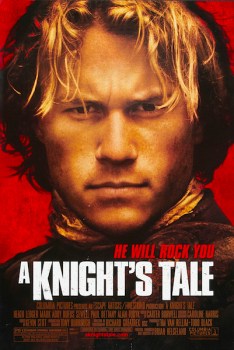
A Knight’s Tale (2001)

2016 #160
Brian Helgeland | 132 mins | streaming (HD) | 2.35:1 | USA / English | PG / PG-13

A Knight's TaleA squire fakes being a knight to win a jousting contest, and a lady’s affection, in this medieval comedy-adventure.
Renowned for its anachronistic use of rock music, there’s actually not much of that, but there’s plenty of comedy and adventure — too much: it’s a little long (that there’s an extended DVD beggars belief). An able cast keep it ticking: Heath Ledger hefts the derring-do and romance, with comic support from Mark Addy, Alan Tudyk, and Paul Bettany; but love interest Shannyn Sossamon is clearly miscast.

Though a favourite to some, I wouldn’t say it’s under-appreciated, but it’s a fun romp.

3 out of 5

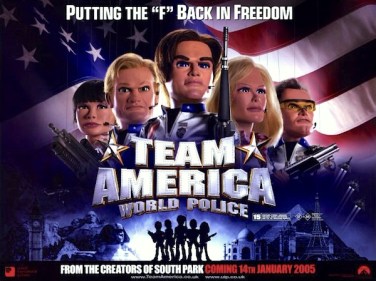
Team America: World Police (2004)

100 Films’ 100 Favourites #89

Freedom Hangs by a Thread

Country: USA & Germany
Language: English, French, Klingon, Korean & Arabic
Runtime: 98 minutes
BBFC: 15
MPAA: R (cut)

Original Release: 15th October 2004 (USA)
UK Release: 14th January 2005
First Seen: cinema, 2005

Stars
Trey Parker (BASEketball, Despicable Me 3)
Matt Stone (BASEketball, South Park: Bigger, Longer & Uncut)
Kristen Miller (Cherry Falls, Puff, Puff, Pass)
Masasa (Kingdom Come, Angels & Demons)
Daran Norris (Comic Book: The Movie, Veronica Mars)

Director
Trey Parker (Orgazmo, South Park: Bigger, Longer & Uncut)

Screenwriters
Trey Parker (Cannibal! The Musical, The Book of Mormon)
Matt Stone (South Park: Bigger, Longer & Uncut, The Book of Mormon)
Pam Brady (South Park: Bigger, Longer & Uncut, Hot Rod)

The Story
Global paramilitary protectors Team America: World Police must battle both the machinations of terrorists and the criticism of Hollywood actors.

Our Heroes
Gary Johnston is just a Broadway actor, until he’s recruited into counter-terrorism force Team America: World Police to use his acting skills to save the world. The rest of the team include its boss, Spottswoode; Lisa, a psychologist; Sarah, who thinks she’s psychic; Joe, an all-American jock; and Chris, a martial artist with a hatred of actors — like Gary! There’s also their supercomputer, I.N.T.E.L.L.I.G.E.N.C.E., which stands for… um…

Our Villains
Kim Jong-il, the lonely leader of North Korea, and his threats to global security. His positions is strengthened by those liberal FAGs — that’d be the Film Actors Guild.

Best Supporting Character
Matt Damon!

Memorable Quote
“We’re dicks! We’re reckless, arrogant, stupid dicks. And the Film Actors Guild are pussies. And Kim Jong-il is an asshole. Pussies don’t like dicks, because pussies get fucked by dicks. But dicks also fuck assholes — assholes who just want to shit on everything. Pussies may think they can deal with assholes their way, but the only thing that can fuck an asshole is a dick, with some balls. The problem with dicks is that sometimes they fuck too much, or fuck when it isn’t appropriate — and it takes a pussy to show ’em that. But sometimes pussies get so full of shit that they become assholes themselves, because pussies are only an inch-and-a-half away from assholes. I don’t know much in this crazy, crazy world, but I do know that if you don’t let us fuck this asshole, we are going to have our dicks and our pussies all covered in shit.” — Gary

Quote Most Likely To Be Used in Everyday Conversation
“Matt Damon.” — Matt Damon

Memorable Scene
Puppets having sex. Sex, by puppets. Sexing puppets. Puppet sex.

Best Song
The titular refrain (“America! Fuck yeah!”) is perhaps the most memorable, though it has strong competition from Kim Jong-il’s I’m So Ronery, but my favourite song has always been the in-jokey, film-fan-y Montage. I certainly laughed far louder than anyone else in the cinema, anyway.

Technical Wizardry
Puppets! Considering the Gerry Anderson shows they’re emulating took multiple iterations and years of work to really perfect, Team America does a remarkable job out of the gate — and isn’t adverse to some puppet-based humour either, naturally.

Making of
Originally the Matt Damon character had a proper speaking part, because he’s a pretty intelligent guy really and Parker and Stone knew that. But then the puppet came out looking a bit, shall we say, ‘special’. With no time to remake it, they decided to have the character live up to how he looked: only capable of saying his own name. So it’s less a grand piece of satire on the self-involvement of Hollywood lefties, more an in-joke.

Awards
1 Empire Award (Comedy)
1 MTV Movie Awards nomination (Action Sequence for “the desert terrorist assault”)

What the Critics Said
“it’s hard not to guffaw with glee at the gross libelling and on-screen dismemberment of an array of ‘aware’ Hollywood stars (albeit in puppet form) and in which George W Bush’s war on terror is rendered in risible sub-‘Supermarionation’ form. The whole thing plays like Thunderbirds Goes to Hell and will doubtless offend all those numskulls who complained about the BBC’s transmission of Jerry Springer: The Opera. For that alone, it gets my vote.” — Mark Kermode, New Statesman

Score: 77%

What the Public Say
“The idea of the puppets in the first place is very clever, because when you make everything a puppet, everything becomes funnier. I think that the puppets themselves work so well because the creators knew their strengths and weaknesses. The puppets they use are pretty detailed and can do a lot of different kinds of movements. The team use these functions of the puppets for simpler actions (moving limbs and heads and so on) and make it look realistic. But how do you make a fistfight between two puppets look realistic? You don’t, just make some very basic and crude movements and the joke basically tells itself.” — Felix, FelixMovieThoughts

Verdict

The guys behind South Park spoof Michael Bay-style action movies — and by extension right-wing America’s view of its place in the world — through the medium of Thunderbirds-style puppets, which just heightens the ridiculousness. It’s a neat mix of clever satire and baser laughs, bolstered by surprisingly listenable musical numbers. It’s not always clever, and it’s never big (they’re puppets!), but it is funny.

#90 will be… following yonder star.

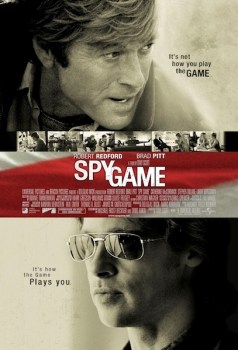
Spy Game (2001)

100 Films’ 100 Favourites #87

It’s not how you play the game.
It’s how the game plays you.

Country: USA, Germany, Japan & France
Language: English, German, Arabic, French & Cantonese
Runtime: 126 minutes
BBFC: 15
MPAA: R

Original Release: 21st November 2001 (USA)
UK Release: 23rd November 2001
First Seen: DVD, c.2002

Stars
Robert Redford (The Sting, All is Lost)
Brad Pitt (Twelve Monkeys, Ocean’s Eleven)
Catherine McCormack (Braveheart, 28 Weeks Later)
Stephen Dillane (Welcome to Sarajevo, The Hours)

Director
Tony Scott (Crimson Tide, Man on Fire)

Screenwriters
Michael Frost Beckner (Sniper, To Appomattox)
David Arata (Brokedown Palace, Children of Men)

Story by
Michael Frost Beckner (Cutthroat Island, Prince Valiant)

The Story
When a retiring CIA agent’s one-time protégé is captured by the Chinese, he recalls their years training and working together, while battling internal agency politics to free his former friend.

Our Heroes
Nathan Muir is on the cusp of retirement, a former CIA field agent who’s now desk-bound and disregarded by his superiors. Previously, he recruited sniper Tom Bishop into the agency, training him to be a spy with Muir’s own values — which Bishop didn’t necessarily share, and his reaction against has ultimately led him into the hands of the Chinese. But how? Well, that’s what flashbacks are for.

Our Villains
Lots of Johnny Foreigners — but also some factions within the CIA itself…

Best Supporting Character
One of the CIA agents handling Bishop’s capture, and so attempting to handle Muir, is his oleaginous colleague Charles Harker. He’s played by the always-excellent Stephen “Stannis Baratheon” Dillane, who is perfectly snide in the role.

Memorable Quote
Bishop: “You don’t just trade these people like they’re baseball cards! It’s not a fucking game!”
Muir: “Oh, yes it is. It’s exactly what it is. And it’s no kid’s game either. This is a whole other game. And it’s serious and it’s dangerous. And it’s not one you want to lose.”

Memorable Scene
After an asset is killed, Bishop confronts Muir on a rooftop about the morals of what they do and why they do it. See also: Memorable Quote; Making of.

Technical Wizardry
The cinematography and editing haven’t yet reached the crazed heights Tony Scott would later display in Man on Fire and Domino, but it’s not without its affects. The flashbacks occur in a few different eras, so Scott decided to give each period a distinct look to remind the viewer of that time. For example, Vietnam is desaturated to a “strange sepia green”, while the colours in Beirut are heightened to mimic news clips from 1985. Conversely, Scott found the talky scenes within the CIA to be the “most challenging part of the movie” — without all his usual tricks, he had to rely on the quality of his actors to bring the scenes to life.

Making of
For the Berlin rooftop confrontation between Muir and Bishop, Tony Scott asked for more money to rent a helicopter. The producers refused — not unreasonably, when you consider it’s a dialogue scene. But Scott believed it was important and so rented the helicopter with his own money. Robert Redford was reportedly baffled by Scott’s use of a helicopter to film such an intimate conversation, but when he saw the final result he was impressed by how dynamic it made the scene.

What the Critics Said
“beneath the film’s nostalgic veneer and tooth-rattling visual and aural effects lies a mature ambiguity that’s unusual for a holiday blockbuster — and all but unheard of in a Tony Scott movie. […] the portrayal of Muir, Bishop, and their employers as significantly less than moral beacons makes the film surprisingly demanding as a whole. Rather than requiring us to take its desperate heroes and their dubious redemption entirely at face value, Spy Game slips in a refreshing dose of uncertainty with its cinematic jolts.” — Mark Holcomb, The Village Voice

Score: 66%

What the Public Say
“I have seen it three times now, and I still don’t have a full grasp of all the phone calls and cutaways and violent edits. This aspect, rather than being a distraction, is one of the film’s virtues. The idea is that Redford’s Nathan Muir is so smart that he is hoodwinking the CIA. Part of the game that the movie plays is that we the viewers are given just enough of a hint that we can appreciate his cleverness, but even we aren’t intended to fully ‘get it’. Tony Scott’s hectic, pulse-pounding visual style is largely responsible for this mesmerizing and confusing effect. Similar to (but far superior to) Guy Ritchie’s penchant for seemingly random visual tampering, Scott hits more often than he misses in Spy Game” — Ian Kay, Taking a Look

Verdict

Spy Game is not normally considered the pinnacle in the careers of anyone involved, but there’s something about it that really works for me. In part it’s the chemistry between Redford and Pitt, a pair of actors who look like they could be father and son and exude a similar level of connection. The dual timeline structure keeps things rattling along, with Redford entertainingly running rings round the CIA in the present, while the flashbacks consider “the greater good” — how far should they go, and is it ever worth it? Possibly such questions weren’t appreciated on the film’s immediately-after-9/11 initial release, but they’ve since become more relevant than ever.

That’s no moon… it’s #88.

Spider-Man 2 (2004)

100 Films’ 100 Favourites #86

A man will face his destiny.
A hero will be revealed.

Country: USA
Language: English
Runtime: 127 minutes | 135 minutes (2.1 extended cut)
BBFC: PG (cut, 2004) | 12A (2004) | PG (uncut, 2009)
MPAA: PG-13

Original Release: 25th June 2004 (Lithuania)
US Release: 30th June 2004
UK Release: 16th July 2004
First Seen: cinema, July 2004

Stars
Tobey Maguire (Pleasantville, The Great Gatsby)
Kirsten Dunst (Interview with the Vampire, Melancholia)
James Franco (City by the Sea, 127 Hours)
Alfred Molina (Frida, An Education)

Director
Sam Raimi (The Evil Dead, Drag Me to Hell)

Screenwriter
Alvin Sargent (Gambit, Ordinary People)

Story by
Alfred Gough (Lethal Weapon 4, The Mummy: Tomb of the Dragon Emperor)
Miles Millar (Shanghai Noon, Herbie Fully Loaded)
Michael Chabon (John Carter)

Based on
Spider-Man, a comic book superhero created by Stan Lee and Steve Ditko; in particular the story Spider-Man No More! by Stan Lee and John Romita, Sr.

The Story
Peter Parker battles problems in his personal life while his superhero alter ego Spider-Man battles the machinations of evil scientist Dr Otto Octavius.

Our Hero
Spider-Man! Spider-Man does whatever a spider can — spins a web any size, catches thieves just like flies. Is he strong? Listen bud, he’s got genetically-modified blood. Wealth and fame he’s ignored, action is his reward… though he’s having doubts about if it’s worth it. With great power comes great responsibility, and neither sit well with a kid who wants a normal life.

Our Villain
Doc Ock! Guy named Otto Octavius winds up with eight limbs, four mechanical arms welded right onto his body — what are the odds?

Best Supporting Character
Before he won an Oscar for Whiplash, or posted photos of his insanely ripped body on social media, J.K. Simmons brought himself to everyone’s attention as the hilariously irascible editor of The Daily Bugle newspaper, J. Jonah Jameson. He was so good, they haven’t even bothered to recast the character for any of the three live-action Spidey films that have come since the first reboot.

Memorable Quote
“So here I am, standing in your doorway. I have always been standing in your doorway.” — Mary Jane

Quote Most Likely To Be Used in Everyday Conversation
“With great power comes great responsibility.” — Uncle Ben may be dead, but they manage to have him say it in this one too.

Memorable Scene
The elevated train fight between Spidey and Doc Ock. It was the first major sequence filmed, before the screenplay was completed, but Raimi had dreamt it up personally. It was shot in Chicago because New York no longer has an elevated railway, but Raimi was seeking to create an idealised version of the city.

Technical Wizardry
The sound effects for Doc Ock’s tentacles were created using motorcycle chains and piano wires, while the sound of him ripping open the bank vault was a hubcap scraping along the floor. The designers consciously didn’t include the noise of servomotors, to enhance the idea that the tentacles have become a part of Ock’s body.

Truly Special Effect
Doc Ock’s tentacles were built practically. Each one was 13ft long, made up of 76 pieces, fully articulated, and controlled by four people. Obviously some of their appearances are CGI, especially when Ock’s using them to move around, but every scene was first filmed using the real props to see if CGI was truly necessary

Making of
Tobey Maguire injured his back before filming began, to the extent that Jake Gyllenhaal (at the time only really known for Donnie Darko) was tapped to replace him, and even began preparing for the shoot. Ultimately Maguire recovered enough to participate (obviously). A couple of years later Gyllenhaal was one of the final contenders for Batman in Batman Begins, but didn’t get to do that either. I’m sure Marvel will find a superhero for him eventually — they do for most people.

Previously on…
Ignoring the many and various animated series and failed attempts to bring Spidey to the screen, there was the first Sam Raimi-directed Spider-Man, which was the first film to gross over $100 million on its opening weekend. Also, MTV animated series Spider-Man: The New Animated Series is technically set after Spider-Man and therefore before Spider-Man 2, but I don’t think anyone remembers it…

Next time…
Spider-Man 3 concluded the trilogy with a whimper thanks to behind-the-scenes clashes, which also scuppered plans for Spider-Man 4. The series was rebooted with the unpopular The Amazing Spider-Man, which was followed by the even-more-unpopular The Amazing Spider-Man 2, leading to the character being rebooted again and integrated into the Marvel Cinematic Universe. The latest version debuted in Captain America: Civil War before starring in a solo movie, Spider-Man: Homecoming, next summer.

Awards
1 Oscar (Visual Effects)
2 Oscar nominations (Sound Mixing, Sound Editing)
2 BAFTA nominations (Sound, Visual Effects)
5 Saturn Awards (Fantasy Film, Actor (Tobey Maguire), Director, Writer, Special Effects)
3 Saturn nominations (Supporting Actor (Alfred Molina), Music, DVD Special Edition Release)
Nominated for the Hugo for Best Dramatic Presentation Long Form
1 World Stunt Award (Best Overall Stunt by a Stunt Man (Peter Parker falling into clothes lines))
2 World Stunt Awards nominations (Best Work with a Vehicle, Best Speciality Stunt (Doc Ock waking up))

What the Critics Said Then
“a sequel that not only outstrips its predecessor but has a perversity and quick-wittedness that hardly seem to belong in a comic-book movie. […] It’s unusual and gratifying to find a multimillion dollar movie that’s been put together with some thoughtfulness, that doesn’t neglect subtlety in between delivering the smash-bang-wallop. […] It’s the interest in human fallibility that sets this movie apart. The superhero who bridles at his own responsibility may not sound an especially gripping prospect, but his dilemma is explored with a conviction that, within the fantasy genre, feels almost groundbreaking.” — Anthony Quinn, The Independent

Score: 93%

What the Critics Say Now
On placing the film in his top ten for BBC Culture’s 100 Greatest Films of the 21st Century: “First of all, the 21st century is the century of superheroes. To approach the history of this era without acknowledging that is to miss the story. Many of my peers opted to make The Dark Knight the film that represented superheroes for them, but while I like that movie it’s a crime film in superhero drag. Spider-Man 2 is an unabashedly comic book superhero movie, a film that is pulsing with the vibrant four color life of the best comic book panels and that is soaked in the sudsy soap opera of the best comic book word balloons. It’s a movie that is a perfect fusion between filmmaker and material, and it is, without a doubt, the best example of superhero filmmaking ever attempted.” — Devin Faraci, Birth. Movies. Death.

What the Public Say
“The most interesting relationship that gets explored in Spider-Man 2, however, is with Spider-Man himself. In the first Spider-Man, Peter basically became Spider-Man the instant he decided to live his life by Uncle Ben’s last few words and donned on the Spidey suit, and that was that. Here, Peter Parker basically breaks up with Spider-Man and with Uncle Ben, as he says he is “Spider-Man, no more,” and has to start over and re-bond with the hero inside of him. [The] movie makes use of this psychological relationship to refine its definition of a hero as established in the first film. It isn’t just about responsibility. It argues that the hero is inherently sacrificial. They give up even their dreams to salvage yours. This definition is much more mature and sophisticated […] It goes to show that a big budget doesn’t have to translate into senselessness. Spider-Man 2 is the intellectual experience I was looking for in a Spider-Man film with all the action that I always imagined was possible.” — Kevin Tae, Taestful Reviews

Elsewhere on 100 Films
Just before Spider-Man 3 came out they released an extended cut of the first sequel on DVD, dubbed Spider-Man 2.1 (remember when they briefly called extended cuts things like that?) At the time I concluded “it’s still a 5-star film because it doesn’t ruin the original — but it’s not at all essential”, though I later added a postscript to note that “I probably should have rated this lower. It may still be a good film, but the fact is the original cut’s better — even if just for the superior version of The Lift Scene. I rather doubt I’ll ever watch it again.”

Verdict

In a simpler time before every superhero movie was connected to every other superhero movie, filmmakers were free to only have to tell one story and develop the ongoing life of their lead characters (rather than juggle everyone else’s lead characters for cameos, too). Spider-Man 2 is a pinnacle of this. It takes the seeds sown by the first movie and nurtures them into more interesting and complex emotional dilemmas, without losing sight of the fact it’s a movie based on a comic book about a man who swings around the city in a red-and-blue onesie fighting crime. Nonetheless, it’s as memorable for Peter and MJ’s up-and-down relationship as it is for the stunning action sequences, which become icing on the cake rather than the raison d’être.

#87 is… no kid’s game.

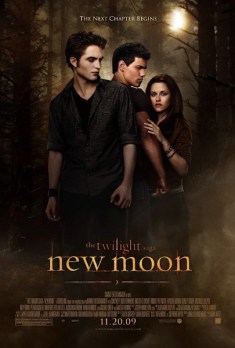
The Twilight Saga: New Moon (2009)

2016 #170
Chris Weitz | 131 mins | download (HD) | 2.35:1 | USA / English | 12 / PG-13

The Twilight Saga: New MoonLast Halloween, I reviewed one of the most horrifying movies of all time: Twilight. This Halloween, at the risk of establishing a terrible tradition that could potentially run for another three years, I’m turning my attention to its first sequel, New Moon.*

If you watched the first movie and thought things couldn’t get any worse… well, you clearly didn’t watch New Moon. I don’t blame you. My original plan had been to watch all five and review them over the course of a week last Halloween, like I did for George A. Romero’s zombie movies in 2013 (plug!), but after the first I couldn’t stomach any more straightaway. Or for an entire year, apparently.

Anyway, the film. New Moon picks up more or less where Twilight left off, with human teen Bella (Kristen Stewart) and 109-year-old vampire Edward (Robert Pattinson) deeply in love. Their relationship is complicated by the slightest sign of Bella’s blood making members of Edward’s vampire pseudo-family want to kill her, but he refuses to turn her. Then Edward’s family have to leave the area and he decides it would be better if she didn’t come. Bella goes into extreme mourning — OK, teens over-feel break-ups, but Bella goes fucking mental, screaming in her sleep like a junkie going cold turkey. Her father confronts her: “It’s just not normal, this behaviour.” Bang on, daddy-o!

So, Bella discovers that doing crazy adrenaline-generating things — like riding on motorbikes with strangers — gives her visions of Edward. It’s unclear if she’s imagining these or if he’s actually manifesting to her. In most movies you’d know it was the former, but this is a supernatural flick about vampires and werewolves, for crying out loud — make yourself clear, moviemakers! Anyway, to replicate this rush Bella salvages some bikes from a tip or something and gets her chum Jacob (Taylor Lautner) to rebuild them. She still can think of nothing but Edward… until Jacob takes his top off. My face is up here, BellaAnd they accuse teenage guys of being shallowly obsessed with the opposite sex’s chests. But then Jacob starts acting aggressively, and hanging out with a gang, and there are stories about beasts in the woods killing people, and his tribe leader type guy looks shifty whenever all that’s mentioned, and… wait, could there be a connection between Jacob and his friends and the wolf-like attacks in the woods?! Gasp!

New Moon is a terribly slow, terribly mopey movie, which takes forever to get to really obvious ‘reveals’ — like, yes, Jacob and co are werewolves (after a fashion). That’s when it’s not trying to build a love triangle that we all know can only end one way. I mean, Bella tells Jacob “it will always be Edward”. Not subtextually — she tells him literally, with words. Those exact words. And when it’s not doing that, it’s slowly building up some form of mythology, presumably to use properly in future instalments. Then it ends with what I think is meant to be a cliffhanger and/or surprise ending, but it’s so ridiculously unsurprising or cliffhanger-y that it’s almost insulting. Bella’s forced Edward’s hand, making him agree to turn her into a vampire because they can’t bear to be apart and want to spend forever together, so why should it be such a surprise that he wants to marry her?!

Then there’s the pathetically hand-holding direction — a shot that shows the changing seasons conveys the passage of time perfectly decently, so why superimpose the names of the months on top as if we’re all 5 year olds who can’t understand it hasn’t literally turned from late summer to autumn to winter in 90 seconds? The CGI is uniformly terrible, We feel your pain, Bellaso that even bits that aren’t bad in isolation (the wolves, for instance) are poorly integrated into the live-action. And at one point the characters go to the cinema to see an action movie… called Face Punch. At this point New Moon slips from ineptitude into genius. It’s the best worst fake action movie title ever. The scene where they discuss it is so hilarious, I actually had to pause the movie to finish laughing.


Though it may contain the funniest thing I’ve seen in any movie this year, it’s not enough to save New Moon. It’s even worse than the first one, because it’s boring. Some bits and bobs may actually be improved (some of the direction is slicker; Bella’s terrible voice over is reduced), but goddamn, it’s so dull. So little actually happens. It feels like it’s probably setting things in place for whatever’s to come next for an entire movie.

On the bright side, that might mean the series improves from here. I can but hope.

1 out of 5

New Moon featured on my list of The Five Worst Films I Saw in 2016, which can be read in full here.

* Here’s a thing: the film has two title cards: the first says New Moon, the second says Twilight Saga: New Moon — no “The”. But as all the posters and, y’know, everyone else uses the “the”, I am too. Fighting my urge to use the accurate on-screen nomenclature here, people. ^

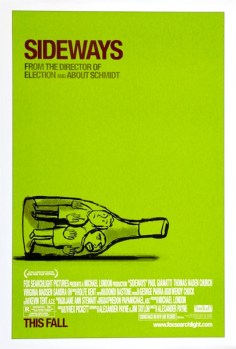
Sideways (2004)

100 Films’ 100 Favourites #84

In search of wine.
In search of women.
In search of themselves.

Country: USA & Hungary
Language: English
Runtime: 127 minutes
BBFC: 15
MPAA: R

Original Release: 22nd October 2004 (USA)
UK Release: 28th January 2005
First Seen: cinema, 2005

Stars
Paul Giamatti (Big Fat Liar, Shoot ‘Em Up)
Thomas Haden Church (George of the Jungle, Spider-Man 3)
Virginia Madsen (Candyman, The Number 23)
Sandra Oh (Under the Tuscan Sun, Hard Candy)

Director
Alexander Payne (About Schmidt, Nebraska)

Screenwriters
Alexander Payne (Jurassic Park III, The Descendants)
Jim Taylor (Election, I Now Pronounce You Chuck & Larry)

Based on
Sideways, a novel by Rex Pickett.

The Story
Middle-aged wine lover Miles takes his friend, groom-to-be Jack, up to California wine country for a more mature kind of bachelor trip, but Jack’s lascivious ways lead them to become involved with a pair of women — while keeping Jack’s impending nuptials a secret…

Our Hero
Miles Raymond is a divorcee, a teacher, and an unpublished novelist, depressed at the state of his life. His one love is wine appreciation, though when Jack goads him into getting closer to a waitress he casually knows, Maya, things begin to look up.

Our Villain
Jack, a has-been actor and Miles’ college roommate. Not really interested in wine; very interested in women — even though he’s engaged, he hooks up with Maya’s friend Stephanie, not telling her about his imminent marriage. Not strictly a villain, but his antics bring Miles little but misery.

Best Supporting Character
Maya is a waitress at Miles’ favourite restaurant, and they bond over a shared appreciation of wine. Unfortunately, her friendship with Stephanie and the secret of Jack’s engagement poses a threat to her burgeoning relationship with Miles…

Memorable Quote
“If anyone orders Merlot, I’m leaving. I am not drinking any fucking Merlot!” — Miles

Quote Most Likely To Be Used in Everyday Conversation
See above.

Memorable Scene
Jack hooks up with a random waitress but has to flee when her husband comes home, leaving his wallet behind with the wedding rings inside. He gets Miles to take him back to her house, where Jack convinces his friend to sneak in to find the wallet. Inside, the waitress and her hubby are having sex, but they spot Miles grabbing the wallet — so he’s chased back to the car by a very angry naked man. (It’s not exactly the film’s cleverest bit, but it is memorable.)

Making of
Sideways was so popular, it actually had an effect on the wine market. Miles is famously critical of Merlot (see above), which actually caused its sales to drop in the US and UK. However, there was a bigger impact on Pinot Noir, which he expresses a love for. After the film’s release, sales of Pinot Noir wines increased by over 20% compared to the year before. The effect lasted, too: a 2009 study found that sales volume of Merlot had slowed and its price had dropped, while sales and prices of Pinot Noir were still up.

Next time…
Author Rex Pickett has penned two sequel novels, Vertical and Sideways 3 Chile, but Alexander Payne has said he has no interest in adapting them and, though Fox owns the rights to the characters, they have no interest in making sequels without Payne. Of gossipy interest, however, is that Pickett deliberately wrote Sandra Oh’s character out of the sequels, because the actress made script changes he disliked and he didn’t want to work with her if they did make a sequel.

Awards
1 Oscar (Adapted Screenplay)
4 Oscar nominations (Picture, Supporting Actor (Thomas Haden Church), Supporting Actress (Virginia Madsen), Director)
1 BAFTA (Adapted Screenplay)

What the Critics Said
“how different these two characters are: the crass actor and the sensitive writer, linked by being roommates at college, but by little else these days. Viewers will probably identify with one or the other, but the beauty of the script is that these are rounded, believable people with recognisable failings and strengths — one is not superior than the other. So, while Jack is a bit dim, crude, and thinks largely with his crotch, he’s also enthusiastic, loyal and embraces life. And while Miles is funny, clever, and knowledgeable, he is also timid, drink-dependent, and crippled by insecurity” — Nev Pierce, BBC Movies

Score: 96%

What the Public Say
“This performance made [Thomas Haden Church] a star, earning him roles in everything from Spider-Man 3 to Easy A. By turns charming and crass, his laconic man-child is a perfect foil to the tightly-wound Miles, and their chalk-and cheese riffing is minded to fine comedic effect at times, most notably in Miles’ horrified discovery that Jack has been chewing gum throughout his detailed tutorial into wine tasting. It’s Giamatti’s picture though. He makes Miles vulnerable, sarcastic, grouchy and tender – sometimes all at the same time. He’s capable of expressing a depth of emotion with nothing more than a flicker in his eyes or furrowing of his brow. It’s a performance he’s never bettered.” — Rob D, Random Movie Guy

Verdict

Do you ever watch a film, like it well enough, but then find that, without re-watching or consciously re-evaluating, it sneakily grows in your estimation? That was Sideways for me, after I saw it on its original release. I’ve watched it a few more times since which have cemented my opinion. It’s a pretty perfect example of the comedy-drama, being both very funny but with a core story based in characters going through emotional crises, whether they know it or not. It’s a deceptively gentle film, the kind of movie where it can seem like nothing’s happening, but the cumulative effect builds to a nice, complicated aftertaste. Like a fine wine, then.

I see #85 walking around like regular movies.

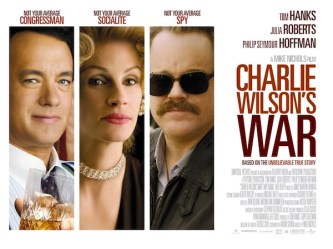
Charlie Wilson’s War (2007)

2016 #135
Mike Nichols | 98 mins | streaming (HD) | 1.85:1 | USA & Germany / English & Russian | 15 / R

Charlie Wilson's WarUnlikely stories can make great movies, or at least fun ones, and if this isn’t the former then it’s largely the latter.


It’s about a hard-partying US congressman (Tom Hanks) who suddenly becomes interested in the Soviet occupation of Afghanistan, so increases support for the rebels by calling in the many favours he’s collected.

Boasting a typically witty script from Aaron Sorkin, and a cast (including Philip Seymour Hoffman) capable of delivering it, it makes a potentially grim topic surprisingly entertaining — which is presumably why acknowledgement of the aftereffects is reduced to one subtle, but chilling, nod to 9/11.

4 out of 5

Serenity (2005)

100 Films’ 100 Favourites #82

They aim to misbehave.

Country: USA
Language: English
Runtime: 119 minutes
BBFC: 15
MPAA: PG-13

Original Release: 29th September 2005 (Australia)
US Release: 30th September 2005
UK Release: 7th October 2005
First Seen: cinema, 7th October 2005

Stars
Nathan Fillion (Waitress, Super)
Summer Glau (The Initiation of Sarah, Knights of Badassdom)
Chiwetel Ejiofor (Dirty Pretty Things, 12 Years a Slave)

Director
Joss Whedon (Avengers Assemble, Much Ado About Nothing)

Screenwriter
Joss Whedon (Buffy the Vampire Slayer, Toy Story)

Based on
Firefly, a TV series created by Joss Whedon.

The Story
In the far future, a crew of renegades harbour a fugitive who knows a terrible secret about the totalitarian rulers. When a ruthless assassin comes for them, their only hope becomes to seek out the truth behind one of the regime’s darkest acts…

Our Heroes
The crew of the Firefly-class spaceship Serenity. Led by Captain Mal Reynolds, they’re a gang of rogues and thieves, but are also honourable sorts (well, mostly) forced into that life by a harsh universe. They’ve recently taken onboard Dr Simon Tam and his mysterious sister, River, who has certain skills…

Our Villains
The Operative, an efficient and moral assassin sent by the Alliance, the universe’s ruling body, to retrieve River — at any cost. But if he’s the rock then there’s also a hard place: Reavers, bloodthirsty perverted cannibals who stalk the uncharted regions our heroes will need to venture into.

Best Supporting Character
Shepherd Book, a preacher and former member of Serenity’s crew, now living on the appropriately-named planet of Haven. Has some very insightful words of advice for Mal.

Memorable Quote
“I don’t care what you believe in, just believe in it.” — Shepherd Book

Quote Most Likely To Be Used in Everyday Conversation
“Shiny” — as a synonym of “great”.

Quote Most Likely To Be Found on a T-Shirt
“I am a leaf on the wind, watch how I soar.” — Wash

Memorable Scene
After the history-lesson-within-a-dream-within-a-hologram-within-a-scene pre-titles, Whedon introduces us to the crew and their titular ship with a four-and-a-half-minute unbroken tracking shot. I do love a long single take, and this one excels by introducing us to all the main heroes, their personalities, their situations, their relationships — all at the same time — while also establishing the geography of the ship; and, by extension, the incredible set, which featured the entire interior of the ship built across just two sections (there’s an invisible cut in the middle of the shot to transition between sets).

Technical Wizardry
I created this category to highlight any elements of production that were especially striking — things like cinematography, editing, design, costumes… No offence to any of them (and considering the film was produced for a slight-for-a-sci-fi-blockbuster $40 million, they all do a super job), but the real star is Whedon’s screenplay. Packed to the gills with the literate, witty dialogue he’s famed for, it also manages to be emotionally affecting, make points about governments and their power, engage with themes of belief and the importance of freedom, and weave in a subtext that reflects the real-life story of Firefly’s death and rebirth — though Whedon claims that last one was an accident.

Letting the Side Down
The public. It didn’t gross enough; there weren’t any sequels. Damn you, mankind!

Making of
Talking of the impressive Serenity set (see: Memorable Scene), it was built in the same way for Firefly, but the blueprints were lost between Fox destroying the series’ sets and production on the movie beginning. When Nathan Fillion learnt this at a production meeting, he was able to supply the blueprints himself — he’d been so excited to be on the show, he’d taken photos of all the pre-production material he’d seen, including the set blueprints.

Previously on…
Serenity continues and, to an extent, concludes Joss Whedon’s criminally short-lived TV series Firefly. Mismarketed by US network Fox, the series wasn’t a success on original broadcast, leading to cancellation after just 11 episodes had aired. Thanks to word-of-mouth and availability on DVD, it has developed a massive following since.

Next time…
Despite the distinct and disappointing dearth of sequels, the Firefly/Serenity franchise has continued on, mostly in the form of various comic books, which have plugged gaps in continuity, revealed long-awaited character histories, and even continued the story after the movie.

Awards
1 Saturn Award (Supporting Actress (Summer Glau))
1 Saturn nomination (Science Fiction Film)
Won the Hugo for Best Dramatic Presentation Long Form

What the Critics Said
“With its Hawksian attention to group dynamics and its skilful definition of character through action, this supremely entertaining hybrid-movie plays like Rio Bravo in space. The textured narrative is peopled by precisely delineated characters who employ a salty retro-future-speak, in which twenty-fifth century slang is morphed with frontier Western archaisms (‘take umbrage’, ‘confound these bungers’). The settings and tone are hyper-real, yet the human behaviour is grounded and credible, the moral conflicts complex and involving. Shiny, intelligent fun.” — Nick Funnell, Time Out London

Score: 82%

What the Public Say
“We get a decent story, providing lots of action, a huge amount of wit and plenty of suspense. It’s extremely entertaining. It’s well written too, with information smartly hidden beneath breezy dialogue, and looks very cinematic. (The camerawork is often expressive and classy.) Maybe what’s most impressive is the economy. Many scenes are doing double-duty, servicing plot and character, action and exposition, drama and comedy… There’s just a sharpness to everything, which means the film rattles along and is never boring.” — Ian Farrington

Verdict

Regular readers may have picked up that I don’t re-watch films much (I can’t identify at all with people who claim to have seen the same film dozens or hundreds of times). Despite that, I saw Serenity in the cinema four times, two of them back-to-back. Such is the genius of writer-director Joss Whedon, and the quality of the Firefly universe — it’s a situation where every element just clicked to make a perfect result. (Well, every element except the original TV network, anyway.) No doubt Serenity is best viewed as a capper to the fourteen-hour TV series — that extra investment in the characters and universe makes the film’s best bits sing — but it’s accessible to newcomers also, being so cleverly structured and packed with all the information you’d need.

It was named “Film of the Year” by the BBC’s Film programme; it topped an SFX poll for the best science-fiction film of all time; and its DVD is a permanent resident on the International Space Station to entertain the crews. Cào nǐ, Fox.

#83 will… get busy living or get busy dying.