Iron Man (2008)

2008 #31
Jon Favreau | 126 mins | cinema | 12A / PG-13
This review contains spoilers.

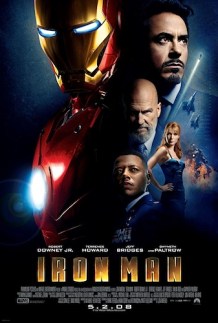
Iron Man“Iron Man, Iron Man, does whatever an iron can. Flattens clothes, nice and smooth; burns a hole if he doesn’t move. Look out! Here comes the Iron Man!”

OK, maybe not…

Irritating ‘humorous’ review intros aside, Iron Man has never been at the forefront of my comics experience. X-Men and Batman, yes yes yes; a few of Alan Moore’s, of course; a solid stab at getting through Preacher; occasional diversions into Spider-Man or Ghost Rider… But never Iron Man (or a slew of others, but they don’t have a surprisingly successful movie currently in cinemas). Whilst he’s obviously a popular character with fans, the film’s phenomenal success — both financially and critically — has rather taken me by surprise, and consequently dragged me to the cinema for the first time in over 10 months.

Tony Stark is, perhaps, Marvel’s answer to Bruce Wayne: the billionaire playboy CEO of a huge technology company who uses his technological know-how to become a superhero in the wake of personal tragedy — but in Stark’s case the company is an amoral weapons manufacturer and the playboy lifestyle isn’t just a front. What this means for the viewer is that, in the title role, Robert Downey Jr gets to shine. He has all the best lines and comedic moments (of which there are plenty) and a couple of cool action bits too (of which there are few). As he’s the hero this would seem just, but you only have to look at earlier entries in the Batman franchise to see how the hero can be sidelined for the villain. Elsewhere in the cast, Gwyneth Paltrow brings humanity to proceedings as the improbably named Pepper Potts, whose biggest flaw is that the filmmakers refuse to have anyone make a joke about her name. Not even one! Jeff Bridges gives a suitably dastardly performance as the eventual villain, but the plot woefully underuses him.

Because this is an origin story, you see, and sadly falls into most of the typical origin story traps: the ‘major’ villain exists only to provide a final act punch-up while the rest of the film explores how Ordinary Man (or Ordinary Rich Man in this case) gained Super Powers (or Built Super Suit) and went on to Save Mankind (or Save Some Foreigners, but I’ll leave deeper debates over the film’s dubious international perspective to others). It used to be the case that superheroes arrived on the screen ready to go — look at Burton’s original Batman, for example — but since the genre’s ’00s revival it’s all about the origins. What this typically means is a decent-enough first film that serves only to introduce the characters for the sake of a fully-formed second entry. One can only hope this will be the case with Iron Man.

The primary exception to this rule is Batman Begins, which succeeds because it’s less about the origin story and more an exploration of Batman’s psychology in general, something only vaguely alluded to in preceding efforts. Where Iron Man falters on this score is in completing Stark’s move from uncaring weapons manufacturer to socially conscious hero relatively early on, from which point he spends ages building his suit and battling, not an evil villain, but off-screen corporate machinations. The final fight, when it arrives, lacks punch (literally) and is over too soon. The amount of time, depth and humour awarded to the characters is to be applauded, but it comes at the expense of some excitement. At least it makes a change, as it’s thoroughly unusual to find the balance skewed that way.

To touch on an exceedingly minor element, the fan-pleasing post-credits scene with Samuel L. Jackson as Nick Fury is quite disappointing. While it’s cool to see Jackson as Fury, and a nice lead for the now-confirmed Avengers movie (which will come after Iron Man 2, so you have to wonder why the scene is at the end of this film), it’s too brief. When Fury informs Stark he’s not the only superhero in the world it provides a mixed reaction: on the one hand, we’re all too aware that from the Marvel Universe we’ve had three X-Mens, three Spider-Mans, a Daredevil, an Elektra, a Hulk (and soon another), a Punisher, and even a Ghost Rider — if they all take place in the same filmic universe then Stark ought to have noticed at least a couple of them on the news! And if they’re not in the same universe, one wonders if the cast of The Avengers movie will be padded with second-string heroes who barely warrant their own film. But that’s a debate for another review (one in three years’ time, in fact).

This may all sound a tad harsh on Iron Man, but when a film receives near unrelenting praise from most quarters it’s hard not to spy the faults when coming to it late. What it most resembles is a great TV pilot: at the end you enjoyed what you just saw, but your thoughts lie with what’s to come — “that’s the setup, now what will they do?” Hopefully Iron Man 2, due in two years, can take the many positive elements and run with them.

4 out of 5

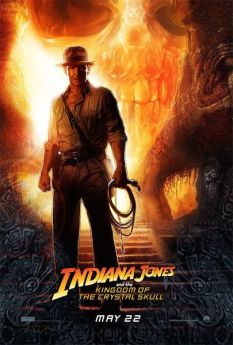
Indy 4: Initial Thoughts (no spoilers)

Indiana Jones and the Kingdom of the Crystal SkullI couldn’t make it to the local midnight showing of Indiana Jones and the Kingdom of the Crystal Skull, so instead I plumped for the next one on the largest local screen (which is also the cheapest student rate locally — hurrah!) A whole 11 hours extra waiting…

The film has now been out in the UK for just over 14 hours, and goodness knows how long elsewhere, not to mention last Sunday’s premiere at Cannes, so the ‘net is already packed with thousands of opinions and full-bodied reviews (almost 3,000 people have already rated it on IMDb, unsurprisingly placing it in the Top 250). Hundreds of thousands more will follow in the ensuing hours, days, weeks and years — I’m sure discussion of Indy isn’t going away soon. Nonetheless, I’m throwing out my thoughts onto my little plot of webspace, just in case anyone cares. I’ll post a proper review another time, but these are a quick handful of reactions having finished the film less than an hour ago. They are, as the title notes, spoiler-free.

From the first shot it’s clear that a playful, entertaining spirit will pervade the film. It’s a bit of a slow open after that, but once it kicks into gear it’s excitement all the way. There are several exciting sequences, most notably the much-trailed jungle chase, so there’s no disappointment there. It also has the best idea for a sword fight since Pirates of the Caribbean 2. The MacGuffin is decent enough — not as iconic as the Ark or the Holy Grail, perhaps, but it more than serves its purpose. There are fewer quotable lines than you might hope, but the dialogue is still witty. It’s occasionally a bit silly too, but most of it’s in-keeping with the near-B-movie spirit of the franchise.

Indy’s age is playfully acknowledged, but it doesn’t become an excuse — he still gets plenty of action and drives the story. There are nice references to his earlier adventures (including the TV series) and what he’s been doing for the last 20 years. Most fans will appreciate that, I think. One might argue (and some reviews have) that a few actors are underused in their supporting roles, but this is Ford’s film and they’re no worse than, say, Sallah in Raiders and Last Crusade — I doubt they cast John Hurt, for example, and then wrote him a relatively small part. As with the opening image, Spielberg ends the film with another playful beat aimed primarily at fans.

To rank Crystal Skull in relation to the original trilogy, it’s the third best — but that’s behind Raiders, a certified classic, and Last Crusade, one of the first films I ever saw and which I love dearly. Aside from those, it stands head and shoulders above many other action/adventure films. Will it hold up as well as Raiders has in 27 years’ time? Who can say. But right now, it’s damn fine entertainment.

A proper review of Kingdom of the Crystal Skull will appear as #32 in the next few days, following my review of Iron Man.

Sweeney Todd: The Demon Barber of Fleet Street (2007)

2008 #30
Tim Burton | 112 mins | DVD | 18 / R

Sweeney ToddTim Burton and Johnny Depp collaborate for the sixth time (as the DVD’s blurb is so keen to point out) for a film adaptation of Stephen Sondheim’s musical adaptation of the classic tale of the titular barber who slaughters instead of shaves and sells the resultant meat to all of London in the pies of his accomplice, Mrs Lovett.

As with 2005’s Charlie and the Chocolate Factory, the announcement of Burton as director of Sweeney Todd was one of those “well, of course” moments, despite the vastly different audiences. And with Burton come Depp and Helena Bonham Carter, naturally. But whereas the eventual product of Charlie resulted in a “that’s that done then” feeling of the inevitable, Sweeney is more of an unknown quantity for me — I’m familiar with the basic story, of course, but not this particular version. It’s a dark tale, but told here in a heavily stylised manner — no gritty realism to be found (for that try the Ray Winstone TV movie), but instead there’s bold and striking performances, design, direction, and storytelling. One is tempted to call it “theatrical”, but the direction is anything but and the actors do much more than project for the benefit of the back row. It’s anti-naturalistic in all elements, which suits both the ghoulish and musical subject matters perfectly, but is consequently not to everyone’s taste.

As for the musical elements, Sweeney is done in an operatic style — the majority of dialogue is sung and the story is almost entirely told through these songs, rather than having a couple of numbers peppered throughout (quite how they managed to edit a trailer that was both comprehensible and light on song is near miraculous). Anyone who’s seen an Andrew Lloyd Webber production will be familiar with this way of doing things. Personally, I find it a more immersive style — everyone’s singing from the word go, not disconcertingly launching into song a little way in. The cast’s voices may not be perfect (and I’m far from a knowledgeable judge), but they do the job more than adequately. Rough moments almost add to the film’s style, and the cast’s acting abilities more than make up for them anyway. One casting oddity is Anthony Head, who turns up for a sole inconsequential line. He may not be a regular film actor, but surely he’s bigger (and certainly better) than a glorified extra? He’s not even listed in the end credits. I smell deleted scenes… (A bit of IMDb reading reveals I’m right. Sadly, these aren’t included on the DVD.)

The other striking element of Sweeney Todd is its look. London here is a dingy monochrome metropolis, interrupted only by fanciful fairytale-coloured fantasies like the song By the Sea, and, of course, gallons of vibrant spurting blood. Wisely held off until relatively late in the film, when the blood comes it is all the more shocking. And from that point it flows like wine — or, more accurately, squirts like a stamped-on ketchup bottle — in perfectly judged amounts: it gushes far more than you’d normally see but, because Burton never pushes it to the mad excess that Tarantino did in Kill Bill, it remains on the disturbing side of believable. The stylised theatricality of it almost makes you question the high classifications, but the underlying morals and sheer bloody volume ultimately justify them.

Yet there’s something missing from Sweeney Todd. I can’t work out what it is — perhaps the numerous numbers Burton cut or trimmed have unbalanced proceedings slightly, in some frustratingly ephemeral way? — but despite all this praise and only vague criticisms, I’m certain it’s a four-star film. A very solid four, to be sure, but it doesn’t achieve enough to pass higher.

4 out of 5

Sweeney Todd: The Demon Barber of Fleet Street is on Channel 4 tonight, Saturday 9th August 2014, at 11:10pm.

Vantage Point (2008)

2008 #27
Pete Travis | 86 mins | download | 12A / PG-13

Vantage Point is nothing like Rashomon.

I don’t imagine you’ve missed the endless comparisons — every review seems to have them, IMDb’s single-line plot description mentions it, the film itself certainly pretends to be like it, and I imagine even the pitch to the studio went, “well, it’s like this Japanese film…”. But, in fact, it’s nothing like it, and here’s why: Rashomon is about four people who tell completely different versions of the same events, some or all of which are therefore untrue; Vantage Point repeatedly shows the same events from different angles, revealing a sliver of new information each time. There are no lies and no real misdirection; none of the characters interpret what they see, we’re just shown it from where they were standing. Nonetheless, it’s a potentially interesting way to construct a thriller, but Vantage Point doesn’t exploit the concept’s full potential.

And then, halfway through, it gives up on it.

At first it seems like the filmmakers have simply lumped the gang of terrorists together as one character for the purpose of their perspective, an example of typically uninsightful American action-thriller ideology. But it soon becomes clear that, instead of continuing the perspective-shifting high concept of the first half, the rest of the story is going to play out like a normal thriller. And suddenly it’s a lot more entertaining, freed of pointless repetition and an irritating tendency to stop each story at an appropriately cliffhanging moment. If only the whole film had been constructed this way! Yes, it would have lost out on the odd mystery and some revelations wouldn’t have been so spread out, but continually retelling the story to pull this off seems a cheap trick anyway. Not that it matters, as most of the twists are blatantly obvious, and possibly the biggest of all was blown in the trailer — and is glossed over in the film as if they expected you to have seen it there.

Of course, the already slim running time would be reduced to the length of an American TV episode if they edited it chronologically, because there are plentiful repeated shots of speeches, explosions and crowds running, as well as the over-egged ‘rewind’ sequence each time the chronology is reset, a trick that’s as pandered to an inattentive brain-dead audience as ever you’ve seen. Another reason for employing this disjointed wannabe-Rashomon style is that the timelines probably don’t add up: some characters seem to squeeze an awful lot into a couple of minutes before their plot has to sync with someone else’s, while others presumably stand around doing nothing now and then.

Ultimately it’s the much-reported attempt to be ‘Rashomon-like’ that really scuppered Vantage Point for me. It only manages the multiple perspectives trick until halfway through, and even then it’s not especially well executed. The style has clearly been foisted upon it to mask a story that isn’t that original — the plot is a bit like half a season of 24 on speed — but it could have made passable enough entertainment for 90 minutes, especially as there are a couple of half decent action sequences. As a straightforward thriller it might not have been a great deal better, but it would have been less disappointing.

3 out of 5

Sunshine (2007)

2008 #23
Danny Boyle | 103 mins | DVD | 15 / R

This review contains minor spoilers.

SunshineAfter branching out into the genres of horror (with 28 Days Later…) and ‘family’ (with Millions), Danny Boyle turns his hand to sci-fi with this effort, which tells the story of a spaceship in the apparently not-too-distant (but, clearly, distant enough) future transporting an improbably large nuclear bomb to restart our dying sun.

Sunshine is what some would call “grown-up science fiction”, often more concerned with the crew’s moral dilemmas than thrilling action set pieces or dazzling CGI. Luckily, though, the former aren’t too pretentious and both of the latter are still present. Similarly, the fact that it’s a British rather than American film is apparent early on: there’s an international crew (the Captain is even Foreign! Shocking!), there’s no time wasted on the melodrama of what life is like back on Earth, and the plot slow burns, carefully depicting the crew’s day-to-day relationships and tasks before, inevitably, It All Goes Wrong. The crew notice their failed predecessor floating nearby and have to decide whether to continue on their present course or divert to meet the other craft. I’m sure anyone can guess which option they choose. The ensuing slow slide from relatively minor problems to increasingly major ones fills most of the running time and, like every aspect of the film, is very well executed.

One stumbling block is that, in many ways, it’s territory that’s been trod before. Boyle and screenwriter Alex Garland mix in elements of Alien, 2001: A Space Odyssey, Armageddon, and no doubt several other spaceship-based movies. To their credit, it doesn’t feel like a total rip-off, but the influences are apparent. I was also reminded of the BBC miniseries Space Odyssey: Voyage to the Planets, though I doubt that was a huge influence! (It is quite good though, so you never know…)

Most reviews of Sunshine primarily criticise a shift in quality for the third act. It’s hard to disagree on this, as the film moves from a realistic(ish) Apollo 13-esque space mission movie into slasher horror territory. It almost works, though does feel a little like they were desperate for either a multiplex-pleasing round-off or anything that would carry the film through the last 30 minutes. The real let down is the final sequence, a logic-vacant confusingly-shot finale that consequently feels a tad disappointing.

Yet it’s not bad enough to make too large a dent in the film’s overall quality. The first hour may be better than the final half hour, but it’s all still good enough to pass. Ultimately, the weak ending’s only impact may be in knocking one star off the final score — though, without an alternate final act to compare it to (obviously), it’s hard to be certain it’s even that bad.

4 out of 5

Sunshine placed 10th on my list of The Ten Best Films I Saw For the First Time in 2008, which can be read in full here.

Beowulf: Director’s Cut (2007)

2008 #19
Robert Zemeckis | 110 mins | DVD | 12

Beowulf Director's CutBack to catching up on last year’s films that I missed, this time with Beowulf in its Director’s Cut form — which, much to my amusement at the time, prominently featured a BBFC 18 icon on its initial cover art but only received a 12 when classified. Clearly the BBFC didn’t feel the “bolder, never-before-seen images” were any more unsuitable for kiddies than the originals. Personally, I’m not so sure. This version of the film is bloody violent (literally); more so than Lord of the Rings, which is the comparison the BBFC make. I’m not a parent and I’m not pro-censorship (far from it), but this feels more like a 15 to me.

Anyway, that’s not the point. What of the film itself? Well, let’s stick with the violence for a moment. It’s bloody and brutal… and completely undermined by the quality of the animation. I like animated films; I have absolutely no problem with animated films for adults; but the issue here is that most of the characters (especially the ‘extras’) seem of about the same quality as humans in Shrek. So while the battle scenes are often very violent, it becomes hard to take them seriously because it’s all too cartoony. Perhaps this is where classifying became problematic. But it’s not just the violence — the animation is awkward throughout. It’s not lifelike enough to be confused with reality, but not ‘animated’ enough to accept on that level. The characters move stiffly, are mostly too smooth (things do improve with aged characters in the final act), and are ‘dead behind the eyes’. The creatures are largely less realistic CGI than you’d see in a live action film. There are even times when things aren’t far above the graphics from a high-end computer game.

It’s not all bad. Anthony Hopkins is entertaining (and sounding more Welsh than ever), and I enjoyed Alan Silvestri’s score. The screenplay plays fast and loose with the original poem, but Gaiman and Avery have justified this and it’s mostly pretty good. While the third act initially slows the film’s pace to a crawl, the tiredness of an older Beowulf and an exciting duel with a dragon make it the best bit, despite the occasional lack of internal logic (why doesn’t the dragon’s fire burn his heart?) It goes someway to making up for the Beowulf-Grendel battle earlier on. In a rare attempt at genuine faithfulness, Beowulf strips naked for the fight so as to be on equal terms with Grendel. Understandably, the filmmakers don’t want his CGI manhood flying around, so he’s always shot with something helpfully blocking his groin. Problem is, the lengths and tricks involved in achieving this are too reminiscent of similar bits in Austin Powers, turning what should be a big heroic action sequence into a comedic exercise (though, it must be said, not an especially amusing one).

I wanted to like Beowulf. All those people on IMDb who whined that it was animated and you couldn’t do an animated action movie for adults annoyed me something rotten, and I really wanted them to be proved wrong. Plus I like many of Zemeckis’ other films, I like the poem, and there’s a lot of potential for a good adaptation. But the weak CGI, sometimes leaden dialogue (I forgot to mention the 300-wannabe “I am Beowulf” and comedically repetitive “I’ve come to kill your monster”), and uncertain level of violence all get in the way. For the majority of its running time, Beowulf left me with a sadly inescapable feeling of disappointment.

2 out of 5

There seem to be a couple of conflicting reports on how different the two cuts are. A comparison lists 90 seconds of new material, but shows the running times to be four-and-a-half minutes different (without credits). On the other hand, the BBFC list the director’s cut as being just 30 seconds longer. However much is completely new, there’s definitely added blood in existing scenes and some shots have been replaced with more graphic versions.

Troy: Director’s Cut (2004/2007)

2008 #18
Wolfgang Petersen | 188 mins | DVD | 15 / R

Troy: Director's CutA lot of people didn’t like Wolfgang Petersen’s big budget version of The Iliad. I can’t remember the specific criticisms any more, other than that some friends who’d read the poem found this to be simply laughable. Personally, I quite enjoyed it — it may not be classic art like its source, but the theatrical cut of Troy was a more than passable example of swords-and-sandals entertainment. If not an epic, despite its running time, it was quite fun.

This director’s cut adds almost half an hour of new material, which is about a 15% increase in length — enough to justify a new number here, I feel. That said, I can’t spot most of what’s new, undoubtedly because the last time I saw Troy was in the cinema almost four years ago. Rose Byrne’s character seems to get more screen time, which in turn helps flesh out Achilles; and, based on what it says in IMDb’s trivia section, Trevor Eve’s role has also increased. He’s still a minor character, but as an advisor to King Priam the reinstating of his scenes means there’s more politics on screen. And I believe there’s some extra nudity too — quite why that couldn’t be in the R-rated theatrical cut is beyond me, but there you have it.

What this reveals is that, on the whole, Troy hasn’t changed much. If you know it well enough to spot the differences then you surely already like it, in which case I expect you’ll like this cut too. Despite the length and additions (which, in some extended cuts, can throw things out of kilter) it feels well paced, taking time to build character and plot in between the action sequences. Some of the characters have (relatively speaking) complex motives and actions — I expect we have Homer to thank for that — while several of the action scenes are fairly impressive — due more to the Hollywood production team.

If you didn’t like Troy first time round, I doubt you’ll be swayed now. Some of the script is very clunky, dragging the performances down with it, and if you didn’t like its level of faithfulness then that hasn’t improved either. Mind you, compared to the 1997 TV version of The Odyssey, which opens with a twenty minute version of this tale, Troy seems like high art.

4 out of 5

This score is one higher than I gave the theatrical cut (not reviewed here). I’d attribute this more to generosity and lowered expectations than the added material.


UPDATE (7/7/2014)

I recently re-watched the theatrical version on TV by ‘accident’, and was considerably underwhelmed — though, as noted above, I rated that one lower before, so technically nothing’s changed. Anyway, a few of my thoughts from that re-watch can be read here.

Starwoids (2001)

2008 #17
Dennis Przywara | 79 mins | DVD | PG

StarwoidsAnother fan documentary (following yesterday’s review of Done the Impossible), Starwoids tells the tale of two groups of Star Wars fans who queued for six weeks to be the first to see The Phantom Menace. Alongside this, the film takes a couple of diversions into general Star Wars fandom.

The main story here is the more interesting element. You might think an hour of people standing in line is pretty dull, but, surprisingly, enough happens to hold the attention. The two groups make a structurally pleasing contrast: one is just a group of fans, who have a great time playing games and hanging out in line. Their biggest worries are the police moving them off the pavement, and where to go to the toilet. The other group was organised by fansite CountingDown.com, and turns from a bunch of people having fun into a 24-hour television studio and media event on a sidewalk, provoking arguments, governments and revolutions. Przywara uses no narration for the majority of the film, so these contrasts are left for the viewer and participants to draw out on their own. Generally it works, though leaps in time and the skipping of certain events occasionally make it hard to follow what’s going on, especially at the more argumentative camp.

The asides into broader fandom work fairly well. They break up the occasional monotony of people queuing, but are neither entirely related to the release of Episode I nor delve far into painting a picture of Star Wars fandom as whole. This dilutes the focus of the film a little: it’s neither a comprehensive overview of fans nor entirely centred on the anticipation of one film. It would be a lesser film if they were missing, however, as Star Wars: The Musical, the life of a toy collector, and the woman whose car is painted like an X-Wing are among the highlights. A trip to find filming locations in Death Valley is a misguided inclusion though, as the lack of comparative clips or stills from the film itself renders it fairly pointless.

Eventually the hundreds of queuing fans get to see Episode I. First reaction: they love it. Przywara returns four days later, and then a year later — amusingly, no one is asked for a retrospective opinion on the (generally reviled) film. Personally, I’d much rather watch Starwoids again: while the fans’ aggressive nature makes it a somewhat more depressing experience than Done the Impossible, the insight into what it’s like to be completely obsessed (and to queue for a month and a half) are both interesting and entertaining.

4 out of 5

Done the Impossible: The Fans’ Tale of Firefly and Serenity (2006)

2008 #16
Jeremy Neish, Brian Wiser, Jared Nelson, Tony Hadlock and Jason Heppler | 79 mins | DVD

Done the ImpossibleOne of the more recent entries in the “fan documentary” sub-genre (which also includes the likes of Starwoids and Ringers: Lord of the Fans), Done the Impossible investigates the cult sparked by the prematurely-cancelled TV series Firefly and its continuation movie, Serenity — a movie that only exists thanks to the fans’ dedication.

The activism, and success, of Firefly’s fans (known as Browncoats) makes for a key difference from other fan docs: these aren’t just people who queue for obscene amounts of time to see something they like; these are people who helped turn a cancelled TV show into a DVD hit, and then a successful movie too. As such, as well as touching on the basics of fandom (forums, conventions, fanfic, and so on), this documentary is the tale of the rise and fall of the TV show and the making of the movie, but from the perspective of the fans rather than the filmmakers. That said, a noteworthy number of those involved in the film are interviewed, discussing their love for both the show and its fans, and often confessing to be fans themselves. These include six of the lead cast (one of whom hosts the documentary, and another narrates the DVD’s extras), writers and directors, and creator/writer/director (and God to fans) Joss Whedon.

As a film, Done the Impossible has a nicely loose structure, on the whole following the thread of the production story through to around the time of Serenity’s premiere, but taking time for diversions into personal recollections and general areas of Browncoatism. Actually having a story to tell gives the film an advantage over other fan docs (Ringers rather lacked one, for example) — even though there are diversions, there’s always a narrative to keep things moving forward. It certainly stops things from seeming too slow or repetitive.

Whatever you may think of them, Firefly and Serenity broke the rules, and in the process helped pave the way for other cancelled properties being revived by fan support. With its emphasis on personal recollections alongside the minutiae of fandom, Done the Impossible is undoubtedly of primary interest to fellow Browncoats, and perhaps anthropologists. But there should be broader interest in the story of a dedicated and unfailingly hopeful mass of people who came together, refused to give up, and, against all the odds, actually won.

4 out of 5

Best in Show (2000)

2008 #15
Christopher Guest | 87 mins | DVD | 12 / PG-13

Best in ShowMockumentary from some of the team behind the perennially popular This is Spinal Tap. The target this time is the Competition Documentary, a genre of which the best comparable example I can recall is the excellent Spellbound (not the 1945 Hitchcock one). In this case, the film follows five sets of dog owners as they enter a prestigious dog show — an American Crufts, if you will.

The script, acting and direction always err just this side of believability, meaning if you came to this cold (and managed to not recognise any actors) you might be fooled into believing it was genuine. That doesn’t mean it’s short on laughs however — quite the opposite — and much of the comedy comes from the various recognisable character types. Not all of it mind, as many of the best moments are courtesy of a pair of commentators, who are always a good source for laughs (the first example that springs to mind is Dodgeball). Fred Willard does an excellent job as the poorly chosen sports commentator, and even his British straight man (in the ‘comedy double act’ sense), Jim Piddock, manages to grab a few laughs.

I reviewed This is Spinal Tap back at the start of last year, and while I enjoyed it (enough to award four stars) I found it often underwhelming and perhaps a victim of its own hype. No such issues with Best in Show. While it may not manage laugh-a-minute, its hit rate is above average, and what passes in between the gags is a surprisingly decent comedy-drama.

4 out of 5