
Alexander Sokurov | 96 mins | DVD | U
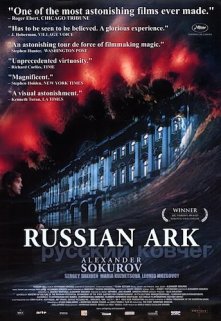 Russian Ark has received boundless praise from some quarters, and not just for being shot in a recording-smashing single take — to cite one review in particular, “anyone with an eye for beauty, a yearning for the past or a passion for pure cinema is going to be spellbound.”
Apparently some sort of artistic documentary on the history of Russia, told via a fantastical time-travelling-ish tour of a Russian museum, Russian Ark is certainly ‘artistic’. Unfortunately, it doesn’t teach you much and is at no point clear about what it’s covering. Perhaps a more detailed knowledge of Russian history would lend some meaning to the tableaus that are half-glimpsed as the Steadicam drifts by, though it spends as much time meandering down empty corridors in search of something to film as it does actually showing anything. When it does alight on something, the staging is occasionally spectacular, especially considering the self-imposed technical restrictions, but I gained little from this alone.
I freely admit this may say more about me than the film itself, but the most interesting parts were when the character whose point-of-view we inhabit and the French historian he encounters begin to discuss something that almost (almost) resembles a plot — how did they get there, how can the Frenchman speak Russian, can others see them, and so on. Sokurov merrily raises all these questions, in the process throwing a sci-fi dimension into his artistic-documentary-fantasy, but are there any answers offered? No, of course not — that’s not the point. Which does rather make you wonder why they’re vocalised at all…
Watching Russian Ark is a little like doing what the nominal lead characters do: wander aimlessly around an unfamiliar museum without any guide to what they see. Undoubtedly impressive, and worth seeing for the audacity of the single take, but I, unlike others, was far from spellbound.

(Originally posted on 30th January 2009.)
 Director Julian Jarrold seems to have found his cinematic niche in “coming a bit late”. His
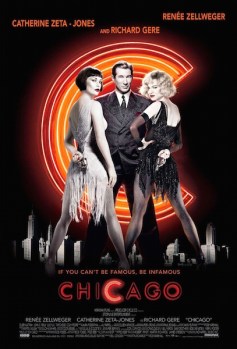 I remember being distinctly unimpressed when Chicago took the Best Picture Oscar in 2003, especially as the alternatives included
 You don’t get much more high-concept than “snakes on a plane”, a mission statement of a title if ever there was one. It certainly captured the imagination of online geekdom, who knew everything they wanted just from those four words and famously launched a viral marketing campaign for a film they’d not seen. Ultimately, it’s for that reason it will be remembered, because without the evocative title and the reaction it provoked this would be forgotten quicker than Samuel L. Jackson can utter his Oedipal expletive-laden catchphrase.
 Wallace and Gromit are phenomenally popular, as proven this Christmas Day when their latest adventure became the most-watched programme on British TV for three years (and that was just the overnights — ratings will rise when official figures are released in a couple of weeks). Not only that, but the TV premiere of
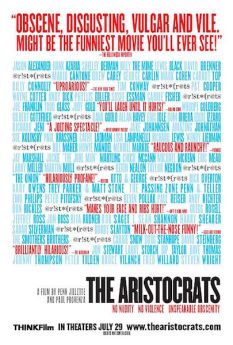 It’s not unusual for films showing on TV to be prefaced with content warnings about language, sex or violence, but I don’t think I’ve ever previously seen one that feels the need to place such a warning after every single ad break. But if there’s one film that needs that treatment — or, rather, one film they could actually show on TV that needs that treatment — it’s The Aristocrats.
 It had been my impression that this summer’s sequel,
  You’ve probably heard about Enchanted: it’s the one that starts out as a traditionally animated Disney film, before The Normal Girl Who Will Marry A Prince is thrown into a Magic Portal by The Evil Stepmother and finds herself in present-day New York. It’s one of those concepts so good it just makes you think, “why haven’t they thought of that before?”
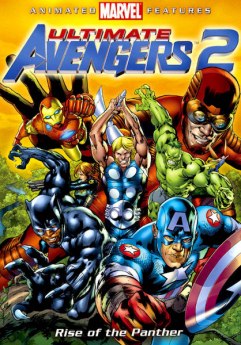 Some things in life baffle me. Form dictates I now list a couple of humorous examples, but we’ll skip that and get to the point: why would you make a direct-to-DVD movie that has a subtitle on the box but not on the film itself? I can understand why titles get tweaked on cinema-release posters and/or subsequent DVD releases — for marketing purposes, say; or clarity — but why, when your title is going direct to the DVD stage, do the titles not match? And why does the box add the subtitle rather than remove it for on-shelf simplicity? I have no answers — it baffles me, remember — but this is the sort of thing I sometimes muse about. The sort of thing that most other people don’t even notice, never mind care about.
 With the
  100Films.co.uk