Sarah Silverman: Jesus is Magic [TV edit] (2005)

2009 #45
Liam Lynch | 50 mins | TV | 15

Sarah Silverman: Jesus is MagicStand-up concert films are an awkward business (as are rock concert films), raising questions that are oft pondered on this blog about what constitutes a “film”. After all, if this were just shown on TV or released direct to DVD rather than released in cinemas, no one would be considering it a feature. Indeed, Channel 4’s TV showing cut the 70-minute (PAL) version down to just 50, much as they do for the TV showing of any other direct-to-DVD stand-up gig. But the fact remains that this was released in cinemas (albeit not many) as a feature film. Though if it’s worthy of review under this blog’s remit, and direct-to-DVD movies are worthy of review too, surely direct-to-DVD comedy gigs should be? It’s enough to make your head hurt — something Jesus is Magic might also do, if it hasn’t sent you to sleep.

All comedy is an acquired taste, of course, but what Silverman offers here must take some acquiring. I mostly like what I’ve seen of her work in the past — I’ll admit to having I’m F***ing Matt Damon circling round in my head for weeks after first hearing it — but the lack of laughs here is enough to put me off bothering with her in future. Most of her material seems to be an excuse to say extremely rude or controversial things, and in fact often relies on these things being so rude as to provoke laughter just for that. The audience seem happy to go along, but there’s nothing inherently funny about a rude sentence — it needs a point, be it satire or surrealism (which she tries, but fails at) or something else. I have no problem with edgy or ‘offensive’ comedy, but this isn’t it.

Occasionally Silverman hits on something worthwhile amongst all the dross. Some of her comments on 9/11, the Holocaust and a handful of other edgy (and, indeed, ‘edgy’) areas raised a smile, maybe even a chuckle, proof (were it needed) that difficult topics can be covered as comedy. Even then, however, it’s only one or two gags among a raft of blabbing on those topics. At other times there are lines that desperately want to be funny, and if she’d managed to build up a head of comedic steam they’d garner a laugh as they passed, but in isolation they’re just not enough.

On a related note, the whole thing is bizarrely slow-paced. I don’t know if that’s an American thing or if British comedians are exceptional in their rapid-fire delivery — or just “relatively rapid-fire delivery”, because even the slowest joketeller you’d encounter on something like Live at the Apollo can spit them out twice as fast as Silverman — but she seems to take forever to get anywhere. Anywhere at all, that is, never mind to an actual joke. Few, if any, British comedians would survive at this pace.

Directorially, it’s a simple concert film, perhaps an over-edited one. Lynch splashes out during a couple of musical numbers, producing the occasional background gags this way — the people Silverman passes during I Love You More, for example — though at other points he’s just as guilty of spending too long on something that’s either not funny or that becomes humourless through exhaustion, such as the black people she encounters at the end of the same song.

Based on comments in online reviews, it seems Channel 4 mostly cut documentary material for their abbreviated TV showing. Whether these insights add some weight to proceedings or just slow the film down further I don’t know, but I’m thankful I didn’t have to suffer through another 20 minutes of this. As noted at the start, this editing (just like other stand-up DVDs transferring to TV) lends credence to the idea that this isn’t really a film. Whether it is or not ultimately doesn’t matter, other than if you’ve paid to see a comedy it would be nice to hear some gags — why go to the cinema for a humour-free evening you could stay at home with Michael McIntyre’s Comedy Roadshow and actually have a laugh?

1 out of 5

Also see Eamonn McCusker’s review at DVD Times for a similar perspective. I’d especially echo his final paragraph: “Or the everyday conversations that you can hear up and down the country, which [would] leave Silverman blushing. Compared to all that, Silverman seems safe.” It’s great to be British.

Sarah Silverman: Jesus is Magic featured on my list of The Five Worst Films I Saw in 2009, which can be read in full here.

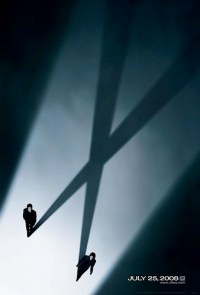
The X Files: I Want to Believe – Director’s Cut (2008)

2009 #44
Chris Carter | 104 mins | DVD | 15

Six years after the once-phenomenal TV series meandered to an inconclusive conclusion, Mulder and Scully were back at the cinema, a decade on from their previous between-seasons big screen outing. The big threat this time was not aliens, however; nor even something more Earthly supernatural; but rather, where they would find an audience? There are now kids old enough to watch this in a BBFC-endorsed fashion who weren’t even born when the series started, and that’s not to mention the misguided attempt to pitch this as a Summer blockbuster.

And if there’s one thing I Want to Believe isn’t it’s a Summer blockbuster, which its snowbound setting arguably gives away to even the most casual observer, while its lack of action sequences and focus on spooky goings-on and character relationships — not to mention that none of these characters are requisitely young enough to head up a typical Summer Movie — should have been the clue to studio execs. And, unsurprisingly, the release strategy failed, leaving audiences either disappointed or not even turning up. As with so many perceived flops these days, it seems to me, I Want to Believe didn’t actually flop: off a $30m budget it made $68m worldwide. Though as only $21m came from the US, where the consideration of box office stats is often highly self-centred, it’s easy to see why many believe it did. Such perception, coupled with poor reviews and that problem of finding an audience, may mean there’s not a third movie, which seems a shame with 2012 on the horizon — quite nice timing for a (last-ever, I should think) instalment.

But let’s return to the issue of how this film was perceived, because I think that’s key to why it was so poorly received. The problem here is that it’s an X Files movie; not because there’s anything wrong with another film for that series, and not because it’s a bad version of The X Files, but because that title carries certain expectations — not only from fans but, with greater relevance to any widespread success, from the general public. Witness the IMDb thread entitled “Where the F were the aliens”, for example. Were this just an entirely standalone supernatural-tinged thriller — and consequently released in a sensible non-Summer slot — it probably would’ve gone down a bit better.

As it actually stands, I Want to Believe is not the kind of X Files most people were expecting — i.e. Something To Do With Aliens, and it’s no spoiler to say that there’s not a single one to be seen — forgetting that the series was never just about extraterrestrials. The idea that I Want to Believe was a bit rubbish and thoroughly disappointing is consequently as much (if not more) the fault of those viewers and reviewers who expected a different kind of film and didn’t get it. That said, it’s a shame that I Want to Believe isn’t wholly successful as the kind of film it’s trying to be either: on the surface, a standalone low-key supernatural thriller — though it fails to explore or explain its fantastical and scientific ideas as fully as one would like, particularly during its lacklustre (anti-)climax — but one that also tackles issues of moving on, obsession and belief, and how they can impact on a relationship — though with all the weight you’d expect in the belated sequel to a sci-fi TV spin-off.

Mainly, however, it’s about belief. The examples of this are too numerous to mention, but a clear one is the subplot involving Scully’s fight to treat a terminally ill boy. The thread bears little relation to the main supernatural plot, which was another point of confusion for many viewers, but if you consider the film as a commentary on and examination of the various forms and merits of belief it begins to slot in a lot better. Perhaps this is another case of a filmmaker attempting something beyond what audiences were expecting to invest in terms of intelligence, although if one accepts it’s there and a significant part of the film it probably begins to pale as a relatively light and underdone exercise. Still, it’s hard to deny that belief is the film’s central theme, which pleasantly turns the title from a generic catchphrase from the series, as it initially appeared, to a none-more-appropriate moniker.

Perhaps distracted by his thematic intents, writer-director Carter rushes some plot points, though he may also be limited by budget constraints and the need to make a distinctly R-flavoured movie hit PG-13. While the Director’s Cut adds three-and-a-half minutes of material, which Duchovny asserts is mainly gore that was cut to avoid an R certificate in cinemas (full details of which can be found here), there’s still nothing that looks as if it would’ve been out of place on conservative US network television, and obviously no effort has been made to give the main plot some breathing space.

The same goes for the guest cast, most of whom are thoroughly underused. Billy Connelly makes a good show of it, but Amanda Peet’s FBI agent has much unfulfilled potential. Yet at other points Carter lets things spool out comfortably — too comfortably, some might argue. One of these places is the relationship scenes between the two leads. The amount of attention lavished on this might lend credence to a theory that the film is as much about a pair of ostensibly retired paranormal investigators as it is this particular case, and through that again a consideration of obsession and belief.

The large amount of time spent on Mulder and Scully’s relationship fortunately doesn’t turn the film into an effort solely for the benefit of ‘shippers’. There’s definite space here for a portrait of two people in a relationship who have tried to move on from their old life but just can’t, and at times I Want to Believe does achieve such lofty aims. Little nuggets of information — such as the fact they’re even in a relationship, or that they once had a child together — drop in almost from nowhere in a way that undoubtedly sounds just like dialogue to a knowledgeable fan, but to a more casual viewer works as a slow uncovering of these two characters. Unfortunately such quality is fitful, especially as the movie goes on, and while the nine-seasons-and-one-movie of backstory initially just add depth if you know about them, it’s some time before the sudden and underwhelming climax that it feels they’re dictating events a little too much. What was shaping up to be a workably standalone depiction of two characters almost becomes just a status update on Mulder and Scully.

And here lies the rub: at times, the Second X Files Movie gets too caught up in being just that. There’s nothing wrong with that per se, but it could do with remembering it’s a Movie and not just another X File — especially if it wants to find any new (or even lapsed) viewers. When Assistant Director Skinner turns up it’s the final nail in the coffin for any shot at independence. As a fan, it’s impossible to begrudge a brief but heroic last-minute appearance from Mulder and Scully’s long-time ally, but as an objective viewer, he’s just some bloke who turns up with no introduction just in time to play a major role in the climax. It’s a misstep that, along with an accumulation of others, seriously damages the film.

But does an X Files movie need to be independent? Should nine seasons (and one movie) of backstory be ignored? Well, yes and no. There’s nothing wrong with making a “where are they now?” fan-pleasing reunion, but that would belong on TV with the bulk of the thing being commemorated. In the cinema, six years distant and billed as a standalone tale (note that it’s not even The X Files 2: I Want to Believe, never mind The X Files 204: I Want to Believe), it ought to stand on its own two feet and work entirely as a self-contained piece of drama. That it fails in this is perhaps the most disappointing aspect of all for me: it makes it infinitely harder to defend this as a supernatural thriller that deserves to be judged entirely on its own terms, rather than with some established knowledge of what The X Files ‘is’, when the makers are relying on those self-same established notions to tell their story.

Never mind finding an allusive audience, this is the film’s real battle: when Carter gets too caught up in making The Second X Files Movie, shifting what’s working well as both The X Files and A Movie into straight-up An X Files Movie territory. It’s this failure to be independent — not to the point of ignoring the series’ backstory, I should clarify, but to a point where this film can be wholly appreciated without ever seeing The X Files — that ultimately holds I Want to Believe back from becoming a great horror/thriller/drama movie in its own right. It’s frustrating because so often Carter comes tantalisingly close to fulfilling such ambitions, and if he had I’d have no qualms about defending this movie as an underrated (though, it is), misunderstood (though, it is) and independent supernatural-flavoured drama. Sadly, however, I think I just want to believe it is.

3 out of 5

The X Files: I Want to Believe premieres on Sky Movies Premiere tonight at 9:45pm, then at various times throughout the week. It’s probably the theatrical cut, but who can say?

Flags of Our Fathers (2006)

2009 #39
Clint Eastwood | 126 mins | DVD | 15 / R

Flags of Our FathersIt’s been two years since I reviewed the second in Clint Eastwood’s 2006 double bill of World War II films; thanks to the machinations of my DVD rental site, it’s taken this long to see the first. In a somewhat innovative move, the pair examine both sides of the battle for Iwo Jima: Letters from Iwo Jima from the (losing) Japanese perspective, while Flags of Our Fathers shows the (victorious, obviously) American view. I found Letters to be a fair effort, if undeserving of some of the praise and nominations it garnered, but the consensus seems to have it that this first half isn’t as good.

Perhaps that’s because Flags is a different kind of war film. While it seems to have been promoted as the story of the battle for Iwo Jima, it’s more about the experience of three men, both on the island and upon their return to America — hailed as heroes and paraded around the country trying to raise money for the war effort, purely because they happened to be in a photograph raising a flag. While there are still plenty of battle sequences and the occasional bit of “who will survive?” suspense — not to mention an examination of such issues as honour, duty, responsibility and so forth — Eastwood is clearly aiming for something different here. Indeed, while those themes may be standard war movie fare, by placing them in slightly different contexts Eastwood finds new (or at least uncommon) perspectives on them. Perhaps this explains why Letters came off better: by comparison it’s a much more typical war movie, therefore more what was expected.

Many of Flags’ weak spots also arise from this approach however. It adopts a time-jumping structure, flitting between the battle itself and what happened after. It’s debatable how well that works: at times it’s fine, at others it needlessly complicates matters. The final stretch also gets a bit meta/hyper/intertextual, following the author of the book on which the film is based as he conducts research for the book… then rams it home when the three lead actors also appear as his brothers. (To be fair, the latter is in a single shot where their faces are almost hidden.) In the end, Flags offers neither of the usual clear-cut war movie endings (“we won!” or “we lost nobly!”), closing with no easy answers or conclusions to the issues it raises. This at least sticks to its realism, but won’t be to all tastes (with reservations, I liked it).

One side effect of such a different approach is that Eastwood’s two Iwo Jima films make good companion pieces. In no serious way do they present Part One and Part Two of a story, but instead two vastly different perspectives on the same events. The points of crossover between the two are neatly used, occurring naturally rather than forcing “you’ll understand this later”-style mysteries upon the viewer, but mainly they explore the way two very different cultures reacted to the same battle.

They do directly share something however, and that’s a debt to Saving Private Ryan in their depiction of combat. A beach-storming sequence naturally invites direct comparisons, with Flags unquestionably coming off worse due to a lack of focus. It’s still an effective sequence and it’s not a clone of Ryan, but the comparison is hard to avoid and Ryan’s opening is famous for a reason.

Despite the verisimilitude the Ryan-esque visual style now has, Eastwood nonetheless shies away from some of the reality. It seems he can’t bear to explain or show what happened to Iggy, for example, though in fairness the viewer should be glad he didn’t. (If you want, some of the details can be found on Wikipedia, but be warned that his fate was truly distressing.) Knowing the truth, one can only imagine the trauma and guilt felt by ‘Doc’ Bradley in the wake of the incident.

On a lesser level, one also imagines it must be difficult as a filmmaker deciding whether to include such details or not — on one hand, I’m glad we weren’t confronted with them on screen (certainly, to show a body would have been too much), but, while the details are horrific, knowing them adds an extra layer of emotion that is absent when kept a mystery. An externally-gained awareness of the reality of Iwo Jima adds a weight that is arguably missing from the film, but which improved it for me.

Flags of Our Fathers is an unusual war movie, probably not what many were expecting when told Eastwood was doing a War Film about the battle of Iwo Jima. But by being different it has a lot to say about the experience of war — both on an individual level and in a broader sense — that is rarely (if ever) expressed on film in quite this way.

4 out of 5

My thoughts on the second half of this pair can be read here.

Solaris (2002)

2009 #13
Steven Soderbergh | 94 mins | DVD | 12 / PG-13

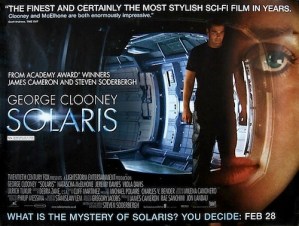
SolarisWhen Andrei Tarkovsky adapted Stanislaw Lem’s thoughtful science fiction novel in 1972, it took 165 minutes. When Steven Soderbergh did it 30 years later, it took just over 90. Lem hated them both, stating that he didn’t write about people’s “erotic problems in space”, but for those concerned with what the film is about rather than what it (perhaps) should have been about, it seems that an abbreviated running time is no barrier to loading any adaptation of Solaris with a weighty thoughtfulness.

Everyone knows Solaris is a sci-fi film — the title sounds that way, for one thing, and George Clooney in a space helmet on the cover certainly does the rest. It’s a shame that’s so well known, because if one came to this version cold it would take a good few minutes before there was any inkling it wasn’t just a drama. The underplaying of the scientific elements may have angered Lem, but Soderbergh uses them to create a backdrop to the emotional story he wants to tell — Solaris the sentient planet was the point of the novel, as far as Lem was concerned, whereas to Soderbergh it’s a device to explore relationships and grief.

In doing this the film merrily mixes genres: it looks very much like it’s Science Fiction, all futuristic TVs and space station settings, and there are a few scientific concepts touched on; but it’s also a Romance, occasionally; and a Drama about coping with death, amongst other things; and an ‘arthouse’ film about notions of God and memory and reality and humanity; and there’s a huge chunk of Mystery in what the hell is going on; and there are a couple of moments that wouldn’t be out of place in a Horror film… About the only conventions Soderbergh doesn’t bother with belong to Action-Adventure, which as the normal stomping ground of big-name sci-fi certainly makes for a change.

It’s likely this that explains its low rating on IMDb and the like. A slow pace and obtuse storytelling that leaves plenty of gaps for the audience to fill is not the experience implied by an advertising campaign showing a Space Movie starring Movie Star Heartthrob George Clooney. Obviously it doesn’t fulfill these expectations, and will likely have still been too slow and difficult for even more viewers. (As it makes for a slow hour-and-a-half, I wonder how they would feel if told there’s a version over an hour longer.) The question is, does it also deserve such a low rating from those ‘clever’ or accepting enough to ‘get’ it? That depends on your perspective. It’s either Deep and Meaningful, or a bit Pretentious and Pointless. In this respect it’s highly reminiscent of The Fountain (or, rather, The Fountain is reminiscent of Solaris) — an unusual sci-fi/romance angle, slow pace, and ambiguous to the last. As one character says, “there are no answers, only choices.”

Soderbergh’s direction, plus the performances of Clooney and Natasha McElhone on which the film relies, do have the power to hold you, but only if you’re prepared for — and, more importantly, open to — the sort of experience Solaris offers. Undoubtedly not for everyone.

4 out of 5

The Wraith of Cobble Hill (2005)

2009 #4a
Adam Parrish King | 15 mins | DVD

Animation isn’t a genre, it’s a medium, as Brad Bird would be so keen to tell you. As such, there’s no reason that any story shouldn’t be told in animated form… but sometimes, you have to wonder if it’s the best choice for the job.

The Wraith of Cobble HillThe Wraith of Cobble Hill is a perfect example for this debate as its modern, urban story seems to clash with the cartoonish style employed to bring it to the screen. There are no flights of fantasy, few implausible shots, nothing that couldn’t be achieved in live action even on a low budget. Ultimately the only reason for it being animated is, why shouldn’t it be? Personally, I’m not convinced it works; at the very least, it distracted me enough to consider it.

Otherwise, the story is a bit slow paced and perhaps uncertain of what it wants to say. By the end, ignoring the question of if the right form was chosen, I was unsure what it did say — what had actually happened, what had changed. Without giving away the ending, obviously rather a lot changes for one peripheral character, but for the central character it seems to have minimal impact. Well, he acquires a dog…

In short (sorry), The Wraith of Cobble Hill is nicely animated, though you might wonder why. More importantly, you might wonder what it was trying to say.

2 out of 5

This short is available on the Cinema16: American Short Films DVD.

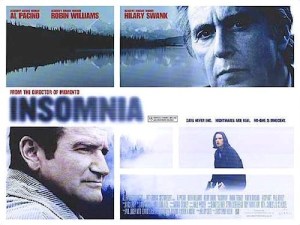
Insomnia (2002)

2009 #33
Christopher Nolan | 113 mins | DVD | 15 / R

This review contains minor spoilers.

The Dark KnightBetween becoming a Geek God with Batman Begins and The Dark Knight and coming to everyone’s attention with a stunning more-or-less-debut that managed to elbow itself right up into the IMDb Top 10 (that’d be Memento — obviously, it’s slipped since), Christopher Nolan directed this: an American remake of a Norwegian police thriller, and the only one of Nolan’s five major films not to be on that be-all of film quality, the IMDb Top 250 (the fifth is of course The Prestige, while Begins is the lowest at #106.) So is Insomnia a forgotten classic robbed of a spot, or just a footnote to the rest of Nolan’s superb career?

These days, there’s a murder mystery/thriller on the TV most weeks — heck, most days thanks to the abundance of repeat-laden digital channels — and so a film attempting one can’t just settle for the usual array of clues, suspects, interviews and twists. Insomnia looks like it’s heading down this road early on — an interview with the victim’s boyfriend in particular could easily slot into any episode of Midsomer Murders or what have you — but soon does what’s required of any film entering this territory these days: it provides more. Most obviously, despite the early plot and stylistic conventions, this is not a “whodunnit”: the killer’s identity is revealed around the halfway mark (assuming you haven’t already guessed it from the opening credits) and from then on the film gradually moves into murky moral territory, quickly leaving behind those early trappings for a set of more complex noir-ish moral conundrums.

Al Pacino’s detective, for example, is a man under pressure — not just from the case, nor the usual clichés of a messy divorce or alcoholism, but from a pending Internal Affairs investigation that may or may not be justified, and an incurable bout of insomnia brought on by the Alaskan summer’s lack of night. The pressure mounts, he makes bad decisions (which I won’t spoil here), and even if the use of these plot points was merely that they occurred it would have offered something above the norm. Hillary Seitz’s screenplay pushes it further however, digging far deeper than usual for the genre into debates about the morals of police work, what seems acceptable and what is acceptable, and perhaps even what should be acceptable. The ending may seem to offer a Hollywoodised “everything’s set right then” denouement, but while it’s true that the plot is neatly resolved the considerations raised are not so easily ignored.

Cast-wise Insomnia fares pretty well. When it was released, around the same time as the excellent One Hour Photo, everyone was amazed at Robin Williams turning in a pair of non-comedic performances. The quality of them both makes it seem only natural now however, leaving that amazement as a distant memory. His turn as novelist Walter Finch here may owe something to Kevin Spacey’s John Doe in Se7en — indeed, Nolan seems to explicitly reference that film in locations such as the corridor of Finch’s apartment building — but isn’t as lowly as an impersonation. Hilary Swank offers able support as wide-eyed young cop Ellie Burr, while Pacino does a good job portraying the confusion induced by lack of sleep, aided by some effective camerawork, editing and sound design.

In the end, the main damage done to Insomnia is inadvertently by its director: while it is undoubtedly above average for a murder mystery/thriller, its relative straightforwardness pales in comparison to the work Nolan’s done before and since. However, as with every Nolan film so far, I found my perceived enjoyment increase the more I’ve thought about it since. It may not be objectionable that Insomnia hasn’t made it onto that IMDb list then, but if it is a footnote to Nolan’s career it’s a significant and enjoyable one.

4 out of 5

BBC One are showing Insomnia tonight at 10:45pm.

In Bruges (2008)

2009 #22
Martin McDonagh | 102 mins | TV | 18 / R

This review contains minor spoilers.

In BrugesIn Bruges has gathered quite a bit of indie-level praise and acclaim, culminating in wider recognition at the Oscars and other awards ceremonies at the start of this year. For those like me, finally getting round to seeing it in the wake of all this, it comes with quite a burden of expectation on its shoulders. Can it possibly be the modern classic many make it out to be? I mean, it is set in, y’know, Bruges…

First and (perhaps) foremost, In Bruges is hilariously funny, much more so than most by-the-numbers ‘comedy’ films can manage. The easily-offended might disagree, and some jokes are a tad too obvious (Americans are fat! Fat people can’t climb tight stairs!), but it’s nice to genuinely laugh at a film rather than force the odd smirk so as to at least get something from an otherwise wasted 90 minutes. It’s also dark and occasionally tragic though, and in this respect it’s unsurprising that writer/director McDonagh started out as an acclaimed and award-winning playwright, as stage plays mix humour and darkness more frequently (and with wider extremes) than films ever dare to. His theatrical roots also go some way to explaining the amount and ferocity of the swearing (again, something plays are more prepared to indulge in), but so too the brilliance of the dialogue. That it takes a playwright to craft such a good film is perhaps an irony, but not a troubling one.

Good dialogue is wasted without a good cast however, and thankfully everyone here gives a fantastic performance. The standout is Colin Farrell as hitman Ray. He initially seems a confident, cocky, experienced young hitman, and therefore verges dangerously close to stereotype, but we soon realise he’s actually twitchy, nervous, insecure, and genuinely sorry for the sole act of violence he committed. It might look like a Black Comedy With Nasty Violence to some — certainly, there are reviews that suggest some viewers are incapable of seeing anything beyond that — but there’s a lot more depth in the characters than the surface would suggest. Brendan Gleeson and Ralph Fiennes give consummate supporting performances, like Farrell chipping away at the stereotyped facades to find the hidden facets that the script is kind enough to reveal.

The quality of McDonagh’s writing (and direction) doesn’t stop with character and dialogue. The story is thematically considered, with a variety of paintings and associated imagery to occupy those who might be interested. Events are beautifully tied together and, best of all, none of the early scenes feel oddly inserted or have that nagging sense that they’re merely an excuse for something to be there later — everything works first time, and then has a seamless payoff too. Some viewers have criticised the ending, but I suspect they’re largely more used to mainstream fare and viewers who have ever enjoyed an indie film won’t bat an eyelid. All in, it’s easy to see why the screenplay has become the film’s prime awards nominee and winner.

Nominations, wins and buzz weigh heavy, but In Bruges has shoulders broad enough to carry such expectation with ease. “There’s never been a classic movie made in Bruges,” one character truthfully espouses, “until now.” It seems she couldn’t’ve been more right.

5 out of 5

In Bruges placed 2nd on my list of The Ten Best Films I Saw For the First Time in 2009, which can be read in full here.

Watchmen (2009)

2009 #9
Zack Snyder | 162 mins | cinema | 18 / R

This review contains major spoilers.
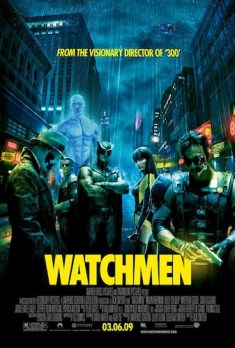
Watchmen didn’t flop. Let’s get that out of the way.

Did it do less business than expected? Yes. Were expectations unreasonably high? Unquestionably. After the barnstorming success of The Dark Knight I think some expected a repeat run, but they forgot that while TDK was dark, it still had clear heroes, clear villains, a massively popular franchise and — let’s be honest — a highly-publicised, highly-acclaimed final performance from a certain tragic young actor. Watchmen, by comparison, is densely plotted, morally ambiguous, a tad on the long side, with unknown characters, an unclear story (in the marketing at least) and no mass recognition. And it was rated R. All this considered, it did phenomenally well, and at the end of the day it’s WB’s fault for spending $150m on something that, realistically speaking, wasn’t going to make that back on opening weekend.

But this isn’t meant to be a rant about the box office. Now that the dust has settled somewhat from the initial flurry of reviews — which on the whole seemed to either hail it as an instant classic or an unrelenting mess (though some more reasonable ones found the middle ground) — and with the dubiously-featured UK DVD and Blu-ray releases just announced, it seems about time to add a few of my thoughts to the already-overflowing mix. In doing this I find it impossible to fully divorce myself from the fact that I’m a fan of the book, so can only really view this adaptation from that perspective; just as I think anyone who’s read the book can’t truly imagine quite how a non-reader will take this, whatever they may claim. The only people who can do that are people who haven’t read the book, and there have been plenty of those reviews around too.

But even as a fan, my opinions are not as predetermined as some might think. Watchmen is incredibly faithful to its source material (some notable tweaks and omissions aside), but while some have loved it for this, others have viewed it as weak or pointless. Perhaps some of the complaints about faithfulness stem from the fact that we’re actually unused to seeing faithful superhero adaptations — “adaptations” being the operative word. Across seven Batmans, five Supermans, four X-Mens, three Spider-Mans, two Hulks, and countless others, how many actually adapt a specific book? Most, if not all, develop their own story around the notion of the character(s), or take some degree of inspiration from various storylines, tailoring a new tale for the different medium (well, theoretically). In choosing to adapt the source rather than make a film starring the same characters, Watchmen places itself more in line with other literary adaptations than other superhero movies. Some would argue this context still renders it more of a Da Vinci Code than a Godfather, but it’s perhaps still appropriate to debate that rather than if it’s more a Hulk than a Dark Knight.

The consistent faithfulness is a bit of a mixed bag. For much of the film it’s a great story well re-told, and its climax actually manages to improve on the original’s to the extent that, if Alan Moore ever actually watched it (which he won’t), I’d like to think he’d be man enough to admit that this one change at least was an improvement. Similarly, in the novel I wasn’t convinced Rorschach’s final moments made sense — it seemed out of character. On screen, however, Jackie Earle Haley completely sells it, his final scream becoming one of the film’s most memorable moments. Other elements are retained with no thought, however: the intercutting of Dan and Laurie’s alley fight with Dr Manhattan’s press conference is an effective (if blunt) sequence in the novel, but on screen makes little sense — even though I know the story and know the events of both scenes, this choice left me struggling to follow events. Even worse, the sudden and unexplained presence of Ozymandias’ pet big cat is almost baffling to a viewer familiar with the source, and so I can only imagine how little sense Bubastis must make to a new viewer. Consequently, his demise has no emotional weight.

The final scene is a bit of a misstep as well. In the book it’s a perfect little coda, beautifully ambiguous and tied to several of the novel’s themes. On screen, Snyder overplays it, allowing it to drag on with pointless dialogue and leaving the point of the scene feeling forced — equally a fault of David Hayter and Alex Tse’s script, then. Part of the problem is that it’s lumbered with introducing a subplot and its characters for the sake of the payoff, both of which develop slowly and appropriately in the novel. The details of that particular subplot are not the only elements that are missed from the original: the novel contains a lot of details of street life in Manhattan, for example, which makes the city’s ultimate destruction more personal for the reader. Some of these scenes have been filmed and, knowing that an aptly-titled (for once) Director’s Cut is on the way, it’s at times hard not to view the theatrically-released Watchmen as an abridged version. While it is still more complex than some critics (both pro and fan) give it credit for, the missing nuances and subplots would strengthen the whole experience. We can but hope it’s these that the Director’s Cut will include, rather than just a collection of completist-pleasing trims.

It’s easy to complain about Watchmen — clearly — but, actually, I really enjoyed it. Snyder has arguably created a live-action version of the graphic novel rather than creating a film in its own right, but is that really a bad thing? It’s what many literary adaptations aspire to, the only difference here is there were already some pictures to directly transfer. Some will disagree, and if you do then this is a perfect argument for why Non-Fans should be in charge of film adaptions — Fans are too concerned with pleasing other Fans, in this case being rigorously faithful; Non-Fans often just want to make the best movie possible based on the source material, rather than making the best translation (or, perhaps, re-appropriation). Perhaps it’s too fine a line to walk; perhaps Snyder was too afraid to change anything; or perhaps it’s just a case of damned if you do (“it’s exactly the same, what’s the point?”) and damned if you don’t (“he changed too much, it’s not Watchmen!”).

In their faithfulness, Snyder, Hayter and Tse retain much of the story and character elements that made the original great. If the aim was to take the page and put it on screen, the screenplay is near flawless, embellishing some moments and even fixing others, while excising subplots so wisely I didn’t miss much. As stated, however, the definitive cut is surely the forthcoming one. As for Snyder’s direction, he mostly does a good job, recreating iconic panels — occasionally with too much reverence, true — but enlivening other sequences in his own way. In fact, for all the moans of reverence, some of the novel’s more filmic ‘cuts’ are actually abandoned (I’m thinking specifically of the ins & outs of flashbacks during the Comedian’s funeral). Photography wise, most of the film was far too dark, and I couldn’t help but wonder if it had been shot too much with DVD/Blu-ray in mind and suffered when projected. I suppose we’ll see later…

Snyder certainly left a clear directorial stamp on one element of the film: occasionally the action sequences smash into slowmo, sometimes to the point of freeze frame… exactly like they did for most of 300’s fights. Whereas there it looked kinda cool and felt like a stylistic tick unique to that film, here one can’t help but think time is being wasted that would be better spent on expanding the dense plot. And rather than being a stylstic quirk of 300, it now becomes one of Snyder’s; which means that, from the very first scene, “A Zack Snyder Film” is stamped all over this like a young boy with an abundance of name stickers. There’s nothing wrong with making it his own film, of course — I’m sure Gilliam’s or Greengrass’ versions would’ve slotted comfortably into their distinctive oeuvres — but it would be nice if it weren’t quite so intrusive. On the other hand, could it be that the expectation of this makes it seem worse than it is, and if any other director had pulled the same tricks it wouldn’t seem as apparent?

Similarly, the violence is incredibly brutal, gory and graphic — but that’s the point. Though they live in a heavily stylised world, these are ‘real’ superheroes, and real violence isn’t pretty. The level of brutality is appropriate to the theme but never lingered on more than is reasonable and rarely over-done. Those who aligned it with ‘torture porn’ flicks like Hostel in their criticism of the film were missing the point.

The film’s soundtrack has also come in for criticism in some quarters, where certain tracks have been accused of being entirely out of place and others have been suggested as replacements. However, the tracks lambasted and others put forth suggest that these particular critics (usually amongst fandom) have a rather narrow taste in music, with the suggestions often too obscure to suit. In fact, Watchmen’s soundtrack provides a nice variety of contemporary songs, spanning styles in order to quickly define an era rather than to evoke what a specific genre was doing at the time — so a 1970s riot is accompanied by disco, for example, rather than a niche rock track. It makes absolute sense from a filmmaking standpoint and, for those of us with broader tastes, is perfectly pleasant. Elsewhere, the choice of music references both the original text — Rorschach and Nite Owl’s arrival in Antarctica is set to Jimi Hendrix’s All Along the Watchtower (while the novel quotes Bob Dylan, here its use as an action cue means Hendrix fits better) — and other films — the Vietnam sequence is knowingly set to Ride of the Valkyries. There are some missteps — the use of Leonard Cohen’s Hallelujah over the sex scene is presumably meant to create a moment of euphoric triumph, but is instead laughably cheesy — but, most of the time, it’s a success.

The other major addition from the graphic novel is, of course, a cast. As already noted, Jackie Earle Haley is incredible in the default-lead role of Rorschach. He may’ve nicked Christian Bale’s Batman voice, but it’s much more suited here. Patrick Wilson’s Dan Dreiberg/Nite Owl II is also great, showing the benefit of hiring proper actors rather than stars. Jeffrey Dean Morgan and Matthew Goode hold their own in potentially challenging roles. Some didn’t — and don’t — think Goode was right for Adrian Veidt, but I preferred his portrayal so much that the more butch-looking Ozymandias of the novel now seems wrong to me. The female leads suffer more. Malin Akerman is about passable, but Carla Gugino is quite possibly miscast. It’s a tricky part to get right, having to be both young and sexy in the flashbacks but an old woman in the story’s present day, and so it may be more the fault of some poor old-age makeup than Gugino’s.

That’s not to mention Billy Crudup, who has the double challenge of playing a man who has become God-like, and of giving this performance underneath a big pile of CGI. And with a CG penis on show too. Personally I didn’t find the CG manhood as distracting as many others seem to have, and Crudup’s actual performance is captivating — there’s a thin line between aloof otherworldliness and reading dialogue aloud in a monotone, but Crudup managed to fall on the right side of it.

Surprisingly, I’ve made it through almost 2,000 words without mentioning the title sequence. There’s no need to describe it any more, it is simply brilliant. More dioramas were shot than made it into the final cut, so I can’t help but hope they’ll be reinstated in later versions.

In summary (if this ramble around Watchmen can be summarised), Zack Snyder’s Watchmen Film is not “the big screen equivalent of Alan Moore’s Watchmen” — that would be a movie, likely very different to the graphic novel, that examined and deconstructed representations of superheroes in cinema and television. Instead, Zack Snyder’s Watchmen Film is “Alan Moore’s Watchmen on the big screen”, a blisteringly faithful adaptation of the source. Crucially, however, it is not (always) blindly faithful — the ending being a case in point — but some will still ponder its relevance. Judged as an artistic work in its own right, then, it perhaps comes up lacking. Judged in comparison to other faithful adaptations of great literature, however, it’s arguably as good as many others. At the very least, it’s exposed a wider audience to the characters, themes and debates of the original, and, whether they like it or not, that can only be a good thing.

In closing, I’m reminded of a comment made by Danny Boyle when discussing his favourite film ever made: “it’s imperfect; which every film should be.”

5 out of 5

My review of Snyder’s preferred Director’s Cut can now be read here.

That version placed 3rd on my list of The Ten Best Films I Saw For the First Time in 2009, which can be read in full here.

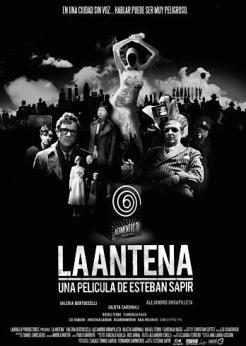
La Antena (2007)

aka The Aerial

2009 #10
Esteban Sapir | 95 mins | TV | PG

La AntenaLa Antena is a Silent Film. And by that I mean there is no dialogue, though there is music, and it’s in black and white with low-budget (looking, at least) effects, though it was made in the 21st Century — but it is entirely in the style of those films made in the era before sound was technically possible. It could sit comfortably alongside ‘real’ silent films to the extent that the uninitiated might reasonably be fooled into believing it was one.
In some respects this is neither here nor there, though it will undoubtedly put some viewers off. For those with a more open mind or who are fans of silent movies, however, it’s a joy. This is mainly because it’s incredibly imaginative, especially with its visuals, which are often pleasantly barmy. The setting is a dystopian future (or alternate reality) where people can no longer speak (thus justifying the silent film styling), and this world is wonderfully realised without a hint of realism or awkward attempts to explain why things are the way they are. These days it’s a rare filmmaker who doesn’t feel the need to explain everything and make it fit in relation to our world, but Sapir is one of the few who trusts us to accept what’s going on — much as the great silent film directors did.

Sadly it isn’t flawless. Some elements of the plot get forgotten as things roll on (what happened to Mr TV’s son, for example?), perhaps a victim of the 50 minutes of cuts they chose to make for pace. Most of the symbolism is also fairly heavy handed, though one could argue that’s in keeping with the style, and at least means it’s all nicely noticeable. Even then a few bits are unavoidably leaden — particularly, the use of the swastika and Star of David felt uncomfortably irreverent to me.

Ratings-wise, La Antena is borderline — the sort of film I give four stars to now but then beats most five-star films to a high place on my year-end top ten (like The Prestige or Hellboy II or the five others that have done it). In which case it seems only fair to run the risk of awarding it full marks.

5 out of 5

Oscar-winning modern silent movie The Artist is on BBC Two tonight, Saturday 24th January 2015, at 10pm, and is reviewed here.

Commentary! The Musical (2008)

2009 26a
Jed Whedon & Joss Whedon | 42 mins | DVD

Commentary! The MusicalCommentary! The Musical falls somewhere between DVD extra, TV episode and short film. Whatever it should be classed as, it’s utter genius.

You’ve surely heard of Dr. Horrible’s Sing-Along Blog, the project Joss Whedon created during the infamous US Writers’ Strike. (That in itself you could debate the status of. Three-part miniseries? Short film? Feature film? (At 42 minutes it’s over the Academy’s boundary.) And endlessly on.) Well, on the Dr. Horrible DVD can be found this — an alternate audio track, on which the cast and crew discuss the making of the feature… except it’s all scripted and the majority is sung. Not your traditional audio commentary then.

As an audio commentary, it does little to illuminate the production of Dr Horrible — though, surprisingly, it does do some — but instead focuses its energy on spoofing commentary tracks, DVD extras, and the American film and TV industry in general. Specific targets include the Writers’ Strike and its lack of success, rivalry between lead actors, the importance of ensemble cast members, Asians in US TV and film, the dissection of art by DVD extras, and many more. It’s almost all incredibly funny — inevitably there are a few duff gags and dull songs, although they are uncommonly rare — and it moves at a rate of knots, meaning it rewards multiple listens to pick up every gag. Having already re-listened to a couple of tracks, I can attest to noticing funny lines that I was too busy laughing through before. In a spot of technical impressiveness, the commentary is often surprisingly scene-specific, sometimes even shot-specific. When you consider the effort that must’ve been involved to script and time both songs and spoken dialogue to make this happen, it’s even more impressive.

It’s this careful scripting and the sure-handed attentiveness to theme that marks Commentary! The Musical out as a fictional work in its own right, rather than ‘merely’ a DVD extra, in much the same way that Mystery Science Theater 3000 or the short-lived (and easily forgotten) Rob Brydon series Director’s Commentary are original works. With its well-targeted thematically-appropriate comedy and plentiful gags, it’s pure delight for fans of DVDs, or anyone else with a mind open to the concept.

5 out of 5