aka Evangerion shin gekijôban: Ha / Evangelion New Theatrical Edition: Break
2011 #65
Hideaki Anno, Masayuki & Kazuya Tsurumaki | 112 mins | Blu-ray | 15
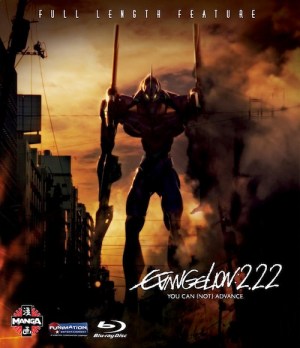 Just over a year since the preceding film made it to UK DVD and Blu-ray, and two years since this was theatrically released in Japan, the second part of creator Hideaki Anno’s Rebuild of Evangelion tetralogy reaches British DVD/BD today. Continuing to re-tell the story originally visualised in the exceptional, and exceptionally popular, TV series Neon Genesis Evangelion, You Can (Not) Advance throws in more changes to the original tale than its predecessor, including at least one significant new character.
This is very clearly a second part. It hits the ground running, with no thought for those not up to speed on the characters and events so far. Indeed, there’s perhaps little regard for those who may be familiar with it anyway: certain significant events rattle past, the storyline spewing mysteries via dialogue we barely understand, so dense is it with references and allusions. In some respects that’s realistic, of course — why would characters explain, for instance, the Vatican Treaty to each other when they all know about it — but it might leave the viewer struggling to keep up. It’s not all like that, but there’s plenty of it; and when there’s few answers forthcoming within the film itself, the mysterious references feel even more opaque.
 For my money, the first 40 minutes or so of the film are (by and large) the best bits. It opens with a barnstorming action sequence, a great scene for newbies and fans alike as we’re introduced to Eva pilot Mari, who didn’t appear in the TV series. That she then disappears for most of the film, only to make a thoroughly mysterious return later, is one of those explanation-lacking flaws. I’m sure it won’t look so bad once the next two films provide us with answers. Well, I hope not.
After that the film seems to trade one-for-one on character scenes and action sequences: ostensible lead character Shinji and his father have what amounts to a heart-to-heart, for them, in a vast cemetery; Eva pilot Asuka is introduced in another action sequence — different to her intro in the TV series, and I’d say not as memorable, though it’s still visually exciting. This is followed by some of the film’s best sequences: an “everyday morning in Tokyo III” montage is a beautifully realised piece of animation, depicting the commute to work/school under the backdrop of a megacity that can sink and rise as needed, moving into the school lives of our band of awkward misfit ‘heroes’. It’s not readily describable on the page, which is arguably the definition of properly filmic entertainment.
 Then the gang take a trip to a scientific installation which is trying to preserve the oceans and their wildlife. It feels like animation shouldn’t be as effective for such a sequence as, say, the footage in a David Attenborough documentary, but nonetheless it feels extraordinary, in its own way. It also marks itself out with the interaction of the characters on a fun day out rather than their usual high-pressure monster-fighting world. And then it’s back to that world for another impressive three-on-one Angel attack.
I’m loath to say it’s after this that Evangelion 2.22 begins to slip off the rails, because flicking back through it after (the distinct advantage of watching something on DVD rather than in a cinema!) I struggled to find any point where I felt it lost its way or dragged with an interminable or pointless sequence. That said, this is where it begins to get more complicated. Much is made of the international situation, something I don’t recall from the TV series. It’s a neat addition — the world bickering over who has the Evas and how many — but it takes some following at times and the relevance isn’t always clear.
 But it’s all building somewhere. For one, there’s another of the film’s best sequences — certainly, its most shocking, which readily earns the 15 certificate. I don’t want to spoil it for anyone yet to see the film, because it’s one of the plot points that differs from the TV series, but it involves the death of a main character in a brutal, deranged way. I say “death” — they pop up in the third film trailer that runs after the end credits, so there’s more to this yet…
Other than that, it sometimes feels like the story is meandering through thematic points that don’t engage as well as the character and action ones earlier in the film. Again, flicking back through, I couldn’t spot what I felt had slowed it, so maybe it functions better on a second viewing, knowing what ending it’s headed towards — at least one apparently minor subplot is, in its own way, vital to the climax, and the climax is certainly vital: unlike the first film’s ending, which was suitably climactic but clearly with story left to tell, this is a major turning point, a proper cliffhanger. Indeed, after a long stretch of confusion, it’s something of a gut-punch to reach such a dramatic point. I loved it, even if I felt I was missing some of the significance of the five minutes that led up to it.
 And then, after the end credits, there’s a brief scene that throws another spanner in the works! Double-cliffhanger-tastic… one might say…
Oh, and we get an explanation for why Shinji’s still using a tape player in the near-future (which, you may remember, was a (minor) complaint I had about the last film).
The second new Evangelion film isn’t as straight-up enjoyable as the first. It starts incredibly well, but then it feels like its getting too bogged down in the politics of a world that hasn’t been properly established for us and in the intricacies of some thematic considerations — the latter is especially worrying as it was this that made the ending of the TV series so unsatisfactory, which in turn led to a pair of movies that, frankly, didn’t do that much better. But the ending did cause me to rethink my position a little, and perhaps a second viewing would find the whole film a better structured and more understandable experience.
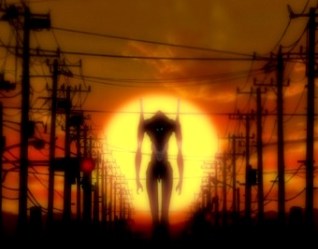 In short, if you’ve always liked Evangelion then you won’t be waiting for me to tell you this is a must-see reimagining; if You Are (Not) Alone was your first experience and you enjoyed it, this is an essential continuation of the story — but be prepared that it’s not as simplistically entertaining. I didn’t enjoy it as much on this first viewing, but it may in retrospect pan out as the better of the two.
Evangelion 2.22 is out on DVD and Blu-ray today.

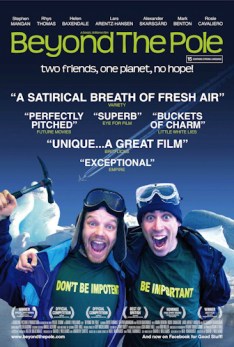 Adapted from a cult Radio 4 series, Beyond the Pole is a British mockumentary about “the first carbon neutral, vegetarian and organic expedition ever to attempt the North Pole”, starring Stephen Mangan Off Green Wing and other recognisable faces.
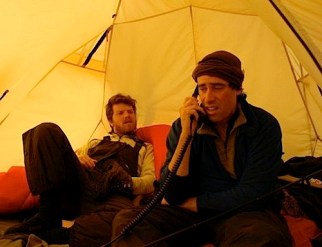 It’s also impressively realised. Its apparent low budget led me to assume we’d, a) see very little of the actual trip, and b) what we did see would be all inside-a-tent and green-screened. But no, it was really shot on floating sea ice off the coast of Greenland, and it makes for a highly effective polar landscape. Good work, filmmakers.
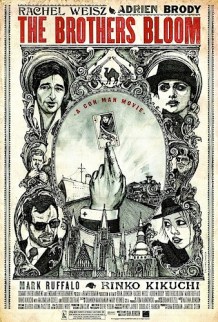 “Crikey, time flies!” I thought when I compiled this listing and saw that The Brothers Bloom was released in 2008. Somehow it felt like it was only last year, not three (or, if at the start of 2008, closer to four) years ago.
 but then the job of a trailer is to sell you a film, so if the end result doesn’t match it 100% is that a failing? How are you meant to summarise the entire tone of a film in a two-minute spoiler-free sales burst anyway? That dilemma is emphasised in this case because it’s the opening that feels least like the trailer. I mean, the pre-titles is kinda quirky-fun, but then it gets a little serious and slow, and later — perhaps half-an-hour or three-quarters of an hour in — you get to all the stuff the trailer was selling. And then the last act is back to something more unusually — or, if we’re to be unkind, unevenly — paced and toned. I can imagine the marketing meetings for this were a struggle…
 Perhaps the problem for others was that the ending doesn’t quite spell everything out. I’m certain every question you might have is answered, more or less, but it doesn’t lead you by the hand back over the film pointing everything out, as many twist-ending-ed films do. Part of me appreciates this assumption of intelligence; part of me would like it all handily explained so I don’t sit here wondering it for myself. I don’t feel completely lump-headed not wanting to do that — there’s no Deeper Meaning or Philosophical Insight gained from sorting this out, I don’t believe; just an understanding of who was being conned and when, and who knew what and why.
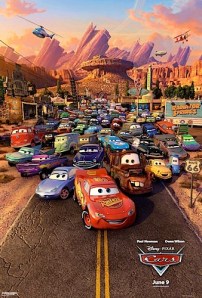 Since the creation of the Oscar for Best Animated Feature, only two Pixar features have failed to win:
  how the building of the interstate killed off so many small towns is both historically accurate (more or less) and emotional — but I imagine it also explains why the film can feel so long.
 having them talk to each other and giving them personalities, and it doesn’t need to make sense because his age isn’t even close to double digits and he’s just playing. But does that make it a viable idea for a film?
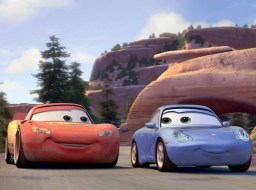 Cars is undoubtedly a below-par Pixar movie. It’s not a bad film — it has funny bits, exciting bits, a good moral message, some nice cameos and references and that kind of thing — but it doesn’t stand comparison to even a regular Pixar outing, never mind the best of their output. But hey, if you can produce 10 features that manage a 90%+ score on
 David Mitchell and Robert Webb move from the small screen to the big one in this comedy from the writers of their sitcom
  while Webb is adept at dancing sillily and, increasingly, hosting / voice-overing quickly-made cheap rubbish for various channels. These are all skills in their own way, but they don’t necessarily demonstrate brilliant acting. But, hey, they’re fine here.
 With box office and critical acclaim sliding, Disney abandoned traditional 2D animation for their significant films in the early ’00s, switching to the computer-animated 3D that was doing so well for Pixar and Dreamworks. I don’t know if it helped the box office any, but it didn’t help with critics — it wasn’t the medium that was at fault, it was the storytelling. Notoriously, as soon as Pixar’s John Lasseter was put in creative control of the whole of Disney he instituted a return to 2D animation. The Princess and the Frog was the much-heralded first film after this change.
 there are just too many stacked up back to back for my taste. The voodoo material seems like it might be a bit on the scary side for kids, though maybe that’s just because too many children’s films are sanitised these days — I agree with the regular argument that it was better when films and TV aimed at kids included a bit of a scare or sadness, rather than more modern entertainment’s attempts to keep them wrapped in cotton wool for too long. The death of a character in the climax also sits in the same vein.
 where the musical numbers fit effortlessly into the flow of the story rather than stopping the film for a showpiece. This is also true of the very best entries in the canon —
  A faded action movie star (Burt Reynolds) thinks he’s been signed up to play King Lear with the RSC… but when he arrives in England, he finds it’s just a small village amateur dramatics group. Hilarity, and the odd heart-warming message, ensue.
 Imelda Staunton and Derek Jacobi, all ceaselessly watchable, plus a supporting cast of faces you’ll likely recognise from British telly.
 Probably the best bit is the series of films Reynolds’ character is known for: Ultimate Finality 4 plays as a nice, subtly-used background gag.
 There doesn’t seem to be much love in the world for Easy Virtue, a witty adaptation of Noel Coward’s play (previously filmed
 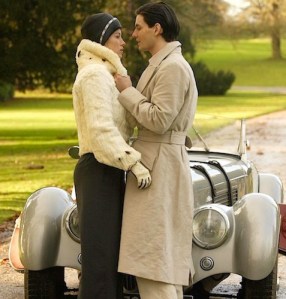 possibly in the soundtrack CD’s liner notes — that the following was Elliott’s idea.) Standards from the era are present and correct, but Cole Porter-styled reinterpretations of modern songs like Car Wash and Sex Bomb raise a smile whenever they turn up unexpectedly. It’s fabulously cheeky.
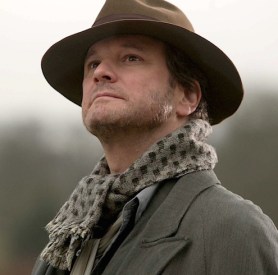 It’s still not a big part, nor a showy one, but those little closing tweaks left him standing out for me.
 Law Abiding Citizen is a revenge movie with a (slight) difference: wronged man Gerard Butler isn’t just going after the two criminals who invaded his home and murdered his wife and daughter — he’s going after the legal system that let one of the men walk free.
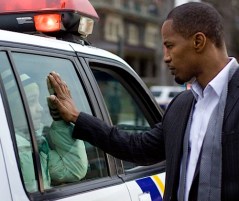 He attends the execution of the aforementioned criminal, but something goes wrong — instead of going to sleep with a lethal injection, the attacker suffers an agonising and horrific death. Someone must have swapped the chemicals. The prosecutors’ thoughts leap to the other criminal, but I’m sure we’ve all guessed who’s really behind this. And so Butler’s sprawling revenge mission begins…
 On the issue of who the film thinks is good and who it thinks is bad,
  It is a little far-fetched, granted, but it’s not so outside the rules the film sets up for itself that I find it unacceptable.
 As an action-thriller that actually has something to think about wrapped up in it, I considered being a bit lenient in my score (much as I was to
  Michael Caine killing hoodies. How great does that sound? As a film premise, that’s awesome. If it doesn’t get you excited about seeing this movie, then what kind of film fan are you, eh?
 Which in some ways is quite a chilling way to feel. I’ll be buying the Daily Mail and watching Sky News next.
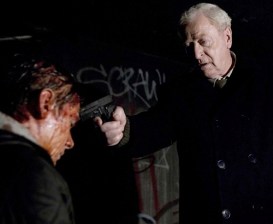 Whatever you may think of the revenge thriller it turns into, I think it’s hard to deny these early scenes have a realism and power. It is, of course, to the credit of Caine that he performs all this flawlessly. Oh yes, he’s (to quote another review) “the king of cool” when blowing away the scum that surround him, but before that he’s an affecting old gent, abandoned by the world.
 The counter to that would be that a murder spree may be viscerally satisfying but isn’t a real-world solution, so this is just as useless at relevancy as Death Wish.
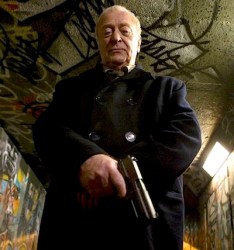 Some will think it tackles these, others that it’s just a facile revenge movie; some will think it’s cool, others despicable; some will think it plausible, others anything but. Or maybe, rather like me, you’ll think it’s all of those things, however mutually exclusive they may seem.
 100Films.co.uk