
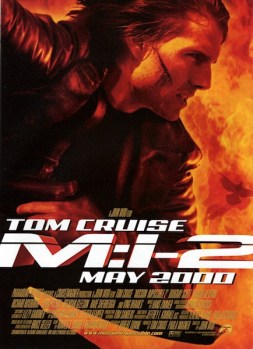
Also Known As: M:i-2

Country: USA & Germany
Language: English
Runtime: 123 minutes
BBFC: 15
MPAA: PG-13
Original Release: 24th May 2000 (USA)
UK Release: 7th July 2000
First Seen: cinema, July 2000
Stars
Tom Cruise (Top Gun, Jack Reacher)
Dougray Scott (Ever After: A Cinderella Story, Enigma)
Thandie Newton (Besieged, Crash)
Ving Rhames (Pulp Fiction, Dawn of the Dead)
Director
John Woo (Hard Boiled, Face/Off)
Screenwriter
Robert Towne (yes, the author of The Most Perfect Screenplay Ever™, Chinatown)
Story by
Ronald D. Moore (Star Trek: First Contact, Battlestar Galactica)
Brannon Braga (Star Trek: First Contact, Star Trek: Enterprise)
Based on
Mission: Impossible, a TV series created by Bruce Geller.
The Story
When rogue IMF agent Sean Ambrose steals every sample of Bellerophon, the only cure to deadly man-made virus Chimera, his former colleague Ethan Hunt is assigned to get it back. His team includes Nyah Nordoff-Hall, Ambrose’s former lover, who Hunt must send undercover in the villain’s operation. Ambrose plans to blackmail Biocyte, the company behind Chimera, and potentially unleash the virus on the world — unless Hunt & co can destroy it first.
Our Heroes
Daredevil IMF agent Ethan Hunt is back, this time with floppy hair! Basically a one-man team, the film nonetheless nods to Mission: Impossible’s original team-based format by having him recruit thief Nyah Nordoff-Hall and his computer expert chum from the first film, Luther Stickell. There’s also pilot Billy Baird, but I’d completely forgotten about him until I looked up a plot summary.
Our Villain
A former IMF agent gone bad, Sean Ambrose therefore has access to some of the same skills and tech as Hunt, like those (basically magic) masks. Not so fond of dangling from ventilation shafts, though.
Best Supporting Character
For some reason Richard Roxburgh has always stuck in my mind as Ambrose’s South African henchman, Stamp. It was the start of a very successful few years for Roxburgh, in which he had leading roles in high-profile movies like Moulin Rouge, The League of Extraordinary Gentlemen, and Van Helsing, playing Dracula in the latter, and was also Sherlock Holmes in a major BBC adaptation of The Hound of the Baskervilles. I guess the lack of critical success that greeted most of those is why he’s somewhat fallen off the radar since.
Memorable Quote
“Mr. Hunt, this isn’t mission difficult, it’s mission impossible. ‘Difficult’ should be a walk in the park for you.” — Swanbeck
Memorable Scene
At the sale of the cure, Ambrose’s henchman, Stamp, captures Hunt and drags him before his boss. As Ambrose gloats, Hunt can only mumble in protest because Stamp broke his jaw. With great glee, Ambrose unloads his gun into Hunt… and only then spots his little finger, which is missing its tip — just like Ambrose did to punish Stamp earlier. He approaches Hunt and pulls his face off to reveal the real Stamp, his mouth taped shut. Meanwhile, ‘Stamp’ is running off with the cure, and as the Mission: Impossible theme surges on to the soundtrack he whips his mask off to reveal (of course) Hunt. #owned.
Memorable Music
The rock version of the main theme, composed by Hans Zimmer and also turned into a song (a song! with lyrics!) by Limp Bizkit, was ever so cool at the time, at least to my teenage ears (I loved the entire soundtrack, actually). It all sounds terribly dated and turn-of-the-millennium now, but hey, that’s music and the ravages of time for you.
Technical Wizardry
For the much-trailed close-up shot where Ambrose nearly shoves a knife in Hunt’s eye, Tom Cruise — in a typical daredevil move — insisted a real knife be used and that it stopped just a quarter-inch from his eyeball. To achieve it with some degree of safety, that knife was attached to a cable that was carefully measured to ensure it wouldn’t, you know, half-blind a major movie star.
Letting the Side Down
“All of it!” Oh, hush, you.
Making of
John Woo’s final cut was 3½ hours long. The studio balked at this (understandably!) and ordered a final length of no more than 2 hours. According to IMDb’s trivia, “this could explain why there are so many plot holes and continuity errors in the theatrical cut.” I’ve never noticed those, personally, but now I’d be fascinated to see that longer version. Considering it’s 16 years later and the film isn’t well liked, I guess we’ll never get the chance.
Previously on…
Part of the James Bond-provoked spy-fi craze of the ’60s, the original Mission: Impossible TV series ran for seven seasons, was revived for two more at the end of the the ’80s, and then relaunched as a Tom Cruise film franchise in ’96. (That film narrowly missed out on a place here.)
Next time…
To date, three more sequels, with a sixth (at least) in development. The third also missed out on inclusion here, while the fourth and fifth are part of 100 Films.
Awards
2 Razzie nominations (Worst Supporting Actress (Thandie Newton), Worst Remake or Sequel)
2 MTV Movie Awards (Male Performance (Tom Cruise), Action Sequence (the motorcycle chase))
2 Teen Choice Awards nominations (including Wipeout Scene of the Summer)
[Thandie Newton was also nominated for Female Newcomer at the Blockbuster Entertainment Awards, British Actress at the Empire Awards, and Supporting Actress at the Image Awards. Take that, Razzie!]
What the Critics Said
“The first Mission: Impossible (1996) had a plot no one understood. Mission: Impossible 2 has a plot you don’t need to understand. It’s been cobbled together by the expert Hollywood script doctor Robert Towne out of elements of other movies, notably Hitchcock’s Notorious (1946) from which he takes the idea that the hero first falls in love with the heroine, then heartlessly assigns her to resume an old affair with an ex-lover in order to spy on his devious plans. […] If the first movie was entertaining as sound, fury and movement, this one is more evolved, more confident, more sure-footed in the way it marries minimal character development to seamless action.” — Roger Ebert, Chicago Sun-Times
 Score:
 57%
57%What the Public Say
“compared to the wildly complicated and almost infuriatingly labyrinthine plot of DePalma’s Mission: Impossible it seems like nothing is happening in M:I-2, but the plot here is actually pretty top-notch. […] what I once considered emotionally unsatisfying and intellectually sub-par now seems kind of fascinating. I still tend to not like plots that revolve around a man-made disease as a MacGuffin — I have no idea why, but they always seem lazy to me — but the Cruise/Newton/Scott love triangle holds some very honest beats […] Scott plays a very interesting, unique kind of villain, one I can’t entirely explain. But I think he succeeds in humanizing somebody who is written to be despicable. Scott’s tearful intensity when he learns of Thandie’s betrayal is almost sympathetic.” — Marcus Gorman, 10 Years Ago: Films in Retrospective

How M:I-2 Makes More Sense If You Consider It In a Different Context
“Fully asserting the series reboot mantra, M:I-2 eschews the original’s ethos in favour of […] traditional, near self-parodic Woo bombast (not enough for some fans, but there’s set pieces here that are among his very best). It’s often dopey, but then, to be fair, so are a lot of Hong Kong action films that don’t tend to get flak for that attribute, including Woo’s own action masterpieces made there. Fifteen years on and three more sequels later, it’s curious to observe how Woo’s film is even less like a traditional Hollywood action blockbuster than De Palma’s.” — Josh Slater-Williams, Vague Visages (the full piece has more analysis in this vein)
M:i-2, as we used to call it, is pretty much everyone’s least-favourite Mission movie, a place only cemented by the two excellent instalments that have been released during this blog’s lifetime. To be honest, I’ve never really been sure why. It’s very much a John Woo movie, all overblown action and melodramatic stakes, and I’d be tempted to say that turns people off were it not for the love Face/Off receives. Personally I like his style, and I always thought it neat that the Mission series aimed to avoid having a “house style” by hiring distinctive directors for each instalment (a plan that went out the window almost as soon as it began thanks to tapping the bland J.J. Abrams for the third one, but hey-ho). For my money, M:I-2 has a strong storyline (as action-thrillers go), a threatening villain (particularly with his IMF-recruited ex-girlfriend undercover in his operation), and entertaining action sequences. For its genre, what more do you want?

#63 will be about… truth, beauty, freedom, love.



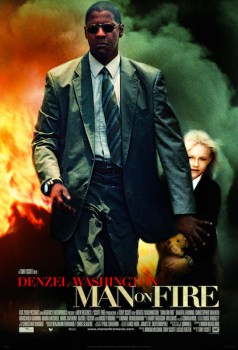

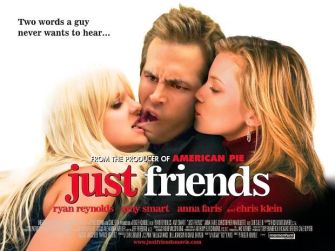 I was aware of the existence of Just Friends in the way you’re aware of any movie with name actors that came out during the period in which you were cognisant of films that were being released — that is to say, I knew it was a film and it was a comedy, and I had paid it no heed beyond that. Until a couple of months back, when
  For all kinds of reasons, Just Friends spends a long time feeling like a morally bankrupt movie. It’s unclear if it’s praising or condemning Chris’ frivolous lifestyle, if he needs saving by coming home, or if he deserves revenge on the people who mistreated him. We know what the standard Hollywood perspective on these things is, so kudos to some degree for dodging it (at least for a while), but it doesn’t commit to the other direction either. What the story really amounts to is wish fulfilment on an epic scale. Its message is essentially: you can go back to your past and make it better. Maybe I’m just a cynic, but that’s not something I believe.
 One lesson I took from watching Just Friends (as if I didn’t know this already) was that just because a bunch of people defend something they like in a comments thread on the internet, it doesn’t mean you’ll like that thing too, even if that comments thread is on the A.V. Club. Nonetheless, while Just Friends is not any kind of “must see” film, as a 90-minute diversion — with, at this temporal distance, a splash of mid-’00s nostalgia — it’s passably entertaining.




 The same summer that Christopher Nolan revitalised the Dark Knight with the critically acclaimed and commercially successful
 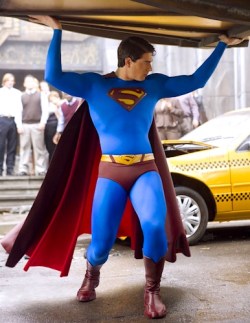 All of that was ten years ago now, since when plans for a sequel have been abandoned, the character has had
  often for good reason, but (a) sometimes a new telling is the right way to go, and (b) if you’re going to pick up a character mid-life, you still need to treat it as a new and standalone story if its immediate predecessor was released decades ago.
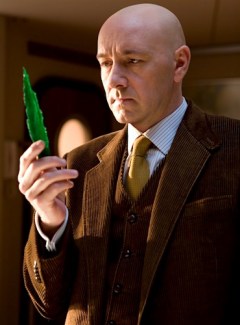
 that actually takes up the first half-hour-or-so. I can imagine an edit of the movie that begins on that plane: just a bunch of journalists observing the press demonstration of the new shuttle technology, when suddenly, inexplicably, it fails — they’re all going to die — then Superman turns up completely out of nowhere and saves them. Then you have the credits, which are immediately followed by Lex’s whole journey to the Fortress of Solitude, and only then do you get in to the stuff with Superman only having just returned, wondering what his places is now, and so on. Maybe lose the scene of him basically stalking Lois’ new family, though.
 The final thing this all makes me think of is the forthcoming Marvel Spidey movie,



 100Films.co.uk