True Lies (1994)

2010 #62
James Cameron | 135 mins | DVD | 15 / R
Quite how I’ve not got round to seeing True Lies until now is a little beyond me. Perhaps — no, definitely — if they’d re-released a better edition on DVD I’d’ve bought it and seen it then; but they never did, and so it’s taken ’til now to reach the top of my rental queue (not that my rental service works that way) and ‘force my hand’, as it were (because it’s certainly been on TV enough over the years).

True Lies is unusual on director James Cameron’s CV — though not, as things turned out, on Arnold Schwarzenegger’s — in that it’s a funny, daft comedy, a spoof of other action films. Where it differs from most spoofs is that it’s also a proper action movie. Most action-comedies can’t manage the former because they’re classed as the latter, with the limiting cast and budget to match, but Cameron’s background means he can put all the thrills, explosions and effects of an action movie into a comedy/spoof plot. Multiple boxes thoroughly ticked.

The comedy is quite broad — in particular, Tom Arnold is too OTT as Schwarzenegger’s sidekick — but it’s definitely a comedy, as opposed to an action movie that’s aware it’s a bit silly. Situations are pushed to extremes, clichés are played up, things go wrong in a way they’re liable to in real life but rarely do in films, action sequences are played for laughs as well as genuine excitement… The advantage to Cameron is he’s allowed to do some audacious things that might get laughed out in a straight actioner. The demise of the villain, for instance, is a great idea and great fun, but would be a step too far normally; but here that’s OK, because it’s allowed to be funny as well as cool.
Things go on a bit long in the middle, perhaps, when it gets bogged down in Harry dealing with his marital issues. But it’s a James Cameron film, of course it’s long in the middle. That said, it doesn’t feel like a James Cameron film — it’s far too funny. OK, sometimes it’s trying too hard to be funny rather than actually being funny, but a comedy is not what you expect from the rest of Cameron’s filmography, and it doesn’t feel distinctly ‘A James Cameron Film’ in the way that his Terminators, Aliens, Avatar, or even Titanic, do.

Other flaws emerge thanks to the film’s age. All the computer stuff feels a little dated now, but then that’s life (or rather, technology). It places the film firmly in that era of technological-ish thrillers that seemed to emerge as home computing was becoming more common, which makes the naïve computer sections actually a little nostalgic. Less forgivable are some really obvious stuntmen who stand in for Schwarzenegger. I don’t know if stunt people have always appeared so blatant — perhaps we’re just spoilt by the recent trend for actors to do everything themselves (and even if they don’t their face gets CG’d on).

True Lies isn’t perfect then, but the humour is funny enough and the action plenty exciting, particularly the famous Harrier Jump Jet-based finale. You can’t ask for more than that. Well, you can, but this’ll do.

4 out of 5

Mulan (1998)

2010 #64
Tony Bancroft & Barry Cook | 84 mins | TV | U / G

I realised recently that I haven’t seen an animated Disney film produced after The Hunchback of Notre Dame, which I saw on rented video thinking I was probably getting too old for the Mouse House’s output. Now I’ve grown up, of course, I know you’re never too old for a good Disney. As Mulan seems to be one of their last to gather significant praise before they slipped into their ’00s rut, it seemed a good place to begin catching up on what I’d missed.

It’s easy to see what critics and/or audiences liked about Mulan. There’s a few good, catchy songs — though sadly no villain’s song, which is usually one of the highlights — and some lovely animation — though I feel it’s been rather outshone by the similarly-styled Kung Fu Panda in this regard. There are decent action sequences too, fast-paced and fluidly animated, which helps make what could’ve been a Girly Film into something palatable to both genders (I remember being distinctly unimpressed with Pocahontas when forced to see it in the cinema).

The other thing that stands out about Mulan, particularly now, is how very Americanised it is. That’s nothing new for Disney, of course, but it feels a little odd these days. When we’re so used to increased attempts at appropriate cultural reverence from Hollywood movies, it’s almost uncomfortable to hear such American accents from clearly Chinese characters. (It’s this kind of thing that has caused uproar for The Last Airbender in the US (quite aside from it supposedly being a load of cobblers). How times change.) Eddie Murphy’s Mushu (who now comes across a little like a proto-Donkey) is particularly incongruous in this regard. I suppose it’s no worse than, say, Aladdin, or The Jungle Book, or all the Euro-set films.

With a ‘princess’ overcoming her assigned place, a pair of cute/humorous animal sidekicks, a princely husband-to-be, and a vicious villain in need of defeating, the tale of Mulan has certainly been adapted into the Disney mould. It may not be their best effort, but it’s still a strong one.

4 out of 5

Mulan is on Channel 5 today, Sunday 4th May 2014, at 5pm.

Insomnia (1997)

2010 #52
Erik Skjoldbjærg | 92 mins | TV | 15

It’s generally taken as a rule that an original film is better than the remake, particularly so if that original is in a language other than English and the remake is American. But there’ll always be something to buck the trend, and in my view that’s Insomnia.
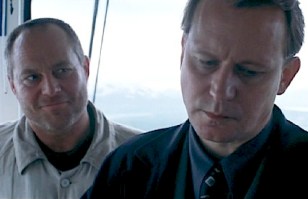
Watching this Norwegian original after having seen Christopher Nolan’s American version, it feels like someone watched the remake then was asked to retell it: it hits most of the main plot beats and memorable sequences, but seems to gloss past the nuances and character. On the bright side (perhaps) this makes it more efficient in its storytelling than the Hillary Seitz-penned US version. And about 20 minutes shorter.

Conversely, one might argue it’s subtler. Less time is spent directly delving into the characters, especially Jon Holt (Robin Williams in the remake), but there’s still stuff there to extrapolate from. Nolan’s version, on the other hand, makes it more explicit, including scenes and sequences that actually develop and reveal characters rather than leaving it purely as something that may be inferred if the viewer wishes.

The titular condition suffered by Stellen Skarsgard’s detective (Al Pacino in the remake) feels more present here. The remake lifted some elements of it, but I remember being surprised how little his lack of sleep had to do with anything. Here, there are several scenes of Skarsgard struggling to sleep, he’s visibly rougher as the film progresses, and it seems to impact his judgement and sense of what’s going on more than in Nolan’s film. If the other character elements are apparently less developed, this is something the original does better.
I’ve given both versions the same score; perhaps generously, because I think the remake comes out of things better. The original undoubtedly has that European indie aesthetic (not to mention subtitles, and that it’s The Original) that will always endear it more to some. As a remarkably faithful remake, the US version clearly owes this a lot, but the depth of character and more overt complexity of morals added by Nolan and Seitz gives it the edge for me.

4 out of 5

Titanic (1997)

2010 #35
James Cameron | 187 mins | TV (HD) | 12 / PG-13

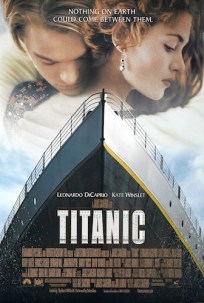
Before Avatar came along and ruined everything — um, I mean, dominated both the box office and James Cameron’s career — the director seemed to have become best-known for his previous record-breaking box-office-topper, Titanic. And because he was so well known for it, it’s easy to forget that it stands out like a sore thumb in his filmography: previously he’d only been responsible for action and/or sci-fi films: The Terminator, T2, Aliens, The Abyss and True Lies. And, lest we forget, Piranha 2. And, in the years since his ship-based behemoth, his only fiction film is Avatar, which you may remember — it was a little film about some blue aliens on a moon.

So, despite Titanic’s slightly-ironic runaway success (considering the fate of the titular vessel), one still has every reason to question if Cameron can handle a straight-up drama. After all, dialogue and character are hardly his strong points, and box office success and Oscar victory are hardly reasons to suppose a film is any good.

The first thing one can note about Titanic is that it’s over-reaching itself size-wise. This is true of both vessel and film, one being too big to dodge an iceberg, the other simply too long. I can’t be certain, but it feels like the entire film following the iceberg’s arrival is in real-time, which would make the length an excusable narrative trick — I do like real-time — were it not for Cameron padding it out with endless contrivances to have Jack and Rose running around the ship. All of these sequences are suitably exciting in themselves, but there’s so many of them that they become dully repetitive.

But before the good bit — giant boat sinking! Yay! — there’s the Jack-Rose romance, clearly the main draw for many fans. I can’t help feeling they need to be shown some better films. It’s not quite as weak as George Lucas’ efforts in Attack of the Clones, but it’s not far off. The scene the day after Jack saves Rose — where they have a natter on deck and she looks at his art for the first time; aka the primary scene for their falling for each other — is particularly weakly written. “Oh Jack, the plot requires me to look at your drawings now, so please hand them over.” The dialogue’s not actually that bad, but it’s bloody close.
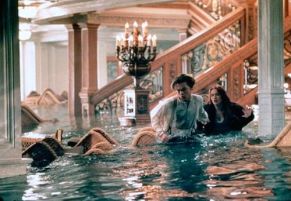
The film really takes off with the iceberg. While my criticism still stands that it goes on too long from this point (just as it does before it, mind), the post-impact scenes are by far the most exciting and engaging sequences in the film. The predictable romantic plot may keep Leo’s fans flocking back, but the horrendous spectacle of the sinking ship — both visually in an array of epic wide shots, and emotionally in the various and changing ways the passengers and crew react — is the film’s real triumph, a reason for the rest of us to even consider revisiting it.

Even if spectacle is the real star, there are some actors too. Kate Winslet does fine work with a character who could just be (and occasionally is) a cliché. As the same character 85 years later, Gloria Stuart gives an even better, emotionally resonant performance. Billy Zane and David Warner are perfectly dastardly villains, Bernard Hill practices the stoic leader he would later perfect in The Lord of the Rings, and Kathy Bates provides some intermittent comic relief.

And Leo is pretty-boy Leo. I’m not saying he’s not a talented actor — that was something he’d shown before Titanic and has certainly proven since, though everyone seemed to forget it in the late ’90s — but Jack Dawson is hardly a tricky task for him. Clearly he looks beautiful, has the loveable rogue thing down, and that’s job done.
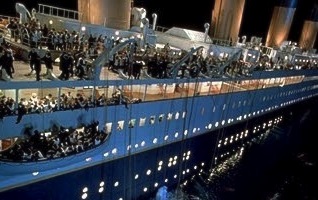
Russell Carpenter’s cinematography is always up to the task with a nice degree of diversity, from Michael Bay-style tech-fetish crispness in the present-day bookends to a warm glow for the past of Rose’s memory, with an icy collision of the two as disaster strikes. On a similar note, the CGI has aged surprisingly well… provided you don’t look too closely, at least. And I do mean “surprisingly” in the most literal sense, because I expected it to look awful. I swear it did last time I saw a clip. Anyway…

None of this can be said for James Horner’s irritating score. While not as bad as the batter-you-round-the-head signposting of his work on Avatar, it has a similar sense of obviousness. His frequent use of motifs from Celine Dion’s irritating My Heart Will Go On is always unwelcome, and (for me) always drags French and Saunders into the equation — “my heart will go ooooooooon” and all that.

Indeed, Titanic’s literally phenomenal success, and the subsequent abundance of spoofs and homages across all media in the decade-and-a-bit since, is an obstacle for any new viewer. One can’t watch Jack declare “I’m the king of the world!” without thinking of Cameron’s much-derided Oscar speech; can’t watch Jack and Rose ‘flying’ without thinking of any number of piss-takes; and French and Saunders spring to mind quite all over the place.

And yet, despite all this criticism, I found myself quite liking Titanic. I didn’t expect to, which is why I’ve avoided it for so long. I could take or leave the romance — could take it better if they’d gotten someone in to polish the script — and while they were at it they could’ve trimmed the second half’s repetition — but, all things considered, there’s enough spectacle to keep one engrossed.

Over-long and based on spectacle over content? Reminds me of this little film about some blue aliens on a moon…

4 out of 5

Titanic is on Channel 4 tonight, Sunday 13th July 2014, at 7pm.

What About Bob? (1991)

2010 #15
Frank Oz | 95 mins | TV | PG / PG

What About Bob is a comedy about mental health. As such, it feels primed for misunderstanding and inappropriateness. And it is indeed a little worrying early on: Bill Murray’s performance is, from the off, superbly believable, but it’s undercut by bad ‘this is a comedy’ music that suggests we’re meant to laugh at his impairments rather than feel sympathy. And maybe that’s what the screenplay, direction and performance were actually aiming at, but, personally, I don’t find laughing at the mentally disabled all that funny, even in a film nearly 20 years old. At one point, people clap as Bob gets off a bus he struggled to even get on — perhaps this is meant to indicate “thank God he got off!”, but I choose to take it as them celebrating his achievement, because, if not, it’s just attacking the disabled again.
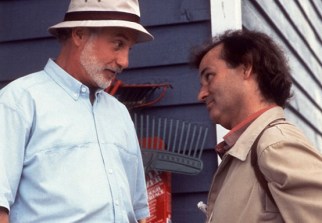
Fortunately, after these troubling moments in the film’s early minutes, the tone becomes more settled. Once Bob’s made it to New Hampshire, inappropriately on the trail of his new therapist Dr Leo Marvin (Richard Dreyfuss), and begins to get to know Dr Marvin’s family, the film really lifts off. From here out we get a nice array of, essentially, related sketches. That does them something of a disservice: each is linked and they build in a well-structured fashion as Bob finds himself accepted as part of Dr Marvin’s all-important family, leading to the turning point of a Good Morning America interview, where love for Bob spreads out into (to all intents and purposes) the whole world; and then Dr Marvin’s last potential safe haven of sanity, his fellow therapists, are won round too.

The film hinges entirely on Murray and Dreyfuss, and both are excellent in their respective roles. Murray portrays Bob’s mental health struggles early on in a way that would garner wider praise for accuracy if this were a drama, showing the potential he’s only unleashed in more recent years to play straight roles. But he’s equally good as the film becomes a clear-cut comedy: Bob doesn’t suddenly become a caricature, but is revealed as a good-natured, child-like, fun-loving person who, perhaps, just needs some care and love from others to help his conditions. Dreyfuss, meanwhile, is slickly believable as the uncaring fame-minded therapist, whose true nature — and problems — begin to unravel the more he’s confronted with Bob.
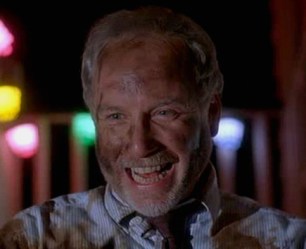
What we see here is that the apparently-afflicted patient is actually in a pretty good place (almost), while the apparently-perfect doctor is actually on the verge of a complete collapse (which, of course, he ultimately has). If it feels a little like a stereotyped plot arc, I’m not entirely certain why; and What About Bob? plays it out with enough truthfulness and humour to make it entirely palatable.

Believe it or not, some side with the psychotherapist, viewing Bob as a damnable annoyance that no one but Dr Marvin can see. It’s an interesting way to view the film, certainly, but I suspect whether you ‘side’ with Bob or Dr Marvin says more about you as a person than it does about the film, the characters or the performances. It seems starkly obvious to me that Bob is the ‘good guy’, a nice but troubled chap who just wants to get by and have a good time, while Dr Marvin is a control freak with a raft of suppressed problems that are gradually unveiled throughout the film until they ultimately overwhelm him. He’s not a bad chap per se, but he is in the wrong.

What About Bob? seems to have been forgotten — I’d never even heard of it until it was on TV at the tail end of last year — but that’s unfair. I can only assume it stems from those people who seem to have misinterpreted it, because such a misinterpretation must make it quite an awkward experience. Seen correctly, however, What About Bob? is a funny, heartening, feel-good comedy that deserves to be better remembered.

4 out of 5

Air Force One (1997)

2010 #13
Wolfgang Petersen | 115 mins | TV | 15 / R

This review contains surprisingly minor spoilers.

Air Force OneHarrison Ford stars as President Indiana Jones — sorry, Jack Ryan — no, James Marshall (that’s it) in this action-thriller from the Die Hard school of moviemaking. Yep, this is “Die Hard on a plane” — except it’s not any old plane, it’s Air Force frickin’ One; and the Bruce Willis character isn’t any old washed-up cop, it’s the frickin’ President of the U.S. frickin’ A. Hells yeah!
At least, that’s how I imagine the pitch went.

It’s a faintly ridiculous premise: Russian terrorists take control of the President’s aircraft in an attempt to get their favourite General released from prison; the President, still on board unbeknownst to them, goes all John McClane. On their ass. Es. Oh, whatever. The really fun thing is, screenwriter Andrew W. Marlowe and/or director Wolfgang Petersen seem to have set themselves the task of upping the level of ludicrousness about every ten to fifteen minutes — the things that go on during the final act have to be seen to be believed and so I won’t ruin them here. Though, suffice to say, if you think someone taking a bullet for the President is old hat, imagine what a fighter jet might do…

If you can suspend your disbelief — and that’s certainly the film’s greatest intellectual challenge — then what goes on is pretty fun. Yes, much of it’s a Die Hard re-hash, but (as someone once said) if you’re going to steal, steal from the best. The initial hostile takeover may be the best action sequence, but the story does its best to hold our interest with a variety of new problems to be solved by the war-hero President-turned-action-hero (the former mentioned in one line of dialogue to help explain the latter, naturally). More entertaining, it must be said, is watching Marlowe and Petersen battle with the problem of making a fairly brief idea stretch to a feature.

Unfortunately, this problem sometimes manifests itself too obviously. The lead villain is dispatched before the final act kicks in. Even if you think narrative theory and screenwriting how-to guides have too large an influence on modern movie structure, surely most will agree that dispensing with your antagonist a good 20 to 30 minutes before the credits roll is a bit much. Though the badly damaged plane still has to be landed, it doesn’t have quite the same anyone-could-die tension as much of the film; a tension which impresses, incidentally, as there’s a disaster movie level of suspense in the potential executions, something most action thrillers fail to achieve with a line up of victims and survivors that’s predictable from the get-go.

A cast who were later TV bound (just see how many faces you can spot from the likes of 24, CSI and, for one of the big stars, Damages) give their all, though Gary Oldman is wasted in a sub-Hans Gruber / neutered-Stansfield role. Harrison Ford again shows he can play variations on a theme — President Jim Marshall may not be as cocky as Han Solo or Indy, but he’s an older figure from the same ballpark. But that’s what’s required in the role and that’s why he was cast, so why complain? On the technical side, there’s a showcase array of pre-CGI-overload special effects, particularly in the closing minutes.

The film’s most interesting facet, 13 years on, is the opening. President Marshall’s stance on terrorism and his commitment to stopping evil foreign regimes probably sounded great rhetoric at the time; and it probably sounded even better post-9/11, when those who perpetrate terrorism and those regimes that support it were obviously at the forefront of everyone’s mind. But after Afghanistan and Iraq, it’s beginning to seem a little awkward. As we’ve seen, tyranny may be quickly overthrown, but peace is much harder to restore; and genocides are worth stopping, but only if there’s oil involved. President Marshall’s peace still sounds bold and correct in theory, but it’s difficult to imagine it going down so well today.

But, really, that’s a retrospectively unfortunate aside: the West Wing-esque fast-talking political early minutes are really just set-up for the barmy action that follows, and taken on that level it’s as disposable as it needs to be.

Overall, my favourite thing about Air Force One is an indefinable quality: it’s an ’80s/’90s action-thriller, the kind of thing Hollywood gave us before The Matrix came along and changed everything. It has a feel — the same one that’s in Die Hard (of course), or The Rock, or other films of this era — that we don’t seem to get any more. Things move on and change, naturally, but I miss this quality a bit, and it’s always nice to discover another example of it.

4 out of 5

The World of Tomorrow (1998)

2009 #69a
Kerry Conran | 6 mins | Blu-ray | U

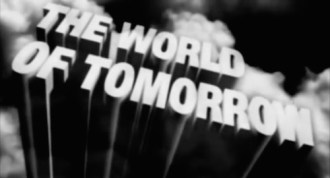
The World of TomorrowBefore Sky Captain, there was this: a six-minute reel, shot, edited and, er, special-effects-ed, by Conran on an amateur basis over four years, demonstrating the production techniques and storyline he had in mind for a feature-length homage / reimagining of ’40s cinema serials.

We’re used to incredibly impressive home-crafted effects-laden films these days, but keeping in mind this was finished 11 years ago, it’s quite impressive. Judged now, it’s clearly the very early days of such composited digital filmmaking, lacking some of the complexity and flair we now see. What it does still suggest is that, given a full budget, such an idea has potential, both in terms of the method and the retro-sci-fi ’40s-serial-style story. Certainly, in my opinion, it did produce a very entertaining film in exactly that vein.

In comparison to its big brother, nearly every shot is exactly duplicated in the final film. In fact, most don’t look much more primitive here. The resolution’s lower, it’s perhaps a bit jagged round the edges, and it’s in deliberately dirtied black and white rather than the glowing sepia-hued colour of the feature, but it shows the concept worked from the off.

The World of Tomorrow isn’t a great film in its own right — indeed, as the closing captions suggest, it’s really an extended trailer / proof of concept for something bigger. In the latter regard it shows all the requisite promise, and thankfully someone in the industry noticed too.

3 out of 5

Children of Heaven (1997)

aka Bacheha-Ye aseman

2009 #83
Majid Majidi | 82 mins* | TV | PG

Children of HeavenChildren of Heaven is an Iranian film, which means it’s in a Foreign Language and it’s Subtitled. And yet, it was on ITV. Sometimes the mind boggles. Still, it was relegated to a post-midnight showing, so some things never change. Indeed, the one thing that inspired me to watch it is that it’s referred to by Roger Ebert in his wonderfully evangelical (about film, not Christianity (thank God!)) article to commemorate reaching 100 entries in his Great Movies series. I recommend it, incidentally; Children of Heaven comes up for good reason about halfway through.
The film itself is a charming little number, with a simple story about a brother and sister that nonetheless runs itself on inventive incident — the amount of (pleasingly light-hearted) drama it can ring from one missing pair of shoes is, in many ways, quite extraordinary. It also contains moments of simple beauty and pleasure, like blowing bubbles while cleaning or sunlight glittering on the goldfish pool. This is more what I had in mind when someone described Slumdog Millionaire as “feel-good”.

Speaking of which, Children of Heaven adds depth with an amiable commentary on poverty: this poor family live in close proximity to such rich ones, but they can all get along. When Zahra sees another girl wearing her shoes, she doesn’t confront her or demand them back, even when the other girl’s dad buys her a brand new pair and the all-important pair are thrown away again. Halfway through, Ali and their father go up to town and we see how the other half live — enough glass-fronted skyscrapers, dozen-laned roads, tree-lined avenues and blindingly-white mansions to rival any metropolis. And yet they don’t get angry at their lot, and the film doesn’t shove the obvious comparison down your throat. It doesn’t go for the simplistic and oft-tried “poor have little, but have each other so are ultimately happy; rich have lots, but are lonely and so ultimately sad” conclusion (though it does, briefly, err along that path), and nor does it end with the family getting rich and managing to move up in the world.

In fact, the finale deals solely with the issue of the shoes (pun not intended). It’s a long-distance running competition in which Ali must come third in order to win a new pair of sneakers. It’s nail-biting and a beautifully conceived idea — he doesn’t need to win, he needs to come third. If only mainstream films were so simply innovative more often.

Unfortunately, several plot threads feel underdeveloped or unresolved, ultimately coming across as a pleasant but unnecessary aside — the elderly neighbours, for example, who Ali delivers soup to in one scene, or the persistent landlord. The viewer can read more into these if they wish — the neighbours representing the generosity of those with nothing, for example, while we can assume the landlord is eventually paid off now Ali’s father apparently has better employment — but the film itself does nothing with them. There’s a difference between not spelling things out and just abandoning them, and perhaps Children of Heaven falls on the wrong side of this divide. It’s most galling at the very end (after the race), when the film seems to just stop abruptly. IMDb notes that originally there was an epilogue explaining Ali’s future which is for some reason absent from the American-released version, and the presence of something like that is indeed missed. However, the interweb can also provide theories on how the foreshortened ending does have significance, with the goldfish being symbolic, if one chooses to look for them.

But no matter — it seems churlish to complain about such diversions. Children of Heaven is a beautifully simple and good-hearted film and, apparently, a great way to introduce children to the notion of having to read while watching a film.

4 out of 5

* This is timed from ITV’s broadcast. The listed running time is 89 minutes; with PAL speed-up this would be c.85; hopefully the remaining three are accounted for by snipping the closing credits.

(Originally posted on 6th February 2010.)

Copycat (1995)

2009 #53
Jon Amiel | 118 mins | TV | 18 / R

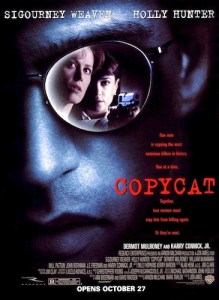
CopycatThe Radio Times compare this favourably to David Fincher’s excellent Se7en, because both are high-concept serial killer thrillers released in 1995 but only one has been widely remembered. The Radio Times consider this unfair, suggesting Copycat deserves a similar level of recognition. Unfortunately, they’re wrong.

The most striking thing about Copycat is its very mid-’90s feel — tacky fashions, dull cinematography, instantly dating use of the internet — unlike Se7en, which has a more lasting style. In fairness, in these respects it’s not as bad as some films of the era (and indeed later), but it’s already tempting to reuse the central idea of an agoraphobic investigator in light of how far the internet has come in the last 15 years. Relatedly, the first video the killer sends to Helen, Sigourney Weaver’s agoraphobic criminal psychologist, is unbelievably chilling in spite of its primitiveness. I bet it gives some people nightmares.

I’m tempted to say there’s no visual flair — unlike (guess what?) Se7en. However, it’s merely the way DoP László Kovács photographs here that has no flair, leaving a plain look like any number of film-shot TV movies. The actual camerawork has its moments, not least in a couple of long takes, action sequences, and the depictions of Helen’s agoraphobia. While the latter is occasionally twee, especially early on, there are times when what director Jon Amiel and Kovács have come up with works, not least during the climax. As an affliction for the heroine it’s a nice concept, though a difficult one to work with for obvious reasons, but it’s exploited well and put to good use in a few of the set pieces.

Screenwriters Ann Biderman (who’s gone on to be one of the writers of Michael Mann’s Public Enemies) and David Madsen (who wrote, um, a TV movie) provide a story that is also less focused than Se7en. The killer’s pattern emerges eventually, but it’s less universal and not particularly well explained — what’s inspired him onto this spree? The idea of a Famous Serial Killers copycat is neat but not flagged up as well as it could be. Maybe it’s a positive that it’s not over done, but equally it feels like there’s more to be made of it. At least Biderman and Madsen aren’t afraid to be brutal about who gets killed, although at least one death lacks the appropriate ceremony. The randomness of another may irritate some but worked for me: in a genre where murder is usually so obsessively meaningful — particularly here, in fact, when you have a killer who is adding a new level of meaning to already loaded killings — it works to show that, sometimes, it’s entirely, depressingly, unstoppably random.

They also choose to reveal the killer about a third of the way through, which feels an unusual move but probably isn’t: there’s no real whodunnit element in the first place, and we still don’t get to know him even after his reveal. In fact, even by the end little or nothing has been shown of his character, including any hint of motivation. It seems he’s merely the right ‘type’ to want to go killing people and for whatever reason has an obsession with both previous killers and Helen. The post-ending ending is plain irritating too. It adds a minor twist to what we’ve seen, but actually robs the plot of its satisfaction. It’s a last-ditch attempt to suggest a sequel, Silence of the Lambs-style, when a conclusive ending would be more appropriate.

Talking of Lambs, Harry Connick Jr.’s Lecter-ish nemesis feels like a stereotype. I say Lecter-ish because he’s a killer already locked-up and aiding the police find another — nothing about Connick Jr.’s performance is even close to Hopkins’ Oscar-winning ability. Where Hopkins established a new kind of killer and forever glued himself into filmgoers’ psyches, Connick Jr. just provides a clichéd impersonation of a generic serial killer type. Among the rest of the cast, Sigourney Weaver gives a particularly good performance as an agoraphobic psychologist heroine, while Holly Hunter makes a very amiable lead detective. Dermot Mulroney’s character is less irritating than might initially be expected, while William McNamara does his best with some weak material as the killer… or does he? I mean, he’s not as bad as Connick Jr., but he’s not really good, just fine. He certainly doesn’t hold a candle to (of course) Kevin Spacey in Se7en.

Despite inherent flaws, it’s almost a shame for Copycat that it came out at the same time as Se7en: the similarly high-concept serial killer plot invites comparison, but Fincher’s classic simply does everything better. Hold it to lower standards, however, and it manages a passable, if unavoidably dated, job.

3 out of 5

(Originally posted on 21st January 2010.)

Fatal Instinct (1993)

2009 #86
Carl Reiner | 90 mins | download | 15 / PG-13

Fatal InstinctHaving just recently laid into High Anxiety, a spoof in a broadly similar style that also took on thrillers, it seems a little hypocritical to praise this, which flopped so badly in the US it went straight to video over here. Unfortunately, life isn’t that simple, and where Mel Brooks’ effort failed to amuse me this succeeded.

The plot, such as it is, doesn’t bear much discussion, being a loose amalgamation of half a dozen other films in the name of spoofery. So too the performances — no one distinguishes themselves as a comedic genius, but none let the side down. Reiner’s direction is equally fine, setting up and paying off the visual, verbal and aural jokes perfectly well. He drops the ball in a couple of instances however, allowing several jokes to run on well past their natural conclusion, and indulging in a few well-worn staples of the genre — the on-screen-musicians-playing-the-score turn up, for example, although at least there’s a nice variation at one point involving a tape player.

It’s a little difficult to understand exactly why it flopped so badly in the US as it followed in the wake of the similarly-styled Hot Shots!, which was successful enough to spawn a sequel. But then perhaps exactly that hindered it — Fatal Instinct’s release came just a few months after Hot Shots! Part Deux.

Or perhaps its targets were just too broad to attract a mass audience. While it ostensibly tackles then-recent thrillers like Basic Instinct, Cape Fear and Fatal Attraction (though the latter was already six years old at this point), it also has a lot of time devoted to the tropes of film noir, in particular Double Indemnity. Relying so heavily on a 50-year-old film isn’t likely to earn you much favour among the masses.

I’ve not seen any of those ’80s/’90s thrillers it targets, but Fatal Instinct seems to stick to the most famous bits, making the references easy to appreciate even for those with just a passing knowledge. Conversely, it seemed to me that having seen Double Indemnity would be a major advantage. But then again, perhaps that’s simply because I spotted the references to it and missed references to the films I hadn’t seen without, er, missing them, and anyone who hadn’t seen Double Indemnity would survive in much the same way. At the very least I’m sure it’s easier to follow than this paragraph…

Fatal Instinct may not be terribly original in and of itself — though, obviously, the films it chooses to spoof set it apart from its kin — and some of the gags are very much old hat (a roving camera bumps into something and breaks the lens, for instance), while others go on too long — as does the film itself, actually — but anyone who enjoyed all the films mentioned in this review may find it’s capable of raising a few smiles.

3 out of 5