2013 #95
George A. Romero | 101 mins | Blu-ray | 1.78:1 | USA / English | 18
 Threequels, eh — who’d make ’em? It used to be received wisdom that sequels were poor, with only a few exceptions. That’s less often the case these days — indeed, it’s almost de rigueur that the first film in a potential franchise will exist to establish the world in preparation for a superior sequel. But how many great third films are there? There are some good ones, it’s true, but are there any that are the best film in their series? If there are, they’re certainly outweighed by the number that couldn’t live up to the quality of the two preceding parts.
Day of the Dead has its fans (including director George Romero, who has said this is his favourite of the ‘Dead’ films); but the impression I’ve always gotten is that, while not regarded as a bad film, it’s seen as the weakest of Romero’s original ‘Trilogy of the Dead’. Whereas Night was a taught, socially-conscious horror-thriller, and Dawn an epic, socially-conscious character drama, Day feels like it’s the kind of quotable gore-filled cult-friendly B-movie the series is often perceived as (and, in fairness, is taken as by some of its less brain-engaged fans). Of course, that’s not true: this is a George Romero movie — the subtext is definitely still there.
Here, Romero sets his sights firmly on the military mindset. Criticism of weapons fetishism isn’t something new to the series — indeed, there’s an element of it in both the preceding films — but here he specifically takes on the military, a recurrent theme in 1980s cinema: this is the era of films like Rambo: First Blood Part II, Rambo III, Predator, and other less well-remembered films in which a one-man-army (importantly, a one man American army) takes on some less-friendly locals on the other side of the globe and shows them who’s boss. As ever, Romero doesn’t tackle this head on. His methodology, it would seem, is to create a situation, put in elements (be they political, social, etc), and let it play out. The resultant work is driven by the story of the situation, the criticisms or analysis becoming subtle and secondary.
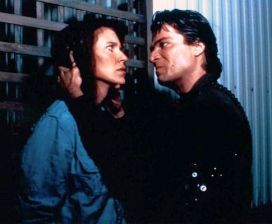 The same is true in Day’s criticism of science, especially vivisection. According to Romero (in the booklet that accompanies Arrow’s Blu-ray), he didn’t set out specifically to tackle that controversial area of scientific research. Instead, he developed a “next logical step” for what scientists would do to the undead. Of course, it’s horrific and criticism is implicit. Thankfully, Romero isn’t painting all science as bad: the lead character, our de facto hero, is also a scientist; but she’s not really interested in the vile work of her colleague, dubbed ‘Frankenstein’ by the soldiers.
It has been said that Day is the darkest and most nihilistic of all Romero’s films, lacking the humour that played such a significant role in Dawn. It’s not as if Night was rolling in laughs, but in the end the humans won (or seemed to), and there are no villains — characters conflict, but their motives are all understandable. Whoever you might side with, you can understand the other person’s perspective. The same is true of Dawn, even with those bikers. But Day has a clear-cut villain: the base’s new commander, Captain Rhodes, a power-mad borderline-caricature of small man syndrome. This is where that B-movie thing comes in: he’s eminently quotable, but he’s also thoroughly unlikeable. His men all fall into the same bracket, whatever effort the actors may have intended to humanise them.
The real development here, in terms of the zombie mythology, is that the creatures are beginning to learn and develop. Central to this is Bub, who doesn’t seem to crave flesh, imitates shaving, listens to music, and almost manages to talk. There’s a parallel with how monkeys have been kept captive for similar experimentation, and again of an unthinking military mindset:  Bub salutes the Captain, an instinctive reaction the same as his shaving. That it leads to an ironic repetition at the film’s climax is perhaps satire, or perhaps just another cool moment. You have to hand it to Romero and co, though: it’s a great villain’s death scene.
Indeed, the special effects throughout are the finest the series has to offer. After the hit-and-miss work on Dead, the zombie make-up here is right on, especially Bub. The flesh-ripping finale is the most gruesome yet, but so over-the-top as to become comical — which, again, has been Romero’s intention all along. The location work looks great, too. Filming in a real underground storage facility lends a quality that you’d never get from studio sets, with huge empty rooms, the small band of soldiers and scientists huddled around the edges or needlessly sprawled across spaces.
For me, the main problem with Day is it feels like a bit of a rehash, thematically. Humans are the biggest enemy? That’s been touched on in both previous films. It’s at its most central here, with the base’s military contingent and scientific team clashing from the off, but it’s also at its most blatant. The characters are B-movie archetypes through-and-through, from the Villain to the Henchman, the Mad Scientist to the Wise Ethnic Guy, rather than the more rounded characters that even Night offered. Similarly, Romero punishes or rewards them in a straightforward fashion: everyone dies except for the likeable handful, who get to escape to tropical paradise — away from the epidemic forever!
 There’s probably an in-depth piece to be written on the evolving gender politics of the ‘Dead’ films, which I’m sure must reflect changes in society. Here, we have an unequivocal female lead, a scientist and voice of reason amongst the madness of both sides. She stands up for herself against the men, who belittle her as much as possible. Actress Lori Cardille has commented that she wanted to develop the woman’s role in these films, even beyond that of Fran in Dawn, who she saw as little more involved than the useless females of Night. Of course, as I noted last time, the role of Fran is considerably more involved and competent than that of Barbra or Judy, so it’s interesting that Cardille felt there was work still to be done. Not that she’s necessarily wrong; and the way the men treat her character in Day suggests that someone having a similar reflection on this film, nearly 30 years on, would find room for continued improvement.
I find it hard to disagree with the consensus on Day’s status within Romero’s initial trilogy. It’s not that there aren’t good things in there, both thematically and on more basic entertainment levels, but it feels like less of a cohesive whole than either of the previous films. Although it develops the mythology (as well as the more intelligent zombies, this is the first time we have no sign of what’s going on in the outside world: power is out in most of the US so there’s no long-range radio or TV for further reports; these people are isolated — again, adding to that nihilistic world view mentioned earlier), there’s a slight sense of it going in circles, thematically. Maybe that’s a tad harsh, especially as I wouldn’t disagree with 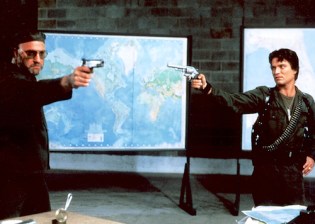 Romero’s critical stance evidenced here. I don’t even object to it being a bleak film, with little sense of hope for the future of humanity; in fact, there’s a lot to commend in that.
Put plainly, Day is certainly a good film, rewarding in several different ways. It just isn’t as good as the predecessors it inevitably butts up against.
Part of Week of the Living Dead for Halloween 2013.

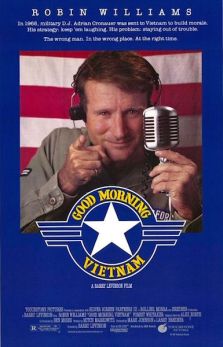 Inspired by the true story of a US Army DJ in Vietnam during the war, the resulting film is a showcase for star Robin Williams — reportedly, his antics aren’t even close to what really happened.
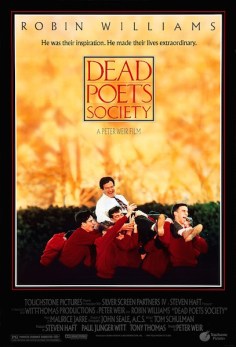 At an oppressive private school (is there another kind?), a gaggle of disenchanted students are invigorated by teacher Robin Williams; until his methods, and the independent thought they inspire, attract the ire of parents and faculty.
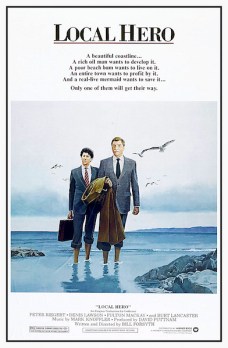 Gentle comedy in which Peter Riegert’s middle-management American oil exec has to persuade the residents of a Scottish village to sell up, unaware that they’re only too keen — for the right price. One of Quentin Tarantino’s Coolest Movies of All Time (
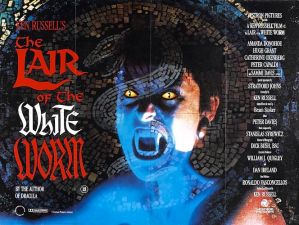 The Lair of the White Worm looks cheap, has a ridiculous story, overacted characters and overcooked dialogue, and by all rights should be a disaster. And maybe it is… but I don’t think so. In the right frame of mind, at any rate, it’s a whale of a time.
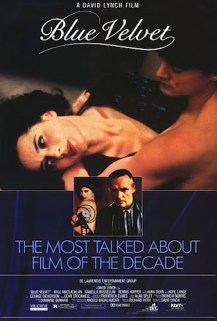 Before he brought the disquieting underbelly of small-town America to television audiences with
  But… is it, really? The white-picket-fence-dwellers are pretty clean; it’s the people inhabiting the scuzzy apartment blocks and industrial estates nearby who are the problem. Those characters are as corrupt and degenerate as their abodes might lead those with regular prejudices to suspect. It’s a less subversive point of view, and I don’t think it’s what Lynch was actually going for. Anyway, the entirety of his moviemaking technique is so outré that you can’t help but find the whole twisted nonetheless.
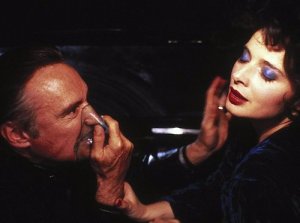 “It’s not a movie for everybody,” Lynch himself said (to Chris Rodley for the book
  Part of Leone’s intended trilogy about the history of violence in the USA, Once Upon a Time in America is the life story of four friends and gangsters in Noo Yoik during a large chunk of the 20th Century. So it’s a gangster film focusing on violence, then? Well, no… not at all, really. Indeed, saying Once Upon a Time in America is a film about gangsters is a bit like saying
  Leaving aside the less savoury aspects (as, it seems,
  Once Upon a Time in America falls somewhere between these two stools. It’s a film that is, I think, easy to instantly admire — if not wholly, then for its majority; but also one I found difficult to process a full personal reaction to. With the recently-extended version set to arrive on DVD/Blu-ray/download later this year (in the US, at any rate), an ultra-convenient chance for a second evaluation looms.
 #25
#25  #29 The Sweeney (2012)
 One of my all-time favourite movies. It should be laughably awful, really — not least the accents — and I’m sure to some people it is; but I think it’s immensely fun, and you can tell the setup is a good’un thanks to its legs: four sequels, a six-season TV series, a spin-off series, an animated series, an anime movie, and
  Top Gun
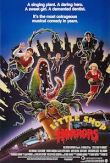 Little Shop of Horrors
 For some people, whether Alien or Aliens is the better film is a huge debate. For others, there’s no question which is superior — and those people can be divided into those who think it’s Alien and those who think it’s Aliens. I lean more towards Ridley Scott’s original, but James Cameron’s sequel has its own merits — not least the fact that, instead of dully repeating the original, it shifts the franchise into a wholly different genre.
 Crocodile Dundee
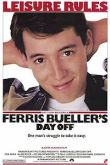 There’s a good handful of well-regarded films from 1986 that I’ve never seen (also, Howard the Duck), but this is the highest I’ve not seen on
 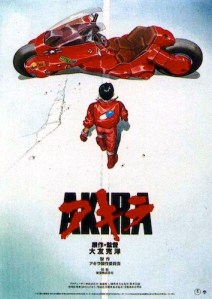 For many Westerners of a certain generation, Akira was their first (conscious) exposure to anime. Not so me: a step or two down,
 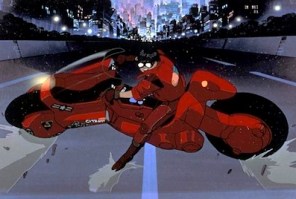 The visuals remain something to be savoured; they’re probably the film’s strongest point, in my opinion. Akira was an expensive production and it pays off on screen. It’s not just the bike chases that I appreciated either, while an extra decade of experience made the ending a bit less freakish! The other strong point is the audio. The BD’s booklet goes on about “hypersonic” sound. I’ve no idea if that worked on my system, but it sounded fantastic regardless.
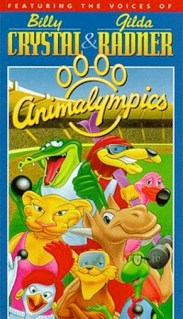 Originally commissioned as a pair of specials for US TV, Animalympics was dropped by the network when the US pulled out of the Moscow Olympics, then repurposed by its makers as a feature film. You might be able to guess the plot from the title: various animals compete in an Animal Olympics. It’s a series of sketches, essentially, although arranged to provide some narratives throughout.
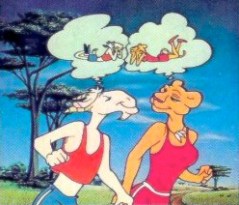 As per anything which is made up of sketches, some bits are funnier than others; and, as American animation, it is primarily aimed at kids, though I thought it was enjoyable enough for grown-ups too. Gouldman’s score is catchy in places, but nothing to rival The Things We Do For Love or Dreadlock Holiday or… I could go on for a few, actually. I’m just going to go listen to some 10cc…
 100Films.co.uk