
Akira Kurosawa | 88 mins | DVD | 12 / PG-13
 One has to wonder if Dr. Gregory House was exposed to Rashomon at a young age. House’s universal truth — “everyone lies” — is also the conclusion of Kurosawa’s much-lauded film, in which four witnesses tell different versions of the events surrounding a samurai’s murder.
The “Rashomon” of the title is one of two gates to Kyoto, built in 789 and in disrepair and disrepute by the film’s 12th Century setting, but thanks to this film the word has come to signify a narrative that retells the same event from multiple perspectives. Mentioning it seems unavoidable when writing about a film (or episode of TV, or novel, or…) with such a structure, as reviews of recent thriller Vantage Point would attest. However, most similar tales aren’t quite as radical as this ‘original’ (which is based on two short stories by Ryunosuke Akutagawa), in which the four tales differ wildly.
Justifiably, much has been written about Rashomon, both critically and analytically. As such I’m not going to dig too deeply here, but instead just highlight a couple of reasons why it’s so acclaimed. For one, it looks great. Kazuo Miyagawa’s cinematography is exemplary, producing gorgeous rain at the gate, wonderful shadows in the forest, and employing numerous inventive shots and moves, always effective rather than showy. Fumio Hayasaka’s music underscores proceedings beautifully, coming into its own during long dialogue-free sequences. The performances are also accomplished, especially Toshiro Mifune as laughing bandit Tajomaru, but also Masayuki Mori’s largely silent turn as the murdered samurai, and Fumiko Honma’s chillingly freaky medium.
As I said, there’s much more that could be (and has been) written about Rashomon — I’ve not even touched on the intricacies of the plot, the presentation of the courthouse scenes, the significance of the fights, and so on. Certain viewers might be put off by the subtitles, the black and white photography, the film’s age, and its occasional ‘arthouse’-ness — and, I confess, I’m one of the first people to get fed up with films like Tati’s Play Time or Ozu’s Tokyo Story — but, for me, Rashomon was an incredibly enjoyable first encounter with Kurosawa.

Rashomon placed 5th on my list of The Ten Best Films I Saw For the First Time in 2008, which can be read in full here.
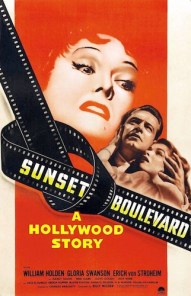 Sunset Blvd. may not be the first movie about the movies, but for the amount of controversy it caused and the impact it’s had it may as well have been. It’s certainly a well respected film — I’m sure I could cite any number of
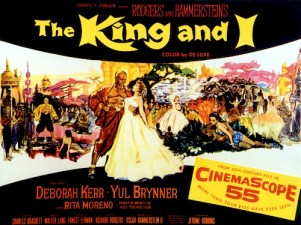 To be fair to The King and I, I was a little sleepy through most of it, and, thanks to some slightly cheesy bits at the start, my mind was occasionally locked in a spoofing mode.
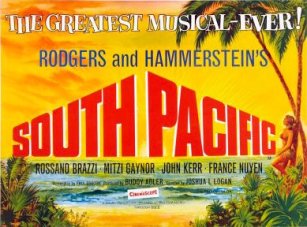 I like a good musical. I wouldn’t say I was a fan of the genre on the whole, but I do enjoy good ones. South Pacific, to my mind, is not one of the very best, but it has its moments (and its songs!) and there are some fair points underlining the plot. If you don’t like musicals this one probably won’t convert you; if you’re a musical fan… well, you’ve probably already seen it.
 100Films.co.uk