
Otto Preminger | 154 mins | TV | 12
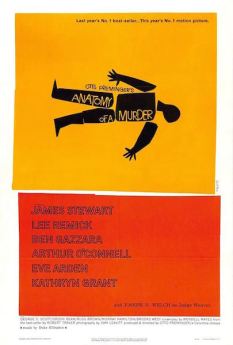 Anatomy of a Murder is a courtroom drama, adapted from a novel by a real-life defence attorney (“defense attorney”, I suppose), who in turn based his fiction on a real case. This background not only adds to the veracity of what we see, but likely explains the film’s style and structure.
The story is intensely procedural: we meet the lead character, defence attorney Paul Biegler (James Stewart), moments before he first learns of the case; leave the story almost immediately after the verdict; and in between, every single scene is bent to Biegler’s research and the trial itself. It’s so thorough, accurate and real that it is (reportedly) still used as a working example in law education. The complete lack of flashbacks or definitive truth is a perfectly judged part of this: we only know what Biegler would; only hear what would come up in trial; can only be as certain as he and the jury are of the motives and testimonies of all involved.
By the end we have a verdict from the trial, but Preminger leaves what happened slightly ambiguous. We know what everyone claims happened and the facts of what little evidence there is, but there’s still room for interpretation. Despite this, Preminger, Stewart and screenwriter Wendell Mayes have us rooting for the murderer and his attorney by the end: Biegler’s case may be dubious, the man he’s defending likely guilty, but the moment he casually hands over the law book that contains the case-turning precedent is almost victorious; and the moment where the final witness is cross-examined had me literally sitting forward in my seat (this, I should point out, is not a regular occurrence), just waiting for the irritatingly slick and cocksure A.D.A. to ask that one question, fatal to his prosecution… and when he finally does, and receives the answer that we know is inevitable — and, crucially and brilliantly, so does a suddenly-unobjecting Biegler — is triumphant. It’s a perfectly constructed climax to a perfectly constructed tale.
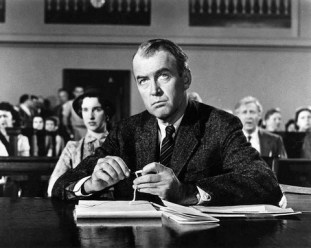 A lot of this support is down to Stewart’s performance — it feels wrong to be cheering the defence counsel of a murderer, even if he had a justifiable motive (which, remember, he may not have) — but we’d probably cheer Stewart on if he was the murderer. His Biegler is always in control, from investigation to courtroom, even when by rights he should be completely out of it. He manipulates the judge, the prosecution, the jury and the crowd to perfection; the viewer sits by his side — we know he’s playing them so we can revel in it — but, in turn, he manipulates us too, tempting us to his team — to laugh at his jokes, to support his case, to loathe the prosecution, even though they might be right. It’s a stellar lead performance.
But in the face of this no one drops a trick — the cast are without exception fabulous. Lee Remick is stunning as Laura Manion, a case of truly faultless casting as she plays every femme fatale-esque beat to perfection. From forthright temptress to harassed and frightened under the glare of cross examination, she is never less than wholly believable. Her performance is second only to Stewart’s by default. Then there’s George C. Scott as that A.D.A., pitched exactly right between slimy and righteous, quiet and controlled at all times, apparently aware that Biegler is playing everyone but unable to prevent it — and most certainly not above using equally underhand tactics.
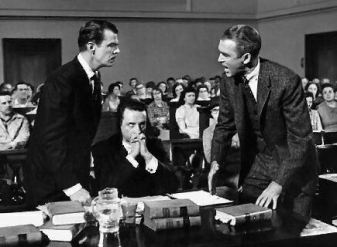 I could just as well go on to praise Ben Gazzara, Arthur O’Connell, Eve Arden, Brooks West, even the smaller roles occupied by Kathryn Grant, Orson Bean, Murray Hamilton and others. Some criticise Joseph N. Welch’s judge, and it’s perhaps true that his performance is a little less refined than the others, but as a slightly eccentric judge he comes off fine. And to round things off, there’s an incredibly cute dog. Mayes’ screenplay is a gift to them all, finding room for character even within the ceaselessly procedural structure, using small dashes of dialogue or passing moments to reveal and deepen each one.
There are police and legal procedurals on TV all the time these days, but that doesn’t detract from the powerful screenplay, acting and direction here. Perhaps it’s the realism, perhaps it’s a collection of filmmakers at the top of their game, but even after innumerable 45- to 90-minute chunks of this kind of thing being served up several times a week, Preminger and co can keep it thoroughly engrossing for a full 160. I can’t think of a current TV show that could manage the same feat. Absolutely brilliant.

Anatomy of a Murder placed 4th on my list of The Ten Best Films I Saw For the First Time in 2010, which can be read in full here.
 “The paths of glory lead but to the grave,” wrote Thomas Gray, and Stanley Kubrick — adapting from the novel by Humphrey Cobb — sets about proving him right.
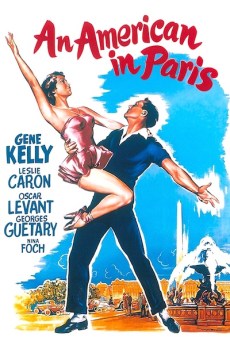 If anyone is interested in An American in Paris and has found this alleged-review in search of something interesting to read, I’m afraid you’re going to be sorely disappointed. Not because I didn’t like the film, but because I’ve not got anything to say about it.
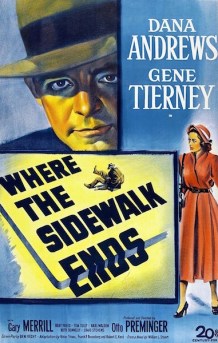 Otto Preminger’s film noir — scripted by Ben Hecht, adapted from William L. Stuart’s novel by Robert E. Kent, Frank P. Rosenberg and Victor Trivas, and quite what the difference between “adapting” and “writing” are I’m not sure — offers complex characters in a multi-layered plot. The ending particularly underlines this: the filmmakers could’ve killed anti-hero Dixon, could’ve had him choose to not open the letter, etc; but the decision he takes and the reactions of others are all relatively complex. Earlier, the sequences following Paine’s death are well constructed to produce the maximum amount of tension; their plotting clever, allowing for multiple (albeit similar) interpretations of events. Things happen which seem irrelevant, but are of course none-more-relevant later. Few films today are so brave as to not explain such things immediately.
 Cole Porter-scored musical remake of
 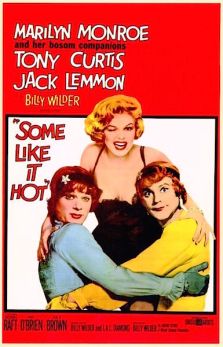 Did you know that Some Like It Hot is a remake of a 1951 German film,
 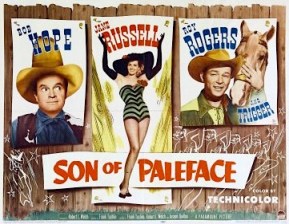 A sequel to 1948’s
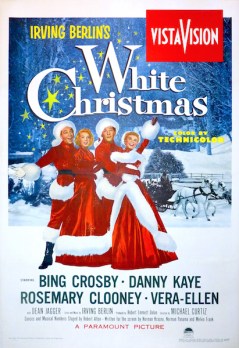 White Christmas is surprisingly un-Christmassy. Yes, it’s set at the right time of year, and the plot concerns itself with do-gooding and charity and other such vaguely seasonal themes; but, crucially, there’s a distinct absence of snow (until the very end) and little else actually inspires much Christmas feeling.
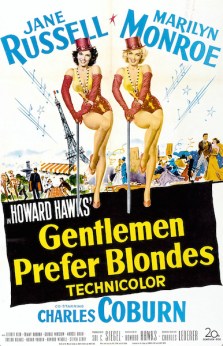 It’s easy to see how Gentlemen Prefer Blondes helped launch Marilyn Monroe as a sex-symbol superstar — her ditzy, breathy blonde, who may just be cleverer than she looks, is clearly the star of the film.
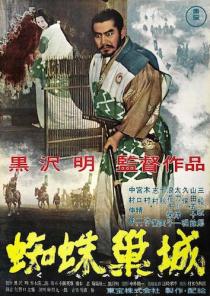 Kurosawa moves Macbeth from Scotland to 16th Century Japan in this retelling of Shakespeare’s infamous Scottish Play. I’ve heard this described as a loose adaptation — perhaps those reviewers have never read the play. Kurosawa sticks very closely to the structure of Shakespeare’s version of the story (though based on real events, Shakespeare changed key details), often choosing to adapt it scene-for-scene. It works well in the new setting, with some of the themes — honour, respect, betrayal — perhaps becoming more understandable when placed in samurai culture. Kurosawa changes other elements too — character names are understandably localised, there’s only one witch, there’s no version of the famous “Is this a dagger which I see before me?” monologue, and so on. It’s not all omissions however, as Kurosawa adds imagery and symbolism of his own. Again this helps to place the story in its new context, but also covers the loss of Shakespeare’s original language (a major sticking point for some critics).
 100Films.co.uk