The Cranes Are Flying (1957)

aka Letyat zhuravli

Mikhail Kalatozov | 97 mins | Blu-ray | 1.37:1 | Soviet Union / Russian | 12

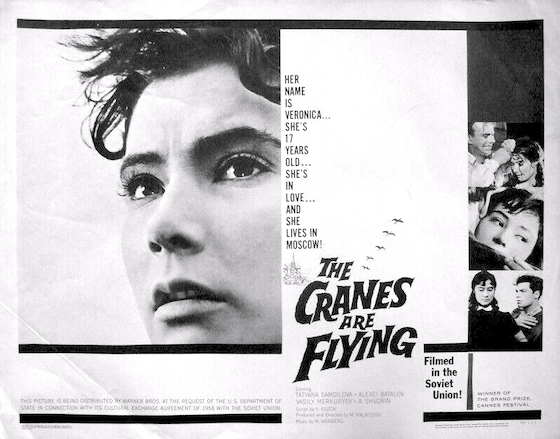
The Cranes Are Flying

The Russians seem to excel at making a certain kind of war movie; one that befits our stereotype of their national temperament. It might be most succinctly described as “grim as fuck”. The Cranes Are Flying is no Come and See in that regard, but it’s also a million miles away from the gung-ho, celebratory kind of World War II pictures being produced by the US and UK during the same era. No exciting commemorations of the heroic deeds of our brave boys here. Instead, this is a clear-eyed condemnation of the futility of sending the young off to war, and the devastation wreaked on those back at home.

Yet, for all of that, the film is underpinned by what feels like a broadly standard “wartime romance” storyline. Veronika (Tatiana Samoilova) and Boris (Aleksey Batalov) are young and in love, in that all-consuming do-or-die way only young people can be, when war is declared. He does some kind of important job so should be safe from the draft, but — spoiler alert! — he volunteers anyway. Will they survive the war so and be reunited? What other calamities will fate throw at them to prevent happiness? Yes, as if war weren’t enough, other Bad Shit goes down too. I suppose that’s part of what helps the film overcome what could have been a boilerplate plot: that it’s not just about Veronika pining away at home while Boris tries not to get killed on the front line. Indeed, the film is more focused on Veronika’s struggles than on Boris fighting the actual war, and it benefits immensely from a strong performance by Samoilova as Veronika navigates her own personal battles.

The war at home

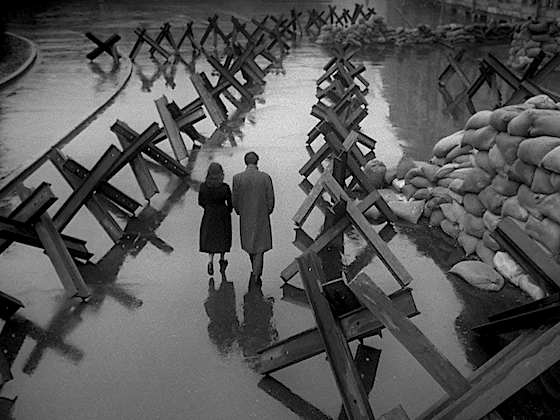
Nonetheless, what really elevates and defines the film is the truly remarkable camerawork by cinematographer Sergey Urusevskiy. Appropriately, his then-groundbreaking use of handheld cameras was a filming technique he had learned as a military cameraman during the war. But its effectiveness goes far beyond the mere fact the camera isn’t mounted. ‘Handheld’ tends to conjure an idea of rough, on-the-fly, documentary-esque filmmaking, but that’s not the impression you get here. The shots are still carefully composed, it’s just that they’re also often extraordinarily and innovatively designed, in a way that remains striking seven decades later. The very way the camera moves is sometimes part of the storytelling itself; at others, it cleverly imparts new information mid-shot, or reveals the scale of events. As an inherently visual success, there’s little point in trying to describe it — “just watch it” has rarely been more apt. (That said, Chris Fujiwara’s essay for the Criterion Collection neatly describes several of the film’s most memorable shots.)

The Cranes Are Flying was a huge success on its release, both at home in the Soviet Union — where it was a breath of fresh air for a nation used to positive propaganda pictures — and abroad, becoming the first (and last) Soviet film to win the Palme d’Or. (For our part, it was nominated for two BAFTAs, although it won neither: it was one of several still-acclaimed movies that lost Best Film from Any Source to a British film (Room at the Top) that also won Best British Film (do I smell bias?), and Samoilova lost Best Foreign Actress to the lead from that same film (hmm…) Next time someone tries to claim awards have become meaningless, maybe suggest they always have been.) They also don’t really matter, this many years later, when we can easily appreciate this film’s successes — both for the impact it had at the time, and the one it continues to have today.

5 out of 5

The Cranes Are Flying is the 91st film in my 100 Films in a Year Challenge 2024. It was viewed as part of Blindspot 2024. It was my Favourite Film of the Month in November 2024.

2022 | Week 34

Skipping week 33 (when I didn’t watch anything), here are all the films I watched in week 34 — which, if anyone’s interested, was back in August. Somehow, I don’t think I’m going to get caught up on my 2022 reviews before the end of the year…

  • The Winter Guest (1997)
  • Repeat Performance (1947)
  • Carousel (1956)


    The Winter Guest

    (1997)

    Alan Rickman | 105 mins | digital (SD) | 16:9 | UK & USA / English | 15 / R

    The Winter Guest

    The writing and directing debut of actor Alan Rickman, The Winter Guest follows four loosely-connected pairs of characters through a day in their lives, all confined to a small Scottish seaside town where the stark winter has turned the sea to ice. It’s the kind of film where nothing happens: the characters hang out with each other and talk, basically, with their issues ranging from bereavement to stereotypical teenage sex obsession (one boy played by a young Sean Biggerstaff wants… a bigger staff, wink wink. Sorry, the pun was too tempting to avoid).

    The confined setting and characters means the end result feels theatrical in both style and content — it’s basically just a series of two-handers, with quite mannered dialogue. And yet its staging isn’t so limited, because Rickman and cinematographer Seamus McGarvey do an excellent of of evoking the chilly surroundings (most of the film is set outside), giving the scenery a painterly feel. That’s probably in part due to using digital matte paintings to convey the frozen ocean, but it extends to the beaches and town buildings, too. Or it could just be an unintended side effect of the smoothing conferred by watching in digitally compressed SD; but as it’s just about my favourite aspect of the film, let’s assume it was intentional and skilfully done.

    3 out of 5


    Repeat Performance

    (1947)

    Alfred Werker | 93 mins | Blu-ray | 1.37:1 | USA / English

    Repeat Performance

    On the eve of 1947, actress Sheila Page (Joan Leslie) shoots dead her husband (original Saint Louis Hayward). She flees, ending up at the home of her producer (second Falcon Tom Conway) in the early hours of New Year’s Day… 1946. Given the chance to re-live the past year, can she make things right?

    Repeat Performance gets classified as film noir, but I feel like it’s one of those films that sits on the periphery of what qualifies for the genre. The opening — in which a woman shoots dead her husband, in New York City at night — yes, very noir. But what unfurls over the next 90 minutes is more of a backstage romantic melodrama by way of Twilight Zone-style fantasy. But that’s the thing with noir: as a movement that wasn’t recognised and codified as a genre until after it was over, what ‘counts’ can be a very broad church.

    Here, the odd combination of styles makes for an unusual and mostly entertaining film. My only real gripe is that we’re given very little idea what went on in the ‘original’ 1946, so it’s hard to tell how much effort Sheila is actually making to change it, or to follow how successful she’s being. This kind of perspective is perhaps the benefit of a further 75 years of development and refinement in the field of fantastical storytelling — Repeat Performance isn’t a Fantasy film in the true genre sense, more a Thriller with a neat inciting twist, a la Sliding Doors (my go-to example of a Fantasy film that doesn’t care it’s a Fantasy film!)

    The plot is bolstered by strong or likeable performances across the board. Some of the lead cast may be better known for starring in B-movie schedule-fillers, but this is proof if proof were needed that to interpret that as a sign of limited skill on their part would be an incorrect conclusion. Which is a rather torturous way of saying “Hayward and Conway were quite good actors, actually”. Hayward is particularly good here, getting to show off his range from loving husband to psychopathic abuser, plus a few other stages in between. Conway is more at the likeable end of the spectrum as Sheila’s kindly producer, while Richard Basehart’s performance (in his movie debut) as queer-coded poet William Williams (in the original novel, the character is a transvestite) was so impressive that the producers gave him more scenes with Leslie and bumped up his billing.

    4 out of 5

    Repeat Performance is the 52nd film in my 100 Films in a Year Challenge 2022.


    Carousel

    (1956)

    Henry King | 123 mins | digital (HD) | 2.55:1 | USA / English | U

    Carousel

    Carousel is a spectacularly odd entry in the Rodgers & Hammerstein canon of musicals. Based on a play called Liliom (which was previously filmed by Frank Borzage in 1930 and Fritz Lang in 1934), it tells the story of a carnival barker (Gordon MacRae) who’s been dead 15 years, but in flashback we learn of how he fell in love and married, and how he died, and why he now gets a chance to go back for a day to make amends. That almost makes the film sound focused. As it plays out, the storyline has a weirdly aimless quality, not helped by songs that are mostly mediocre or bizarre. That’s before we get to the horrendously outdated views on domestic violence, or the fact that it’s not actually got very much to do with the titular fairground attraction.

    The darker material and themes could work in the right setting, but here they clash with the sunny seaside photography and stereotypically cheerful musical numbers. I mean, this is a story about a physically abusive husband and wannabe small-time crook, who can’t even change his ways when the afterlife gives him a second chance, and we have songs about the beauty of summer and the joys of a clambake (the latter may haunt your memories…)

    A strange film, and not in the good way. At least it’s made me curious to see the Borzage and Lang versions — perhaps as a straight drama it will be more obvious why this has merited adaptation so many times.

    2 out of 5


  • 2022 | Weeks 27–28

    Hello! Yes, it’s me — I am still here. I’ve just been finding my time filled up with other stuff: working on the 2022 iterations of both WOFFF and FilmBath Festival (in addition to the ol’ day job); dogsitting for the in-laws; throwing up from eating bad garlic…

    Anyway, here are some reviews of films I watched all the way back in July. (Oh dear, I am behind. Well, let’s see if I can catch up…)

  • Johnny Gunman (1957)
  • A Better Tomorrow (1986), aka Ying hung boon sik
  • Mifune: The Last Samurai (2015)
  • The Lost Daughter (2021)


    Johnny Gunman

    (1957)

    Art Ford | 67 mins | digital (HD) | 4:3 | USA / English

    Johnny Gunman

    The history of cinema is littered with fascinating asides and dead ends, and this is one of them: an independent film from before independent films were really a thing; from the time when the studio system was beginning to falter, but the film school auteurs hadn’t yet arrived (Spielberg, Scorsese, Coppola, et al were still in their teens when this was made).

    As with the films that would later break similar new ground after the digital video revolution in the ’90s, there are cracks — it’s amateurish and undeniably low-budget in places — but also artistry — every once in a while it’ll whip out an exceptionally well-lit scene or interesting visual. Story-wise, it’s an odd mix: there’s the noir-ish gangster plot line, which is derivative and clichéd; but it takes over the film from what you feel like it almost wants to be, which is a Before Sunrise-style slice of life. Maybe, in a freer world, that’s what the filmmakers would’ve produced; but when you’re one of the first people trying to break in from the outside, hitting the familiar beats of a genre is no bad idea.

    Some of the highlights of the film come at the start, with documentary-like shots of New York street life when our heroine visits the Greenwich Festival. It’s a brief little window into the real 1950s NYC, before the rote gangster plot comes to dominate. Indeed, being shot on location, and with an inexperienced cast, lends the whole production a certain veracity that you don’t always get from soundstage-bound studio pictures of the era. On the other hand, that’s also what gives it the rough edges that will make it unpalatable to some viewers.

    However you cut it, this is hardly a forgotten gem, but it’s an interesting detour of movie history that I’m glad I stumbled across.

    3 out of 5

    Johnny Gunman is the 45th film in my 100 Films in a Year Challenge 2022.


    A Better Tomorrow

    (1986)

    aka Ying hung boon sik

    John Woo | 96 mins | digital (HD) | 1.85:1 | Hong Kong / Cantonese, Mandarin & English | 18

    A Better Tomorrow

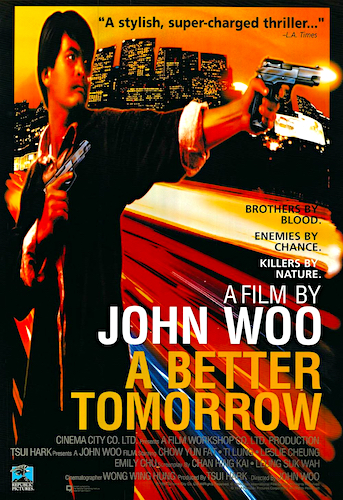
    A Better Tomorrow was the first in a run of modern-day gangster action movies that would make director John Woo’s name. Its original Chinese title translates as True Colours of a Hero, which is just as apt: it’s about a pair of mid-level crooks, one of whose brother is a cop, and the ways and whys in which they try and fail to escape the criminal life.

    Woo’s style was cutting edge back in the day, but that day is now pushing 40 years ago. Of course, his flamboyant style has never been to some people’s taste (witness the dismissive stance some still take towards M:i-2). Viewed now, this is cheesier and less stylistically polished than his later career-defining HK films like The Killer or Hard Boiled, but, on the couple of occasions it does explode into action, it’s suitably grandiose, and it has an engaging storyline and character dynamics.

    In regards to the latter, you can definitely see why Chow Yun-Fat was the breakout star. He’s actually got a supporting role, but his charisma shines off the screen, and there’s a plausibility to the way he handles the action. (Ironically, although it made Chow an action icon, he was cast because Woo didn’t think he looked like an action star.)

    Not Woo’s strongest film, then, but a definite sign of someone headed in the right direction — and, clearly, his later work paid off that promise.

    4 out of 5

    A Better Tomorrow is the 46th film in my 100 Films in a Year Challenge 2022. It was viewed as part of “What Do You Mean You Haven’t Seen…?” 2022.


    Mifune: The Last Samurai

    (2015)

    Steven Okazaki | 77 mins | DVD | 16:9 | USA & Japan / English & Japanese | 12

    Mifune: The Last Samurai

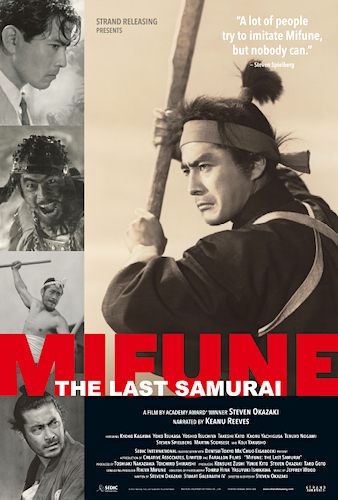
    At just an hour and a quarter, this biography of the actor Toshiro Mifune feels more like a primer on his work and life (complete with newcomer-friendly contextual asides into the history of Japanese cinema, the career of Akira Kurosawa, etc) rather than the deep-dive exploration of the man and his legacy that some reviewers hoped for. I certainly learnt stuff, but such criticism has validity. For that reason, the less you know about Mifune (and Kurosawa), the more you’ll get out of the film. That said, it might pay to have already seen some of their films — it’s not that director Steven Okazaki doesn’t introduce and summarise them adequately; more that, if you’ve seen them, you know the full context.

    Nonetheless, a good range of interviewees ensure the documentary is not without insight, managing to explore both what made Mifune the man tick and what made him such a phenomenal screen presence. Plus, the fact that Okazaki is happy to explain contextual topics (like a history of chanbara films; or matters of social history, like what losing World War 2 was like for the Japanese people) is both education and useful, because I imagine most non-Japanese viewers don’t have much baseline knowledge about this stuff. The film is definitely a biography of Mifune (not, say, a history of 20th century Japan using the actor as a gateway), but there’s much to be gleaned here for the interested viewer.

    4 out of 5

    Mifune: The Last Samurai is the 47th film in my 100 Films in a Year Challenge 2022.


    The Lost Daughter

    (2021)

    Maggie Gyllenhaal | 122 mins | digital (HD) | 1.66:1 | USA, UK, Israel & Greece / English & Italian | 15 / R

    The Lost Daughter

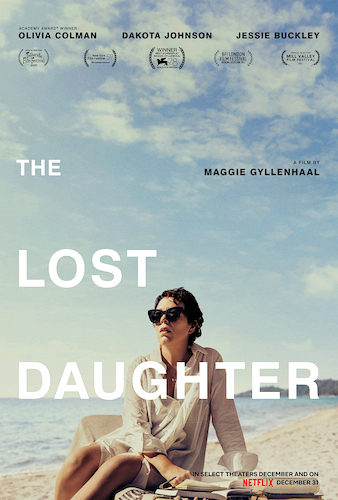
    Maggie Gyllenhaal’s directorial debut, based on a novel by Elena Ferrante, stars Olivia Colman as Leda, a woman on holiday alone in Greece, where she encounters a young mother (Dakota Johnson) whose daughter briefly goes missing, reminding Leda of her own younger days, when she was played by Jessie Buckley and had a husband and two daughters herself.

    It’s perhaps initially difficult to pin down exactly what The Lost Daughter is driving at — I suspect it’s the kind of film in which some people would say nothing happens. But it’s really a kind of mystery, where the mystery is the lead character’s psychology: why is she like this? There’s also the more obvious mystery of what exactly happened in her past, but that isn’t solved so much as gradually doled out in flashbacks. Obviously that kind of story relies a lot on its performances, and Colman is as strong as ever. So much of the importance of the film, which lies in her character and emotion, is conveyed without dialogue. That’s not do down the able support from Buckley and Johnson, mind.

    Gyllenhaal’s direction is interesting and effective, using lots of fairly extreme close-ups to give a kind of tactile sensation to the film. On the other hand, I would say it feels a little longer than necessary (especially after the ‘reveal’ scene, where the final piece of the puzzle clicks), and I’m not convinced it knows how to end (or perhaps it’s my fault for not really ‘getting’ the finale).

    Overall, though, it’s an impressive debut from Gyllanhaal, and a great alternative perspective on motherhood.

    4 out of 5


  • 2022 | Week 22

    Maybe I should’ve called this post “Weeks 21–22”, to ensure that the titles of these roundups had a complete run of weeks throughout the year. But I didn’t actually watch anything new in Week 21 (my only film that week was the Challenge-qualifying rewatch of On the Town), so it seemed inaccurate to include it.

    Week 22, on the other hand, was moderately busy, with this lot…

  • This Means War (2012)
  • To Be or Not to Be (1942)
  • An Unsuitable Job for a Woman (1982)
  • The Pajama Game (1957)
  • The Contender (2000)


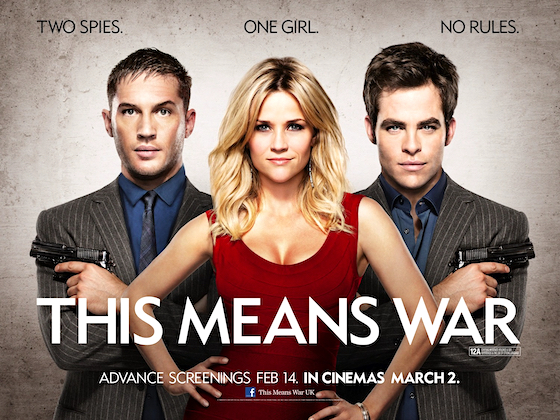
    This Means War

    (2012)

    McG | 98 mins | digital (HD) | 2.35:1 | United States / English | 12 / PG-13

    This Means War

    I bet whoever came up with this thought they were a genius: “spyfi action-adventure + rom-com? It’s the perfect date movie!” Of course, what you actually end up with is a film that struggles to do either part well.

    It stars the unlikely combo of Chris Pratt and Tom Hardy (you definitely can’t imagine Hardy doing a movie like this today) as BFF CIA agents who independently fall for the same woman, played by Reese Witherspoon. Uh-oh. Hilarity ensues as the guys deploy their CIA tricks and tech to influence the relationships. Yeah, it’s the kind of concept that once upon a time sounded like a fun and quirky rom-com, but nowadays seems at best morally dubious, at worst downright creepy. And, indeed, that’s how it plays out, with situation after situation that’s played for laughs but feels a little uncomfortable.

    Of course, the big question is “who ends up with who?” This is one of those films so committed to its storyline, so structured to lead to one correct answer, that… they shot multiple endings so they could decide in post. The one they went with doesn’t feel quite right, but, if you imagine the alternatives, most of them don’t either. Well, I say that: I don’t think it’s really a spoiler to tell you that Witherspoon ends up with one of the guys, when the correct choice would’ve been “neither of them. Run from the stalker-ish CIA agents! Find a normal man!”

    2 out of 5


    To Be or Not to Be

    (1942)

    Ernst Lubitsch | 99 mins | digital (HD) | 1.37:1 | USA / English | U

    To Be or Not to Be

    Ernst Lubitsch’s satire concerns an acting troupe in occupied Poland who become mixed up in a soldier’s efforts to capture a German spy before he can undermine the resistance. Made while World War II was still in full force, the film attracted criticism in some quarters for being a comedy about such tragic and ongoing real-life horrors. Lubitsch defended his work, writing to one critic to say, “What I have satirized in this picture are the Nazis and their ridiculous ideology. I have also satirized the attitude of actors who always remain actors regardless how dangerous the situation might be, which I believe is a true observation.” He’s right, of course; at least about the first part. Ridiculously, such debates about whether you can satirise the Nazis persist to this very day — just look at some of the responses to Jojo Rabbit.

    Lubitsch’s film is subtler than Waititi’s, though still undoubtedly a comedy. I mean, with its plucky resistance members taking occupying Nazis for fools, I couldn’t help but think of this as a classier version of ’Allo ’Allo… but I’ve never actually seen a whole episode of that show, so don’t hold my comparison in too high a regard. Whereas that sitcom is famous for its catchphrases and bawdy gags, To Be or Not to Be is less overt, preferring to paint the Nazis as fundamentally incompetent and derive its humour there.

    Despite the distaste some felt, it obviously works for most people, as it appears on several “great movies” lists, not least both the IMDb and Letterboxd Top 250s. To be honest, I feel like I need to give it another spin to digest it more fully, but these thin thoughts will have to suffice for now.

    4 out of 5

    To Be or Not to Be is the 35th film in my 100 Films in a Year Challenge 2022. It was viewed as part of Blindspot 2022.


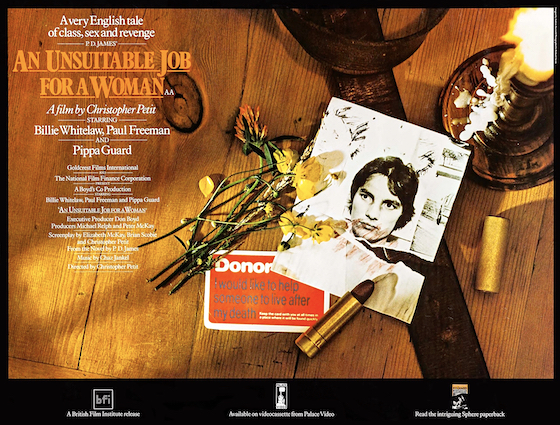
    An Unsuitable Job for a Woman

    (1982)

    Christopher Petit | 94 mins | Blu-ray | 1.85:1 | UK / English | 15

    An Unsuitable Job for a Woman

    I’ve never read the P.D. James novel on which this is based, but I’m assured it’s longer and more complex — the film rather lacks for plausible suspects, making the central murder mystery thoroughly guessable.

    That said, I’m not sure co-writer/director Christopher Petit is all that concerned with producing a true whodunnit. Put another way, I think he’s more interested in the characters, who happen to be involved in a mystery, than in the mystery itself. Which is fine, but I’m also not sure the film does as good a job as it could digging into those characters. I mean, the way the kinda-naïve young investigator becomes obsessed with the deceased subject of her inquiries — almost falling in love with him, it seems, like some kind of gender-flipped riff on Laura — is more nodded at than explored.

    In the end, I felt like I wanted to like the film more than it was actually giving me things I needed to really like it. It’s not bad, but perhaps it could have been great.

    3 out of 5


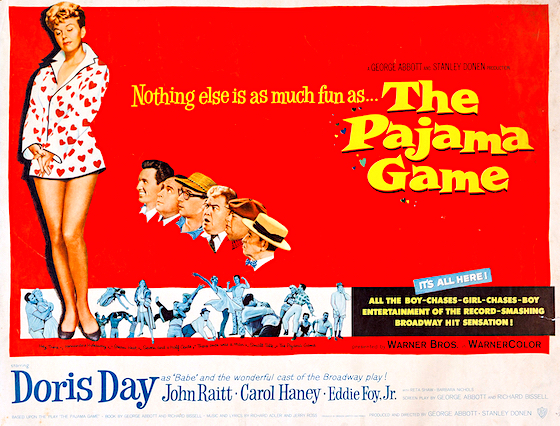
    The Pajama Game

    (1957)

    George Abbott & Stanley Donen | 101 mins | digital (SD) | 4:3 | USA / English | U

    The Pajama Game

    This minor musical is primarily of note for two things: the original Broadway staging featured the choreography debut of one Bob Fosse; and it features the song Hernando’s Hideway — if you don’t recognise the title, I’m sure you’ll recognise the tune. I had no idea this is where it originated.

    The story is about a pay dispute in a pyjama factory (given the current strikes and arguments here in the UK, you might think I watched this deliberately. Nope, total coincidence). On one side there’s the leader of the union’s grievance committee (Doris Day, one of just a handful of replacements made to the original cast when they transferred the stage production to the screen). On the other, the new superintendent (John Raitt, clearly a success on Broadway but less so on film). Of course, they fall for each other, before the pay conflict tears them apart. Can their love overcome such trials? What do you think?

    I saw someone describe The Pajama Game as an overlooked classic, which is taking things a bit far. It’s mostly likeable and quite fun, but rarely transcends that level. The undoubted highlight is Fosse’s choreography, which gives even the lesser numbers a polished dynamism. There are a couple of decent songs, but nothing really stands out, bar the aforementioned. It gets a bit too farcical in places, with some of the storylines ultimately taking a turn into very broad territory that feels misjudged. One primarily for genre fans only.

    3 out of 5


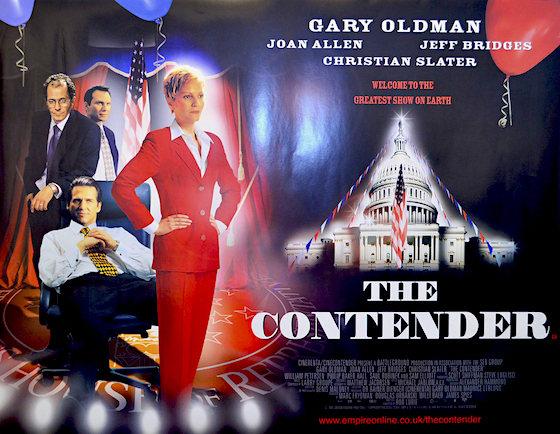
    The Contender

    (2000)

    Rod Lurie | 126 mins | Blu-ray | 16:9 | USA, Germany & UK / English | 15 / R

    The Contender

    I only picked this up on disc because it was part of a bundle of other titles I really wanted, but it also sounded like the kind of thing I’d like. Strange that I’d not heard of it before, then. I guess some films just get lost in movie history, especially when they’re a lesser member of a whole wave of movies. This is a political thriller of the kind they seemed to make quite a few of during the ’90s and into the early ’00s, but don’t really do anymore. I guess they exhausted the well, especially after 156 episodes of The West Wing.

    In this case, the story revolves around Laine Hanson (Joan Allen), the first woman nominated to be Vice President (it only took another two decades for that to happen in real life). There’s the familiar battle between the Democrats to get her confirmed, and the Republicans who’d like to do anything to thwart the Democrats. Amongst the scheming between the two sides, the big revelation is that Laine possibly engaged in a scandalous sex act while in college. She refuses to confirm or deny the rumour — it’s her personal business and shouldn’t affect her appointment. Except, of course, it does.

    Various other allegations come and go throughout the confirmation process, the two sides continuing to go back and forth in their attempts to win. It’s not necessarily the point the film is making, but it’s a reminder that politics is all a game to those involved, even as it can have serious effects on the lives of the rest of us. More overtly, the film tackles the different standards a woman is held to when trying to take public office. Fortunately, it’s not as overbearing with that as it could be. Indeed, all round the film is fairly understated. It’s a solid, unflashy, procedural-based kind of thriller.

    That is until the end, when it throws away the understatement for a grandstanding speech based around a fundamental belief in the greatness and goodness of the American political system. It would be heavy-handed in any circumstance, but the past few years (if not longer) of American politics have shown it for the total lie it always was. It doesn’t wholly undermine what’s gone before, but it does end the film on a sour note.

    4 out of 5


  • 2022 | Weeks 18–20

    These three weeks take us most of the way through May. When I first started writing this batch of reviews, I thought that would bring me almost up-to-date… but then I realised we were already over halfway through June, and, as I finish it, June is almost over. Time flies!

    It’s partly because I haven’t been watching as many films over the past couple of months (so it doesn’t feel like I watched these as long ago as I actually did), instead spending a lot of my leisure time on finally watching Apple TV+ series For All Mankind (I’ve just finished season one, which was really good, and I hear only gets better) and replaying all the Monkey Island games (I’m on the fifth and, to date, final one now).

    But I digress. Because I already posted Shang-Chi and Frances Ha separately, the remaining reviews from this period are…

  • The Monolith Monsters (1957)
  • Hannah and Her Sisters (1986)
  • Chip ’n Dale: Rescue Rangers (2022)


    The Monolith Monsters

    (1957)

    John Sherwood | 77 mins | Blu-ray | 2:1 | USA / English | PG

    The Monolith Monsters

    I watched this film in Eureka’s box set of ’50s B-movies, Three Monster Tales of Sci-Fi Terror. As you can tell from its inclusion there — and, indeed, its title — this is one of a wave of “monster movies” from that era. Except it isn’t, really. In fact, it’s a sci-fi disaster movie jerry-rigged into what I guess was the prevailing B-movie trend of the day: the eponymous ‘Monolith Monsters’ aren’t monsters at all, but an alien rock that expands relentlessly.

    Whatever you want to call it, the film offers a mix of B-movie daftness and real-sounding science that’s quite appealing. For example: our heroes discover this crazy, hitherto unknown multiplying rock; then realise they have maybe two days to stop it before it destroys their town; and rather than, say, alert the government, or call in expert help, they decide to… figure it out for themselves. But it does make you wonder: is this poor B-movie logic, or just 1950s Americanness? I love the thought that some crazy extraterrestrial incident may have occurred in some backwater town in the middle of nowhere, and no one ever knew about it because the locals just dealt with it themselves. “Oh yeah, aliens invaded back in ’57, but we didn’t see the need to bother nobody else with it, just shut ’em down ourselves.”

    Yet for all that silliness, there’s some scientific logic in play too. Whether it’s real science or “close enough”, I don’t know (let’s be honest, it’s probably the latter), but they manage to make it sound convincing. It helps contribute to an exciting climax, in which a plan to stop the monoliths can only be executed at the last moment before the town is overrun. Rocks don’t normally move fast enough to create race-against-time tension, but hey, these are alien rocks.

    The more I reflect on The Monolith Monsters, the more I like it. For a pulpy B-movie, it has an appealing seriousness. Sure, there’s some schlockiness that I wager is inevitable thanks to its era and budget range, but it feels like it’s trying to be more than trashy entertainment, aiming instead to be a more grounded, almost realistic sci-fi thriller. In reaching for that end it becomes a little slow going at times, but overall it’s quite fun.

    3 out of 5

    The Monolith Monsters is the 31st film in my 100 Films in a Year Challenge 2022.


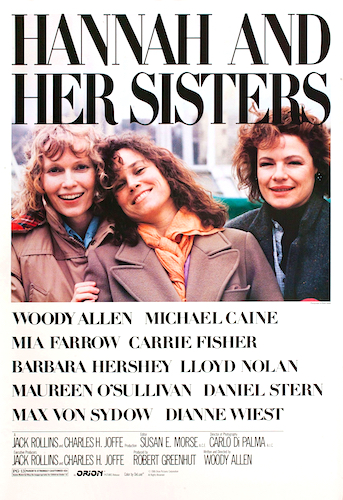
    Hannah and Her Sisters

    (1986)

    Woody Allen | 107 mins | digital (HD) | 1.85:1 | USA / English | 15 / PG-13

    Hannah and Her Sisters

    Hannah and Her Sisters is one of writer-director Woody Allen’s more popular and successful films. For example, it was nominated for seven Oscars, winning three; and nowadays, it’s his third highest-rated film on Letterboxd, above the likes of Manhattan and later-career highlight Midnight in Paris. All of which I mention because, personally, it’s the kind of film I’d describe as “something and nothing”, because I liked it well enough, but also didn’t really get what it was going for overall.

    It’s the story of… well, Hannah (Mia Farrow) and her sisters. They’re three middle-aged women who all live in New York City (of course) and, over the course of a couple of years, we follow their lives and relationships, with a focus on the latter. Actually, if anything, I might argue the biggest focus is on Elliot, played to Oscar-winning effect by Michael Caine, who is married to Hannah but finds himself pining for her sister, Lee (Barbara Hershey).

    I say “might argue” because Hannah and Her Sisters is one of those films that feels like a collection of subplots. All of the storylines play out, then they stop, with happy endings almost across the board, and that’s your film. I expect it’s based around a theme of some kind, but all I really got it from it was the old “the grass is always greener” adage. Apparently Allen particularly wanted to make something about the relationship between sisters, because he thought that was more complex than between brothers. Fair enough, but I’m not sure it really comes across in the finished film. There are only about two or three scenes in which the sisters actually interact. They’re mostly off on their own subplots; and while those subplots do effect each other, I don’t think they truly speak to the sisters’ relationships; not in any revelatory depth, anyway.

    I’ve enjoyed quite a few of Allen’s films that I’ve seen, but Hannah and Her Sisters won’t be cracking my personal favourites of his work. It was fine to watch — not exceptionally funny or dramatic or insightful or original, but fine — and then it ends, and we go on with our lives. It’s not bad, but it also wasn’t anything much. Not to me, anyway.

    3 out of 5

    Hannah and Her Sisters is the 32nd film in my 100 Films in a Year Challenge 2022. It was viewed as part of “What Do You Mean You Haven’t Seen…?” 2022.


    Chip ’n Dale: Rescue Rangers

    (2022)

    Akiva Schaffer | 97 mins | digital (UHD) | 2.39:1 | USA / English | NR* / PG

    Chip ’n Dale: Rescue Rangers

    On the surface, there’s nothing here for me — a live-action remake/reboot of a late-’80s/early-’90s cartoon that I don’t remember ever watching — but something persuaded me to watch the trailer, and that convinced me to watch the film the moment I could. If you’ve missed said trailer, or any of the attendant hype or reviews, what sold me is that this isn’t just an update of a children’s cartoon with modern tech, but a Who Framed Roger Rabbit-style riff on cartoon celebrity.

    Like Roger Rabbit, it’s set in a version of our world where cartoons are ‘real’ and living alongside us, and they act in the TV shows and movies we know them from. Decades on from the Rescue Rangers TV show, Chip (voiced by John Mulaney) and Dale (Andy Samberg) no longer get along, but when an old friend goes missing, they’re thrust into investigating his disappearance together.

    Frankly, the plot and character arcs feel like stuff you’ve seen before — probably because we have. Although Roger Rabbit is the obvious reference, the film’s storyline feels very similar to the Melissa McCarthy-starring Muppet version of the concept from a couple of years ago, The Happytime Murders. It works better here, though, because it’s not leaning on crudeness as a comedic crutch. If you didn’t see that film, it might be to Chip ’n Dale’s advantage in terms of feeling fresh.

    Instead, the best bit of the film is that it’s full to bursting with fun nods and references to pretty much every facet of (Western) animation. These are often tucked away in the background or on the periphery for the eagle-eyed to enjoy, with the film rarely (if ever) stopping to show them off. To its credit, that means the abundant Easter eggs aren’t allowed to overshadow the story, and so the film avoids using them in the same way Happytime Murders used its vulgarity. It’s just a shame that said story is a little well-worn.

    Ultimately, Chip ’n Dale gave me the same kind of entertainment as its trailer, but for 95 minutes. Which, in a way, is fair enough — no one can accuse the trailer of being misrepresentative. On the other hand, it would be nice if there’d been something more to substantive to discover. It’s no contender for Roger Rabbit’s throne, but nor is it another Happytime mess. My score rounds up, because I did have fun.

    4 out of 5

    Chip ’n Dale: Rescue Rangers is the 33rd film in my 100 Films in a Year Challenge 2022.

    * There was no certificate listed on the BBFC website at time of review. As you may or may not know, there’s actually no legal requirement for streamers to have their content certified, and so it seems Disney haven’t bothered. For what it’s worth, Disney+ lists the film as “9+”, which I guess equates to PG. ^


  • 2022 | Weeks 12–13

    So, it’s already the 15th — fundamentally halfway through the month — and this is just my ffith post in May. (It would’ve been third, but then my West Side Story and F9 reviews felt like they should have their own posts.) In my mind, I’ve raced this batch out as quickly as possible following my start-of-month posts, but it certainly doesn’t feel very speedy when you look at the dates.

    And, talking about messing with time, this roundup begins by taking us all the way back to March: week 12 ended on the 27th of that month. I might’ve posted sooner, were it not that week 12 seemed too small to run by itself. For what it’s worth, week 13 ended on 3rd April, so I’m still over a month behind now.

    Anyway, here are the rest of the new films I watched that fortnight…

  • Muriel’s Wedding (1994)
  • Cobra (1986)
  • Django & Django (2021)
  • A Man Escaped (1956), aka Un condamné à mort s’est échappé
  • Death on the Nile (2022)


    Muriel’s Wedding

    (1994)

    P.J. Hogan | 101 mins | digital (HD) | 1.85:1 | Australia & France / English | 15 / R

    Muriel's Wedding

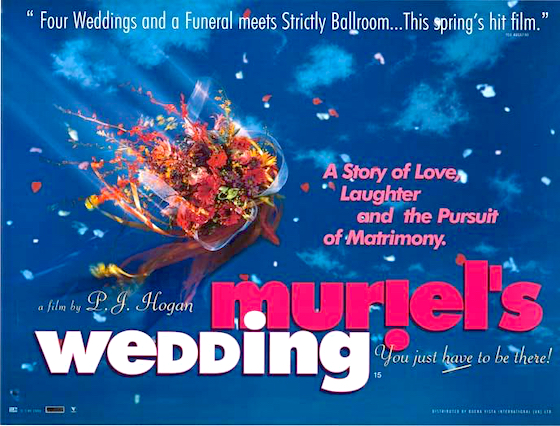
    This is one of those films I’ve been sort of aware of forever, but never really paid a huge amount of attention, until suddenly I’m watching it almost on a whim. It’s the story of the misadventures of small-town Australian girl Muriel (a breakout performance from Toni Collette), who doesn’t fit with her family or ‘friends’ and so sets off to the big city for a different life.

    I don’t know what I was expecting from the film, exactly — a kooky Aussie romcom, I guess — but not a surprisingly dark, quirky almost to the point of being twisted, black comedy. Not that that’s a bad thing, but it kind of bamboozled me by being a lot odder and more tonally complex than I’d anticipated. I liked it, but it’s a weird one.

    4 out of 5


    Cobra

    (1986)

    George P. Cosmatos | 87 mins | digital (HD) | 16:9 | USA & Israel / English | 18 / R

    Cobra

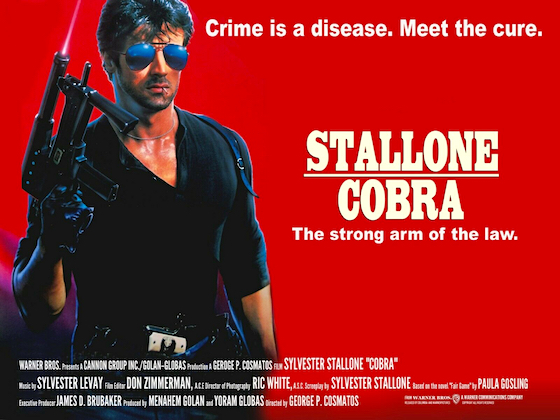
    This is the kind of film I might never have watched were it not for my WDYMYHS challenge. It’s a film I’d heard very little about, and what I had heard wasn’t good, but when it came to selecting the 12 most significant films I hadn’t seen from 1986, it scraped in. I’m glad things like that happen, because while Cobra is far from being a new favourite or something, I did enjoy it.

    Sly Stallone stars as a hot-shot cop on the trail of a serial killer with cult affiliations. That’s about it for the plot. This is a film that’s all style and no substance — though, when you’ve got this much style, maybe that is the substance. It’s so much a stereotypical ’80s macho action fest that it plays like a spoof of itself in places, with over-the-top editing, performances, and one liners that all seem driven by some sense of ‘cool’. I kinda love it for that. Take the car chase at the halfway mark: it’s a ludicrous sequence (one bit barely connects to the next; cars explode when shot; etc), but it’s filmed and cut with style and packed with excitement. It’s epic.

    Remarkably, it’s based on a novel. I say that’s remarkable because novels are devoid of being able to show off flashy visuals or dynamic action sequences, so you think of them as being heavier on things like plot and character — but, as discussed, this has very little plot, and even less character development. The already-brief running time seems to mostly contain music montages and extended action scenes. Reportedly the original cut was around two hours, which was then mercilessly shorn down to the under-90-minute final cut in an attempt to squeeze in more screenings per day. I imagine a lot of what went was the plot, although apparently there was also a lot of graphic violence — and what we’re left with still earnt an 18.

    I guess if a “director’s cut” was going to surface it would’ve done so by now (given all the other films that got them back in the ’00s). It’s something of a shame, because perhaps that version would round out the storyline enough to match the flair that’s all we get from the existing cut. Really, it’s a trashy film, but I rather enjoyed its trashiness. As stated, it’s all style and, at just 87 minutes, all business.

    3 out of 5

    Cobra is the 23rd film in my 100 Films in a Year Challenge 2022. It was viewed as part of “What Do You Mean You Haven’t Seen…?” 2022.


    Django & Django

    (2021)

    Luca Rea | 77 mins | digital (UHD) | 16:9 | Italy / English, Italian & French | 15

    Django & Django

    The work of the “second-best Spaghetti Western director”, Sergio Corbucci, is analysed by admirer Quentin Tarantino, and supplemented with a handful of anecdotes from a couple of people who worked with him. The small number of interviewees means the film is lacking in the depth you get from having multiple perspectives, but it’s a fine overview of Corbucci’s work nonetheless.

    Indeed, the title — implying a focus on two specific films — is a bit of a misnomer. Not only is it about Corbucci’s career as a whole, with Django just one film among many, but there’s only a single clip from Django Unchained, when QT mentions how Corbucci’s style influenced his choice of Southern setting. That’s it for discussion of Tarantino’s own work — barring a lengthy opening aside into the alternate history of Once Upon a Time in Hollywood; a ‘short story’ about Rick Dalton’s time in Italy and his meetings with Corbucci. Tarantino relates these events as if they’re historical fact — the guy really did thoroughly imagine his alternate history!

    3 out of 5

    Django & Django is the 24th film in my 100 Films in a Year Challenge 2022.


    A Man Escaped

    (1956)

    aka Un condamné à mort s’est échappé ou Le vent souffle où il veut

    Robert Bresson | 101 mins | digital (HD) | 1.33:1 | France / French & German | U

    A Man Escaped

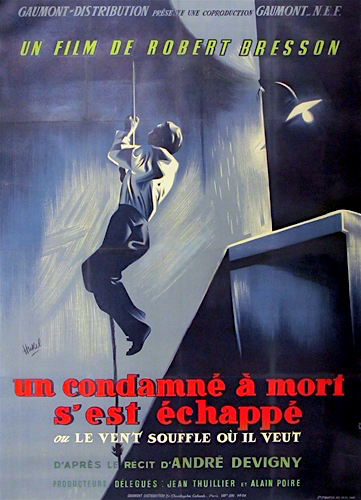
    Most “prisoner of war” movies are about plucky Brits and/or Yanks stuck in jail somewhere behind enemy lines, working out ways to escape almost as a time killer, or at best a matter of honour. A Man Escaped is something different. Based on the memoirs of André Devigny, a member of the French Resistance held in a French prison by the occupying Germans during World War II, and written and directed by Robert Bresson, who was also imprisoned by the Germans as a member of the Resistance, you can’t doubt its pedigree for authenticity. Indeed, Devigny was an adviser on the film, and lent the production the actual ropes and hooks he had used in his escape. More than these points of fact, it’s the film’s overall tone that’s striking — more dour and pessimistic than the usual POW drama, at least as I remember them. Here, the need to escape isn’t a game, it’s literally life or death.

    Bresson certainly knows where he wants his focus to be. The film begins with our hero, Fontaine (François Leterrier), arriving at the prison, although an escape attempt on the way there sees him immediately condemned to solitary confinement. Nonetheless, we remain by his side, never leaving him or his point of view, right until the end, when… well, that would be a spoiler. In terms of background, there’s only what we can pick up along the way; the barest outline of who he is, why he’s there, and what awaits him on the outside. That’s extraneous detail — this is all about his time in prison, his mentality in prison, and how he intends to escape the prison.

    To that end, Bresson spends a lot of time detailing very little. The process by which Fontaine fashions ropes, or chips away at a crack in his door to facilitate a way out, is shown in almost-excruciating detail. It’s all about the prep. When something truly dramatic does happen — like Fontaine gaining a roommate, and the question of whether that man can be trusted — it’s dealt with quickly, confined to a couple of quick scenes. I can only think that’s part of the point: much of the work to escape prison is tedious preparation, but when a spanner gets in the works it has to be dealt with quickly lest it derail the whole enterprise. Such ‘big things’ are a potential threat, but it’s arguably the little things that are even more dangerous. Accidentally drop something noisily, thus alerting the guards to your suspicious activities, and it’s all over.

    As a film, it doesn’t feel as strikingly stylised as the other Bressons I’ve seen, but it definitely has a stripped-back simplicity that’s part of his overall ethos. It’s debatable if we need the semi-monotone voiceover that describes exactly what we can see on screen — I’m no expert, but such an unnecessary and purely cinematic addition seems out of sorts with Bresson’s usual style. That said, at points it adds insight into Fontaine’s thought process, so the narration is not without merit.

    4 out of 5

    A Man Escaped is the 25th film in my 100 Films in a Year Challenge 2022. It was viewed as part of Blindspot 2022.


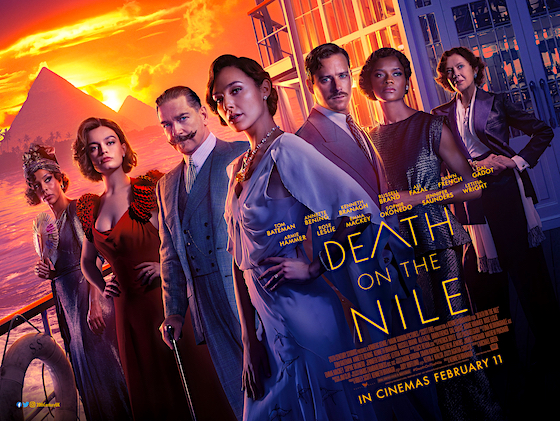
    Death on the Nile

    (2022)

    Kenneth Branagh | 127 mins | digital (UHD) | 2.39:1 | USA & UK / English & French | 12 / PG-13

    Death on the Nile

    Kenneth Branagh returns as both director and star for another Hercule Poirot mystery, after the somewhat-surprising success of his Murder on the Orient Express — “surprising” in the sense that it did better at the box office than I think anyone expected. It performed less well with critics, but I enjoyed it. Sadly, this followup is not its equal… though that’s not necessarily saying it’s bad.

    For me, it was a film of two halves — although, often as not, those two halves occurred simultaneously. For example: there’s an over-reliance on CGI for the Egyptian vistas makes many scenes look disappointingly fake; but then there’s a fantastic, huge set for the boat where much of the film takes place, and the real-life elements are quite handsomely shot on 65mm. Story-wise, there’s been a lot of rejigging (try to line up the cast with who played the roles in previous adaptations, for example, and you’ll soon discover a lot of the characters are amalgamations), but Christie’s typically excellent plotting survives mostly intact. That said, the ratio of buildup to detective work feels off, with the murder seeming to occur quite late in the film and the subsequent investigation feeling rather rushed.

    The motive behind screenwriter Michael Green’s remixing seems to be a serious attempt to make the film All About Love — not just the motive for the crimes, but all the subplots and whatnot too. I guess they were seeking some kind of justification for why this story is being filmed again, and what makes it worthy of the all-star movie treatment, rather than being just a run-of-the-mill, see-it-every-week-on-TV whodunnit. Plus, there’s a bizarre attempt to provide a backstory for Poirot’s moustache. No, seriously.

    Branagh initially seemed miscast as Poirot, but wasn’t bad in Orient Express, and that continues here. His version of the character is rather likeable, imbuing the Belgian with a neat sense of humour that marks his interpretation out from previous incarnations (Ustinov often played it for laughs too, but with less subtlety). There’s the customary all-star supporting cast, but they’re somewhat wasted, with some big names or talented performers left with too little to do. Though, when about half of them are employing dodgy accents, maybe that’s no bad thing.

    A mixed bag, then. It’s far from my favourite Christie adaptation; although it might actually be my favourite Death on the Nile by default, because I don’t think the previous versions (a Ustinov film and Suchet TV episode) are the best their respective series have to offer either. Whatever — I love this kind of stuff, and I’m glad to hear they’re intending to forge ahead with a third outing.

    3 out of 5

    Death on the Nile is the 26th film in my 100 Films in a Year Challenge 2022.


  • 2022 | Weeks 9–11

    Right, let’s try (again) to get things back on track.

    These compilations were/are meant to keep my reviewing roughly up-to-date with my viewing, but I don’t think stuffing them with too many films at once is the right way to go. I don’t know about anyone else, but I feel like five or six per post is about right (with some leeway, of course — I’m sure four or seven would be fine too). However, dividing like that means getting out of sync with Real Life, so I suppose I should clarify when “weeks 9–11” were: Monday February 28th to Sunday 20th March, to be precise. And back then, I watched…

  • Tintin and the Temple of the Sun (1969), aka Tintin et le temple du soleil
  • Los Olvidados (1950), aka The Young and the Damned
  • The Very Excellent Mr. Dundee (2020)
  • The King’s Man (2021)
  • Dirty Rotten Scoundrels (1988)
  • Nothing Like a Dame (2018)


    Tintin and the Temple of the Sun

    (1969)

    aka Tintin et le temple du soleil / The Adventures of Tintin: The Prisoners of the Sun

    Eddie Lateste* | 75 mins | DVD | 4:3 | Belgium & France / English | U

    Tintin and the Temple of the Sun

    This fourth big-screen outing for the Belgian reporter also continues the popular TV series, Hergé’s Adventures of Tintin, made by Belgian studio Belvision from 1957 to 1962. Having adapted ten of Hergé’s volumes for TV, here they tackled two more: two-parter The Seven Crystal Balls and Prisoners of the Sun. The story sees Tintin and chums head to Peru on the trail of their kidnapped friend, Professor Calculus, and to investigate an Incan curse that has befallen a previous party of archaeologists.

    Trekking up mountains and through jungles, with nefarious agents in pursuit, plus all the to-do with ancient curses and whatnot, this is chock-a-block with good old “Boy’s Own Adventure” stuff. As with so many of those, the joy lies in being swept along with the adventure rather than thinking about it too hard (our heroes are saved at the end because the Captain happens to have a scrap of newspaper that Snowy happens to steal that Tintin happens to fancy having a look at that happens to mention a handy forthcoming event). By the same token, there’s also the unavoidable effects of time: some of it feels a teensy bit racist nowadays; Tintin makes his way through the jungle merrily murdering animals left, right and centre. The animation itself is fine, with designs and an overall visual style that emulate Hergé well, but it does have a certain TV-ness.

    It’s also not available in the greatest of copies, at least to English-language viewers. Reportedly the original version contains two songs, both of which were cut from the UK video release, but only one of which has been restored for the DVD (and, I presume, the version currently available to stream from Apple, etc). Although most of the film is dubbed, the song is in the original French, unsubtitled; and has clearly been edited, because there are digital freeze frames around it. At the start of the film, the title card has been replaced in a similarly awkward fashion. Then there’s the 5.1 remix, which seems to be missing some effects and music cues. You can still enjoy the majority of the film despite these distractions, but it’s disappointing that we still have to put up with such palaver nowadays.

    3 out of 5

    Tintin and the Temple of the Sun is the 19th film in my 100 Films in a Year Challenge 2022.

    * Many (but not all) online sources list Lateste as the director, including IMDb, but the film itself doesn’t actually credit him — the only director-like credit is for “Belvision”. Lateste is credited as one of the screenwriters, at least. ^


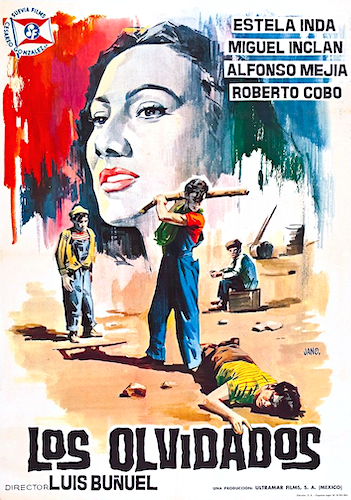
    Los Olvidados

    (1950)

    aka The Young and the Damned

    Luis Buñuel | 81 mins | digital (HD) | 1.37:1 | Mexico / Spanish | 12

    Los Olvidados

    Combine the literal translation of the film’s title — The Forgotten Ones — with the US retitling — The Young and the Damned — and you build a sense of what Los Olvidados (as it’s been released in the UK) is about. To be clearly, it’s a socially-realist depiction of life for children in the slums of Mexico City. Although initially condemned (according to IMDb, it only played for three days in Mexico before the “enraged reactions” of the press, government, and upper- and middle-class audiences caused it to be pulled), it’s since been reevaluated as one of the greats of Latin American cinema. Certainly, watching it after films like The 400 Blows (made almost a decade later), City of God (over 50 years later), and Capernaum (almost 70 years later), its influence is felt.

    The downside to that is the film feels somewhat less fresh and more worthy than the later efforts. It’s got an overt anti-poverty message that is admirable but sometimes heavy-handed (a school principal character feels like he’s been inserted just to state the film’s thesis out loud) or naïvely optimistic (the opening voiceover asserts that child poverty will ultimately be solved by progress. Over 70 years later, I don’t think progress is doing a great job…) While much of the movie works at its intended goal, when aspects like these intrude it stops feeling like a realistic depiction of poverty and more like a straightforward polemic about how it should be fixed. On the bright side, it avoids the lure of a pat happy ending — although one was actually discovered in 2002, apparently shot to appease Mexican censors. Clearly they managed to get the film released without having to cave on that point, and it’s better for it.

    4 out of 5

    Los Olvidados is the 20th film in my 100 Films in a Year Challenge 2022. It was viewed as part of Blindspot 2022.


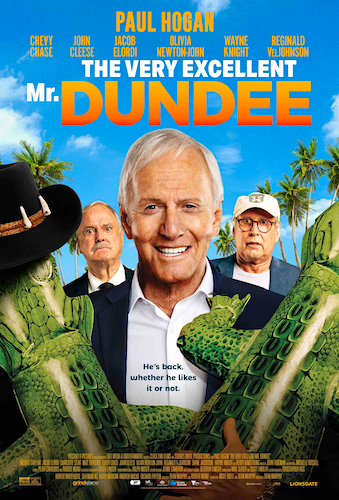
    The Very Excellent Mr. Dundee

    (2020)

    Dean Murphy | 88 mins | digital (HD) | 2.35:1 | Australia & USA / English | 12 / PG-13

    The Very Excellent Mr. Dundee

    Not a fourth Crocodile Dundee film, but rather a depiction of the accidentally-chaotic life of that series’ leading man, Paul Hogan, the archetypal Aussie now living in LA and, reaching his 80s, somewhat bemused by the modern world.

    Even from that quick summary, you can tell it’s not a terribly original premise. Couple that with a clearly small budget and you have a recipe for many dismissing the film out of hand. Personally, I found it to be surprisingly enjoyable, in a laidback, undemanding way. None of it is properly hilarious (though a bizarre musical sequence comes close), but it’s kinda amiable, and almost heartwarming at the end. Discerning viewers should perhaps not apply, but if you have any affection for the second or third Crocodile Dundee films (again, widely maligned instalments that I found passably entertaining), this is worth a punt.

    3 out of 5


    The King’s Man

    (2021)

    Matthew Vaughn | 131 mins | Blu-ray (UHD) | 2.39:1 | UK & USA / English | 15 / R

    The King's Man

    Co-writer/director Matthew Vaughn expands the Kingsman universe with this World War I-era prequel that delves into the backstory of how the eponymous organisation was founded. Unlike so many prequels, this does feel like a story worth telling — we don’t necessarily need it, but it’s not merely an exercise in visualising events we’ve already been told, or coming up with over-elaborate reasons for people’s names or whatever (why couldn’t Han Solo’s birth name have just been Han Solo, hm?)

    The story begins with Europe on the brink of war, and our heroes — led by the Duke of Oxford (Ralph Fiennes) — attempting to stop it. History tells us they fail, and so the narrative unfurls across WWI as they try to bring it to a close. That will see them come up against the manipulations of Rasputin (Rhys Ifans), who’s part of a secret organisation plotting to bring down the great empires.

    Let’s cut to the chase: the Kingsman films have a rep for elaborate fight scenes set to pop music. One of the major villains is Rasputin. You only need a passing familiarity with the disco hits of the ’70s to know what I was looking forward to here. Well, it doesn’t happen. Indeed, that stylistic calling card is more or less entirely abandoned (the fight does happen, of course, but it’s set to Tchaikovsky’s 1812 Overture — kind of like era-appropriate ‘pop’ music, I guess?) Apparently Vaughn did originally intend the sequence to be set to an orchestral version of the song in question, but ultimately felt it didn’t work.

    This, perhaps, speaks to another concern I had going in, which was that Kingsman’s highly irreverent, almost satirical tone might clash with the all-too-real WWI setting. Such an historical tragedy doesn’t feel right to be made light of in that way, even over a century later. So, as if to compensate, Vaughn and co have toned down the humour, making The King’s Man fairly serious… but without fully sacrificing the near-whimsy at other times, because, well, it’s part of the franchise. The result is a little awkward, tonally, swinging back and forth between historical seriousness and franchise-establishing fun. Put another way, it’s hamstrung by being an entry in a series known for its irreverence that feels the need to show due reverence to WWI. That’s a clash of values it struggles with, some might say admirably, but can’t quite reconcile. In short, it’s too serious to be a Kingsman film, but too Kingsman-y to be a standalone WWI-set action-adventure.

    I wouldn’t say it’s a disaster, by any means — but then, I enjoyed The Golden Circle when many lambasted it, so make of that what you will. Nonetheless, I’m looking forward to the next film getting back to Eggsy & co in the present day.

    3 out of 5


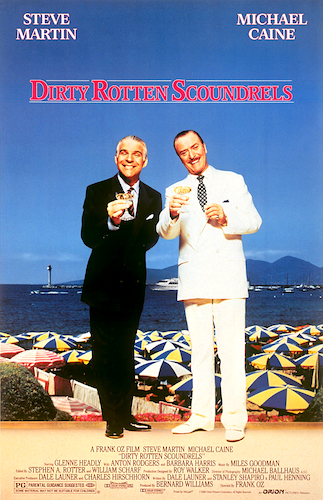
    Dirty Rotten Scoundrels

    (1988)

    Frank Oz | 110 mins | digital (HD) | 1.85:1 | USA / English | PG / PG

    Dirty Rotten Scoundrels

    Michael Caine and Steve Martin star as a couple of chalk-and-cheese con men, pilfering the fortunes of wealthy single ladies on the French Riviera, in this fun con caper with a neat sting in its tail.

    Caine hits just the right note as a charming con artist, his manner inspired by David Niven, who played the role in the original, 1964’s Bedtime Story. I was unaware the film was a remake until after watching it, though I did know it was itself subject to a gender-bent do-over in 2019, The Hustle. I don’t know how similar Bedtime Story and Dirty Rotten Scoundrels are, but, based on its trailer, The Hustle seems to be a direct lift from this, albeit peppered with the kind of pratfalling that’s de rigueur in modern big screen comedy.

    Marlon Brando was Niven’s co-lead, whereas here Caine gets Steve Martin as the very embodiment of a brash American — a little too brash, if anything, though reportedly there were bits he actually reined in. The running time could have done with a similar consideration, because it’s a little long for its breezy premise and tone (running 110 minutes, it would be better nearer 90), but that’s a minor complaint — it rarely feels too slow or draggy, just a little long overall.

    4 out of 5

    Dirty Rotten Scoundrels is the 21st film in my 100 Films in a Year Challenge 2022.


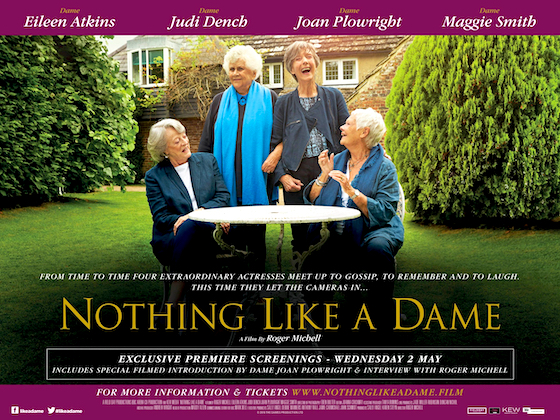
    Nothing Like a Dame

    (2018)

    aka Tea with the Dames

    Roger Michell | 77 mins | digital (HD) | 16:9 | UK / English | 12

    Nothing Like a Dame

    Four thespian friends, Dames all — Eileen Atkins, Judi Dench, Joan Plowright, and Maggie Smith — gather for a natter about their careers and lives. That’s it, that’s the film.

    Given the setup, plus the style of advertising and US retitle, you’d be forgiven for expecting a gentle bit of fluff; eavesdropping on a pleasant chinwag with four venerable British actresses. The film is that, in places, but it also has a surprising undercurrent of sadness running throughout, as these ageing ladies reflect on the ups and downs of their careers and personal lives now that they’re (shall we say) closer to the end than the beginning. It rarely bubbles to the surface, but it always feels like it’s there, somehow inescapable.

    If that gives proceedings more texture than you might’ve expected, then the film’s biggest flaw lies elsewhere. For me, it’s that it wasn’t long enough. The conversations are often delightful and occasionally insightful, but you feel like there’s so much more to be gleaned from these women. The film chops about between topics and pairings, always feeling like we’re getting snippets of the full conversation, never the true depth; like we’re watching a highlights reel of what should be a three-hour series, or something like that. I know it’s an old theatrical adage to “leave ’em wanting more”, but I really did want some more.

    4 out of 5


  • Archive 5, Vol.2

    I have a backlog of 442 unreviewed feature films from my 2018 to 2021 viewing. This is where I give those films their day, five at a time, selected by a random number generator.

    Today: musical comedies from ’41 and ’51; murder mysteries from ’33 and ’73; and an animated film that changed the Oscars.

    This week’s Archive 5 are…

  • Royal Wedding (1951)
  • A Study in Scarlet (1933)
  • Chicken Run (2000)
  • The Last of Sheila (1973)
  • Road to Zanzibar (1941)


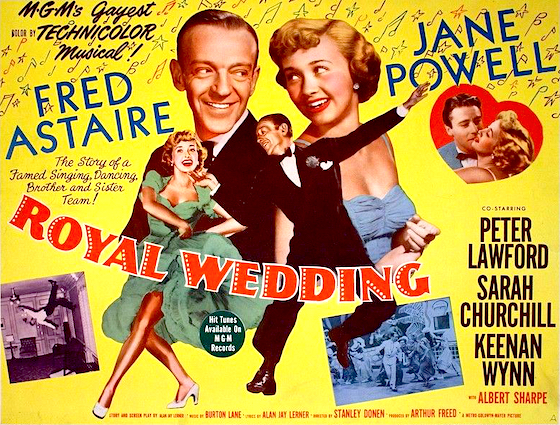
    Royal Wedding

    (1951)

    aka Wedding Bells

    Stanley Donen | 93 mins | digital (SD) | 4:3 | USA / English | U

    Royal Wedding

    Cynically, I assumed this US production was designed as a cash-in to a news event, most likely the wedding of Princess Elizabeth (i.e. the Queen) and Philip. Although those are indeed the eponymous nuptials, they actually took place several years earlier, in 1947; and in the UK, for its initial release the film was retitled Wedding Bells so audiences wouldn’t think it was a documentary about the real event. So much for my modern cynicism.

    The actual plot is semi-biographical, inspired by the real-life dance partnership of the film’s star, Fred Astaire, and his sister Adele, and who she went on to marry. Here the sister is played by Jane Powell (almost 30 years Astaire’s younger) as the duo take their successful Broadway show across the ocean to London in time for the royal wedding. Such window dressing aside, the plot that unfurls is run-of-the-mill, with both siblings finding themselves in romantic entanglements, and the songs are unmemorable too. The object of Astaire’s affection is played by Sarah Churchill, daughter of Winston Churchill, which adds a bit of fun trivia, at least.

    There is one noteworthy highlight: a set piece in which Astaire dances up the walls and across the ceiling of his hotel room, an effect that’s achieved seamlessly — there’s no wobble or what have you to give away the trickery, and Astaire’s choreography helps hide the behind-the-scenes technique too. There are one or two other neat bits if you’re a fan of dance-y musicals, but, on the whole, this is a thoroughly middle-of-the-road Astaire musical — not bad, just no more than adequate.

    3 out of 5

    Royal Wedding was #180 in my 100 Films in a Year Challenge 2021.


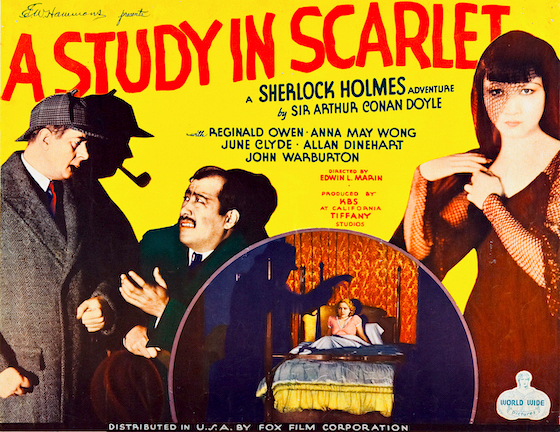
    A Study in Scarlet

    (1933)

    Edwin L. Marin | 72 mins | Blu-ray | 1.33:1 | USA / English | U

    A Study in Scarlet

    For some reason, cinema has a long history of taking the titles of original Sherlock Holmes stories but then producing an entirely new plot underneath. A Study in Scarlet — the very first of Sir Arthur Conan Doyle’s Holmes works — seems to be a particularly afflicted tale. It features the first meeting of Holmes and his roommate / sidekick / chronicler, Dr Watson, but I think there are two adaptations that actually show this — and, ironically, neither of them are actually called A Study in Scarlet (one is the debut episode of Sherlock, A Study in Pink, and the other is the first episode of the Russian series The Adventures of Sherlock Holmes and Dr. Watson, which is called Acquaintance). According to IMDb, “the Conan Doyle estate quoted the producers a price for the rights to the title and a considerably higher price to use the original story” — perhaps they did that all the time, hence my observed phenomena.

    Obviously, this ‘poverty row’ effort is one such example of title/story mismatch: this so-called adaptation stars Sherlock Holmes and Dr Watson… and that’s where similarities to the novel end. The pair don’t even live at 221b Baker Street — for no apparent reason, it’s been changed to 221a. Did the filmmakers just misremember one of the most famous addresses in literature? Having only paid for the rights to the title, the producers hired director Robert Florey (the Marx Brothers’ The Cocoanuts; Murders in the Rue Morgue) to write a new story, and actor Reginald Owen — who stars as Holmes — wrote the dialogue. Owen hoped this would be the first in a series of Holmes films starring himself. It wasn’t.

    Physically, Owen isn’t anyone’s ideal image of Holmes, but his actual performance is adequate. Much the same can be said of the whole film: it’s an entertaining-enough 70-minute crime romp, with enough incident to create a brisk pace, and a use of the rhyme Ten Little Indians that makes you wonder if Agatha Christie saw this movie before she published And Then There Were None six years later (or is it just a coincidence? The audio commentators spend a good deal of time chewing it over). Given second billing behind Owen is bona fide Chinese-American movie star Anna May Wong, even though she has relatively little screen time. She makes her mark, though, with a role that doesn’t simply conform to racial stereotypes (possibly an unintended side effect of her late casting rather than genuine progressivism by the filmmakers, but sometimes you gotta take what you can get).

    This particular Study in Scarlet is a long way from being a definitive Sherlock Holmes movie, but for fans of ’30s detective flicks, it’s nonetheless a likeable little adventure.

    3 out of 5

    A Study in Scarlet was #206 in my 100 Films in a Year Challenge 2021.


    Chicken Run

    (2000)

    Peter Lord & Nick Park | 84 mins | digital (HD) | 16:9 | UK, USA & France / English | U / G

    Chicken Run

    I’ve always enjoyed Aardman’s work. I grew up watching the Wallace & Gromit shorts on TV, and have seen all of their feature output — except their first. I’m not sure why it’s taken me 20 years to get round to Chicken Run. I guess when it was originally released I had grown out of “kid’s movies” but not yet grown back into them; but since then, to be honest, something about it never particularly appealed to me. It certainly has its fans: it’s still the highest grossing stop motion film ever; there was a push to get it an Oscar Best Picture nomination, the failure of which led to the creation of a category it could’ve won, Best Animated Feature (trust the Academy to shut the door after the horse had bolted); and when Netflix recently announced a sequel, there was much pleasure on social media.

    So, finally getting round to it, would I discover what I’d been missing all along? Unfortunately, no. I thought it was fine. In no way did I dislike it, but nor did it charm me in the way of my favourite Aardman productions. It’s rather dark for U-rated film — it doesn’t mince its words or imagery about the fact the chickens are being killed — and that contributes to some particularly effective sequences, like when our heroes end up inside the pie machine, or a suitably exciting climactic action sequence. There are some reliably decent gags along the way, too.

    I’m sure I’ll watch the sequel. Maybe I’ll like it more. But, I confess, the fact they’ve now announced a new Wallace & Gromit movie for the year after does have me even more excited.
    3 out of 5

    Chicken Run was #148 in my 100 Films in a Year Challenge 2020.


    The Last of Sheila

    (1973)

    Herbert Ross | 120 mins | digital (SD) | 1.85:1 | USA / English | 15* / PG

    The Last of Sheila

    I’d never even heard of this before Rian Johnson mentioned it as an inspiration for Knives Out 2. Co-written by Anthony Perkins (yes, Norman Bates from Psycho) and Stephen Sondheim (yes, the famous musical composer), The Last of Sheila is a murder mystery firmly in the Agatha Christie mould — despite the writers’ pedigree, there are no significant horror elements (even the deaths are, at worst, on the PG/12 borderline) and certainly no song-and-dance numbers (excepting a magnificently inappropriate song over the end credits, sung by Bette Midler). Apparently Perkins and Sondheim used to host elaborate scavenger hunts for their friends in the late ’60s and early ’70s, and they adapted them into a screenplay at the suggestion of a guest, Herbert Ross, who produced and directed the film (seems only fair).

    Further inspiration came from their professional lives and acquaintances, because the potential victims and suspects are all actresses, agents, and the like, gathered for a Mediterranean cruise aboard a producer’s yacht. He proposes they play a game about secrets and gossip — but clearly one of the secrets in play is too big, because someone winds up murdered. A well-constructed mystery is unfurled throughout the film, although its execution is a little variable: a fun, very Christie-esque first half gives way to long talky scenes in the second, as characters stand around and explain the plot to each other. But when that plot is as good as this — with some nice surprises, plus motives dark enough to give it a little edge — it feels churlish to object too strongly.

    4 out of 5

    The Last of Sheila was #186 in my 100 Films in a Year Challenge 2021.

    * IMDb says it was given a 15 on video, but the BBFC say it hasn’t been rated since 1973, when it got an AA. The BBFC site is crap nowadays; IMDb will accept any old junk users submit. You decide. ^


    Road to Zanzibar

    (1941)

    Victor Schertzinger | 87 mins | DVD | 1.33:1 | USA / English | PG

    Road to Zanzibar

    The second in what became the Road To… series — though it was never intended as such. What ended up becoming Road to Zanzibar was initially an original feature, first offered to Fred MacMurray (this before his roles in the likes of Double Indemnity and The Apartment) and George Burns (an actor I’m not particularly familiar with). After they rejected it, apparently someone at Paramount remembered Road to Singapore had done relatively well, and that Bob Hope and Bing Crosby seemed like a good pairing, and so they were offered it.

    As I wrote in my last review of a Road To film (which was over 11 years ago?! Jesus…), if you’ve seen one Road To film then you’ve a fair idea what to expect from any other — essentially, a suitably daft bit of fluff and fun. This one’s a bit thin — on plot, on gags, on everything — but it skates by on the charm of Bob and Bing, joined, as ever, by Dorothy Lamour. The only serious problem is the same as Singapore: dated depictions of African stereotypes. It kind of gets away with it by being a spoof of “African adventure”-type movies, but maybe that’s me being kind with hindsight. Either way, the bit where the tribe’s African dialogue is subtitled with contemporary American vernacular is one of the film’s more amusing gags.

    3 out of 5

    Road to Zanzibar was #110 in my 100 Films in a Year Challenge 2019.


  • Godzilla (1954)

    aka Gojira

    2019 #71
    Ishirô Honda | 96 mins | Blu-ray | 1.37:1 | Japan / Japanese | PG

    Godzilla

    Before its current re-fashioning as a major US-produced blockbuster franchise, the rep of the Godzilla movies was more-or-less cheesy B-movie SF with cheap-n-cheerful “man in a suit” special effects. (I expect die-hard fans would disagree, but to outsiders looking in, I feel that’s fairly accurate.) But that certainly wasn’t how things started with the first movie. Indeed, this first movie was nominated for Best Picture at Japan’s answer to the Oscars, only losing to Seven Samurai. There’s no shame for any film in losing to Seven Samurai. It was also a pricey affair: the most expensive Japanese film ever made up to that point, costing almost a million dollars — ten times the average budget for a Japanese feature at the time.

    But, more than just the blockbuster entertainment of its day, Godzilla is a serious-minded work. A giant monster stomping on cities — or, if you prefer, a man in a rubber suit stomping on models — may have soon become fodder for the kind of movie fans who enjoy pulp entertainment, but, in its original incarnation, it’s an analogy for the terror of the nuclear bomb. Released just nine years after the bombings of Hiroshima and Nagasaki, it’s one of the first films to deal with that scar on the Japanese national psyche. And lest you think this is something pretentious critics have projected onto the film after the fact, the movie itself draws the connection, with one character — a young woman, no less, as if to remind us of the recency of those events — commenting that she only narrowly escaped the bombings. A big part of why Godzilla still works as a film today, almost 70 years later, is because everyone involved is playing it straight, and the clear messages about the folly of mankind interfering with nature, and the futility of weapons, are powerful.

    That’s not to say it’s perfect. Subplots get in the way, like a love triangle that manages to waste screen time while not really having any significant impact on the viewer. (Reportedly, a flashback scene that would have helped explain the connection between two of the participants was deleted because it slowed down the film. The romance is slow enough as it is, but you never know, maybe that extra clarity would have helped.) Conversely, some of the moral conundrums raised by the story are barely touched on. One of the main characters is a scientist who thinks mankind should study Godzilla rather than try to kill it, but other than him stating that fact and consistently looking miserable, the film doesn’t really do anything more to engage with his argument.

    Good God

    As for the stomping monster action, viewed with a modern eye the effects are of course a mixed bag (the miniature vehicles look like something you’d find in a toy shop, for example), but make some allowances and they’re still pretty darn effective. An underwater sequence that mixes footage of real divers with “dry for wet” shots of Godzilla and lead characters remains mostly convincing. Godzilla may have lost Best Picture to Seven Samurai, but it did win the award for special effects, and that’s one thing it does have over Kurosawa’s film, at least. I don’t know if those same awards had one for music, but if so I guess Akira Ifukube’s score wasn’t even nominated. It would’ve deserved it for the main theme alone, though, which has since become iconic for good reason.

    The Godzilla franchise has come a long way and changed a good deal across the seven decades since this film’s release. It’s not a series, nor a genre, that’s to everyone’s taste (just look at the wide spread of reactions to the recent US movies, including the fact even people who broadly like them can’t vaguely agree on which order to rank them in). But this original, at least, stands tall as an example of how a movie that some might seek to dismiss as facile genre fare can actually be about a whole lot more.

    4 out of 5


    For 50 years, you couldn’t actually see Godzilla in the West — not exactly. Instead, you’d watch…

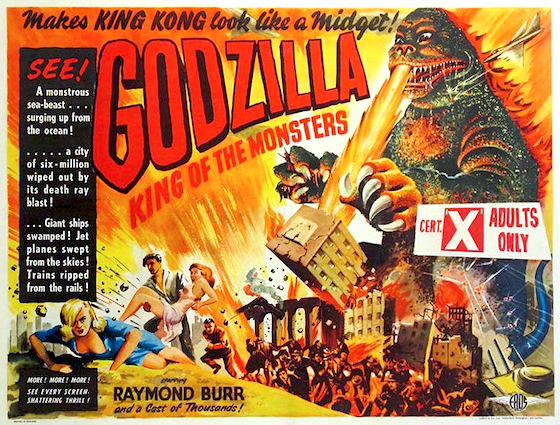
    Godzilla, King of the Monsters!
    (1956)

    2019 #82
    Terry Morse & Ishiro Honda | 81 mins | Blu-ray | 1.37:1 | Japan & USA / English | PG

    Godzilla, King of the Monsters!

    In an era where the original cut is king (to the extent that, say, a major studio might hand a director $70 million to complete his cut of a not-particularly-successful movie just so they can release it on a streaming service), it seems wild to remember that, until 2004 — a full five decades after Godzilla‘s premiere release — this re-edited, bastardised version was the only one available to Western audiences.

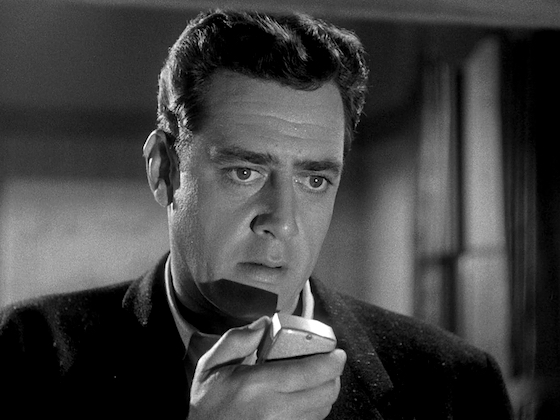
    With a runtime 15 minutes shorter than the Japanese cut, you might think King of the Monsters was just an abridgement. But they went at it more thoroughly than that back in the ’50s; in fact, almost 40 minutes of footage was cut, and the disparity is covered by newly-filmed scenes starring Raymond Burr as Steve, an American journalist. These new scenes don’t just place Burr’s character around the existing action, but work to make him the (human) star of the movie.

    The end result is actually fairly close to the original story-wise, just now there’s an American journalist hanging around the fringes. At first he’s often to be found at the back of a crowd or the edge of a room, observing events, but they get bolder as the film goes on, integrating him with some of the main characters, either by repurposing and rearranging original footage or shooting Burr with doubles whose faces we never see. It’s not a perfect match, but for a quickly-produced low-budget effort in the 1950s, it’s surprisingly well achieved. This is partly thanks to the choice of director for the new scenes. Terry Morse had 30 years of experience as an editor and director of low-budget films, and it was felt someone with that kind of background would be well-placed to maintain the continuity needed to make it seem like Burr was part of the original production.

    Raymond Burr, sir

    Morse also makes some interesting decisions about how to adapt the existing footage. Although all of the ‘Japanese’ characters speak perfect English with American accents in the new bits, a lot of the Japanese dialogue in Ishiro Honda’s scenes is left undubbed, and it’s never subtitled either. Instead, the film trusts us to infer what’s happening, or informs us via someone translating for Steve, or his voiceover narration. It feels like quite a mature way to handle a multi-lingual production. Unfortunately, any such maturity doesn’t extend across the board: when abridging the original, they removed or neutered much of its commentary about mankind’s destructive nature, thereby turning a powerful allegory into a simple monster movie.

    To my surprise, Godzilla, King of the Monsters is not a complete disaster. There’s a fair bit of the original movie left, and the American inserts aren’t unremittingly terrible, which they certainly could have been. If this was the only version of the film available, I’d probably give it a solid 3 stars. But it isn’t the only version anymore, so the question becomes: why watch it nowadays? It neuters some of what was great about the Japanese cut, and it’s inherently a bastardisation — so, other than curiosity value (or, for older fans, nostalgia), there’s no reason to bother with this. Stick to the real one.

    2 out of 5

    The Man Who Reviewed Some Films

    There are a lot of films about a man who did something — already on this blog I’ve written about men who invented Christmas, sued God, and, um, laughed. But I noticed I have many other reviews pending about such apparently-noteworthy fellas, so I’ve rounded most of them up into this one handy location.

    Some of these men knew stuff; some shot somebody; one just had a nap… but they’re all men who had a movie named after them. They are:

  • The Man Who Knew Infinity (2015)
  • The Man Who Knew Too Much (1956)
  • The Man Who Shot Liberty Valance (1962)
  • The Man Who Sleeps (1974)


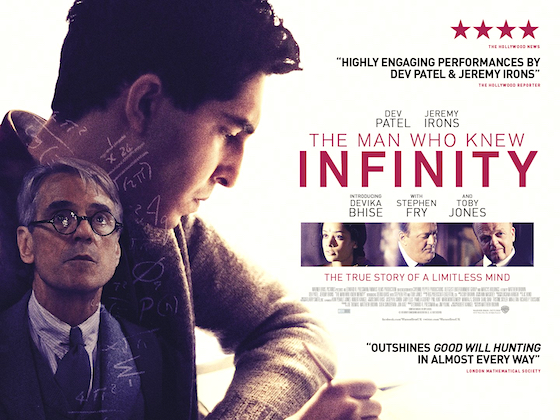
    The Man Who Knew Infinity
    (2015)

    2019 #65
    Matthew Brown | 109 mins | digital (HD) | 2.39:1 | UK & USA / English | 12 / PG-13

    The Man Who Knew Infinity

    Srinivasa Ramanujan (Dev Patel) is a man of boundless intelligence that even the poverty of his home in India cannot crush. His skill for mathematics attracts the attention of noted British professor G.H. Hardy (Jeremy Irons), who invites him to develop his computations at Trinity College, Cambridge. Ramanujan finds that his largely-intuitive mathematical theories clash with stringent academic requirements, just as his cultural values are challenged by the prejudices of 1910s Britain. With Ramanujan’s health in decline, the two men join in a mutual struggle that would define him as one of India’s greatest scholars. — adapted from IMDb

    Writer-director Matthew Brown takes this interesting true story and turns it into an ironically by-the-numbers biopic. Even with reliable actors like Patel and Irons headlining, there are some surprisingly stuff performances, and the film struggles to truly convey the genius or importance of the maths involved. Instead, it’s just lots of characters saying “OMG look at this stuff he thought up” and other characters saying “nah mate, it’s wrong” (except in the vernacular of 1910s Cambridge, of course). Alongside that, it doesn’t have many places to go with the story or characters, so it comes to feel repetitive as it goes round and round over the same points. Even the start of World War I has no genuine impact on events, factoring into the film only because that’s when these events actually happened, so Brown seems to feel it must be mentioned. Indeed, a lot of the film feels beholden to fact in this way, though I’m sure it must be doing the usual biopic thing of bending the truth.

    3 out of 5

    The Man Who Knew Too Much
    (1956)

    2019 #84
    Alfred Hitchcock | 120 mins | Blu-ray | 1.85:1 | USA / English | PG / PG

    The Man Who Knew Too Much

    Dr. Ben McKenna (James Stewart), his wife Jo (Doris Day), and their eight-year-old son Hank are on vacation in Morocco when they witness the public murder of a mysterious man who, before he dies, manages to reveal to Ben details of an assassination about to take place in London. The plotters kidnap Hank to keep the McKennas silent, so Ben and Jo return to London to take matters into their own hands. — adapted from IMDb

    Famously, this is the time Hitchcock remade himself: he’d previously filmed The Man Who Knew Too Much in 1934 while he was still working in Britain. Later, he’d compare the two by calling the original “the work of a talented amateur” while the remake “was made by a professional”, although he reportedly preferred the earlier version precisely because it wasn’t so polished.

    Undoubtedly, the 1956 Man Who Knew Too Much is not top-tier Hitchcock, but that doesn’t mean it’s without joys. Jimmy Stewart and Doris Day are perfectly cast as an ‘everyman’ American couple who accidentally get embroiled in international espionage, and Hitch could make such thrills work with his eyes closed. He’s also on top form during a sequence in the Albert Hall, a stunning set piece that lasts 12 minutes without a single word of dialogue, in which Hitch has the balls to just keep going through an entire piece of music, allowing the tension to almost build itself as he cuts around the room; even when Stewart finally turns up, we still don’t need exposition — we know exactly what’s happening.

    Although a key part of the film’s conclusion, it’s not the actual finale, which is a shame because the following plan to rescue Hank is a bit daft. And, when you think about it, the villains’ plot doesn’t make a whole lot of sense either. It’s stuff like that which gets in the way of The Man Who Knew Too Much being among Hitch’s very best work, but it remains a fine suspense thriller.

    4 out of 5

    The Man Who Shot Liberty Valance
    (1962)

    2020 #66
    John Ford | 118 mins | digital (HD) | 16:9 | USA / English | U

    The Man Who Shot Liberty Valance

    When US Senator Ransom Stoddard (James Stewart) returns to the town of Shinbone to attend the funeral of his friend Tom Doniphon (John Wayne), a young reporter persuades him to tell the story of why he’s there. Flashback to a quarter-century-or-so earlier, when Ransom, a newly-qualified lawyer (still played, unconvincingly, by 53-year-old Stewart), arrived in Shinbone with a plan to bring law to the West. After Ransom receives a beating from local heavy Liberty Valance (Lee Marvin), he recuperates at the Ericsons’ restaurant, where he takes a job in their kitchen to repay their kindness. He develops an affection for their daughter, Hallie (Vera Miles), who’s also being wooed by young rancher Doniphon (still Wayne, also in his early 50s — it seems there was a good deal of movie star vanity in this casting). With local law enforcement refusing to do anything about Valance’s violent oppressive tactics, Ransom eventually takes it upon himself to face the villain down…
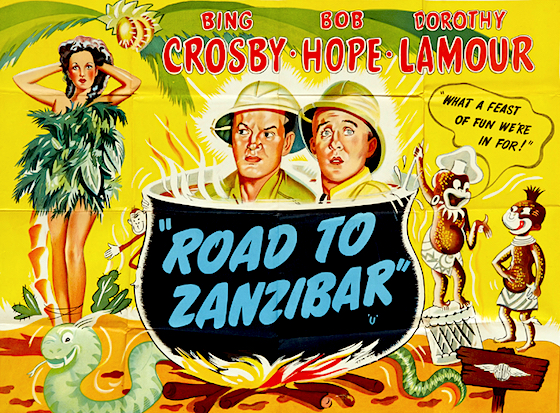
    Despite the violent promise of the title, Liberty Valance is very much a dramatic western rather than an action-packed one. Just shooting Valance isn’t the characters’ first recourse; indeed, the film on the whole is interested in the clash between the moral values of the old West and incoming modernity, and how the old ways can persist even as new ones come into force. That older Ransom is a senator is not incidental: a major part of the plot concerns Shinbone (or, rather, wherever it is) applying for statehood, and Ransom and Valance both standing to be a representative.
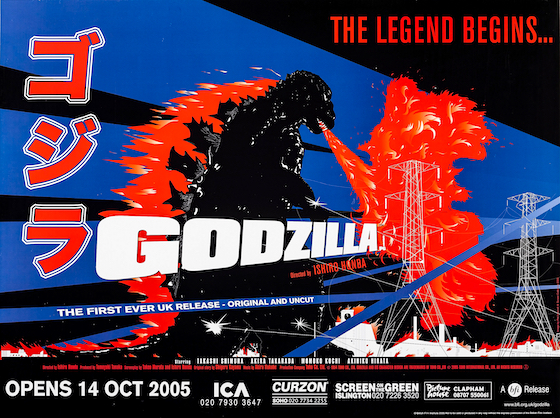
    All of which is fine, but unfortunately the dramatic focus seems to have resulted in the film being rather slow-going at times. The main plot is fine, but the telling could’ve been tighter — there’s a lot of stuff about Ransom washing dishes and teaching everyone to read and write. It establishes his place in town, sure, but it takes forever getting there. At the other end, Valance is actually shot a full 25 minutes before the end. There’s story to wrap up and twists to reveal, but it takes its sweet time doing it. None of which is distracting as the age-related issue I already referred to. I was genuinely puzzled why everyone kept talking about how young Ransom was, when Stewart patently isn’t, until I realised it was an example of good ol’ Hollywood vanity, where someone thought a star in his 50s could get away with playing a guy in his 20s.

    Despite that, however, Stewart and Wayne remain powerful screen presences, and the commentary on the changing face of the West — indeed, of the country as a whole — is indicative of a direction the genre continues to explore to this day (it’s what the whole of Deadwood is about, at its core).

    4 out of 5

    The Man Who Sleeps
    (1974)

    aka Un homme qui dort

    2020 #203
    Bernard Queysanne | 78 mins | digital (SD) | 4:3 | France & Tunisia / French

    The Man Who Sleeps

    When I watched this, it was ranked as one of the greatest films of all time by Letterboxd users. I did not feel the same — rather than Un homme qui dort, I found it more like Un homme qui t’endort. (That’s a joke I’m so pleased with, I’ve now used it four times.)

    At first it plays like a stereotype of French art house cinema: shot in black & white, it’s about a disaffected student, told with introspective voiceover narration, which philosophises at the level of a pretentious undergraduate, and nothing actually happens. But then I began to feel that, actually, it does a pretty good job of capturing how I’ve felt often in my life; especially back when I too was a pretentious undergraduate. But that feeling didn’t last much more than quarter-of-an-hour — and as the film is an hour and a quarter, that became a problem. As I slogged on through it, the interminable narration became repetitive; the musings less relatable. Just because warped minds exist doesn’t mean it’s worth our while to spend 78 minutes in their thoughts.

    The Man Who Sleeps is the kind of film that thinks it’s profound, but is actually pretentious. That may gel with the worldview of its undergrad subject, but, just as you wouldn’t want to listen to a real-life undergrad’s philosophising for over an hour, I don’t want to endure the same from a fictional one either. I guess it’s apt that a film titled “the man who sleeps” would be a good cure for insomnia.

    2 out of 5

    The Man Who Sleeps featured on my list of The Worst Films I Saw in 2020.