
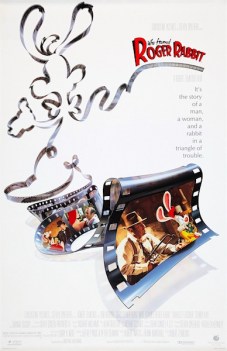
and a rabbit in a triangle of trouble.
Country: USA
Language: English
Runtime: 104 minutes
BBFC: PG
MPAA: PG

Original Release: 22nd June 1988 (USA)
UK Release: 2nd December 1988
First Seen: VHS, c.1991
Stars
Bob Hoskins (The Long Good Friday, Super Mario Bros.)
Christopher Lloyd (Back to the Future, Addams Family Values)
Charles Fleischer (A Nightmare on Elm Street, Gridlock’d)
Kathleen Turner (Romancing the Stone, The Virgin Suicides)
Director
Robert Zemeckis (Back to the Future, Beowulf)
Screenwriters
Jeffrey Price (Doc Hollywood, Dr. Seuss’ How the Grinch Stole Christmas)
Peter S. Seaman (Wild Wild West, Shrek the Third)
Based on
Who Censored Roger Rabbit?, a novel by Gary K. Wolf.
Animation Director
Richard Williams (Raggedy Ann & Andy: A Musical Adventure, The Thief and the Cobbler)
The Story
When cartoon movie superstar Roger Rabbit is accused of murder, rundown private detective Eddie Valiant overcomes his dislike of toons to take the case — which masks a much bigger conspiracy…
Our Heroes
Eddie Valiant is an alcoholic Hollywood PI who used to work high-profile cases involving toons, but now dislikes them because one killed his brother. Nonetheless, an innate sense of justice (and a pair of handcuffs) brings him to the aid of Roger Rabbit, the manic major cartoon star who’s accused of murder and on the run for his life.
Our Villain
The cheerily named Judge Doom, the sinister and literally-black-hatted judge responsible for Toontown who has developed a special substance especially for killing toons, called “Dip”. Very keen to introduce Roger to it.
Best Supporting Character
Jessica Rabbit, Roger’s human (well, cartoon human) wife. A slinky, sexy, 2D femme fatale, she’s the cartoon character even people who aren’t attracted to cartoon characters are attracted to.
Memorable Quote
“I’m not bad, I’m just drawn that way.” — Jessica Rabbit
Memorable Scene
When Judge Doom and his henchmen discover Roger in hiding, he and Eddie escape in a cab — an anthropomorphic toon cab called Benny. Cue a chase involving a real human in a cartoon vehicle, which exemplifies the film’s technical chutzpah.
Technical Wizardry
The whole film is a technical marvel, what with many of the lead characters being created in 2D animation integrated into live-action footage. What’s even more impressive is that they’re 2D characters who exist convincingly within a 3D space. Production went to a lot of effort to pull this off, including using life-size models on set. (And if you need proof of how hard it is to do right, watch Cool World.) In total, 326 animators worked full-time on the film, drawing and painting 82,080 frames of animation. Animation director Richard Williams estimates that, after including storyboards and concept art, well over a million drawings were completed for the film.
Making of
With a production budget estimated at $70 million, Roger Rabbit was the most expensive film produced in the ’80s. Animation is expensive, of course, and the team were dedicated: when Eddie takes Roger Rabbit into the backroom of the bar to cut the handcuffs, the ceiling lamp is bumped and swings around, meaning lots of work for the animators to match the shadows between the live-action footage and the animation — something most viewers aren’t even going to notice, at least not consciously. Apparently “bump the lamp” has since become a term used by Disney employees to mean going the extra mile to make something special even when most viewers won’t notice.
Next time…
Three short animations starring Roger Rabbit were made to promote the film and screened with other movies (they’re all available on the DVD/Blu-ray release). Although the original book is very different (and therefore any sequels to it are presumably unlikely to provide suitable movie material), Gary K. Wolf has nonetheless penned two follow-ups: 1991’s Who P-P-P-Plugged Roger Rabbit? and 2014’s Who Wacked Roger Rabbit? Talk of a movie sequel has occurred ever since the original film was a hit — J.J. Abrams met with Spielberg in 1989 to work on an outline and storyboards, for example. Nat Mauldin wrote a prequel titled Roger Rabbit: The Toon Platoon, about Roger and his animated friends having to rescue Jessica from the Nazis in 1941, but Spielberg decided he couldn’t satirise the Nazis after directing Schindler’s List. Retitled Who Discovered Roger Rabbit, the screenplay was reworked to cover Roger’s rise to fame on Broadway. That version got quite far: Alan Menken wrote five songs and test footage was shot that mixed live-action, traditional animation and CGI, but it was abandoned when the budget spiralled over $100 million. Nonetheless, various people involved have expressed their interest ever since, with numerous scripts supposedly in the works. Even Bob Hoskins’ death hasn’t stopped such talk, though it seems to have led to a definite focus on any follow-up being a prequel.
Awards
4 Oscars (Editing, Sound Effects Editing, Visual Effects, Special Achievement Award to Richard Williams for “animation direction and creation of the cartoon characters”)
3 Oscar nomination (Cinematography, Art Direction-Set Decoration, Sound)
1 BAFTA (Special Effects)
4 BAFTA nominations (Adapted Screenplay, Cinematography, Editing, Production Design)
1 Annie Award (Technical Achievement)
3 Saturn Awards (Fantasy Film, Director, Special Effects)
5 Saturn nominations (Actor (Bob Hoskins), Supporting Actor (Christopher Lloyd), Supporting Actress (Joanna Cassidy), Writing, Music)
Won the Hugo for Best Dramatic Presentation
What the Critics Said
“This splendidly entertaining film, which craftily combines live action with cartoon animation, […] is an absolutely new and novel motion-picture concept. Illusion on the big screen has never been better executed or more uproarious in effect. Assuming you can withstand the laughs during the first 10 minutes of the film — with its dazzling, breakneck animated sequence and introduction of the goofy star, Roger — then brace yourself; you`re in for the ride of your life, disbelieving all you will see and hear.” — Roger Hurlburt, Sun Sentinel
 Score:
 97%
97%What the Public Say
“Who Framed Roger Rabbit is not a children’s film; it’s too noir for that; there’s scenes of drinking, smoking, sexual intrigue and murder. The strong animated aspect, however, draws children into the film and these dark overtones engage them in a completely different way. That’s one of the things that’s so special about Roger Rabbit; you feel as if you’re watching a film made for an adult audience using elements that appeal to one’s more childish side. The USA and UK ratings of the film are a PG, so younger audiences can still watch. However, the twisting noir-esque plot focusing on Judge Doom’s attempt to destroy The Red Car trolley service and ToonTown in order to build a freeway can be hard enough for adults to follow. […] This is why the film works so well; everyone is committed and the characters show no awareness that they’re in a PG rated noir with elements of comedy; they commit as if they are in a 1940s, life-or-death, grown-up movie.” — queenieem, the6fingeredblog

“Effects movies” used to mean lots of model work and now of course means non-stop wall-to-wall CGI, but you could also apply it to Roger Rabbit, considering the monumental effort involved in animating half the cast, not to mention props and locations. But that would undersell it, because while the technical achievement remains impressive today (bearing in mind the limitations of the time) it’s all in service of the characters and the story. Even as you marvel at the visuals, you’re engrossed by the mystery and kept amused by the gags, including clever and witty references to cartoons and film noir.
I’ve always liked Roger Rabbit, but I re-watched it recently for this project and discovered I really love it. I think it’s underrated, even — it’s a masterpiece.

#98 will be… the beginnings of another stage of human evolution.
 I’m not sure I’d even heard the name Jeff Nichols before Midnight Special came along, at which point most of the gushing reviews that followed seemed to mention him with cult-like reverence. He’s the writer and director, by the way, for anyone still in the dark, and unbeknownst to me (and, I rather suspect, most people outside certain cinephile circles) he’d amassed something of a following over his first three movies (
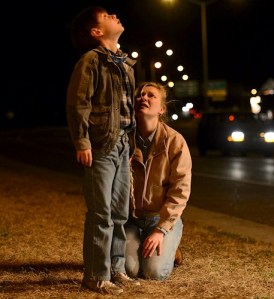 straight-up Spielberg rehashes we’ve seen over the past four decades; conversely, a strand of wilful obscurity means it may be ultimately less satisfying. Again, some people derive satisfaction explicitly from that lack of resolution or explanation, while others will find it damagingly frustrating. Even more than Spielberg, I felt the thing most evoked by this structure was
  I thought they perfectly conveyed what they were intending to convey — usually, just a kind of otherworldly light. It’s not like it’s even over-stretching its means, like so many network TV series or


 When Amazon started making a serious effort to challenge Netflix in the field of streaming original series, one of their early moves was the headline-grabbing signing of Woody Allen to create his first TV series. As has since become clear, Allen didn’t know what he was letting himself in for. To summarise his comments from various interviews (and read between the lines a little), it seems he had a view of TV that’s about 20 years out of date, and thought he’d be able to dash off something suitable between two of his annual movies. At some point he obviously realised how much more sophisticated TV has become, and coopted a movie idea he’d had on the back-burner to expand into a short TV season. Allen’s been vocal about how miserable he found this process, but I’m not sure if he’s aware that he made a rod for his own back: he essentially made three movies in two years instead of his usual two. It probably would’ve been wise to swap out one of the films for the TV series, but you get the sense that, despite having been shown TV’s burgeoned respectability, Allen’s still something of a film snob. Rather than the potential of TV coming as a revelation to him, he’s declared he won’t be making any more.
 But enough of the form — what of the content? This is not prime Allen, that’s for sure. At times it makes for uncomfortable viewing, when it’s hard to tell if it’s half improvised or if half the cast are just a bit doddery (and I suspect it’s the latter). Other bits do work, though, and while it isn’t massively rewarding it is amusing at times. Even less assured are some broadly political points that it seems like Allen is trying to tap into, or maybe it’s just incidental. He appears to be using the series’ 1960s setting as a mirror of the present: the plot concerns a twenty-something anti-government protestor, and there’s lots of talk about unnecessary wars, campus demonstrations, young people staging protests, rights for women and black people, etc, etc. At first blush these parallels are all well and good, but I’m not sure they develop into much more than wry observations. The best I can take from it is a result of the particularly farcical last episode, where it may be that he’s trying to say people in general should be more aware and active, like the young are — to walk the walk of political change rather than just talking the talk.
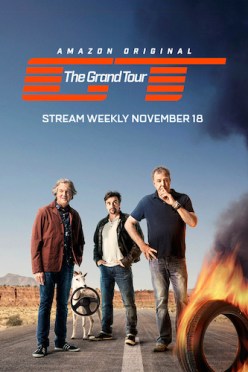 Another big gun in Amazon’s streaming mission, their £160 million “Not Top Gear, Honest” original series kicked off last month to widespread positive reviews and, apparently, big ratings (relatively speaking). I’m not really a ‘car person’, but like millions of others I wound up watching Top Gear during the height of the Clarkson / Hammond / May era for all the other hijinks. I thought it was going off the boil a bit even before their semi-enforced departure — I didn’t even get round to watching their last series. They come to Amazon after a short break (a long break for us, but it takes time to film these things, so, short break), and I think reinvigorated — possibly by the rest, possibly by the change of management, possibly by the huge budget.
 The Doctor Who spin-off that



 Favourite Film of the Month



















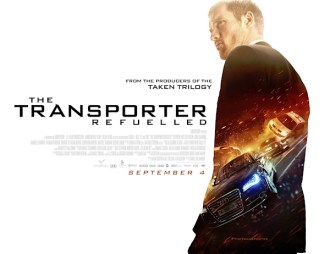 I kind of knew The Transporter Refuelled was going to be bad before I even began, but I watched it anyway because, well, I watched the
 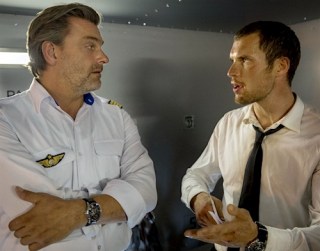 Unfortunately I wasn’t wrong about the acting, which is indeed pretty shit. Ed Skrein was truly dreadful in
 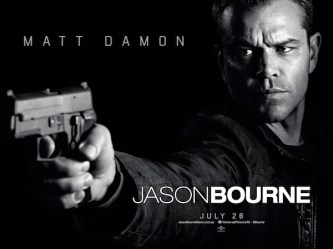 Much like the Bond films to which they’re so often compared, the Bourne movies have their devotees while only fitfully pleasing the critical establishment. This fifth movie — which is notable for marking the return of star Matt Damon and director Paul Greengrass after the semi-reboot of
 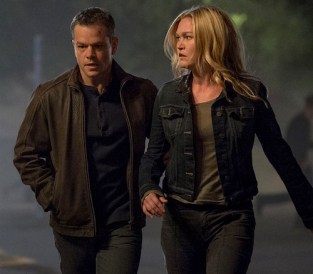 Action sequences ensue, shot with all the ShakyCam you’d expect from Greengrass. By now I imagine you have your own view on whether his style works or not. Personally, I think it’s considerably less bamboozling than when it made its debut in
 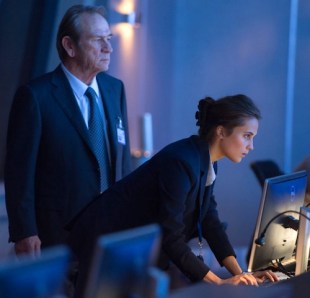 Frankly, Jason Bourne is at pains to mix in hyper-current iconography; the reasoning for Damon and Greengrass’ return now being that the world has changed and how does Bourne fit into that? So as well as social media and Greek riots we’ve got references to and riffs on hacking, Edward Snowden, government surveillance of its own citizens, the prevalence of Facebook/Twitter-esque tech companies, and so on. Sadly, I’m not sure the film’s actually got anything to say about any of these things. Greengrass and his co-writer, editor Christopher Rouse, have appropriated all these zeitgeisty concepts to make the film feel very Now, but that surface sheen is more or less where it ends. I mean, there’s a whole subplot starring Riz Ahmed as the Zuckerberg-like CEO of a social media company that I didn’t even mention in my plot summary because it’s kind of an aside. It’s kind of ironic, really, that it always seemed as if Greengrass’ more natural stomping ground was his documentary-ish real-world-exposé type movies, with his contributions to the Bourne series an unusual sideline; yet when he finally marries the two halves of his filmmaking career, it’s the action rather than current-affairs commentary that takes precedence.
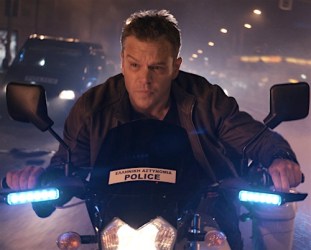 The end result is that Jason Bourne does thrill as an action movie, which seems to have been the primary goal of its makers, at the end of the day. As an action-thriller, however, the rinsed-and-repeated plot is a slightly faded imitation of former successes; a through-the-motions way to provide those impressively staged chases and punch-ups. It’s not the definitive Bourne movie one might’ve expected from the returning star/director combo (why else come back if not to perfect, or at least add to, the formula?), but instead means the film ends on an odd note: even though it wasn’t a wholly satisfying experience, and even though it doesn’t end with questions still blatantly hanging (as every Bourne movie bar Ultimatum has done), I want Damon and Greengrass to come back and do it all again, please. Only do it properly next time, yeah guys?

 100Films.co.uk