The Mystery Blogger Award

Mystery Blogger Award

Let’s break this down…

1. Put the award logo/image on your blog.
Boom, done! Next!

2. List the rules.
Doing that.

3. Thank whoever nominated you and provide a link to their blog.
I was very kindly nominated by sgliput of Rhyme and Reason ~ Poetry Meets Film Reviews.

4. Mention the creator of the award and provide a link as well.
The Mystery Blogger Award was created by Okoto Enigma.

5. Tell your readers 3 things about yourself.
1) The last five Blu-rays I bought were: the new remastered release of Heat, The Last of the Mohicans, The King of Comedy, The Mask of Zorro, and… Red Sonja. Yep.
2) I spend most of my spare time… writing this blog. I really should get some other hobbies.
3) I have to sign a non-disclosure agreement for my job, which means I can’t tell you what I recently learned about a certain rodent abode and their plunderous pentalogy. (It’s not that exciting really, just more interesting than the stuff I usually know about.)

6. Nominate 10 – 20 people.
That’s… quite a lot of people. As these awards sometimes have a tendency to go round and round, and I know not everyone’s interested in doing them, feel free to consider yourself invited if you’re reading this. Reply in the comments or on your own blog, the choice is yours!

7. Notify your nominees by commenting on their blog.
See above.

8. Ask your nominees any 5 questions of your choice; with one weird or funny question (specify).
1) Which film haven’t you seen that you most feel you should’ve seen?
2) R2-D2 or BB-8?
3) With the Oscars imminent, which previous Best Picture winner do you think was the least deserving?
4) Tea or coffee?
5) What’s in the box? What’s in the box?! (This is the weird and/or funny question.)

9. Share a link to your best post(s).
I mean, they’re all pretty great, amiright? Thanks to that bracketed S, I’m going to mention a regular feature rather than one specific post: the Arbie awards that I hand out each month.

As you can see, the rules don’t actually mention answering the nominator’s five questions, which I can’t help but feel is an itty-bitty oversight on the part of the creator. Nonetheless, here are my answers to sgliput’s queries…

What film(s) do you love that others seem to ignore or not even know about?
I’m sure there are loads, but I’m going to go with Josie and the Pussycats.

If you had to eat one food (or kind of food) for the rest of your life, what would it be?
Pizza is the food of the gods. Also, flexible.

If technology allowed us to live in an ideal virtual Matrix-world, would you choose that over reality?
I mean, if I could do all that cool kung fu stuff, maybe. But as it’s other people who contribute an awful lot to making the world a shitty place at times, how ideal would a virtual world with those people in it really be?

What one film do you think is vastly overrated?
I’m sure there are loads of these as well, but the one that always springs to mind is No Country for Old Men.

For a fun question, you have three paradox-free wishes that won’t come back to bite you (says a genie). What would they be?
Paradox free? Well, I’d have to wish my old dog, Rory, back to life; I’d wish for, like, a billion pounds, because then I’d be pretty well set; and I’d wish for a thousand more wishes, too.

TTFN.

Me and Earl and the Dying Girl (2015)

2016 #137
Alfonso Gomez-Rejon | 101 mins | streaming (HD) | 2.35:1 | USA / English | 12 / PG-13

Me and Earl and the Dying Girl

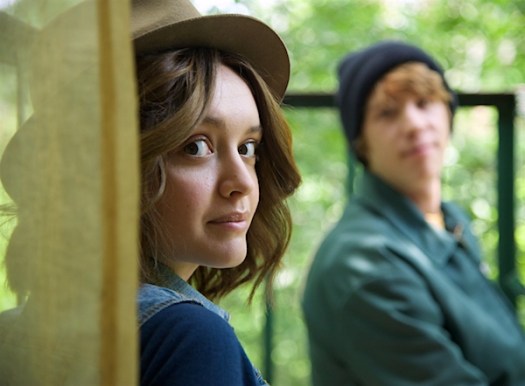
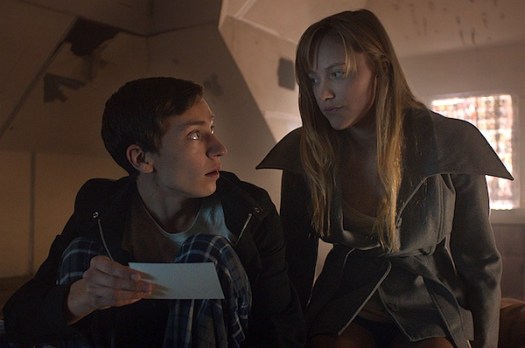
This is a film about a high school student who makes movie parodies for fun, who befriends a dying girl. It won the Audience Award at Sundance. I’m not sure there’s any other knowledge you need to judge if you’ll like this movie or not. Except normally that’d have me thinking “oh God, here we go,” but I liked it enough to put it in my Top 20 of last year.

So, I admit, I went into the film feeling pretty cynical about it. I was expecting to find a movie tailor-made to be an indie cinephile’s dream comedy-drama. There are elements of that about it, but I must also admit I ended up being won round and affected by the film, to the point of feeling quite emotional and often a little teary for, ooh, most of the second half. Was I just manipulated into feeling that way? Well, that question is a fallacy. All film is emotionally manipulative, because it has been constructed to achieve a purpose, and the people who complain about feeling manipulated by sappy dialogue or heavy-handed music or whatever have just seen behind the curtain, as it were. For these reasons it kind of annoys me when critics or ‘film fans’ get annoyed about a film being “manipulative”, but maybe that’s a rant for another time.

Me and Earl and the Criterion Collection

Anyway, as I was saying, I kind of didn’t want to like Me and Earl and the Dying Girl because I didn’t want to fall into the obvious trap of “this movie totally gets me because I love Criterion editions too!” But I thought it worked in spite of those pandering affectations. Or maybe I just couldn’t resist them on a subconscious level? In some respects it doesn’t matter how it achieved it: the film wanted to make me feel a certain way, and I did feel that way — success.

Perhaps another reason it worked for me was the positioning of Greg (the titular “Me”) as a high school “Everyman”, not affiliated with any of the school’s multitudinous social groups. I don’t think I’ve seen that in a film before. What movies (and TV) have taught us about American high schools is that they are chocka with rigid cliques, and everyone belongs in one group or another. Is that true? I have no idea — but as far as movies (and TV) are concerned, yes it is. I don’t think it’s the case out in the rest of the world (well, at least not in the UK); not so rigidly and antagonistically as it’s depicted as being in US high schools, anyway. Nonetheless, I could identify with Greg’s status as someone able to drift around groups being generally well-liked but also almost entirely unnoticed, which perhaps helped me buy into him and his emotional journey a little more, thereby explaining the film’s ultra-effective emotional manipulation effect.

The Dying Girl

A lot of what works lies in the performances. As “the dying girl”, Rachel, Olivia Cooke is fantastic. She’s got the showy role, but manages to play it with subtlety. Instead of the usual indie movie Manic Pixie Dream Girl, the lead character / narrator is the Quirky one and she’s a cynical girl who undercuts him, which is kinda fun. Nonetheless, as the film’s “Me”, Greg, Thomas Mann has a less obviously showcasing part, but the way he handles it — especially as the film moves away from the “he’s a Quirky film fan who’s uncomfortable in high school just like you” aspect — is essential to how the film’s relationships and emotions function.

Nowhere is this better exemplified than in a two-hander between the pair: achieved in a single static shot that lasts five minutes, they don’t look at each other while they argue and their friendship struggles. It’s a frankly stunning scene from all involved: kudos to Jesse Andrews (who wrote both the original novel and the screenplay) for the plausible and complex dialogue; kudos to Alfonso Gomez-Rejon for the confident blocking of both actors and camera; kudos to both of the actors for their layered, emotive, but not grandiose, performances.

Several supporting cast members are also worthy of note: Jon Bernthal as a cool teacher; Molly Shannon as Rachel’s mom; and Nick Offerman for once again perfectly judging the level of funny his character needed to hit to be comic relief but also stay tonally consistent with the rest of the film.

Fake Criterions

A final stray thought before I wrap up this rather bitty review: I’ve read a few comments that make a point of mentioning this is not like all those other “teen death” movies, or that if you’re sick of all those then this one’s still good, and so on. I’m kind of aware these “teen death” movies exist and that there’ve been a few, but I’ve never bothered to watch one (because, frankly, they’ve all sounded rubbish), so I am immune to any overkill other viewers may experience. But if there’s a lesson here (and I’m not saying there is) it would be that you don’t have to watch every high-profile film that comes out (unless you’re a critic and being paid to do it).

4 out of 5

Me and Earl and the Dying Girl placed 14th on my list of The 20 Best Films I Saw For the First Time in 2016, which can be read in full here.

It Follows (2014)

2017 #17
David Robert Mitchell | 100 mins | Blu-ray | 2.35:1 | USA / English | 15 / R

It Follows

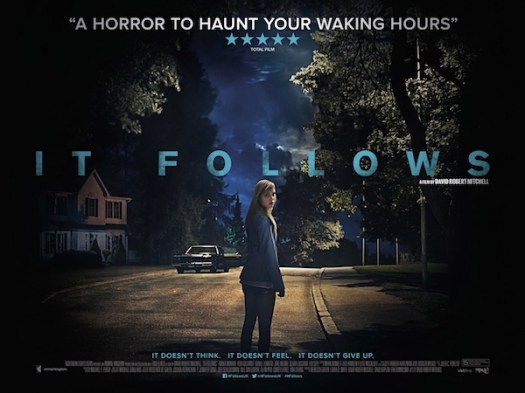
It’s always fun when you come across a divisive movie — “which camp are you in?” It Follows is one of those (naturally — I wouldn’t’ve mentioned it otherwise). Some say it’s an instant horror classic, others that it’s slow, boring, unscary, and can’t even follow its own rules. I’m not qualified enough as a horror viewer to claim the former, but nor do I hold with the latter.

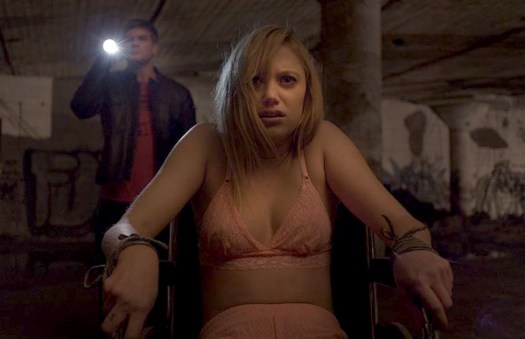
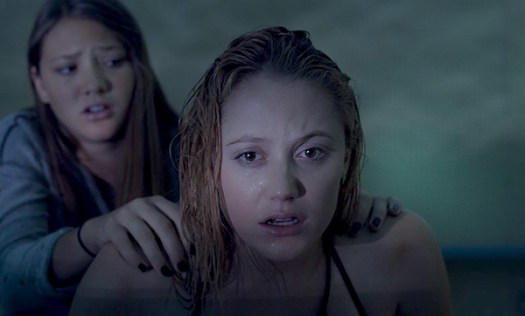
If you’ve not already seen it, it’s based around an original horror concept — that, at least, has been near-enough universally praised. After teenager Jay (The Guest’s Maika Monroe) sleeps with her new boyfriend, he reveals that he’s passed a curse to her. She will be followed by something. It always takes human form, but that form changes — it could be a face in the crowd, someone she knows, whatever it needs to get close to her. Only people who have (or have had) the curse can see it. If it catches her, it will kill her, and then return to hunting the previous target (i.e. the boyfriend). The only way to get rid of it is to sleep with someone else and pass it on — though, of course, if they get killed then it’s back to you. The one advantage you have is that it only walks, and slowly — but it never, ever stops. Naturally, Jay doesn’t quite believe it… until things start happening to change her mind, and along with her friends she tries to find a way to shake the curse permanently.

Pretty in pink

A deadly force that moves towards you slowly but unceasingly and unstoppably — sounds like the stuff of nightmares. And it literally is, having been inspired by a series of nightmares writer-director David Robert Mitchell had as a child. He has not made those childhood fears into a childish movie, however. Far from it. Even leaving aside a couple of splashes of gore, the creature’s frequently nude form, and all the sex stuff, It Follows is adult in its filmmaking attitude. Much like the creature, it often moves slowly, letting its story and situations breathe. This is not a multiplex movie; not a teen-friendly horror flick for date night. It feels more like an indie drama, with Mitchell creating a slow, methodical pace, which doesn’t linger on things — he trusts we’ll spot them. It’s subtle filmmaking, respectful of the audience and our ability to work stuff out. There’s the subject matter, too, about disaffected youth killing time… until they start being stalked by a murderous force, anyway.

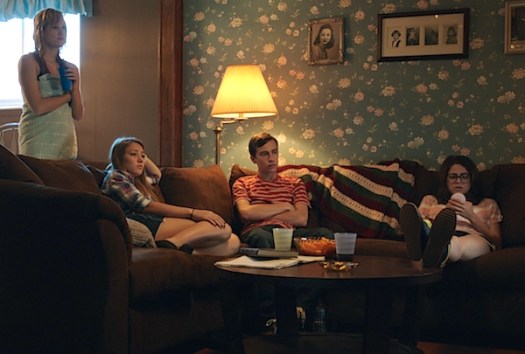
One thing I’d say it excels at is creating that ambiance of teenage life. That sense of endless time to do nothing, to be bored — who gets bored once they’re a grown-up and there’s not enough time to do everything you want to do, never mind have time to kill doing nothing? There are parents, but they’re barely present — they exist, but they also aren’t part of your life. They never really tell Jay’s mother what’s going on, nor get the police involved, beyond an initial, fruitless investigation into the boyfriend. Well, why would they? Like being a teen, adults have no real power in your world (i.e. your friendship circle); you can’t talk about all your ‘problems’ with them. Some of this is literally applicable to the film (seriously, are the police going to believe a teenage girl who says she’s being stalked by an invisible killer?), but it’s also part of the film’s broader metaphor.

Normal teens

They’re also a decent evocation of normal teens, not the Cool Kids you usually see in movies and TV — they don’t talk in pop culture references or be all hip and aware, like the cast of Sceam or Buffy or something. They’re more normal… apart from the fact they’re always watching black-and-white B-movies, anyway. They’re fumbling their way through life, and the situation they’re in forces them to wake up a little — and they fumble their way through that, too. Again, more metaphors for the real experience of adolescence.

Of course, if you don’t want that kind of stuff from your Horror movie, then I guess It Follows would seem slow and disinterested. So what of the scary stuff? As with pretty much all horror movies, your mileage will vary — perusing various reviews and comment threads shows no consistency in that regard. Personally, I found it more than sufficiently creepy. The whole effect is built on being very atmospheric rather than simplistically Scary. It’s not without its jump scares or freaky moments, but it’s the building sense of dread and tension where it most chills; that has you looking in the back of every frame for what’s coming; longing for a reverse shot, because what if it’s coming from the other direction? There are some very edge-of-your-seat sequences where Mitchell establishes there is something there, that something is coming, but then the camera pans slowly around, or it cuts away, and keeps cutting to other stuff, and you’re begging for it to cut back to the original shot, or for the pan to speed up, so that you can see how things are going, how close it’s getting, to LET US KEEP A BLOODY EYE ON IT.

Ahem.

Rules? What rules?

Also from reading others’ comments, it strikes me that the people who are most let down by the film are the ones who are either: a) looking for it to establish and follow a set of rules, or b) reading it as a great big sex metaphor. While it undoubtedly has rules (as a horror movie with a supernatural foe, it requires them) and obviously there’s a sex-related reading (the curse is passed on through sex — how can there not be?), I’m not sure either of these are the film’s main concern; at least, not in the way you’d expect them to be.

People as high and mighty as Quentin Tarantino have criticised the film for its faulty internal logic, for not following its own rules, but I don’t agree. For starters, some of the faults QT calls out are actually explained in the film itself. For seconds, the rules are never established with perfect clarity. We’re given some rules up front, but they come from a scared teenage boy whose only source for this information is his own experience. This isn’t some sage old wise-man or some ancient textbook, this is just some kid who’s been lucky enough to survive a while — who’s to say his observations are 100% accurate? Personally, I don’t think they are. Some people defend the film by saying there are no rules, that it’s operating under dream logic, and that’s fine because the point is to be scary, but I don’t agree with that either. I think the behaviour of “it” does bend the rules we’ve been told, but that’s because the rules we’ve been told are incomplete. I believe it is operating under a set of specific rules, which Mitchell knows but hasn’t fully shared with us. And further, I think that’s not only OK, but actively a good thing. Rules create a safety net — you know what it can and can’t do, and you can work out what to do to defeat it, and, by extension, a way for the characters to win. But if you can’t be certain what it’s going to do next, that’s scarier — and this is a horror movie, not an instruction manual.

Sex

As to the sex stuff, the obvious reading is the good old horror movie cliche of “having sex = getting killed”; or, more specifically, “losing virginity = getting killed”. Except that’s not the case at all. There’s a throwaway reference to the fact Jay isn’t a virgin, never mind the lack of general “it’s my first time” handwringing you’d realistically expect if she were, so if it’s a punishment for sex then it’s a bit late coming. Even more omnipresently, the way to beat the curse (albeit temporarily) is to sleep with more people. If the message was intended to be “sex is bad, mmkay kids” then it’d’ve royally fucked that up.

There’s an awful lot of theories that can be crafted out of It Follows — about what it’s saying about sex, about teenage life, about growing up, about the inevitability of death. I don’t think it’s the kind of horror movie that’s designed to scare you for 90 minutes in a darkened cinema in a comforting fashion (there are no pauses or fake-out scares to elicit reassuring laughter). It’s designed to chill you on a more fundamental level, and perhaps to say something about something too — though what those somethings are, well, we can debate that.

I also think its shortage of hard-and-fast rules should not invite derision, but rather our own theories. Like, what’s going on with water — does it really have an aversion to it? If so, why? Can it stop it? Spoilers: apparently not. More spoilers (just skip to the next paragraph if you’ve not seen it): does it require a chance to manifest as one of your parents before it can kill you? We don’t see how it appears to the girl at the start, though note she’s on the phone apologising to her father just before it does. Jay’s friend who dies identifies it as his mom just before we see it fuck him to death. When it finally catches up with Jay in the pool, it’s her dad. Conversely, when it attacks her on the beach earlier it starts by just grabbing her hair — why not get her then?

Wet

And I haven’t even mentioned the awesome synth score by Disasterpiece, or the era-unspecific production design. Maybe that doesn’t signify anything beyond an aesthetic throwback (the score is very Halloween; there’s some modern tech but they’re not all on their mobiles).

As I said at the start, my experience with the horror genre is too slight to ever go labelling something a genre classic. But this isn’t ‘just’ a horror movie. Like the same year’s The Babadook, there are dramatic elements that stretch out beyond the genre’s usual stomping ground, not to mention an atmosphere of terror that exceeds simplistic attempts to make you jump in your seat every few minutes and call it a day. It’s the kind of film that lingers after the credits roll, as you ponder the gaps it leaves you to ponder, and keep looking over your shoulder, because you never know when something might be following you…

5 out of 5

The UK network premiere of It Follows is on Film4 tonight at 9pm.

Miss Peregrine’s Home for Peculiar Children (2016)

2017 #16
Tim Burton | 127 mins | Blu-ray | 1.85:1 | UK, Belgium & USA / English | 12 / PG-13

Miss Peregrine's Home for Peculiar Children

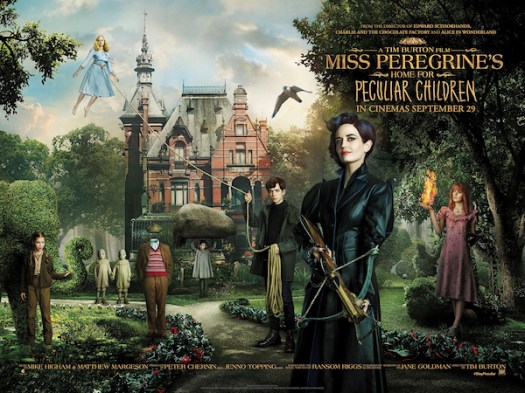
After his beloved grandpa Abe (Terence Stamp) dies in mysterious circumstances, Floridian teen Jake (Asa Butterfield) seeks closure by visiting the children’s home in Wales where his grandpa was raised. As a child, Abe regaled his grandson with tales of the home’s other residents and their fantastical abilities — tales which were completely true, as Jake discovers when he meets Miss Peregrine (Eva Green) and her peculiar wards.

The quickest route to defining the experience of watching Miss Peregrine is by referencing other films, if only in a broad sense. For starters, it’s adapted from a young adult fantasy-adventure novel, and there’s a definite shape to things which reflects other entries in that genre — the whole “ordinary kid discovers a fantasy world of incredible powers and approaching danger” type thing.

It’s also directed by Tim Burton, and does feel like a Tim Burton movie. However, what’s incredibly pleasant about that is it doesn’t feel aggressively Burtoneseque. As if in reaction to the blandness of his Planet of the Apes remake, much of Burton’s output since then has slipped towards self-parody, and suffered for it. Miss Peregrine has recognisable flourishes, undoubtedly, but is a little more restrained with how it deploys them. Some have criticised it for this, citing it as another example of Burton removing his unique stamp from the picture, much as he did with Apes, but I disagree.

Her special ability is being a badass

The final other work I would reference is the X-Men; in any incarnation, but the most relevant filmic one is probably First Class. Or not, because that was all about the establishing of Xavier’s school and the equivalent establishment here is already established. Nonetheless, it’s about a country house owned by a British matriarch-figure who cares for a gaggle of misfit kids with special powers. Rather than the X-Men’s potentially-violent array of action-ready skills, however, the ones on display here are a little more whimsical — like Emma (Ella Purnell), who’s lighter than air, or Horace (Hayden Keeler-Stone), who can project his dreams through his eyes.

Also like X-Men, the threat comes from within this secretive world. The starter X-baddie is, of course, Magneto, a mutant seeking to use scientific methods to turn the whole world into mutants. Here, the baddie is Barron (Samuel L. Jackson), a peculiar seeking to use scientific methods to grant immortality to himself and his cronies. Part of their thing is eating people’s eyeballs, which has benefits for them — again, that’s quite Burtonesque… though a mite less whimsical.

The eyes have it

Being on board with this whole milieu is important to enjoying Miss Peregrine, because the film does spend a lot of time establishing it. For those not interested in world-building, the action-packed third act must be a long time coming. There is a lot to marvel at along the way though, and Burton keeps things pleasingly real in his filmmaking techniques: there’s a fight between two creatures that was created with stop-motion, while another sequence involved constructing underwater rigs, and the vast majority of Emma’s floating was achieved by dangling Purnell on wires. That’s not to say there’s no CGI — ironically, the foremost example is a sequence that could otherwise be considered a tribute to Ray Harryhausen — but Burton’s filmmaking encapsulates varied techniques to lend a satisfying physicality to much of the film.

On the whole Miss Peregrine seems to have received a rather muted response, but I thoroughly enjoyed it. It might be best to qualify that by reiterating that it’s playing with a lot of things I enjoy — “X-Men by way of Tim Burton” sounds fantastic to me, and that’s not a bad definition of this movie. I’d even go as far as saying it’s his best work this millennium (though, in fairness, I still haven’t seen Big Fish. Well, it’s only 14 years old.) The shape of the story is no great shakes, but it’s built from magical elements and fantastical imagery, and a game cast of quality thesps hamming it up magnificently and eager youngsters with a slightly earnest likeability.

Let's go fly a kite

Actually, in many ways it reminds me of another heightened, stylised young-adult adaptation that suffered from a mixed reception. See you in 2029 for the Netflix re-adaptation, then?

4 out of 5

Miss Peregrine’s Home for Peculiar Children is released on DVD & Blu-ray in the UK tomorrow.

The Tale of Zatoichi Continues (1962)

aka Zoku Zatôichi monogatari

2016 #194
Kazuo Mori | 73 mins | Blu-ray | 2.35:1 | Japan / Japanese

The Tale of Zatoichi Continues

Back in 2014, when I reviewed the debut Zatoichi movie a year after first watching it, I promised that reviews of the series’ future instalments would follow in 2015. Well, it’s 2017, and here’s Film #2. Yeah, this is going to be the new Rathbone Holmes, isn’t it?

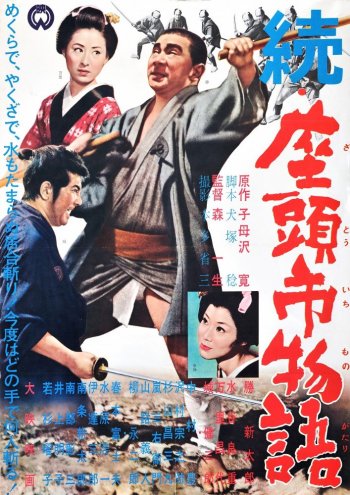
Anyway, this second movie is — as its title might suggest — a direct sequel (a rarity for the series, so I gather), which sees our hero, the blind masseuse and skilled swordsman Ichi (Shintarô Katsu), back in conflict with one of the gangs from the first film. Despite that, it doesn’t start like a direct sequel at all. Reference is made to the previous film, the events of which have given Ichi a reputation, but that could be a reference to something that occurred off-screen for all its significance to the story. Later, however, we learn that Ichi is travelling to pay homage to the grave of the samurai he killed before, and we end up in the same town with some returning characters. It’s quite a nice structure for a sequel: to seem like a new adventure before revealing and exploring connections to the previous movie. Unfortunately, to say this film “explores” anything would be doing it a kindness.

All the ladies love a blind man

The consensus seems to be that The Tale of Zatoichi Continues is a faster-paced and more action-packed movie than its predecessor, which is obviously to some viewers’ taste. The fight scenes are certainly on a more epic scale: where the first movie ended with a one-on-one between Ichi and an opposing samurai, here he takes on a small army of men. It’s less than an hour-and-a-quarter long, too, at which length it’s hard to avoid running at a brisk speed. However, I thought it lacked the artistry of the first film. It’s very focused on plot rather than digging into character, which is especially problematic when it comes to a subplot about a rogue who turns out to be Ichi’s brother. It’s structured to make for good reveals, but they aren’t always well executed, and what should carry a weight of emotion ends up rushed.

The movie as a whole is oddly paced and very oddly ended. What turns out to be the de facto climax starts earlier than you’d expect, but then the film moves on from it… before suddenly stopping. Is this meant to be a cliffhanger? It doesn’t quite play like one, but it’s also unresolved. Film 1 felt like a complete story, but this ends with the need for a Part 3 — or rather a Part 2.1, because it doesn’t feel like a whole movie. The fact the next one is called New Tale of Zatoichi isn’t promising…

Brotherly love

Technical merits are similarly mixed. It’s not poorly shot, but it’s not as striking as its predecessor. The music is occasionally horrendous. There is indeed more sword fighting, and with it more involved choreography, but it doesn’t feel like an earned trade-off with the lightweight story.

The Tale of Zatoichi Continues comes with lots of great ideas and potential themes, but the rushed production seems to have led to a weak execution. It’s almost like you want to say to the filmmakers, “good effort, you’re almost there. Now try again and do it properly.” Of course, there are 23 more films where they may do exactly that…

3 out of 5

The Riddle of the Monthly Update for January 2017

How is it February already?!

OK, how about we stave off the inevitable just a little longer and take a look back at January…


#1 Green Room (2015)
#2 Anomalisa (2015)
#3 Ninja Scroll (1993), Jūbē Ninpūchō
#4 Hunt for the Wilderpeople (2016)
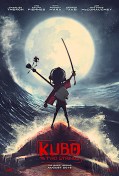
#5 Kubo and the Two Strings (2016)
#6 Donald Trump’s The Art of the Deal: The Movie (2016)
#7 Into the Wild (2007)
#8 Eye in the Sky (2015)
#9 Charlie Bartlett (2007)
#10 The Conversation (1974)
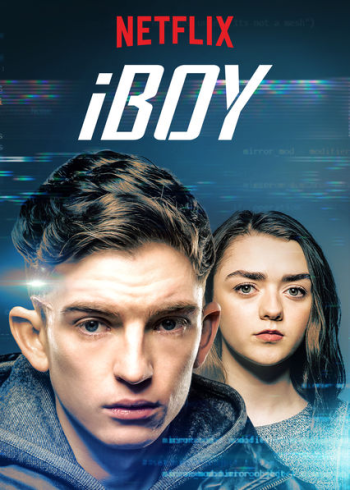
#11 iBoy (2017)
#12 Under the Shadow (2016)
#13 Sing Street (2016)
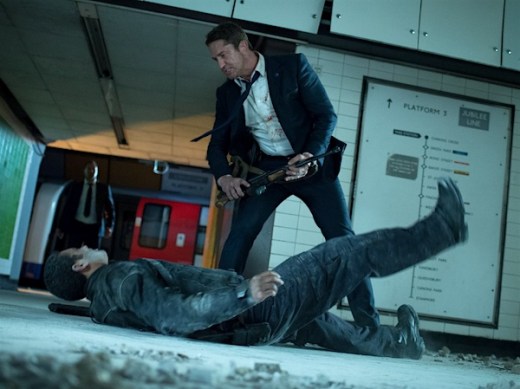
#14 London Has Fallen (2016)
#15 Another Earth (2011)
Hunt for the Wilderpeople

Kubo and the Two Strings

.


  • 2017 gets underway with 15 new films. (I’ll talk about my Rewatchathon in a bit.)
  • That’s the 32nd consecutive month with ten or more films.
  • It’s just shy of the 2016 average (16.25), and makes the average for the last 12 months 15.83.
  • It does beat the January average of 11, though. However, it’s the lowest January since 2014; but it’s also the third largest January ever. Swings and roundabouts, eh?
  • This month’s Blindspot viewing: Francis Ford Coppola’s great ’70s paranoid surveillance thriller, The Conversation.
  • This month’s WDYMYHS viewing: getting the film I had least interest in out of the way, Sean Penn’s Into the Wild. And I was right, it was a mess.


The 20th Monthly Arbitrary Awards

Favourite Film of the Month

Multiple films snagged full marks this month, and several I’d say are already hot favourites for my best-of-year list in 11 months’ time, which makes this a particularly tricky choice. On balance, however, I’m going to say charming Kiwi comedy is trumped (on this occasion) by the fantastical world conjured through the incredible artistry of Kubo and the Two Strings.

Least Favourite Film of the Month

For all its faults, London Has Fallen was pretty much what I expected it to be. Into the Wild, on the other hand, is misguided and overrated.

Best Original Song of the Month
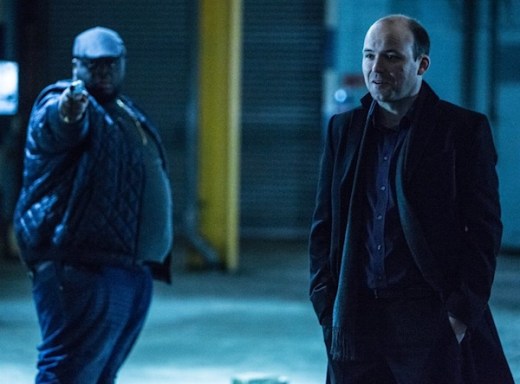
I’m sure La La Land is great ‘n’ all, but the lack of Oscar recognition for Sing Street’s music is disappointing. My personal pick would be The Riddle of the Model, but there’s a lot to be said for Drive It Like You Stole It too — especially considering…

Best Dance Routine of the Month
You haven’t lived until you’ve seen Littlefinger do a steering wheel-inspired dance move to Drive It Like You Stole It.

The Audience Award for Most-Viewed New Post of the Month
As we know, statistics are The Best Thing Ever, which surely explains why my 2016: The Full List post was by far the most-read in January. Lists are almost as good, which surely explains why my Best & Worst of 2016 came second.


My goal to rewatch 52 movies this year got off to a weak start, as you don’t have to scroll very far to see.

#1 Enemy of the State (1998)

Yeah, that’s it. I watched it after The Conversation, because of the theory about Gene Hackman’s characters being the same guy. I can see where the idea came from, but it does not hold up.

Anyway, only rewatching one thing is OK — although my goal of 52 films was inspired by the principle of watching one per week, I never intended to stick to that slavishly; especially as I had Netflix this month, which led me to focus on newer stuff available there while I had it. I’ll make it up later.


It’s about time for an update to my director’s page header image, which features the 20 directors who have the most films covered on this blog. My 100 Favourites series created a bit of a shake-up in this area, with the main beneficiary being Steven Spielberg. I also watched a fair few of his films that I hadn’t got round to in 2016, so all told he was catapulted from six films at the end of 2015, to 17 at the end of 2016. But he’d already made it onto the header last year, so his newfound abundance doesn’t actually affect that.

As for what has changed, then, six directors drop out: Danny Boyle, Marc Forster, Alfred Hitchcock, Fritz Lang, Vincente Minnelli, and George A. Romero. In their place we have (in descending order of number of movies): Peter Jackson, Bryan Singer, John Carpenter, Tony Scott, Robert Zemeckis, and Michael Bay.

Wait… Michael Bay? Yeah, I can’t stand for that. No Bay; Hitchcock stays.


It’s the official 10th birthday of 100 Films at the end of February, for which I’m working on a whole host o’ posts.

London Has Fallen (2016)

2017 #14
Babak Najafi | 99 mins | streaming (HD) | 2.35:1 | UK, USA & Bulgaria / English, Italian, French & Japanese | 15 / R

London Has Fallen

The unwanted sequel to the less-good of 2013’s “Die Hard in the White House” double bill sets its rip-off sights lower: the entire plot feels rehashed from a weak season of 24. It may as well begin with a gravelly-toned voiceover informing us that “the following takes place between 9AM and 9PM Greenwich Mean Time.” Fortunately, events don’t occur in real time.

Those events take place in the wake of the British Prime Minister’s unexpected death. Granted a state funeral, the American President (Aaron Eckhart) is naturally in attendance, along with 39 other world leaders — most of whom are suddenly wiped out in a series of terrorist attacks. POTUS’s Secret Service chum (Gerard Butler) must get him out of the embattled capital, away from an enemy who seems to have foreseen their every move.

From there, the film is a relentless assault on the notion of good filmmaking. The narrative is so poorly structured that it doesn’t feel like there’s a climax — it’s only apparent with hindsight that what seemed like the back-half of Act 2 is actually meant to be the big finale. The main villain is only dealt with in a tacked-on coda; so too is the obligatory mole, whose presence appears to be solely motivated by a futile attempt to plug plot holes.

Going Underground

The dialogue is horrendous (“You should have let us kill him quickly, because now… we’re going to kill him slowly”) and the CGI is ceaselessly cheap — shots of the various terrorist attacks wouldn’t look out of place in a Sharknado movie. A single-take action sequence feels like it should be exciting filmmaking, but is actually more like watching someone else play a video game.

Even with that, London Has Fallen does just about pass muster as a brains-off actioner, in the truest sense of the term: you’ll need to switch your brain off to endure the rampant xenophobia and American flag-waving.

God, I bet Trump loves this movie.

2 out of 5

London Has Fallen featured on my list of The Five Worst Films I Saw For the First Time in 2017, which can be read in full here.

iBoy (2017)

2017 #11
Adam Randall | 90 mins | streaming (HD) | 2.35:1 | UK / English | 15

iBoy

When it comes to TV, Netflix are dominating the cultural landscape with much-discussed original series like Stranger Things, Making a Murderer, Orange is the New Black, the Gilmore Girls revival, their cadre of Marvel shows… I could go on. But when it comes to their original movies — the eponymous “flix” — well, it’s a bit different. Their Crouching Tiger Hidden Dragon sequel went down like a lead balloon; Beasts of No Nation was well reviewed but couldn’t translate that into the awards buzz that was clearly hoped for; and their Adam Sandler movies… well, those are apparently very popular with viewers, at least.

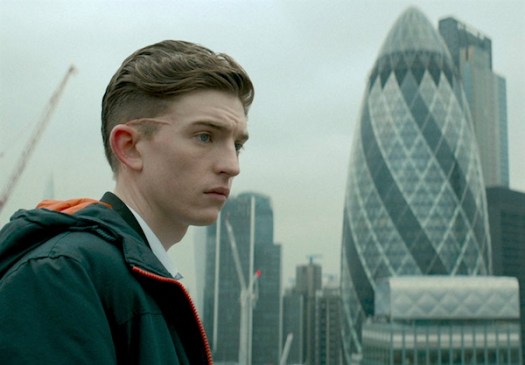
Their latest effort, iBoy, is based on a young adult novel about a teenager who fights against bad people — so that’s pretty zeitgeisty at least. It’s not set in a dystopian future, though, but why bother when our own days are so bleak? So iBoy sets its stall in present-day London, where Tom (Bill “the sweet one from Son of Rambow” Milner, looking completely different) is just a normal teen — going to school by day, blocking out the sounds of violence around his tower block by night. When the girl he fancies (Maisie Williams) invites him round to study one evening, he turns up at her flat to find her being, to not put too fine a point on it, gang raped. He runs, trying to phone the police, but the gang give chase and shoot him in the head. When he wakes up, parts of his phone have been inoperably embedded in his brain, which he soon comes to realise has given him the ability to interact with technology using his mind.

Look, it's London!

So, yeah — scientifically, it’s a thoroughly dubious premise. But is it any worse than having abilities bestowed by a radioactive spider-bite or spilled toxic goo? In respect to Tom’s newfound powers and how he chooses to use them — as a vigilante seeking revenge on the gang that have been terrorising his estate — iBoy is more in line with superhero narratives than other young adult adaptations. Where it comes unstuck is the tone. How many superhero films are going to feature gang rape? Well, somewhat appropriately, I guess the Netflix ones might. But the disjunct between iBoy’s daft premise and the grim world of inner city gangs (there are more acts of shocking violence) is a difficult one to negotiate.

To its credit, iBoy doesn’t use the assault as a starting incident and then discard its aftereffects — the presence of Maisie Williams, who’s been quite outspoken about the treatment of female characters in media, should give an indication that it’s not so thoughtless. But nor does a 90-minute movie that’s fundamentally about a superpowered vigilante have much time to dig into it properly. Nonetheless, Williams essays the role with some subtlety, aided by a screenplay that keeps things appropriately unverbalised. Perhaps the most effective part is when, home alone, she has to venture outside for some milk.

Nasty gangs

Unfortunately, the screenplay doesn’t pay the same amount of attention to the hows-and-whys of its hero and his abilities. Apparently hacking someone else’s phone involves watching a progress bar; he can learn how to fight while watching a couple of YouTube videos during the ten seconds he’s walking towards an assailant; and so on. A little more effort would’ve sold the premise more and could’ve removed these niggles (at least have him download a phone-hacking app or something; maybe the YouTube videos could be downloaded into his brain, but his unpracticed muscles struggle to perform the moves). Problem is, the notion of phone fragments getting stuck in your brain and giving you superpowers is pretty silly, so even if you provide better internal consistency, it’s still a struggle to parse that implausibility being mashed up against the ultra-real-world stylings of the rest of the story. Films like Super and Kick-Ass do the “real-life superhero” thing by making their hero a bit inept. Maybe iBoy isn’t shooting for “real-life superhero”, but then why are the threats he faces so serious?

Talking of the threats, Rory Kinnear turns up near the end as the Big Bad, and lifts the film considerably. I suppose there’s not a whole lot of originality in a politely-spoken but actually horrendous villain, but Kinnear sells the part effortlessly. You kind of want to see that character (or at least that performance) turn up in something bigger and better. Elsewhere, Miranda Richardson brings some much-needed lightness as Tom’s grandma, who serves as an Aunt May figure. If nothing else, you can rely on British productions to have quality acting, eh?

British baddies are best

For all this criticism, on the whole I didn’t dislike iBoy while it played out, it just doesn’t stand up to scrutiny. As Netflix’s first genuine original movie from the UK, it’s a shame it can’t demonstrate to the rest of the Netflix-viewing world what British film could be capable of if encouraged, but maybe that would be too big a weight to put on its little shoulders anyhow.

3 out of 5

iBoy is available on Netflix everywhere (I presume).

Howl’s Moving Castle (2004)

aka Hauru no ugoku shiro

2016 #193
Hayao Miyazaki | 114 mins | DVD | 1.85:1 | Japan / English | U / PG

Howl's Moving Castle

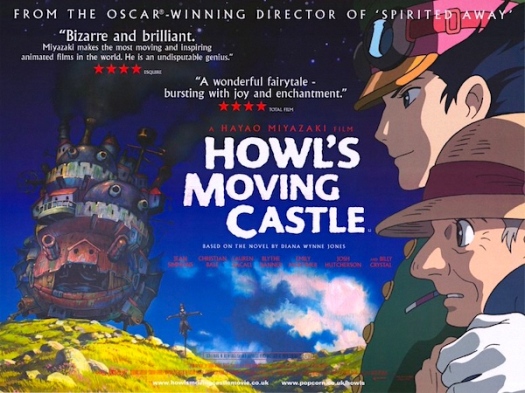
Director Hayao Miyazaki’s first film after he won the Oscar for Spirited Away, Howl’s Moving Castle is another fantasy adventure about a young girl encountering a magical world. Well, I’m bending that similarity a bit — the heroine is considerably older than the one in Spirited Away (a young woman rather than a girl) and she already lives in a world where magic exists (but she doesn’t seem to have encountered much of it).

Adapted from a novel by British author Diana Wynne Jones, Howl’s Moving Castle concerns Sophie Hatter (voiced in the English version by Emily Mortimer), who works in her family’s hat shop in a fictional Mitteleuropean country in a steampunk-y past (anime really gets away with launching you into these subgenre-mash-up worlds in a way no Western work ever dares, doesn’t it?) After a brief chance encounter with famed wizard Howl (Christian Bale), Sophie is attacked by the wicked Witch of the Waste (Lauren Bacall) and transformed into an old woman (now voiced by Jean Simmons). She goes hunting for Howl’s titular abode/transportation, wherein she meets sentient fire Calcifer (Billy Crystal), Howl’s young assistant Markl (Josh Hutcherson), and alongside them gets swept into a brewing war with a neighbouring country.

Frankly, the plot is a bit messy, flitting from one situation to another in a way that feels in need of some streamlining. The climax is particularly hurried, underpowered, and under-explained. For example, there’s a missing prince who suddenly turns up to resolve the whole war storyline — a prince who was only mentioned in passing in some background dialogue nearly two hours earlier.

Running up that hill, no problem

However, much of the film is enjoyable in a moment-to-moment sense. The affable characters are quite delightful to get to know even as they’re getting to know each other, and there are some magical sequences. Plus it’s all beautifully designed and animated, as you’d expect from Studio Ghibli, though we should never take such achievements for granted. The English dub is pretty good too, benefitting from Disney picking it up and getting a starry cast, and no doubt the direction of Pete “Monsters Inc / Up / Inside Out” Docter and Rick Dempsey. No disrespect to the professional voice actors who work in anime day-in day-out, but they often perform with a certain stylisation that isn’t always naturalistic.

Apparently Howl’s Moving Castle is Miyazaki’s favourite from his own work, probably because some of its themes (anti-war sentiment, a positive depiction of old age, the value of compassion) are close to his heart. While those are worthwhile topics, they sit alongside the aspects mentioned above as good parts that aren’t wrapped up into a whole that equals their sum. But even if it’s not Ghibli’s finest work, it’s still a likeable fantasy adventure.

4 out of 5

Howl’s Moving Castle was viewed as part of my What Do You Mean You Haven’t Seen…? 2016 project, which you can read more about here.

Studio Ghibli’s first TV series, Ronja, The Robber’s Daughter, is available on Amazon Prime in the UK and USA (and presumably elsewhere too) from today.

The Pianist (2002)

2016 #175
Roman Polanski | 143 mins | streaming (HD) | 1.85:1 | France, Poland, Germany & UK / English, German & Russian | 15 / R

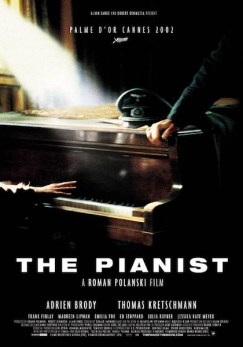
The PianistRoman Polanski’s semi-autobiographical biopic of Wladyslaw Szpilman (Adrien Brody), who survived the Warsaw ghetto in World War 2 primarily through luck and good fortune, is a subtly powerful work. It may not poke at your emotions quite so readily as, say, Schindler’s List, but that’s because Polanski and screenwriter Ronald Harwood dodge histrionics or an operatic envisioning of events. Instead this feels like a grounded relation of the facts, with everyday heroism (and cruelty) the order of the day — but, of course, there’s nothing “everyday” about it.

If this were fiction it would seem improbable; because it’s true, it’s extraordinary.

5 out of 5

The Pianist was viewed as part of my What Do You Mean You Haven’t Seen…? 2016 project, which you can read more about here.