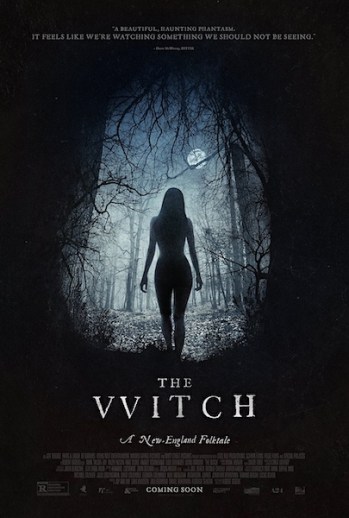
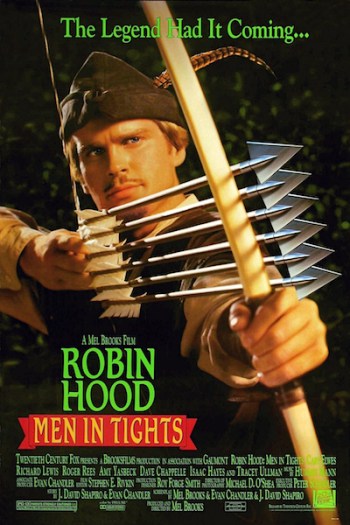
The Witch (2015)

aka The VVitch: A New-England Folktale

2016 #171
Robert Eggers | 93 mins | Blu-ray | 1.66:1 | USA, UK, Canada & Brazil / English | 15 / R

The Witch

There’s a lot to commend in this debut feature from writer-director Robert Eggers, the story of English settlers in 17th Century America who are banished from their community and begin to be affected by a supernatural force in the woods.

With dialogue lifted from contemporary reports of witchcraft, it has a level of period authenticity that is rarely seen. I thought it was an immensely effective choice for evoking an entirely different era, but others find it a distracting affectation. Also distancing for some viewers is the understated style — it’s more of an arthouse period flick than a gore ‘n’ guts chiller; like a horror movie made by Terrence Malick. Much like the dialogue, I thought that gave it a level of realism. You know this isn’t a true story because such occult happenings aren’t real… but if they were, they’d be like this.

It’s not a horror movie that suits all tastes, then, but I thought it was v.v. creepy and v.v. good.

4 out of 5

Don’t Breathe (2016)

2017 #21
Fede Alvarez | 88 mins | streaming (HD) | 2.35:1 | USA / English | 15 / R

Don't Breathe

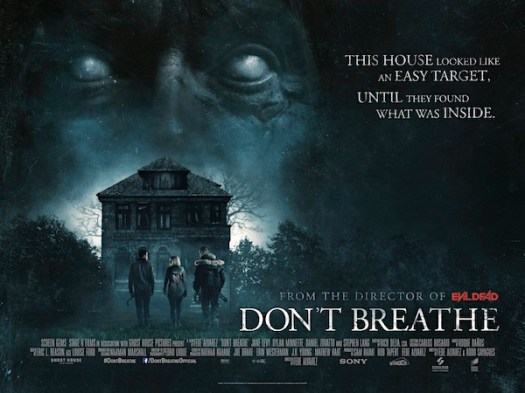
One of the most talked-about thriller-cum-horror movies of last year, Don’t Breathe (which is available on Sky Cinema as of last Friday) concerns a gang of young house burglars — Rocky (Jane Levy), who’s doing it to help get her little sister away from their good-for-nothing parents; her boyfriend Money (Daniel Zovatto), who’s a bit of a dick; and Alex (Dylan Minnette), who’s secretly in love with Rocky, and whose dad runs a security company from which they ‘borrow’ the necessary information to access homes without setting off the alarms. After a big final score, they set their sights on the remote home of a chap (Stephen Lang) whose daughter was killed in a car accident, from which he netted a hefty settlement. Plus he’s blind, so it’ll be easy money. Right? As is no doubt obvious, the blind bloke turns out to have a few secrets up his sleeve… and down his basement…

Despite how it was advertised (doesn’t that poster scream “horror movie”?), really speaking Don’t Breathe is a thriller — it’s about a trio of crooks trying to rob a home and its owner fighting back. Though I suppose it depends what you use to define “a horror movie”, really. I tend to think of them as featuring an enemy who is either supernatural or possibly supernatural, but I suppose the only real prerequisite is that they be scary. Don’t Breathe doesn’t have a supernatural villain (though the blind man’s abilities do stretch credibility), but it’s so gosh-darn suspenseful that the viewing experience is similarly tense to a horror movie, even if outright scares are few. And one memorable scene in particular is certainly classifiable as horrific, most especially for female viewers. So, as a sub-90-minute exercise in mood and thrills it’s a very effective viewing experience; but it’s best not to stop to think about the practicalities if it were real because a lot of the film doesn’t withstand scrutiny. I won’t rehash all of the plot’s logic gaps (there are plenty of articles online that already do that, if you’re interested), but I think it’s best enjoyed as a go-along-with-it experience.

Bad guys gone good?

One point of contention for many seems to be the likeability or otherwise of the characters. The ostensible heroes are a gang of crooks who we first meet robbing the home of an undeserving victim, and being needlessly destructive about it too. You might think this sets the blind man up as some kind of avenging hero, but it becomes clear pretty quickly that he’s an even bigger bad guy… so are we meant to side with the crooks after all? For me, this raises a question I’ve come up against before: does a movie actually need to have any likeable characters? Some people need that, for sure, but I don’t think a film does per se. I’m not sure Don’t Breathe has really thought through its position on this issue, which makes reading online commentary about this point a funny thing. For instance, I saw someone argue that the writers make no effort to make us like the burglars — so, what’s the whole thing with Rocky trying to get her sister out of their shitty life for, then? And then another person stated that they actually found themselves liking two of the “bad guys” — so, if the burglars are the bad guys that makes the blind guy the hero? I don’t want to spoil anything, but if you’ve seen the movie you’ll know why holding that opinion is either, a) ridiculous, or b) deeply troubling…

As I said, it’s best not to think about it too much. I think Don’t Breathe is perhaps the movie equivalent of a theme park attraction: designed to thrill you and scare you during its brief duration, not withstand plot and character scrutiny when dissected afterwards. That’s why my rating errs on the lower side, though if you want nothing more than a gripping hour-and-a-half it maybe merits another star.

3 out of 5

The Ghostly Monthly Update for March 2017

If there’s something strange in your neighbourhood, who ya gonna call?

How about Scarlett Johansson in a skintight bodysuit? I’m sure plenty of people wouldn’t need something strange going on to want to make that call…


#30 Logan (2017)
#31 Robin Hood: Men in Tights (1993)
#32 Demolition (2015)
#32a Deadpool: No Good Deed (2017)
#33 Long Way North (2015), aka Tout en haut du monde
#34 Florence Foster Jenkins (2016)
#34a Hotel Chevalier (2007)
#35 The Darjeeling Limited (2007)
#36 Money Monster (2016)
#37 Room (2015)
#38 Warcraft (2016), aka Warcraft: The Beginning
#39 Kong: Skull Island (2017)
#40 13 Hours: The Secret Soldiers of Benghazi (2016)
#41 Ghostbusters (2016), aka Ghostbusters: Answer the Call
#42 Babe: Pig in the City (1998)
#43 The Monster Squad (1987)
#44 Ghost in the Shell 2: Innocence (2004), aka Kôkaku Kidôtai Inosensu
#45 Big Game (2014)
#46 Young Frankenstein (1974)
#47 Black Dynamite (2009)
#48 Ghost in the Shell (2017)
#49 Jackie Brown (1997)
Long Way North

Kong: Skull Island

Black Dynamite

.


  • I watched 20 new films this March, making it my largest month for nearly a year, since last April’s 21.
  • It’s far head of the March average (previously 12.3, now 13.1) and also passes the average of the last 12 months (previously 15, now 14.75).
  • In terms of my yearly goal, it’s behind where I was last year (two-thirds there at #67) but ahead of every other year (including 2015 — aka The Year of 200 Films — when March ended at #44).
  • This month’s Blindspot film: plugging one of the few gaps in my Tarantino viewing with Jackie Brown.
  • This month’s WDYMYHS film: Room. Normally I’d offer a brief comment, but I already reviewed it in full here.
  • I watched three films starring Samuel L. Jackson this month. Even for a fella as prolific as he is, that’s still quite a number.


The 22nd Monthly Arbitrary Awards

Favourite Film of the Month
A tough contest this month between a couple of films I enjoyed an awful lot, but however much I was entertained by a giant ape beating up other giant monsters, the beautiful artistry of Long Way North just edges it today.

Least Favourite Film of the Month
Not such a tricky choice here: easily the worst film I watched this month was the disappointing mess that was Warcraft.

Best Dialogue of the Month
You’d think any month with a Quentin Tarantino film in it would have this award sewn up, but not when in the presence of the genius that is Black Dynamite. I’d throw in a quote, but half of the magic is in the delivery.

Most Gratuitous Arse of the Month
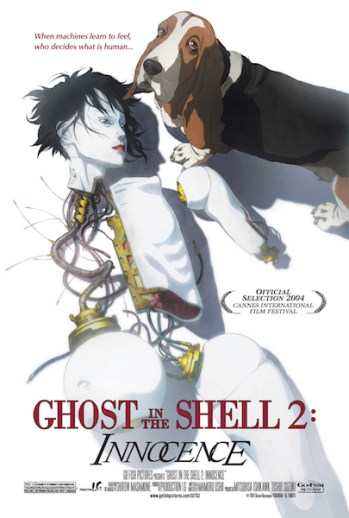
Plenty of derrières on display this month, between Natalie Portman’s much-discussed bare behind in Hotel Chevalier, Scarlett Johansson’s extremely figure-hugging costumes in Ghost in the Shell, Bridget Fonda’s post-coital stroll in Jackie Brown, and Kong stomping around the place with nary a stitch on as well. But the fact someone bothered to draw the intimation of an arsehole on the dog in Ghost in the Shell 2: Innocence takes the biscuit.

The Audience Award for Most-Viewed New Post of the Month
Following a tip from Caz at Let’s Go to the Movies, I’ve been adding my reviews to IMDb of late. That paid dividends this month, with an extraordinary (for me) number of hits flowing towards Logan.


This blog’s 10th birthday celebrations continued (and concluded) this month by counting down my 100 favourite movies I’ve seen for the first time in the past ten years. If you missed it, you can read all about it here:


Things are beginning to look up for my Rewatchathon, as I actually rewatched more than one film this month…

#3 Gattaca (1997)
#4 The Nice Guys (2016)
#5 Mighty Morphin Power Rangers: The Movie (1995)
#6 Ghost in the Shell (1995)
#7 Hook (1991)

I think I was too young to properly appreciate Gattaca when I first saw it. Now, I think it’s a five-star sci-fi drama/thriller, and it would’ve contended for a place on my 100 Favourites if I’d got this rewatch in a couple of years ago.

Truth be told, I only watched the first 15 minutes of Power Rangers (then my NOW TV subscription ended and it cut me off), so I probably shouldn’t count it… but I would’ve found another way to finish it if those 15 minutes hadn’t been utterly terrible, so I say it still counts because I’d clearly seen enough.

This was the first time I’d watched Hook since childhood and, a few moments and images aside, I barely remembered it at all. It has things going for it (the sets are incredible and many of the special effects are fantastic), but it’s definitely the worst Spielberg movie I’ve seen (1941 still awaits…)


A big year for the MCU kicks off: I’ll be reviewing Iron Fist, and Guardians of the Galaxy Vol. 2 comes to the big screen (over here, at least).

Ghost in the Shell (2017)

2017 #48
Rupert Sanders | 107 mins | cinema | 1.85:1 | USA & China / English & Japanese | 12A / PG-13

Ghost in the Shell

A few decades in the future technology has continued to proliferate to the point where the majority of humans are cybernetically augmented in some way, whether it be eyes that have additional functionality, like zooming or x-ray, or fingers that split into dozens of segments to type faster, or a stomach that can process alcohol quicker… However, Major Mira Killian (Scarlett Johansson) is the first of her kind: a human mind in a fully cybernetic body. Along with her team at anti-terror unit Section 9, they find themselves on the trail of a cyberterrorist who is murdering high-ranking employees of Hanka Robotics — the company that built the Major. As they dig further, they begin to uncover a startling conspiracy. Well, of course they do.

Although officially (as per the credits) adapted from Masamune Shirow’s original manga, this iteration of Ghost in the Shell creates a new narrative, but builds it out of liberally repurposed imagery, sequences, character traits, and more from the popular 1995 anime adaptation and its sequel, and apparently from the Stand Alone Complex TV series too (I’ve never got round to watching that so can’t vouch for its use here). Though to say “new narrative” is something of a kindness because, intricacies aside, the story isn’t new at all. A familiar narrative is not necessarily a barrier to enjoyment — to invoke it for the second time in as many GitS reviews, Doctor Strange had a rote “Marvel superhero begins” storyline but made up for it with flashy visuals and a good amount of wit, resulting in a movie that I enjoyed very much. Ghost in the Shell also has flashy visuals, as you’ll have no doubt noticed from the trailers, but instead of wit it has all sorts of existential philosophy to ponder upon.

Shoot first, ask questions never

Unfortunately, it doesn’t bother to. It certainly raises some of those issues, but I think it may do so by accident: director Rupert Sanders and co have clearly decided to focus on the action-thriller aspects of previous Ghost in the Shell material in their reworking, but have unavoidably swept up some of the philosophising in the process; but because they have little to no interest in actually exploring those questions (Sanders has literally said as much in interviews), they all lead to nowt. Some of the quandaries Ghost in the Shell’s world poses have been well-considered elsewhere — Blade Runner is probably the most obvious example — but, I think, not all of them. For instance, there’s rich potential in the stuff about having your brain put in a brand-new body, especially given some of the twists and revelations about that which come later on, but it doesn’t feel like the film has much to say about it. It’s a thriller movie that uses those elements to generate plot twists, rather than a film that’s interested in examining what they might mean to a human being who experiences them.

This tin-eared understanding of the source material stretches in every direction. Take the role of the bin man, for instance, and how it’s been repurposed here. How that character’s been tricked, and Section 9’s uncovering of it, is quite an affecting sequence in the original film, as well as contributing a lot to the film’s cogitation on how much our memories make us who we are. In this remake, the fundamental facts of the man’s case are still the same, but there’s very little feeling or emotion there. It’s just a plot point; a stepping stone on the way to the next bit of the narrative. I guess to most people watching Hollywood blockbusters plot is paramount, but there’s no reason it couldn’t have both driven the story onwards and contributed something meaningful.

Geisha gone gaga

Despite the focus on plot, and the relatively brisk running time of an hour and 45 minutes, Ghost in the Shell manages to drag on occasion. Perhaps the filmmakers felt they had licence to do so thanks to some of the slower sequences in the original film, but at least those were busy with philosophising, while here they’re just… I’m not sure, really. It was probably a form of exposition — slow, unfocused exposition — but dressed up to look like it might be something more. Conversely, at other times the relatively brief running time is to the film’s detriment, with characters and plot elements going underdeveloped. For example, we never really feel the brewing conflict between Hanka Robotics, the government-funded tech company that built the Major, and Section 9, a government anti-terror task force. We see some of the arguments between the heads of each organisation, but the fact they both answer to the government is only alluded to rather than enacted — the Prime Minister and what s/he might do is invoked on more than one occasion, but no one governmental personage ever appears to actually weigh in on matters. Considering the importance of all that to events in the third act, I thought it could’ve done with a few more building blocks.

If we set aside the wasted potential to engage with the thought-provoking topics its world raises, and the few storytelling fumbles like the one just discussed, Ghost in the Shell is a solid straightforward sci-fi action-thriller, with a decent if familiar revenge-ish story eventually emerging and some competently realised action scenes — though the very best of the latter are all homages to the original movie, which probably did them better. The design work is often exemplary, with some striking cityscapes and technology (the robotic geishas that have been quite prominent in the marketing, for instance), and Sanders and DP Jess Hall usually lens it all to good effect. That said, this is a future world that doesn’t really feel lived in — it looks like it’s just sprung out of the mind of a designer, or a comic book artist. Some might think that’s the fault of the source material being a comic book, but I don’t think it’s true of the earlier film, at least. The rubbish collectors are again a good example: in the original movie you really feel like they’re on their usual rounds, until Section 9 track them down and it explodes into an action sequence. In this version, they merely exist because a bin lorry is the kind of thing that would make a handy battering ram (and also as another nod to the anime, of course).

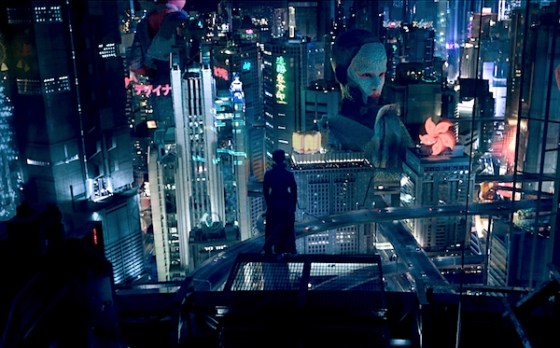
Unspecified future cityscape

Funnily, for all the film’s faults in not talking about anything, there’s a lot to talk about with the film itself. I haven’t even touched on the whole whitewashing controversy, though to be honest it never bothered me that much anyway — I mean, it’s a US-led English-language remake, of course they’re more interested in a big-name American star than racial fidelity. Not that it’s cut and dried anyway: you might assume she’s Japanese, but the ’95 movie was supposed to be set in a future Hong Kong (for its part, the live-action movie never names the city or country it’s set in). Also, without meaning to spoil anything, the film itself touches on the issue. I thought how it did that was solid, though (as with everything else) under-explored, but others consider it an empty gesture to try to excuse the whitewashing.

I find it a little tricky to sum up my reactions to this new Ghost in the Shell, because they were kind of… nothing. I walked out of it feeling reasonably entertained by the action scenes and thriller storyline, though I would argue both could’ve been even stronger; and while I may lament its lack of engagement with the issues its world inherently raises, it does so little to tackle them that I almost just shrug it off — yeah, it probably should do that, but it doesn’t do it badly, or half-heartedly, it just doesn’t. Exactly what you want or expect from Ghost in the Shell may well dictate one’s reaction to it as much as the content of the film in and of itself, which I think is perfectly adequate for what it is. It could have been so much more, though.

3 out of 5

Ghost in the Shell is in cinemas pretty much everywhere now.

Ghost in the Shell 2: Innocence (2004)

aka Innocence / Kôkaku Kidôtai Inosensu

2017 #44
Mamoru Oshii | 100 mins | Blu-ray | 1.85:1 | Japan / English | 15 / PG-13

Ghost in the Shell 2: Innocence

Nine years after he made the highly influential sci-fi action/philosophy mash-up anime Ghost in the Shell, writer-director Mamoru Oshii returned to that world to tell an original story (the first film having been an adaptation of Masamune Shirow’s manga) that once again butts action up against philosophising, though with diminishing returns.

Set a couple of years on from the original movie, it follows the first film’s sidekick, Batou (originally voiced by Akio Ôtsuka, and in the English version by the dub’s co-writer and director, Richard Epcar), as he investigates a series of murder-suicides committed by sex robots. It’s just the tip of an iceberg that leads to… some kind of conspiracy.

At the time of its release Innocence gained a lot of praise, as is plastered all over the DVD and Blu-ray covers (at least over here), with some hailing it as a more artistically accomplished film than its predecessor. With time I think that reaction has cooled considerably, and rightfully so. If there’s one criticism to be levelled at the first movie it’s that it sometimes stops dead for characters to have a thoughtful discussion about the existential quandaries that underpins their cyborg existence. Innocence ramps this up to the nth degree, with even more such chats that go on even longer, liberally peppered with quotations from other sources, an idea Oshii cribbed from Jean-Luc Godard. It feels like it.

Ain't she a doll?

While the first film clearly pondered what it means to be human, and where the line might be between an artificial creation and sentience, I can’t really recall what Innocence was driving at. Possibly several things. Possibly too many things. A lengthy sequence in the middle where our heroes find themselves repeating the same events over and over with slight variations is probably meant to be About something, but it just left me thinking of cheap referential jokes (“Locus Solus, I’ve come to bargain!”)

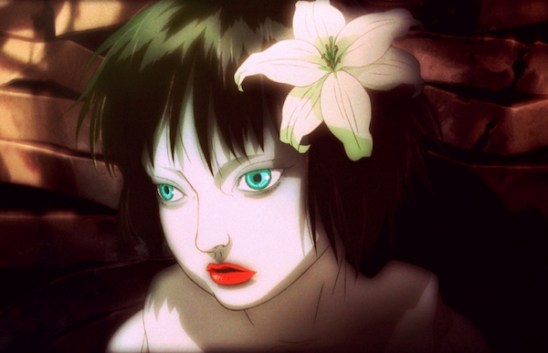
There are action scenes too, some of which are decent and some of which are hysterically overblown. There’s nothing that approaches being as iconic as any of the original’s multiple memorable set pieces. Where the first film broke new ground by combining traditional cel animation with computer-generated 3D, in a way that still holds up today, Innocence takes it too far, and looks dated because of it. The characters are always 2D, but often placed in CG environments, which are now 13 years old and feel it. It’s weird to think this is a film that was once hailed for its visual majesty, because a lot of it feels quite drab now. At times there’s an awful lot of brown.

Computer-generated brown

On its original release Innocence was called simply that, the Ghost in the Shell 2 prefix added to help sell it in international markets. Oshii’s view was that the film stood on its own and wasn’t your standard “Hollywood-style” sequel. I disagree. For one thing, the film makes many references to the events of the first movie, meaning a working knowledge is required to understand what’s going on at times. For another… well, with technical advancements that aren’t necessarily beneficial, grander but less memorable action sequences, and less coherent thematic underpinnings, it’s clear that Hollywood doesn’t have the monopoly on sequel-y sequels.

3 out of 5

The live-action remake of Ghost in the Shell is released in the UK today and the US tomorrow.

Tokyo Tribe (2014)

2016 #149
Sion Sono | 112 mins | streaming (HD) | 2.35:1 | Japan / Japanese | 18

Tokyo Tribe

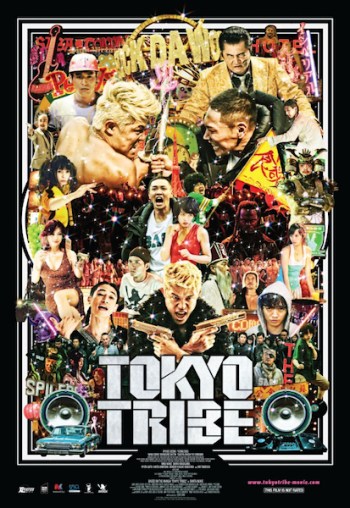
Adapted from the manga Tokyo Tribe 2, the film version is a hip-hop musical, sung (or rapped) through by an expansive cast who make up the titular tribes — gangs who rule the streets of a divided near-future (or possibly alternate reality; or possibly it doesn’t matter that much) Tokyo. The world of the story is pretty barmy, and much of the plot follows suit — I’m not going to attempt to describe it, but suffice to say it involves kidnapped girls, rescue attempts, and brewing gang warfare.

Much of the film does feel like a cartoon brought to life, with the ultra-heightened scenario and larger-than-life scenery-chewing villains — as the big bad, Riki Takeuchi hams it up so ludicrously his performance circles back round into genius. It’d definitely be an adult cartoon, though, because director Sion Sono brings a kind of trash-art, exploitation vibe, with gratuitous helpings of nudity and violence. Indeed, that direction is indicated early on when a young female police officer ventures into gang territory and is grabbed by one of the villains who, in front of a baying crowd, rips open her shirt and begins to trace a knife around her naked breasts to explain the various gang factions. It’s kind of kinky, kind of nasty, kind of distasteful, kind of not (I mean, he is a bad guy) — if you wanted to summarise the feel of the whole film in one sequence, it’s actually not a bad start.

When too many tribes to keep track of go to war

I watched Tokyo Tribe out of pure curiosity (a rap musical isn’t exactly my usual kind of thing) but I ended up rather loving it, which is why it made my 2016 top 20. There I summarised that its mix of “battle rap, comic grotesques, ultra violence, gratuitous nudity, more barmy notions than you can shake a stick at, and probably the kitchen sink too, [made it] possibly the most batshit-crazy movie I’ve ever seen.” So those extremes don’t bother me per se (other than to the extent they should bother me), but there’s an undoubted not-for-everyone-ness to a lot of it. That, plus some rough edges, are all that hold me back from giving it 5 stars.

4 out of 5

Tokyo Tribe placed 19th on my list of The 20 Best Films I Saw For the First Time in 2016, which can be read in full here.

100 Favourites II — Statistics

I couldn’t do a list like that without publishing some statistics at the end, could I? No, no I could not. By my standards this will be a relatively brisk post, though, because I didn’t thoroughly log everything I could have. Nonetheless, I had some observations…

One thing I was particularly interested to compare was the age of my picks. I know my tastes skew recent — I like “old films”, but I do watch more new(er) stuff and (as demonstrated in my 10th anniversary statistics) I tend to place newer films higher in my year-end lists too. My first 100 Favourites list certainly bore that out as well, as you can see on this graph. Have the last ten years changed that at all? Well, no. Not in the slightest. If anything, it’s worse.

That’s 49% of my selections — almost literally half — from the 2010s, a decade which at the time of writing only includes seven years. And if you add in the 2000s as well, the last 17 years account for 72%, just under three-quarters of the list. I guess if I tried this again in another ten years some of the more recent films would fall out while the older classics would endure. I must say, I’m not alone in this — it’s something I’ve observed on other public-voted great lists, like the IMDb Top 250 (well-liked new films are always jumping in and then slowly dropping out), or Empire magazine’s 500 Greatest and 300 Greatest polls. The opposite seems to happen with critics’ lists, like Sight & Sound’s famed poll, which Citizen Kane topped for, what, 50 or 60 years, and the rest of the top ten is pretty stable too. But maybe that also changes a lot further down, I don’t know.

Talking of top tens, precisely 70% of the films on this list were previously featured in one of my year-end top tens. The worst affected were 2007, 2009, and 2012, each of which lost six films. Luckiest was 2016, with all ten top-tenners making the list. 2013, 2014, and 2015 only lost one each. That’s partly thanks to a change of perspective, of course (as you may have noticed, many of the films have shifted around in their ranking), but it’s also simply the case that some years had more films I liked than others. In terms of total numbers in this 100, the worst hit were 2009 and 2012, which only feature four films each. If you want to rank them thoroughly, 2009 definitely fared worse: only one of its films is in the top 50, while 2012 has three in the top 50, including two in the top 20, and one of those in the top 10.

Conversely, the most successful years were the last four (the ones with the most top-tenners that made it, unsurprisingly). Highest of all was 2015 with 18. I suppose that’s helped by the fact I watched 200 films that year, though 2014 is second with 16 and I ‘only’ watched 136 then. Indeed, rendered as a percentage, 2014 fares best of all, with 11.76% of the films I watched that year making my top 100. Second is shared by 2011 and 2013, each with exactly 10%, while 2015 only comes fourth, with exactly 9%. At the bottom end, the fact 2009 and 2012 were my least successful years in numerical terms (the only two times I failed to make 100) doesn’t help them at all, coming out at 4.26% and 4.12% respectively.

Here’s a pair of graphs, comparing the years in flat numerical terms and as a percentage of their own year’s total.

Compared to their previous positions in my year-end top tens, the biggest riser was The Story of Film: An Odyssey, shooting up 13 places from being 2015’s 21st to its 8th now. (I know #21 is not in the top ten, but I did a top 20 that year and noted The Story of Film was 21st, so…) The biggest faller within the chart was Stoker, also from my 2015 viewing, which dropped seven places from 7th to 14th. The worst-affected film not on the list was 2010’s #3, Inception, which isn’t among the nine 2010 films on the list. The #3 films from 2007 (Mean Creek) and 2012 (Master and Commander) also aren’t here, but (as we’ve seen) their respective years don’t feature as many films on the list so they’ve theoretically dropped less far.

Lastly, directors. There were 82 of them across the 100 films, of which 13 had two or more entries on the list. Top of the pile with four was, of all people, Matthew Vaughn. His films ranged from Kick-Ass in 8th up to Kingsman in 83rd, via X-Men: First Class at #16 and Stardust at #41. Sharing second place, each with three films, were David Fincher (Zodiac at #3, The Social Network at #11, Gone Girl at #66), George A. Romero (Night of the Living Dead at #62, Dawn of the Dead at #63, Land of the Dead at #89), and Steven Spielberg (The Adventures of Tintin at #9, War Horse at #86, Lincoln at #95). Finally, the remaining nine directors with two films apiece were Wes Anderson, Alfred Hitchcock, Akira Kurosawa, George Miller, Hayao Miyazaki, Chan-wook Park, Zack Snyder, Quentin Tarantino, and Denis Villeneuve.

And now I’m done.

Should you wish to revisit the excitement, all 200 of my 100 favourites can be found linked from their dedicated page here.

100 Favourites II — The Top 10

And so I reach the pinnacle of my list — my most favourite films I’ve seen for the first time in the past ten years. (Well, if we’re being precise, in the past ten years and three months, but not counting anything from the last three months. But that’s less snappy.)

Over three previous posts I’ve counted down #100 to #11, but here’s the perfectly rounded number everyone loves for a list: the top ten.

#10
Dark City


4th from 2008
(previously 3rd | original review)

Before The Matrix there was Dark City, which tackles some of the same philosophical issues as the Wachowskis’ trilogy, only in a less opaque and verbose fashion — and, as I said, did so first. Of course, it lacks the groundbreaking action sequences that made The Matrix such a hit, but as a thoughtful piece of stylish sci-fi noir it probably bests its better-known thematic cousins. I also reckon it’s still a bit underrated… including by me, really, because it’s nine years since I first watched it and I still haven’t got round to seeing the Director’s Cut. (Note to self: fix that.)

#9
The Adventures of Tintin: The Secret of the Unicorn


1st from 2014
(previously 2nd | original review)

Calling on the same skill set that produced the Indiana Jones movies, Steven Spielberg created an adventure movie that perfectly balances plot, action, and humour. Despite the freedom afforded by crafting the entire thing in CGI (rendered with stunning realism by Weta), Spielberg knows when to hold back and maintain a level of realism, only to cut loose when warranted. The top end of this list definitely skews blockbustery-y — well, it is “favourite” rather than some kind of “objective best” (not that that’d be strictly possible anyway) — but, nonetheless, I think Tintin is a very fine and underrated example of the form.

#8
Kick-Ass


1st from 2010
(previously 1st | original review)

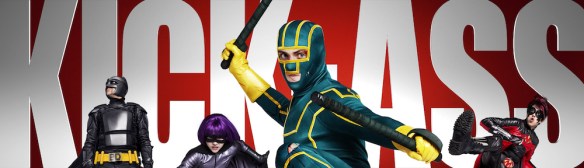
As Watchmen was to superhero comics, so Kick-Ass is to superhero films: taking familiar building blocks from other films and TV series, it deconstructs the genre through a “what if someone tried to be a superhero for real” storyline, asking questions about the glorification of violence and the sexualisation of its characters — all while being a funny and exciting action-comedy. Perhaps it’s having its cake and eating it, and that leads some people to miss the point (some by enjoying it a bit too much, some by thinking it has nothing to say), but I don’t think that stops it being one of the best and most thoughtful superhero movies yet made.

#7
Let the Right One In


1st from 2011
(previously 3rd | original review)

It’s felt like you can’t escape vampires in film and TV for the last couple of decades, but trust a European movie to give them a unique spin, right? So it’s both a coming-of-age-y arthouse-y movie about two 12-year-olds and first love, and a scary horror movie about violent supernatural creatures. It works by not shortchanging either aspect, instead combining them to transcend genre boundaries. So it’s a genuinely touching, emotional and relatable drama, as well as a creepy and horrific fantasy thriller.

#6
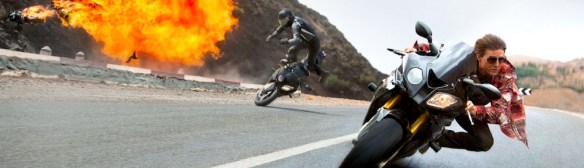
Mission: Impossible – Rogue Nation


1st from 2015
(previously 1st | original review)

There’s always been a bit of a ‘wannabe’ air to the Mission: Impossible films, like maybe someone thought it could fill the void left by Bond disappearing post-Dalton, only it took so long to make it to the screen that Bond himself got there first in the shape of Pierce Brosnan. Nonetheless, the series has trundled along… though I don’t want to sound like I’m doing it down too much because I’ve always enjoyed it — the second one made my first 100 Favourites list, even. But Rogue Nation is where M:I finally out-Bonds Bond. Mixing action thrills and a genuine sense of jeopardy with just-ahead-of-reality gadgets, a knowing sense of humour, and a cast full of likeable characters, it’s superb blockbuster entertainment.

#5
Seven Samurai


1st from 2013
(previously 1st | original review)

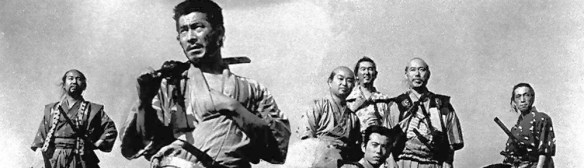
A phrase like “three-and-a-half-hour subtitled black-and-white movie” is going to conjure up a certain experience in the minds of most viewers. That experience is most probably nothing like Seven Samurai — although it is, of course, a three-and-a-half-hour subtitled black-and-white movie. On the surface it’s about a bunch of warriors protecting a small impoverished village that can’t defend itself, and it has a lengthy action-packed climax to deliver on such promise, but it rises above that thanks to its reflective attitude towards its characters and their very existence. No, wait, I said it’s not your typical three-and-a-half-hour subtitled black-and-white movie!

#4
Rashomon


3rd from 2008
(previously 5th | original review)

I’d wager most would rank Seven Samurai higher in the Akira Kurosawa canon, but I give Rashomon the edge because the form of its storytelling appeals to me. It retells the events surrounding a murder from the subjective viewpoint of each of the characters who were there, and of course their accounts differ. Its title has become a byword for such narratives, but there’s more here than just trendsetting plot construction — it’s a fantastically made film, exquisitely shot and magnificently performed.

#3
Zodiac


2nd from 2008
(previously 2nd | original review)

David Fincher’s meticulous true crime thriller may be his best movie — and when we’re talking about the man who made Se7en and Fight Club, that’s certainly saying a lot. It may look like it’s a murder thriller — it is about the hunt for a serial killer, after all — but in many respects it’s more about obsession and addiction, and how such things can come to take over your life. But if you don’t want to ponder that kind of thing, there’s always chills like the basement scene to keep you viscerally engaged. (The slightly-different Director’s Cut is the better version of the film and, if we’re being specific, would be my pick here; but I watched that a couple of years later, so it was the theatrical cut that figured in 2008’s top ten.)

#2
Skyfall


1st from 2012
(previously 1st | original review)

The James Bond films have always been action blockbusters, and more often than not immensely popular and successful ones. Skyfall changed the game though: by hiring Oscar-winning director Sam Mendes it was instantly booted into Prestige Picture territory — and still managed to deliver the most financially successful film in the series’ long history, the first billion-dollar Bond. But box office success is not why Skyfall is #2 on my list. It’s the beautiful cinematography; the way it adds thematic weight to the character without breaking the formula; the sense of Bond’s history without over-explicit reverence — and the way those aspects makes it both familiar and fresh at the same time. Plus it delivers on the action, larger-than-life villain, and one-liners just like a Bond film should. Its artistic success may be a case of the stars aligning and lightning striking (the lacking-by-comparison follow-up Spectre proved that), but Bond has rarely been better.

#1
The Dark Knight


1st from 2008
(previously 1st | original review)

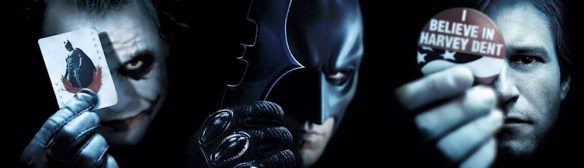
Eight years and three months ago, when I named The Dark Knight my #1 film of 2008, I wrote that “I’m unashamedly one of those who believe The Dark Knight isn’t just one of the best films of 2008, it’s one of the best films ever.” It’s nice to be able to stand by such a brazen assertion. And, having thought long and hard about what I would declare as my most favouritest movie from the 1,283 new ones that I’ve seen in the last decade, I clearly do stand by it. I love superhero movies, I love crime thrillers, and I love epics, so it’s no surprise that a movie which combines all three — and does them all well — would top a list of my favourite movies.

Now: what’s a good list without some statistics?

Demolition (2015)

2017 #32
Jean-Marc Vallée | 97 mins | streaming (HD) | 2.35:1 | USA / English | 15 / R

Demolition

Jake Gyllenhaal is a high-flying banker struggling with the grief of his wife’s death by taking his life apart — literally — in this slightly strange drama from the director of Dallas Buyers Club and Wild.

It’s more of a comedy-drama, actually, despite the apparently serious subject matter, because a large chunk of the plot revolves around Gyllenhaal making a complaint to a vending machine company, pouring his heart out in the process, and then being kinda stalked by the customer service rep, and… well, that’s just the first half. I said it was strange.

Despite some witty moments, the emotional truth just isn’t there to hold it all together. And the trailer song I once mentioned is barely featured in the film itself, so that was disappointing.

3 out of 5

Robin Hood: Men in Tights (1993)

2017 #31
Mel Brooks | 100 mins | streaming (HD) | 1.85:1 | USA & France / English | PG / PG-13

Robin Hood: Men in Tights

Master movie spoofer Mel Brooks’ penultimate work as director was this riff on the Robin Hood legend, in particular the version seen in Prince of Thieves.

Although generally regarded as one of Brooks’ lesser movies, its deeply silly style tickles, and also means you don’t have to have seen Prince of Thieves (or remember it) to get most of the jokes. Cary Elwes is on point as the dashing hero, while Roger Rees successfully spoofs the unspoofable with a version of Alan Rickman’s villain. Instead of Nottingham he’s the Sheriff of Rottingham, a pun that indicates the film’s humour level.

3 out of 5