Musical Review Roundup

My blog is alive with the sound of music, courtesy of…

  • Sing Street (2016)
  • Jersey Boys (2014)
  • Sing (2016)
  • Into the Woods (2014)


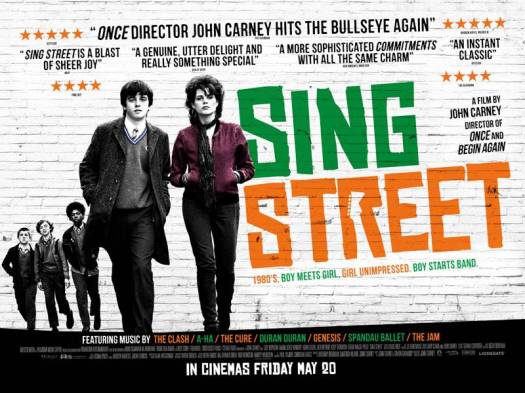
    Sing Street
    (2016)

    2017 #13
    John Carney | 106 mins | streaming (HD) | 2.35:1 | Ireland, UK & USA / English | 12 / PG-13

    Sing Street

    A struggling busker — sorry, a failing record exec — no, sorry, a misfit teenage boy… sets out to impress a beautiful fellow busker — sorry, a promising singer-songwriter — no, sorry, a cool girl… by helping her record a record — sorry, by coercing her to record a record — no, sorry, by persuading her to star in the music video for the record he’s recorded. Except he hasn’t actually recorded that record yet. In fact, he doesn’t even have a band.

    Yes, the writer-director of Once and Begin Again has, in some respects, made the same film again. Yet somehow the formula keeps working. Here there’s extra charm by it being school kids dealing with first love and finding their place in the world. It’s something we all go through, so there’s a universality and nostalgia to it that perhaps isn’t present in the story of twenty/thirty-somethings who are still floundering around (especially Begin Again, which made them cool twenty/thirty-somethings living in cool New York).

    It’s fuelled by endearing performances, particularly from young leads Ferdia Walsh-Peelo and Lucy Boynton, and a soundtrack of era-aping toe-tappers — in an alternate (better) universe, The Riddle of the Model and Drive It Like You Stole It competed for the Best Original Song Oscar, and one of them won it too. And those are just the highlights — the rest of the soundtrack is fab as well. I imagine if you were a music-loving teenager in the ’80s, this movie is your childhood fantasy.

    5 out of 5

    Sing Street placed 7th on my list of The 17 Best Films I Saw For the First Time in 2017, which can be read in full here.

    Jersey Boys
    (2014)

    2017 #97
    Clint Eastwood | 134 mins | streaming (HD) | 2.35:1 | USA / English | 15 / R

    Jersey Boys

    A musical biopic about Frankie Valli and the Four Seasons doesn’t seem like a very Clint Eastwood film at first glance, but when it turns out to be kind of Goodfellas but with the music industry, it becomes at least a little more understandable.

    Based on the hit Broadway musical, it retains a staginess of structure — the four band members take turns narrating the story by speaking to camera — while also opening out the settings so it feels less “jukebox musical” and more “biopic with songs”. It takes some liberties with the chronology of events for dramatic effect, but that’s the movies for you.

    The shape of the story feels familiar and it feels leisurely in the time it takes to tell it, but the songs are good and most of it is perfectly likeable. It’s by no means a bad movie, just not one that’s likely to alight any passion.

    3 out of 5

    Sing
    (2016)

    2017 #107
    Garth Jennings | 108 mins | download (HD+3D) | 1.85:1 | USA / English | U / PG

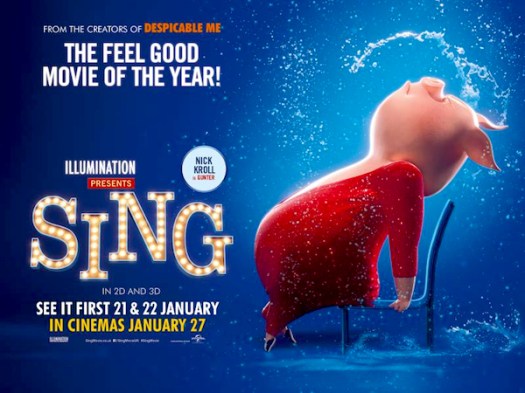
    Sing

    The seventh feature from Illumination (aka the Minions people) comes across like a cut-price Zootopia: in a world where animals live side-by-side in cities like humans, a struggling theatre owner launches an X Factor-esque singing competition to revive his fortunes. Naturally there’s a motley cast of participants, all with celebrity voices, and hijinks ensue.

    Apparently the film features 65 pop songs, the rights to which cost 15% of the budget — if true, that’s over $11 million just in music rights. The big musical numbers (all covers, obviously) are fine, with the best bit ironically being the new Stevie Wonder song on the end credits, which is accompanied by Busby Berkeley-ing squid. Elsewhere, there are some moments of inventiveness, but it doesn’t feel as fully realised as Zootropolis. Perhaps that’s part and parcel of Illumination’s ethos: to make films that translate internationally, presumably by being quite homogeneous. And to make them cheaply (their budgets are typically half of a Pixar movie), which has its own pros and cons.

    Anyway, the end result is fine. Much like Jersey Boys, Sing is perfectly watchable without ever transcending into anything exceptional.

    3 out of 5

    Into the Woods
    (2014)

    2017 #118
    Rob Marshall | 125 mins | streaming (HD) | 2.39:1 | USA, UK & Canada / English | PG / PG

    Into the Woods

    Fairytales are combined and rejigged in Stephen Sondheim’s Broadway musical, here brought to the screen by the director of Chicago. The original is a work that definitely has its fans, but doesn’t seem to have crossed over in the way of, say, Phantom of the Opera or Les Mis — I confess, I’m not sure I’d even heard of it before the film was announced.

    The film adaptation readily suggests why that might be. For one, it’s light on hummable tunes. It’s almost sung through, with only a few bits seeming to stand out as discrete songs in their own right. For example, it takes the opening number a full 15 minutes to reach its culmination, having been diverted into a few asides. Said song culminates with most of the main characters going into the woods while singing about how they’re going into the woods, and yet the film doesn’t put its title card there. The placement of a title card is a dying art, I tell you.

    Performances are a mixed bag. Everyone can sing, at least (by no means guaranteed in a modern Hollywood musical adaptation), and the likes of Emily Blunt, James Corden, and Anna Kendrick are largely engaging, but then you’ve got Little Red Riding Hood and her incredibly irritating accent. Fortunately, she gets eaten. Unfortunately, she gets rescued. On the bright side there’s Chris Pine, his performance well judged to send up the romantic hero role. You may remember Meryl Streep got a few supporting actress nominations for this, which is ludicrous. It’s not that she’s bad, but she’s in no way of deserving of an Oscar.

    There are witty and clever bits, both of story and music, but in between these flashes it feels kind of nothingy. It’s also overlong — the plot wraps up at the halfway point, with the second half (presumably what comes after an interval on stage) feeling like a weak sequel to the decent first half. All in all, another one for the “fine, but could do better” pile.

    3 out of 5

  • 21 (2008)

    2017 #114
    Robert Luketic | 123 mins | streaming (HD) | 2.35:1 | USA / English | 12 / PG-13

    21

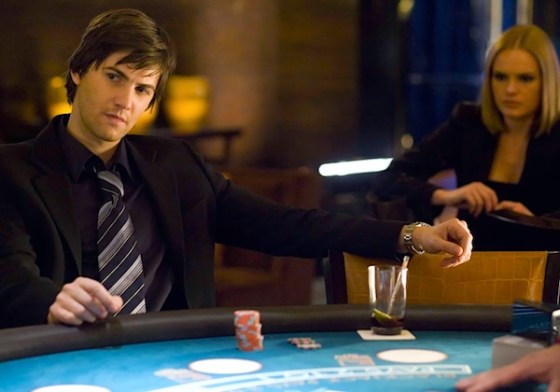
    21 is based on a true story. Actually, it’s based on a book that’s based on a true story. Bringing Down the House by Ben Mezrich was a non-fiction bestseller, telling the fun and exciting story of the MIT blackjack team, a bunch of college kids who learnt card counting and took Vegas for millions of dollars. It was such a popular book that all the attention made people look into it, and it turned out it was heavily fictionalised — Mezrich not only exaggerated events, he flat out invented whole chunks of the story. (At the same time, he also left out some good stuff.) In turn, the book has itself been heavily melodramatised for this movie adaptation. What we’re left with is probably about as close to the truth as Game of Thrones is a fair depiction of the Wars of the Roses: some of it happened, but not to those people, not in that way, not at that time, and certainly not all of it.

    As a film, it’s been mashed broadly into the heist movie template. Setting aside the veracity and treating it purely as an entertainment, this has pros and cons. Whenever it’s whizzing around in Vegas it’s kinda fun, with flashy camerawork and a slick feel for the excitement of being a successful high-roller. But when it puts that aside to get stuck into the characters’ thinly-drawn personal lives, it gets kinda dull. Part of the point of the book is how boring normal life began to seem to the team when compared to their Vegas lifestyle, but 21 tacks on more interpersonal subplots that just become finger-drumming.

    Counting cards

    Trying to make the chosen genre function isn’t helped by the fact that there’s no complicated heist here. The blackjack team are doing the same thing over and over — that’s basically how their system works as a moneymaker — and once the system’s been explained and we see it in action, the film only has a few ways to jazz that up. Between that and those subplots, at over two hours 21 is much longer than it needs to be, but doesn’t focus that time in the right areas: at least one major character undergoes a huge personality change across a single montage.

    21’s got enough pizzazz to make it enjoyable purely as a lightweight movie experience, but you do have to wonder: would the incredible real story, by dint of being true and not movieised to fit a genre template, actually have been more interesting?

    3 out of 5

    The Deathly Monthly Update for August 2017

    It’s been a quiet summer here at 100 Films


    #108 Shin Godzilla (2016), aka Shin Gojira
    #109 This is the End (2013)
    #110 Death Note (2006), aka Desu Nôto
    #111 Nashville (1975)
    #112 Death Note: The Last Name (2006), aka Desu Nôto: the Last name
    #113 The Girl on the Train (2016)
    #114 21 (2008)
    #115 Death Note (2017)
    #116 Eddie the Eagle (2016)
    #117 Anvil: The Story of Anvil (2008)
    #118 Into the Woods (2014)
    Shin Godzilla

    Eddie the Eagle

    .


    • With 11 new films, August has the lowest total for any month of 2017 to date.
    • It’s below the August average (previously 11.78, now 11.7), the rolling average of the last 12 months (previously 14.6, now 14.25), and the 2017 average (previously 15.3, now 14.75).
    • With such low numbers, other stats can rack up quickly: over a quarter of films were from Japan, another over-a-quarter were Death Note movies, and just under a fifth starred Emily Blunt.
    • This month’s Blindspot film: the film that established Robert Altman’s trademark ensemble style, Nashville.
    • No WDYMYHS film this month. There are only 10 of them, so two months were always going to go without. August is the first of those.


    The 27th Monthly Arbitrary Awards

    Favourite Film of the Month
    It was kind of an unremarkable month quality-wise as well as numbers-wise this August — plenty of films I liked, some I even liked quite a bit, but few that I loved. The exception would be Shin Godzilla, which seems to have a mixed response generally but I was this close to giving five stars.

    Least Favourite Film of the Month
    To repeat myself: it was kind of an unremarkable month, which also means there was nothing remarkably bad. That said, Netflix’s remake of Death Note was a disappointment. I don’t care about its relocation to America, I don’t even care that it wasn’t especially faithful to the original characters, I just care that it wasn’t very good in its own right.

    Biggest Dick of the Month
    Satan may rock up with a giant schlong in This is the End, but he’s got stiff competition (er, as it were) from James Franco, especially as James Franco is playing James Franco. But they’re both beaten by Light Yagami, who as well as being a cocky little shit (spoilers!) murders his completely innocent and perfectly sweet girlfriend just to prove he’s not a murderous psychopath. What a dick.

    Least-True True Story of the Month
    Eddie the Eagle may’ve invented a character out of thin air to be its hero’s coach, thereby completely changing the story of how he trained to compete in the Olympics — or “the whole story of the film” — but it’s got nothing on 21. The Vegas heist drama makes massive changes to the non-fiction book it’s based on that include simplifying the card counting system (the central point of the film), setting it in the present day (when surveillance technology would prevent them doing what they do), changing the characters’ ethnicities (whitewashing!), and, er, inventing half of the events that happen to them. Compound that with the fact the “non-fiction” book it’s based on is itself half made-up and you’ve got a film that’s roughly as historically accurate as Game of Thrones.

    The Audience Award for Most-Viewed New Post of the Month
    For the third time this year, this film blog’s most-read new post was about TV: The Past Month on TV #21, which covered Top of the Lake: China Girl, Game of Thrones episodes 2-5, Twin Peaks episodes 11-14, Line of Duty series 3, Peaky Blinders series 2, and more. (The highest film review was in (a fairly distant) second, and was something some people would argue is also a TV review: Netflix’s Death Note.)


    My Rewatchathon continues to toddle along at a reasonable pace, but quite far behind where it ought to be — I should be well into the 30s at this point. As my titular goal has flourished for the past few years, this is making me remember the days when it was a struggle…

    #25 The Fugitive (1993)
    #26 Ghost in the Shell 3D (2017)
    #27 Arrival (2016)
    #28 Jaws (1975)

    As well as my full cinema review of Ghost in the Shell (linked above), I posted a few thoughts after my rewatch on Letterboxd.


    2017 moves into my top five best-ever years (probably).

    The Past Fortnight on TV #22

    It’s only been a fortnight since my last “monthly” update but it’s been a busy one, with the entirety of Marvel/Netflix miniseries The Defenders and two feature-length instalments of Game of Thrones to look over.

    Also reviewed: the penultimate pair of Twin Peaks episodes, the first season of Designated Survivor, and the pilot of Rick and Morty.

    The Defenders  Season 1
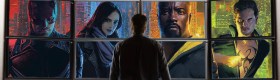
    The DefendersAfter years of build-up, and a grand total of 65 episodes of lead-in shows (yes, that many, really), we’re finally here: the culmination of Phase One in the Netflix arm of the Marvel Cinematic Universe. Like Phase One of the movie side, said culmination is a big ol’ team-up of every hero we’ve been introduced to so far, working together to stop a threat that’s been building across some of their individual series.

    The Defenders is the epitome of the “it’s really an X-hour movie” style of TV making. It starts slow, confident both that it’s got 8 hours to tell its story (though it actually only takes 6½) and that the majority of its viewer base will stick it out whatever. Said viewers have been divided on its merits, but I bet most of them did stick around for all eight episodes. I mean, if you made it through Iron Fist, The Defenders is a walk in the park. (Interesting aside: apparently most Netflix subscribers have watched at least one of the four contributing series, but very few have actually watched all four.)

    Episode one, The H Word, takes its time to reintroduce us to the four lead characters, showing where they’ve been and what they’ve been up to since we last saw them in their own series. Depending on your whims, the aggressive colour grading used to differentiate each thread is either a neat visual shortcut or laughably overcooked. It’s kind of impressive that each strand evokes the style of its root show, though that means the combination feels like a bit of a hodgepodge. The downside is that the way hip-hop music kicks in almost any time Luke Cage appears (there’s no similar aural affectation for any other character) feels like a parody.

    In Mean Right Hook, we begin to see that the apparently-unrelated storylines of our four heroes are, shocker, actually connected — who saw that coming? But it’s not until Worst Behavior that we get them on screen together. The episode is every inch the end of act one: it’s confirmed where all the separate threads lead (the Hand), we find out what happened to Elektra, and our heroes team up for the first time. That it takes almost three whole episodes to get to this point is emblematic of the leisurely pace these streaming series take; the downside of shows being released all at once and treated as a long movie in segments. It would be better paced if the team was together by the end of episode two — dividing what was originally billed as a miniseries into four two-hour chunks seems natural to me.
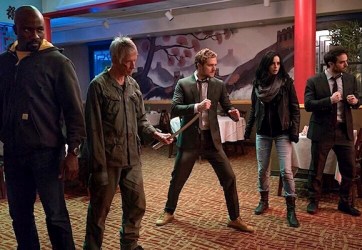
    Teamed upWith the team introduced to one another, Royal Dragon is almost a bottle episode — the gang hole up in a Chinese restaurant to hide from the Hand and make a plan. It works neatly to let our heroes settle their differences and agree to actually team up. There’s some fun sparky dialogue in their interactions, too. For my money it’s the best instalment of the series. The downside: having said that episode three is the end of act one, episode four really feels that way, with the team finally united — but we’re halfway through the series.

    So now it’s into a truncated middle. Take Shelter is a lot of business, transitioning the series into its second half — getting the supporting casts to safety, establishing where the plot is headed now they’ve teamed up. Ashes, Ashes livens things up, splitting the team into the mismatched pairings of Luke/Danny and Matt/Jessica, which keeps things lively as they put the pieces together. Cap that off with a couple of big twists at the end and it makes for a low-key great episode.

    The final two episodes, Fish in the Jailhouse and The Defenders, form a suitably epic-ish conclusion — essentially, a big punch-up (with a bang), though with character moments and developments liberally scattered throughout. As to how it finally wraps it all up… well, no spoilers, but it plays a card it can’t follow through on (but at least has the good grace to admit that as a parting shot), and doesn’t conclusively end some of the things I thought it would. Maybe future seasons of Marvel/Netflix shows will decide to leave those threads dead and buried; maybe they’ll resurrect them. I hope the former, but they haven’t shut the door on the latter. Either way, I think it’d be difficult to keep watching any of the individual series without also making time for The Defenders.

    Going downOverall, the relative brevity and speed of the story here does make it feel like an event miniseries, more than the sprawling and novelistic styles of the four contributing series. Maybe it’s just because it’s how I chose to watch it, but I reckon it plays better as four feature-length episodes than eight normal-length ones. As this is Netflix and you can watch at your own pace, maybe that doesn’t matter; but if you were watching this weekly, I think it’d be immensely frustrating that it took three whole weeks to get to the actual team-up. In a post-series interview, the showrunner talks about how they didn’t have time for certain character combinations that writers and/or fans wanted to see. Well, you could’ve made time if you’d got a move on with things in the first few episodes. The freedom streaming series are allowed is great, but some of the hoops network shows are forced to jump through do have pleasant side effects.

    In the end, The Defenders is much like its big screen analogue, The Avengers: it’s fun to finally see all of these characters come together, and there are good bits scattered throughout, but ultimately it struggles to measure up to expectations, or to reach the same heights of quality as the better individual adventures. Put another way: it’s not Iron Fist, but it’s not quite Daredevil or Jessica Jones either. Somehow, I guess it makes sense that a series which combines all the other series would end up settled at the median of their quality levels.

    Game of Thrones  Season 7 Episodes 6-7
    Men on a missionPicking up where the previous episode left off, the season’s penultimate episode saw us follow Jon Snow and his band of merry men Beyond the Wall in search of evidence. What ensued was a Thrones version of the “men on a mission” narrative, with the characters sharing scenes in a variety of combinations (I think we can all agree the Hound / Tormund exchange was the highlight) before running into trouble. Surrounded and outnumbered on a frozen lake, with Gendry sprinting back to Eastwatch for help, this is where some people found massive problems with the episode.

    The whole season has been called out for its apparently flexible attitude to time — in particular, how long it takes to traverse huge distances — and Beyond the Wall focused that into a microcosm. Personally, I think the season (and episode) could’ve handled this better if they gave us a few more points of reference — a line here or there about how long people had been away, a shot of them travelling, that kind of thing. It doesn’t help that things are moving at a different pace to earlier seasons. Maybe in the past there were days between individual scenes; now there are weeks. That throws off viewers’ expectations. Nonetheless, the production team’s defence — that there can be weeks between scenes — covers almost all of the complaints. Even in this one episode, we don’t know precisely how long the guys are trapped on the lake. It’s at least over night, and in the North in winter nights would be very long.

    Any episode with a flaming sword can't be all badSo ignoring those somewhat facile complaints, we can get back to looking at the end of the episode as pure spectacle. Other people (people not complaining about the timelines) hailed this as the series’ most incredible visual display yet. Well, some people always do that. It was great to see the dragons in action against the army of the dead, the exploding ice indeed looked spectacular, but as a battle it wasn’t equal to what we saw in Hardhome, Battle of the Bastards, or this season’s The Spoils of War. Coming fourth(-ish) to those is still a mean feat.

    As for the ending… deus ex machina gets thrown around in online discussions a lot these days. It’s almost always used incorrectly. That was the case here. Still, the whole thing with Jon Snow almost drowning and then pulling himself out was a bit silly. We know he’s got the thickest of thick plot armour — stop putting him in mortal danger and then having to jump through ridiculous hoops to save him, it just shatters the illusion.

    With the proof acquired, it was on to King’s Landing for a long-awaited meet-up by most of the surviving cast members in the feature-length finale, The Dragon and the Wolf. I don’t know about anyone else, but it felt like two episodes glued together to me. The aforementioned conference took up exactly half the episode, I believe, with the second half moving on to events at Winterfell, back at Dragonstone, and between Cersei and Jaime in the wake of promises made and already broken. Of course, if you did split it in half then each episode would only run about 43 minutes, and we’ve seen how angry some fans get when episodes dare to run as short as 50 minutes.
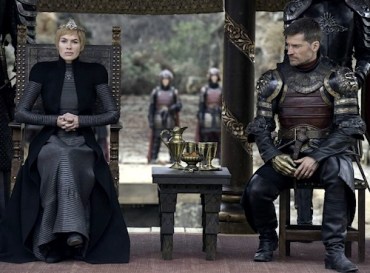
    It's my throne and you can't have itSome people were blown away by the twists and revelations in the finale. I guess it’s the fault of the internet age, but it felt like an awful lot of stuff that had just been a long time coming to me. The Night King using his dragon to melt the wall should probably have been mind-blowing, but it felt like it was just a matter of time (him actually getting a dragon the week before, however, was as effective as it was meant to be). The reveal about Jon Snow? We’ve already had enough breadcrumbs to put it together. It’s not really worth mentioning until Jon hears it for himself. On the other hand, the revelation that Bran doesn’t know everything — he has the option to see anything ever, but he has to go looking for specifics — is potentially important. How? Well, we’ll see.

    On the whole, it seems to have been a divisive season of Thrones. I feel like I’ve written that sentence before. Some people thought it moved too quickly — presumably not the same people who used to moan about how slow it was. Some missed the character moments that allowed for; others revelled in the spectacle on display almost every week. I wouldn’t have minded a slightly slower pace, spreading the big events out a little more (the end of The Queen’s Justice was particularly over-stuffed with major events), but said events were hugely impressive in themselves. HBO may lavish Thrones with an insanely large budget, but it’s all on screen, looking more like a summer blockbuster than a cable TV series.

    Season eight is now on its way — eventually. It feels like there’s still a lot of story left to get through. With only six episodes left, I hope they’ve given themselves enough time to wrap it up satisfactorily.

    Twin Peaks  Season 3 Episodes 15-16
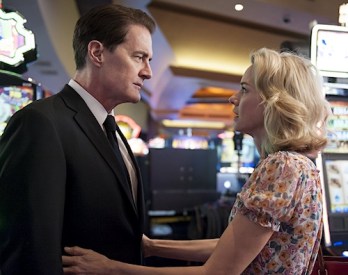
    He is the FBIAs we reach the penultimate week of the Twin Peaks revival, the one-armed man speaks for us all: “You are awake… Finally.”

    Yes, it’s true: the thing most viewers have wanted since, ooh, the first bloody episode has finally happened: FBI Special Agent Dale Cooper is back in the building. The advantage to the excruciating wait for his return was that, when it came, it was joyous. I don’t think anything has given me as big a grin this year as “I am the FBI.” Well played, Mr Lynch. Now the next two hours better be bloody good to make up for that wait…

    Actually, it finally feels like there’s hope it might all wrap up and come together. Of course, this is David Lynch we’re talking about — his idea of “all wrapped up” is not the same as most people’s. But pieces are moving into position, some answers have been forthcoming, and the stage is set for an ending that is satisfying on at least some level, even as it inevitably leaves numerous things open for people to ponder for decades to come. Lynch has said before that season two’s cliffhanger was not how Twin Peaks was meant to end, so I don’t think it’s too daft to presume we’ll get something a bit more conclusive this time round.

    Designated Survivor  Season 1
    Designated SurvivorWhile signed up to Netflix for The Defenders, I also started watching this Netflix “Original” (it’s on ABC in the US, but Netflix have global rights, hence it gets their “we made this, honest” branding over here). Its setup has intrigued me since it launched last year, but its traditional release model (21 episodes across nine months) didn’t fit with my “subscribe for a month now and then” usage of Netflix until after the season had finished, i.e. now.

    It stars Kiefer Sutherland as President Jack Bauer— dammit! President Tom Kirkman, a man who didn’t want the job: during the State of the Union address, Kirkman is the “designated survivor” — a member of the cabinet squirrelled away somewhere secret in case disaster strikes. And strike it does, as the entirety of the US government is wiped out in a massive explosion, thrusting Kirkman from junior cabinet member about to lose his job to leader of the free world. As he copes with his newfound responsibilities — not only rebuilding the government, but retaliating against those responsible and battling forces at home who question his legitimacy — we also follow an FBI agent who unearths a conspiracy behind the attack.

    The dual-pronged narrative means the series plays like 24 meets The West Wing, with a big conspiracy storyline unfolding across the season while Kirkman faces a variety of political challenges and emergencies on a week-to-week basis. It’s not quite as sophisticated-feeling as Aaron Sorkin’s classic, though maybe that’s just time speaking — the rise of prestige TV has kind of dulled the ability of network shows to feel high-quality, and I wonder if The West Wing would hold up as well today. Anyway, what Designated Survivor lacks in sophistication it makes up for with watchability: we burned through the entire season in under a fortnight. Its American patriotism may be unpalatably cheesy at times (Kirkman makes a speech in the finale, greeted with a standing ovation from Congress, that’s like eating a stuffed crust quattro formaggi with extra cheese and mozzarella sticks on the side, all dipped in fondue), but if you can stomach that it’s a decent drama. I’ll be back for season two.

    Also watched…
  • Rick and Morty Season 1 Episode 1 — People seem to keep going on about how great this is (it’s ranked as the 7th best TV series ever on IMDb), so, despite thinking it looked singularly unappealing, I thought I should give it a go. The pilot does not bode well. It has some fantastic throwaway ideas, but the characters and tone weren’t to my taste. Apparently it gets better though, so I’ll give it a couple more chances.

    Things to Catch Up On
    The TickThis month, I have mostly been missing Amazon’s new version of The Tick, the first half of the first season of which debuted last week, a full year after the pilot was made available. I wasn’t too impressed by that episode (my review is here), but I’ve heard episode two rights the ship somewhat, so I intend to make time for it at some point.

    Next month… it has happened again: Twin Peaks reaches its conclusion.

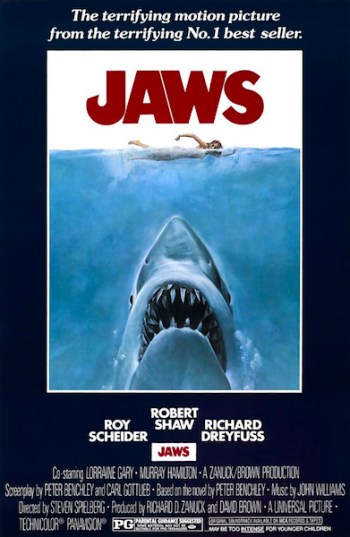
  • Jaws (1975)

    The 100 Films Guide to…

    See it before you go swimming.

    Country: USA
    Language: English
    Runtime: 124 minutes
    BBFC: A (1975) | PG (1987) | 12A (2012)
    MPAA: PG

    Original Release: 20th June 1975 (USA)
    UK Release: 26th December 1975
    Budget: $7-12 million (sources vary)
    Worldwide Gross: $470.6 million

    Stars
    Roy Scheider (The French Connection, All That Jazz)
    Robert Shaw (From Russia with Love, The Sting)
    Richard Dreyfuss (Close Encounters of the Third Kind, Poseidon)
    Lorraine Gary (Jaws 2, 1941)

    Director
    Steven Spielberg (The Sugarland Express, E.T. the Extra-Terrestrial)

    Screenwriters
    Peter Benchley (The Deep, The Island)
    Carl Gottlieb (Jaws 2, The Jerk)

    Based on
    Jaws, a novel by Peter Benchley.


    The Story
    As the seaside resort of Amity Island prepares for the lucrative 4th of July weekend, a series of violent shark attacks threaten the lives of residents and holidaymakers alike.

    Our Heroes
    Police chief Martin Brody is the one lumped with having to work out how to stop a man-eating shark, battling both small-town politics as well as the underwater predator. Eventually he’s aided by Matt Hooper, a young shark expert, and Quint, a salty old shark hunter.

    Our Villain
    A 25ft great white shark, with a taste for human flesh.

    Best Supporting Character
    Amity’s Mayor just wants what’s best for his town and its people — which, in this case, is having the beaches open for July 4th, whether people might get eaten or not.

    Memorable Quote
    “You’re gonna need a bigger boat.” — Brody

    Memorable Scene
    A group of young people sit on the beach at night drinking. The eyes of a boy and girl meet. They race off towards the sea, stripping as they go. She gets into the water first, while he’s too drunk to get his clothes off. She messes around in the ocean while he passes out on the sand. Then, she notices something underneath the water — something that grabs her — and… well, it doesn’t end well.

    Memorable Music
    John Williams’ famous, simple main theme is the definitive musical interpretation of approaching terror. When Spielberg first heard it, he thought it was a joke. Later, he said it was half of what made the film so successful.

    Making of
    Three mechanical sharks were built for the film, but no one thought to test them in water before taking them on location. They kept malfunctioning, causing a constant headache throughout production — because of them and other issues of shooting at sea, the film’s 55-day schedule ended up taking 159 days, and the $3.5 million budget ballooned to as much as $12 million. On the bright side, Spielberg had to work out how to shoot material around the unavailability of the sharks, which led to him taking a Hitchcockian approach of showing the ‘monster’ as little as possible, which was ultimately a benefit to the film’s effectiveness.

    Next time…
    Jaws was the highest grossing film of all time, so naturally there were a series of cash-grab sequels. As far as I was aware they were universally condemned, so I’d never paid them any heed, but I recently read a review that made me think I should give them a go. It said Jaws 2 wasn’t actually all that bad, Jaws 3-D was trashy fun, and Jaws: The Revenge… well, in for a penny, in for a pound, I guess. Incidentally, the last one is the film of which star Michael Caine famously said, “I have never seen it, but by all accounts it is terrible. However, I have seen the house that it built, and it is terrific.”

    Awards
    3 Oscars (Editing, Sound, Original Dramatic Score)
    1 Oscar nomination (Picture)
    1 BAFTA (Music (also for The Towering Inferno))
    6 BAFTA nominations (Film, Director, Actor (Richard Dreyfuss), Screenplay, Editing, Sound)
    1 Grammy (Original Score Written for a Motion Picture or Television Special)

    Verdict

    It’s easy to start discussing Jaws in terms of it being the first summer blockbuster, or its troubled production, or the effect it had on audiences’ desire to go swimming. But divorced from all that, as a film in its own right, it’s a thrilling adventure movie — a man vs. a shark, when it comes down to it. It’s so packed with memorable shots and moments — be they horrific shark attacks, improvised one-liners, or precisely calibrated jump scares — that it’s no wonder it made Spielberg’s name. Personally, I feel the pace flags a bit once the three men get on a boat and go shark hunting, which slightly holds me back from completely loving it. Quibbles aside, it’s still a classic of suspense.

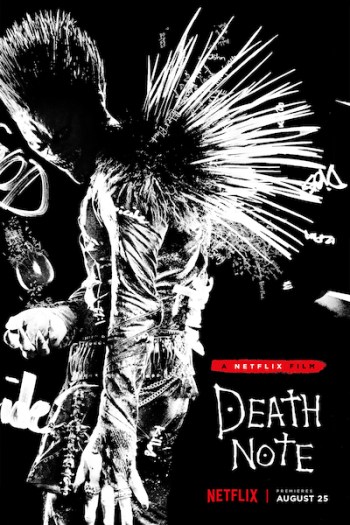
    Death Note (2017)

    2017 #115
    Adam Wingard | 100 mins | streaming (UHD) | 2.35:1 | USA / English | 18

    Death Note

    Something of a global phenomenon in the ’00s, Death Note started life as a manga, is perhaps best known for its anime adaptation, was adapted into a series of live-action films (I reviewed the first two last week), adapted again as a live-action TV series, and was even turned into a musical. Although it’s taken a while, finally the inevitable is here: an American remake. After passing through several studios, it’s wound up with Netflix, under the helmsmanship of Adam Wingard. Thus, I was hoping for the new film from the director of The Guest. Instead, I got the new film from the director of Blair Witch. And much like Blair Witch, this is a ham-fisted reimagining of a once-popular franchise.

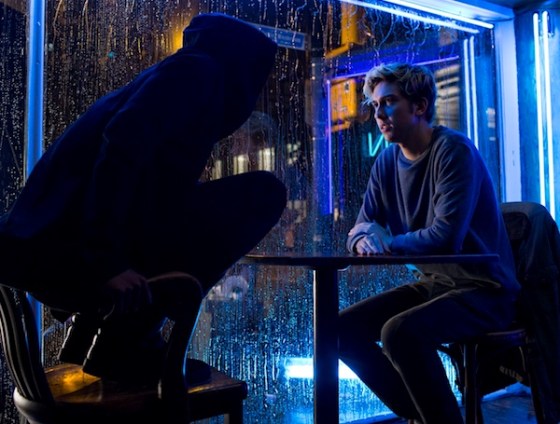
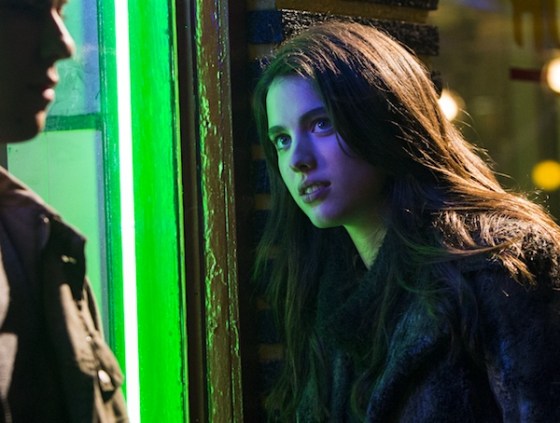
    This incarnation of the story concerns Light Turner (Nat Wolff), a Seattle high school student who one day discovers the mysterious Death Note, a notebook with the power to kill just by writing someone’s name in it. Goaded into using it by the demonic death-god Ryuk (voiced by Willem Dafoe), Light soon teams up with his crush Mia (Margaret Qualley) and they set about murdering criminals. Their actions become famous under the alias Kira, which they hope to use to establish a new world order. But hot on the case is a mysterious super detective known only as L (Lakeith Stanfield), who engages Kira in a battle of wits.

    As with so many things nowadays, the US version of Death Note has been dogged by accusations of whitewashing. As seems to be the case at least half the time, these accusations are largely unfounded. If this had kept the Japanese settings and character names but given them white faces, fair enough, but it hasn’t — it’s relocated to America, with American characters. It’s no different to all the other new-country remakes that have always happened (and also goes on the other way, with US movies remade in Bollywood and Asia, we just don’t hear about them very often here).

    Light vs L

    Unfortunately, Death Note: America has genuine problems to contend with. Despite that reimagining status, it’s still understandably shackled to the broad shape of the original work. Consequently, it glosses over some of the more interesting implications of the premise in its rush to make Kira famous and introduce L. Partly that’s what happens when you condense so much story into just 100 minutes, but it’s also because it’s beholden to bringing in L and starting his cat-and-mouse game with Light. When I reviewed the Japanese live-action movies, I didn’t think Light and L’s battle of wits was as clever as the films clearly thought they were, and it’s even worse here.

    There would seem to be more fertile and interesting ground for exploration in why Light and Mia are trying to establish a new world order — what exactly they think that means; what motivates them to do it; and how they intend to achieve it. On the whole, the film doesn’t seem to be making time to dig into the psyche of its characters — why they’re doing what they’re doing, how it changes them — instead just going through the motions of a thriller plot. It feels like it’s had 20 minutes of character stuff cut out that would grease the wheels of the plot. The worst offender is the climax: there’s no weight to the big finale because we’ve been given no time to care about these characters or their relationships with each other.

    Ello, L

    For all the faults of the way the other version I’ve seen executed Light and L’s chess-like interactions, at least they consistently involved Light using the Death Note and its rules to try to trick L. Here, after the eponymous book and its abilities have been established, it’s basically just used to control other people to make them forward the plot, only returning to its real purpose come the climax. This is another reason the focus on Light and L’s duelling doesn’t work here: at least the original thought they were both geniuses and behaved as thus; each of them was motivated by proving they were cleverer than the other, everything and everyone else be damned. Here, L is still some kind of savant, whereas Light seems a pretty normal teenager, motivated by… well…

    So, in the original, Light does his utmost to keep the Death Note secret from everyone to protect his identity as its user. Here, almost as soon as he’s got it he blabs about it to the girl he fancies. Why? Same reason most guys try to show off to girls: because he thinks it’ll impress her. It’s a change of motivation, but okay, why not? But he’s given very little indication that such a thing would impress her. What if she’d been appalled and gone running to the police? She doesn’t, of course, because this is a geek’s fantasy, so she a) loves it, and b) within minutes is shagging him. (Presumably. This may be an 18 for gore, but sexy times are implied by no more than a little light clothing removal. Perhaps they just sat around in their undies while murdering people with their magic book, I dunno.)

    Bloodthirsty crush

    Believe it or not, Death Note is not a total washout. Indeed, the best things about the film are easily identified. Firstly, there’s Willem Dafoe’s voice performance as Ryuk. If you need a manipulative death-god, he’s a perfect choice. Secondly, the visual realisation of said death-god, a mix of strong CG and keeping him in the shadows. It’s light years more effective than the ’00s movies. On the downside, Ryuk’s role amounts to little more than a glorified cameo: after an initial appearance to explain the rules, he just pops up briefly to remind us he’s still a bother.

    Thirdly, then, there’s the death sequences that occur on the first couple of occassions Light uses the Death Note. This film skips the “they just die of a heart attack” phase and goes straight for the “you can dictate how they die” jugular. In this version, that means a Final Destination-a-like chain of random events occur that make the deaths fairly amusing. Also, graphically violent — enough for that 18 in the eyes of the BBFC. These go AWOL again as the film has to get busy with its plot, which is a shame. Basically, someone should’ve tapped Wingard to make Final Destination 6.

    Fourthly, and finally, the score is very likeable. It’s full of the ’80s horror movie synths you’d expect from the director of The Guest, though it’s undercut somewhat by a few bizarre song choices, mostly during the climax.

    In the dark, no one can see your CGI

    Having read a few reactions to the film online, it strikes me that on one hand you’ve got fans criticising it for not being faithful enough, while on the other you’ve got critics picking on it for things that I’d argue are inherent in the source narrative (at least based on what I’ve seen before). That doesn’t excuse this adaptation entirely — they’ve changed so much that fixing logic issues could definitely have happened too — but it’s an amusing juxtaposition of reasons for displeasure: it’s a film scuppered both by being faithful and by not being faithful. Unfortunately that means that, whether you’re comparing it to a previous version or not, it fails to be a coherent experience.

    2 out of 5

    Death Note is available worldwide on Netflix now.

    Death Note: The Last Name (2006)

    aka Desu Nôto: the Last name

    2017 #112
    Shūsuke Kaneko | 135 mins | DVD | 16:9 | Japan / Japanese | 12

    Death Note: The Last Name

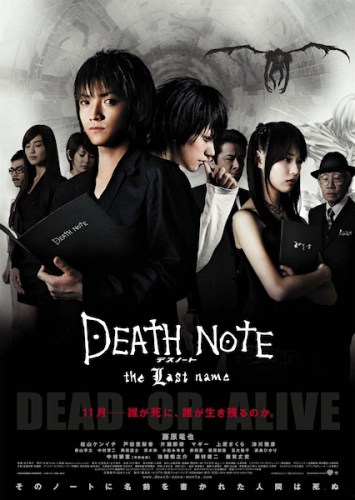
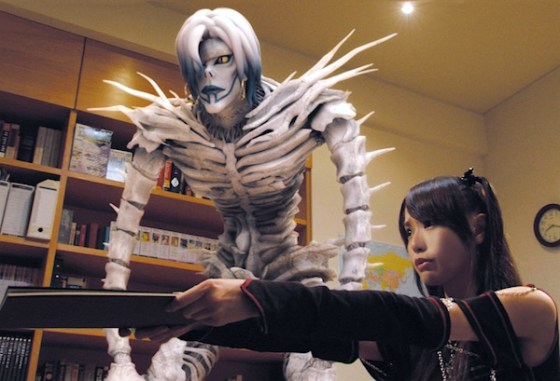
    Picking up immediately after the first movie, this sequel — part two of two — sees Light Yagami (Tatsuya Fujiwara), the owner of a supernatural notebook that allows him to kill anyone simply by writing their name, join the team of detectives searching for him. Although he had supposedly proven his innocence, Light is still the prime suspect of genius detective ‘L’ (Kenichi Matsuyama). Light aims to discover L’s real name and write it in his Death Note. He’s aided by the emergence of a second Death Note, wielded by TV host Misa Amane (Erika Toda), who has a crush on Light and agrees to help him. They’re observed and aided by their respective shinigami (death-gods), Ryuk (Shidô Nakamura) and Rem (Shinnosuke Ikehata) — but can supernatural beings be relied on in the end?

    Fundamentally, The Last Name resumes Light and L’s cat-and-mouse game in the same style as the first movie — in case you didn’t get it, near the start of the film their figurative chess game is represented by a literal chess game. This time there are the added complications of Light being on L’s team and the second Death Note being in play, which at least adds some variety. Light continues to manipulate the book’s rules to help prove his innocence and achieve his goals, which is perhaps where the films are at their most inventive — for example, you forget about the Death Note if you lose possession of it, but regain those memories if you touch it again, so what if you could find a way to give it up, prove your innocence conclusively, and get it back later? The endless games and counter-games begin to get a bit tiresome after a while (together the duology pushes four-and-a-half hours), but they do eventually make for quite a surprising climax.

    Figurative chess, literal chess

    Produced hot on the heels of its predecessor (see my previous review for how ridiculously tight the production schedule was), it’s no wonder that The Last Name feels very much of a piece with the last movie. The major downside of this is L’s alleged genius-level intellect, which was quite ridiculous last time but is now off the charts as he frequently makes entirely unfounded leaps of logic. All of his ‘deductions’ are correct, of course, because the story wants him to be a genius, but he has no reason to be. No other character ever calls him out on it. Even when events would seem to prove him wrong, other characters, who should know better and stop him, let him keep going. He has a starting hypothesis (“Light is Kira”) and, whenever something disproves it, he pulls a reason out of thin air to keep himself being correct. He guesses right every time, but for no good reason. He should’ve been kicked off the case for being loony several times over.

    Something else that’s more noticeable in The Last Name is how this series treats its female characters terribly. (Spoilers for the first film follow.) At the end of the first movie, it’s revealed that Light murdered his girlfriend in cold blood and feels absolutely no remorse, but he’s still positioned as the hero. In this film, every woman that turns up loves either him or his Kira alter ego. When they’re not working to help him, they prance around in schoolgirl outfits, or lounge about showing off their legs, or are chained up in revealing rags. They’re all a bit dippy, too, happy to do whatever Light/Kira says just because he’s deigned to interact with them. Conversely, almost all the menfolk are positioned as geniuses. It’s not outright distasteful, but you don’t have to think too hard to find it a bit eye-roll-worthy at the very least.

    Me Light you long time

    Although The Last Name seems to conclusively end its story, that hasn’t stopped the live-action incarnation of the franchise rolling on: a couple of years later there was a spin-off movie starring L (I have it on DVD and was going to review it this week, but, frankly, I couldn’t stomach anymore of the brat right now), and in 2016 it was revived with a miniseries that led into a fourth movie (no sign of a UK release for either of those, though).

    As I said at the end of my review of part one, it seems clear these Death Note films were hampered by their hurried production — greater thought at the writing stage could iron out some of the issues I’ve outlined. Conversely, as it’s adapted from an existing work, it’s equally possible the problems are inherent to the material and more time wouldn’t’ve made any difference. Maybe the imminent US version will have reworked it to positive effect…

    3 out of 5

    The US remake of Death Note is released on Netflix tomorrow.

    Death Note (2006)

    aka Desu Nôto

    2017 #110
    Shūsuke Kaneko | 121 mins | DVD | 16:9 | Japan / Japanese | 12

    Death Note

    Something of a worldwide phenomenon in the ’00s, Death Note started life as a manga and is perhaps best known for its anime adaptation, but it was also adapted into a series of live-action films, the first of which actually predates the anime.

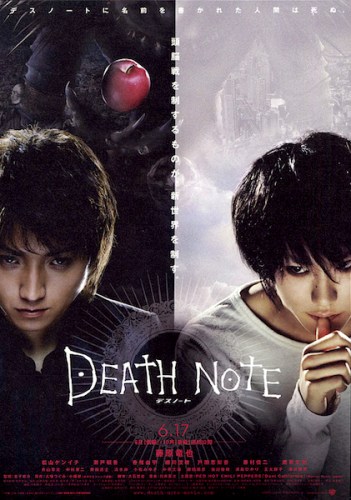
    In case the whole thing passed you by, it’s the story of student Light Yagami (Battle Royale’s Tatsuya Fujiwara) who discovers a supernatural notebook, the titular Death Note, that was dropped by death-god Ryuk (voiced by Shidou Nakamura). Whenever a name is written in the Death Note, that person drops dead. Light begins to use it to execute criminals who’ve escaped justice, a pattern of killings that is quickly noticed by the police and the media, who dub the mysterious murderer “Kira”. While much of the public agree with his actions, the police are stumped in their investigations. Also on the case is a reclusive genius detective known only as ‘L’ (Kenichi Matsuyama), who quickly suspects Light of being Kira, initiating a game of cat and mouse between the pair.

    It’s a good setup for a story, a premise that invites moral conundrums and “what would you do?” questions. I can see why it appealed to young people, too — what youth hasn’t wished certain annoying people would just drop dead? (Some places banned the manga because its popularity was leading to kids making their own Death Note books, writing in names of classmates and teachers. Obviously they didn’t actually work, but it was a “psychological health” thing.)

    A little Light reading

    There’s not much plot in that idea, mind: the Death Note is so all-powerful that there’s little drama in Light using it, especially as he isn’t morally conflicted himself — he’s sure he’s doing the right thing, despite people around him voicing their disagreement with Kira. The story therefore comes to focus on the battle between Light and L, a pair of self-proclaimed geniuses who work to constantly outwit each other. This is where the film begins to falter, because a lot of their supposed intelligence comes from leaps of logic designed to make them look clever.

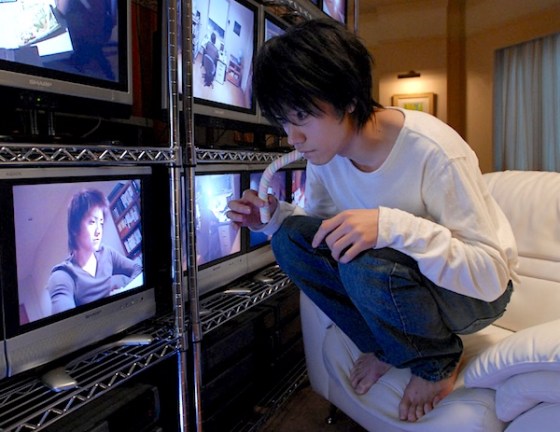
    It’ll also be a problem for any viewers who need a likeable protagonist: although Light starts out aiming to do good, he’s gradually led to be a right evil bastard; on the other side, L is an irritating brat, walking around barefoot, weirdly crouching on chairs, always stuffing his face with sugary treats, and speaking cryptically to the level-headed coppers forced to work with him. I’ve said before that I don’t think a film necessarily needs a likeable hero to work, but it does feel odd that there’s no one to root for here. Partly I don’t think the film’s sure whose side we should be on. It’s made to feel like it should be Light’s, but the film also knows he’s not got the strongest moral compass.

    One L of a detective

    This “duel of the geniuses” eventually comes to a head in a neatly-conceived climax, but one which doesn’t wrap everything up — the film ends on a very “end of part one” note. Although this film is simply called Death Note and the second was released here as Death Note 2, in Japan they were marketed as a “two-part event” and released just months apart. So I guess the cliffhanger ending is fair enough — it’s not an attempt at launching a franchise (an annoying trend when sequels aren’t produced), but is instead no different than The Matrix sequels, or Kill Bill, or so on.

    That said, the production schedule to make that happen is somewhat interesting, especially as it clearly had an influence over the film’s quality. The duology was produced at extraordinary speed. The concept of a two-film adaptation was greenlit in November 2005, Shūsuke Kaneko signed on as director in December, and they were shooting by the start of February 2006. Film 1 was shot in February and March, then came out in the middle of June, just three months later. Film 2 was still being written during Film 1’s post-production, before shooting in June and July, and was released at the start of November, just two months later. There were six assistant directors, including people who’d already graduated to helming their own films, just to handle the volume of work required to fit in the tight schedule — two major movies from script to screen in under 12 months. It’s no wonder the production looks a bit TV-ish at times, with somewhat dull cinematography and Ryuk realised through cheap and cheerful CGI. More vitally, the script or edit probably could’ve done with greater attention, to iron out some of those logic leaps and improve the pace in the middle.

    Demonic CGI

    The final work still manages to be an enjoyable thriller with a supernatural conceit — a film which definitely has its moments, especially as Light begins to work with the Death Note’s rules to creative effect — but it needed more polish, the legacy of its speedy production resulting in an array of niggles.

    3 out of 5

    The US remake of Death Note is released on Netflix this Friday.

    The Past Month on TV #21

    Another busy, busy month — I should’ve split it into fortnights again.

    Anyway, read on for reviews of Top of the Lake: China Girl, the latest instalments of Game of Thrones and Twin Peaks, ‘old’ shows like Line of Duty series 3 (from all the way back in 2016) and Peaky Blinders series 2 (from even longer ago: 2014), and even more bits & bobs too.

    Game of Thrones  Season 7 Episodes 2-5
    Arya's as surprised as the rest of usThe first of this month’s quartet of trips to Westeros, Stormborn, demonstrated better than the premiere the whip-crack pace the show is now moving at. To pick one example: Arya re-encountered Hot Pie and learnt that Winterfell was back in the hands of the Starks, changed her plans to journey there instead of King’s Landing, and encountered Nymeria (her wolf last seen way back in the second ever episode), who now leads a pack of wolves and, basically, rejected Arya. All those developments previously would’ve taken Thrones a good four or five episodes to get through, but no more. There are benefits to this, of course — no more longueurs — but the worry is Dan & Dave are rushing for the sake of rushing; because they told themselves this story would be done in 73 episodes and they’ve kind of had enough after the best part of a decade working on it. Still, it’s not as if it’s bad, it’s just faster. And where the episode promises exciting reunions and first meetings left, right, and centre, we can be assured they’re just around the corner.
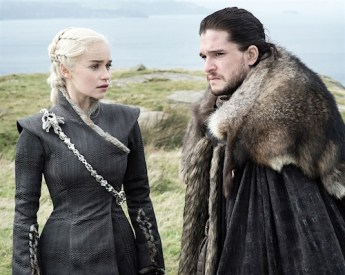
    Almost literally, as Jon Snow, hot off deciding to go visit Dany at the end of the previous episode, rocks up to Dragonstone in The Queen’s Justice for the long-awaited meet-up between aunt and nephew — not that either of them know that. The show doesn’t even make us wait all episode for it, kicking right into it. And, again, things move ever onward, as cunning plans are executed, thwarted, and bettered. It’s been reported that this season has the same budget as normal, despite having three fewer episodes, and that clearly shows on screen with epic battles almost every week.

    Jon and Dany, sitting in a tree...The most epic so far came in The Spoils of War. Apparently it’s been dubbed the Field of Fire — if there’s one thing Game of Thrones is consistently good at, it’s giving its big events cool monikers. (The “Field of Fire” is also an event from the series’ backstory, I believe, so maybe some of the reviews I read just got confused.) But it’s not just cool shots of fiery destruction that make this episode so satisfying: it’s the way that changes the game. Not to mention characters coming together after so long apart, both on the battlefield and not. That two girls talking in a crypt can be as thrilling as a dragon blowing shit up is… well, how character investment works, I guess. Some reckon this is the series’ best-ever episode. I wouldn’t go that far, but it is right near the top.

    By comparison, Eastwatch was almost a calm affair. Okay, that might be an exaggeration; but there were no epic battles this week (just a cliffhanger teasing one next time). It continued to contribute to this perhaps being Thrones’ most satisfying season ever though, with yet more long-awaited reunions, a couple of pretty major revelations, and some great skullduggery and counter-skullduggery. It also held fan-pleasing moments aplenty, my personal favourite being Davos’ meta one-liner. If it doesn’t stand out as an all-round all-time classic like the episodes surrounding it, that says more about them than it does this quality instalment.

    Top of the Lake: China Girl
    Top of the Lake: China GirlElisabeth Moss, star of both Mad Men, a series partly about the sexual politics of the ’60s workplace, and The Handmaid’s Tale, a series about the sexual politics of a world where women are baby-making slaves, returns as Det. Robin Griffin for a second run of Top of the Lake, which is now a series about the sexual politics of present-day Australia.
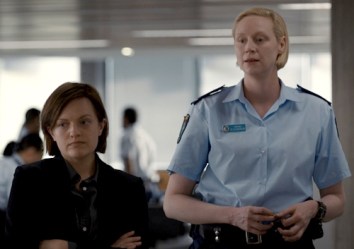
    Set four years after the first season, China Girl sees New Zealander Robin back at work as a police detective in Australia. The inciting incident happens on Bondi Beach, but this is not the world of sunny tourist hotspots or chirpy vets: it’s the body of an Asian prostitute, brutally murdered and shoved in a suitcase, then dumped to rot in the ocean. And it gets grimmer from there. Meanwhile, Robin seeks a connection with the daughter she gave up for adoption at two days old, who is now a headstrong and over-assured seventeen-year-old blindly falling into something way out of her depth.

    After a first episode that seems somehow tentative, as if it’s considering on the fly whether it should be a second season or a standalone narrative with the same protagonist, China Girl quickly resolves into its own beast: with vital groundwork laid in that sometimes stilted first hour, it hits the ground running as soon as episode two (making me wonder if, with further hindsight or a rewatch, the first episode wasn’t so awkward after all). Over its remaining five hours, China Girl increasingly impresses as dark, difficult, uncomfortable, challenging, and powerful drama. It’s also laced with surprising humour, and it’s a bit pretentious too. I can see why it was a hit at Cannes.

    Elisabeth Moss and Gwendoline ChristieThere are some great performances in there too, mainly from the female characters — no surprise, really, considering creator and co-writer/co-director Jane Campion is clearly interested in exploring women’s place in the world. Moss carries things, with Robin competent but combative at work (she needs to be, as the Australian police force seems stuck in the ’70s with its gender politics) even as her personal life is a tumultuous mess. Nicole Kidman gets to play it kooky as the adoptive mother of Robin’s child, who’s gone all spiritual and lesbian recently. The most entertaining is Gwendoline Christie as an enthusiastic constable who latches on to Robin, eager to be her protégé. She brings the bulk of the humour, with great lines and moments aplenty, but also brings emotional depth when needed.

    The whole thing ends with a degree of ambiguity rather than a killer blow, answering all the plot mechanics but seemingly less clear on how it wants to conclude its important themes. Nonetheless, for me it was an order of magnitude more interesting than the good-but-kind-of-woolly first season, and therefore a lot better than it too.

    Twin Peaks  Season 3 Episodes 11-14
    Two CoopersI must be honest with you, dear readers: the longer this Twin Peaks revival goes on, the less I feel I’m enjoying it. It works best when Lynch is trying to out-Lynch himself. Those episodes are crazy and borderline nonsensical and insanely challenging to what constitutes filmed entertainment, but at least they’re interesting; and if you don’t get it you can dismiss it as “it’s Lynch, innit”. It’s actually the ‘normal’ stuff — the investigations and machinations in South Dakota, Las Vegas, and Twin Peaks itself — that are beginning to get on my wick. Again, at times there are moments of clarity or inspired weirdness, but in between sits a morass of sludgy plotting and wilfully obscure characterisation. It’s starting to nudge the series from “revelatory experiment” into “noble failure” territory, for me.
    That said, there was a definite uptick at the end of this month’s viewing, with Part 14 providing a lot of long-awaited developments and forward momentum for the plot (plus one of my favourite of the end-of-episode performances at the Roadhouse, Lissie’s Wild West). Perhaps everything will finally come together in the remaining few episodes after all? Or perhaps everything will slow down again and we’ll be none the wiser come the end of Part 18. Only time will tell…

    Line of Duty  Series 3 Episodes 4-6
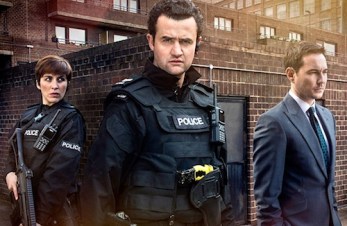
    Line of Duty series 3As I noted last month, the third series of Line of Duty seems to be the one that attracted the most adulation. I was reserving judgement until I’d finished, because at the halfway point I wasn’t finding it superior to the brilliant second series.

    For those still unaware of the show, it’s about a police anti-corruption unit, and in this six-parter they were looking into an officer who shot a suspect and covered up the circumstances. That wasn’t all that was going on, however. Line of Duty pretends it’s about a new case each series but, really, it told one big story across its first three runs. I wonder if that’s why some have hailed this one as its best: it finally brings all those long-brewing arcs to a head. Unsurprisingly, the bulk of the resolutions come in the feature-length finale, which is certainly a striking episode. Nonetheless, I’d argue series two was better overall — I felt it had a greater sense of mystery, palpable tension throughout, and the plot was more unpredictable. Still, I don’t wish to do the third series down — being second-best to that is no mean feat.

    Peaky Blinders  Series 2
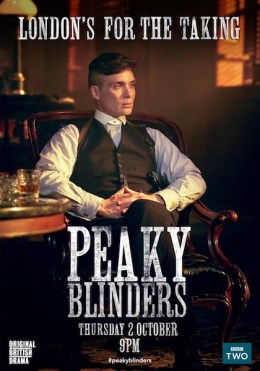
    Peaky Blinders series 2The second series of BBC Two’s period crime drama jumps forward two years to find everyone’s favourite Brummie criminals running such a successful business that they intend to expand their operations to London, by sticking their oar into a turf war between the Jews (led by Tom Hardy) and the Italians (led by Noah Taylor). Meanwhile, Sam Neill’s copper is back with a vengeance, teaming up with the Irish to blackmail Blinders kingpin Cillian Murphy into performing an off-the-books assassination for the crown.
    Peaky Blinders’ second series ups the ante from the already excellent first, pitching its leads into a more dangerous world where they’re not the major force to be reckoned with. As its stories unfurl over six hours (without needing to resort to wheel-spinning), you begin to wonder how they can possibly escape the various binds they find themselves in. It all builds to a payoff-filled finale, even though things don’t go quite to plan… Where that will take things in the third series will be interesting to see. (For more up-to-date fans than me, the fourth series is due later this year.)

    Also watched…
  • The Bletchley Circle Series 1-2 — ITV’s short-lived drama (just seven episodes across two series), about former Bletchley Park codebreakers using their skills to solve crimes in ’50s London, is chiefly notable for its intelligent and capable female heroes. The first series is good, but I felt like the second was beginning to struggle to sustain the conceit — just how many criminal conspiracies were these ladies going to stumble upon?
  • The Musketeers Series 3 Episodes 1-3 — the last season! Sob! If you like swashbuckling excitement and have let this show pass you by, do find a way to catch up on it.
  • Sherlock Pilot — finally got round to watching this unaired pilot (it’s included as a special feature on the series one Blu-ray). I was under the impression it was something of a disaster, but it really isn’t. The direction isn’t as flashy as the final show (but is otherwise fine), and obviously it’s half-an-hour shorter, but other than that it’s all very similar.
  • Wallander Series 4 Episodes 2-3 — an adaptation of the final novel, in which the Swedish detective investigates a case relating to a shameful incident in his country’s past while battling early-onset dementia. It’s a superb idea for a story — the once-great detective battling his deteriorating mental faculties. This being Wallander, it tackles the concept from a more personal, emotional perspective, rather than a Memento-esque plot-driven one, but is no worse for it. It’s a sad end for the character, but an affecting one for his series.

    Things to Catch Up On
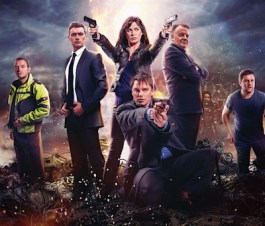
    Torchwood: Aliens Among UsThis month, I have mostly been missing Torchwood: Aliens Among Us. Although ‘just’ an audio drama from Big Finish, it’s being marketed as the series’ official fifth season, picking up after the events of 2011’s (disappointing) Miracle Day. A full 12-episode run, it’s coming out in three box sets — although part two isn’t out until October and part three until February, part one came out last week. Obviously, I’ve not listened to it yet. Hopefully next time…
    Next fortnight… another earlier-than-normal edition, as Netflix gets defendered and Game of Thrones reaches a feature-length finale. Yes, already.

  • Review Roundup

    In today’s round-up:

  • Money Monster (2016)
  • Transformers: Revenge of the Fallen – Big Screen Edition (2009)
  • Headshot (2016)


    Money Monster
    (2016)

    2017 #36
    Jodie Foster | 95 mins | streaming (HD) | 2.35:1 | USA / English | 15 / R

    Money Monster

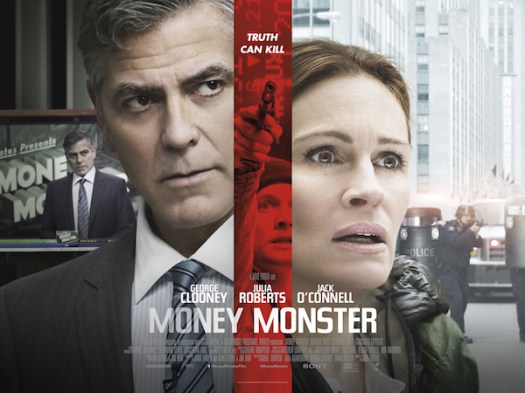
    Lee Gates (George Clooney) is the host of a silly financial advice TV show, produced by his mate Patty (Julia Roberts), who one day is taken hostage live on air by a guy (Jack O’Connell) who followed one of Gates’ tips and lost big.

    Director Jodie Foster’s topical thriller takes aim at both Wall Street finagling and satirising media consumption, but has bitten off more than it can chew. Some of its points are on target, they’re just so obvious it barely matters. At least it works quite effectively as a straightforward throwback-style thriller (it’s a bit ’90s), especially on a couple of occasions where it subverts expectations — like getting the hostage taker’s pregnant wife on the phone to talk him down, only she starts laying into him; or when the charming TV host pleads with the public to raise a company’s stock price in order to save his life, but the price goes down. That said, in the grand scheme of the movie these are quite minor niceties — the overall narrative goes exactly where you’d expect it to.

    Perhaps its greatest point comes at the end: the Wall Street guy is exposed as a total villain… and everyone just goes back to their lives. We all know these people do bad shit, but because everyone’s just kind of accepted it (and the people with power to perhaps do something about it are disinclined to attempt it, for $ whatever $ reason $), they’re allowed to just keep on going. You can shout about it all you want and however you want — by making a thriller movie with big-name stars, perhaps — but the best you can hope for is a shrugged “yeah, we know, it sucks”.

    3 out of 5

    Transformers: Revenge of the Fallen
    Big Screen Edition

    (2009)

    Rewatchathon 2017 #19
    Michael Bay | 150 mins | Blu-ray | 2.40:1 + 1.78:1 | USA / English | 12A / PG-13

    Transformers: Revenge of the Fallen IMAX

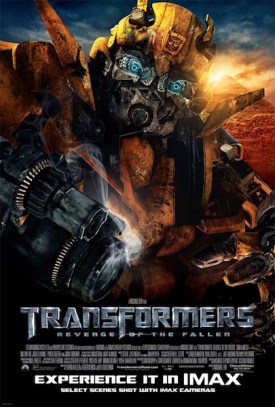
    “Big Screen Edition”? This is the version of the second Transformers movie that was released theatrically on IMAX, and later made available on Blu-ray exclusively at Walmart in the US. Which is why I’m only watching it now, when I picked up a cheap second-hand copy. As well as including two big sequences at a more IMAX-esque ratio, it’s also extended — by 30 whole seconds!

    30 seconds isn’t much in the first, and even a die-hard fan would struggle to spot them because they’re frames-long additions here and there. The full details can be found here, should you care. The expanded aspect ratio of the the IMAX scenes are more noticeable. I love a changing aspect ratio, and these are effective at adding scale to the two sequences they’re used in — the midway forest battle that (spoilers!) results in Optimus’ temporary death, and part of the climactic battle. On the downside, two action scenes in a two-and-a-half-hour movie isn’t very much, really.

    As for the film itself, I don’t know if I enjoyed it more than the first time, because I gave it quite a kind review then, but I kind of liked it (enough) for what it is — a big, dumb spectacle. It’s still too long, poorly written (in part a victim of the writers’ strike), and has all kinds of awkward and uncomfortable bits. It’s not a good film, but it is a decent(-ish) movie.

    3 out of 5

    Headshot
    (2016)

    2017 #92
    Kimo Stamboel & Timo Tjahjanto | 118 mins | Blu-ray | 2.40:1 | Indonesia / Indonesian & English | 18

    Headshot

    The Raid’s Iko Uwais stars in this actioner as Ishmael, a man who washes ashore with amnesia thanks to a bullet wound in his head — so far, so Bourne. Bad people are out to get him, of course, and when they kidnap the kindly doctor who nursed him back to health (Chelsea Islan), Ishmael goes on a violent rampage to save her and uncover his past.

    Beginning with a focus on the sweet kind-of-love-story between Ishmael and the doctor, Headshot has a slightly different feel to your usual beat-em-up-athon at first, almost like an indie romance drama. That changes pretty sharpish, of course, and we’re thrown into an array of highly choreographed punch-ups. It’s pretty entertaining as that, with some inventive bits here and there, but nothing to challenge the pair of films Uwais is best known for.

    Put it this way: I enjoyed it while it was on, but I sold the Blu-ray on eBay the next day.

    3 out of 5