Hidden Figures (2016)

2017 #170
Theodore Melfi | 127 mins | download (HD) | 2.39:1 | USA / English | PG / PG

Hidden Figures

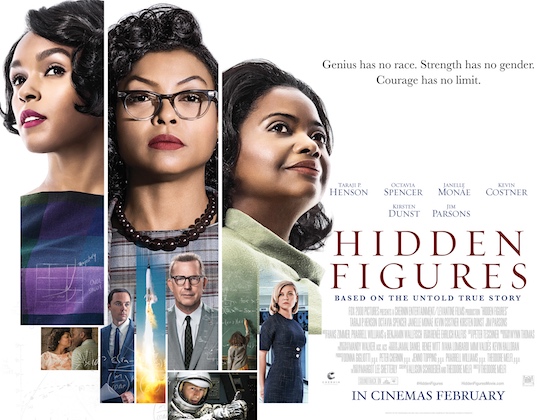
Based on a true story, Hidden Figures is about three black women working at NASA in the early ’60s, a time when segregation was still in force in the US.

It’s a double whammy of timely issues, then: they struggle to prove they’re clever and have scientific know-how because they’re women, and they struggle to prove they’re worth treating with respect because they’re black. How depressing that these things are still relevant over 50 years later. That said, any right-minded person watching it will still be suitably appalled that this kind of thing went on at all — even when you know about it, seeing it played out is something else.

Of course, it comes with a positive message attached: these people overcome their societally-imposed disadvantages to be awesome nonetheless, fighting everyday sexism and racism left, right and centre to eventually prove their worth. Hurrah! It’s a strong message, even more powerful thanks to it being a true story, and no doubt goes a long way to explaining the film’s success. As a movie in its own right, it’s nothing particularly special. There are good performances from a high-calibre cast, but everything else is pretty standard for a biopic — well done, but there’s a reason the film’s Oscar nominations were for acting and screenwriting.

4 out of 5

Hidden Figures is available on Sky Cinema from today.

John Wick: Chapter 2 (2017)

2017 #86
Chad Stahelski | 122 mins | Blu-ray | 2.40:1 | USA & Hong Kong / English, Italian, American Sign Language & Russian | 18* / R

John Wick: Chapter 2

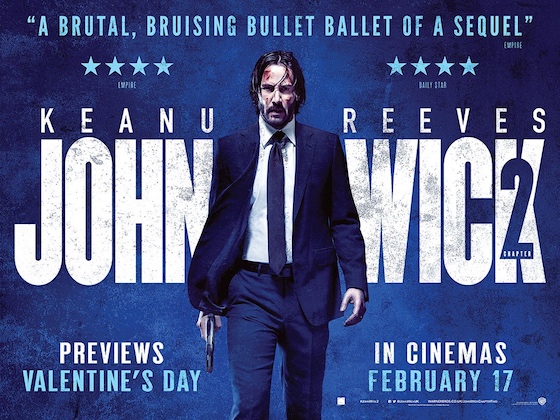
John Wick, the action movie in which Keanu Reeves plays a retired assassin who returns to his former life to avenge the murder of his puppy, was a surprise hit back in 2014, and so it’s no surprise that there’s now a sequel (and a burgeoning universe of spin-offs and the like in the works too, but we’ll leave that for another day).

Part of the first film’s success was undoubtedly in its elaborately choreographed action — Reeves has always taken his action roles seriously, becoming a proficient performer of combat himself rather than relying on stuntmen; co-directors Chad Stahelski and David Leitch have their background in stunt work also; and they all brought their considerable expertise to bear on a variety of incredible fight scenes. But another aspect that piqued audiences’ interest was the equally elaborate underworld the film casually introduced — a secret community of assassins and those who served them, with its own codes and rules, the extent of which was only hinted at. So, as good sequels are wont to do, the second chapter in Mr Wick’s story serves up more of both these elements.

The story picks up immediately after the first film left off: having dealt with his grievances in such a public fashion, the underworld is aware that John Wick is back in the game, and so an old friend comes to call in a favour. Reluctantly forced to accept, Wick is soon off on a mission to Italy, but things quickly become more complicated, making Wick a target himself. In a society governed by strictly enforced rules, how far can — and will — he go to protect himself?

Shadowy underworld

For anyone who particularly liked the snippets of this world’s mythology from the first movie, Chapter 2 delivers what they’re after in spades. Before they were just texture — fun window-dressing to the main story of a man taking violent revenge — but here they become absolutely central. We not only get to see more of the world (when Wick travels to Italy we learn a lot more about how the network of assassin-hotels functions), but the codes and how they’re enforced kick off the plot and are central to multiple aspects of it later on. It’s a neat structure across the two films, actually. The first doesn’t throw you in at the deep end with a sudden mass of things you need to learn, but instead intrigues you with a few relatable, fundamentally unimportant titbits, so that maybe you want to know more. Then the second takes what you know and expands on it, using the knowledge that you picked up almost incidentally to lead you further down the rabbit hole, to the point where it can hinge major plot developments on the rules of its own mythology. It’s quite sophisticated, in its way.

Of course, it’s all still in service of people shooting and stabbing and punching and whatever-else-ing each other. Maybe that’s doing it a disservice. Nonetheless, there’s lots of intricately choreographed, cleanly staged action — and what more do you want from a film like this? Some sequences probably go on a tad too long (a shootout in some catacombs, for example, which doesn’t payoff a careful setup as well as it could), but others are delightfully done (the climax in a hall of mirrors, for instance). But it’s not all po-faced mythologising and macho violence, with Peter Serafinowicz turning up to add a dash of humour as an armourer. There’s also a cameo for Reeves’ Matrix co-star Laurence Fishburne, but his brief turn definitely falls under the “mythologising” bracket — I imagine he’ll have a continued role in the forthcoming threequel.

Morpheus no more

Speaking of which, this is the good kind of middle part to a trilogy. It very much grows out of Chapter 1, but then it starts and completes its own narrative, rather than only telling half a story, before ending such that a third instalment is inevitable. Put another way, it finishes on something of a cliffhanger. My point is, this is my idea of how a sequel that’s aiming for another sequel should be done, rather than one of those things where they want to do a four-hour movie and chop it in half. (Though I recently said Rurouni Kenshin 2 and 3 were fine doing just that, so I guess it’s a matter of how it’s done rather than whether it’s done at all.)

By expanding the world of the series, John Wick: Chapter 2 loses some of the elegant simplicity that drove the first instalment, while also fleshing out an alternate universe for fans to sink their teeth into. Some viewers will prefer the more straightforward nature of the first chapter; others will enjoy the added complications. Either way, in its primary role as an action-thriller, Chapter 2 is more-or-less the equal of its enjoyable predecessor.

4 out of 5

John Wick: Chapter 2 is available on Sky Cinema from today.

* The UK theatrical release was cut by 23 seconds to get a 15. That version was also released on Blu-ray over here, but the uncut version was released on 4K Blu-ray. I watched the regular US Blu-ray, which is uncut. ^

My Continuing Adventures in the Brave New World of 4K UHD, Part 37

In my ongoing adventure of “trying to work out if 4K is any good or not”, I finally got round to doing a direct comparison: some scenes from The Punisher episode one, which I compared in 4K with Dolby Vision (through my TV’s Netflix app) to 1080p (through my Amazon Fire TV Stick).

And holy moly if I didn’t really see the difference.

In 4K, The Punisher’s got gritty, grainy visuals. In 1080p, that quality all but disappeared, just smudged away. And the colours… I watched in 4K first, and during a particularly dark scene I tried to note how distinguishable different colours and shades were in shadowy areas. I needn’t have bothered: in 1080p it was all just black. So, in conclusion, the difference in both areas (resolution and colour range) was, to be honest, considerably more pronounced than I was expecting.

Dolby Vision

Now, a few caveats. This conspicuous a change is undoubtedly due in part to how much bandwidth Netflix bothers to use, and therefore how much compression is being applied. It seems that for 4K they devote about three to four times more bandwidth than for 1080p (and even that’s about half what a Blu-ray goes at). This may not have affected the colours, but it likely explains why the 1080p stream lacked so much of the fine detail seen at 4K.

Also, there’s always the potential that my TV’s settings were affecting things. HDR and Dolby Vision use a dedicated set of picture settings, which have to be setup separately from those used for regular playback. I’ve optimised both sets as best I can, but there’s always the possibility I did one better than the other. There’s also the fact that I was using different devices. Maybe the Fire TV Stick is just less good at streaming Netflix than my TV’s app? (If I could force the Netflix app to play in lower quality then I’d’ve done the entire comparison there for fairness, but I don’t think that’s possible.)

Finally, to drag a different series into the debate, I also watched Stranger Things 2 in UHD with Dolby Vision. Most of the time it looked fine, but every once in a while the colours in a shot would look completely screwy — usually too blown out, like someone had whacked the brightness up to silly levels, sometimes erasing detail in the process. Now, what Dolby Vision does is adjust the picture settings on a shot-by-shot basis to optimise every individual moment (rather than just use a blanket setting for the whole movie, which is what standard HDR does). Presumably that’s why the picture went funny on individual shots rather than for whole scenes. I’m far from an expert on these things, but I believe part of how Dolby Vision does this is to do with metadata, and apparently metadata can just go missing. Perhaps this is what happened. On the other hand, I went back and checked some of the most egregious moments on a different day and they retained the same problem. Who knows what was going on, then, but it’s obviously less than ideal. (If the same thing happened during The Punisher, I didn’t notice it.)

Stranger Things 2 HDR

So, after all that, I’m still not 100% convinced about UHD and HDR… but I can’t deny there was a marked improvement when comparing The Punisher, particularly during very dark scenes. Heck, even if the difference is just a fluke of how I’ve set up my TV, it proves that paying for the 4K option on a Netflix subscription is worth it. But purchasing a 4K Blu-ray player, which I’d also need to be region free, along with the prospect of having to rebuy some films again… that’s a lotta dough.

I should probably do a Netflix UHD to 1080p Blu-ray comparison, really. Next time…

Star Wars: The Last Jedi (2017)

aka Star Wars: Episode VIII – The Last Jedi

2017 #169
Rian Johnson | 152 mins | cinema | 2.39:1 | USA / English | 12A / PG-13

Star Wars: The Last Jedi

I’ve felt a great disturbance in the Force, as if a small but vocal group of fanboys suddenly cried out in terror and were unfortunately not silenced because on the internet such complaining goes on forever.

Yes, something terrible has happened: a new Star Wars movie has come out and, rather than go the Force Awakens route of appealing to nostalgia and familiarity, it’s attempted to boldly go where no Star Wars movie has gone before. Well, it’s maybe not quite that innovative, but writer and director Rian Johnson has given us an Episode VIII that eschews rehashing former glories for an attempt to push the franchise forward in interesting new ways. It’s not an unmitigated success, but it is considerably more than just “a good effort”.

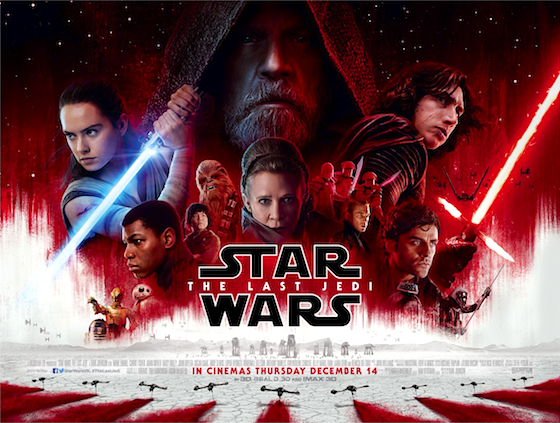
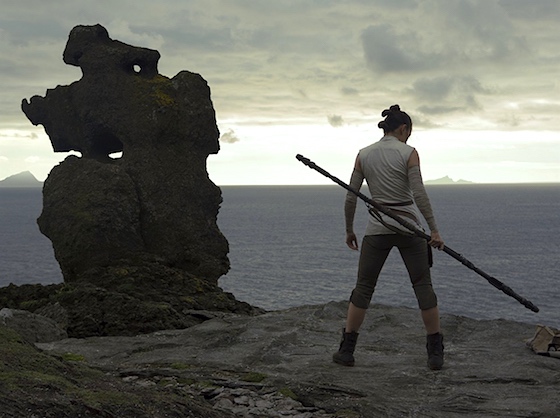
Picking up exactly where Episode VII left off, The Last Jedi opens with the Resistance fleeing as the First Order strike back. With those villains in pursuit, intent on wiping out the Resistance once and for all, hot-headed pilot Poe Dameron (Oscar Isaac) and former Stormtrooper Finn (John Boyega) hatch a plot to cripple the First Order’s flagship. Meanwhile, on the other side of the galaxy, Force-adept orphan Rey (Daisy Ridley) tries to persuade hermit Luke Skywalker (Mark Hamill), the only remaining Jedi Master, to rejoin the fight.

The last Jedi?

Two years ago, The Force Awakens set a new trilogy in motion by not only introducing us to a selection of new characters and their conflicts, but also by posing a bunch of questions and establishing a pile of mysteries. The Last Jedi has the task of either perpetuating these — essentially, putting them on hold to be answered in 2019’s finale, Episode IX — or actually (gasp!) resolving some of them. No spoilers (I imagine if you care then you’ve seen the film by now, but just in case…), but Johnson has indeed decided to furnish us with some answers, and it’s generally this that has riled up certain parts of the internet.

Frankly, it’s not a debate I want to wade into, in part because I generally think the complaints are misplaced — many of them stem from fans having expected certain things, then not got those things. They say that’s not it; that Johnson’s writing of characters and ability to tell a story is fundamentally flawed… but they’re wrong. Johnson’s answers are fine — in fact, in many cases they’re exactly the kind of thing I’d hoped for (yep, some of us did get what we wanted!) — they’re just not the kind of answers some people expected. And I think that’s a good thing. This way is more surprising. But also, it’s not surprising for surprise’s sake — it fits the story being told. Minor spoilers here for the film’s themes, which are failure and what it takes to be a hero. (That’s two of them, anyway. I’m sure there are more.) The former, as we are told, is important — you learn more from failure than from success, as they say. The latter is, at least in part, explored in terms of who gets to be a hero, and why. Both of these lead to answers that have made some people deeply unhappy, usually for the wrong reasons — as I say, an awful lot of people are blaming Johnson’s abilities as a filmmaker, when really they just don’t like the perfectly-well-built story they’ve been given.

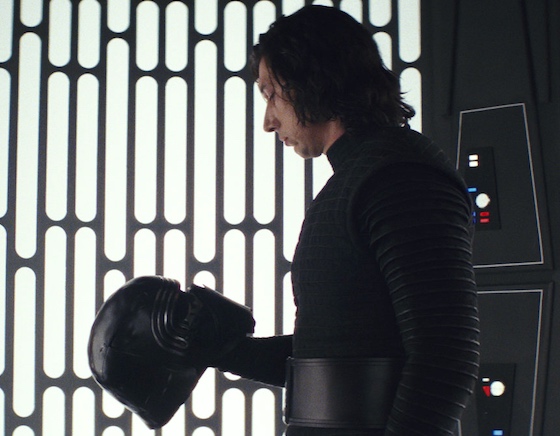
The end of Kylo Ren?

Anyway, that’s enough harping on about other people’s issues. I do think the film had some flaws, primarily in the pacing department. I think where it goes wrong is how it emphasises the events on Ahch-To (Luke’s island) and Canto Bight (the casino planet). I get the impression the latter has been built up to give us somewhere to cut away to during the former, but it means what is a subplot aside gets too much screen time. We expect a three-act structure, and it makes that whole section feel like Act Two of Three, but it isn’t. I can imagine this plays better on a rewatch, so I’m reserving judgement slightly.

That aside, though, The Last Jedi has much to please. Every major player is granted a noteworthy arc, developing as people throughout the movie. The pay-offs to all that are particularly satisfying. Obviously I can’t talk about that without spoiling it, but everything that occurs in the throne room after it becomes clear this isn’t your typical Star Wars throne room scene is among my favourite stuff in the whole saga. And you’d have to go some way to beat the long-awaited reunion between a couple of characters, in a perfectly-written and emotionally loaded scene. This definitely contains some of the best acting in any Star Wars movie — Carrie Fisher gives one of the best performances of her career; Mark Hamill makes you wonder why his never took off like, say, Harrison Ford’s did; and the young guns get their moments too, particularly Daisy Ridley and Adam Driver, with a shoutout for the always wonderful Domhnall Gleeson.

Also John Boyega and Kelly Marie Tran

Away from the dramatic conflicts, it also satisfies as an action movie, with some of the saga’s most incredible sequences. At times it feels like we’re watching an actual war, rather than the odd skirmish that pops up in previous films. The smaller level combat is impressive too. This is certainly not a film just about its action set pieces, but they don’t disappoint. All around this may well be the best-directed Star Wars movie, with its shot choices, editing, and some bold and original ways of staging things that give us examples of pure filmmaking never before seen in this series. Part of that is the beautiful cinematography by Johnson’s regular DP, Steve Yedlin. There’s been striking photography in previous Star Wars movies, but none so consistently as this. One bit in the second half provoked actual gasps and “wow”s from my audience — and we’re British, we don’t make noise during films.

Except laughter. People laughed, too. This is a funny film. Too funny, in some people’s estimations. Maybe they forget that Star Wars has always been amusing (on IMDb the highest-rated quote from A New Hope is Han’s chat over the intercom when they’re breaking Leia out, which is basically a comedy skit). I had mixed feelings about one extended bit at the beginning (it’s funny, but does it fit in Star Wars?), but mostly I thought the level of humour was about right. That reminds me of the most ridiculous single criticism I’ve read of the film, though: some people have claimed the film has a “vegan agenda” due to one comedy bit. I kid you not. Elsewhere, the humour is used to succinctly undercut some of the series’ pomposity, which ties back round to Johnson’s pleasantly irreverent aims that I was alluding to earlier.

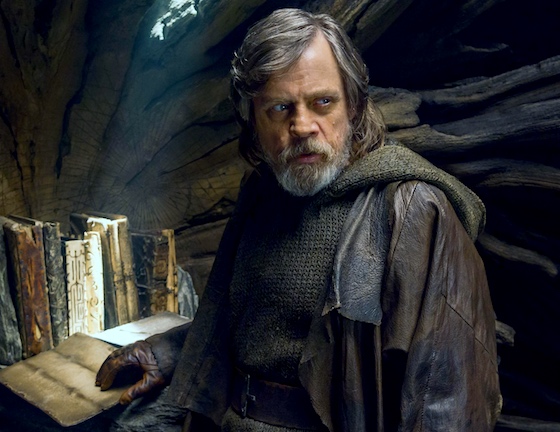
Or is Luke the last Jedi?

One of the key lines from The Last Jedi’s trailer (and it’s also very important in the film, of course) comes from Luke: “This is not going to go the way you think.” That’s quite clearly the case between the film and its audience, too. Some of us have revelled in that; others despised it. Others still find themselves in between, stuck being drawn back and forth to two complex and opposing emotional states. Being uncertain of your feelings between the Light and the Dark — seems only appropriate for this franchise, doesn’t it?

The Last Jedi doesn’t play to the populist cheap seats in the way The Force Awakens did, which makes it a less congenial movie, but perhaps a better one. It doesn’t effortlessly entertain with nostalgic Star Wars-ness as Episode VII does, but instead takes all that familiar iconography and prods at it to push it in new directions. Like another big sci-fi sequel this year, Blade Runner 2049, it’s a film whose true appreciation may only occur over time. I didn’t like everything about it, but the stuff I liked, I loved.

4 out of 5

Star Wars: The Last Jedi is in cinemas everywhere now. I imagine you’ve already seen it.

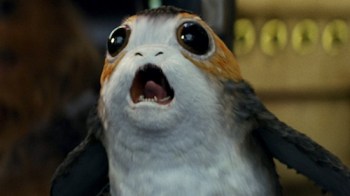
P.S. I loved the Porgs.

The last Porg?

The Past Month on TV #27

A slightly earlier than normal TV review this month, to get ahead of all the Christmas telly — but there’s still plenty to discuss…

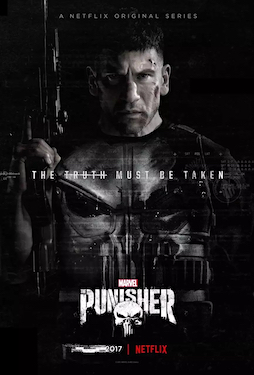
The Punisher  Season 1
The PunisherThe fourth live-action iteration of Frank Castle, Marvel’s murderous anti-hero (and people moan about Spider-Man reboots), debuted in Daredevil season two and was greeted so positively that now he’s got his own spin-off series. And “spin-off” is not an inaccurate descriptor, because this very much launches out of the events of Frank’s storyline in Daredevil — which makes it all the more annoying that Netflix care not for “previously on”s: Daredevil season two was over 18 months ago; a little refresher would be nice.
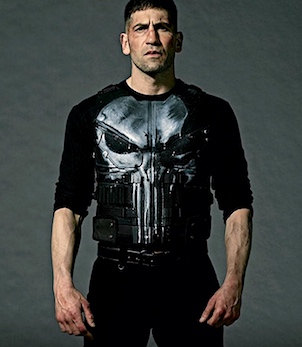
You see, the plot revisits the Punisher’s origins: his family were killed in the crossfire of a gang shoot-out, leading him to kill the criminals responsible. He thinks that mission is complete, but the season begins (more or less) with him discovering new intel that suggests his family’s murder may not have been so random, and it links back to his actions when he was in the military. This also serves as a launchpad for the series to tackle other war-related issues, primarily the psychological wellbeing of veterans. With such serious themes it’s perhaps no surprise that there’s very little here that’s outright comic-book-y here — no superpowers, for sure; not even veiled references to the big names of the MCU movies, which we’ve had in every other Marvel Netflix show. In fact, if it weren’t for the fact the series is so obviously spun out of Daredevil and has the Marvel logo at the start, you could be forgiven for thinking it wasn’t a Marvel show at all.

Some people think this removes the Punisher’s USP. In and of himself he’s just a violent man out for revenge — action cinema is stuffed to bursting with such anti-heroes. What makes Frank unique is he’s that kind of character but in a world where super-powered and super-moral people exist. So would The Punisher have been more interesting if, instead of a very grounded military conspiracy storyline, it had something to do with Frank clashing with superpowered people? I don’t know. It certainly would’ve been a different show. As it stands, this may be a show for people who don’t typically like Marvel shows. So was Jessica Jones before it, but this is for different people who don’t like Marvel shows — people like Jason Statham, maybe.

Jon BernthalIn the title role, Jon Bernthal is fantastic. You can absolutely believe him as a revenge-driven psychopath capable of killing anyone and everyone, but also as a kind-of-charming strong-but-silent type with a heart and moral code who will definitely do the right thing. I’ve seen some critics and viewers opine that now is the wrong time for a series about a hero who just murders indiscriminately. I say those people definitely haven’t watched this Punisher. Although the plot is a conspiracy thriller, the series invests a lot of time in the emotional world of Frank Castle, making him human and moral rather than just a single-minded murder-machine. Bernthal makes what could be a very one-note role into a plausible human being; one who you believe might be able to find redemption and leave someday. And maybe that makes him even more tragic — he could find it; it’s possible… but likely? There’s the rub. As it’s also trying to engage with issues facing combat veterans once they return home, it makes for a clearly different, more serious flavour for an MCU production. How successfully it explores these weighty issues is more debatable.

Many of these Marvel shows take their whole first season to fully complete the hero’s origin story, but The Punisher is stuck with the fact that Castle already became The Punisher during his Daredevil appearance. So do they just ignore that story shape? No, of course they don’t — they shift it on to the villain! Therefore any comic book fan who knows what one character will ultimately become (no spoilers here!) is constantly teased with possibilities throughout the season until, eventually, as we should’ve known from the start, the transformation occurs in the finale. Why not really surprise us: do the transformation earlier and then wrap a character up within one season, rather than leaving them dangling for a possible next time? Comic books have to leave things dangling — they will all run for ever and ever; there can be no permanent solutions — but these TV series will end — whether it’s after a single season, or two, or five, or ten, they are without exception finite. That means you’re allowed to wrap a character up and move on to others.

So, The Punisher is not an unmitigated success, but it does lend another flavour to the Marvel-Netflix landscape. I certainly hope we get to see more of Bernthal’s take on the character in the future.

Detectorists  Series 3 Episodes 2-6
Detectorists series 3The third and final series of BBC Four’s sitcom about a couple of mates whose hobby is metal detecting was every bit the equal of the first two runs, which saw the show place on my list of 10 Favourite TV Series of the Last 10 Years back in February. Its brilliance lies in how perfectly weighted it is: the characters are quirky, but also normal; their problems are grounded and realistic, without being glum and unduly serious; it’s frequently hilarious, but without slipping into gurning ‘Comedy’ territory; it’s kind and gentle, but without being dull; and it’s all very lovely and kind-hearted, without being twee or saccharine. It’s also beautifully put together by writer-director (and star) Mackenzie Crook — the storyline across the series was precisely constructed, and the photography is often a gorgeous showcase for the English countryside. A real gem that will be missed, though at least it came to a perfect conclusion.
The Good Place  Season 1 Episodes 3-13
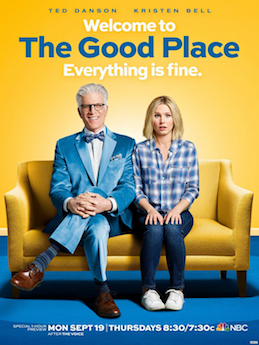
The Good PlaceI only heard about this after its Big Twist was much-discussed online, so starting it was an exercise in knowing there was a big reveal awaiting. Fortunately, that knowledge doesn’t overshadow everything that comes before it. For those who still aren’t aware of it (especially as it’s only on Netflix on this side of the pond), it’s about a woman (Kristen Bell) who dies and goes to Heaven only due to an admin error, so she tries to better herself so that she’s deserving of her place. Other complications emerge as the season goes on, but that’s the premise. There’s a lot of plot for a sitcom — although it’s not necessarily immediately obvious, it tells a 13-episode story; this makes Netflix quite a natural home for it, actually, as it’s not your typical “every episode is fundamentally standalone” sitcom. But it’s also very funny in amongst all that, mining not only the characters and their foibles, but also the uncommon situation they’ve found themselves in. The shocker in the finale is just the icing on the cake. I hear season two has gone off the boil somewhat, but I’ll find out for myself once it’s all wrapped up.

Also watched…
  • Armchair Detectives Series 1 Episode 1 — Game show in which contestants watch a murder mystery scene by scene and attempt to guess the perpetrator. It’s a fun idea (who doesn’t ‘play along’ while watching a whodunnit?), but it’s hampered by the dirt-cheap quality of the drama. That’s to be expected on a daytime game show budget, but still…
  • Bounty Hunters Series 1 Episodes 3-6 — If you saw the James Corden comedy-thriller The Wrong Mans, this is tonally very similar to that — not quite as elegantly done perhaps, but still pretty decent. If you like comedy-thrillers and haven’t seen The Wrong Mans, watch that first.
  • The Flash Season 4 Episodes 3-6 — After complaints about it getting too grim and self-serious, they’ve endeavoured to return The Flash to the lighter tone of its first season, in the process practically turning it into a comedy. I often find these CW superhero shows kinda laughable anyway, so, a little to my surprise, that’s working for me.
  • The Musketeers Series 3 Episodes 9-10 — Sad to (finally) reach the end of this fun action drama. The third series wasn’t quite on a par with the first two (the result of new showrunners, undoubtedly) but it still had its moments. It leaves a swashbuckling void in the schedules that I doubt anyone will bother to fill.
  • Would I Lie to You? Series 11 Episodes 1-4 — Is this the best panel show on TV? Could well be. Its genius lies in the elegant simplicity of its concept, a game anyone can play (and we can play along with at home), plus the sharp and quick wits of regulars Rob Brydon, David Mitchell, and Lee Mack. Almost a dozen series in and there’s no sign of the hilarity waning.

    Things to Catch Up On
    Blue Planet IIThis month, I have been missing so much stuff. There’s been the fourth series of Peaky Blinders on BBC Two (which concludes this week, so we’ll whizz through it sometime in the new year); the second season of The Crown on Netflix (also waiting for the new year now); the same streamer’s first ever miniseries, Godless; the immensely acclaimed Blue Planet II (now available in UHD on iPlayer, too!); and I’m behind on Arrow and The Flash so haven’t reached the four-show Arrowverse crossover. And those are just the ones I can remember right now.
    Next month… is January, but sometime before that I’ll likely review some Christmas TV.

  • Your Name. (2016)

    aka Kimi no na wa.

    2017 #168
    Makoto Shinkai | 107 mins | Blu-ray | 1.78:1 | Japan / Japanese | 12 / PG

    Your Name

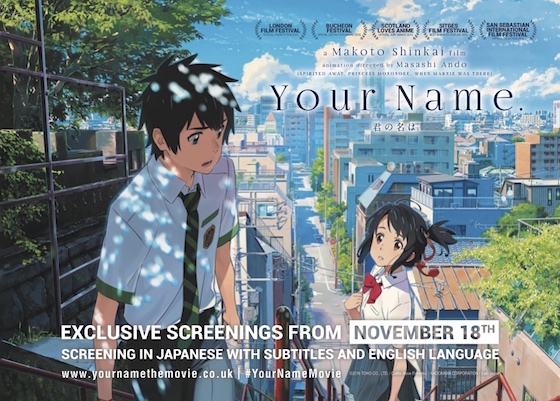
    If you’ve not heard about Your Name then… well, where have you been for the past year? It was a colossal hit in its native Japan during the back end of 2016, spending 12 weeks at #1 to become the fourth highest-grossing film of all time there (behind only Spirited Away, Titanic, and Frozen). It’s also the only anime not made by Studio Ghibli to gross over ¥10 billion at the Japanese box office. Critical acclaim has followed as it’s been released around the rest of the world too, hailing writer-director Makoto Shinkai as the new Miyazaki. It’s hard to imagine higher praise for an animator. The film reached UK cinemas last November, but then took a whole year to hit DVD and Blu-ray (I guess thanks to Japanese studios’ usual restrictive licensing agreements), and as of this week is available to stream for Amazon Prime members. So when I finally sat down to watch it this week it had a bit of weight on its shoulders — at this point it runs the risk of being a victim of its own hype.

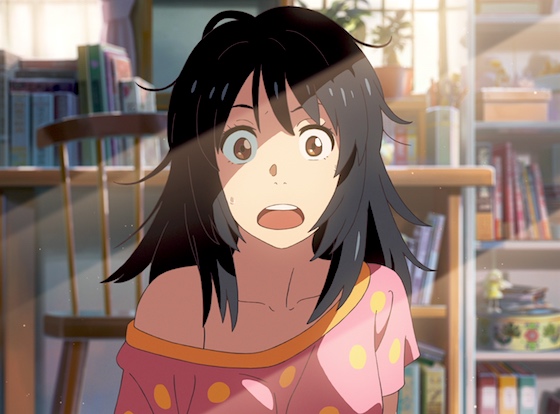
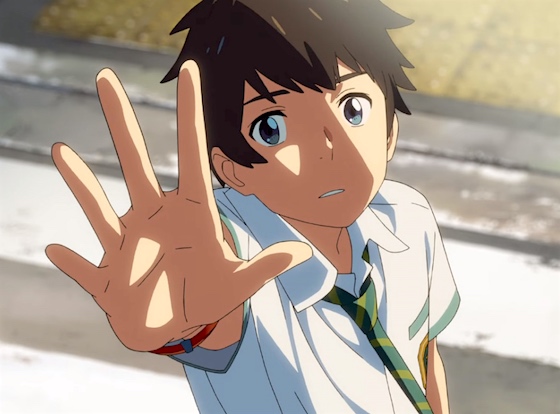
    The film introduces us to Mitsuha, a teenage girl in a sleepy country town — more a village, really (it doesn’t even have a cafe!) — who wishes for a more exciting life in the big city. Her friends tell her she was acting weird the day before, but she can’t remember any of it. Then she wakes up in the body of Taki, a teenage boy living in Tokyo. Assuming it’s a dream — a very long, very realistic dream — she stumbles through his life for a day. To cut to the obvious, Mitsuha and Taki soon realise they’re actually swapping bodies, apparently at random but for a whole day each time. (The literal translation of the film’s Japanese title is What is your name, which kinda makes more sense.) They find ways to deal with it, but a big explanation for why it’s happening is looming…

    That feeling when you wake up and realise a boy's been inside you... er, as it were

    That comes in the form of a hefty twist about halfway through the movie. I’ve read some very different reactions to that development and what follows it — criticism of it for shifting the film into something generic after a more original first half; praise for it elevating the film into something more original after the generic first half. I guess your mileage will vary. For me, it kind of glossed over some of the body-swap stuff to get to a place where there was still time to deal with what happens next. Conversely, there are plenty of intersex body-swap movies — how much do we need to go over that again? But there are generic elements to the second half too.

    That said, the way it uses Japanese folklore to bring all the threads together is a bit different, at least for us Westerners. I don’t know if it’s based on genuine beliefs or if it’s a mythology imagined for the film, but it conveys some effective and affecting ideas. It builds to an emotional climax and, ultimately, a perfectly satisfying ending. Well, unless… At times you feel there were perhaps other, more unusual directions the film could have explored. Fair enough, that clearly wasn’t the story Shinkai wanted to tell; but some viewers may think those less well-trodden paths would’ve made for a better movie. Of course, that would’ve neutered its appeal to others; but then Mark Kermode compared it to Romeo and Juliet in terms of how it might appeal to teenagers, and that certainly doesn’t have a happy ending…

    Taki reaching for Mitsuha's boobs, probably. He loves feeling her boobs.

    I’m not just talking about the finale, though. For example: while in Taki’s body, Mitsuha displays his “feminine side”, which leads to a date with a girl he’s had a crush on for ages. On the day of the date, Taki is in his own body, which leaves Mitsuha upset because she’d wanted to go on the date. Surely you can see how this is possibly building in a direction where Mitsuha realises something about herself; something she might not have noticed living in a very traditional little town. But that’s not where Your Name is going — and, as I said, fair enough — but it’s not a bad idea for a movie (is it?)

    Nonetheless, at times the story is quite complicated, with overlapping dialogue, or a density of information conveyed in images, on-screen text, and dialogue simultaneously. I mention this because watching the English dub might make for a more manageable experience, at least on first viewing. (That said, there’s one gag which only works in Japanese, and the subtitles work at a rate of knots to explain the joke while it’s happening. I watched the English dubbed version of the scene afterwards and it kind of fudges the gag away, because there’s no way to translate it into English.) That said, other bits of the story are just straight up jumbly, but trust that there’s a reason for that — you may get confused about who’s in whose body when, but the film makes enough sense in the end.

    Pretty pictures

    One thing I have no problem praising unequivocally is the imagery. The film is visually ravishing; the animation thoroughly gorgeous. Its use of colour and light is beautiful; the detail in the art and its movement is almost photo-real, without the uncanny valley effect you often get from rotoscoping. Shinkai also seems to have a live-action-esque feel for shots and editing, particularly in his use of montage, which lends a very filmic feel. At other times it benefits from animation’s freedom to be less literal, particularly in one sequence apparently created with pencils and chalk.

    I do think the hype around Your Name ended up as a problem for me. I was expecting to be blown away by its amazingness, the expectation of which got in the way of just appreciating the film for what it is. That said, I definitely liked it a lot. Despite using some building blocks familiar from other movies, it mixes them together with some fresh perspectives to create a film that is thoroughly romantic, in multiple senses of the word.

    4 out of 5

    As I mentioned, Your Name is now available on Amazon Prime Video in the UK, in both subtitled and dubbed versions.

    The Terminator (1984)

    The 100 Films Guide to…

    The Terminator

    Your future is in its hands.

    Country: USA & UK
    Language: English
    Runtime: 107 minutes
    BBFC: 18 (1984) | 15 (2000)
    MPAA: R

    Original Release: 26th October 1984 (USA)
    UK Release: 11th January 1985
    Budget: $6.4 million
    Worldwide Gross: $78.4 million

    Stars
    Arnold Schwarzenegger (Conan the Barbarian, Predator)
    Michael Biehn (Aliens, Tombstone)
    Linda Hamilton (Children of the Corn, Dante’s Peak)

    Director
    James Cameron (Piranha Part Two: The Spawning , Avatar)

    Screenwriters
    James Cameron (Rambo: First Blood Part II, Strange Days)
    Gale Anne Hurd

    Based on
    not Harlan Ellison’s The Outer Limits episode Soldier. (Ellison sued production company Orion, who settled out of court for an undisclosed sum and an acknowledgement in the film’s credits. James Cameron disagreed with this decision, and still does.)


    The Story
    Two time travellers from a future world beset by a war between ruling robots and a human resistance arrive in Los Angeles 1984 to find the mother of the future human leader, Sarah Connor — one to kill her, one to protect her.

    Our Heroes
    Sarah Connor is just an ordinary young waitress in ’80s L.A. who suddenly finds herself marked for death by an unstoppable robot from the future. Her only hope is Kyle Reese, a soldier also from the future, sent back in time by Sarah’s unborn son to protect her.

    Our Villain
    In the Year of Darkness, 2029, the rulers of this planet devised the ultimate plan. They would reshape the Future by changing the Past. The plan required something that felt no pity. No pain. No fear. Something unstoppable. They created… the Terminator.

    Best Supporting Character
    Paul Winfield is the kind, dryly humorous police lieutenant who lands the tough job of protecting Sarah Connor. He thinks Reese’s story makes him mad (who wouldn’t?), but then he comes face-to-face with the Terminator itself…

    Memorable Quote
    “Come with me if you want to live.” — Kyle Reese

    Memorable Scene
    Having learnt Sarah Connor is being held at a police station, the Terminator walks in and asks the desk sergeant if he can see her. He’s refused, but told he can wait. Sizing up the room, the Terminator informs the sergeant: “I’ll be back.” And he is — in a car.

    Memorable Music
    Composer Brad Fiedel’s main theme is surprisingly catchy, I find, as well as now being rather iconic. Some of the rest of his score has dated terribly, though.

    Truly Special Effect
    Despite being a relatively low budget production, The Terminator is stuffed with memorable effects work. The stop motion and models used to depict the future war look fantastic even when placed alongside live-action elements, but best of all must be the full-size Terminator endoskeleton from the climax. The prop weighed a ton and was hard to manoeuvre on set, but it looks fantastic.

    Letting the Side Down
    For all the brilliant effects, the model of Arnie’s head used for when his robot eye is exposed is… less than convincing. Apparently it took six months to create. Maybe during all that time they forgot what Arnie looked like…

    Next time…
    Seven years later, Cameron revisited the Terminator universe for one of the most acclaimed action movies and sequels of all time, Terminator 2: Judgment Day. Then Cameron was done, but where there’s a popular film there’s money to be made, and so twelve years later Terminator 3: Rise of the Machines turned up. It was less remarkable. Since then, there have been multiple attempts to exploit the IP: TV series Terminator: The Sarah Connor Chronicles rewrote continuity and was well regarded, but was nonetheless cancelled after two seasons; Terminator Salvation attempted to kickstart a new trilogy but didn’t go down that well (and is probably best remembered for star Christian Bale’s on-set rant); and Terminator Genisys attempted to start another trilogy by bringing back Arnie and revisiting events from the first film. It didn’t do well either. Now, Cameron is about to get the rights back… and intends to start another new trilogy. We’ll see.

    Awards
    3 Saturn Awards (Science Fiction Film, Writing, Make-Up)
    4 Saturn Award nominations (Actor (Arnold Schwarzenegger), Actress (Linda Hamilton), Director, Music)

    Verdict

    When I published the list for my 100 Favourites back in 2016, I tried to remove anything I felt was being included on autopilot — films that are such accepted greats that I wasn’t considering how much I actually liked them. Eliminated as part of that were the first two Terminator movies. I liked them a lot, but I hadn’t bothered to watch them for years — they seemed a definite case of films I thought should be there rather than ones I was really passionate about. Rewatching the original for the first time in well over a decade, I realised pretty quickly that I’d made a mistake. The more mediocre movies you see, or even just “quite good” ones, the more you realise how perfect the great ones are — and The Terminator is a great movie. It’s full of superb sci-fi ideas, well-directed action sequences, quotable dialogue, and memorable characters — not least the instantly iconic title role.

    The Darjeeling Limited (2007)

    2017 #35

    Whoa there! Hold your horses! Before The Darjeeling Limited, we need to talk about…

    Hotel Chevalier
    (2007)

    2017 #34a
    Wes Anderson | 13 mins | streaming (HD) | 2.35:1 | USA & France / English | 15 / R

    Hotel Chevalier

    The short film that exists as a kind-of-prequel, kind-of-Part-One to The Darjeeling Limited. It’s probably best remembered for its controversies — around whether or not it was attached to the feature’s theatrical release (it was, then it wasn’t, then it was); and around Natalie Portman’s ass, firstly because oh my God you get to see Natalie Portman’s ass, then later about whether or not she regretted baring it (long story short: she didn’t). The former issue annoyed fans at the time for reasons that, a decade later, are immaterial (though if you’re interested you can read about it here). The latter… well, frankly, I guess it got a lot of attention because, a) men are men, and b) what else there is to talk about from the short isn’t necessarily all that obvious.

    In it we’re introduced to Jason Schwartzman’s character from The Darjeeling Limited, one of the feature’s three leads, who here is seen lazing about in a Paris hotel room when he gets a phone call from a woman, who shortly thereafter arrives. Then they talk and stuff. All shot with director Wes Anderson’s usual style, because obviously.

    Natalie Portman's ass not pictured

    Hotel Chevalier exists in a weird in-between state, where it’s almost essential to the main film (the feature includes numerous callbacks to it; some inconsequential, others that I’m not sure make sense without seeing the short), but it also feels like the right decision to have left it out of the film. Its setting and the presence of only one of the trio of main characters mean it feels like a different entity, and if it had been in the feature itself, even as a prologue, it would’ve shifted the focus onto Schwartzman as the primary character. I don’t think that would’ve been right.

    So maybe it’s just a glorified deleted scene, then? Or maybe there was something I didn’t get and I’m doing it a disservice. The thing it most reminds me of, watching in 2017, is those Blade Runner 2049 shorts: it informs the main feature without being an essential component of it. So, while I didn’t dislike it, I don’t know how much it has to offer outside of setting up part of The Darjeeling Limited. Unless you just want to see Natalie Portman’s ass, of course.

    3 out of 5

    You can watch Hotel Chevalier on YouTube here.

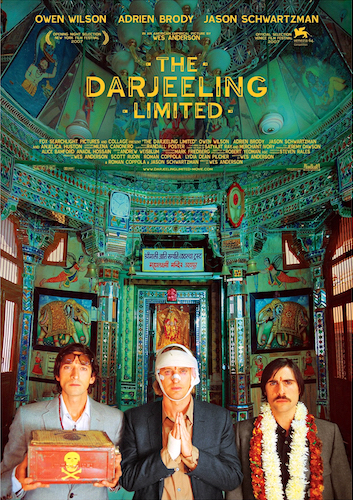
    The Darjeeling Limited
    (2007)

    2017 #35
    Wes Anderson | 88 mins | streaming (HD) | 2.35:1 | USA / English | 15 / R

    The Darjeeling Limited

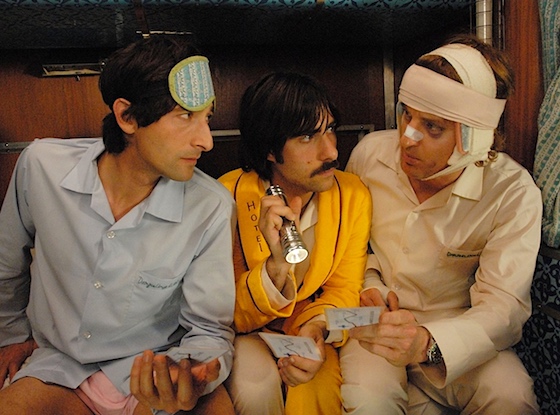
    So, the film proper. It’s the story of three estranged brothers (Adrien Brody, Owen Wilson, and Jason Schwartzman) who reunite a year after their father’s funeral. One of them has organised a train trip across India so they can reconnect, although he also has an ulterior motive…

    My impression has always been that The Darjeeling Limited is a lesser work on Wes Anderson’s CV. I don’t remember it making much of a splash when it came out — maybe I’m wrong, but “another film where Wes Anderson does what Wes Anderson does” was my impression at the time — and I don’t think I’ve seen it discussed a great deal since. As someone who still feels new to Anderson’s world and is working through his oeuvre in a roundabout fashion, I don’t necessarily disagree with this sentiment. If you want to find out what’s so great about Anderson, there are certainly other places to start.

    Brothers on a train

    That said, I did enjoy the film. Anderson’s mannered camerawork, kooky characters, and shaggy dog storylines seem to have gelled well with my own sensibilities. Conversely, finally getting round to this review nine months after I saw the film, I can’t remember many specifics. It’s a movie I’ll likely add to my Wes Anderson Blu-ray collection someday (for comparison, I can’t definitely say the same about Rushmore), and will be happy to revisit, but for the time being I’ve exhausted what little thoughts I had about it.

    4 out of 5

    Comedy Review Roundup

    Let’s have a laugh (or, perhaps, not) with…

  • Police Academy (1984)
  • Black Dynamite (2009)
  • Four Lions (2010)
  • Ferris Bueller’s Day Off (1986)


    Police Academy
    (1984)

    2017 #27
    Hugh Wilson | 92 mins | streaming (HD) | 16:9 | USA / English | 15 / R

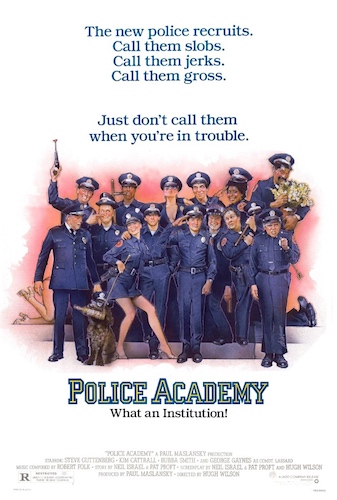
    Police Academy

    I watched some of the Police Academy movies when I was younger — yes, plural — but I never saw the first one. It never seemed to be on TV (though the second always was), and the fact it’s rated 15 (weren’t all the later ones, like, PG?) would surely mean my parents would never have let me rent it (I’m pretty sure I never saw any of the series after I hit double-digits age-wise). So there was an element of box ticking in finally seeing the original — a film that Roger Ebert gave zero stars.

    It doesn’t start well: the opening credits incompetently cover up the onscreen action. That’s not for the sake of a joke, like in, say, Austin Powers 2 — it’s not overt or thorough like a joke — it’s just poorly done. From there… it might be generous to say that things pick up, but they’re not so bad. In fact, I passingly enjoyed it. It’s not aged particularly well, but there are some funny bits. Remember the sound effects guy? I used to love him when I was a kid. There’s surprisingly little of him here, though. I guess he got amped up for the sequels.

    Police Academy isn’t some masterpiece that’s been buried under the weight of its increasingly shite sequels, but it isn’t that bad as an hour-and-a-half of mindless comedy.

    3 out of 5

    Black Dynamite
    (2009)

    2017 #47
    Scott Sanders | 81 mins | streaming (HD) | 16:9 | USA / English | 15 / R

    Black Dynamite

    A spoof of cheap blaxploitation movies, Black Dynamite hits every nail on the head. I’ve not actually seen many films from the genre (the original Shaft may be the extent of it, unless Live and Let Die counts), but you only need a passing awareness of the ludicrousies of low-budget ’70s genre cinema (the third act sidesteps into a spoof of kung fu movies) to get the overall joke. Plus there are plenty of generally funny riffs and sequences for the layperson to laugh at, the highlight being a deduction scene that makes no sense whatsoever. At a brisk 80 minutes, it’s hard to go wrong.

    4 out of 5

    Four Lions
    (2010)

    2017 #65
    Chris Morris | 97 mins | streaming (HD) | 1.85:1 | UK & France / English, Urdu & Arabic | 15 / R

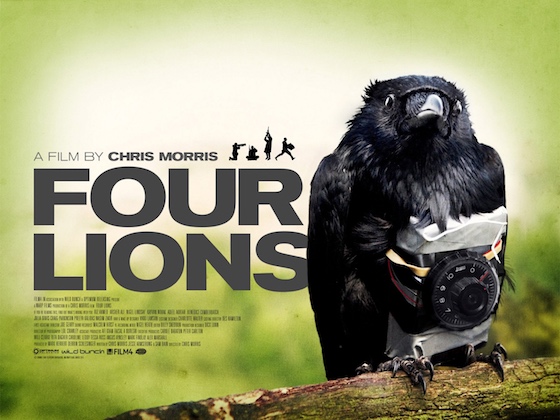
    Four Lions

    A comedy about Muslim suicide bombers? You don’t need me to tell you all the different minefields that idea is tiptoeing into. But it’s by the guy behind Brass Eye, so it less tiptoes more bounds, and barely puts a foot wrong either.

    The most important point, of course, is that it is very, very funny. There’s a stream of good one-liners and exchanges. But it also winds up making you feel for some of these guys, which, considering their goal, is a feat unto itself. At the same time, the attempted emotional pull in the third act doesn’t quite come off — asking us to care for “the stupid one”, who’s merely been the butt of jokes until that point, comes a little out of left-field. I mean, if we’re suddenly meant to be concerned about his (mis)treatment, why have you been making us laugh at him all along?

    Anyway, if you just ignore that unwarranted about-turn, Four Lions is absolutely hilarious.

    4 out of 5

    Ferris Bueller’s Day Off
    (1986)

    2017 #50
    John Hughes | 103 mins | streaming (HD) | 2.35:1 | USA / English | 15* / PG-13

    Ferris Bueller's Day Off

    Is this or The Breakfast Club the archetypal John Hughes movie? Argue amongst yourselves — I’ve never seen The Breakfast Club. I hadn’t seen Ferris Bueller until this year either (I mean, obviously — it wouldn’t be here otherwise), though I’m not sure why. Despite it being quite well-known and referenced, it just didn’t seem to come up that often. (Incidentally, are references to it on the increase? Both Deadpool and Spider-Man: Homecoming had significant riffs on it within the past couple of years.)

    Anyway, for those as in the dark as I was, it’s the story of cool kid Ferris Bueller (Matthew Broderick) who has an elaborate plan to bunk off school for the day, which involves persuading his best mate Cameron (Alan Ruck) to ‘borrow’ his dad’s Ferrari and head off into Chicago with Ferris’ girlfriend (Mia Sara). Meanwhile, the school’s suspicious principal (Jeffrey Jones) tries to catch Ferris out.

    Going back to what I was saying a moment ago, part of why I didn’t watch it before was that I felt like I’d find it annoying. Turns out, not so much. Ferris is indeed a bit of a dick, but I’m not sure the film doesn’t know he is. Because he talks to camera and makes the viewer his confidante, the assumption might be we’re meant to admire him, but there’s an almost “unreliable narrator” aspect to him. Or maybe I’m projecting that because I didn’t like him but did enjoy his antics, who knows.

    5 out of 5

    * The film was reclassified as 12A for a 2013 theatrical re-release, but I watched it at home, where it’s still technically a 15. Ah, the oddities of the BBFC. ^

  • Life (2017)

    2017 #123
    Daniel Espinosa | 104 mins | streaming (HD) | 2.35:1 | USA / English & Japanese | 15 / R

    Life

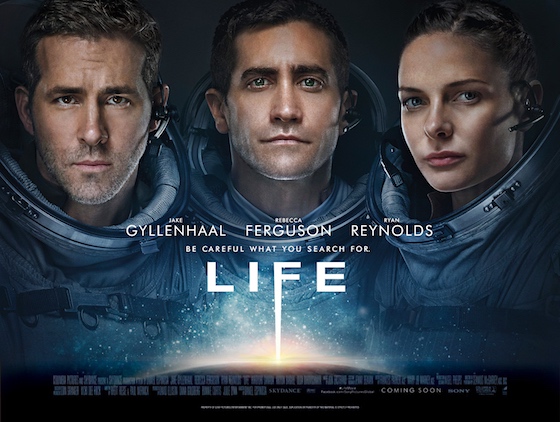
    Aboard the ISS in the near future, a team of astronauts receives a probe returning from Mars with samples from the surface. Included among them are some living cells — the first proof of extraterrestrial life. The cells begin to quickly evolve into a living organism, thrilling the scientists… until it turns nasty and begins to attack the crew. That feels like a spoiler, but this is a sci-fi horror and that development is kind of inherent in the genre.

    Playing like a cross between Gravity (a near-future thriller where space technology is almost identical to our present capabilities) and Alien (a violent alien lifeform attacks the crew of a space vessel), Life clearly aspires to be little more than a straight-up sci-fi/horror thrill ride, and on that score it’s a pretty effective piece of entertainment.

    Of course, it’s not without its niggles. It could’ve nixed some of the stupid-ass dialogue, like one of the crew commenting “it’s so cold” while they’re shivering and their breathe condenses. More fundamentally, as the organism rapidly develops none of the scientists seem all that concerned by this, sticking to their initial feelings of awe and wonder. Surely there should be some worry about its potential? Perhaps the film was supposed to be saying something about humanity’s hubris when it comes to nature — that we wouldn’t worry about such a small organism, because why would we? — but I’m not convinced that’s a theme being actively invoked. Or maybe it was: comparing his movie to that other recent first contact flick, Arrival, director Daniel Espinosa notes that Denis Villeneuve’s film “is a great, beautiful, cinematic essay about philosophy. Mine is a rollercoaster with some underpinnings of philosophy.” Well, they’re under enough that you can ignore them entirely if you like. There are certainly some even bigger ideas it could’ve chosen to tackle — see the ghost of 82’s review for some interesting thoughts on that.

    In space, no one can hear you rip off other movies

    Still, we shouldn’t really judge a film for things it wasn’t aspiring to do. As a “rollercoaster”, this is decent entertainment. It builds to a helluvan ending too, which naturally I won’t spoil. That said, spoilers follow, because there are some interesting comments by Espinosa about the ending here. Two points jump out at me. One: the alien doesn’t kill David — why not? Espinosa says David didn’t fear it; in fact, he has a connection to it. Personally, I’d say that’s not apparent in the film at all. It would certainly make the ending more interesting if it were true, but I’m not convinced it was actually set up. Two: nowadays we’re so trained to expect sequels that we don’t consider the implications of ambiguous endings anymore (certainly not on blockbuster-sized movies, anyway). We don’t think about what it might mean, we just wait for a sequel to tell us. At best, we consider the ending in terms of “what’s the next two-hour genre-friendly story here?”, which is equally as limiting. He might well have a point there.

    I have no idea if Life is getting a sequel to tell us what happens next or not. I believe the writers wanted one, but I’m not sure how well it did at the box office in the end. I’m not anxiously anticipating a follow-up, but I’d watch it. Life isn’t interesting enough to be a great movie, but it’s an entertaining thrill ride. My score is a smidge generous, but I did enjoy it overall.

    4 out of 5

    Life is available on Sky Cinema from today.