Public Access (1993)

2017 #130
Bryan Singer | 86 mins | DVD | 16:9 | USA / English | 18 / R

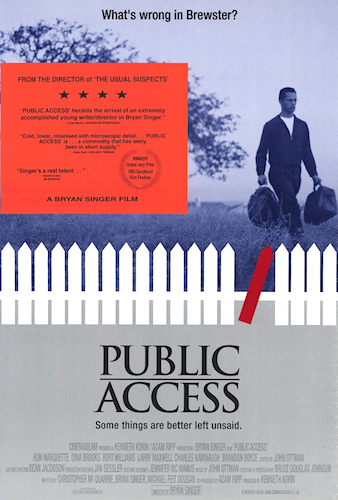
Public Access

This is the feature debut of director Bryan Singer, screenwriter Christopher McQuarrie, and Singer’s regular editor/composer John Ottman, who would go on to make their names two years later when they created The Usual Suspects (for which McQuarrie even won an Oscar). Despite that — and their careers since — Public Access seems to be little-seen, with less than 800 votes on IMDb (for comparison, Singer’s next lowest is Apt Pupil with over 30,000 votes, and all his other films are in six figures).

The story sees a mysterious stranger, Whiley (Ron Marquette), arrive in the small town of Brewster and book a slot on the local public access TV station, during which he invites viewers to call in to anonymously air their grievances about Brewster and its inhabitants. Soon all the townsfolk are talking about is Whiley’s catchphrase: “What’s wrong with Brewster?”

It’s an intriguing setup for a movie. What secrets lurk beneath the surface of this pretty little town? Who is this stranger and what are his motives? How will the community react to the previously-secret complaints and possible revelations? Unfortunately, Public Access does very little to explore any of those possibilities. It actually toddles along quite nicely for a while — it’s kind of understated; slow in a good way; things appears to be building up to something; there’s some kind of mystery — and then, just over halfway through, Whiley has an incredibly cheesy dream/flashback/premonition, and then the film awkwardly swerves into serial killer thriller territory. I guess that could work, maybe, but it rushes through events, not explaining anything. Then it ends.

What's wrong with Brewster?

What shines through the poor storytelling (and the crappy almost-VHS-level transfer on the DVD) is some obvious proficiency at filmmaking from all involved. There are many bits of nice direction from Singer, a few fairly well written and performed scenes, good editing, an effective use of music, and some gorgeous autumnal orange photography… though a lot of the interiors and stuff look rather orangey too, so I’m not entirely sure if this was intentional or just that shitty transfer. Well, whether by accident or design, it looked like it was good.

Public Access was made for just $250,000, according to IMDb, so perhaps they just ran out of money to shoot everything they needed. Perhaps they were just going for a level of ambiguity that doesn’t come over properly. I was going to say “perhaps I didn’t get it”, but I’m far from alone: Variety said it was “vague about important matters as key story points, motivation and overriding theme”; Newsweek reckoned that “after an intriguing buildup […] the story self-destructs”; and the Hollywood Reporter called it “a virtuosically stylish independent feature that is as full of flourishes as it is devoid of meaning”.

There’s talent on display here, and fortunately Singer and co were given the opportunity to spin that out into the successful careers they’ve enjoyed since (well, mostly… but let’s not get into the Singer stuff right now). Public Access isn’t an undiscovered early gem on anyone’s CV, but it was interesting to see nonetheless.

3 out of 5

The Straight Story (1999)

2017 #133
David Lynch | 108 mins | TV (HD) | 2.35:1 | France, UK & USA / English | U / G

The Straight Story

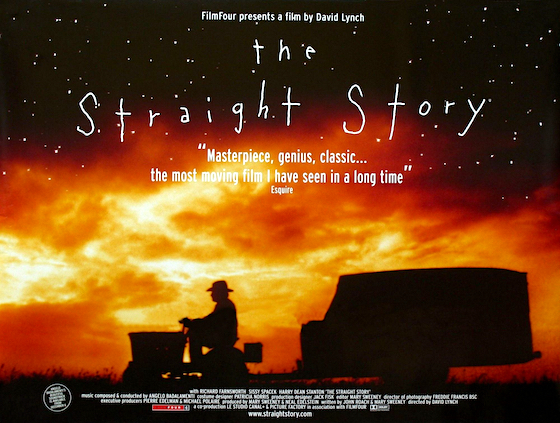
“What would a G-rated Disney movie directed by David Lynch be like?” It sounds like a sketch show pitch, but in 1999, between Lost Highway and Mulholland Drive, it happened for real.*

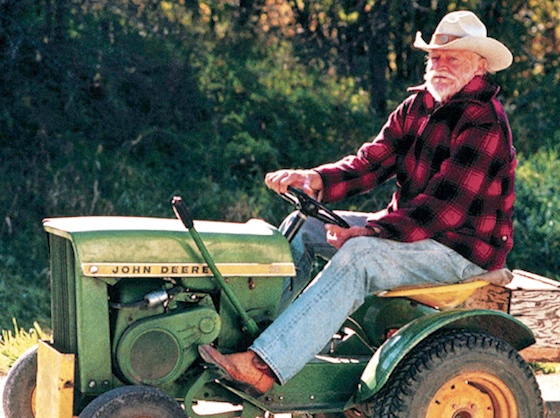
And, talking of “happening for real”, this is a true story about an old fella, Alvin (Richard Farnsworth), who decides to visit his estranged brother after he suffers a stroke. Unable to get a driving licence, he sets off on his 30-year-old ride-on lawnmower, with a maximum speed of 5mph, to make the 240-mile trip. Yes, I said it’s a true story. Of course, it’s not just 100 minutes of Alvin riding a lawnmower along county roads — through the people he meets and the stories he tells, we learn he’s certainly lived a whole life.

Such a simple, straightforward, grounded (well, relatively grounded) narrative seems so very un-Lynch-like at first, but its tale of quirky Americana, peopled by a ragtag selection of endearing oddballs, isn’t so far outside his wheelhouse. There’s a definite Lynch touch detectable in how its made — the shot choices, editing patterns, and so on. There’s even a shot of a grain silo with a background hum that feels straight out of Twin Peaks. Then there are pretty scenery shots which are less obviously him.

Lawnmower man

Lynch has called The Straight Story his “most experimental movie”, which, considering the rest of his oeuvre, probably says more about what he considers experimental than it does about the film itself. What it does demonstrate is that the director, normally known for producing movies that befuddle the mind and chill the blood, is capable of producing something understatedly human and kind of heartwarming.

4 out of 5

* In the US, anyway — other distributors released it elsewhere, including Film4 here in the UK. ^

Black Swan (2010)

2017 #128
Darren Aronofsky | 108 mins | Blu-ray | 2.40:1 | USA / English | 15 / R

Black Swan

Oscar statue2011 Academy Awards
5 nominations — 1 win

Winner: Best Actress (Natalie Portman).
Nominated: Best Picture, Best Director, Best Cinematography, Best Film Editing.


Described by director Darren Aronofsky as “a psychological thriller horror film”, Black Swan straddles the divide between classy Cinema and genre Movies as artfully as, say, a Hitchcock thriller. It’s the story of ballet dancer Nina (Natalie Portman) who’s desperate to be the lead in her company’s production of Swan Lake. She’s suited to the White Swan but struggles as its black counterpart, a role newly-arrived rival Lily (Mila Kunis) seems perfect for. As Nina pursues perfection with a monomaniacal focus, she’s pressured by the lascivious director (Vincent Cassel) and her overbearing mother (Barbara Hershey), to the point where her sanity is beginning to crack…

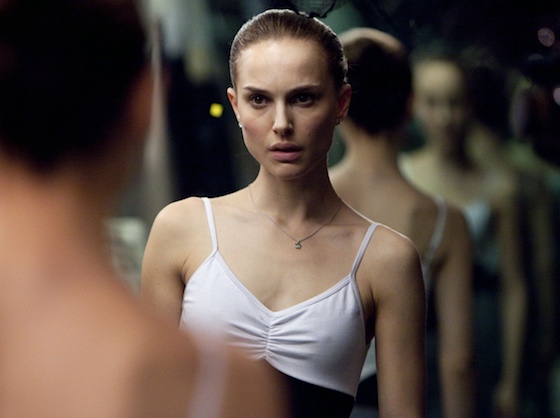
Shot handheld on a mix of 16mm and video-capable HD DSLRs, Black Swan has a documentary look, often emphasised by its editing — at times it could almost pass for a fly-on-the-wall look behind the scenes of a ballet company. That’s not to say the visuals lack artistry, however. In particular, the constant presence and use of mirrors is fantastic — both thematically relevant and visually rich. Nonetheless, the documentary-ish look serves to make the film’s unsettling parts all the more effective, especially as they take a while to emerge and continue to sidle up on you as the film goes on. The final act is where everything really kicks off — the point of the rest is to build up to that; to establish and put in place and explain everything we need for a shocking, thrilling, somewhat unguessable climax. If that sounds like a criticism, it’s not, because the movie leading up to that point certainly has worth.

Reflections

I’m not particularly familiar with Swan Lake, but it would seem Black Swan’s story echoes it — to the point, even, that all the cast are credited with both their character in the film and their equivalent in the ballet (and I don’t just mean the dancers who also play that role in the ballet-within-the-film — Hershey, for example, is billed as Erica Sayers / The Queen”). This extends outwards in other ways, like how the music of Tchaikovsky is repurposed by the film to its own magnificent effect. That’s as well as featuring a typically striking score from Clint Mansell.

Natalie Portman is brilliant as the conflicted Nina. She’s introverted and sheltered but has chosen (or been railroaded into) a career that requires she perform publicly; she’s fragile and under-confident but in a profession that invites criticism from all sides; she’s been left repressed, uptight, and virginal, which clashes with her perfectionism when trying to embody a role that is none of those things. It’s a complex role with many subtle facets that Portman negotiates skilfully. It feels like a departure from who she is — proper acting, if you like — which makes the performance all the more striking. Conversely, Mila Kunis feels more in her comfort zone as Lily, the free-spirited, lively but imperfect, almost a bit of a bitch, company dancer that Nina is inexplicably drawn to. She holds her own against Portman when required, but it’s not exactly a role of equatable complexity.

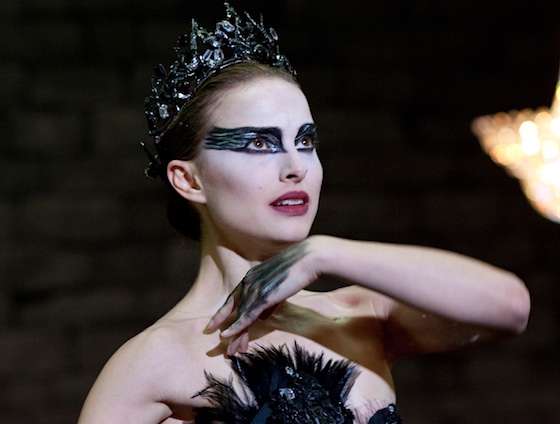
Titular terror

Depending how you want to see it, Aronofsky’s film is an arty movie about ballet and the psychological effects of perfectionism, or a slow-burn horror-thriller with almost as many jump scares as instances of introspection. Best of all, it can be both those things.

5 out of 5

Black Swan was viewed as part of my What Do You Mean You Haven’t Seen…? 2017 project, which you can read more about here.

Darren Aronofsky’s latest dark mind-bender, mother!, is released on UK DVD and Blu-ray tomorrow.

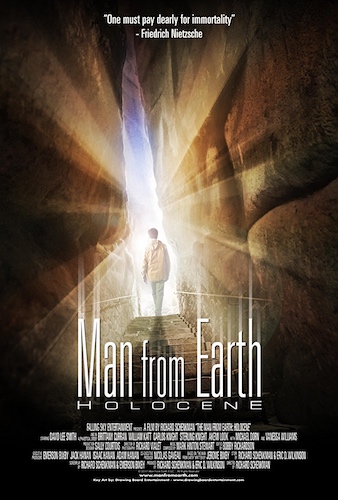
The Man from Earth: Holocene (2017)

2018 #9
Richard Schenkman | 99 mins | download (HD) | 16:9 | USA / English

The Man from Earth: Holocene

Back in 2007, a low-budget sci-fi movie about a gang of college professors sat around having a chat kinda went viral: a screener copy was uploaded to piracy websites, from where people who would probably never have even heard of it otherwise were able to download and watch it. Interest in the film on IMDb jumped by 11,000%, and high user ratings earnt it a place on their list of the top 50 sci-fi films. The film in question was Jerome Bixby’s The Man from Earth.

Ten years later, here’s a sequel from the same crew (though not written by Bixby — his original screenplay was produced posthumously), and this time the makers have engaged with file sharing head on: rather than wait for someone to pirate the film, as would inevitably happen, they’ve uploaded it themselves. They’re banking on the honour system, asking people to donate if they liked the movie. If torrenting isn’t your thing, it’s also available to stream on MovieSaints, and on Vimeo next week, with a DVD and Blu-ray release coming soon. Personally, I first encountered the project 3½ years ago, when it was known as The Man from Earth: The Series and they were crowdfunding to produce a pilot episode. I backed it then, though ironically have ended up torrenting it now because the reward copy provided was through MovieSaints and I can’t watch that on my TV. But anyway.

Ageing hurts

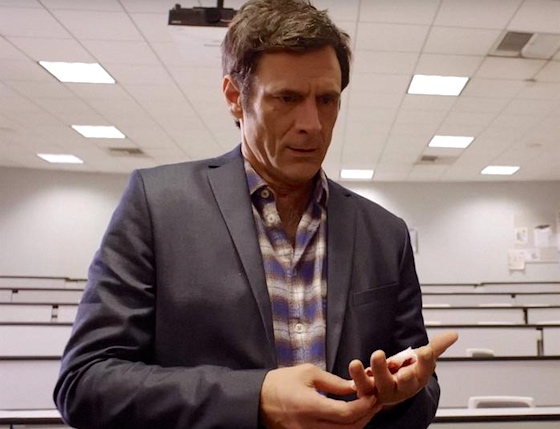
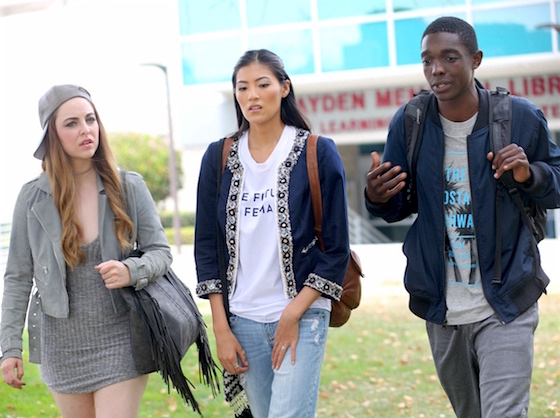
The story picks up ten years on from the events of the first film, with the 14,000-year-old title character now going by the name John Young (David Lee Smith) and lecturing at a community college in California. When a gang of his adoring students stumble upon a book about the events of that fateful night a decade ago, they begin their own investigation into whether John’s seemingly impossible story is actually true. Meanwhile, for the first time in about 13,965 years, John has begun to show signs of ageing…

Holocene has some very good ideas that could’ve made for a worthy continuation of the original film. Chief among them is the mystery of John’s relatively sudden ageing. Is he dying? Is he just entering a new phase of his existence? Either way: why? The film asks these questions, makes nods towards possible explanations, but otherwise doesn’t seek to explore it too much. It’s more concerned with meandering through a story that doesn’t quite rehash the first film but is distinctly reminiscent of it: a group of college-related people, with diverse religious beliefs and levels of scepticism, investigate the incredible notion that a professor may be 14,000 years old and, during that time, once have been the person we know as Jesus Christ. Watching a bunch of students going through the motions of uncovering a story we already know isn’t the most thrilling narrative, quite frankly.

On the bright side, it eventually leads to a long scene in a basement which is loaded with tension and possibilities. It features an ‘evil Christian’ type, which is a dead giveaway for the authors’ atheist beliefs — fine by me, but it may not work for some people. This scene works particularly well as a sequel to the original film in itself, because although it too is a kind of re-run of the first film, it comes at it from a very different angle. It’s a little bit ironic that, for a film which is trying to open out the world of its story to be more than just a near-real-time fireside chat, the best bit is still an extended scene where two people just talk in a room.

The wannabe Scooby Gang

But Holocene’s biggest problem comes right at the end, when it abruptly finishes with various plot threads unresolved. As I mentioned, this project started life as a pilot for a TV series, later evolving into a standalone film (presumably as a way to secure funding — having something you can actually release is a safer bet than a pilot that requires a series pickup). Unfortunately, the makers still have hopes of either a sequel or that series, and so the story stops at a point which feels just a scene or two away from a resolution. To rub salt in the wound, there’s a bizarre mid-credits scene that throws a totally new, very different storyline into the mix. I think there were better ways to leave things set up for possible further instalments, and more interesting directions to suggest they might go in too. Or maybe they have a really good grand plan for this storyline? Perhaps we’ll get to find out.

One of the most accidentally striking elements of the original Man from Earth was that it was shot on SD digital video. They’ve upgraded to HD this time, meaning it doesn’t look quite as cheap-and-cheerful, but it does still have a lo-fi semi-pro feel. (As one commenter on Letterboxd put it, “still has that softcore porn vibe”. I think that says more about his viewing habits than the film itself, but you get his point.) On the acting front, David Lee Smith is still the clear standout. He imbues John with a quiet authority — you can believe this is a guy who’s lived for centuries; his very presence elevated by a lifetime of learning but weighed down by a lifetime of regrets. The rest of the cast are decent.

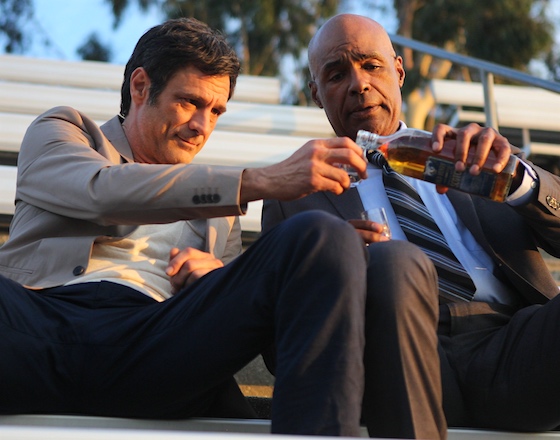
Pour yourself a drink, you might need it

The writing is a little up and down. Some bits almost sing with an understated focus on character. Other bits clunk, like a terribly forced encounter to kick off the third act. Most often it feels like scenes needed a trim to keep everything a little tighter. It’s not that it’s a slow-paced movie and I’m claiming that’s a problem, it’s that at times it seems to be drifting aimlessly. The first film is ‘slow’ in some people’s eyes, but it’s actually a very tightly constructed movie; it’s just that that tightness is driven by the dialogue and story construction rather than, say, fast cutting. Holocene lacks a similarly taut screenplay. Chopping out ten minutes, both of little bits here and there but also a few scenes that I guess are meant to build up the students’ characters but I kind of feel are ultimately unnecessary, might work wonders. Well, maybe not wonders, but it’d be better.

Holocene fritters away goodwill on a reheated teen remix of the first film’s story, has the audacity to not conclude that properly, and then does little to promise a bright future with a DOA mid-credits twist. Even still, I don’t think the film is the total disaster some reviews are painting it as, not least because I believe there’s potential left in a continuation of The Man from Earth — there are interesting developments of the series’ central concept here. Unfortunately they remain little more than teases as the film instead wastes time reinvestigating what we already know. It winds up disappointing.

3 out of 5

The Man from Earth: Holocene is available to stream and download in various ways now. For more details, visit ManFromEarth.com.

The Past Month on TV #29

After the bustle of Christmas TV, it’s been a quieter January on the box here at 100 Films Towers. Nonetheless, I did catch up with one of the best series of 2017 — possibly of all time…

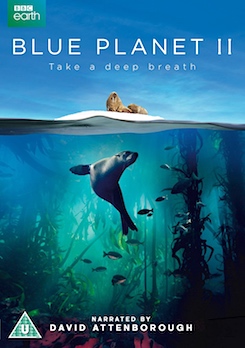
Blue Planet II
Blue Planet IIDespite the massive hype, I missed this when it aired. I say “missed” — I always intend to watch these big natural history shows, then never get round to them. I confess, it was new tech that persuaded me: after I saw it was all available in UHD on iPlayer, I had to give that a go. And…

Wow.

That’s the only word for it, really. Well, it isn’t — “stunning” would be another one. Incredible. Wondrous. Mind-boggling. I’m talking about both the UHD photography and the series itself here. In the latter camp we can also add educational, and informative, and eye-opening, but those are kind of a given — it’s a BBC David Attenborough series, of course it nails that part. Attenborough’s script and delivery strikes the perfect balance between acknowledging the creatures’ intelligence and personalities without slipping into anthropomorphising them. But many of the creatures and places we’re shown are almost unbelievable. Never has that old chestnut “we know more about the surface of the Moon than the oceans” seemed more true. James Cameron is planning to explore the alien life in Pandora’s oceans in Avatar 2, but he’s going to have to go some way to imagine anything more alien than what’s to be found in our real depths. I wonder if he’s seen this? He should. Everyone should.

If that wasn’t enough, the visuals are awe-inspiring. The vibrant colours of some of these creatures were incredible, unquestionably enhanced by the wider spectrum of HDR. The level of detail the extra resolution seems to afford made it all feel very real too — creatures like dolphins and sharks don’t show gaudy colours, but the texture and sheen of their bodies felt like you could reach out and touch it.

I wish you could see this in HDR...Now, I didn’t do a comparison to the regular HD stream, so I can’t really say how much better the UHD made things, but I do have a few observations. Related to it looking “more real”, after viewing I saw a good resolution photo taken for the series of one creature (this chap) which didn’t seem to capture the texture of its body in the same way the episode did. That could be the added effect of motion vs a still photo, but it could also be the extra detail from 4K. And talking of comparing still images, when a UHD episode was selected it displayed the iPlayer menu in UHD/HDR too, so I was able to do a direct comparison of each episodes’ key image. In particular, the one pictured above (from episode five) really showed off the vibrancy of HDR.

Finally, the making-of bits they have at the end of every episode looked more muted than the main show, and I wouldn’t be surprised if that’s because they were finished at HD rather than UHD. But that’s not to say those segments looked bad. So while I feel fairly sure the HDR image was better to at least some degree, I’m also certain that at least some of this marvellousness would come across in regular ol’ 1080p — quality does filter down with image resolution, and they’ve done such sterling work here.

Anyway. Like everyone else, I can’t recommend Blue Planet II enough to anyone… but doubly so if you have a chance to see it in UHD with HDR.

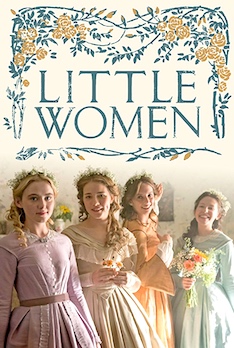
Little Women
Little WomenAs I mentioned last time, I’ve never seen or read a previous version of Little Women, but apparently this new one was pretty faithful so I figure I’m all learned about it now. The biggest change appears to be in the ages of the four eponymous heroines: in this version they look to be about the same age, in their late teens or early 20s at the start, but in fact they should be 16, 15, 13 and 12. Quite different. A challenge for adapters, though, because the story covers a timespan of five or more years (by my reckoning). Other films have dodged this by casting two actresses in some roles, but this adaptation sought to avoid that. It has its cons (an early petulant act comes across very differently if done by a 12-year-old versus a c.17-year-old, I think), but it is what it is.

Anyway, setting that point aside, it seems quite clear why the book has endured in popularity. (Or, if you prefer, books — in the US it’s one novel with a Part 1 and Part 2, but in the UK it’s separated as Little Women and Good Wives. This version adapts both.) There’s a certain tweeness and sweetness to it — it’s about four sisters who are poor but not that poor and all love each and do fun homely things and have romantic entanglements and so on and so forth — but it’s laced with enough seriousness and sadness (to say more would be spoilersome) to add a bit of welcome grit. Plus the big central romance doesn’t pan out how you might expect. Actually, it develops with a solid dose of realism that more romance-based storylines might benefit from.

This particular adaptation shines with the typical high quality of a BBC drama, with a recognisable elder cast (Emily Watson, Dylan Baker, Michael Gambon, Angela Lansbury) being equalled by a quartet of newcomers and almost-newcomers as the girls — including Maya Hawke, who looks scarily like her mother, Uma Thurman. (Once you’ve seen it, you can’t unsee it. Seriously, it’s like they’ve used time travel to cast a young Uma Thurman.)

Also watched…
  • Bright — Well, some people counted it as TV. Review here.
  • Death in Paradise Series 7 Episodes 1-2 — As sunny, breezy, and predictable as its island setting. Reliably lightweight and cheery viewing for dreary January.
  • The Great Christmas Bake Off — For a show just about people competitively baking that I watched in the middle of January, this was surprisingly heartwarming and Christmassy. (Not watched the New Years special yet because the trailer looked strangely disappointing.)
  • Not Going Out The True Meaning of Christmas — The plot may be predictable, but writer-star Lee Mack keeps the jokes coming thick and fast.

    Things to Catch Up On
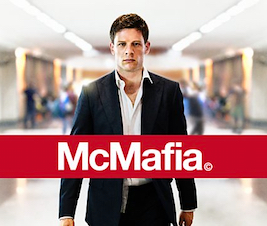
    McMafiaThis month, I have mostly been missing the BBC’s pair of big, grim January dramas, McMafia and Hard Sun. They both seem to have received a very mixed reaction (not that I’ve been following too closely because, y’know, spoilers), but both have intriguing setups: the former a drama about the global business of the Russian mafia inspired by a non-fiction book; the latter a pre-apocalyptic sci-fi/crime thriller from the creator of Luther.

    Next month… no specific idea, to be honest. But I’ve got the latest seasons of The Crown and Peaky Blinders waiting to be binged, and plenty of Arrow and The Flash to catch up on.

  • The Mummy (2017)

    2017 #82
    Alex Kurtzman | 110 mins | cinema | 2.39:1 | USA, Japan & China / English & Ancient Egyptian | 15 / PG-13

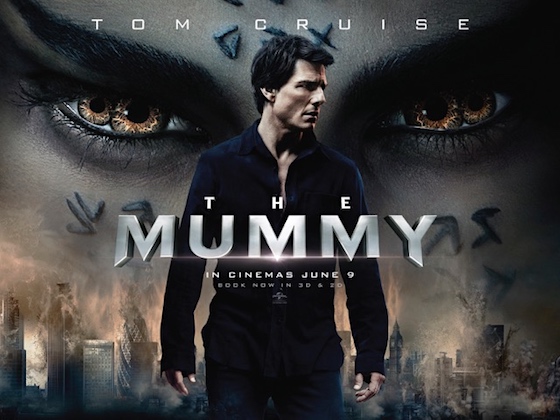
    The Mummy

    As studios scramble to emulate Marvel’s shared universe success, there are some very odd ideas being thrown around. One of the least odd, really, was Universal’s Dark Universe, which intended to mix together their various famous horror properties. At first blush that sounds as forced as most of these ideas are, but back in the day they made tonnes of “Dracula Meets Frankenstein” type movies, so why not do it again today? All of these movies were to be reboots, obviously, and they arguably played it safe by beginning with a reboot of one they rebooted before — a re-reboot, if you will. The Mummy 2017-style bears no resemblance to its popular ’90s forebear, but I doubt that was anything like the ’30s version anyway, so all’s fair in love and blockbuster moviemaking.

    You’ll notice the repeated use of the past tense in my opening paragraph. That’s because The Mummy flopped, both critically and commercially, and the Dark Universe plans have been thrown into doubt. (Some say it’s been definitely cancelled, but I don’t think that’s been officially confirmed.) While I wouldn’t go so far as to call that a shame, I didn’t necessarily think The Mummy was that bad. On the other hand, it’s not great either…

    Tom Cruise realises he's made a terrible mistake...

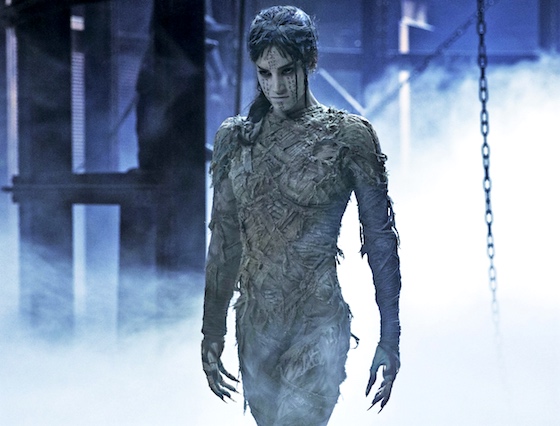
    This iteration of the concept sets its scene in the present day war-torn Middle East, where Nick Morton (Tom Cruise) is a mercenary who stumbles upon a hidden tomb, inside which is the well-protected coffin of an Egyptian princess (Sofia Boutella). To cut to the chase, the dead lass wakes up, and brings all her supernatural powers to bear on destroying the world… or something. At the same time, Nick seems to have developed some kind of connection to her.

    However, what sticks in your mind about The Mummy is not its eponymous villain, but all the time it spends trying to establish the aforementioned shared universe. Nick eventually comes into contact with a secretive organisation headed by Dr. Henry Jekyll — a name we all know, of course, so you begin to see the connections developing. You can’t help but feel more effort has been put into setting up this element than the movie that surrounds it, which therefore feels like little more than a delivery system for Dark Universe: Part 1.

    But let’s try to judge it anyway. Primarily, it’s a tonal mishmash. It’s not exciting enough to satisfy as an action movie, but not scary enough to qualify as a horror. There’s humour, but it’s poorly integrated, feeling at odds with the dark tone. This is a PG-13 movie that kinda wants to be an R, but not so much that it’ll really commit to sitting on that PG-13/R line. Whole sequences and imagery seems to have been included just to look good in the trailer. For example, a bunch of business with a sandstorm in London — in the trailer it looked like it would be some sort of end-of-the-world climax, but it’s actually just a bit of a chase scene to get characters from one location to another.

    “I’m here to talk to you about the Avenger Initiative.”

    Cruise isn’t given room to display his usual charm, instead wandering through the plot being told stuff and always threatening to tip over into being the villain. This movie always seemed like an odd choice for him — getting stuck into a franchise-within-a-franchise at this stage in his career — and, yeah, it remains an odd choice. Russell Crowe phones in his Nick Fury turn as Jekyll, while sidekicks Annabelle Wallis and Jake Johnson fight against the material as they struggle to make their mark. Boutella’s part makes feints at complexity, but is ultimately no deeper than you’d expect the Mummy’s role to be in a Mummy movie.

    And after all that it doesn’t even end properly. It’s not even that it’s blatantly set up for a sequel (it’s not, really), but it’s clearly aware that it’s part of a shared universe and they might want some of these characters back. Well, that’s what this is all about, don’t forget — Dark Universe: Part 1.

    Despite all that, there are hints of a decent movie here: the first act is fairly good, and while the humorous moments may sit oddly with the pervading tone, they’re mostly fine in themselves. But it’s too concerned with establishing a universe when it should worry about being a good yarn in its own right, meaning it fails to do either adequately.

    Mummy mia, here they go again

    When I started this review I was going to end up giving it a generous 3 (that’s what it’s down as in my 2017 stats therefore), but my memories of whatever I liked enough to nudge it upwards have begun to fade. The Mummy — and the Dark Universe it was meant to kick off — could’ve been something, if not great, then at least worthwhile. Shame.

    2 out of 5

    Bright (2017)

    2018 #1
    David Ayer | 117 mins | streaming (UHD) | 2.35:1 | USA / English & Spanish | 15

    Bright

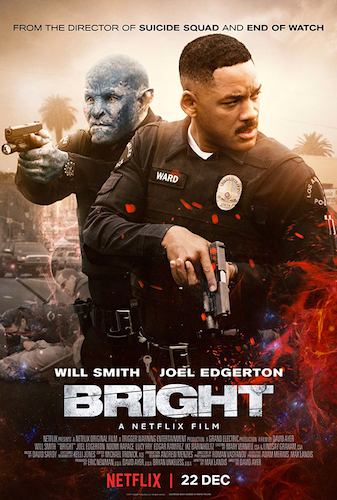
    The director of L.A.-set crime thrillers Harsh Times, Street Kings, and End of Watch returns with another L.A.-set crime thriller, only this time with orcs. Yes, orcs. Also fairies and elves and dragons and all that.

    But you knew that because you surely can’t’ve missed hearing about Bright these past few weeks. It’s Netflix’s first attempt at making a big-budget summer-tentpole-style blockbuster and they’ve been pushing it hard, but it was savaged by critics, only to then have proven immensely popular with viewers (it’s Netflix’s most-watched original production ever) and had a sequel speedily commissioned.

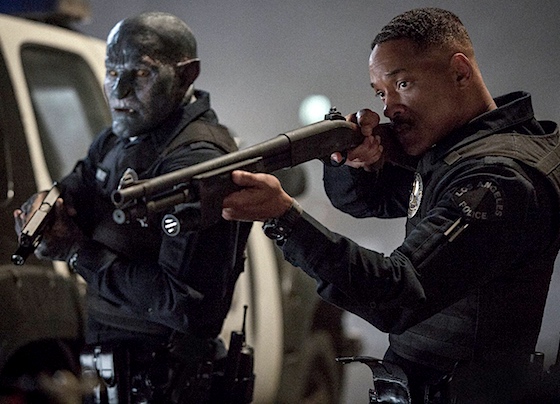
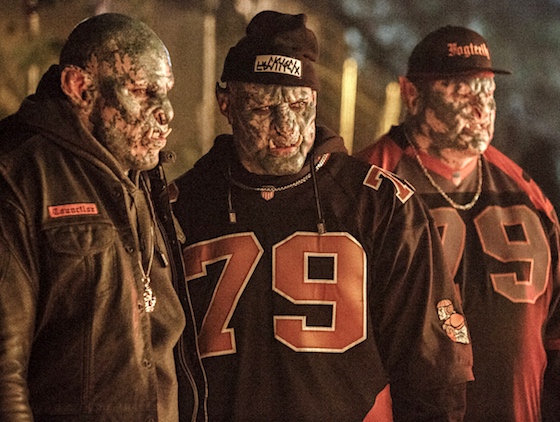
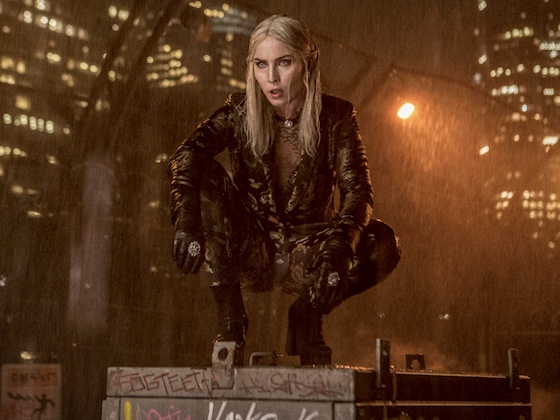
    It’s set in an alternate present day where magic and the aforementioned fantastical creatures all exist. In L.A., humans are your regular run-of-the-mill people, elves are the well-off upper class living in a segregated oasis, and orcs are the poor underclass — a couple of thousand years ago there was a Lord of the Rings-style war to vanquish the Dark Lord, in which orcs picked the wrong side and still pay the price. Nonetheless, the LAPD has recently inducted the first orc cop (Joel Edgerton). When he and his partner (Will Smith) happen across a magic wand, a rare and immensely powerful device, they find themselves hunted by an evil elf (Noomi Rapace) who intends to resurrect the Dark Lord.

    Orc of Watch

    Bright is, straightforwardly, a mash-up of crime thriller and fantasy blockbuster. Visually and tonally it could be a sequel to End of Watch, were it not for the fantastical creatures. With them in the mix, the plot, creatures, terminology, etc, feels broadly familiar from other fantasy adventures. The unique point, obviously, is in combining these two disparate genres into a homogenous whole. In this regard, Max Landis’ screenplay is a mixed bag: I like the basic concept, and a lot of the ideas within it are decent too, but the execution leaves something to be desired.

    For example, the alternate present-day L.A. is imagined just by switching out one real-life race for a fantasy one. So black people become orcs in a simple one-for-one switch. These race analogies are thuddingly heavy-handed, to the point where you wish they hadn’t bothered because then at least they might’ve done it by accident and it would’ve been subtle. Exposition is equally as on the nose, with characters spelling out world history and terminology to each other purely for the viewer’s benefit. It’s a challenge to convey this kind of information to the audience in a fantasy movie, but that’s not an excuse for doing it badly.

    OWA - Orcz Wit Attitudes

    Ayer seems an apt choice for director — of course he is, because he made End of Watch and Bright really is very similar to that movie. He doesn’t seem to have a complete handle on the material, though. The pace feels all wrong — not terrible, just slower than it should be, like scenes need tightening up, maybe a few more deletions here and there. It feels like it’s been mis-paced in the same way as many a Netflix original series, which makes you wonder if this is a problem with someone who oversees stuff at Netflix rather than individual film/programme-makers. Conversely, it could be because most regular people just won’t notice it — these productions aren’t slow in the way an arthouse movie is slow, they’re just not moving through situations and dialogue at the rate they should; killing time by letting scenes roll on that bit longer than they have any purpose to, that kind of thing.

    As the film goes on, it trades this early wheel-spinning for other problems: choppy editing; disjointed storytelling; ill-defined characters and motives. Noomi Rapace is severely underused as the villain — she has so little to do that the role could’ve been played by anyone. Edgar Ramirez isn’t quite so poorly served as an FBI-type elf also on the trail of the wand, but one wonders if someone was already thinking about sequels when shaping these supporting roles. At least Smith and Edgerton make for decent leads, even as they battle against the script’s character inconsistencies and dead-end subplots (for instance, a chunk of time spent on Smith’s home life at the start has barely any baring on later events).

    Urban elf

    Bright is hampered not by its potential-filled genre mash-up premise, but instead by the filmmakers chosen to execute that idea. They fitfully realise that potential, but it’s diluted by a rash of clichéd or plain undercooked filmmaking. The final result is a long way from perfect, but it’s also pretty far from being the disaster of epic proportions that critical and social media reaction seems suspiciously keen to paint it as (the Cannes-like “Netflix make TV not movies” sentiment is strong in some quarters). It’s a middle-of-the-road blockbuster movie, with some very solid plus points that are let down by some irritating negatives.

    3 out of 5

    Bright is available on Netflix now and forever.

    P.S. Random pointless thing of the week: there are British and American variations of the Bright poster. Spot the difference.

    Get Out (2017)

    2017 #104
    Jordan Peele | 104 mins | streaming (HD) | 2.35:1 | USA / English | 15 / R

    Get Out

    Writer-director Jordan Peele’s timely horror (or, according to some people, horror-comedy — I’ll come to that) has topped various “best of year” critics polls, including those in Sight & Sound and Empire magazines, and is now part of the awards season conversation, having been nominated for Best Musical or Comedy at the Golden Globes and is many people’s pick for an Oscar nod too. It’s a good film… but is it that good?

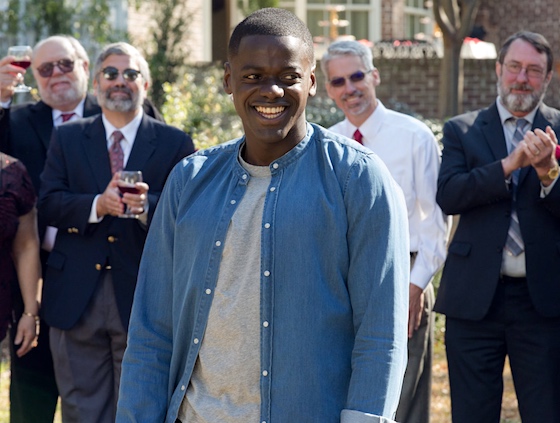
    It’s the story of a guy, Chris (Daniel Kaluuya), going to meet his girlfriend’s parents for the first time. The only complication is that Chris is black and his girlfriend, Rose (Allison Williams), is white. But it’s okay, her parents (Bradley Whitford and Catherine Keener) are very liberal and keen to be welcoming to their daughter’s fella, even though they’ve accidentally arrived the same weekend as a large gathering of the family’s friends. And there’s something strange going on with their black housemaid and gardener too…

    Get Out unfurls with a slow-burn tension, where you can’t be sure that Chris isn’t just being paranoid. Well, we can be sure, because we know we’re watching a horror movie. In terms of that genre, it’s effectively creepy without indulging in many outright scares — it foregrounds an encroaching sense of unease rather than pure terror. It’s as much about the mystery of what’s going on, and in that regard it’s neatly littered with clues that either you can piece together or, with hindsight (or a second viewing), marvel at all the little blatant hints you missed.

    Everybody loves Chris

    The aspect that’s attracted so much praise beyond the usual genre constraints is its commentary on contemporary race-related issues. What it has to say is clear without being batter-you-round-the-head obvious. It satirises the casual racism of white, liberal, “woke” (as I believe the kids are saying nowadays) people, with a particular view on something akin to cultural appropriation — the point where white acceptance or praise of black people and their culture runs into being racism, just not of the ‘traditional’ sort. It’s more nuanced and current than your old-fashioned KKK-ing.

    It’s also where we run into the “comedy-horror” point. We usually think that satire = comedy, but Get Out demonstrates it doesn’t have to; or, at least, not in an overt, laugh-a-minute kind of way. I don’t think the comedy-horror label is accurate because, while it’s undoubtedly satirical, it’s not outright comedic. There’s a funny character/subplot about the antics of Chris’ friend Rod (Lil Rel Howery), but as he’s not actually very funny I don’t think that lends much credence to the idea this is a comedy. There’s the odd other laugh here and there, but no more than you’d expect from any movie that wasn’t concerned with being po-faced for every single second. In other words, this isn’t Shaun of the Dead.

    Everything's FINE

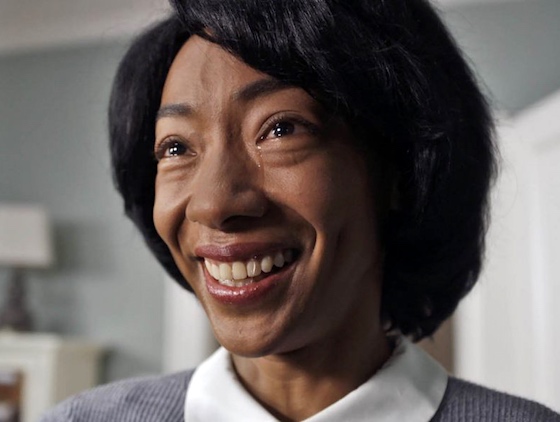
    As a film it’s mostly well made, with good performances in particular from Kaluuya, Whitford, and Betty Gabriel as the family’s maid. The most effective moment comes at the end, an aspect that was changed after the rise of the Black Lives Matter movement, which now effectively plays on the audience’s expectations for what’s about to happen. That said, while there’s the odd moment like that to praise Peele’s direction, I didn’t think it was especially striking on the whole. The film’s certainly not without glaring faults, like the grating ‘comedy’ character I already mentioned, or a deluge of exposition at the start of act three that’s disappointingly clunky.

    This is why I’m not convinced by Get Out’s presence in those best-of-year conversations. Personally, I think it’s merely the timeliness of what it has to say that has put it in that position — perhaps, if we’re being cynical, even just white critics/voters being keen to signal their approval of its message. Or maybe the way it encapsulates and comments on things that are very pertinent in society right now is merit enough? Whether it’s the year’s best film or not, it deserves to be seen, not only for its commentary on contemporary issues, but simply as an entertaining horror-mystery.

    4 out of 5

    Get Out is available on Sky Cinema from today.

    Blindspot Sci-fi Roundup

    With my 2018 Blindspot and “What Do You Mean You Haven’t Seen” selections now chosen, it’s about time I got on with reviewing those from the class of 2017 that are still in my “to do” pile. Here, then, are four more reviews of my 2017 must-sees, connected (as you may’ve guessed from the title) by all being works of science fiction.

    In today’s roundup:

  • District 9 (2009)
  • Moon (2009)
  • Her (2013)
  • Forbidden Planet (1956)


    District 9
    (2009)

    2017 #88
    Neill Blomkamp | 112 mins | Blu-ray | 1.85:1 | South Africa, USA, New Zealand & Canada / English | 15 / R

    District 9

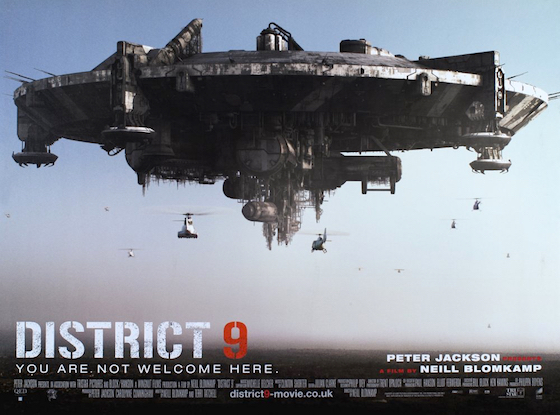
    We begin this roundup with two 2009 sci-fi thrillers that made the names of their respective directors. District 9 got the wider attention, being backed by Peter Jackson and receiving a Best Picture Oscar nomination (alongside three other nods), but I’d argue it’s ultimately the lesser of the two films.

    Although District 9 remains highly praised, co-writer/director Neill Blomkamp’s next two movies — Elysium and Chappie — haven’t gone down so well. Having seen both of those first, I feel like there are a lot of structural and tonal similarities between all three films, so it’s interesting to me how poorly the next two were received. Basically, they all start with some kind of societal sci-fi issue, explore that for a bit as the world of the story is established, then transition into being a shoot-em-up actioner.

    In District 9’s case, it starts out as a documentary about (effectively) alien refugees who live in a segregated community in South Africa. The obvious real-world parallels are, well, obvious. Then events transpire which make the idea of having to identify with those who are Other than us — of becoming affected by their culture — very literal. Then it turns into an achieve-the-MacGuffin shoot-em-up runaround. It’s done well for what it is, with some strikingly gruesome weaponry to give the well-staged shootouts a different edge, but that’s still what it is. Presumably it was all the rather-obvious allegory stuff that helped land the film a Best Picture nomination, and the fact the second half is a not-that-original humans-vs-aliens shooter was overlooked.

    Not so different. Okay, pretty different.

    For me, the clunkiest bit is the storytelling style it adopts. It’s a mockumentary… until it decides it doesn’t want to be so that it can tell its story more effectively… but then it sometimes slips back into mockumentary later on, most notably at the end. I found that distracting and formally inconsistent. I’d rather it had kept up the mockumentary act throughout or not used it at all; or, if you’re going to do both documentary and ‘reality’, have a point to it — show differing versions of the truth, that kind of thing, don’t just mix it together willy-nilly.

    All told, I found District 9 to be a mixed bag. The first half is excitingly original and interestingly ideas-driven, with allegory that is powerful if perhaps a little heavy-handed (I suppose that’s kind of unavoidable when you make a movie about segregation and set it in South Africa). The second half is just a shoot-em-up.

    4 out of 5

    Moon
    (2009)

    2017 #145
    Duncan Jones | 97 mins | Blu-ray | 2.40:1 | UK / English | 15 / R

    Moon

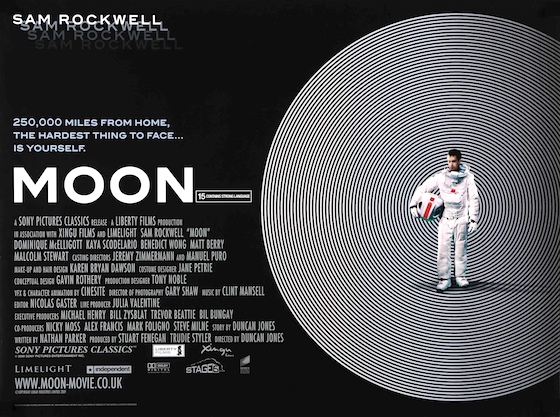
    The other 2009 sci-fi debut feature was that of director Duncan Jones. Although it received no Oscar love it did get a BAFTA, but seems to remain less seen: it has almost half as many user ratings on IMDb as District 9. Personally, I thought it was the superior film.

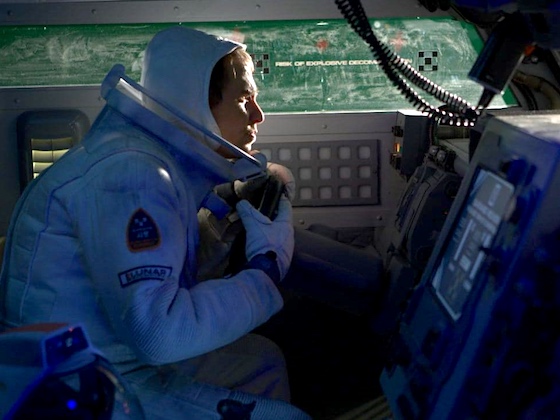
    It stars Sam Rockwell as the sole inhabitant of a mining facility on the Moon. As the end of his tour of duty approaches, his investigation in a malfunction unearths a startling secret. To say any more would spoil things, though Moon gets to its reveal pretty speedily. Also, you may’ve guessed it from the trailers (I more or less did). Also, it’s nine years old now and you’ve probably seen it — though, as those IMDb numbers show, maybe not.

    If you haven’t, it’s definitely worth seeking out. Like so much good sci-fi, it uses its imagined situation as impetus to explore the effect on its characters (or, in this case, character) and what the human reaction would be in such a situation. Maybe this is becoming a cliché already, but it’s quite like an episode of Black Mirror in that regard. (Isn’t all sci-fi that puts a high concept through the ringer of human experience “like Black Mirror”? Such stuff existed before that series. That said, maybe there wasn’t as much of it.)

    It's like looking in a mirror. A black mirror.

    Jones marked himself out as a director to watch with his attentiveness to character in the midst of his SF setting, but also by helming an excellently realised production on a tight budget — the moonbase set looks great and the model effects are perfect. A major reason I reckon it’s clearly better than District 9 is this consistency of style and tone. It’s a film that better knows what it wants to be and how to achieve its intended effect.

    As for Jones, he went on to make Source Code, a solid follow-up, but then seemed to throw a lot of talent away on the risible Warcraft. Hopefully his forthcoming Netflix Original, Mute, will restore the balance.

    5 out of 5

    Her
    (2013)

    2017 #165
    Spike Jonze | 126 mins | Blu-ray | 1.85:1 | USA / English | 15 / R

    Her

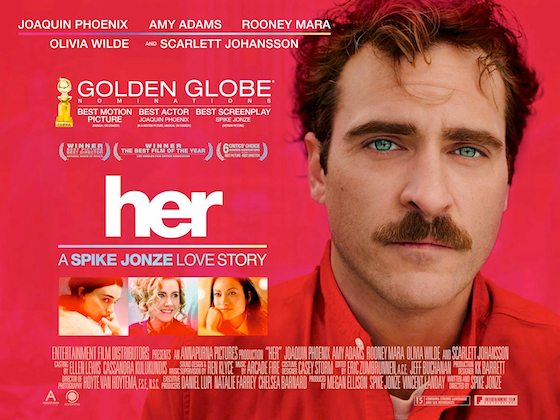
    If Moon is “a bit like an episode of Black Mirror”, Spike Jonze’s Her virtually is one. Set in a highly plausible near future — which has clearly been developed from our current obsession with our phones, iPads, digital assistants, etc — it stars Joaquin Phoenix as Theodore, a lonely chap who gets a new operating system based around a genuine AI, Samantha (voiced by Scarlett Johansson). As Samantha develops, she and Theodore soon become friends, and then more.

    People often refer to the template of Black Mirror as “what if technology but MORE”, and Her definitely fulfils that brief: “what if Siri was genuinely intelligent and someone fell in love with her?” Also like an episode of Black Mirror, it’s as much about what this reveals about humanity as it is about the crazy sci-fi concept. It’s primarily a romance about a lonely guy who was hurt in the past finding a new connection, with the fact he’s falling in love with a piece of technology almost secondary. Even within the world of the film, he’s not some kind of outcast: we hear about other people who’ve fallen for their AI, and his friends unquestioningly accept his relationship as genuine.

    Such acceptance doesn’t translate into our current world, it seems. Although Her is generally very well liked, some people struggle to engage with it at all, and from what I can tell that mostly stems from them not being able to relate to Theodore and his situation, i.e. the very concept of falling in love with an AI is too impossible for them to even imagine. I can’t help but feel that says more about those viewers (for good or ill) than it does the film, which executes the storyline with a great deal of believability and heart.

    5 out of 5

    Forbidden Planet
    (1956)

    2017 #172
    Fred McLeod Wilcox | 98 mins | Blu-ray | 2.40:1 | USA / English | U / G

    Forbidden Planet

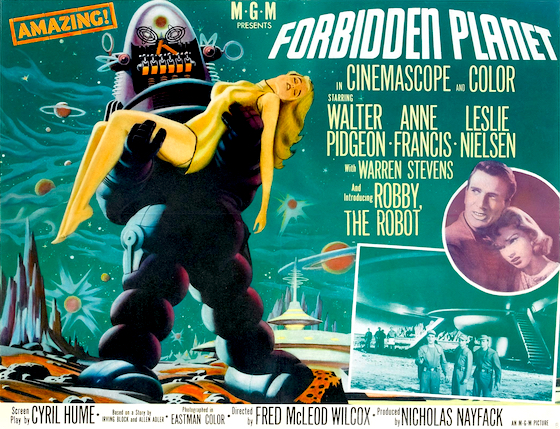
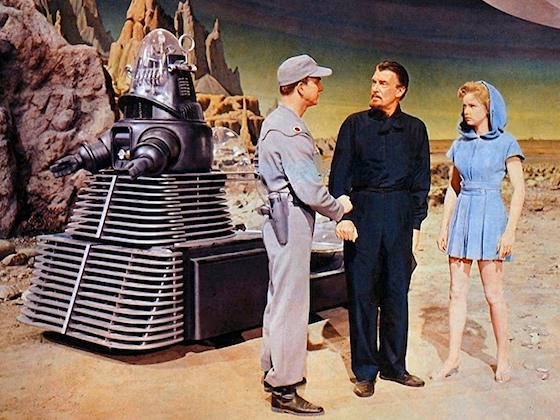
    This classic sci-fi adventure sees a spaceship crewed by blokes (led by Leslie Nielsen) land on the planet Altair IV to investigate what happened to a previous mission there. They find it inhabited only by Dr Morbius (Walter Pidgeon), his robot servant Robby, and his beautiful daughter Altaira (Anne Francis), who perpetually wears short skirts and has a fondness for skinny-dipping. Turns out the crew are a right bunch of horndogs (they spend most of their time lusting after Altaira, tricking her into kissing them and stuff like that), but there are bigger problems afoot when the planet starts trying to kill them.

    Once it gets past everyone’s lustfulness (it feels uncomfortably like watching the filmmakers play out some personal fantasies), there are proper big sci-fi ideas driving Forbidden Planet. There are also some gloriously pulpy action sequences, like a fight against an invisible monster. It’s backed up by great special effects. Obviously they’ve all dated in one way or another, but much of it still looks fantastic for its time — the set extensions, in particular, are magnificent.

    Nothing's forbidden on this planet, wink wink

    Something I wasn’t expecting (but I’m certainly not the first to note) is how blatantly the film was an influence on Star Trek. You can even map the similarities between characters pretty precisely. Switch out the spaceship models and original-flavour Star Trek is all but Forbidden Planet: The Series.

    Although its gender politics have aged even less well than its special effects, and its story occasionally gets bogged down by stretches of explanatory dialogue (it sometimes feels like you’re watching the writer invent and explain his ideas in real-time), Forbidden Planet remains a mostly enjoyable SF classic.

    4 out of 5

    District 9 and Forbidden Planet were viewed as part of my Blindspot 2017 project, which you can read more about here.

    Moon and Her were viewed as part of my What Do You Mean You Haven’t Seen…? 2017 project, which you can read more about here.

  • What Do You Mean You Haven’t Seen…? 2018

    In an emulation of last year, in 2018 I’m setting myself the goal of watching not only a dozen Blindspot films, but also a decad WDYMYHS movies. Last year there was a reason for this (marking my tenth blogiversary); this year, I’m doing it just because it worked before.

    In another similarity to last year, my Blindspot list is a ‘free choice’ selected from films I either already own or have ready access to (i.e. they’re available on Netflix / Amazon Prime / etc), while my WDYMYHS list is chosen by mixing together lists of must-see movies to find those that consensus says I should’ve seen.

    To select this year’s ten, I noted films from IMDb’s Top 250 (or whatever they want to call it nowadays) that I already owned or had ready access to, then saw which were also on They Shoot Pictures, Don’t They?’s 1,000 Greatest Films. Then I narrowed that long-list to films that also helped complete a list on iCheckMovies. After ruling out Princess Mononoke under my old “no duplicate directors” rule (because I really wanted to include Nausicaä on my Blindspot list; and also because I’d already had a shot at Mononoke during 2015’s list), these were my final ten — listed here in whatever order they ended up ranked.


    Das Boot


    The Lives of Others


    Full Metal Jacket


    Stalker


    Amadeus


    Scarface


    Ran


    Casino


    The Elephant Man


    Rocky

    Exciting observation: six of them are from the ’80s. No idea how or why that came about.