Introduction
2009’s well and truly over (well, aside from the 20 reviews I still haven’t posted), so it’s time to reflect on what has been.
It’s been a somewhat inauspicious year for 100 Films, actually, failing to make the titular target for the first time and not necessarily seeing a great many classic films along the way. 2007’s Top Ten held undeniable classics like Brief Encounter and Citizen Kane, while 2008’s managed the likes of Rashomon, Notorious, and the 9th greatest film of all time [as of 2015, it’s gone back up to 4th]. I don’t mean to spoil this year’s lot, but it looks kinda tame and modern (70% come from the last three years) by comparison.
Equally, whereas the first two years saw just a single one-star film each, this year (as noted in my previous summary post) I’ve awarded four. Clearly my recent viewing choices leave something to be desired — indeed, for all of this I have only myself to blame.
In case you forgot…
As regular readers are undoubtedly aware — but it doesn’t do any harm to re-emphasise — both the Bottom Five and Top Ten are based on what I’ve seen for the first time this year, not what was released this year (hence why I was wittering on about not having many all-time-classics to include). To this end, you can see the list of contenders here, which I’m certain includes some that are bafflingly absent from what follows.
Each of the Top Ten comes with a further recommendation, also plucked from this year’s viewing, of a film that is in some way similar. Why? I’m not sure, it just seemed a good idea. They are not numbers 11 to 20 in my favour.
And with that out of the way for another year, here are the lists:
The Five Worst Films I’ve Seen in 2009
Hannah Montana/Miley Cyrus: Best of Both Worlds Concert Tour
My original review was more verbose than this ‘movie’ deserves, so let me sum it up in one word: tosh.
AVPR – Aliens vs Predator: Requiem
AVP was pretty rubbish, but AVPR performs the impressive feat of turning its predecessor into a pleasurable memory. As I said in my original review, “the inconceivably thorough degradation of a once-great franchise is its greatest crime.”
Alone in the Dark
Makes AVPR look good. Actually, it doesn’t — I don’t think anything could — but if forced I’d still rather re-watch those franchises being destroyed than suffer through this incomprehensible and unexciting mess another time.
Sarah Silverman: Jesus is Magic
Comedy should be funny. That’s pretty much a basic principle, I’m sure everyone will agree. Whether it’s also cutting-edge, old-fashioned, gentle, satirical, offensive or comfortable, it at least needs to be funny. Which, in this film, Silverman isn’t.
Sherlock: Case of Evil
This wins the final spot over the likes of Transporter 3, The Man in the Iron Mask, The Red Riding Trilogy and Cinderella simply because it was so wiped from my mind I had to look up my own review to remember what it was. Case of Evil is moderately passable in itself, but by being literally forgettable it earns a place here.
The Ten Best Films I’ve Seen For the First Time in 2009
10) Rage
Just sneaking in at the outside edge of my top ten is Rage. It looked like a film I wouldn’t really enjoy — a full feature-length of fashion industry people nattering to camera while exciting events took place off screen — but a high-quality cast and the fact it was free persuaded me. I’m glad it did, because I actually enjoyed it immensely. Sometimes I do like gimmicks, and this one works.
See also: The Knack …And How to Get It, because it’s the next-most experimental/arty thing (that isn’t also in this top ten).
9) Alien Resurrection
I ummed and ahhed over this, but in the end Resurrection beat the other two Alien sequels into my top ten. Is Aliens a better film? Probably. Well, certainly. But Resurrection is under-loved and, in my view, a little gem… in it’s own twisted, dark kind of way.
See also: Aliens, obviously.
8) Culloden
The faux-documentary is everywhere these days, but few are quite as original as Peter Watkins’ 1964 effort. Instead of comedically covering a fake band/movie/dog show, Watkins presents a real historical event as if it’s been covered by a modern-day current affairs programme. The concept is executed consistently and flawlessly, while even on a small BBC budget he manages to craft epic and affecting battle scenes.
See also: Paths of Glory, for more wartime miscarriages of justice.
7) Star Trek
I’m no Star Trek fan, and that’s one of the main reasons this latest franchise entry makes my top ten: it’s not the Second Coming some seem set on celebrating it as, but it’s a fine action-adventure that I actually enjoyed — more than I can say for most of Trek. It’s also distinctly fun, in the bright, colourful, occasionally a little silly vein, a quality that’s in disappointingly short supply among modern blockbusters.
See also: Avatar, also bright and colourful, but woefully over-hyped.
6) Rock n Roll Nerd
Perhaps enjoyment of this depends on your opinion of Tim Minchin, but even if you’re not a fan (yep, I hear there are some people who don’t like him) it remains an interesting glimpse behind the scenes of the world of stand-up comedy (part of it anyway), alongside the journey of a sudden rise to fame and a sweet domestic ‘subplot’.
See also: Commentary! The Musical for more behind-the-scenes-styled comedy songs.
5) For All Mankind
Two documentaries mark the mid-point of this year’s top ten, but this just edges in the lead because of its Importance and poetic beauty. The story of the Apollo missions is told effectively if sparely, but it’s the visuals that are the real joy here.
See also: In the Shadow of the Moon tells the same story, but with the astronauts’ recollections decades later.
4) Son of Rambow
There’s something about Son of Rambow… The shape of the story is familiar, the lessons learnt hardly new, and some of the sillier subplots rub incongruously against the realist primary narrative. And yet none of that matters because it’s beautifully written, directed and performed, full of skill and charm, amusing and moving in equal measure. And personally, I quite like barmy subplots.
See also: Stand By Me, another set-in-the-past boyhood coming-of-age tale.
3) Watchmen: Director’s Cut
I’ve barred myself from giving this the top spot because, as noted in my review of the theatrical cut, I still can’t be certain my opinion of the film is divorced from my opinion of the novel: so faithful is Snyder’s adaptation, so indicative was the trailer and other pre-release coverage, that even watching it for the first time it felt like I’d seen it before. It’s flawed, but it’s also brilliant.
See also: Batman (1966), an equally divisive superhero movie. Totally different, mind.
2) In Bruges
Looking over my whole top ten this year, there’s a bit of a “it’s not for everyone” theme developing. With its foul language, extreme violence, politically incorrect humour and somewhat inconclusive ending, In Bruges undoubtedly falls into that category. But for anyone who can stomach those things it’s a wonderfully entertaining film in every respect. A bit like my #1…
See also: Ripley’s Game, another Europe-set hitman thriller with a comic edge.
1) Inglourious Basterds
Tarantino’s latest seems to have been quite divisive with audiences, possibly due to misaligned expectations. As a blast — or, rather, several blasts — of pure cinema, resplendent with a cornucopia of irregular screen tricks and motifs scattered throughout with carefree abandon, it’s an awful lot of fun. Unlikely to best Reservoir Dogs or Pulp Fiction for mainstream acceptance, perhaps, but there’s something for every kind of cineast in here.
See also: The Thief of Bagdad, equally episodic, playful and joyously filmic.
Special Mentions
As ever, I can’t end this without mentioning the 17 films that earned themselves 5-star ratings this year (including some that are yet to have reviews published). Six of them made it into the top ten: For All Mankind, In Bruges, Inglourious Basterds, Rage, Son of Rambow, and Watchmen: Director’s Cut. Normally I’d just list the others, but first I’m going to pick out two that came closer than most to cracking the top ten: The Great Dictator and The Thief of Bagdad. I suppose that makes them 11 and 12. The remaining nine included: Aliens, Anne Frank Remembered, La Antena, The Apartment, Glory, Paths of Glory, Watchmen (failing to make the top ten because of the Director’s Cut), and Where the Sidewalk Ends.
Finally, the 17th was Blade Runner: The Final Cut. As with Leon last year, I didn’t feel justified including in my Top 10 a film so similar to a version I’d previously seen. As it was excluded from consideration, then, it gets its own paragraph here.
Additionally, I felt five-stars were deserved by a few films I’d seen before (The Birds, Some Like It Hot, Flash Gordon) and one alternate cut (Alien: The Director’s Cut), not to mention two shorts: The Lunch Date and Commentary! The Musical.
More randomly, well done to X-Men Origins: Wolverine for finally putting a film under ‘X’ on my review list; and to The X Files sequel for doubling the number. Just ‘Y’ left to fill…
The Films I Didn’t See
As I’m certain you’re aware, this isn’t a Top 10 of 2009 (only of my 2009), but new films do feature, and with that in mind there were a number of notable releases that I’ve yet to see.
In my annual tradition, then, here’s an alphabetical list of 50 films (listed as 2009 on IMDb) that I’ve missed this year. These have been chosen for a variety of reasons, from box office success to critical acclaim via simple notoriety.
2012
(500) Days of Summer
9
The Boat That Rocked
Brüno
A Christmas Carol
Coraline
District 9
Drag Me to Hell
An Education
Fantastic Mr. Fox
Fast & Furious
The Final Destination
G.I. Joe: The Rise of Cobra
Glorious 39
The Hangover
The Hurt Locker
Ice Age: Dawn of the Dinosaurs
The Imaginarium of Doctor Parnassus
In the Loop
The Informant!
The International
The Invention of Lying
Invictus
Jennifer’s Body
Julie & Julia
Knowing
Monsters vs. Aliens
Moon
Nine
Paranormal Activity
The Princess and the Frog
The Proposal
Public Enemies
Push
The Road
A Serious Man
Sherlock Holmes
The Soloist
St. Trinian’s 2: The Legend of Fritton’s Gold
The Taking of Pelham 1 2 3
Taking Woodstock
Terminator Salvation
This Is It
The Time Traveler’s Wife
The Twilight Saga: New Moon
Underworld: Rise of the Lycans
Up
Where the Wild Things Are
Year One
A Final Thought
“It’s the end, but the moment has been prepared for…”
See, 2010’s already begun!

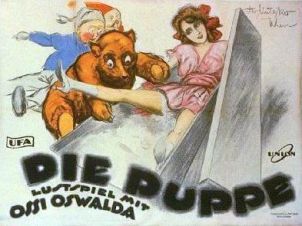 From the very start, Die Puppe sets out its stall (literally) as being something a bit special. The first sequence sees director Ernst Lubitsch himself unpack and assemble a doll’s house set and two dolls, which then become life-size and the dolls — now humans — the first characters we meet. It’s a neat framing device, a joke in itself, and some kind of early commentary on the role of a director.
 Ich möchte kein Mann sein is the kind of silent film that might surprise some among a wider film-viewing audience, both in terms of the attitudes prevalent in what is occasionally assumed to be a highly prim era, and, even accepting that it really wasn’t, the things people were prepared to put on film then — the latter due to, I think, the perception of older films as wilfully innocent (a view no doubt influenced by the effect the Hays Code would later have on American movies).
 As we head in to this year’s awards season, I’ve finally got round to seeing last year’s big winner. It’s the Little British Film That Could, and I do feel like I’m the last person in the country to see it.
 Culloden tells the story of the 1746 battle — famously, the last fought on British soil — and the events that followed it, as if it were covered by a modern TV news report (albeit a feature-length one).
 This clearly made-for-TV adaptation of Rodgers and Hammerstein’s Cinderella (the second of three, to date) is a rather weak affair, easily demonstrating why no one seems to remember it.
 Before
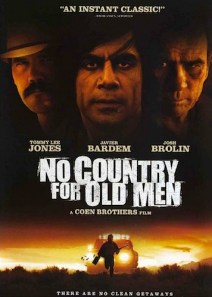 When I saw No Country for Old Men, a new round of films were vying for the Best Picture Oscar. Now, as I finally post my review, a whole new load have been nominated, voted on, and await the final result. Sometimes I feel decidedly behind the times.
 100Films.co.uk