
Declan Lowney | 90 mins | TV | 16:9 | UK / English | 12
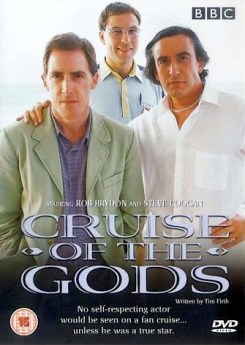 I’ve debated in the past where the line between what counts as a film and what counts as a TV production falls in this day and age, when a one-off feature-length event programme on a major network could easily outstrip a small theatrical film in both filmic spectacle and budget. So it really comes down to intention and/or place of release: if it’s made for TV, it’s TV; if it’s made for cinema or direct-to-DVD, it’s a film; if it’s made for the cinema but doesn’t really get released and goes straight to TV, God alone knows.
Cruise of the Gods is a clear cut case: it was made for TV, it was shown on TV, it’s a one-off TV programme. But I’m going to say screw that and bend my rules a little, just this once*, because I’ve definitely seen ‘proper films’ that aren’t as good as this (naturally, that could be said of a lot of TV) and, well, because I really liked it and wanted to share.
Rob Brydon stars as the lead actor from a cheap ’80s BBC sci-fi show who’s now working as a hotel porter, while his co-star (Steve Coogan) is off in America starring in popular TV series Sherlock Holmes in Miami. (A modern-day TV series update of Sherlock Holmes? What a horrid idea only the Americas would do!) When he’s invited on a fan cruise (like a convention, but on a cruise ship — these things do exist), an initially reluctant Brydon accepts because he needs some money. There he meets fans of the long-dead show, played by the likes of a pre-Little Britain David Walliams and a pre-Gavin & Stacey James Corden. Events, as they say, unfold.
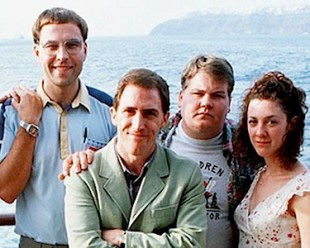 Though the film pokes fun (fairly good-naturedly) at sci-fi obsessives, the underlying story here is about a man overshadowed by his past. In this Brydon gives a strong performance — I think he’s a better actor than he’s normally given credit for — and he’s ably supported by Corden in particular, though to say what gives his role such quality might spoil a twist. He’s another one who’s actually a very good actor, but it gets hidden beneath a public persona that led to such dross as that sketch show with Mathew Horne.
The biggest twist, however, is that Coogan plays a nice character. There’s no surprise sting in the tail there, he’s just nice throughout. It’s weird.
As this is TV, the writer gets prominence over the director; indeed, the opening credits follow the title card with a just-as-big “by Tim Firth” credit, while Lowney’s name is relegated to the end credit scrawl. Such is the fate of many a TV director. Their careers have followed suit too: Firth went on to films like Calendar Girls, Kinky Boots and Confessions of a Shopaholic. (Before it he wrote, amongst other things, The Flint Street Nativity (which I probably last saw when it was on in 1999, but remember fondly) and Border Cafe, a forgotten mini-series which I’ve always vaguely remembered watching. I think this is the kind of thing that can happen with writers: they’re so often undervalued that you might end up seeing a lot of their stuff, almost to the point where it could be called following their career,  without ever realising all those disparate things were penned by the same human being. Poor writers.) Lowney, meanwhile, has stuck to TV, with episodes of Happiness, Little Britain and Married Single Other (amongst others) to his name, and most recently some bits of Glastonbury 2011. (Poorer directors.) None of this tells you much about Cruise of the Gods, I’d just observed it all.
There was talk of this being remade as a film, again starring Brydon and Coogan. I don’t know if that’s still going ahead. Really, there’s no need: I think it’s an entertaining comedy and engrossing character drama as it is, easily on a par with similar-feeling British films (and easily exceeding others — Beyond the Pole, for instance). The only benefit would be wider exposure: people seem prepared to visit old films in a way that isn’t felt for most old TV, which is still seen as disposable and transitory by many. Their loss — they’re the ones missing stuff like this, while the more open-minded among us can find and enjoy it.

* May happen again. ^
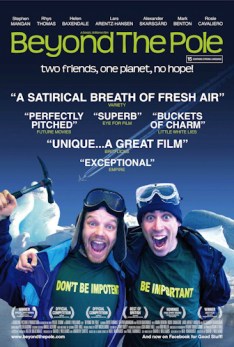 Adapted from a cult Radio 4 series, Beyond the Pole is a British mockumentary about “the first carbon neutral, vegetarian and organic expedition ever to attempt the North Pole”, starring Stephen Mangan Off
 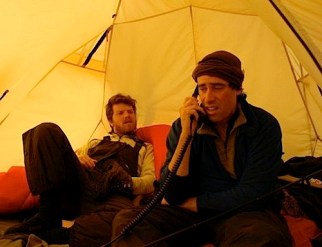 It’s also impressively realised. Its apparent low budget led me to assume we’d, a) see very little of the actual trip, and b) what we did see would be all inside-a-tent and green-screened. But no, it was really shot on floating sea ice off the coast of Greenland, and it makes for a highly effective polar landscape. Good work, filmmakers.


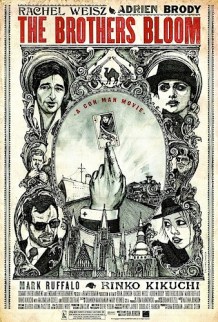 “Crikey, time flies!” I thought when I compiled this listing and saw that The Brothers Bloom was released in 2008. Somehow it felt like it was only last year, not three (or, if at the start of 2008, closer to four) years ago.
 but then the job of a trailer is to sell you a film, so if the end result doesn’t match it 100% is that a failing? How are you meant to summarise the entire tone of a film in a two-minute spoiler-free sales burst anyway? That dilemma is emphasised in this case because it’s the opening that feels least like the trailer. I mean, the pre-titles is kinda quirky-fun, but then it gets a little serious and slow, and later — perhaps half-an-hour or three-quarters of an hour in — you get to all the stuff the trailer was selling. And then the last act is back to something more unusually — or, if we’re to be unkind, unevenly — paced and toned. I can imagine the marketing meetings for this were a struggle…
 Perhaps the problem for others was that the ending doesn’t quite spell everything out. I’m certain every question you might have is answered, more or less, but it doesn’t lead you by the hand back over the film pointing everything out, as many twist-ending-ed films do. Part of me appreciates this assumption of intelligence; part of me would like it all handily explained so I don’t sit here wondering it for myself. I don’t feel completely lump-headed not wanting to do that — there’s no Deeper Meaning or Philosophical Insight gained from sorting this out, I don’t believe; just an understanding of who was being conned and when, and who knew what and why.
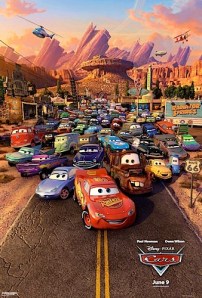 Since the creation of the Oscar for Best Animated Feature, only two Pixar features have failed to win:
  how the building of the interstate killed off so many small towns is both historically accurate (more or less) and emotional — but I imagine it also explains why the film can feel so long.
 having them talk to each other and giving them personalities, and it doesn’t need to make sense because his age isn’t even close to double digits and he’s just playing. But does that make it a viable idea for a film?
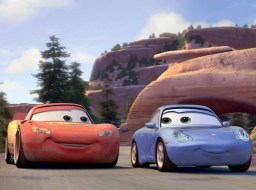 Cars is undoubtedly a below-par Pixar movie. It’s not a bad film — it has funny bits, exciting bits, a good moral message, some nice cameos and references and that kind of thing — but it doesn’t stand comparison to even a regular Pixar outing, never mind the best of their output. But hey, if you can produce 10 features that manage a 90%+ score on
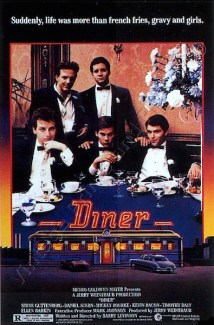 Baltimore, the week between Christmas and New Year, 1959: the lives of six friends in the run-up to one of them getting married, during which period they spend surprisingly little time at the titular establishment.
 There are no big turning points or revelations or developments for any of these characters. One is in trouble thanks to deep gambling debts, but there’s the equivalent of a magic wand that wipes them all out; another is permanently drunk with serious family issues, but neither of those go anywhere; another pines for a girl he barely sees and has never been with — well, except for one significant night — but by the end I’m not sure if they were going to get together or leave it be or… what. Similar things could be said for all the others.
 Like I said, this kind of storytelling works for some viewers and not for others. If it hadn’t been for the pat ending of that gambling debt plot, or the non-development of some other promising threads, maybe I would have liked it more. As it stands, Diner certainly has its moments, but maybe not enough of them for me.
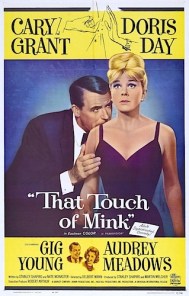 Starring Doris Day as a regular girl who wants to marry Cary Grant’s rich businessman for love, while he just wants to get her into bed, That Touch of Mink is a sex comedy… but being a film produced in ’60s America, no one comes close to using such language. But it’s unquestionably all about that.
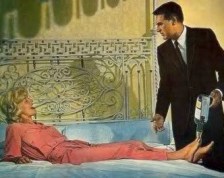 The subplot about his therapist pays such dividends it’s even used for the film’s final gag.
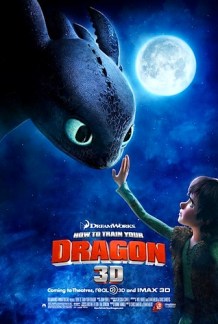 I saw a trailer for How to Train Your Dragon at the cinema a few months before its release. Having never heard anything of it, I thought it looked to have basic animation and a too daft tone. I wrote it off, expecting the kind of animated movie that would be slagged off as a Pixar-wannabe… and probably still land an Oscar nomination because there never seem to be many contenders for the animated feature award. Imagine my surprise, then, when it garnered endless positive reviews and a huge box office. What?

 Anyway, here’s the exiguous (thank you thesaurus) list of films that have got me to this point…
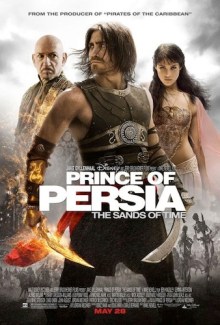 Disney’s attempt to launch a second franchise in the mould of
  There are some good action beats, but there’s also plenty of disorientatingly-edited, CGI-enhanced sequences, as per usual for the genre these days. For the former, see for instance Dastan’s climb up the wall into Alamut (or whatever it was called), or the knife-thrower-on-knife-thrower battle near the end. For explosions of CGI, see the massive logic-shattering ‘sand surfing’ sequence in the climax. Visually they’re clearly trying to evoke
  has the role Keira Knightley would’ve played five years ago. I think she’s meant to be a Strong Independent Princess but, much like Dastan, we’re told we should be inferring it rather than seeing any evidence of it.
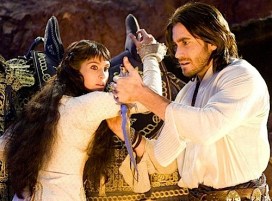 Plus, the sword-and-sandals milieu makes a bit of a change. I know we’ve had plenty of swords-and-sandals-flavoured movies in the wake of
  100Films.co.uk