
Tomas Alfredson | 127 mins | Blu-ray | 2.40:1 | UK, France & Germany / English | 15 / R
 Shortly after I watched Tinker Tailor, it was announced that they (“they” in this instance being Working Title, I think) are planning a new film adaptation of Daphne du Maurier’s perennially popular novel Rebecca. This news was greeted (at least on the websites where I read it) with cries in the comments along the lines of, “you can’t remake Hitchcock!” Such is the power of an adaptation to overshadow its original work, at least in some quarters — here in the UK, I’d say the novel is at least as well known as the film, and has already been re-filmed at least twice for TV.
I mention this because Tinker Tailor Soldier Spy elicited a broadly similar reaction, thanks to the beloved 1979 BBC miniseries starring Sir Alec Guinness as quiet but fiercely clever spy George Smiley. How dare anyone re-make that? Well, perhaps because it’s 30 years old (enough time to afford a new perspective, potentially) and was originally a novel — and those are ‘re-made’ all the time. Just ask Pride and Prejudice, or Oliver Twist, or dozens of others.
Personally, I watched the Guinness version just a month or two before I saw the new film, and it unavoidably colours my reaction to it. In that situation, one can only enjoy the new adaptation to an extent, while memories of the previous one crowd in. Distance is required for anything more objective. So changes between TV and film leered out at me, such as a radically different opening mission, and a radically re-arranged structure in places, and a few performances that weren’t up to the same level, and a marginally less effective denouement.
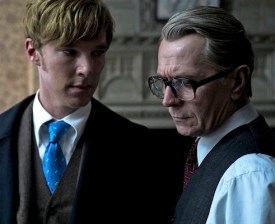 Yet, for all that, the film is excellent. It may not match the TV series in places, in my subjective opinion, but in its own right it shines. Gary Oldman does the impossible and offers a Smiley that is neither an imitation of Guinness’ nor a deliberate counterpoint, but stands apart as an equally proficient rendering of the character. The rest of the cast are equally up to task, with the exception of Kathy Burke, who stands out like a sore thumb in my opinion.
The TV series took about seven hours to tell the same story that this achieves in just over two. Interestingly, without cutting anything major, the film version still feels leisurely paced. It’s also equally as complicated — it’s an intricate plot, and both adaptations assume the viewer will keep up with it. This seems to have caused some viewers problems, particularly in America (anecdotally, at least). It does demand one’s attention, but it is possible to follow. Equally, I had a leg-up from watching and understanding the TV version.
All that said, the four-way mystery about who the villain is never seems much of a mystery. On the one hand, I know the answer; but on the other, I guessed it on TV too. I won’t give anything more away, though the shortened running time means one of the four suspects gets even less screen time than their already-minimal role in the series, and consequently downgraded casting in both instances. It’s an unfortunate side effect of a big-name cast that it helps your audience second-guess plot developments, but it’s equally unavoidable.
 Another noteworthy advantage of the film is that it’s gorgeously shot. The TV series actually has its own appeal in this area, with a realism that is quite pleasing. The film occasionally goes grander (look at the depiction of meeting rooms in The Circus for a major example — while the TV series goes for any old room in Whitehall, the film offers stonking soundproof ‘pods’), but it works in its own way.
I must confess, much like my recent drabble reviews, this TV-version-centric review of Tinker Tailor was not what I had in mind, because the film has many praises to sing in its own right. But, in fairness to the blog’s stated mission of seeing a film for the first time and then reviewing it, the Guinness iteration did factor large in my reaction to the film. Now distanced from the series, I look forward to watching Tinker Tailor again with a fairer eye. Yet for all my talk of negative comparisons, I was still mightily impressed — enough to rank it in my top five films I saw in 2012, and enough to give it full marks.

Tinker Tailor Soldier Spy placed 5th on my list of The Ten Best Films I Saw For the First Time in 2012, which can be read in full here.
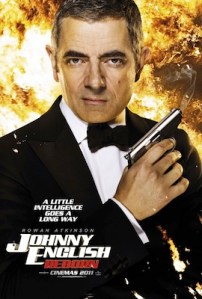 From the director of Oscar Wilde adaptation
  Two of them are very nearly inspired: a
  Apparently Ben Miller, English’s sidekick from the original adverts and first movie, filmed a cameo that was ultimately cut. A lot of people seem moderately upset about that on forums. I like Miller, but to be honest I’d forgotten he was in the first one.

 #17 Final Destination 5 (2011)
 This honour was widely seen as recognising the whole trilogy, and really my inclusion is for the same reason — I love all the Lord of the Rings films, but if I had to pick a favourite it would be Fellowship. That The Hobbit didn’t get anywhere near the Best Picture nods this season gives it a faint ring of The Godfather Part III: belated and misguided. Though even Coppola’s threequel got a nomination.
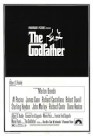 Speak of the devil… I really need to re-watch the Godfather trilogy, so I can’t offer much insightful comment, but I’m one of those people who sides with Part I being better than Part II. I found Michael’s descent into the family more engaging than… what, his consolidation of power? Is that what happened? (I really do need to re-watch them.) Plus, you can’t beat a bit of Brando.
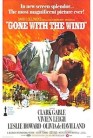 I love an epic — indeed, the average length of my three choices so far is 2 hours 34 minutes — and in many respects Gone with the Wind is the ultimate epic, a tale that sprawls through time and across locations, but with the relationship between two individuals at its heart. And it beat The Wizard of Oz to the prize, which is a bonus.
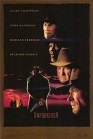 As with The Godfather, I need to re-watch this. It was one of the first Westerns I saw and I think it would benefit from the improved understanding of the genre I now have. Equally, it was instrumental in transforming a type of film I’d previously ignored (not through any conscious effort) in to one I enjoy. (There’s a whole article to write on modern mass perception of Westerns, but that’s for another day.)
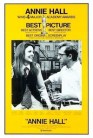 For all the talk of the Academy always getting it wrong, there are numerous times they’ve got it right. Or, at least, near as dammit. Which made choosing just five hard, but I’ve chosen this to try and balance things out — I don’t only like epics that mostly feature some kind of war (this was very nearly Schindler’s List). Woody Allen on form is great fun, and this is that. I liked Manhattan more though.
 There’s a lot of love for this movie in some circles — it’s ranked
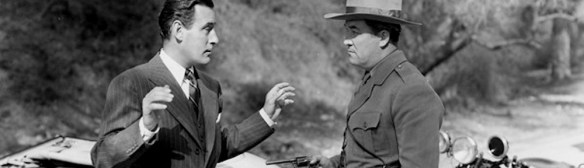
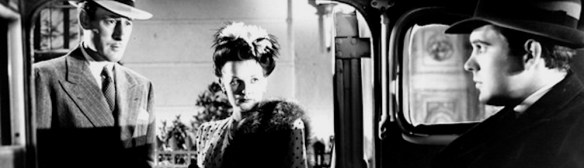
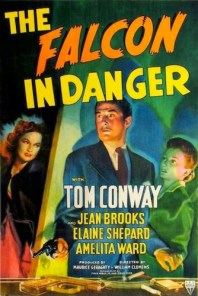 We’ve had the Saint in New York, in London, and in Palm Springs; soon we’ll have the Falcon in Mexico, in Hollywood, and in San Francisco; but here, he’s just in danger. He’s also in perhaps the best film either series has offered to date.
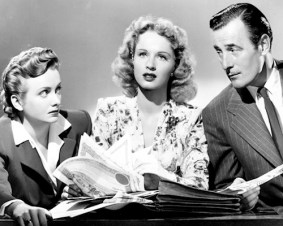 Though the Falcon clearly agrees with everyone else’s assessment and shrugs her off as often as he can, to our benefit.
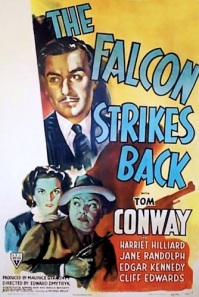 Directed by Edward Dmytryk (who, a couple of years later, would helm
 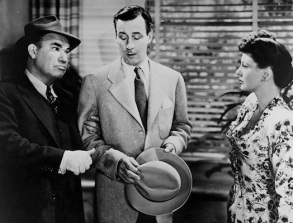 His eye for the ladies remains the same, although Conway feels a bit slicker and less whipped. Neither carry the same charisma as Sanders’ Saint.
 The Falcon may’ve done it in the third entry in RKO’s Saint-a-like film series, but now it was time for Tom Conway to
  Aside from housekeeping, the film offers one of the series’ better plots, a proper detective mystery that doesn’t lead where you’d expect it to for once. That said, I didn’t like the ending so much, especially the way it abruptly dispatches our former hero followed by the gang carrying on with barely a care. The Mysterious Threatening Voice On The Phone is interesting though — will we be seeing a recurring enemy; a Moriarty or Blofeld for the new Falcon? Time shall tell…
 in spite of all the other factors (changing sources of adaptation; changing leads) that should make them feel wildly varied. And the Falcon’s butler, Jerry, is Asian again, after being caucasian in the last two films. Played this time by Keye Luke, rather than being some nasty stereotype he has a nice bit using stereotypes to the characters’ advantage. It’s one of the series’ better comic inventions.
 It’s funny what movies sometimes pique your interest. I saw a trailer for relationship drama Love and Other Impossible Pursuits (or, as it was retitled in America, The Other Woman) on some completely unrelated US Blu-ray earlier this year (I forget which film it was, but the only connection was the disc’s distribution company) and wondered why I’d never heard of it before — after all, it looked like a Worthy Drama, starring Oscar Winner Natalie Portman and Lisa Kudrow From
  As I was brought to the film by its trailer, it pays to say it’s actually very different. The advert hides the baby’s death but hints at it, as if it’s a Big Reveal they clumsily didn’t want to give away. But no, it’s brought up within the first five or so minutes and actually drives a lot of the film. The emphasised “other woman” facet is present, though in a slightly different way to normal: this is how such relationships continue as a long-term status quo, rather than the immediate impact of an affair.
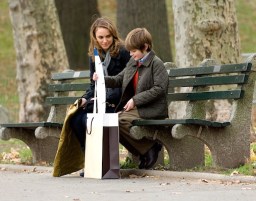 I can imagine that flashback working within the shape of a novel, where structure works differently. Indeed, I got the impression the book is probably very novelistic; maybe a character study, even. Those are two things that don’t always transfer well to film. I don’t think it’s about Being The Other Woman, despite the US title; nor do I think it’s about Being The Stepmother; nor is it about Losing A Baby. Those things are all in there, certainly, but rather than any of them be The Story, they’re elements in the exploration of the character of Emilia. I’m not sure that works for a movie; not for this one at any rate.
 Period sci-fi comedy/action/adventure Iron Sky is the 21st century answer to
 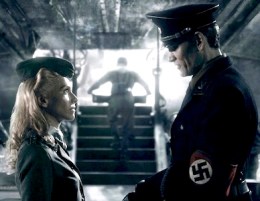 they’d be the gung-ho spotless heroes defeating that Natzees for a second time.
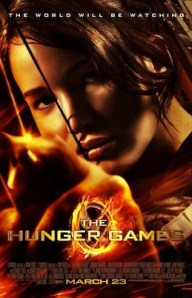 Seen by some as a
  100Films.co.uk