
Georges Méliès | 16 mins | DVD | 1.33:1 | France / silent | U
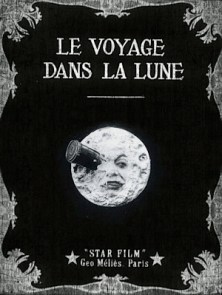 Of all the defining images of cinema — certainly of the silent era — the face on the Moon with a rocket in its eye must be one of the most recognised, though you have to wonder how many have actually seen Méliès’ full vision. More than it could have been, though, because A Trip to the Moon was so popular that, in the copyright-lax world of early cinema, it was widely copied and ripped-off; the kind of thing that destroyed Méliès’ career and, along with it, much of his work.
Unsurprisingly for a film only quarter of an hour long, the plot is quite straightforward: a group of gentlemen are shot out of a giant cannon in a little bullet-shaped craft (not that far from how we actually ended up getting to space), which crashes on the Moon, where they meet a race of man-sized insect-ish creatures (I believe this also happened to the crew of Apollo 11), kill most of them (that too), and take one back to Earth as a slave/performing monkey (now that’s just silly).
As you can see, the politics of the film have dated somewhat… though it’s not a world away from the storyline of some blockbusters — just make the aliens more overtly threatening and the slave a willing volunteer and you’re there. What’s equally remarkable are the similarities to actual space missions — not only what I’ve already mentioned, but the craft splashing back into the sea at the end, for instance. In fairness, this could be as much coincidence as design, because there are plenty of other bits that are way off the mark.
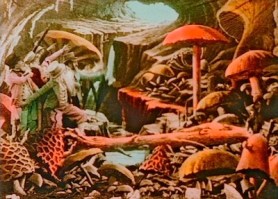 But Méliès wasn’t making a documentary, he was making an entertainment. Indeed, the analogy to a blockbuster is a good one, because this is essentially the turn-of-the-century equivalent. The fantastical sets, costumes and story are all designed to wow the viewer — and remember, we’re only a few years on from people diving out of the way of film of a train arriving in a station.
The spectacle is even more evident in the hand-coloured version, which is what I watched. Discovered in 1993 but (for various reasons) not fully restored until 2011, it made its public (re-)debut at Cannes and was released on UK DVD at the tail end of last year (if you have deep pockets, there’s a pricey Blu-ray version available from Flicker Alley in the US). The colours are vibrant and rainbow-like, though somehow not garish. They emphasise the fantastical nature of the journey very well, and this kind of thing must’ve been a sight to punters familiar with only black-and-white images. From a technical point of view, considering the film was hand-painted frame-by-frame, it’s amazing how consistent and stable the colours are.
This version comes with a new soundtrack by French electronic music duo AIR. It’s somewhere between obtrusive and exciting, depending on your predilections.  Whatever it is, it’s certainly not period-authentic.
A Trip to the Moon is a defining moment in cinema, undoubtedly a must-see for cinephiles. But, more than an obligation, it’s an entertaining experience in its own right; a burst of imaginative storytelling and impressive technical achievement, even more so in the coloured version.

See also my review The Extraordinary Voyage, a documentary about Méliès and the recovery and restoration of this silent print, here.



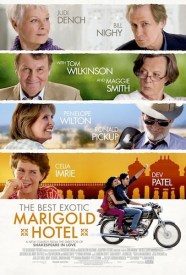 “Old fogies go to India” is the setup of this frothy comedy-drama that clearly courts the so-called ‘grey pound’ — i.e. older viewers still prepared to pay to go to the cinema. But when said fogies are played by Judi Dench, Maggie Smith, Tom Wilkinson, Bill Nighy, Ronald Pickup, Celia Imrie and Penelope Wilton, it will surprise no one to learn there’s something here for us all.
 Screenwriting partnership Jane Goldman and Matthew Vaughn vacate their usual milieu (see
 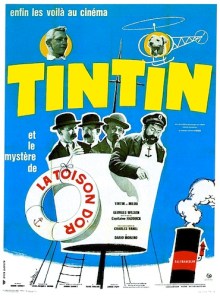 Steven Spielberg and Peter Jackson weren’t the first to bring Hergé’s journalist-adventurer to the big screen, oh no… though you have to go quite far back — and much more obscure — to find the previous efforts.
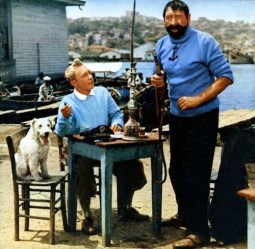 (I don’t know if the BFI DVD includes the original French, Turkish and Greek soundtrack, but on TV it was entirely dubbed into English. There’s a French Blu-ray, but it doesn’t look to be English friendly.)
 Denzel Washington is a fugitive, Ryan Reynolds is the CIA rookie who ends up looking after him — and later, chasing him — after Something Goes Wrong at the titular abode in this workmanlike thriller.


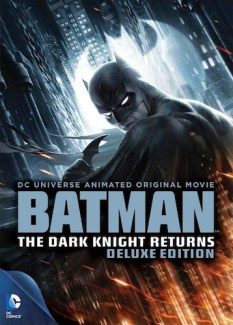 Warner Premiere’s $7 million animated adaptation of one of the seminal graphic novels is here rejigged from its original
 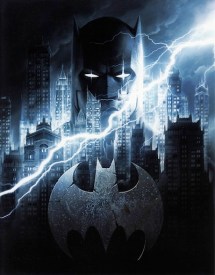 one of which is basically a climax before the halfway mark. Considering Miller’s original structure, that arguably leaves the film with a good three or four climaxes scattered throughout.
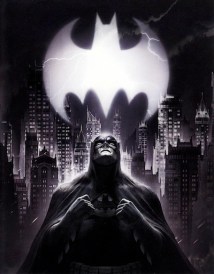 and a feature-length documentary all about the original graphic novel,
 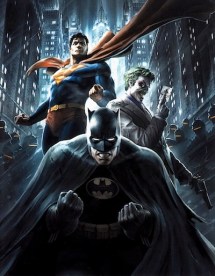 While I’ll continue to champion viewing the two halves of The Dark Knight Returns as separate movies, this single-film version is far from a travesty. If you’ve already got the separate releases, it definitely isn’t worth picking this up just for the film; so a purchase depends on how much value you place on the commentary and Masterpiece documentary (oh, and four art cards found in the box, which I’ve used to illustrate this review). If you don’t own the existing releases then whichever way works out as most cost-effective (bearing in mind which extras can be found where, of course) is the way to go.
 #72 Star Trek Into Darkness (2013)
 #78 Real Steel (2011)
 Throne of Blood
 Romeo + Juliet (1996)
 Much Ado About Nothing (1993)
 The Lion King
 Looking for Richard
 The Chronicle History of King Henry the Fift with His Battell Fought at Agincourt in France
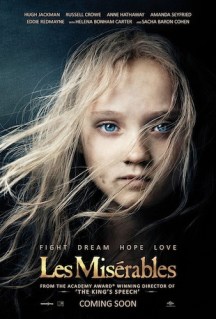 27 years after its West End debut, the long-running smash-hit musical finally makes the leap to the big screen. Such a beloved work paired with a recently Oscar-winning director and an all-star cast was pretty much a dead cert for big-name awards nominations, and so it was to be; but critical reaction was more mixed: I’ve seen people who love the film unreservedly, and others who despise it with a passion.
 Despite its running time, Les Mis is quite brisk for much of that plot (which, sorry if you’ve never seen it, I have described a fair old chunk of). There’s no interval in the film, but on stage it doesn’t come until well into the Paris section of the tale. Such a break must help the pacing, because while I remember enjoying it all on stage (where, I might add, it’s even longer), on screen I felt the middle portion began to drag. So yes, an epic running time for an epic, but it actually moves quickly through the parts that make it an epic before slowing for a bit of a forced romance and that kind of palaver.
 Much talk around Les Mis focused on the performances, with three in particular attracting discussion. As honourable wronged-man Valjean, Jackman is the star of the show, and brings his musical theatre background to bear on a clearly-sung but emotive performance. He was unlucky to be in the same awards year as Daniel Day-Lewis’ all-conquering turn in
 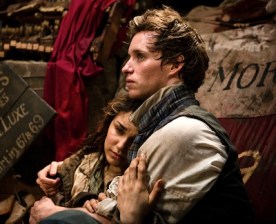 The rest of the cast is an assortment from the can-sing (Eddie Redmayne, Amanda Seyfried) to the comedic-so-it-doesn’t-matter (Sacha Baron Cohen, Helena Bonham Carter). The best voice of the lot belongs to Samantha Barks as Eponine. No surprise, really, as she was poached from the West End… where she’d found herself via one of Andrew Lloyd Webber’s BBC talent shows, so I imagine he feels thoroughly vindicated now (as if he didn’t before).
 Hooper does an above-average job on the whole, but the lack of awards nods shouldn’t be so surprising.
 100Films.co.uk