“Did you sept emb ‘er?”
“No, I oct obe ‘er!”
(Don’t worry, it doesn’t make any sense. Let’s move on…)
What Do You Mean You Haven’t Seen…?
This month’s WDYMYHS film was the massively appropriate Braveheart. I also watched a film actually about a public vote on the future of their country, No. About a nation seeking to get rid of a nefarious ruler who had reigned over them with malicious intent for far too long, the Scottish referendum is what connects these two movies. (Ho-ho!)
On the topic of WDYMYHS, I also finally posted a review for one of last year’s movies, Touch of Evil. I’ve still got Seven Samurai and The Night of the Hunter to go, as well as one other review, and then I’ll finally be done with 2013. (I’ve been exceptionally tardy with that, haven’t I?)
But back to 2014:
September’s films in full
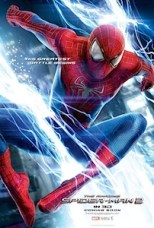
#81 The Amazing Spider-Man 2 (2014)
#82 Crimes of Passion: Death of a Loved One (2013), aka Mördaren ljuger inte ensam
#83 Tucker and Dale vs Evil (2010)
#84 Saving Mr. Banks (2013)
#85 The Grey (2011)
#86 Dark Shadows (2012)
#87 Braveheart (1995)
#88 Good Morning, Vietnam (1987)
 #89 The Spirit (2008)
#90 The Wall (2012), aka Die Wand
#91 Frankenweenie (2012)
#92 Always (1989)
#93 American Hustle (2013)
#94 Mad City (1997)
#95 Fantastic Mr. Fox (2009)
#96 No (2012)
#97 This is Not a Film (2011), aka In film nist
Analysis
At the start of the year, there’s rarely very much to say in these sections; by this point… oh, there are so many ways to look at the data! September is where that really kicks in, because it’s a month in which I’ve twice reached #100, the earliest I’ve ever managed it. That means “how near is #100?” becomes a very viable proposition; plus, I tend to get very watch-y as the big target nears — when it’s only a few films away, why not squeeze in a couple more than normal and get there sooner?
On that last point, it’s perhaps interesting to start with previous Septembers. Last year was my best-ever tally for the ninth month, by some 23% as well… and yet I didn’t reach #100 until two months later. In part that was just the aforementioned pushing on to get closer to the end — the same thing happened in October, and after I actually reached #100 (in early November) I only watched a couple more films. This September, meanwhile, is 31% higher than last year’s — or, to put it another way, 55% better than the best-before-2013 was. And yet I still haven’t reached #100…
What viewing 17 films this month does mean, however, is that it’s my joint-second highest month ever — hurrah! That’s tied with March 2013; it would’ve needed only one more to be outright-second (oh well), two more to be joint-first (looking right back to December 2008 for that), and (obviously now) three more — i.e. have reached #100 — to set a new record.
What does having reached #97 mean for the rest of the year? Well, it’s the furthest I’ve ever gotten by September without reaching 100. Next nearest was last year, when I was at #84. From there, I went on to #110, which is another 26 films — if I do the same this year, I’d reach #123, which would become my second-highest total ever (behind 2007’s 129 and just ahead of 2010’s 122). Widening the parameters to include all previous years, my average total for the year’s final three months is 27 — making last year the most average of the lot, in fact.
That might be the most accurate predictor of where I’ll end up (though still prone to wild variation: I may’ve watched 26 more last year, but the year before that it was only 16, and in 2009 it was up at 40), but let’s use the rest of the 2014 to make some wild assertions anyway. So, my year-to-date average suggests I’ll reach #129, which (as mentioned) would put 2014 equal-best with 2007; pushing a tiny bit harder would leave me with a record-setting 130 films. The most recent months bode well for that: if I maintain my average viewing from the last three months, I’ll reach #139; if I keep up the average of the last two months, however, I’d make it all the way to #145; and if I kept pace with September, I’d make it all the way to #148!
Will any of that happen? Probably not (never say never!), but it’d be nice to end up in the 120s at least.
Slipping…
A side effect of the higher-than-average viewing is that the extent of my backlog has worsened. You may have noticed the number of new reviews step up a little in the past few weeks to try to stave it off, but in the end I had to relent: having kept the “coming soon” list at no more than 49 films ever since July 2012, it slipped to 50 this month. Ah well. Efforts will continue to stop it growing any longer.
This month’s archive reviews
A bit of a lax start to the month means just 17 archive re-posts this time…
Also this month, the two bookend posts from my 2011 David Fincher Week. Most of the reviews featured therein have already been brought over to this blog, but Fight Club and Panic Room will round them out tomorrow and Friday.
(You may have noticed my Se7en review appeared here before this post, but as that’s technically the archive repost for October 1st it’ll be in next month’s update. I am nothing if not precise about these things that don’t really matter.)
5… what?
This is the second month in a row without a “list of five”, but they have not necessarily gone the way of the dodo — last month I couldn’t think of anything worth doing; this month I’ve run out of time.
I was considering “5 favourite Tim Burton films”, because I finally caught up on both Dark Shadows and Frankenweenie this month. My list would probably have included Batman Returns, Edward Scissorhands, Corpse Bride and Sleepy Hollow (along with a fifth, obviously), and definitely would have left out Planet of the Apes, Mars Attacks and Beetlejuice. (Lest you judge my selections harshly, bear in mind I still haven’t got round to Ed Wood or Big Fish. Or Pee-wee’s Big Adventure.)
What about you, dear reader?
Next month on 100 Films in a Year…
98…
99…
100!
101?

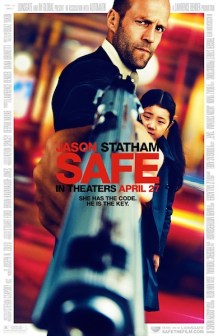 Jason Statham plays a cop turned cage-fighter turned vagrant, who rescues a young girl and finds himself amidst a three-way brawl between the Triad, the Russians, and corrupt cops. They want the child for a number she’s memorised, but what is its significance?
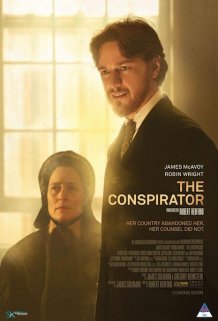 Although John Wilkes Booth is famous as the man who assassinated Abraham Lincoln, he was merely the person who pulled the trigger: eight people were tried for conspiracy to kill America’s 16th President; this is the story of what happened to the only woman among them.
 or rather, like an actress versed in playing modern characters struggling gamely with a period one, and coming up short.
 2014 Academy Awards
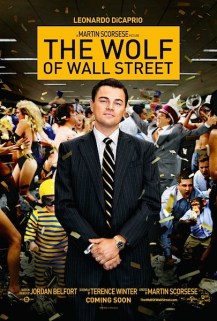 When someone says “100-million-dollar epic”, you probably don’t imagine a film about a swindling stockbroker; but, with a three-hour running time and a nine-figure budget, that’s exactly what Martin Scorsese’s black comedy biopic is.
 and the closing shot clearly shows how many people have already judged them to represent something desirable, regardless of what position the film might take. Some people want this lifestyle, in spite of all the problems it wrought, and even if the film had clearly condemned it that wouldn’t change. In the end, to say Scorsese approves of it purely because he doesn’t lambast it is too simplistic a reading.
 but almost every supporting character gets a memorable line or scene, a moment where they shine brighter than everyone else; and even when the smaller roles aren’t dominating a scene, they’re part of a first-rate ensemble that functions like a well-oiled machine. My personal favourite was P.J. Byrne’s ‘Rugrat’, but yours may well be someone else.
 As one of
  Heartwarming crowdfunded documentary about the power of Batman — not to beat supervillains, but his positive influence on real people.
 Conceived by movie star Will Smith primarily as a vehicle for his wannabe-movie-star son, and helmed by auteur-apparently-turned-director-for-hire M. Night Shyamalan, After Earth is a far-future sci-fi actioner about a militaristic father and son who crash land on a long-abandoned Earth, which has evolved into a hostile environment from which they must try to escape, while also being hunted by an alien super-predator.
 I want to spot the neat callbacks and gradual character development for myself, not have the screenplay or direction screaming “look at the subtle thing we did! Wasn’t it subtle!”; I’d also quite like the film to set up some of its developments better, rather than charge ahead with “now he needs to fly — by-the-way, did we mention he can fly? No? Well, now he is.”
 Even with these faults, however, I mostly quite enjoyed After Earth. For all the complaints levelled at it, primarily centred around it being a vanity project for the Smiths, there’s actually good stuff buried here — given more intelligent development and a different cast, perhaps it could even have been a genre classic. It certainly isn’t that, but it’s not as bad as some say. And it’s definitely M. Night Shyamalan’s best film for years. Sadly, that’s not saying much, is it?
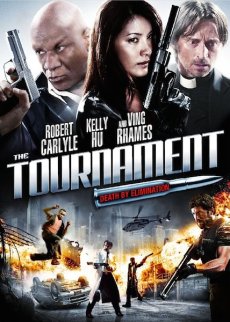 The Tournament is the kind of film where its relative quality is entirely dependent on what you want from a movie. Is it original? Not terribly. Is it clever? Not really. Is it action-packed and kinda fun? Yessir. If you just want to shift your brain into neutral and watch people punch, kick, shoot, stab, chase, and generally fight each other in a slickly-produced fashion, with a solid enough plot that (depending how brain-neutral you’ve gone) might offer an occasional twist… well, you’ve come to the right place.
 The action is the draw, of course, and fortunately the film delivers in spades. The best stuff involves Sebastien Foucan, who you may remember as Bond’s bomb-maker target in
 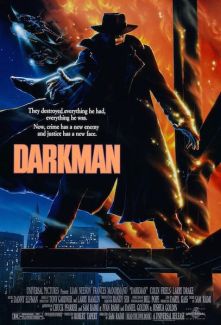 Before he made the insanely successful
  The big winner at the 2002 Oscars (four gongs from eight nominations), A Beautiful Mind adapts the true story of John Nash (Russell Crowe), a Cold War-era mathematics student at Princeton who hit upon a groundbreaking theory and ended up working covertly for the government…
 but the display of range probably merited it; perhaps more so, in retrospect, than his win for Gladiator the year before.
 A Beautiful Mind won Best Picture in spite of being up against the incredibly more innovative, entertaining, and game-changing double-bill of


















 100Films.co.uk