2015 #27
Richard Linklater | 166 mins | Blu-ray | 1.85:1 | USA / English | 15 / R
 2015 Academy Awards
6 nominations — 1 win
2015 Academy Awards
6 nominations — 1 win
Winner: Best Supporting Actress.
Nominated: Best Picture, Best Director, Best Supporting Actor, Best Adapted Screenplay, Best Editing.
 Originally titled 12 Years, until 12 Years a Slave came along, that’s the thing Boyhood will always be most famous for: it was shot from 2002 to 2013, for a few days each year, with the same actors developing and ageing in real time, to tell a story of childhood like never before.
It’s focused on Mason Jr (Ellar Coltrane), who lives with his mother, Olivia (Patricia Arquette), and older sister Samantha (Lorelei Linklater) in Texas. Their dad, Mason Sr (Ethan Hawke), works in Alaska and turns up once in a blue moon. As the years roll on, we follow the family as Olivia gains and loses husbands, Mason Sr finally grows up and settles down, and the kids battle along in the wake of their parents’ lives. Of course, as they get older, they begin to face and have to deal with issues of their own.
It’s quite hard to give a plot description of Boyhood because, in many respects, it has no plot. I mean, how would you succinctly summarise the narrative of your entire school-age childhood? That’s the scope of the film’s canvas and, in tune with real life, various elements fade in and fade out over that time. The kind of childhood these kids have is not uneventful by any means, but nor is it especially dramatic. That said, your opinion on the latter will vary depending on the kind of upbringing you had.
Nonetheless, writer-director Richard Linklater strives to keep things almost unrelentingly normal. Okay, there are abusive relationships — things get a little extreme with her second husband — but even that doesn’t go as far as it could have.  No one gets in a shocking accident or develops a fatal illness or dies suddenly; no one is seriously bullied or mugged; no one is arrested or imprisoned; no one is made homeless; no one gets pregnant… the list could go on. Every time you second guess that — every time you think, “oh now we’re going to have something big” — the film just rolls on with normality. Just like real life does, in fact.
Indeed, it’s so resolutely focused on the everyday that it even skips major-but-normal events in the characters’ lives. Neither of Olivia’s new marriages or divorces are shown on screen; for her third, we barely even see her fall for the guy, and we don’t see them separate. Mason Sr gets married and has a third kid entirely in gaps between scenes: we first meet them picking up Mason Jr and Samantha for the former’s 15th birthday, when they all clearly already know each other. Interestingly, most of the stuff we see that’s close to being definable as a “major” event occurs quite early on — in the early-middle of the 12 years’ filming, in fact. Did Linklater get drawn down a path of bulking up the drama, then decide to pull it back in? That sounds plausible. The stuff closest to being Big Drama is around what must’ve been the third/fourth/fifth year of filming (roughly speaking), and by the eighth/ninth/tenth we’re skipping over stuff and playing catch-up. At times it feels weird to just jump past events that are so important, but that seems to be what Linklater wants — a film focused on the literally everyday.
 Even while Linklater aims for a kind of universality, this is not just about any childhood, but about childhood in the noughties — or as the Americans like to (uglily) call them, “the aughts”. Some have called it “a period film shot now” and there’s a definite truth to that. The noughties-ness isn’t made explicit, but it’s an ever-present factor. The passing of time and issues of the era are conveyed almost exclusively through background details: politics (the Iraq war, the Obama campaign), culture (Harry Potter surfaces multiple times, the best films of summer 2008 are listed), technology (GameBoys, Xboxes, Wiis; CRTs, flatscreens; the ever-evolving iMacs and iPhones), the fashion (haircuts and clothing, particularly when Mason goes all Alternative in his high school years), the music (though the vast majority of it seems pretty obscure, so good luck with finding a grounding through that). It’s those details that ground the film so much in the ’00s and early ’10s, as well as present-day societal factors, like the string of broken marriages, the lack of financial security, the good-natured suspicion and humour with which our sympathetic leads view the Bible-lovers that Mason Sr ends up married in to (can you imagine an American movie about good ol’ family values from a previous era having its leads all but declare themselves atheists?)
It conveys the passing of time with equal subtlety — sometimes it transitions to a new year so inconspicuously that you might not realise it’s changed for several minutes. This, I think, is part of the point: it’s one long story, not “now it is 2005, now it is 2006, now it is 2007…” For a film shot across a decade when the technical side of filmmaking changed so dramatically, it has a remarkably consistent look. That each sequence does blend seamlessly into the next is a minor miracle. If you watch out for it, or put images side-by-side (as in the trailer), you can see a change in look from the heavily-filmic early stuff to what I presumed was digital photography in later years, and even then changes as digital improves.  However, it was reportedly shot entirely on 35mm, so something else must explain the changing picture quality. Perhaps that there were two cinematographers, presumably working at different times. However, as I say, during regular viewing the picture shifts are remarkably subtle, there to be spotted by cinephiles and PQ nitpickers, while going unnoticed by the general audience.
A greater feat of consistency comes from the cast. Experienced pros like Ethan Hawke and Patricia Arquette unsurprisingly give excellent performances, though we surely must acknowledge that it’s a colossal achievement to stay in character when you’re only filming for a few days every year for so darn long. Their characters evolve, too, but in highly plausible ways. Arquette, in particular, starred in the TV show Medium during Boyhood’s production — that’s 130 hours of TV over six years, playing the same character all the time. That she also managed to track Olivia through that period may in part explain all the awards she’s been garnering. Personally I felt Hawke edged it in the performance stakes, but maybe that’s just because Mason Sr undergoes a more obvious change.
As for the kids… well, it depends how much they have to convey. Samantha is always a bit of a… well, “bitch” would be too cruel; but she’s cast in the role of “annoying sister”, and while she comes across as a real person, she’s an annoying sister to the audience, too. Mason Jr grows up to be a little bit pretentious — ‘philosophical’ in the way certain teenagers always are, and which you sincerely hope they grow out of or they’ll become a Certain Kind of adult. 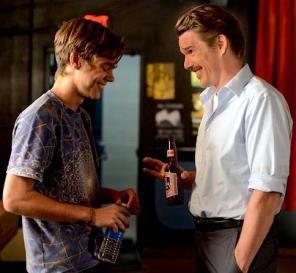 Some will find him irritating as he progresses through his high school years, again in the way the real-life variety of said teenagers are; others will just find it truthful. All of the acting feels incredibly ‘real’, to the point one just assumes it was all improvised. Apparently that’s not the case — according to Hawke, it was all scripted, with the exception of an amusing-with-hindsight scene in which Masons Sr and Jr discuss the potential for a Star Wars 7.
It’s only as the film comes to a close that some kind of sense of what it all signified comes in to focus. For one part, there’s Mason and his new college friend philosophising in the final scene: to paraphrase, “life isn’t about seizing the moment, it’s about the moment seizing you”. Put another way, all we have is now; however important it may be to learn from the past and plan for the future, they’re gone and not coming back or ahead and going to happen anyway — if you don’t appreciate now, it’ll all just disappear. I felt the more telling scene came a few minutes earlier, just before Mason Jr actually leaves for college: looking at her son about to head off on his own, Olivia breaks down, recalling the repetitiveness and transitory nature of her life — all the divorces, all the struggles to do right by her kids. It’s so much more meaningful because we’ve lived through it with her — we’ve seen it as just a string of moments too; we’ve noticed how it can seem repetitive. “I just thought there would be more,” she wails, echoing the sentiment of… all of us? I’d say if that moment doesn’t resonate for you, you must be one of the lucky ones.
Boyhood is unquestionably an achievement of filmmaking. The commitment to craft a story over such a long period of time is admirable; the skill with which it has been achieved is remarkable. The end result is one that won’t work for everyone.  If you like your fiction to be about something exceptional or extraordinary, Boyhood is decidedly the opposite. Linklater has put something of the universality of childhood on screen, however. In no way can the life of Mason Jr be interpreted as a median of everyone’s experiences, but that so much within that is so relatable shows that, however different things may appear, there’s an awful lot that’s the same.
Even more importantly, the film conveys the briefness of our lives. It’s like a film adaptation of Allen Saunders’ quote, made famous by John Lennon: “Life is what happens to us while we are making other plans”. You have to watch out for where your time’s going, or twelve years can race by in under three hours.
The 87th Academy Awards are on Sky Movies Oscars tonight, with red carpet coverage from 11:30pm and the awards ceremony starting at 1:30am.

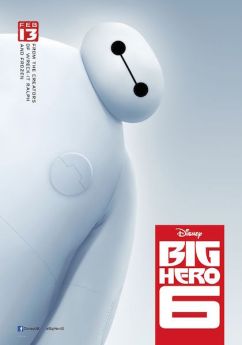 This year’s Best Animated Film Oscar winner is not this year’s best animated film. Not by a long stroke. What it is is one great character, one great emotional plot/subplot, and a lot of stuff that feels like every other big-budget action-orientated CGI animation of the past few years. Most succinctly, this is little more than (as a reviewer on Letterboxd dubbed it) “How to Train Your Baymax”.
 The element that is an unequivocal success is Baymax. A soft robot — made of inflated vinyl so as to be genuinely huggable — he’s sweet, funny, and always entertaining. Memorable moments abound, in particular a sequence where his batteries run low, and his interpretation of a fist-bump (a recording booth improvisation by Adsit that was worked into the film). The movie truly comes alive whenever he’s on screen, but conversely loses some magic whenever he’s pushed into the background.
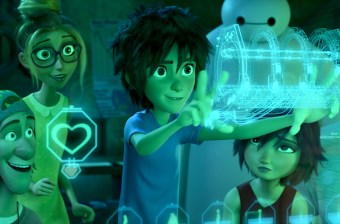 Big Hero 6 is by no means a bad film. It will certainly entertain its target age group, especially if they haven’t seen the other CG spectacles it nabs from. That aside, the entire thing is worth a look purely for Baymax and a few stand out moments — all of them involving the aforementioned vinyl robot, of course. Otherwise, it’s pretty by-the-book. The five-star-level praise it’s attracted in some quarters is completely unwarranted.

 Argo is probably the most traditionally entertaining from 2012’s crop of Best Picture nominees. I know a lot of people awarded that honour to
 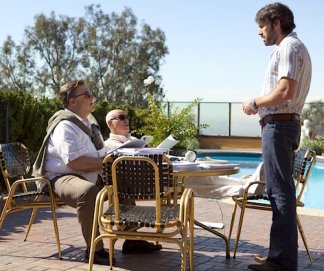 This is where we get the humour, mainly directed at the movie industry. Some say this is why it won the big awards: Hollywood loves a look at itself, and here it’s both satirical (“So you want to come to Hollywood, act like a big shot, without actually doing anything? You’ll fit right in!”) and congratulatory — after all, the plan goes ahead and so (spoilers) Hollywood saves the day. The film creates just the right balance between taking the mick out of Hollywood and bigging-up its role in saving some lives, while also not spending too long on this section that we forget the perilous situation on the other side of the world. After all, once all the fun and games in Tinseltown are over, it’s back to the serious business in Iran.
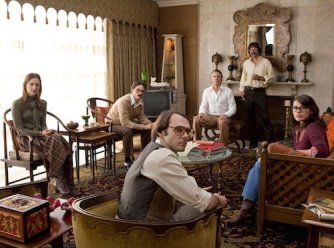 That’s just artistic licence, really — it’s not as if these people were safe, they just had a damn good plan; and, as I said, you need a dramatic ending for a thriller. However, all the “chasing them down the runaway” stuff is a bit full-on and action-movie-ish. It’s not even accurate to how it would go in real life, if it had happened, because the militia’s cars would need to be travelling phenomenally fast to keep up with the plane, and they aren’t seen to be affected by its jets either. For me, the rest of the climax — the guards checking the ‘crew’ out, phoning the LA office, later running up to the control tower, etc — all works; assuming you accept the film is still a Hollywood thriller, not a fact-bound documentary, and so needs a suitably dramatic climax. It’s a shame they didn’t leave it at that, but not a deal breaker either.
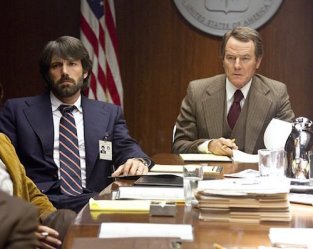 That was in the ’70s — adjusted for inflation, it comes to over $350 million. For a drama about a couple divorcing and arguing over custody of their kid! Today, it’d be lucky to earn a tenth of that, even if it was up for Oscars. But I digress.) It’s a surprising Oscar pick these days because it’s a genuinely enjoyable watch, rather than a gruelling look at something-or-other serious.
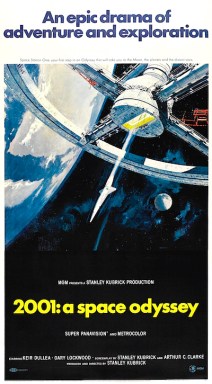 As
As 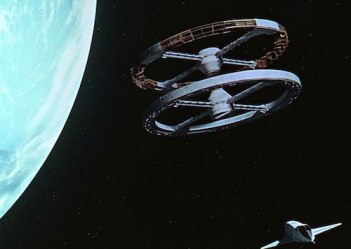 with this kind of pace and uncertainty would be unthinkable, but I guess audiences were a little more mature in the Good Old Days. Even then, Kubrick cut 19 minutes after the film’s premiere in order to “speed up the pacing”. Maybe he succeeded, but no one’s going to be calling this a fast-paced thrillride any time soon.
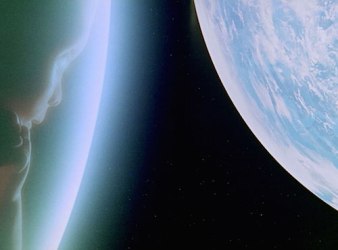 Technically, then, 2001 is undeniably stunning. Thematically, though… what’s it all about? What does it mean? Author Arthur C. Clarke once said that “if you understand 2001 completely, we failed. We wanted to raise far more questions than we answered.” Some find such goals unsatisfying, especially when it comes to storytelling, but the very spirit of space exploration, of science, is to keep asking questions that don’t necessarily have answers. Of course, the ending is actually very easy to explain: the evil alien monolith kidnaps Dave, ages him to death, then mutates him into a giant Space Foetus, which it sends back to Earth. Why they didn’t make 2002: Invasion of the Giant Space Baby, I don’t know. Who doesn’t want to see that movie?
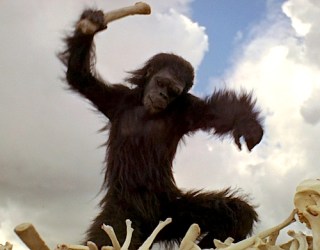 and almost immediately use them to kill, first a beast for food, then another ape for territory. Then, in a literal split second, we jump forward millennia, as that simple tool turns into a nuclear weapon drifting in orbit — the entirety of human technological innovation summed up in a single cut.
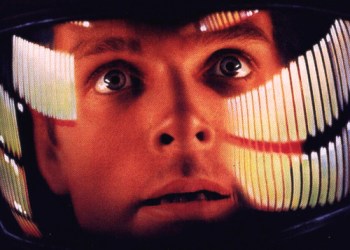 In the end, I think 2001 is a film that’s very easy to admire, for all sorts of reasons, but to enjoy in the traditional sense of “enjoyment”? Surely it’s far too removed, too obtuse, too joyless, for that? Some people will like those qualities, of course, and all power to them. For me, 2001 is a film to be impressed, even awed, by; but not one to love.
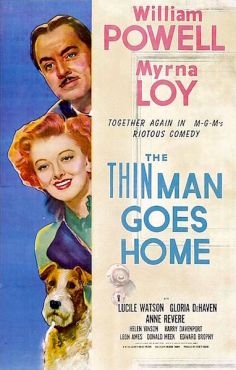 After four glamorous adventures, high-living sleuths Nick and Nora Charles (William Powell and Myrna Loy) head to small-town America to visit his parents (Harry Davenport and Lucile Watson), and naturally find themselves embroiled in a murder plot.
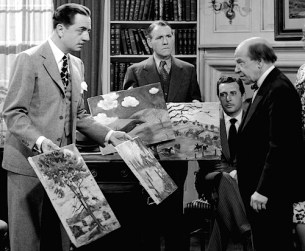 then no one would’ve been murdered. (Probably.)
 Twelve people sit around in two rooms and talk for an hour and a half in more or less real time — sounds like a recipe for dull pretension, and yet 12 Angry Men is anything but. In fact, it’s probably one of the most gripping thrillers ever made.
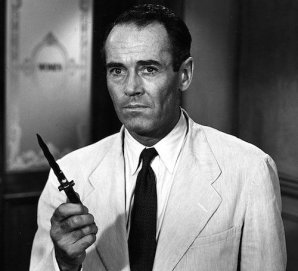 Slowly, steadily, surely, Fonda’s juror leads a recap of the evidence, analysing it, picking it apart, challenging presumptions and suppositions. Gradually, other jury members begin to be won over. This could be trite — of course our hero has to start convincing the others — but this is where the writing and cast shine again, because even men who seemed unswayable have their minds changed in a plausible fashion. Even then, the outcome rarely seems certain, each victory hard won, so that the film holds you rapt, desperate for sense and reason to prevail. There are moments of tension which may literally push you to the edge of your seat; moments of exultant success which may elicit an exclamation of approval similar to a point scored in a sports match.
 For all that 12 Angry Men seems to show justice being served in the face of adversity, what it actually shows is justice being served thanks to blind luck: if Juror Eight had been a weaker-willed man, or another who was just as prejudiced as his eleven compatriots, then the debate would never have occurred, the teenager condemned to death in the blink of an eye. What are the odds on every jury room containing a Henry Fonda? I don’t fancy them myself.
 Despite looking like a 100-minute toy commercial with an irritating theme song, plus a moral message about nonconformity that seems like it’ll get bungled (but doesn’t), The Lego Movie is so much more — and better — than that.
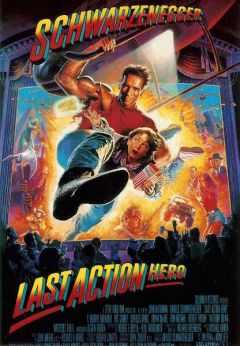 The first film to be advertised in space (
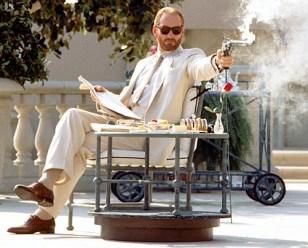 That said, it’s probably a good thing this isn’t a whole movie of “fictional characters in the real world” — you can imagine how that would play out; all the predictable “fish out of water” hijinks. However, at just over two hours, this isn’t a short film, and cutting out some of the middle wouldn’t have hurt.
 The first manned mission to Mars is reaching the end of its six-month tour. As they count down the final hours, battling a dust storm and its attendant power outages and communications blackouts, one of the team secretly discovers bacterial life on the surface. Attempting to recover further samples, a sink hole opens beneath him. When the rest of the crew try to recover his body, it’s not there. Then he arrives back at base… only, he’s not quite himself anymore…
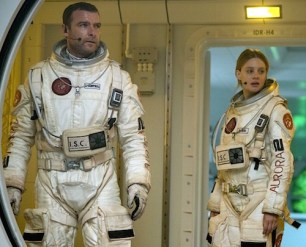 These faults persist despite the best efforts of a quality cast, particularly Romola Garai as (in functional terms) the capable sidekick, and Olivia Williams as the bitch whose heartless practicality becomes an asset when the going gets tough. First-time feature director Ruairí Robinson assembled his cast on the principle of “people who aren’t normally in sci-fi movies”, and that does feed in to the sense of realism. It also looks great, the production, costume and effects designs gelling to create a believable Mars mission, all in spite of a tiny budget (funded by the BFI and the Irish Film Board, it had about a tenth of Gravity’s budget, for example). Credit, too, to cinematographer Robbie Ryan for lensing the Martian surface convincingly (it’s actually the Jordanian desert). The editing may descend into fast-cut blurriness during action scenes — only emphasised by Max Richter’s predictably derivative horror movie score — but during calmer moments the film looks very good.
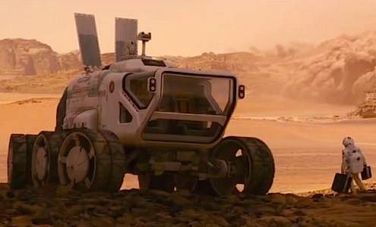 and was more sure of its tone. There may be elements to commend The Last Days of Mars in this comparison (the much bigger budget pays off in the scope of the visuals, of course), but as a story and viewing experience, The Waters of Mars wins hands down.
 This time it’s not personal for Nick and Nora Charles (the joyous William Powell and Myrna Loy), as they stumble upon the murder of a race-fixing jockey and the subsequent killing of a corrupt journalist… and then one of their friends (Barry Nelson, aka
  As murder mysteries go, the Thin Man series tends to offer plots that are somewhere between perfunctory and over-complicated to the point of being unsolvable, and Shadow is a typical example. But that doesn’t matter a jot, because the story’s abundance of incident keeps things moving, and the real entertainment value lies in the comedy chops of the three leads: Powell, Loy, and, of course, Asta the dog.
 100Films.co.uk