Michele at Timeless Hollywood has kindly nominated me for a Liebster Award (or, as spellcheck insists on rendering it, “Leicester Award”).
For those not in the know, a Liebster Award is bestowed from blogger to blogger as a kind of peer appreciation. There are actually a bunch of variations — this person took it upon themselves to write some official rules. Not entirely sure what makes them qualified to do such a thing, but they did it anyway, and now that post sits right at the top of the Google search results, so I guess it worked for them.
Anyway, The Rules:
- Answer my nominator’s 11 questions;
- Nominate 11 additional bloggers;
- Ask 11 questions to my nominees;
- Share 11 additional facts about myself.
I’m not sure why it has so much to do with the number 11. Having seen various other bloggers complete the award, #2 seems to be particularly flexible in this regard. I suspect I shall be too.
But first! 11 questions must be answered, in my usual longwinded style:
1) What onscreen couple has the best chemistry?
A relatively recent discovery for me, but I’m going to go with William Powell and Myrna Loy in the Thin Man films.
2) If one lost film could be found, what would it be?
Would it be a cheat to pick some Doctor Who episodes? It would, wouldn’t it? Especially as Who is in a better state than silent cinema, where up 75-90% of films are estimated to be lost. Of course, there’s Hitchcock’s second feature, The Mountain Eagle, and the first British Sherlock Holmes film, an adaptation of A Study in Scarlet (which always seems to be given short shrift when it’s filmed,  so I wouldn’t hold much hope of that being any better), but the film that most intrigued me when looking into this was from the ’70s: #10 on this list, Patrick McGoohan’s first (and only) film as director, Catch My Soul. Turns out it’s since been found, though the chances of anyone else seeing it look shaky. Still, it does exist, so I go back to the first two.
3) If you could choose one silent comedian between Charlie Chaplin, Buster Keaton, Harold Lloyd or Roscoe “Fatty” Arbuckle, who is your favorite and why?
I confess, I haven’t seen enough of any for this to be a fair contest. From what I have seen, however, The Great Dictator was my favourite work, so I’ll go for Chaplin. (Also for compatriotism.)
4) Who is your favorite swashbuckler?
Does someone who usually (always?) played the villain in such movies count? Basil Rathbone, arguably best known for his portrayal of Sherlock Holmes, was a skilled fencer in real life, shown to great effect in The Adventures of Robin Hood, The Mark of Zorro, The Court Jester (even if that mostly isn’t him), and a few other films that I really must see.
5) What is your favorite biography or autobiography?
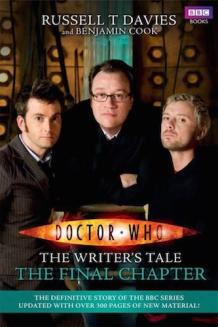 It’s not an autobiography per se, but Doctor Who: The Writer’s Tale by Russell T Davies and Benjamin Cook kind of is, as it chronicles Davies’ experience running Doctor Who (and its spin-offs) in 2008 to 2010. You may think “I’m not a Doctor Who fan, this has no relevance to me,” but you’d be wrong. Anyone who’s had a desire to write in a professional capacity, especially for the screen, must read this book — it’s the experience of writing for TV and running a TV show, just with Doctor Who as a case study. And it’s immensely readable, making its surprising length (particularly in the extended The Final Chapter paperback version — length-wise, it’s literally a whole extra book bundled in) fly by.
6) Have you ever participated in a blogathon and if so what did you enjoy most about it?
I’ve participated in a few now (three, to be precise). Each time, I found the knowledge that I was likely exposing my writing to a much wider readership than normal led me to up my game in terms of the research and thought I put into my posts (and consequently their length, too). Which is not to say I don’t just do that anyway (sometimes), but there was a kind of pressure to do well. Good pressure.
7) If you could buy any memorabilia, what would it be?
Let’s be properly extravagant and say a James Bond Aston Martin DB5. I’m not even a ‘car person’, but c’mon, the DB5!
8) In your opinion, who is the biggest pioneer in the film industry (past or present)?
I mean, where do you begin? But here’s a slightly more obscure one: Garrett Brown. Who? The inventor of the Steadicam, that’s who. It looks like the Steadicam might be about to be replaced by the even greater flexibility afford by drones, but still, it was (is) awesome while it lasted.
9) What decade had the best films?
I’m quite fond of all eras of film, so I decided to be empirical about this: I looked at my list of favourite movies and totted up the decades. Turns out the 2000s have it, just pipping the 1990s. Probably says more about when I grew up than anything else, mind.
10) Is there any actor/actress you feel hasn’t gotten the recognition they deserve?
Maybe it’s just because I’m more immersed in modern film, but no one ever seems to talk about Ray Milland. I discovered him for myself through films like Ministry of Fear, The Thief and The Lost Weekend, and I really ought to seek out more of his work because he’s great in all of those.
11) What actor/actress should receive an Oscar that hasn’t?
Michael “The Queen / Frost/Nixon / The Damned United / etc” Sheen.
Next! 11 5 bloggers shall be nominated. (I’m not stingy, I’d do more, but a bunch of blogs I thought of just had one.) Anyway, in alphabetical order:
(You’ll notice a fair degree of crossover with blogs I highlighted in my June update. Not a coincidence.)
Next! The 11 questions they must answer:
1) Have you ever walked out of a cinema part way through a film?
2) Favourite current TV series?
3) Favourite silent film?
4) Favourite David Fincher film?
5) Favourite film soundtrack?
6) Who’s the best James Bond?
7) Which is the longest-running film series that you’ve seen every movie in?
8) Which film have you watched the most?
9) Which film do you love that everybody else hates?
10) Is there a line from a film that you use a lot in everyday life?
11) How much wood would a woodchuck chuck if woodchuck would chuck wood?
And finally! 11 random facts about my good self:
1) I am currently mostly listening to Muse’s Drones and Nightwish’s Endless Forms Most Beautiful.
2) I have two dogs, Rory and Poppy, both rescues.
3) Part of the reason for adopting Poppy was to help with the transition when Rory… you know… because he’d been on his last legs for years. 18 months later, he’s still going, bless ‘im.
4) I kind of work on the principle that my personal life has little to do with my film-related blogging (which, in many ways, is an invalid stance, but that’s a whole other debate), so this is proving tricky…
5) I get kind of ‘attached’ to sayings — not deliberately, but I think I use certain phrases a lot, even if just for a while. Maybe we all do? I’m sure there are plenty of examples in my reviewing (there are certainly words I revert to often); in real life, “there’s a first time for everything” is regularly applicable and “better safe than sorry” is virtually my motto. Whether I listen to it or not is another matter.
6) I make lots of lists, about all sorts — mainly films, DVDs and Blu-rays, especially ones to be watched. Each time I watch a film for this blog, it has to be added to, removed from, or rated on up to 21 separate lists and websites.
7) To make sure I don’t miss any, I have a list of those lists.
8) I am inordinately chuffed with the top menu on this blog, which I rebuilt t’other week to include most of my categories and streamline the review lists. Check out Film Noir (under Categories > Genres) in particular. Sub-submenus!
9) I love pizza. I don’t know if this is attributable to a childhood love of Teenage Mutant Ninja Turtles or just because it’s awesome. Anyway, I’ve been trying to eat more healthily and haven’t had a pizza for five months. Five months. You’re driving me back towards pizza, Liebster Facts.
10) Most people my age and nationality call it Teenage Mutant Hero Turtles, because that’s how they rebranded it over here (I really don’t know what the British / the BBFC had against ninjas and their weaponry). It’s always been Ninja to me because, at the time I was into Turtles, I spent nearly two years living in Saudi Arabia. (Who knew that fact was going somewhere broadly interesting, right?) (Obviously, they used the correct title in Saudi.)
11) I have no idea what a woodchuck is.*
So there you go. Thanks again to Michele of Timeless Hollywood, and I look forward to reading my nominees’ answers.
* I wrote that before I looked up the picture above, so this fact is now a lie.

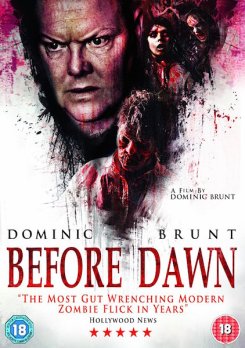 Directed by Emmerdale actor and zombie aficionado Dominic Brunt (who also stars), from a screenplay by Emmerdale writer Mark Illis based on a story by Brunt’s wife, Joanne Mitchell (who also co-stars), Before Dawn is a mash-up between remote-farmhouse zombie horror and kitchen-sink relationship drama.
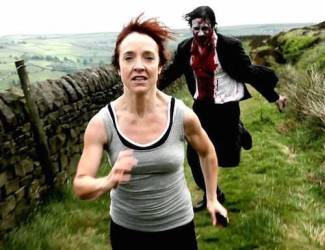 Amateurish production values often let the side down. I don’t think Brunt’s direction would be too bad were it not for the cheap camerawork, although the action scenes are overrun with ShakyCam. There are some very good bits late on: the developments that come as a result of a stranger’s arrival; a phone call with the kids; perhaps even the very end, which is a bold climax.
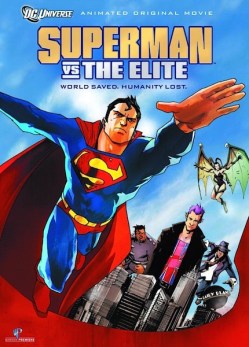 Adapted from acclaimed comic book story What’s So Funny About Truth, Justice & the American Way?, this DC animated movie sees the methods and morals of Superman (George Newbern) being questioned by the public and authorities alike when a super-villain escapes for the umpteenth time and kills more innocent bystanders. In the incident’s wake, a new super-powered team emerges — the titular Elite, led by Manchester Black (Robin Atkin Downes) — and their preparedness to execute criminals is met with great popularity around the world. How much humanity is humanity willing to sacrifice in the pursuit of conflict resolution? Are Superman’s high morals a thing of the past?
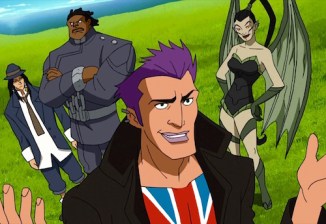 I assumed they were being faithful to a comic that hails from the ’80s, but it was actually published in 2001. It’s like Brit Pop never happened.
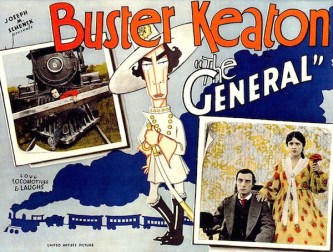 Poorly reviewed and a box office flop on its release, Buster Keaton’s The General has undergone a stark re-evaluation since: the United States National Film Registry deemed it so “culturally, historically, or aesthetically significant” that it was added to the registry in its first year, alongside the likes of
 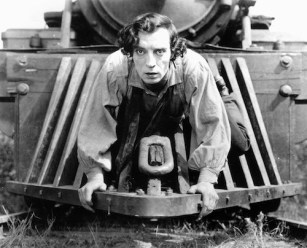 It was reportedly a very expensive film, and it looks it: there are tonnes of extras, not to mention elaborate choreography… of trains! Who knew old steam trains were so agile? There’s impressive physicality on display from Keaton, but the well-timed movements of those big old locomotives are quite extraordinary, especially for the era (I mean, for the past couple of decades you’ve been able to do pretty much anything thanks to a spot of computer-controlled what-have-you. Not much of that going on in the 1920s.)





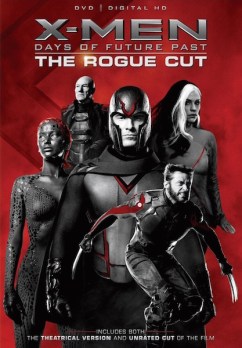 One of the big stories in the run-up to this fifth X-Men film’s release last year (my previous review is
 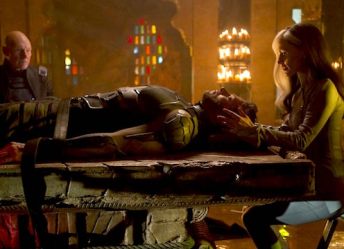 (though the theatrical cut only has 40 chapters, so I’m not entirely sure how that pans out). Most must be teeny extensions, however, and I look forward to
 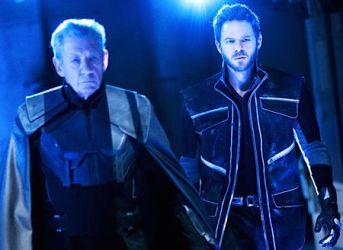 The Rogue Cut is worth seeing for anyone who enjoyed the theatrical version — and, in terms of a copy to own, the Blu-ray comes with both cuts and more special features (though it loses all the extras from the first release, including a few more deleted scenes) — but, unless you’re a huge fan of Rogue or Iceman, it’s not essential.
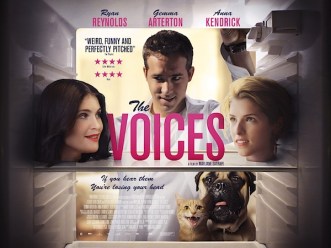 Jerry (Ryan Reynolds) is a nice guy living in the small town of Milton, working in shipping at Milton Fixtures and Fawcetts, where he fancies the English girl in accounts, Fiona (Gemma Arterton), and doesn’t notice how much another girl in accounts, Lisa (Anna Kendrick), likes him. He also talks to his dog, Bosco, and cat, Mr Whiskers, and they talk back. That’s why his psychiatrist (Jacki Weaver) encourages him to take his medication, but he doesn’t. When he accidentally murders Fiona (as you do), it’s Mr Whiskers that encourages him to cover up the crime.
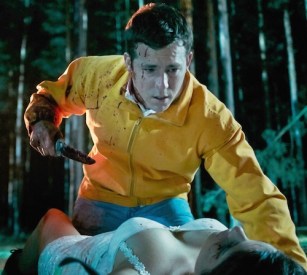 what happened in his past to make him this way (flashbacks and hints are scattered, leading to an eventual reveal), and how will it all end for him? We’re conflicted here, because he’s a nice guy who we like, but he’s also a murderer, in horrific fashion, and so surely justice is due. Screenwriter Michael R. Perry and director Marjane Satrapi (of
 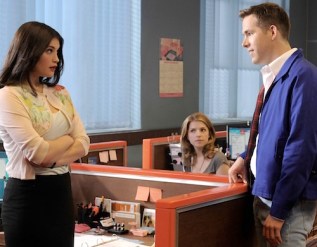 Able support comes in the form of three women in Jerry’s life. Gemma Arterton has a ball, first as a bit of a bitch, then as a ludicrously-chipper super-English talking head. Anna Kendrick, meanwhile, is sweet and likeable, and while we may be on Jerry’ side when he accidentally slides his knife into Fiona, we’re keen for him not to make the same mistake with Lisa. Whether he does or not is where the real battle for his sanity lies. The third is Jacki Weaver’s psychiatrist, who is central to the climax but also has the least to do of all three, really. Never mind.
 The Voices is the kind of film you say is “not for everyone”, which are often the best kind if they are for you. For me, it wasn’t quite funny enough — I’d’ve liked more of the dog and cat, who get the lion’s share of the best material. I also felt that Jerry’s backstory, the reasons for why he is how he is and does what he does, weren’t explored quite enough. The Blu-ray’s deleted scenes hint at more of this, particularly with an alternate climax, which was perhaps cut because there was too little material specifically building up to it. Rather than losing that ending, it would’ve been better to keep it and find more scenes that contributed to it.
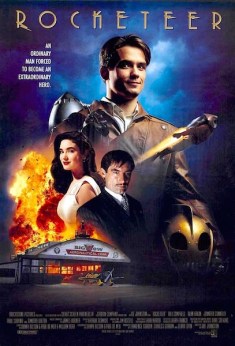 Based on an ’80s-created superhero modelled on the matinee serials of the ’30s and ’40s, The Rocketeer sets its scene in 1938, when stunt pilot Cliff Secord (Billy Campbell) winds up in possession of an experimental rocket pack. Initially donning it as part of the stunt show, when Cliff uses it to rescue another pilot he, a) attracts the attention of the hoods who originally stole it, and b) discovers his true calling as a hero, etc. Throw in a love interest (Jennifer Connelly) who’s a Hollywood extra with connections to the swashbuckling film star (Timothy Dalton) who’s really behind the theft, and you’ve got yourself an adventure!
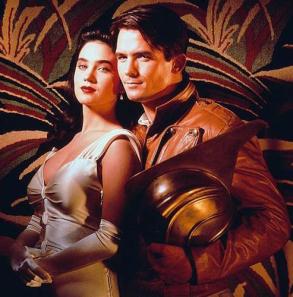 We all know effects alone do not make a good movie, but equally trying to make an effects-y movie when you can’t achieve said effects is a fool’s errand. Fortunately there’s some other derring-do to make up for it, and the climax atop a zeppelin isn’t at all bad.
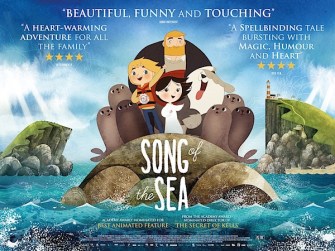 The second feature from director Tomm Moore and his pan-European team of animators (after the excellent, Oscar-nominated
 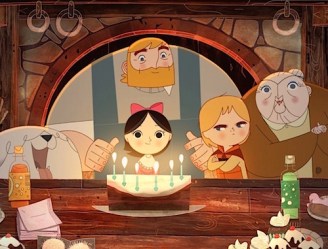 but the motivator for that is clearly resentment towards her for appearing the night his beloved mother left. Their father, too, is hamstrung by his grief, struggling to move on from his wife’s disappearance and fully engage with the world. His kids are his only connection, Saoirse in particular, but his mother makes him realise that clinging to them is damaging their lives too… or is it?
 all are factors that can, and do, elevate the film. Don’t get me wrong: this is a cut above your average animated adventure. I just didn’t enjoy it as much as The Secret of Kells.
 For more positives, Song of the Sea’s animation and design is at least as strong as it was in Moore’s previous film. There’s the ‘house style’ flattened, animated storybook look; a description which could sound like criticism but absolutely is not. Some very beautiful scenes are evoked, meaning that at the very least there’s always imagery to tide you over. I’d list some favourites, but we’d be talking about most of the film. That said, the depiction of a run-down, smoggy Dublin stands out as something different from the countryside idylls of Kells and the rest of the locales in Song of the Sea, but it’s not exactly “beautiful”. Rather, look to the island home of our heroes, a tall rock surrounded by the blue sea; the home of the glowing-eyed long-haired Seanachai (the moment when it suddenly turns around in the montage after Saoirse uses her coat for the first time is my favourite shot in the film, a little sliver of fantasy imagery that magnificently teases what’s to come); or the small sanctuary surrounded by a field of stinging nettles — again, a kind of gentle, on-the-edge-of-the-real-world fantasy that quite appeals to me. The fact the countryside is littered with half-hidden stone figures, which we know to be frozen magical begins, is another nice touch; especially as they’re often surrounded by human litter, the analogy (as I see it) being both that people exist around them but don’t even see them, and also that, presumably through our modern disbelief, we’ve thrown these legends out with our trash.
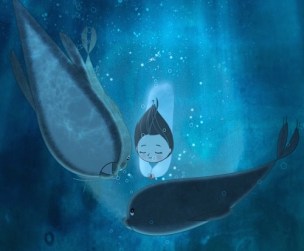 Even as I write, I’m talking myself round to liking Song of the Sea even more than I did on first viewing — and that was quite a lot, albeit coloured by my perception that I didn’t like it as much as The Secret of Kells. If you enjoyed Moore’s earlier film, this unquestionably merits seeking out (if you haven’t already, of course; I mean, I did). If you haven’t seen Kells, well, you’ve so far missed a treat; and now you’re missing two.
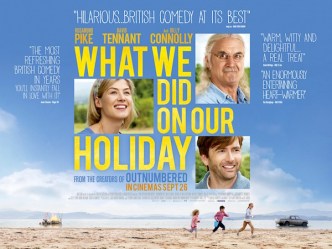 “
“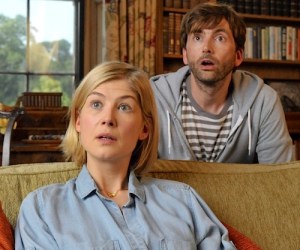 For some, the shift may scupper things. For me, it only makes it better: the story’s pathos and emotion are brought into focus, and the humour becomes all the funnier for punching in as tonal relief. It often seems to me that movies struggle to stay amusing for a full feature running time (there’s surely a reason all TV comedy comes in 30 minute chunks), but this story allows Hamilton and Jenkin to spread the laughs out a little without them feeling few or far between.
 including the likes of Ben Miller, Amelia Bullmore (getting the best subplot), Annette Crosbie and Celia Imrie. The real grown-up star, however, is Connolly. You get the sense he’s as scriptless as the kids are, improvising away with a mischievous twinkle in his eye, like some kind of idealised fun granddad. The scenes with just him and the kids are certainly one of the highlights, among the most amusing and the most affecting.
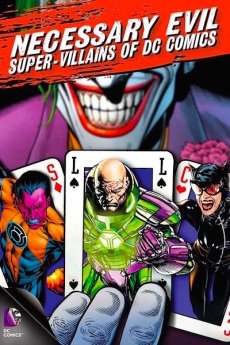 Christopher Lee narrates as a bunch of talking heads (writers, actors, psychologists) discuss the titular. The topics are quite universal — the psychological underpinnings apply not just to DC, not even just to comics, but to all fiction. Side effect: DC’s villains don’t always look so special.
 100Films.co.uk