It’s a month of mixed emotions here at 100 Films, not least thanks to it being the earliest I’ve ever made it to #100.
But before even that, this month’s menu:


This month I was, happily, faced with the choice about what should be 2015’s #100. Fundamentally this doesn’t matter, of course — it’s just another thing watched, which just so happens to be the 100th new thing I’ve watched since a point in time we have decided marks the beginning of a new time-cycle (…just to suck all the romance out of it, there). Given the aim and title of this blog, however, of course #100 takes on significance. In a last-week-of-December scramble-to-the-finish situation, which film is #100 doesn’t matter so much as the very existence of a #100 does; in the more leisurely situation of reaching that point in July, however, there’s time to reflect and consider what film will join the likes of Citizen Kane, The Hurt Locker and Lawrence of Arabia in the 100 Films #100 Club. And I mention this in the WDYMYHS section, rather than Viewing Notes or Analysis or something, because the natural choice for such an accolade seemed to be a WDYMYHS film. So from the list of what was left, I selected the movie I felt most likely (based on its reputation and so on and so forth) to chime with my own tastes — the movie I most felt ‘should’ wind up being a personal favourite.
But first — I’m behind on WDYMYHS, so have been intending to watch multiple selections within a month for a while now, and this month I finally managed it. So before the glory of #100, another WDYMYHS graced my list at #97: John Carpenter’s The Thing. I thought there was a lot to like, but I didn’t love it.
Then on to #100 — the movie I felt most likely to love, that I should find a personal favourite. I have to say, it’s the kind of film I started WDYMYHS for — the very point of the exercise is to make me watch films like this; ones I’ve been meaning to for years, have been led to believe that I will love, but for whatever reason haven’t had a pressing enough reason to get round to. So that’s what led to Terry Gilliam’s Brazil being 2015’s #100. Thank goodness, it lived up to the hype. Naturally I watched the “final cut” he created for Criterion (is any other version readily available these days? Apart from the “avoid except for academic interest” “Love Conquers All” version Criterion bundle in, that is), which I might think is a little on the long side, but, well, I still greatly enjoyed it.
Anyway, that’s 100 done. Hurrah! And with that said, of course July wasn’t just about those two films…

#91 Returning to Jedi (2007)
#92 Necessary Evil: Super-Villains of DC Comics (2013)
#93 Scanners (1981)
#94 Song of the Sea (2014)
#95 The Death of “Superman Lives”: What Happened? (2015)
#96 The Voices (2014)
 #96a X-Men: Days of Future Past – The Rogue Cut (2014/2015)
#97 The Thing (1982)
#98 Lilo & Stitch (2002)
#99 TMNT (2007)
#100 Brazil (1985)
#101 Salvation Boulevard (2011)
#102 RED 2 (2013)

- I backed The Death of “Superman Lives” documentary on Kickstarter a couple of years ago now and have been patiently waiting for it to turn up ever since, so it was kinda weird when half the internet (not to mention Proper Film Magazines ‘n’ that) was talking about it a few weeks ago. At some point I’ll post a proper review, but if you’re interested in its topic then it’s definitely worth a look.
- Utterly meaningless, but it’s also the first film I’ve watched this year that’s title begins with ‘D’. Odd for such a common letter. (The only other unrepresented letters at this point are Q, U, Y and Z. And X, technically, as Days of Future Past isn’t on the main list.)

July 2015 was a month of mixed results. On the one hand, watching 12 new films ticks a number of boxes: it smashes July’s low average (previously 5.86, now 6.63); as that might indicate, it’s also the highest July ever; it continues my at-least-10-per-month-all-year goal; and it’s the ninth month in a row to show an increase year-on-year.
On the other hand, it’s the lowest-tallying month of 2015 so far, and only the second month to fall short of the yearly average (which still rounds up to 15). That said, not included is that I spent time this month re-watching the Lord of the Rings trilogy, in its extended form to boot. Add that to The Rogue Cut and you get 16 films for the month — much more normal (well, normal for 2015). So, y’know, swings and roundabouts.
And, as mentioned, I made it to #100 — that excuses plenty in my book. It’s the earliest I’ve ever reached it, the previous best being September 9th. That was all the way back in my first year, 2007, making it perhaps the only record 2014 didn’t claim. This year has been rather good by my standards, so it’s one I don’t foresee breaking again. I mean, if I had five consecutive best-ever months (i.e. better than I’ve ever done, x5) then I could squeeze it in by the end of May. Well, you never know.
Over in prediction corner, if I can keep up my ten-minimum for another five months, as desired, 2015 will end no lower than #152. Remember, my previous best is 136, so that alone would leave me feeling pretty darn chuffed. Bolder estimates: my pace so far has me reaching #175; if I could consistently reclaim the 2015 mode average (which is 15), I’d hit #177; if I can manage to continue the year-on-year monthly increases (an increasingly tough task, as the end of 2014 was so strong), I get as far as #178. A finish anywhere northwards of #170 is a 25% improvement on my previous best, so that’d be more than grand.
 The 2nd Monthly Arbitrary Awards
 Favourite Film of the Month
A few films this month were good but didn’t quite live up to my expectations, which makes this feel like a pretty clear choice: it’s Brazil again.
Least Favourite Film of the Month
It’s taken me eight years to get round to it, so I clearly can’t’ve been that fussed, but I really wanted to enjoy TMNT. I didn’t not enjoy it, per se, but it wasn’t all I wanted it to be either.
Best Portrayal of a Dog, Cat, Deer, Fish and Bunny Monkey
Ryan Reynolds, your superhero sins are forgiven. (Also, the Comic-Con Deadpool trailer looked great, so that too.)
Most Evil Alien
The Thing from The Thing, or Stitch from Lilo & Stitch? Stitch from Lilo & Stitch, or the Thing from The Thing? Oh, it’s a tough call! Ok, Stitch does redeem himself (itself?), so I guess the Thing edges it.
The Audience Award for Most-Viewed New Post of the Month
This award goes to another award — my Liebster Award! Maybe y’all want to know about me more than I thought you did.



Just a couple of weeks ago, I commented here on the enduringness of our elderly dog, Rory. Sadly, not very long after that post, his long-standing health problems meant it was time for us to choose to say goodbye.
I know non-pet-owners often don’t ‘get it’ when a beloved pet passes away — I grew up in a very non-pet-y home, so I’ve been that person in the past. However, it’s a terrible wrench, even when it’s been inevitable for a while and you know you made the right decision.
Rory was a rescue, found as a stray, with enough health issues that we’ve been taking him to the vet essentially non-stop since we got him. He certainly went through the ringer even with us, starting with a dreadful skin condition, which eventually cleared up entirely after years of uniquely-formulated treatment. He lost the tip of one ear in an assault by another dog, and had his neck punctured in another (both encounters entirely unprovoked!) Then there was the more regular old-age ailment of arthritis; and, two-and-a-half years ago, he slipped a disc and his gall bladder packed up at the same time, leading to a tense Christmas/New Year spent at a specialist vet hospital (and to me not making it to 100 films in 2012).
Experienced owners in the family said they’d never seen a dog be so ill and pull back, but pull back he did, and for another couple of years to boot. He’d been judged too old and fragile to endure a back operation, so he lived with that slipped disc for those years, on pain killers of course, but he kept on. He was a little fighter, right to the end. In his last week, his spine problems finally reached a point where he could only stand for short periods intermittently, even for his beloved food, and that really meant it was time.
We’ll never know what happened to Rory in the years before he knew us, but — in spite of his catalogue of woes — we gave him six years, one month and one day of loving happiness. I don’t believe in an afterlife, but if there is one, I do believe dogs are far more deserving of it than any of us humans. I’m sure Rory would enjoy being able to run free again, in between eating copious amounts of bacon and sausage. It breaks my heart that I’ll never see him again, but at least he’s at peace and out of pain.
(“From around the blogosphere”, the list of 5, and so on, will all return next month.)

With the thrill of #100 passed, there’s a whole new level of excitement…
#1000 is coming.
The countdown begins imminently, as 2015’s #103 (i.e. the very next new film that I watch) will be the blog’s #991.
Expect banners, people.

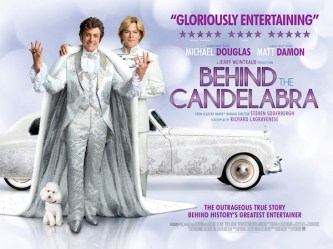 Steven Soderbergh’s supposed last-ever film (or, if you’re American, Steven Soderbergh’s first project after he supposedly quit film) is the story of Scott Thorson (Matt Damon), a young bisexual man in the ’70s who encounters famed flamboyant pianist Liberace (Michael Douglas) and ends up becoming his lover, which is just the start of a strange, tempestuous relationship.
 It looks great, too. The film, that is, not Rob Lowe’s face. The design teams have realised an excellent recreation of the period, which is then lensed with spot-on glossy cinematography by DP ‘Peter Andrews’. Occasionally the film moves outside that heightened, shiny world into places odder and grubbier, with one shot of Liberace peering over the door of a porn shop private video booth (really) that’s particularly striking.
 2013 Academy Awards
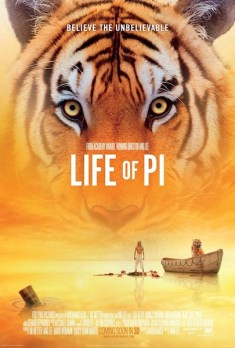 “Unfilmable” — now there’s an adjective you don’t hear tossed about so much these days. For a long time it seemed like it was all the rage to label novels “unfilmable”, but at this point too many ‘unfilmable’ novels have been filmed, and the wonders of CGI have put paid to anything ever again being unfilmable for practical or visual reasons. It may still be an apposite descriptor for works that feature very literary storytelling, though if you can render something like the subjective and unreliable narrator of
  but because of almost-indefinable features of each shot’s crispness, its depth of field, even the compositions. It absolutely works in 2D, and it didn’t leave me longing for 3D in quite the same way as something like the swooping aerial sequences of
 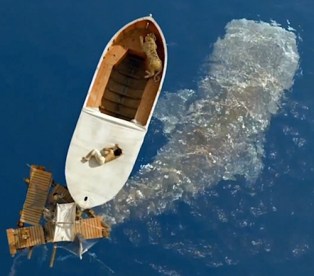 Later, the 4:3 “book cover” shot is just pure indulgence. There’s no reason not to just have empty sea to the left and right of frame, and the “it’s emulating the book cover!” reason/excuse doesn’t come close to passing muster simply because book covers aren’t 4:3. In both cases, then, what was intended to be striking or clever or innovative or in some way effective, I guess, comes across as pointless and distracting and pretentious.
 Reading around a little online, it seems that some people have interpreted the film’s message as being a defence of/justification for/persuasion towards religious faith, and hate it for that. This interests me, because I — coming, I suspect, from a similar perspective on religion — read it as a subtle condemnation of religious stories. Actually, not a condemnation, but a tacit acceptance of the fact that such stories are a nice fairytale, but not the truth. To put it another way, I took the message to be (more or less) that religion is an obvious fiction which people choose to believe because it’s a nicer story than the more plausible alternative, neither of which are provable. I think some focus on the point that the journalist hearing Pi’s story is told it will make him believe in God, and, at the end, the journalist seems to accept that it does. I don’t think that’s the film’s contention, though; I think the film is, in a way, explaining why people believe in God. Or maybe there are just no easy answers.
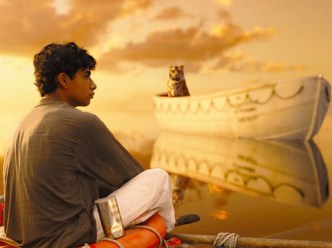 I found Life of Pi to be a little bit of a mixed bag, on the whole, where moments of transcendent wonder-of-cinema beauty rub up against instances of thumb-twiddling; where insightful or emotional revelations rub shoulders with pretentious longueurs. There is much to admire, but there are also parts to endure. The balance of reception lies in its favour, but while some love it unequivocally, a fair number seem to despise it with near-equal fervour. Either way, it’s definitely a film worth watching, and in the best possible quality you can manage, too. It also made me want to read the book, which for a movie I wasn’t even sure how much I liked is certainly an unusual, but positive, accomplishment.
 James Woods is the owner of a trash TV station who’ll do pretty much anything for ratings. His hunt for the next ‘big’ thing leads him to come across the signal for a channel that shows just one bizarre, disturbing programme. Obsessed with finding out the truth behind it, he gets suckered in to a conspiracy that blurs the line between reality and imagination.
 I guess for some people the “ew”-inducing effects are the primary delight of the film. These are the kind of people who complain about the UK version being cut. In truth, this is actually the originally-released R-rated version; the so-called Director’s Cut adds just over a minute. Having read about
 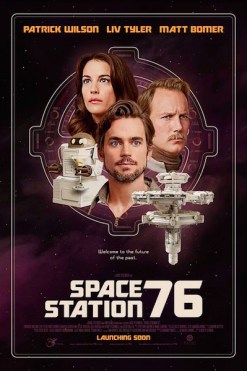 Liv Tyler is the new first officer on a space station commanded by Patrick Wilson in this retro-future-styled film, which is both a spoof of/riff on ’70s genre movies, and a character drama about people’s relationships. No, really.
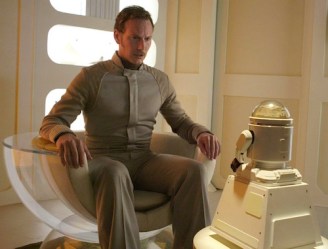 used to feed into the humour, that’s simply what makes it, a) a period movie (just a period movie set in the future), and b) a comedy-drama (as opposed to a drama). I think this is the real reason for its lowly regard on sites like IMDb: those expecting Anchorman in Space are going to be disappointed; but you can’t blame anyone for such expectations when that’s more-or-less how it’s trailed.
 The characters and their relations are well enough drawn to make it passably engrossing, even if not a stand-out contribution to any such genre, while the comedy pays off handsomely at times.
 From the sword and sorcery ‘boom’ of the ’80s, Red Sonja concerns a warrioress going after the evil queen who slaughtered her family and has now seized a magical MacGuffin that will destroy the world or somesuch.
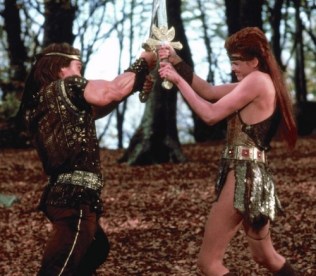 being a particular highlight. Veteran helmer Richard Fleischer’s direction seems to have come in for criticism from some quarters, but I found it adequately unremarkable. Damning with faint praise, I know, but it doesn’t merit slagging off either.
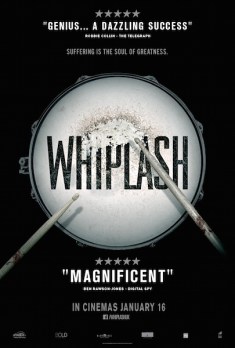 Mr Fantastic dates Supergirl and is taught the drums by J. Jonah Jameson in writer-director Damien Chazelle’s Oscar-winning music drama.
 Simmons’ Oscar is well earnt as the unpredictable Fletcher. If you’ve seen clips and trailers you might imagine it’s a fairly one-note turn, the Angry Teacher who possibly reveals a Heart Of Gold either just in time for the third act or at the very end. But no, there’s more to it than that, and Simmons negotiates every facet and nuance with the expertise of an experienced character actor. Commendations to both Chazelle and Simmons for wrong-footing me on what was actually going on with him more than once.
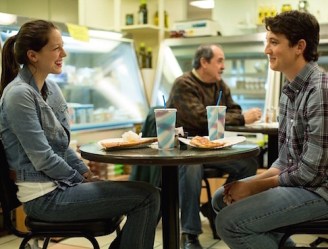 That thread could do with a boost in the middle, to give their relationship a little more weight when we reach the decisions Andrew must make about it later on. (Personally, I’d choose Melissa Benoist over J.K. Simmons any day, but I don’t think that’s the point…) The same could be said of Andrew’s relationship with his father (Paul Reiser), though that’s actually given more screen time and is consequently more impactful.




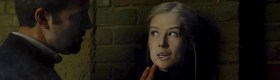































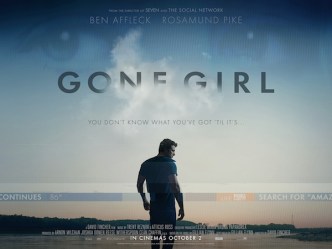 “Horrible people do horrible things to each other” is the Post-it Note summary of this dark drama-thriller from director David Fincher, adapted by screenwriter Gillian Flynn from her own novel, which is short on heroes and overloaded with villains. An alternative brief summation is, “modern society is shit.”
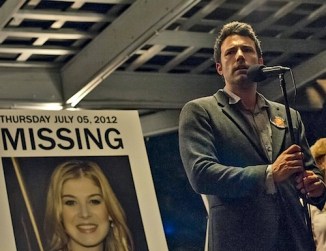 However, that opinion may stem from the same point as my view on the more praise-filled reactions: that Gone Girl is not a film as great as
 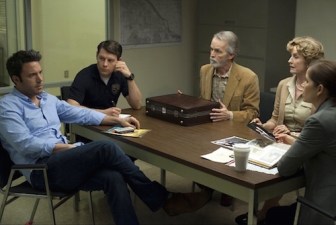 This is an argument for which I have a lot of time. The majority of Fincher’s filmography is made up of policiers and thrillers of one form or another, and even when he breaks out of that mould — in The Social Network, for instance — he often brings a similar perspective and toolset. Many of these films are borderline-rote, heavily-generic schedule-fillers at screenplay level, and would have been just that in the hands of a lesser director; in the hands of a master filmmaker, however, they become genre-transcending classics. I think that same sentence could be said about most (all?) of Hitchcock’s best films.
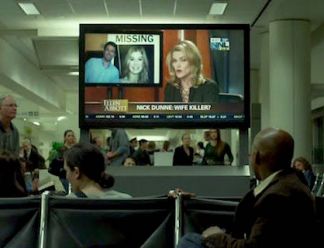 Is it for the masses, too? Maybe. In his
  a lesser actress could’ve given a performance with fewer notes and the film still would’ve functioned; or they would have struggled to contain the numerous sides to Amy’s personality in the form of a plausible human being. Pike does that, and more. She goes on my list of “people who were robbed of an Oscar because it was someone else’s ‘time’” (alongside Paul Greengrass’
 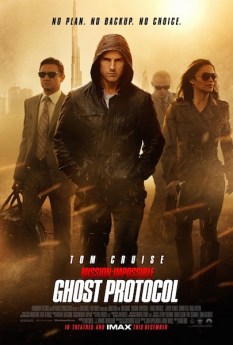 With Bond going “real world” and gadget-free in the Daniel Craig era, and the Bourne series having blazed a trail of “we shot it all handheld and shaky and grainy so it must be real” veracity, it seems the task of providing audiences with a contemporary version of the spy action, just-ahead-of-reality gadgets, and larger-than-life spectacle that the Bond movies specialised in during the ’60s and ’70s, has fallen upon the Mission: Impossible franchise. For my money, it’s taken the baton with aplomb.
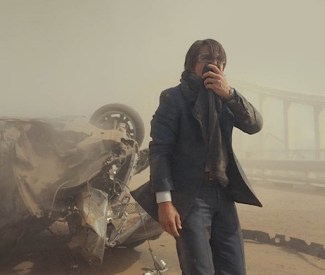 Somewhat unfortunately for pacing, they come halfway through. The climax is a mano-a-mano fight in an automated car park. It’s good, but feels underwhelming by comparison, with Michael “
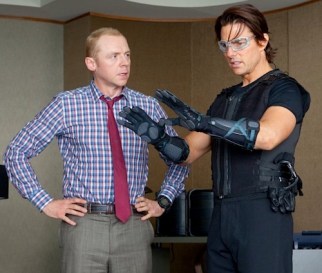 There’s a host of other gadgets to be going on with, though. It may be a side effect of having the writer-director of
 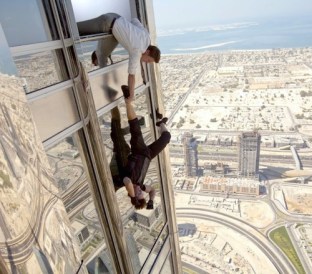 Still, that’s a fault of the home entertainment release, not the film itself. In all other respects, Bird’s work is first-rate. I like that the series consciously changes director with each new film to provide new ideas and voices, but if they were going to break the pattern then Bird would’ve been a good guy to allow back (certainly a superior pick than the third film’s J.J. Abrams, anyway, who was originally slated to tackle this sequel too).
 From the heart of Disney’s most recent poor period, Lilo & Stitch is possibly the only film that comes out of that era with any affection. Certainly, it spawned several sequels and a relatively-long-running TV series. By the standards of the films that surround it, it’s a good’un; in the grand scope of all Disney films, however, I didn’t care for it that much.
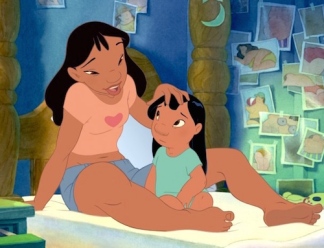 The story is something and nothing. Despite strong and relatively mature thematic notes, it doesn’t quite break free of the family-movie trappings to achieve the kind of insight or age-group transcendence that, say, Pixar movies routinely manage. For kids, though, especially ones who are feeling like misunderstood outsiders, there might be a lot to take from it. The zany antics of the heroes might also work for them in a way they didn’t for me — the ‘craziness’ comes across as a series of vignettes to bide time until the climax, and I didn’t find it massively engaging either. This is also the stage at which Disney had decided musicals were a Bad Idea, so there’s only a couple of non-diegetic songs to keep things ticking over, and… well, your mileage may vary.
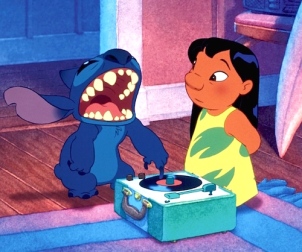 that might be missed by many a viewer, but it gives a subtly different feel. It’s a little more classical, which sits nicely against the very modern zany-aliens storyline.
 100Films.co.uk