
Alejandro G. Iñárritu | 119 mins | streaming (HD) | 1.85:1 | USA / English | 15 / R
 2015 Academy Awards
9 nominations — 4 wins
Nominated: Best Actor, Best Supporting Actor, Best Supporting Actress, Best Sound Mixing, Best Sound Editing.
 I started the week by reviewing the first Best Picture winner, and now end it with a review of the most recent — which just so happens to be coming to Sky Movies and Now TV from today (couldn’t’ve planned that much better if I’d tried!)
Birdman isn’t a superhero movie, though if the title sounds like one then that’s no accident: Michael Keaton is an actor who once played a superhero in the late ’80s and early ’90s. Well, to clarify, Michael Keaton plays an actor, Riggan Thomson, who once played a superhero in the late ’80s and early ’90s — the Birdman of the title. Decades later, he’s trying to be taken seriously by starring in a play on Broadway… which he’s also written… and is directing… and has sunk his personal finances into. So it’s probably not a good thing that one of his cast can’t act, his personal life is all over the place, the critics hate him before the play’s even opened, and he’s hallucinating superpowers.
Birdman is a comedy. “How the heck did a comedy win Best Picture at the Oscars?” you might well wonder, because that never happens anymore. Well, it’s a comedy-drama — it’s certainly funny, but drily so, and with lots of Personal Character Drama and a few Issues along the way. As it goes on, and gets a bit weird and kinda arthouse-y (as if it wasn’t to start with), you may forget that’s where it began. Nonetheless, I found it more consistently amusing than other recent acclaimed comedic Best Picture nominees, like the disappointing American Hustle.
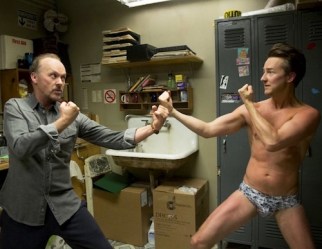 In part this is thanks to Keaton, who gives quite an immersive performance as the numbed, self-deluded star. Some people were very much behind him for the Best Actor gong, but I think it found its rightful home: Eddie Redmayne’s performance as Stephen Hawking was transformative to the point you forgot you were watching an actor; Keaton is just rather good. Anyway, for me the more enjoyable performance came in a supporting turn from Edward Norton. Norton is a notoriously difficult-to-work-with actor… sorry, Norton plays a notoriously difficult-to-work-with actor, who joins Riggan’s production and begins to wreak all kinds of havoc.
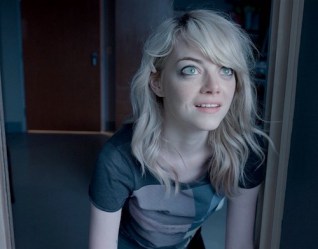
The rest of the cast are dealt very mixed hands. Emma Stone is good, but was there enough meat on the role’s bones to justify Best Supporting Actress, other than one awards-clip-baiting shouty monologue? I’m not sure. The most memorable thing about her performance is how extraordinarily large her eyes are. Andrea Riseborough is thrown a bone or two; Zach Galifianakis doesn’t showboat like I’d’ve expected a comedian with his background to; Lindsay Duncan appears for one scene, but it’s a pretty good one (sometimes it really benefits American movies that there are swathes of fantastic British actors who are capable of first-rate leading performances, but so low down the food chain that they can be drafted in for single-scene roles); and Naomi Watts is utterly wasted. (At one point Riseborough and Watts kiss, which is apparently a spoiler for Mulholland Drive because she kisses a woman in that too. Oh IMDb trivia section, you will let any old rubbish in.)
 Famously, almost the entire film takes place in a single take. A fake one, of course. Well, I say of course — Russian Ark did a feature-length single take for real. I’d assumed this meant the film took place in real time, because that seems the obvious thing to use an unbroken shot for — to show us everything that occurred in the time it occurred. But no. Iñárritu uses that and the fact it’s faked quite cleverly at times, to pull off impossible changes of location. For example, at one point the camera leaves Norton in the theatre’s gods and drifts down towards the stage, where we can see him mid-performance.
The most curious aspect of the single take is: what did it need two editors for?! Everything had to be meticulously planned in advance — apparently, longer was spent on the screenplay than is normal, because once it was shot nothing could be cut — so surely all someone had to do was stick it together at the joins? Some of those joins are actually fairly obvious (your familiarity with filmmaking techniques and where joins might be hidden will dictate exactly how many), but a decent number remain hidden, I think. Well, I presume — I didn’t see them. Anyway, it’s more a feat of logistics and cinematography, the latter of which Emmanuel ‘Chivo’ Lubezki did win an award for. How deserved that was, I’m not sure. It’s very impressive to work out how to shoot a movie in a single take, even a pretend one, but surely cinematography awards are for the quality of the images, not the logistics of moving your camera around? Birdman is by no means an ugly film, but the best-looking of the year? I’m not so sure.
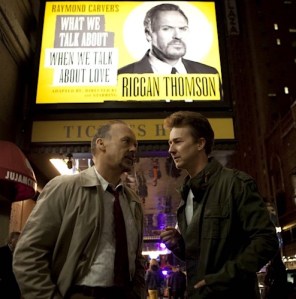 Birdman is an entertaining film, both funny enough to keep the spirits up and dramatic enough to feel there’s some depth there. It’s also a mightily impressive feat of technical moviemaking, but then I do love a long single take (even a fake one). Is it the Best Picture of 2014? Well, from the nominees, it’s not the funniest (The Grand Budapest Hotel), nor does it have the most impactful performances (The Theory of Everything), nor is it the must gripping or thought-provoking (Whiplash), and it doesn’t feel the most significant (Boyhood). There is an interesting element of having its cake and eating it about Birdman, though, as it berates The Movies for their current superhero obsession while telling the story of a Hollywood actor who sets out to prove those snooty New York theatre critics wrong. Hm, however did this win Best Picture from an organisation whose main voting bloc is Hollywood actors?

Birdman debuts on Sky Movies Premiere today at 1:45pm and 10:10pm.
 Director Chan-wook “
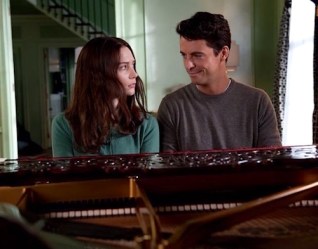 I’m sure the story could be shunted back to a crumbling pile in 19th Century England. So precise is the mood of this secluded household, it’s kind of weird when, a little while in, we get to see India’s place of education: a typical US high school. In another film I might call this sudden change of locale a misstep, a breaker of tone, but in the world Park has created it just feels like a point of contrast.
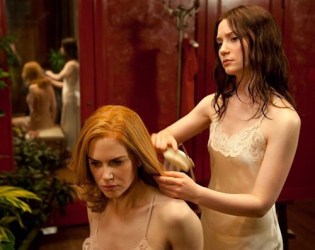 not a soul-bearing artistic portrait of humanity. And as for the style… well, I’ve already talked about that. Whether you can have “style” for style’s sake, or whether it needs to be in aid of something, is a debate for another day. Here, it is in aid of something: amping up the Gothicism of the inherently Gothic story, which in other hands could have just became any-old present-day-set family thriller.
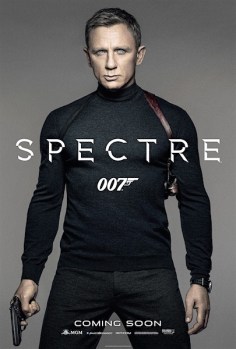 It’s been quite the year for spies on the big screen: mega-success for
 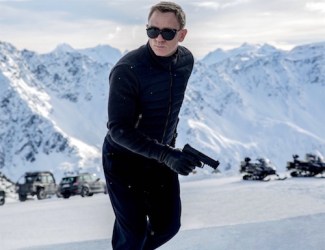 or, “they’ve merely brought back the classic Bond formula, albeit in the Craig-era style — what a regression”. You only have to look at the
  Craig’s films have stuck to the older formula of casting a respected/famous European: Dane Mads Mikkelsen, Frenchman Mathieu Amalric, Spaniard Javier Bardem, and now German “European actor du jour” Christoph Waltz. The double Oscar winner is on fine form at times, but there aren’t quite enough of those times. Again, without aiming to spoil anything, I’d say he’s not so much underused as misused.
 Well, I did too. Now I want a cake. And if you’d like to watch someone eat a Madeleine, check out
 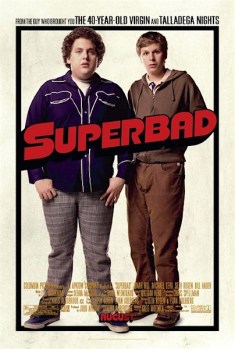 Seth Rogen and Evan Goldberg’s semi-autobiographical comedy sets Seth (Jonah Hill) and Evan (Michael Cera) (see what they did there?) on a quest to obtain booze for a party where they hope to copulate. Or, “every American teen comedy.”
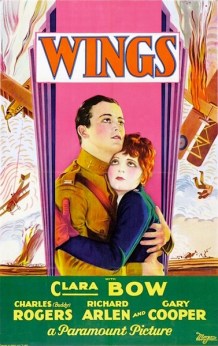 Students of the Oscars well know that, technically speaking, there wasn’t a single “Best Picture” award at the inaugural Academy Awards ceremony in 1929. Instead, there were two awards that covered that ground, seen (at the time) as being of equal significance. One was for “Unique and Artistic Production” — which I’d argue is more or less what most people think Best Picture represents today. That was given to F.W. Murnau’s
  he learnt to fly just for the film), and, mid-flight, had to film their own close-ups by switching on battery-operated cameras mounted in front of them. You wouldn’t know it from watching the film itself, though: even today, the action sequences carry a palpable air of excitement, aided (perhaps even created) by the knowledge that it was all done for real — including the crashes.
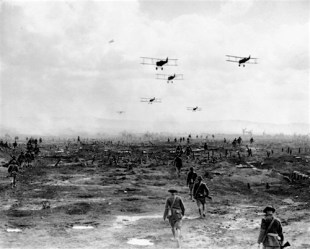 bomb-pockmarked battlefield. Those bomb craters were, in fact, genuine: the military spent a few days before filming using the location for target practice. The climactic battle that occurred on this site was filmed with up to 19 cameras at once, including some mounted on four towers, the highest of which reached 100ft. I know this is a review, not a catalogue of production numbers, but it’s quite incredible.
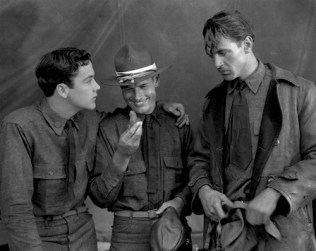 How much these factors affect the film’s quality seems to be very much a personal matter. Wings set the stall for many a Best Picture winner to follow by being not that well regarded by critics; indeed, more time and praise is given to its top-award compatriot, Sunrise. For the most part, I found the personal dramas passable enough, with a few outstanding scenes — David’s farewell to his stoical parents; Cooper’s scene; the bubbles (at first). However, the combat sequences, and in particular the aerial photography, are stunning; so impressive as to easily offset whatever doubts the other elements may engender.
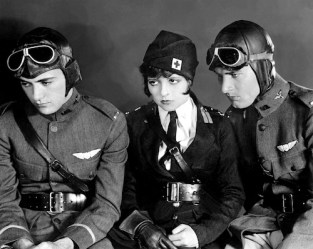 But I digress. Wings is a film that deserves to be remembered as more than a mere footnote. It’s not just a trivia answer to “what was the first Best Picture?”, but a worthy winner of that prize; a movie that, almost 90 years after it was produced, still has the power to elicit excitement and awe. Wellman’s picture may not have been deemed unique or artistic, even though it’s definitely the former and possibly the latter, but it was deemed outstanding, and it’s definitely that.
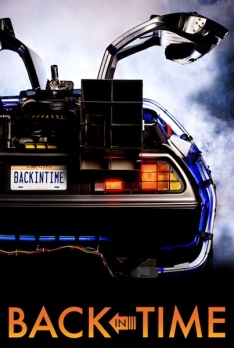 If you’re on social media (or even just frequent pop culture news sites), you can’t fail to have noticed that Wednesday just passed was “Back to the Future Day”, the exact date Marty McFly and Doc Brown (and Marty’s girlfriend) travel to in
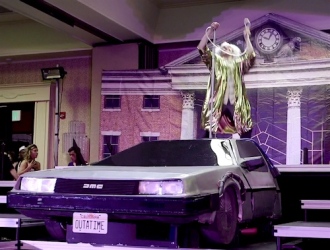
 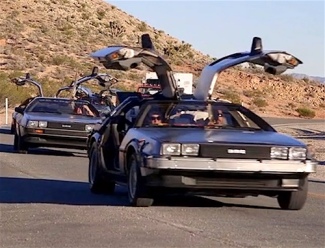 Then it moves on to the fans — what the film means to them, and what that’s led them to do. Those we meet include a couple who travel around the US in a DeLorean fundraising for Michael J. Fox’s charity; the team of aficionados who restored Universal Studios’ decrepit display DeLorean; the family of collectors who own the only film-used DeLorean that will ever be in private ownership; a guy who built a mini-golf course in his yard with a Back to the Future-themed hole that he’s used for charity events with some of the films’ cast; the people who have had some success developing a real-life hoverboard; and the guy who set up a fansite that was so good it became the official site, and is now regularly employed as an official consultant about the films, not least for the rafts of merchandise that comes out these days. We also get a look at the Secret Cinema event in London from a year or two ago that made headlines for all the wrong reasons. Naturally, none of that gets mentioned here (in fairness, because it has nothing to do with Back to the Future itself).
 That glaring error aside, Back in Time is not a bad film, provided you know what to expect. It’s a shade too long and the storytelling is occasionally a little jumbled, but there are some nice interviews and stories — hearing Michael J. Fox recount the Royal Premiere where he was sat next to Princess Diana pretty much makes the whole exercise worthwhile.
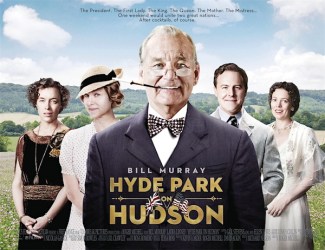 Wannabe-prestige picture Hyde Park on Hudson is like two films playing at once: the dramatic/romantic story of President FDR’s (Bill Murray) burgeoning affair with his distant cousin Daisy (Laura Linney), and the comedy-drama of his meeting with King George VI (aka “the one Colin Firth played in
  For what it’s worth, the film was born of the discovery of Daisy’s letters and diaries, which told of the relationship. Apparently the screenwriter was one of the people who found these, so I guess that’s where his interest lies. The film is a UK production from Film4, however, and made in the wake of the global success of The King’s Speech, so perhaps that explains the root of the royal involvement. While both stories have some potential, they aren’t made to gel, switching back and forth as if in some kind of narrative relay that enables the film to run a theatrical distance.
 with vibrant colours evoking a place of sunny happiness, but anything set at night is graded with a terribly extreme, not to mention awfully rote, case of teal-and-orange.
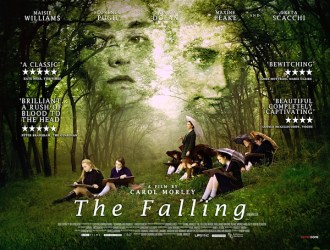 Inspired by real events, The Falling stars
  Writer-director Carol Morley has kept the pace and tone slow, in an enchanting rather than ponderous fashion, but it’s a “not for everyone” pace nonetheless. For me, it only really lost its way as it moved into its final stages. Without wanting to spoil where it goes, in my opinion too much was explained, but at the same time it explained nothing.
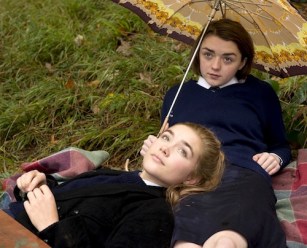 An element I do think was at the forefront of consideration is sensuality and sexuality, which plays a large and significant part in the film. Pretty much any movie bar “bawdy high school comedies starring obvious twentysomethings” seems to veer away from schoolgirl sexuality these days, wary of inevitable “OMG u a pedo” reactions, I guess. Sexuality does not equal pornography, though; and, as I alluded, here it’s played out as much through a heightened, tactile sensuality. It does probably ‘help’ that it’s a film written and directed by a woman — it would carry a very different, more Lolita-ish air if it had been written or directed by a man. What exactly it’s saying with all this is arguably as mysterious as the cause of the fainting epidemic, but then it’s all tied together: teenage years are a period of sexual awakening, of course, and if you’re in an environment where nearly everyone is of the same gender, and where such things are massively repressed… well, how is it going to manifest itself? If “sex” is somehow the cause of the fainting, it’s not because sex is bad, it’s because there’s no other appropriate outlet for it.
 Best of the lot, however, is Florence Pugh. Reportedly discovered when The Falling’s casting directors visited her school, you can see why she’s quickly been snapped up for a leading role. I wouldn’t be surprised if Hollywood come knocking looking to make her the next Kate Winslet/Keira Knightley/Gemma Arterton/etc “English rose”-type lead in some blockbuster or other.
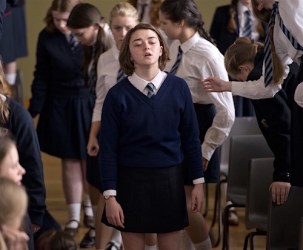 For me, it’s the kind of film that, with time and subconscious reflection, I may come to remember more fondly and be keen to see again, or all but forget. It’s the kind of film I could, without even re-watching it, re-evaluate and want on my year-end top ten, or could see on my top ten contenders long-list come January 1st and wonder, “dear God, what was I thinking?!” It’s the kind of film I’m not sure I wholly liked, but I’m glad I’ve seen.
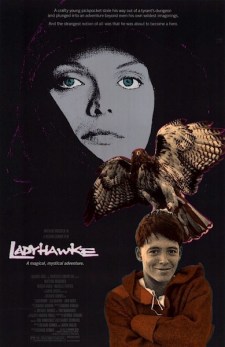 This is one of those films that crops up in the daytime TV schedules now and then and I’d always paid little heed to, because no one else seemed to. Then I read
  Here, there’s a good 45 minutes or so of mystery before said reveal. Obviously, therefore, it would work better as a fresh viewing experience if you didn’t know that going in; but it’s so fundamental to the setup (despite the focus on Philippe, it’s their story) that I wonder if anyone has ever seen it without knowing? On the bright side, it doesn’t really matter: this is not a film where the ‘big twist’ is the point.
 but Philippe occasionally addresses amusing asides to God, for example. It even wisely dodges special effects… most of the time. The few occasions on which it does make motions in that direction, it demonstrates why it was wise not to attempt them more thoroughly. These days they’d slather on the CGI, but shying away from such things is not just due to a lack of technology: it’s far more magical to not be too explicit.
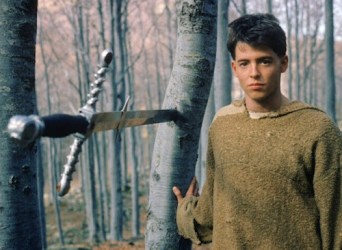 That’s the kind of age when one might be liable to fall in love with it; or, at least, people of (very roughly speaking) my generation would — I suppose Kids These Days fall in love with copious CGI, be that animated or ‘live action’. Anyway, I think it deserves to be less overlooked, and if you’ve never caught it (or not for a while) it certainly merits a chance.
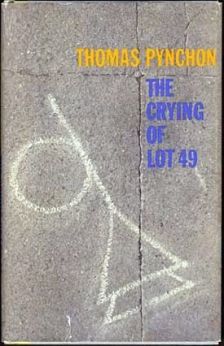 After watching
  It’s probably not fair to judge The Crying of Lot 49 by normal moviemaking standards. As a high school project to summarise a novel in a few minutes of video (which it may or may not be), it’s probably alright. Otherwise, though, it’s not worth the seven minutes; not even for die-hard fans of the author and/or novel. It is, you might say, a W.A.S.T.E. of time. #injoke
 100Films.co.uk