
Jamie Benning | 139 mins | streaming (HD) | 16:9 | UK / English
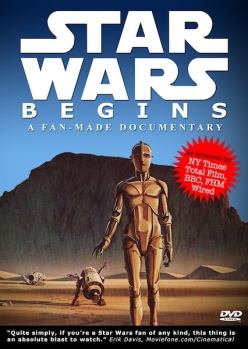 This year, I finally got round to watching the Star Wars Blu-rays I bought back whenever they came out, so I thought what better time to also finally watch Jamie Benning’s trilogy of “filmumentaries”. What’s a filmumentary, you ask? Well, here’s the opening text of the film itself:
Star Wars Begins is an unofficial commentary on Star Wars. It contains video clips, audio from the cast and crew, alternate angles, bloopers, text facts and insights into the development and creation of the film.
For those familiar with (Warner) Blu-rays, it’s essentially a fan-made Maximum Movie Mode, though drawing on a wealth of archive resources rather than newly-recorded material. In practice, it plays less like a cohesive “making of” and more like a trivia track on steroids. Only rarely do we learn something fundamental; mostly it’s interesting titbits. But then, this is a documentary made by a fan for fans, and fans love minutiae. Consequently, it sometimes comes from a place of deep fan-ish-ness. For example, it refers to and uses clips from the “Lost Cut”, but never bothers to define or explain what that is (or if it did, I blinked and missed it). Conversely, it occasionally transcends “Star Wars trivia” to unveil general “moviemaking trivia” — how different on-set audio sounds to the final mix; demonstrations of how editing can affect the flow and pace of a scene; and so on.
Perhaps the highlight are some early deleted scenes. Featuring Luke, Biggs and their friends on Tatooine, and placed to intercut with the droids’ progress and Vader’s search for them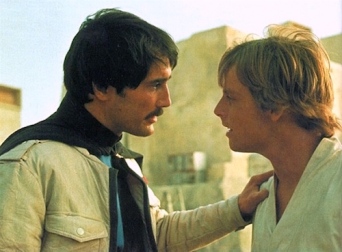 (i.e. before we even meet Luke in the finished film), the sequences were removed en masse due to execs’ fears they made the movie feel like “American Graffiti in space”. And for once, an exec was right! They give the movie a completely different tone; more grounded and less mythic. Thank goodness they were done away with, to be honest.
Another personal highlight was a snippet from a 1978 interview with Harrison Ford, in which the Han Solo actor says Star Wars is not science fiction, it’s science fantasy. He’s bang on the money — it’s a distinction I subscribe to wholeheartedly. I’d always thought it was a more recent argument, but there he is expressing it right after the film came out, not as some decades-later revisionism.
This is actually the third of Benning’s filmumentaries — he started with Empire and followed it with Jedi, only then going back to where it all began. Maybe there’s a reason for that. Maybe a greater behind-the-scenes scrutiny on the sequels gave him more to work with, producing more in-depth making-ofs, and when he went back to the first he just had to work with what he could find. Or maybe the disjointed trivia grab bag is his style, and here it reaches its apogee. I guess I’ll find out soon enough.
 Star Wars Begins may not be the first port of call for anyone looking for an overview of the making of Star Wars, but it’s a goldmine of behind-the-scenes titbits and occasional candid revelations for anyone with a strong enough interest.

Star Wars Begins can be watched on Vimeo here.
Star Wars: The Force Awakens is released in the UK this Thursday, and in the US on Friday.
This review is part of the 100 Films Advent Calendar 2015. Read more here.
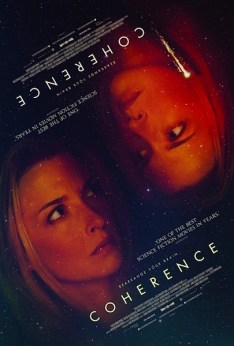 This isn’t something I normally do, but certain factors made me want to review these two films together. They’re both low-budget single-location sci-fi thrillers, but they’re also both more about humanity than ideas — they use sci-fi high concepts as a way to expose, examine, and comment on human behaviour. That I happened to watch them back to back only highlighted the similarities.
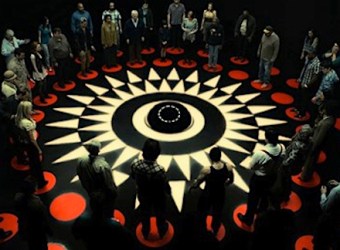
 Circle, on the other hand, must’ve been very tightly constructed. A group of fifty people wake up stood in two circles in a black space, with an array of arrows on the floor in front of them. Every couple of minutes, a klaxon blares out a countdown and one of them is killed. They soon realise they have some control over this, so together they try to work out what’s going on and how to escape, whilst constantly having to select who’s next. Broadly speaking, this is a high-concept thriller in the vein of
  However, it’s clear Byrkit’s focus lay elsewhere. Thematically, it’s about our fear of others, but, as Byrkit explains in
  With fewer to illuminate they’re less quickly-sketched than Circle’s mass of ‘contestants’, and so feel more like rounded humans. By the end, they’re doing things that might initially seem out of character, but actually aren’t at all. (If you can take it, dear reader, there’s a crazy-detailed explanation of the ending (one reading of it, anyway) to be found
 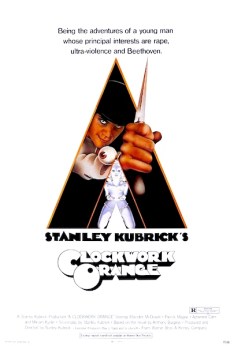 Yet more dystopian sci-fi! Who doesn’t love some dystopian sci-fi? Here we’re in the ’70s, though (makes a change from the ’80s), with writer-director Stanley Kubrick adapting Anthony Burgess’ novel into a film so controversially violent the director himself eventually banned it from release in the UK for decades. Almost 45 years on, it’s testament to the film’s power that it is still in parts shocking.
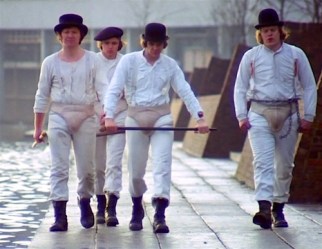 unfortunate byproduct of the film’s age. Other parts just go on a bit too long for my taste — there’s barely a sequence after Alex’s arrest that I didn’t feel would benefit from getting a wriggle on. I don’t think this is me bringing a youth-of-today “everything must be fast cut” perspective to the film, I just found it needlessly languorous at times. Maybe I was missing a point.
 Kubrick ends on a much more ambiguous note… so ambiguous, I’m not really sure what it’s saying… or even what all the ambiguities actually are…
 This neo-noir revenge drama with a twist has received such acclaim from critics and bloggers alike that it’s practically set up to fail.
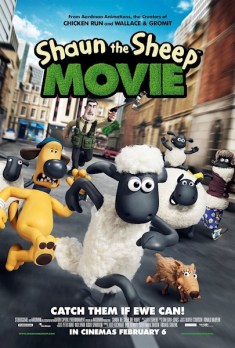 Shaun the Sheep started life in the 1995 Wallace & Gromit short
  (that US PG is thanks to a couple of oh-so-rude fart jokes), but there’s a sophistication to the way that simplicity is handled that adults can enjoy. There are also references and in-jokes for the grown-ups; not hidden dirty jokes that’ll put you in the awkward position of having to explain to the kids why you were laughing, but neat puns (note the towns that the Big City is twinned with) and references to other films (like
 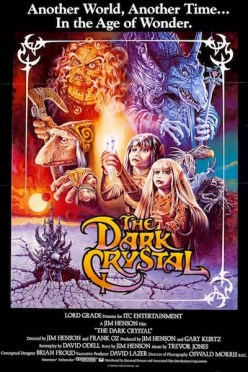 High-fantasy adventure about some elves trying to stop a crystal from destroying their planet.
 Essie Davis is best known for playing the sassy title role in
 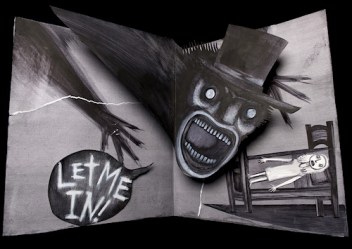 a horror film for people who think about what they’re watching, rather than just waiting for something to be thrown at the screen to make them jump. The slow burn tension will bore those content with the latter, who I suspect don’t tend to think a great deal (for one thing, they’d spot most of the jumps coming if they did).
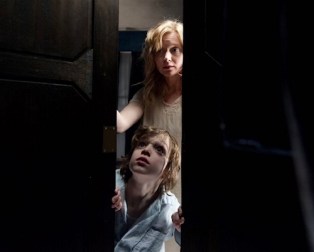 There is little in The Babadook that will make you jump, and even less that will make your stomach turn in disgust, but that’s absolutely fine. What it will do is chill your blood, make your hair stand on end, make you worry about every little creak or thump you hear elsewhere in the house after dark, and make you want to sleep with the lights on. Not just the bedroom lights, all the lights. Because once you’ve seen it, you can’t get rid of the Babadook.
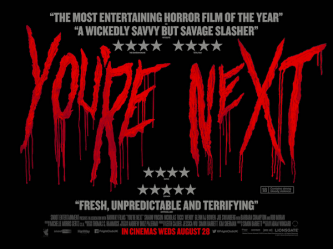 From the makers of
 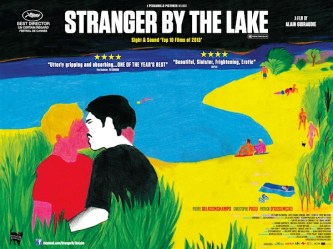 Iiiiiit’s the arthouse gay sex thriller!
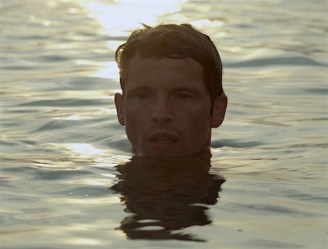 In this regard it has a very particular speed and style — even if there was a version without copious full-frontal male nudity and explicit sex, it still wouldn’t be for everyone. It helps to evoke both a certain time and place (lazy summer days on holiday) and a particular lifestyle (that of gay cruising — which, much to the (presumably straight) policeman’s bafflement, continues virtually unabated even after one of their number is murdered in unexplained circumstances). This is further emphasised by the gorgeous cinematography. Claire Mathon apparently shot it using only natural light, and it looks fantastic — understated (this isn’t a heavily-graded hyper-real kind of beauty), but sumptuous.
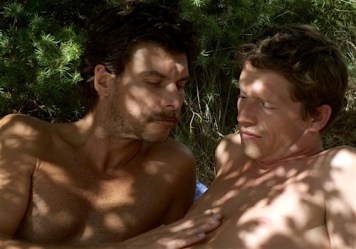 The style is supported by strong performances. I suppose some would say “brave”, by which they’d mean “they’re naked a lot and having gay sex”… so, I mean, maybe it is brave, but, still, that’d be a euphemistic description. What I mean is that they’re strong because they’re calm, understated, realistic, and believable without tipping over into amateurish. You feel Franck’s complex mix of fear and excitement, his lust overpowering common sense; there’s a certain timidity, maybe even naïvety, present in his eyes. Conversely, his lover Michel is unreadable; a closed book, where you never know what he’s thinking, feeling… plotting. Franck’s new friend Henri is similarly tricky to get an accurate handle on, but he’s the yin to Michel’s yang (or vice versa). He’s not plotting, he just is. Or maybe he was plotting all along…?
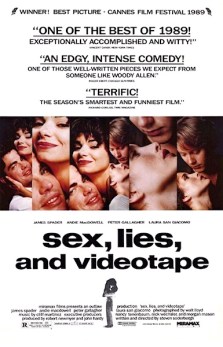 Four acquaintances partake in duplicitous relationships and candid sexual discourse in writer-director Steven Soderbergh’s debut drama.
 100Films.co.uk