
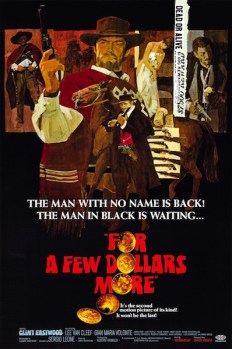
The man in black is waiting…
Original Title: Per qualche dollaro in più

Country: Italy, Spain & West Germany
Language: English and/or Italian
Runtime: 132 minutes
BBFC: X (cut, 1967) | 15 (1986)
MPAA: M (1969) | R (1989)
Original Release: 18th December 1965
UK Release: January 1967 (BBFC)
First Seen: DVD, 2003
Stars
Clint Eastwood (Dirty Harry, Unforgiven)
Lee Van Cleef (High Noon, Escape from New York)
Gian Maria Volontè (Investigation of a Citizen Above Suspicion, Le Cercle Rouge)
Klaus Kinski (Aguirre, Wrath of God, Fitzcarraldo)
Director
Sergio Leone (The Good, the Bad and the Ugly, Once Upon a Time in the West)
Screenwriters
Luciano Vincenzoni (Death Rides a Horse, The Good, the Bad and the Ugly)
Sergio Leone (A Fistful of Dollars, Once Upon a Time in America)
Scenario by
Sergio Leone (The Colossus of Rhodes, A Fistful of Dynamite)
Fulvio Morsella (My Name is Nobody, A Genius, Two Friends, and an Idiot)
The Story
A pair of bounty hunters team up, in spite of their mutual distrust, to capture the most wanted fugitive in the Wild West. That’s the short of it — the ins and outs get complicated.
Our Heroes
The Man With No Name (who this time is called Monco) is played as coolly as ever by Clint Eastwood. This time he teams up with The Man In Black — not Johnny Cash, but Colonel Douglas Mortimer. Much older than Monco, but played with equal amounts of cool by Lee Van Cleef.
Our Villain
El Indio, a murdering, raping, bank-robbing outlaw. Has his own gang; has greater loyalty to money. May also be the first character to smoke marijuana in a major film production.
Best Supporting Character
Klaus Kinski plays a hunchback. I mean, what more do you need to know?
Memorable Quote
“Where life had no value, death, sometimes, had its price. That is why the bounty killers appeared.” — title card
Memorable Scene
It’s a Leone film; there’s a tense climactic pistol duel — surely that’s all the recommendation you need.
Memorable Music
The score is by Ennio Morricone, of course, so of course it’s fantastic. His main theme for The Good, the Bad and the Ugly may be more famous, but personally I prefer this one.
Letting the Side Down
I suppose I should mention the dubbing, which is always skew-whiff in these movies. But it is what it is.
Making of
Leone felt that Gian Maria Volontè’s performance was too theatrical, so he often subjected the actor to multiple takes in an attempt to tire him out. Volontè eventually stormed off the set… but, unable to get a ride out of the desert, returned to filming.
Previously on…
A Fistful of Dollars, also starring Clint Eastwood and directed by Sergio Leone, started both the Man With No Name Trilogy (aka the Dollars Trilogy) and the entire Spaghetti Western subgenre.
Next time…
The Good, the Bad and the Ugly completes the trilogy — not that it was intended as such by Leone: US distributor United Artists invented the “Man with No Name” concept as a way to sell the three films together. Eastwood’s character actually has a name, and a different one in each film at that.
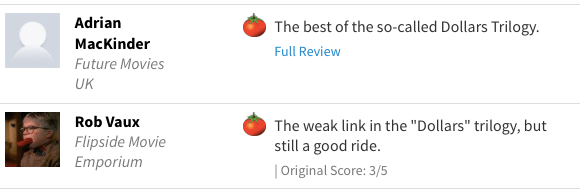
What the Critics Said
“For a Few Dollars More, like all of the grand and corny Westerns Hollywood used to make, is composed of situations and not plots [but] on a larger, more melodramatic scale, if that’s possible. […] The rest of the film is one great old Western cliché after another. They aren’t done well, but they’re over-done well, and every situation is drawn out so that you can savor it.” — Roger Ebert
 Score:
 94%
94%The Joys of Putting Different Reviews Right Next to Each Other
What the Public Say
“It’s a wacky and irreverent film, exactly the type of cheeky genre fare that you’d expect as the follow-up to a blatant act of plagiarism […] This irreverence is what makes the film fun, but it also never stops it from being intelligent. Like its predecessor was to a slightly lesser extent, For a Few Dollars More is a film about the value of life (often literally and monetarily) and the cost of our connections with other human beings (specifically men in this predominantly male society).” — Wes, Screening Notes

Sergio Leone defined the Spaghetti Western subgenre with A Fistful of Dollars, and some would argue perfected it with The Good, the Bad the Ugly, but in between those two he made this, my favourite of the trilogy. Leone’s trademark style tells a story whose scope is in the sweet spot between the first film’s one-town tale and the third’s epic narrative, with a pair of sparky heroes going up against a ruthless villain, and a nice twist in the tail.

#31 will be… Бонд зовут. Джеймс Бонд.
 “Tom Hardy goes for a drive and makes some phone calls” is the plot of this film, which is often mislabelled as a thriller. That’s not to degrade its thrillingness, but rather to say that if you’re expecting a single-location single-character phone-based thrill-ride like
 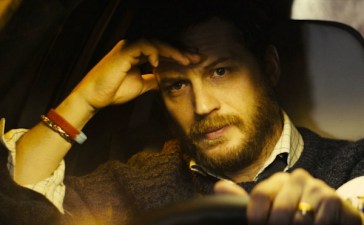 and in the process turning his life upside down. Another part was to tell a story about an ordinary guy dealing with events that aren’t going to change the world, aren’t even going to make the papers, but are a big deal in his life. Something like this could happen to any of us, and how would we deal with it?
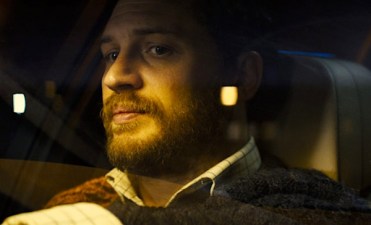 The rest of the cast appear as voices only on the other end of the phone, and in their own way are quite starry — faces that you may recognise, mainly from British TV, in even some of the smaller roles. Not that you see their faces, so, you know, you might have to look them up, or watch the making-of. Some of the performances err a little towards radio acting for me, which is kind of understandable seeing as how that’s basically how they were recorded, but there are particularly good turns from Andrew “Moriarty in
 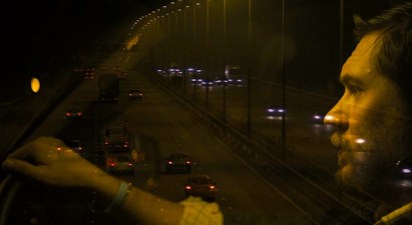 this is about what’s happening on Hardy’s face, not with his whole body. And in either form you’d lose all the photography of nighttime motorways, which have their own kind of hazy beauty. For a movie about someone making phone calls, it is intensely cinematic.
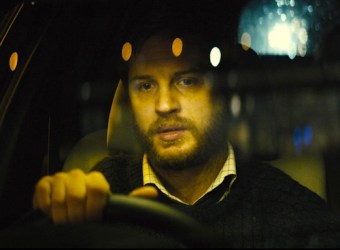 the supporting cast are so much more than “voices on the phone” (listen out, too, for Tom “
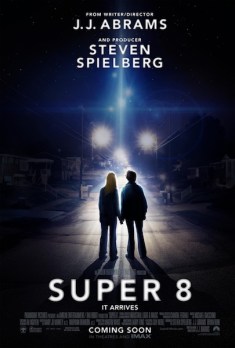 Before he started star warring and between bouts of star trekking, director J.J. Abrams teamed up with producer Steven Spielberg for this homage to the kind of movies Spielberg produced in the ’80s. Those films have endured down the decades; I’m not sure Super 8 endured as far as Abrams’ next
 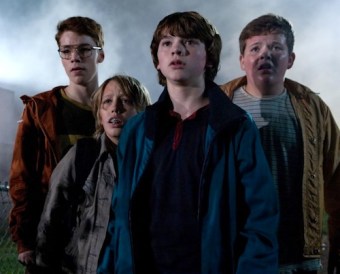 Unfortunately, the longer the film goes on the more it runs away with itself, as characters dash back and forth all over the place, sometimes in credibility-stretching fashion (we never do see how a group of kids manage to escape a heavily-guarded military base and drive back to an evacuated and blockaded town). The adults stumble through the story to little dramatic effect; Joe’s dad even has to be secretly locked up for a good chunk of the film (with no other characters noticing his disappearance) so that his storyline can be paused until he’s wheeled out for his part in the climax. The grown-ups do serve a role — giving us a perspective on events that the kids lack, and being tied to the emotional arcs of the leads — but it wouldn’t have harmed anything to limit them to those functions, rather than trying to half-heartedly give them stories of their own.
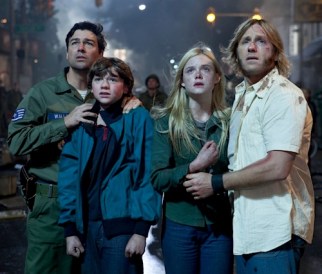 In some respects, the kids’ short film (which plays during the end credits) encapsulates the whole movie: a semi-thought-through SF/F plot, a tacked on emotional arc, the apexes of both tied together in the climax, and a couple of sometimes-shoehorned effects set pieces along the way. Yet for all that, it does enough right that I’d quite like to see Abrams attempt more work along these lines.

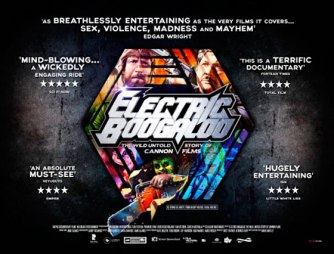 The director of
  (unless you’re a Cannon aficionado, perhaps), but they were there, they lived it, and they have first-rate insights into the craziness. Craziness like the story of the competing Lambada movies, which ended up being released on the exact same day. I mean, you’d think one Lambada movie would be more than enough, but two, competing… If you wrote it in a fiction, the audience would laugh at the ridiculous contrivance of it, but it happened. Elsewhere, there’s a chunk where they just slag off Michael Winner for a bit (awesome), and director Franco Zeffirelli describes them as the best producers he ever worked with and the only ones he ever liked. Like I say, you couldn’t make it up.
 (and if it’s told effectively, rather than the issue of if its telling is effective) is all that really matters.
 When a warrior family are betrayed and killed, the surviving siblings seek vengeance.
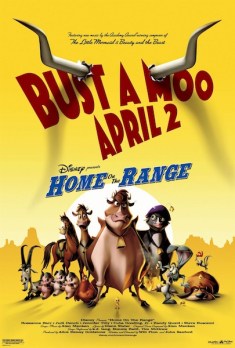 I have many goals within my film viewing, quite apart from trying to watch 100 films every year. Some I’ve completed (the Rathbone Holmes series), others are almost done (every Spielberg film), others not so much (every Hitchcock film), and others I’ve barely begun (the Zatoichi series). One of these goals is to watch every Disney Animated Classic, their canon of feature animations that currently sits at 55 titles (with another scheduled for later this year, in the US at least). I did a pretty good job on the real classics while growing up, and have since filled the gaps of the modern classics, so I’m left ploughing through their lesser periods: the content they pumped out in the war-affected ’40s, and the post-Renaissance pre-Lasseter clusterfrack that was their ’00s produce. My best hope is to uncover a hidden gem while I mop up this dross.
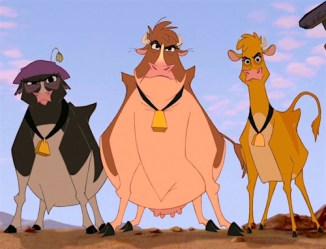 but only because it has a moderately amusing reveal in the middle of it. The animation is unremarkable, besides some terrible CG intrusions. It seems to be under the impression that “hog” is a word for “cow”, based on the number of puns. A couple of gags do land — I even laughed out loud once, though I’ve forgotten why — but the majority is resolutely uninspired.



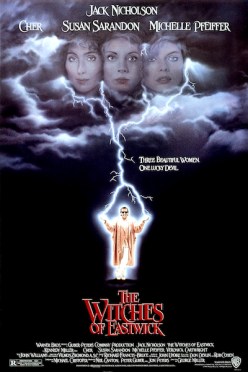 The first US feature from the director of
  These days, Steven Spielberg is as well-known for his Oscar-worthy historical prestige pictures as he is for his action-adventure genre movies, so it’s kinda strange (at least for me) to imagine the time in his career at which this film came about. I mean, it’s an adaptation of a controversial literary novel about the miserable lives of black women in the American South during the early decades of the 20th Century, directed by the white guy known for
 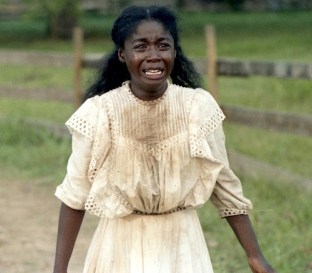 it never quite feels like we’re getting the full force of the story’s brutality. That’s a mixed blessing: as a viewer, we’re spared all the horrors you can infer from what actually happens; at the same time, how much should a story about such horrors be sparing us from them? Though as it was at one point advertised with the tagline, “
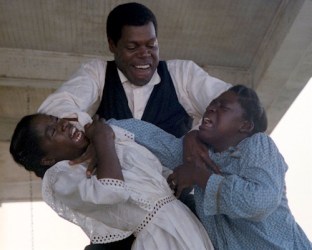 Spielberg’s first foray into Serious filmmaking is a long way from being an unqualified success, but it’s not a bad movie either, and at least it was the gateway to him making some superior dramas. Bonus points, too, for a mainstream big name director tackling a story about the historical lives of black women — depressingly, that still feels like it would be a noteworthy move 30 years later.
 100Films.co.uk