
Alejandro G. Iñárritu | 156 mins | Blu-ray | 2.40:1 | USA, Hong Kong, Taiwan & Canada / English, Pawnee & French | 15 / R
 2016 Academy Awards
12 nominations — 3 wins
Nominated: Best Picture, Best Supporting Actor, Best Film Editing, Best Costume Design, Best Makeup and Hairstyling, Best Sound Mixing, Best Sound Editing, Best Visual Effects, Best Production Design.
 The Revenant is the Oscar-winning, acclaim-gathering story of Hugh Glass, the expert guide for a pelt-collecting group (is that what they are? Is that a thing?) in the Old West, who’s mauled by a bear to within an inch of his life. Eventually betrayed and left for dead by the members of the group who’d vowed to stay with him to the end, Glass somehow survives, and crawls across the wintery wilderness in search of his revenge! And it’s all the more remarkable for being based on a true story… though this retelling contains approximately as many “historical events that actually occurred” as does Game of Thrones.
The main talking point of The Revenant has been Leonardo DiCaprio’s performance, which finally bagged him an Oscar after four unsuccessful nominations (and I’m sure plenty of other roles that he thought might snag him some Academy recognition but didn’t). How much is it acting and how much was it just an endurance test that director Alejandro González Iñárritu subjected him to? Is there a difference? If you have to suffer for great art, Leo certainly did that. In some ways it’s testament to the Academy being able to look past delivery of dialogue as an indication of performance quality, because Glass doesn’t speak much — not when he’s in the company of others, and certainly not when he’s trying to get by on his lonesome, which he is for much of the film. Nonetheless, Leo conveys thoughts and emotions — which do go beyond, “I can’t believe Iñárritu is making me eat this raw liver” — effectively through expression and action.
 In some respects it’s a shame the rest of the cast were consequently overshadowed — Leo may spend a huge chunk of the film on his own, but there are frequent cutaways to what everyone else is up to. Tom Hardy is the obvious standout as selfish bastard Fitzgerald, a perfectly detestable but completely believable villain — I’m not saying we’d all sink to his depths, but I’m not convinced most of us are above some of the choices he makes, either. Will Poulter steps outside the comedy roles he’s mostly taken since his Son of Rambow debut to give an effective turn as the group’s youngest, most conflicted member, while Domhnall Gleeson is commanding as the group’s leader. Gleeson was something of a lucky charm last awards season, appearing in no fewer than four Oscar-nominated films, including two that were up for Best Picture. Not only that, but look at his turn here (as an honourable, disaster-struck Captain) alongside his appearances in those other films (a small town nice guy in Brooklyn; an inexperienced evil military commander in Star Wars; a naive, selfish, sort-of-moral, easily-led programmer in Ex Machina) and you can see the kid’s got range.
Far from just an acting showcase, The Revenant is a film of thematic weight. In fact, it’s like an old-fashioned blockbuster — the kind of thing you’d’ve seen in the 1950s (epic revenge Western) or 1970s (bleak revenge Western) as among the year’s biggest movies — crossed with a slow-paced, scenery-loving, meditative arthouse piece. If it’s about anything (beyond, y’know, the plot), it’s surely about nature — both the amazing vastness of natural spaces, but also the brutality of survival. And not just humans, either, which is the go-to simplistic message (“isn’t nature good? aren’t humans bad?”) of such cod-thoughtful fare. Like the rest of nature, humanity is varied: there are some very harsh, cruel acts herein, but also acts of kindness — sometimes perpetrated by the same people.
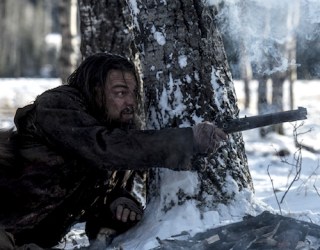 The avoidance of pat depictions extends to its portrayal of Native Americans, too. They’re neither simplistic Evil Foreigners, nor a “we’re so sorry for how we’ve treated them before, they’re great really” apologia. Instead, they’re just as brutal and as human as the rest of us, and made up of varied groups who behave differently, or even slaughter among themselves. The main band of Indians we see do serve as the film’s villains (as if Fitzgerald wasn’t bad enough), a hunting party acting out an inverted Searchers as they hunt for a kidnapped daughter. In The Searchers the group hunting and killing in search of a girl are the heroes; here, they’re the villains. Makes you think, don’t it? I’m not accusing Iñárritu of casual racism — I imagine that’s exactly their point.
And speaking of Iñárritu, I wonder if this is his first genuine masterpiece. I didn’t care for 21 Grams or Babble, and Birdman was good but overrated. (In fairness, I’ve not seen Biutiful, which people seem to disregard nowadays, or Amores Perros, which is a rare foreign language film in the IMDb Top 250.) It seems like he was a nightmare during production — the budget was set at $60 million, but ultimately more than doubled to $135 million due to delays thanks to his production choices. In hindsight it looks like genius — “I knew it would be amazing so we kept going” — but if it had flopped, I’m sure an awful lot more would’ve been made of Inarritu’s excessively picky directorial style and fractious treatment of the crew, which apparently led Tom Hardy to try to strangle him…
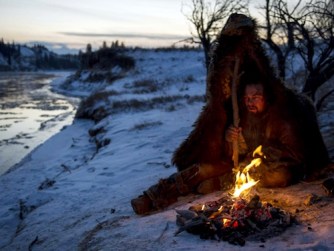 At the Oscars, I was pulling for Roger Deakins to make it 13th time lucky, or for Mad Max to do a technical sweep and take cinematography with it (not undeservedly); but having now actually seen Lubezki’s work on The Revenant, it’s hard to deny it’s an immensely deserving winner. His mastery of all elements of the form is on regular display: the use of light (all natural!), perspective, lenses, focus; the single-shot techniques he and Iñárritu learnt for Birdman are put to superior use here, creating some stunning sequences (rather than taking over the entire movie). It looks incredible on Blu-ray, too — so detailed, crisp, epic. If anything was going to convince me 4K was an idea worth investing in, it’s material like this. (The cost of a new TV, new Blu-ray player, re-buying films, and the real estate needed in the lounge for a screen big enough to appreciate it puts
 the other half me off again.)
The film’s biggest flaw is that it goes on a bit too long in the middle. I’m not saying it needs to be a fast-paced thrill-ride, I just think it lingers a little longer than it needs to in places. Individual shots are beautiful, but the sheer volume of them stretches the centre part thin. There’s probably one too many action sequences where Indians attack and our hero has to escape, not least the one that ends in a too-obviously-CGI dive off a cliff. Equally, for every one of those there’s an incredible sequence, like the opening Indian attack. For a film that could easily be described as arthouse-y and thematically-driven, there are some truly stunning action scenes. The long middle means you couldn’t really call it “an action movie”, 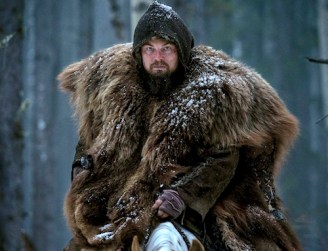 but focus on the first and last acts and it absolutely is.
I slipped in the word “masterpiece” a few paragraphs back, and I’d wager that’s what The Revenant is. It’s not perfect, and I don’t know that I’d say it’s the best film of last year either; but it is magnificently made, telling its story in a way only cinema can truly manage.

The Revenant is out on DVD and Blu-ray in the UK as of yesterday.
It placed 4th on my list of The 20 Best Films I Saw For the First Time in 2016, which can be read in full here.


 Score:



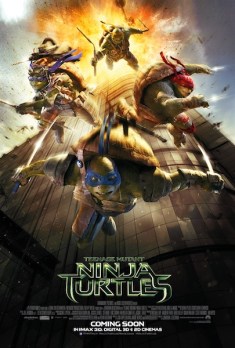 While I was killing time waiting for my coffee to brew before I sat down to watch Teenage Mutant Ninja Turtles, 2014 edition, I drafted the introductory paragraphs to this review. Yes, before I’d even started the movie, so sure was I that I would dislike it. Naturally they took an appropriately condemnatory tone, talking about how it was a product and not a movie, designed primarily to sell tie-in plastic to grown men who wish they were still children, etc etc. Unfortunately writing those paragraphs was a waste of my time, because I can’t use them, because — shock of shocks — I actually quite liked this movie.
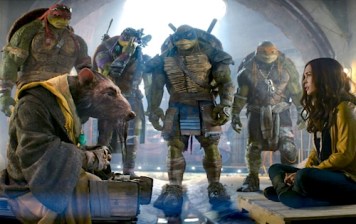 Mike into basically a turtle version of Michael Bay — i.e. he’s focused on lusting after Megan Fox and occasionally causing explosions — is a little cringe-y. Quite a few bits are a little cringe-y, actually; but they’re tempered by a few comedic bits that hit home, and a general veneer of “well, it could’ve been worse”.
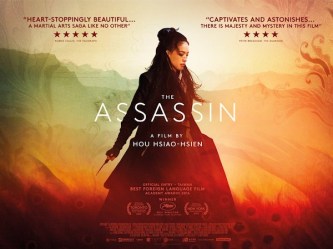 The Assassin is a martial arts drama about Nie Yinniang (Shu Qi), a woman trained since childhood to be a highly-skilled assassin. When her emotions lead her to renege on a mission, her master sets a difficult task for Yinniang to prove herself: she must return to her homeland and assassinate its leader, Tian Ji’an (Chang Chen) — her cousin, to whom she was once betrothed.
 So little happens at times that it’s very easy to become disconnected from it. At one point my mind wandered to other films it reminded me of.
 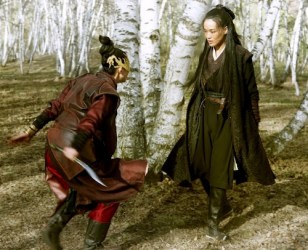 For all that, there is some action, but director Hou Hsiao-Hsien has said he’s more concerned about the before and after of a fight than the process itself — it’s about the mood, the tension, the ultimate outcome of winning or losing, rather than the choreography of the combat — so there’s a lot of build-up for very brief bursts of action. That’s certainly not an invalid way to handle it — it’s Leone-esque, in its way — but it does mean anyone looking for the detailed swordplay or fisticuffs you expect of a martial arts film will come away disappointed.




















 Favourite Film of the Month


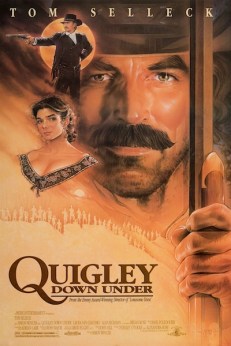 Tom Selleck is Quigley, who has the ability to shoot things at implausibly long distances, and whose hair has the ability to stay implausibly coiffed even after days abandoned in the outback. He’s been employed by Alan Rickman, who we know is the villain because this was released in 1990. Alan Rickman has brought Quigley to Australia on the pretence that he’s to kill dingoes, but he actually wants Quigley to kill Aborigines. Quigley doesn’t take kindly to this, because he’s the hero, and so pretty much as soon as he turns up he’s left to die in the outback. The end.
 I only heard about Quigley Down Under after Alan Rickman passed away, when a few blogs flagged it up as a great forgotten performance of his. He does bring some of his Die Hard /

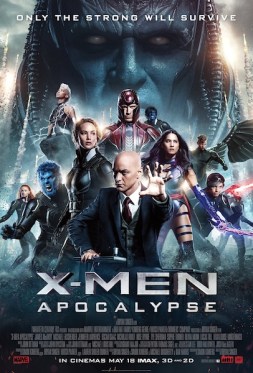 Despite fathering the modern superhero movie genre, the X-Men series always seems to punch under its weight at the box office (a point the recent
  That’s only the half of it, though. This is an X-Men movie, which not only means there’s an ensemble cast, but that it’s dedicated to constantly adding new members to it. This time around, we’re re-introduced to the ‘original’ team as teenagers: Scott Summers (Tye Sheridan) is the viewer’s “way in” to Xavier’s school after he suddenly starts shooting laser beams from his eyes; there he meets Jean Grey (Sophie Turner), a powerful telepath the other students are scared of because sometimes her dreams shake the school at night; Mystique rescues blue-skinned German teleporter Nightcrawler (Kodi Smit-McPhee) from a cage fight in Berlin, where he was up against Angel (Ben Hardy), who becomes one of Apocalypse’s Four Horsemen, alongside weather controlling street kid Storm (Alexandra Shipp) and Psylocke (Olivia Munn), who can create blades of energy with her hands. And there’s also Jubilee (Lana Condor), who has bugger all to do. Jubilee was a major character in the animated series, and the filmmakers seem obsessed with getting her into the movies (she had cameos in the first trilogy) without ever actually giving her anything to do.
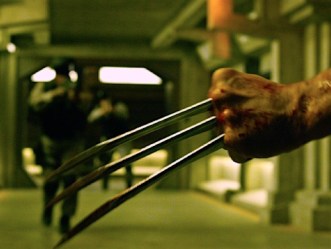 It doesn’t help that they feel the need to shoehorn a Wolverine cameo in there, an underwhelming action sequence that becomes a massive aside from the main storyline. It feels like setup for something more next time, but Hugh Jackman has stated
 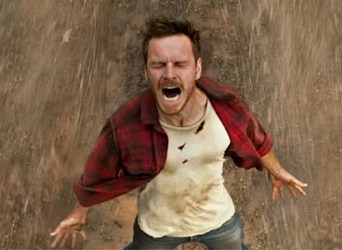 Another element lost in the mix is the real-world resonance contained in the best X-films. There’s a lot of to be said for the spectacle that’s present in all the movies, but Days of Future Past (for the most recent example) anchored it in the human conflicts between the heroes, and in their relation to the rest of the world. Apocalypse nods in that direction, with Mystique invoking Magneto’s metaphorical family to get him to stop destroying the world, but it’s not as well integrated, not as effective as previous outings. Said destruction is on a massive scale, but it’s too massive — the film doesn’t sell it; it’s just another city being destroyed somehow, emotionless computer-generated effects that are overfamiliar in these megablockbusters now (and not helped when you’ve seen similar sights two or three times right before the film in trailers for the likes of
  In fact, the film as a whole feels a draft or two away from being truly ready. Some of the dialogue clunks hard, especially when characters speak in exposition to one another. The plot needs streamlining and focusing, especially early on, and some events need appropriate weight added to them. Other things just need smoothing out — that trip to the mall happens Just Because, with no real sense of why the characters are doing it (other than some handwaving dialogue about needing to get out of the school for a change), and, as I said, in the final cut only leads to one single joke. Yet for all that, some things do work beautifully: Storm’s hero-worship of Mystique comes up almost in passing early in the film, establishing/emphasising Mystique’s place in the mutant world now; but then it becomes a key point in the climax without the need for any explanatory dialogue, as Storm wordlessly realises that her hero is fighting on the other side. It is, in a way, the best bit of the movie.
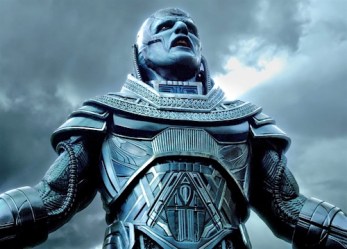 Despite being a negative nelly for much of this review (like so many others, which has given it a lowly
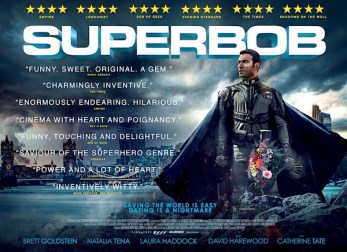 Comedies about superheroes tend to come in the form of big-bucks mainstream-aimed effects-y pieces (
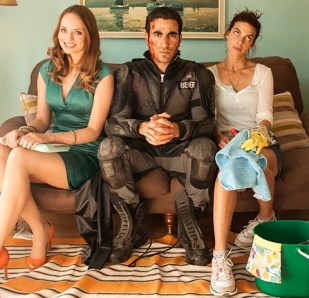 though, because the conceit is all but dropped fairly early on, and the film begins to develop in nice directions. It starts out as pure comedy, and while it doesn’t lose that aspect, it does develop a strand of endearingly genuine sweetness. That helps to see it through the predictable rom-com beats that follow, leaving you (or this viewer, at least) not minding that it’s predictable where the story’s going to go because, thanks to the characters, that’s where you want it to go.
 100Films.co.uk