2022 | Weeks 24–25

Similar to Week 21 last time, Week 23 only included rewatches, so gets skipped in the title. As for the other two, that brings us fundamentally to the end of June (the 26th, to be precise), and so almost to the halfway point of the year. But I’ll leave such discussion to my monthly reviews.

Instead, here are the remaining four reviews of films I watched that fortnight…

  • The Ghost Writer (2010)
  • Escape in the Fog (1945)
  • Pretty in Pink (1986)
  • House of Gucci (2021)


    The Ghost Writer

    (2010)

    aka The Ghost

    Roman Polanski | 128 mins | digital (HD) | 2.35:1 | France, Germany & UK / English | 15 / PG-13

    The Ghost

    Originally released as The Ghost in the UK (the same title as the Robert Harris novel on which it’s based), but now on Netflix under its US title, The Ghost Writer, whatever you call this film, it’s an effective thriller about a subject that might not sound thrilling: writing an autobiography. The key is that the person being biographied is a former British Prime Minister (Pierce Brosnan) who was involved in some shady business during his time in office, which is beginning to resurface in the news; plus the fact that his first ghost writer was recently found dead, washed up on a beach on the island the ex-PM is currently calling home. It’s into this maelstrom that our hero, the new ghost writer (Ewan McGregor), is dropped, and soon finds himself more involved than he’d like.

    So, despite the unique setup, it’s a fairly straight-up thriller plot of political intrigue and buried secrets. That’s not a criticism — this is very much my kind of thing. What elevates it is the film’s style and atmosphere. There’s something odd about it all, which makes the viewer feel as unsettled and out-of-place as McGregor’s character quickly becomes. Some contributing factors to this sensation are likely unintentional — the result of things like half the cast having to labour under different accents, or the excessive green screen used to fill in the views of Cape Cod (the film wasn’t shot in the US, but in Germany and Denmark, for “the director’s a criminal wanted in the US” reasons) — but neither of these elements felt glaringly bad to me, just… off.

    As I say, I think such an atmosphere is actually very fitting for a political thriller full of questions about who can be trusted, life-or-death mysteries, and a couple of solid twists. Yes, very much my kind of thing.

    4 out of 5

    The Ghost Writer placed 8th on my list of The Best Films I Saw in 2022.


    Escape in the Fog

    (1945)

    Oscar Boetticher Jr. | 63 mins | Blu-ray | 1.37:1 | USA / English | PG

    Escape in the Fog

    With the fifth (and, it would seem, final) of Indicator’s Columbia Noir box sets then-imminent, and a new series of Universal Noir soon to begin, I thought it was about time I actually started watching them. So here’s the first, both for me and the series (i.e. it’s the oldest film in box set #1). It’s a quickie from director Budd Boetticher (before he started being credited under that name) about a San Fransisco nurse who has an ultra-specific dream about a murder, then meets the victim-to-be in real life. It turns out he’s a spy about to be sent on a top-secret mission, but his only hope of making it alive is her using the details from her dream to prevent his death.

    It’s unfortunate that this 30-film ‘series’ (they’re only connected by the studio that made them and Indicator happening to bundle them together, of course) begins with such a travesty of a film. For starters, it’s barely even a noir, more a melodramatic mildly-fantastical spy thriller. Well, I can enjoy that kind of thing too — goodness knows the number of spy movies I’ve given high scores to, and there’s something to be said for a spot of ridiculous hokum — and Escape in the Fog might have been another such fun example, except it’s been made with a total absence of passion. It’s about as thrilling as a lukewarm cup of milky tea at a cafe that only has outside seating on a drizzly winter afternoon. It’s only redeeming quality is that it’s so daft (though only in places, because it ends up forgetting its own ridiculous conceits) that you can’t help but have a bit of a laugh at it.

    Filler in every sense of the word.

    2 out of 5

    Escape in the Fog is the 38th film in my 100 Films in a Year Challenge 2022.


    Pretty in Pink

    (1986)

    Howard Deutch | 97 mins | digital (HD) | 16:9 | USA / English | 15 / PG-13
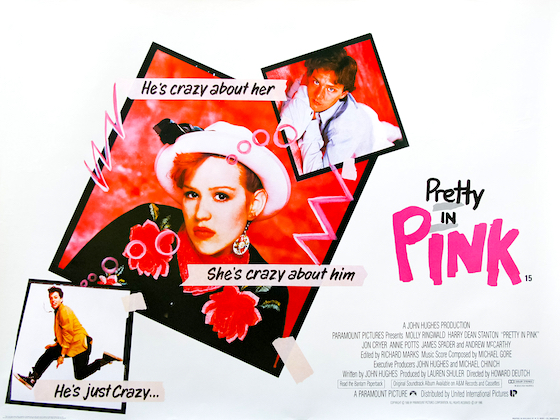
    Pretty in Pink

    Another John Hughes-penned ’80s teen movie that had passed me by (it’s only in the past few years that I’ve watched The Breakfast Club and Ferris Bueller’s Day Off, and I’ve still not seen Sixteen Candles or Weird Science). This one stars Molly Ringwald as Andie, a non-popular high school girl caught between the affections of her childhood friend (Jon Cryer) and a rich kid who’s suddenly showing an interest in her (Andrew McCarthy).

    No bones about it, plot-wise it’s a pretty standard love triangle romcom; but the devil is in the details, and Pretty in Pink has a lot of likeable ones. For starters, it’s so ’80s. Like, aggressively. Like, if you made a movie set in the ’80s, you wouldn’t make it this much ’80s because people would criticise you for overdoing it. Then there’s the supporting performances. Harry Dean Stanton makes a great ‘movie dad’ — you know, the kind of comforting, supportive father figure you kinda wish were your own. I don’t think I’ve ever seen him in a role like this before. The relationship between him and Ringwald comes across as really sweet and effective without tipping over into saccharine or implausible. Then there’s Annie Potts as Andie’s older best friend, proving she should be known for more than just being screechy and kooky in Ghostbusters. Plus, James Spader makes for a superb villain. It’s only a small role in the grand scheme of the film, but he does smarmy glibness so well.

    Poor Molly Ringwald — she’s fine in the lead, but everyone else is so good they kinda overshadow her in her own movie. Or maybe that’s unfair: Andie is a pretty likeable lead, with a commendable amount of independence and self-worth. Okay, she lets that slip a bit for A Boy, but what teenager hasn’t let such heady new emotions get the better of them? She comes out for the best in the end.

    The only major downside is the rushed third act, which makes the ending feel unearned — a feat that’s almost impressive when the ending is so predictable. It’s actually due to a post-test-screening rewrite and reshoot: in the original version (spoilers!) Andie ends up with Duckie, not Blane. Personally, I don’t think either is right: she should’ve chosen neither of them. As I see it, the film doesn’t really set up her getting back with Blane (presumably because it was a last-minute change), so I don’t buy that; but nor does it do enough to suggest she’d suddenly find Duckie a romantic proposition. They should have settled for being BFFs, and Blane should’ve fucked off. But I guess a romcom where the girl ends up single wasn’t done back then. You’d probably still find it a hard sell today, to be honest.

    4 out of 5

    Pretty in Pink is the 39th film in my 100 Films in a Year Challenge 2022. It was viewed as part of “What Do You Mean You Haven’t Seen…?” 2022.


    House of Gucci

    (2021)

    Ridley Scott | 158 mins | digital (HD) | 2.39:1 | USA & Canada / English, Italian & Arabic | 15 / R

    House of Gucci

    Director Ridley Scott tells the true (ish) story of the behind-the-scenes dramas at Italian fashion house Gucci in the mid 20th century. If you think that sounds like some kind of dull boardroom drama, oh boy, is it not. With the amount of scheming and backstabbing that goes on, it’s more like a variation on The Godfather than a staid piece about people arguing in suits in offices. Oh, those crazy Italians, eh?

    Of course, none of the main cast are Italian. But they are all doing Italian accents. Or what passes for Italian accents in the mind of us anglophones — they sound about as authentic as a Dolmio advert. Or a Mario game. “It’s a-me, Lady Gaga!” Although, once you get over the humour value of that, Gaga is genuinely very good in her Lady Macbeth-esque role as a woman who marries into the family and goads her husband into dominating the business. And then there’s Jared Leto, buried under prosthetics as well as the dodgy accent. Does he know he’s getting laughs with almost every line, or does he think he’s giving a serious dramatic performance? Who knows. Who cares. No one in the rest of the cast is as memorable — even when we’re talking about actors of the calibre of Adam Driver, Salma Hayek, Jeremy Irons, and Al Pacino — but then, I’m not sure there’d be room for that many Big performances. Scott brings his usual pizzazz too, with the well-shot gorgeous locales looking beautiful and elegant. Parts of Italy are just fundamentally beautiful, and you think it would probably be hard to mess up filming them.

    There are plenty of criticisms of the film to be found in pro reviews and viewer comments across the usual sources. Reading them, I don’t necessarily disagree on any particular point. For one thing, it’s definitely too long, and still leaves a load of information to be dumped in the inevitable “what happens next” text at the end. It could also be clearer about what’s going on at times, especially legal stuff, like when they’re suddenly being investigated for financial crimes. That said, it has an energy that often keeps it barrelling along. It’s probably an advantage to not know the real-life events, because it allows the story to unfold without preconceptions about where it’s going, so you’re not waiting for it to get to the bits you know.

    Flaws and all, I had a ball watching it. It may really be a 3-star film in some senses, but I got a 4-star level of enjoyment out of it.

    4 out of 5


  • Paris, Texas (1984)

    Wim Wenders | 146 mins | digital (HD) | 1.66:1 | Germany & France / English | 12 / R

    Paris, Texas

    This was my first experience of a Wim Wenders film, so I wasn’t quite sure what to expect, other than knowing it’s an acclaimed classic that features on many “great movies” lists (albeit usually a bit further down than many of the most famous “great movies” on such lists).

    It starts out almost Lynchian, with a man, Travis (Harry Dean Stanton), wandering out of the desert. Where’s he been? How long’s he been there? No one knows. He ends up in the care of a quirky doctor in the back of beyond — it’s not even your typical American “small town”, but a trailer and a shack in the middle of nowhere. Then his brother (Dean Stockwell) comes to get him, and it becomes a bit Rain Man (a film released four years later, so certainly not an influence) as two estranged and mismatched adult brothers embark on a cross-America road trip because one of them objects to flying. Then they get home, and it becomes a domestic comedy-drama about an absent father trying to reengage with his preteen son, Hunter (Hunter Carson). And then they go off in search of the boy’s mother, Jane (Nastassja Kinski), and it becomes something else again… It almost circles back round to Lynchian, in fact, with a couple of extended sequences in a surreal, almost otherworldly place of work.

    But to keep calling it “Lynchian” is to do Wenders’ work a disservice, because it’s not a copy — indeed, in 1984 Lynch was releasing his Dune, and had yet to embark on most of the films that define “Lynchian” for us. An alternate comparison might be the Coen brothers, at least for the opening section: it’s of a piece with their heightened worlds (the weirdo doctor living in the middle of nowhere) and semi-outlandish stories (Travis reappearing from nowhere). But this was released the same year as the Coens’ debut, Blood Simple, so, again, it’s not exactly a fair comparison. Or if it is fair, it’s backwards: if anyone influenced anyone, it would be Lynch and the Coens drawing on Wenders.

    Father and son

    Setting simple (and kinda inaccurate) comparisons aside, in parts this is a magnificent film. The scene where Travis and Hunter walk home after school ‘together’ borders on magical; a truly superb sequence of father-son bonding. The bit where we first enter Jane’s place of work feels like descending into some previously-unknown alternate world that exists adjacent to our own (as I say: Lynchian). Then the ‘conversations’ with Jane through the oneway glass, especially the first one, are subtly powerful in how they’re shot and performed. When it works, this is a striking, memory-searing movie.

    But then, overall, I found it kinda… not slow, exactly — and I couldn’t necessarily point at which bits I’d cut — but I did wonder if it might benefit from being tighter. Especially the first hour or so, which is mainly about Travis and his brother in a way that doesn’t ultimately feel too relevant to what the film really wants to dig into, which is Travis’s relationships with his son and ex-wife. Of course, his relationship to his brother is adjacent to that, but it’s not as vital. That portion of the film does serve to build up mystery and delay certain revelations, but I wonder if the film wouldn’t be just as effective if that section were pared back somewhat. Apparently filming started without a completed screenplay, the intention being to film in story order and write the ending when screenwriter Sam Shepard had an understanding of how the actors were portraying the characters. That methodology might explain why the narrative shifts and changes so much, I think.

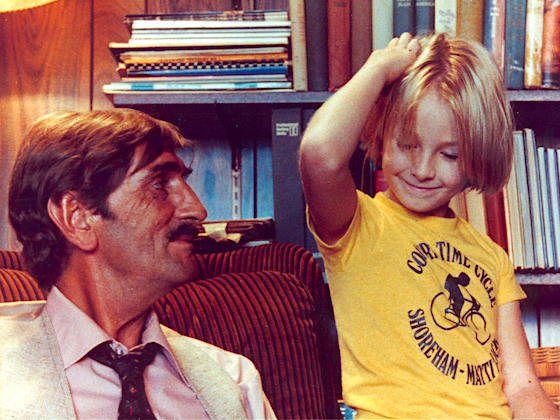
    Through all of this, the film really rests on the shoulders of Harry Dean Stanton. Even when he’s initially taciturn, it’s clear he’s the man to watch; the enigma we must solve. And when we finally learn his history — which is completely at odds to the calm, composed, quiet man we’ve followed throughout the film — it’s… well, I’m not sure what it is. Not necessarily what I was expecting; and yet, what was I expecting? Part of the point of the whole thing, surely, is how much he’s changed, and how that facilitates his final choices. But then, his choices seem based in the man he was, not the man he’s become, so is he right? Maybe; maybe not. I suppose there’s stuff to debate and talk about here, which is often a signifier of a Great Movie.

    An adjacent world?

    As to that, I won’t be adding it to my personal favourites pile right now. But it’s a fascinating, at times incredible, film. I can understand its appeals to a certain kind of cinephile.

    4 out of 5

    Paris, Texas was re-released in UK cinemas at the end of July by Curzon, with the UK debut of a 4K restoration (which is the version I watched. It looks good). There are still some screenings going on, and it’s available to stream on Curzon Home Cinema for £3.99. If you prefer your films free, it’s also on All 4 until the middle of September, but I don’t know if that’s the new restoration or not.

    I do know it was the 40th film in my 100 Films in a Year Challenge 2022, and was viewed as part of Blindspot 2022.

    Prey (2022)

    Dan Trachtenberg | 99 mins | digital (UHD) | 2.39:1 | USA / English | NR* / R

    Prey

    In the seemingly-endless cycle of “trying to reboot popular ’70s/’80s sci-fi franchises”, it is once again the turn of Predator, following in the wake of 2018’s disappointingly messy The Predator and 2010’s apparently-disliked Predators (I enjoyed it, but everyone seems to write it off nowadays). Where both of those tried to go bigger — either with more or larger versions of the eponymous aliens — Prey strips things back to basics, as per the one entry in the series everyone can agree is good, the first.

    Set around 300 years ago, when indigenous people still lived freely on the plains of North America, the film introduces us to a member of the Comanche tribe, Naru (Amber Midthunder, who genre fans might recognise from X-Men-adjacent TV series Legion), a young woman who wants to prove herself as a hunter like the tribe’s menfolk, including her exalted brother (Dakota Beavers). Long story short, she’s about to get her chance when an alien Predator rocks up.

    Plot-wise, Prey is pretty straightforward. And therein lies a big part of its success, because what more do we want from a Predator movie than “a hero has to fight a technologically-superior Predator”? If you do want more than that, I think you’ve come to the wrong franchise. Of course, simply rehashing what’s gone before is just another path to failure, and so what Prey does is take those basic bones and dress them up with fresh settings, ideas, and perspectives. In this case, that’s the period setting and Native American heroes. How do you defeat a Predator using weapons no more technologically advanced than bows and arrows? With intelligence, of course, and the film does a nice job of showing Naru gather information and formulate plans without ever needing to spell them out for us.

    The prey becomes the predator

    That it can pull that off is also to the credit of star Amber Midthunder, who conveys so much of Naru’s thought processes through only looks and expressions. All round she makes for an appealing heroine: she’s capable and brave, but not foolishly so, sometimes hanging back to assess the situation, or even running away when the odds aren’t in her favour, rather than diving in mindlessly. As action heroes go, I think that counts as nuance. I saw one critic tweet that she’s so good she needs to be given a Marvel superhero role ASAP, which is more a depressing indication of the state of cinema (appealing action lead? The highest honour would be a Marvel role!) than an indication of Midthunder’s ability (please, Hollywood, don’t just waste her on Marvel filler).

    This may be a straight-up humans vs aliens action movie, but it still treats its audience with a degree of respect. It knows we’re capable of joining dots ourselves, especially when we can see characters doing the same. Naturally, Prey has some developments and moments derived from previous Predator movies — it wouldn’t really be part of the same franchise if it wiped the slate wholly clean — but they feel recontextualised or come into play naturally, rather than the filmmakers over-eagerly forcing them on us as a plea to nostalgia.

    Quite aside from the plot and action, this is a beautifully made film. The first half-hour almost evokes the work of Terence Malick, with its relatively slow pace and photography that showcases nature and gorgeous scenery. This would’ve been a stunner on the big screen. Most big-budget theatrically-released films don’t look this much like A Movie nowadays, never mind streaming churn. I say it only “almost evokes Malick” because it’s not actually Malick-speed slow, but what it’s doing is quite deliberate: establishing the characters, the environment they live in, the things they know and the tools they have access to, and so on — as well as building up the looming threat of the alien hunter — so that we understand the world and the stakes when things kick off later.

    They're going on a bear hunt (no, really, at this point they think it's a bear)

    One thing I sort of want to pull the filmmakers up on is the language(s) used for dialogue. During promotion, they’ve talked about how some of the film is actually in the Comanche language, a selling point because of diversity and inclusion. Well, not much of the dialogue is Comanche — the primary language is unquestionably English — and it’s not subtitled, which means the vast majority of viewers can’t understand it, so they could be saying anything. I don’t think a film is ‘in’ a language if you can’t understand it (it’s why I’ve not listed Comanche as a language at the top of this review, nor the European languages spoken by the settlers who come into the plot, which also aren’t subtitled). That said, there is the option to watch the entire film dubbed in Comanche — a first, apparently. That would be more historically authentic, but it’s also a dub, i.e. not how the film was ‘intended’. Nonetheless, I’ve already seen some argue it’s a better version, so it may well be worth a look.

    That minor point aside (it’s not something I’m holding against the film, just the filmmakers’ boastfulness), Prey is a resounding success at what it sets out to be: an action movie in which humans and Predators have a fight. It’s the Predator film fans have long been waiting for. And it hopefully indicates to the studio bigwigs what the future of this franchise should be: pick a different era, with different technology and/or attitudes to combat, drop a Predator into it, and see how the humans get on against it. Honestly, with the right creatives, you could milk that simple premise for another half-dozen or more enjoyable movies, I reckon.

    4 out of 5

    Prey was the 49th film in my 100 Films in a Year Challenge 2022. It placed 10th on my list of The Best Films I Saw in 2022.

    * There was no certificate listed on the BBFC website at time of review; Disney+ continuing to take advantage of the fact there’s no legal requirement for streaming content to be certified. Some press ads listed the film as 18+, but they’ve gone with 16+ on the service itself. So, it’s either a 15 or an 18. I guess we’ll never know (unless it gets a disc release). ^

    July’s Failures

    As readers of my monthly review will likely have already gathered, I didn’t go to the cinema this month. Well, if I didn’t make it out for some of the big hitters earlier in the year, I wasn’t likely to be tempted by the poorly-reviewed Thor: Love and Thunder or kiddie sequel Minions: The Rise of Gru, was I? (I actually quite enjoyed the first Minions film, to my surprise, but I’m still not paying cinema prices for the sequel. Happy to wait for it to be free someplace.) Other big screen offerings this month included The Railway Children Return (never seen the original), Where the Crawdads Sing (couldn’t tell you anything about that), and DC’s League of Super-Pets (a box office flop, apparently).

    Also in cinemas — then on streaming a week later — were a pair of Netflix original movies. You don’t need to have even read Jane Austen to realise that Persuasion is not particularly faithful, even just from watching its trailer; and if you are a fan of Austen, apparently it’s a travesty. I may end up watching it at some point out of morbid curiosity, but I’m in no rush. Then there was action-thriller The Gray Man, which seems to have received universally mid to poor reviews, but which I know I’ll end up giving my time to someday. You never know: plenty of people seemed to hate Michael Bay’s Netflix movie, 6 Underground, and I found it passingly fun, so there’s always hope.

    Other premieres further down the streaming hierarchy (as in, I don’t think they were granted theatrical releases) included The Sea Beast, a fantasy animation with “How to Train Your Dragon at sea” vibes that looks like it might be fun; and Rogue Agent, which is apparently a true story about a conman pretending to be an MI5 agent, starring James Norton and Gemma Arterton. I presume that one can’t be very good, because it’s had zero press that I’ve seen, but it sounds up my street. (Mind you, it’s not out in the US until 12th August, where it’s apparently getting a limited theatrical release, so if there’s any buzz to be had I guess it’ll come when US critics get their hands on it.)

    As for Amazon Prime, it seems the best they could offer in the film department was remake Most Dangerous Game. Billed as a “new movie”, it turns out it was originally a Quibi series in 2020 (they never even tried to launch Quibi in the UK, so anything on there has had zero cultural footprint in the UK; which, as I understand it, is roughly the same as the cultural footprint it left in the US). As it has somewhat starry names (Liam “that’s the one who isn’t Thor” Hemsworth and Christoph Waltz), I guess someone felt it was worthwhile to repackage it as a feature film for Amazon. But before they go that far, as a series it moved to The Roku Channel, who commissioned a second season — assuming that goes ahead, I guess we might be treated to a ‘sequel’ someday. Maybe Amazon are on to something after all.

    As I mentioned last month, I’ve dropped many streaming services I was subscribed to. The subscriptions for a couple of them lasted into this month — Disney+, for example, on which I could’ve watched the likes of The Princess or Flee if I’d pulled my finger out in time. (Though Flee was added on the very day my sub ended. After hearing about how good it is on Letterboxd for what feels like years, for it to finally be available to me — only to immediately not be — felt bloody typical.) Over on MUBI, there was acclaimed Nick Cave doc This Much I Know To Be True, but I never got round to the last acclaimed Nick Cave doc (One More Time With Feeling), so I feel I should see that first (probably doesn’t really matter, but you never know). Other titles of note included Paul Verhoeven’s sexy nun flick Benedetta; drama Bergman Island (it’s surely some kind of arthouse Inception when an arthouse film about the work of a famous arthouse filmmaker is available on the arthouse film streamer); Cold War (which I think is still available someplace else anyhow); and — a true rarity — titles streaming on MUBI that I own on disc! Namely, Jia Zhangke’s A Touch of Sin and Mountains May Depart (I have Arrow’s box set; indeed, I mentioned it in June 2019’s failures. Over three years ago… jeez…

    Speaking of box sets, on to the latest stuff I’ve been buying on disc, ready to leave on my shelf for years (or decades) to come before I finally watch it (maybe). This month’s brand-new releases included Everything Everywhere All at Once (imported, because there’s no UK disc release even scheduled currently), Fantastic Beasts: The Secrets of Dumbledore (what can I say? I’ve got to complete the set), The Northman, and anime Belle — all in 4K, naturally. And that’s not the end of it, because catalogue titles in 4K included Okja (also imported, because Criterion aren’t bothering to release on 4K over here, even though they’re region free so they could literally just send us the discs they’ve printed for the US); Out of Sight (also imported); Arrow’s new edition of Tenebrae (I’ve not bothered with all of their Argento 4K upgrades, but this is a significant do-over from the Blu-ray in terms of extras and packaging, no matter what the film’s PQ is like); also from Arrow, Mary Shelley’s Frankenstein (waited for that one to be discounted); Red Sonja (which StudioCanal didn’t see fit to give their box-o’-tat treatment, probably wisely); but they did do one for the second Doctor Who movie, Daleks’ Invasion Earth 2150 A.D., and of course I bought it; and, finally, Second Sight’s lavish edition of The Witch (which, in my head, I still call The V-vitch).

    I think I’ve mentioned before that my strategy for importing from the US these days is wait until I’ve built up quite a few titles I’m interested in, then order them in bulk. That spreads the postage thinner and, it seems, on the site I regularly use, if you spend enough then you dodge them adding a VAT charge (gasp!) So, alongside the aforementioned US 4K titles, I picked up Batman: Mystery of the Batwoman (the last Batman: The Animated Series-adjacent movie I hadn’t upgraded from DVD); Warner Archive releases of Drunken Master II and the 1951 Show Boat (never let it be said my taste is not varied); Flicker Alley’s releases of rare noir Repeat Performance and In the Shadow of Hollywood, a box set of Poverty Row titles; anime Vampire Hunter D (to go with its sequel, Bloodlust, which I bought the UK edition of years ago; no local release of the original has been forthcoming); and… Zebraman. Total punt, that, but I happened to see someone review it on Letterboxd and it sounded awesome. Yeah, that’s all it takes to get me to fork over the cash sometimes.

    That should be more than enough… but no, my lack of self control knows no bounds. For new releases of catalogue titles, well, I can scarcely resist a Shaw Brothers film nowadays, so of course 88 Films got me with Martial Club, and also The Seventh Curse; while Eureka tempted me with a trio of old Universal horrors in their Boris Karloff-starring Universal Terror set. And then there were the sales! From Dogwoof, documentaries Max Richter’s Sleep (the concept of which fascinates me, so a doc on it seems a good punt) and David Byrne’s American Utopia (a doc in technicality only, because it’s a concert film; one I adored). And HMV had one of their regular 2-for-£15 offers on their Premium Collection range, and (as usual) I couldn’t resist. Four titles this time: more Jackie Chan in Mr. Nice Guy; more noir in The Set-Up; more classic horror in The Mystery of the Wax Museum; and an upgrade from my old two-disc DVD for A Streetcar Named Desire.

    Now, that’s plenty, right? …right? Nah, we haven’t even got to the stuff I bought on a random whim yet! Brothers Till We Die, In the Cold of the Night, Knight and Day, Sorcerer… Sometimes I think I might have a problem…

    The Melting Monthly Review of July 2022

    Hello, dear readers! No, this month’s heatwave didn’t melt me away to nothing (though it tried its damnedest), but this is a rare sighting of a post on this blog nowadays. I hadn’t intended to be so quiet this month (well, I never do), but, you know, life. Nothing serious, just a mixture of work and personal commitments.

    It’s been the same story with my film viewing, which once again fell short of my ongoing aim of watching at least ten new films a month. And as for my 100 Films Challenge, well, that’s way behind where it should be. To reach #100 in December at a steady pace, I should be at #58 by the end of July. As you’ll soon see, I’m not even close.

    What I did spend a fair amount of time on this month was catching up with TV — things like Disney+ series Obi-Wan Kenobi, which I seemed to enjoy more than most, and Apple TV+ spy thriller Slow Horses, which is as good as the reviews say — so I intend to refocus on films in August. We’ll see how that pans out.


    This month’s viewing towards my yearly challenge

    #44 Ambulance (2022) — New Film #7
    #45 Johnny Gunman (1957) — Genre #3
    #46 A Better Tomorrow (1986) — WDYMYHS #6
    #47 Mifune: The Last Samurai (2015) — DVD #4
    #48 Calamity Jane (1953) — Rewatch #7


    • I watched eight feature films I’d never seen before in July.
    • Four of them counted towards my 100 Films in a Year Challenge, along with one rewatch.
    • Those are the kinds of numbers there’s not much to say about: they’re nothing special, but they’re not spectacularly bad, either.
    • That said, I’ve slipped further behind in my 100 Films Challenge — as I noted at the start, I should be at #58 by now. I now need to watch, on average, more than 10 qualifying films each month for the rest of the year to complete the challenge.
    • This month’s WDYMYHS film was John Woo’s classic action-thriller that defined the ‘heroic bloodshed’ subgenre, A Better Tomorrow.
    • I remain a film behind in my WDYMYHS challenge, and now the same is true of Blindspot too, as I didn’t watch one of those this month. At least there’s still five months left for me to catch up.
    • From last month’s “failures” I watched Ambulance.


    The 86th Monthly Arbitrary Awards

    Favourite Film of the Month
    When Michael Bay is on form, there’s no action director quite like him — and, for my money, Ambulance is Michael Bay very much on form.

    Least Favourite Film of the Month

    Nothing absolutely terrible this month, which leads me to name Johnny Gunman for this category. It suffers for being a low-budget independent film in an era when low-budget independent films weren’t really yet a thing — it’s solid enough for the forgiving viewer, but does suffer from some weak acting and novice-like filmmaking choices. I didn’t dislike it, but, in the context of the rest of this month’s viewing, it doesn’t quite measure up.

    Bickering Old People of the Month
    45 Years depicts a couple’s sudden relationship difficulties after four-and-a-half decades of marriage with such scathing realism that I have to give this to The Bucket List for being fun bickering. But I think we all know which is the better film, really. Only one of them is in the Criterion Collection, after all.

    Best Weather of the Month
    A scathingly realistic drama about a couple having sudden relationship difficulties after four-and-a-half decades of marriage, in part because their emotional communication is inadequate, set in grey, misty, wintry countryside? 45 Years is British through and through, not least that weather. Oh, it looked so beautiful, especially watching it on a hot summer day — personally, I long for our winter to come again.

    The Audience Award for Most-Viewed New Post of the Month
    After a couple of months where this category has been dominated by my ‘failures’ posts, they dipped to second place in July. Instead, the victor was something of a surprise, but a pleasant one: my review of undeservedly forgotten 1930s melodrama Bank Holiday.


    Every review posted this month, including new titles and the Archive 5


    More films, hopefully.

    Lupin the Third: Is Lupin Still Burning? (2018)

    aka Rupan sansei: Rupan wa imamo moeteiruka?

    Jun Kawagoe & Monkey Punch | 27 mins | Blu-ray | 16:9 | Japan / Japanese | 15

    Lupin the Third: Is Lupin Still Burning?

    Whether you want to call this a short film or a TV special or something else entirely (it was originally released straight to DVD as a special feature in Japan) is little more than a technicality, really. It’s a sub-40-minute standalone piece, and therefore I’m counting it as a short film (it also has been screened theatrically, so it’s not a totally ridiculous classification).

    What it definitely is is a 50th anniversary special for the Lupin the Third franchise. Best known in the West thanks to Hayao Miyazaki’s debut feature, The Castle of Cagliostro, Lupin III is actually a sprawling franchise. Beginning life in 1967 as a manga written and illustrated by a chap called Monkey Punch (I suspect not his birth name), an anime TV series followed in 1971, since when there have been multiple further series, dozens of films (both theatrical and TV specials), plus a couple of attempts at live-action movies, and a bunch of video games and stuff too.

    Although this short was produced to mark the birthdate of the comics, it takes its cue from the anime series, the first episode of which was called Is Lupin Burning…?! and had the same setup: Lupin is to take part in a car race, but it’s actually a lethal trap set by his enemies. But from there, this version spins off into some wacky time-travel shenanigans — a way to send our hero back into key adventures and moments from his history, handily.

    50 years in the crosshairs

    Appropriately for a 50th anniversary special, Is Lupin Still Burning is loaded with references (both major and minor) for diehard fans to enjoy. As someone who has enjoyed a couple of Lupin’s adventures but is a long way from being well-versed in his world, I could tell a load of stuff was flying over my head — almost everything, in fact — which was unfortunate, but understandable. This is clearly a celebration that’s primarily aimed at dyed-in-the-wool fans rather than pleasing or initiating newcomers. That said, it still just about works as a madcap one-off adventure. It’s particularly enjoyable in the kinetic action sequences, like a destructive car race — being held in Nomaco (work out the ‘pun’ for yourself) — that plays out during the opening credits.

    The franchise’s only regular female cast member, Fujiko Mine, spends most of the film captured by the villains, strapped to a torture table with her clothing mostly torn off, being tickled by robot hands and stuff like that. Your feelings about all this are your own; I describe it merely for context. Put another way, not all of the “fan service” requires prior knowledge to be, er, serviceable.

    I expect if you’re a long-term fan of Lupin III, this fan-service-filled short is deserving of at least 4 stars. As someone without that depth of knowledge, it’s unmistakeable that you’re missing out on plenty. The callbacks aren’t little asides or background nods, but fundamental to the plot of the piece. Nonetheless, I’m giving it a positive score, because it is still enjoyable, even if it’s clearly not really made for the likes of me.

    3 out of 5

    2022 | Week 22

    Maybe I should’ve called this post “Weeks 21–22”, to ensure that the titles of these roundups had a complete run of weeks throughout the year. But I didn’t actually watch anything new in Week 21 (my only film that week was the Challenge-qualifying rewatch of On the Town), so it seemed inaccurate to include it.

    Week 22, on the other hand, was moderately busy, with this lot…

  • This Means War (2012)
  • To Be or Not to Be (1942)
  • An Unsuitable Job for a Woman (1982)
  • The Pajama Game (1957)
  • The Contender (2000)


    This Means War

    (2012)

    McG | 98 mins | digital (HD) | 2.35:1 | United States / English | 12 / PG-13

    This Means War

    I bet whoever came up with this thought they were a genius: “spyfi action-adventure + rom-com? It’s the perfect date movie!” Of course, what you actually end up with is a film that struggles to do either part well.

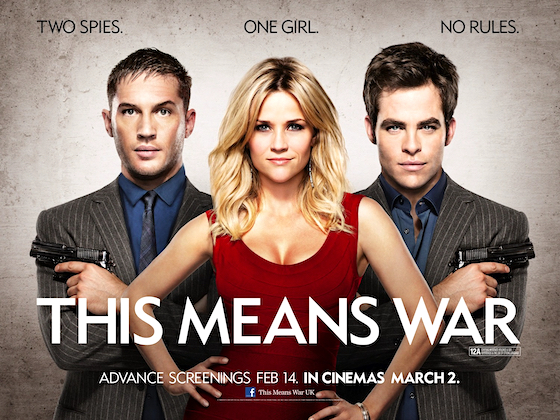
    It stars the unlikely combo of Chris Pratt and Tom Hardy (you definitely can’t imagine Hardy doing a movie like this today) as BFF CIA agents who independently fall for the same woman, played by Reese Witherspoon. Uh-oh. Hilarity ensues as the guys deploy their CIA tricks and tech to influence the relationships. Yeah, it’s the kind of concept that once upon a time sounded like a fun and quirky rom-com, but nowadays seems at best morally dubious, at worst downright creepy. And, indeed, that’s how it plays out, with situation after situation that’s played for laughs but feels a little uncomfortable.

    Of course, the big question is “who ends up with who?” This is one of those films so committed to its storyline, so structured to lead to one correct answer, that… they shot multiple endings so they could decide in post. The one they went with doesn’t feel quite right, but, if you imagine the alternatives, most of them don’t either. Well, I say that: I don’t think it’s really a spoiler to tell you that Witherspoon ends up with one of the guys, when the correct choice would’ve been “neither of them. Run from the stalker-ish CIA agents! Find a normal man!”

    2 out of 5


    To Be or Not to Be

    (1942)

    Ernst Lubitsch | 99 mins | digital (HD) | 1.37:1 | USA / English | U

    To Be or Not to Be

    Ernst Lubitsch’s satire concerns an acting troupe in occupied Poland who become mixed up in a soldier’s efforts to capture a German spy before he can undermine the resistance. Made while World War II was still in full force, the film attracted criticism in some quarters for being a comedy about such tragic and ongoing real-life horrors. Lubitsch defended his work, writing to one critic to say, “What I have satirized in this picture are the Nazis and their ridiculous ideology. I have also satirized the attitude of actors who always remain actors regardless how dangerous the situation might be, which I believe is a true observation.” He’s right, of course; at least about the first part. Ridiculously, such debates about whether you can satirise the Nazis persist to this very day — just look at some of the responses to Jojo Rabbit.

    Lubitsch’s film is subtler than Waititi’s, though still undoubtedly a comedy. I mean, with its plucky resistance members taking occupying Nazis for fools, I couldn’t help but think of this as a classier version of ’Allo ’Allo… but I’ve never actually seen a whole episode of that show, so don’t hold my comparison in too high a regard. Whereas that sitcom is famous for its catchphrases and bawdy gags, To Be or Not to Be is less overt, preferring to paint the Nazis as fundamentally incompetent and derive its humour there.

    Despite the distaste some felt, it obviously works for most people, as it appears on several “great movies” lists, not least both the IMDb and Letterboxd Top 250s. To be honest, I feel like I need to give it another spin to digest it more fully, but these thin thoughts will have to suffice for now.

    4 out of 5

    To Be or Not to Be is the 35th film in my 100 Films in a Year Challenge 2022. It was viewed as part of Blindspot 2022.


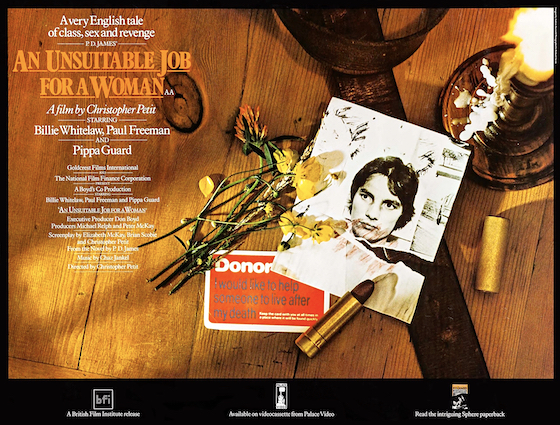
    An Unsuitable Job for a Woman

    (1982)

    Christopher Petit | 94 mins | Blu-ray | 1.85:1 | UK / English | 15

    An Unsuitable Job for a Woman

    I’ve never read the P.D. James novel on which this is based, but I’m assured it’s longer and more complex — the film rather lacks for plausible suspects, making the central murder mystery thoroughly guessable.

    That said, I’m not sure co-writer/director Christopher Petit is all that concerned with producing a true whodunnit. Put another way, I think he’s more interested in the characters, who happen to be involved in a mystery, than in the mystery itself. Which is fine, but I’m also not sure the film does as good a job as it could digging into those characters. I mean, the way the kinda-naïve young investigator becomes obsessed with the deceased subject of her inquiries — almost falling in love with him, it seems, like some kind of gender-flipped riff on Laura — is more nodded at than explored.

    In the end, I felt like I wanted to like the film more than it was actually giving me things I needed to really like it. It’s not bad, but perhaps it could have been great.

    3 out of 5


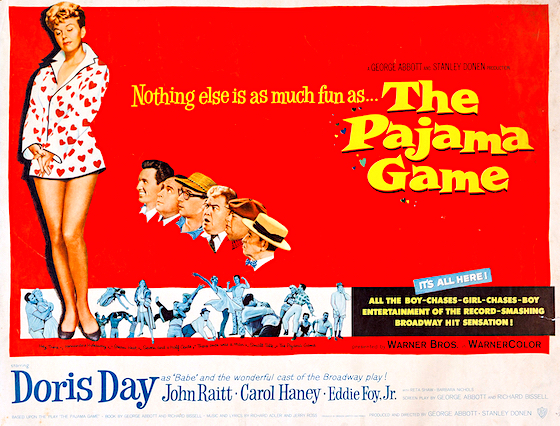
    The Pajama Game

    (1957)

    George Abbott & Stanley Donen | 101 mins | digital (SD) | 4:3 | USA / English | U

    The Pajama Game

    This minor musical is primarily of note for two things: the original Broadway staging featured the choreography debut of one Bob Fosse; and it features the song Hernando’s Hideway — if you don’t recognise the title, I’m sure you’ll recognise the tune. I had no idea this is where it originated.

    The story is about a pay dispute in a pyjama factory (given the current strikes and arguments here in the UK, you might think I watched this deliberately. Nope, total coincidence). On one side there’s the leader of the union’s grievance committee (Doris Day, one of just a handful of replacements made to the original cast when they transferred the stage production to the screen). On the other, the new superintendent (John Raitt, clearly a success on Broadway but less so on film). Of course, they fall for each other, before the pay conflict tears them apart. Can their love overcome such trials? What do you think?

    I saw someone describe The Pajama Game as an overlooked classic, which is taking things a bit far. It’s mostly likeable and quite fun, but rarely transcends that level. The undoubted highlight is Fosse’s choreography, which gives even the lesser numbers a polished dynamism. There are a couple of decent songs, but nothing really stands out, bar the aforementioned. It gets a bit too farcical in places, with some of the storylines ultimately taking a turn into very broad territory that feels misjudged. One primarily for genre fans only.

    3 out of 5


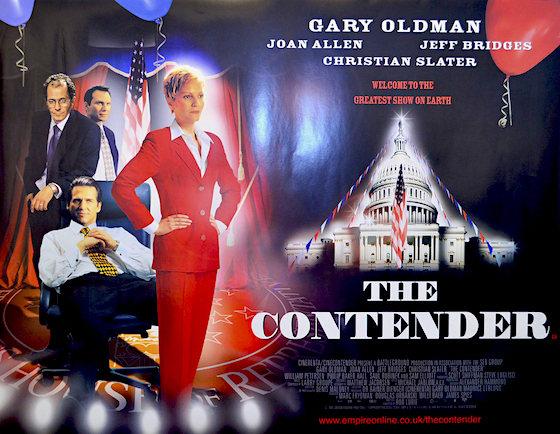
    The Contender

    (2000)

    Rod Lurie | 126 mins | Blu-ray | 16:9 | USA, Germany & UK / English | 15 / R

    The Contender

    I only picked this up on disc because it was part of a bundle of other titles I really wanted, but it also sounded like the kind of thing I’d like. Strange that I’d not heard of it before, then. I guess some films just get lost in movie history, especially when they’re a lesser member of a whole wave of movies. This is a political thriller of the kind they seemed to make quite a few of during the ’90s and into the early ’00s, but don’t really do anymore. I guess they exhausted the well, especially after 156 episodes of The West Wing.

    In this case, the story revolves around Laine Hanson (Joan Allen), the first woman nominated to be Vice President (it only took another two decades for that to happen in real life). There’s the familiar battle between the Democrats to get her confirmed, and the Republicans who’d like to do anything to thwart the Democrats. Amongst the scheming between the two sides, the big revelation is that Laine possibly engaged in a scandalous sex act while in college. She refuses to confirm or deny the rumour — it’s her personal business and shouldn’t affect her appointment. Except, of course, it does.

    Various other allegations come and go throughout the confirmation process, the two sides continuing to go back and forth in their attempts to win. It’s not necessarily the point the film is making, but it’s a reminder that politics is all a game to those involved, even as it can have serious effects on the lives of the rest of us. More overtly, the film tackles the different standards a woman is held to when trying to take public office. Fortunately, it’s not as overbearing with that as it could be. Indeed, all round the film is fairly understated. It’s a solid, unflashy, procedural-based kind of thriller.

    That is until the end, when it throws away the understatement for a grandstanding speech based around a fundamental belief in the greatness and goodness of the American political system. It would be heavy-handed in any circumstance, but the past few years (if not longer) of American politics have shown it for the total lie it always was. It doesn’t wholly undermine what’s gone before, but it does end the film on a sour note.

    4 out of 5


  • Bank Holiday (1938)

    aka 3 on a Week-End

    Carol Reed | 82 mins | digital (SD) | 4:3 | UK / English | U

    Bank Holiday

    You’ll be forgiven for not having heard of this one, even though it’s directed by Carol Reed (The Third Man, Oliver!, etc) and stars Margaret Lockwood (The Lady Vanishes, etc), because it seems to be pretty obscure. I only discovered it when browsing the online offering of UK digital channel Talking Pictures TV, and it mainly caught my attention because that was just before the weekend of the Queen’s Platinum Jubilee, when we had a double Bank Holiday. “What appropriate viewing,” I thought. Well, sometimes chance smiles on us, because this definitely doesn’t deserve to be so overlooked.

    As the title indicates, the film is set on a Bank Holiday weekend — the August one, to be precise — and, this being the interwar years (i.e. well before the ease of popping overseas for a quick holiday), city folk flock to the seaside en masse. In terms of the film, a variety of melodramatic and comic plot lines unfurl for an array of characters. The primary one follows a nurse (Lockwood) getting away for a rare holiday with her young fella (Hugh Williams); but he’s not planned it very well, and she’s distracted by thoughts of a man (John Lodge) who was suddenly made a widower on her last shift. That particular storyline gets a bit heavy (death in child birth; attempted suicide), but its balanced by comic antics in other plot lines. Overall, the mix of drama and humour gives a “something for everyone”, all-round entertainment feel that you tend not to get within a single work anymore.

    Two outta three ain't bad

    Nowadays, the film arguably has greatest value as a snapshot of 1930s British society. There’s a degree to which it feels ‘of its time’ as a work of cinema, but not in a terribly dated way. Indeed, while some things have changed a lot in the ensuing nine decades, but there are definitely behaviours, attitudes, and meteorological phenomena that’ll be familiar to any British viewer and their experience of a summer holiday weekend. And it remains entertaining in its own right. The comic bits still mostly work. Even when they’re not hilarious, at least they’re not embarrassing. The drama is similarly solid: the handling of romantic relationships remains relatable, rather than feeling terribly old fashioned (in fact, it had to be edited for release in the US due to its implication that an unmarried couple had a sexual relationship. And they think us Brits are the prudish ones…)

    To call Bank Holiday a “forgotten classic” or similar would be to overstate the point somewhat, but it does seem to be a largely forgotten film that merits being better known.

    4 out of 5

    June’s Failures

    The ‘big news’ this month that’s relevant here is I’ve finally decided to cancel most of my streaming subscriptions — namely: Sky Cinema, MUBI, Apple TV+, and Disney+. Yes, it’s crazy but it’s true: I’ve had all of them on the go at once, along with Netflix (though I share someone else’s account, so at least that’s free to me) and Amazon Prime (which has its own extra benefits, of course). My existing payments don’t run out on most of them until various dates in July, so they’ll still be a part of failures both this month and next. And that’s part of why the streamlining was necessary: there’s stuff I want to watch on all of these services, but I’m not getting around to enough of it to justify the cost. I might start bringing them back in, one at a time; but when there’s all of Netflix, Amazon, and my ever-growing Blu-ray collection to choose from, I hardly need them. And, frankly, for some of those services, I’ve paid for month after month without watching anything at all. Morally, I feel I’ve more than earnt the right to acquire anything already on my watchlist from (*ahem*) somewhere else, if or when I really want to see it.

    Anyway, on to actual titles. The big film at the cinema this month was… Top Gun: Maverick again, really, as its phenomenal popularity led it to become the first billion-dollar-grossing film released in 2022. When it comes to Cinema, Tom Cruise doesn’t mess around. Trying to face up to it, the likes of Jurassic World: Dominion and Lightyear seemed to find it something of a struggle, apparently hampered by poor reviews. Maybe critics do still matter after all. Also filling out the multiplexes have been Baz Luhrmann’s Elvis biopic, horror The Black Phone, and whatever exactly Alex Garland’s Men is. Also worth a mention, I hear, is Good Luck to You, Leo Grande for a first-rate performance from Emma Thompson, which isn’t likely to get much awards season buzz because the film is going direct to streaming in the US, rendering it ineligible for the Oscars. That said, with BAFTA increasingly going its own way, she’ll still stand a reasonable (perhaps even higher, now it’ll be the only opportunity to reward here) chance this side of the pond.

    Talking of Alex Garland, I heard someone describe Spiderhead (Netflix’s biggest original of the month) as “Ex Machina but you can go make tea and not miss anything”, which is amusing but also means it’s still on my watchlist (I would never go make tea during a film without pausing, personally, but nonetheless, I get the point that’s being made). They also had a new Adam Sandler thing, Hustle, which I shouldn’t really mention because it’s going nowhere near my watchlist. I think I heard some people say it’s not too bad, but I’m not a Sandler fan and the plot is something to do with one of those sports only America really plays seriously, which makes it triply uninteresting (because sport would make it doubly so, and American-only sport even more so again). Meanwhile, their surprise hit of the month was apparently Interceptor, an action thing which received poor notices (19% on Rotten Tomatoes) but nonetheless hit #1 in many territories, sparking sequel discussion. It’s on my watchlist, but it’s hardly a priority.

    The other streamers’s offerings were even less impressive, believe it or not. I mean, Amazon’s main original offering this month seemed to be Force of Nature, a Mel Gibson-starring (already a bad sign) cop drama (hardly popular right now) that was released elsewhere back in 2020. Oh dear. It doesn’t look good. Alternatively, there’s time-travel rom-com Press Play, which mixes things up by making it the woman who’s time-travelling for a change. Innovative. Doesn’t mean it’s any good though, with 56% on Rotten Tomatoes and low viewer ratings on the likes of IMDb. As for Sky Cinema, they had Gerard Butler vehicle Last Seen Alive, which my boss — who’s the kind of guy who likes Gerard Butler films — watched and said was awful. (I should probably stop bothering to mention all these films I’m never intending to actually watch…) The only thing that looked halfway decent was also a ‘Sky Original’, Dual, which I gather is some sort of clone-on-clone action thing starring Karen Gillan… but my Sky Cinema subscription has already expired, so I won’t be watching that anytime soon.

    Also new to Sky this month (and therefore not actually getting watched) were reboot Resident Evil: Welcome to Raccoon City, which I heard nothing good about, and Clifford the Big Red Dog, which I also heard nothing good about. Poor old Sky, they do seem to be struggling nowadays. Though they did have The Matrix Resurrections — which I’ve seen, and should have reviewed; and bought on disc, so should watch again — and Edgar Wright’s Last Night in Soho, which seemed to get divisive reviews, but is Edgar Wright, so I’ve blind bought it anyways. Noteworthy catalogue additions to the other streamers included, on Netflix, The Man with the Iron Fists 2 (I say “noteworthy” — I liked the first one enough that this sequel earns a spot on my watchlist, but it’s hardly a major title) and The Devil’s Men (a film made before the ’90s on Netflix? Why, wonders will never cease! Stops me forking out for the Indicator Blu-ray, too); and, on Amazon, Extremely Loud and Incredibly Close (a Best Picture nominee that I know isn’t meant to be very good, but, as well as being on my ‘to see’ list because of the Oscar nom, it was also on my 50 Unseen list for 2012, and I think this might be the first chance I’ve had to watch it for free in almost a decade).

    And, if you’ve not seen Queen biopic Bohemian Rhapsody, you can now stream it on Netflix… or Disney+… all All 4. For all the flack that film gets on Twitter, plus the facts that it’s been shown on TV and is currently on multiple services, I noticed that it had rocketed to #1 on Netflix the day after it was added. For all that certain cinephile hate it, I get the impression normies love it, or at least like it. So did I, so I ought to watch it again (I do own it on 4K disc, though).

    Disney+’s biggest add this month was Doctor Strange in the Multiverse of Madness, racing there so quickly from the cinema that it’s gained a rare two-months-in-a-row mention in my failures. Technically there are several Marvel things I should watch before I get to it, but as I’ve already jumbled up my viewing order, I might skip to it sooner rather than later. I’d quite like to see it in 3D, but as Marvel’s home-3D releases only happen in Japan nowadays, I think that would mean waiting until something like September. Maybe I should just hang back — it’s not as if people are still quiet about spoilers from it.

    As ever, all of the streamers added tonnes of other stuff that I’ve bulked out my watchlists with, but if I started listing it all we’d really be here forever. I haven’t even discussed anything from iPlayer, MUBI, or Apple TV+, but little of it seems worthy of mention. MUBI’s sole brand-new addition, straight from a limited theatrical release, was Pleasure, which has been discussed in some circles for its unflinchingly graphic portrayal of the porn industry. Frankly, I’m not sure I care. And Apple TV+ had a different kind of festival darling, Cha Cha Real Smooth. I have no idea what it’s even about. I saw people logging it on Letterboxd when it played festivals, but I’ve heard it’s one of those kinds of films that people who go to film festivals enjoy while they’re there, but doesn’t merit much consideration outside of that context. Hardly praise to rush it up my list, that.

    Last — but most certainly not least — all the discs I’ve been spending too much of my money on in the last month. The headliner this month has to be The Batman, one of those films I would say I’m really keen to see but have consistently failed to watch both at the cinema and on disc since it arrived a few weeks ago. It comes with two problems: it’s three hours long, so I’ve got to find the time (at the moment, I seem to be able to just about squeeze in a 70-minute noir of an evening, if I make a concerted effort); and my anticipation for it is so high, I can’t simply bung it on and hope for the best — I’ve got to be Prepared. So, goodness knows when I’ll get to it, but it’s right at the top of my “soon” list.

    The only other brand-spanking-new release I picked up this month was Michael Bay’s Ambulance, which I feel like I’m more likely to get round to because, well, it’s Michael Bay — no need to engage brain there, right? But I’ve heard it’s one of his best films, hence why I’ve blind bought it immediately. For all the criticism he’s received down the years, when he’s on his game, Bay is one of the best pure action directors ever.

    So, everything else I bought was either a new release of a catalogue title, or a slightly older release on offer. To stick with 4K, in the “new release” camp were The Untouchables and Wild Things, both blind buys but films that seem possibly up my alley. More of a known quantity was Drive, in a very lavish edition from Second Sight. I’m looking forward to revisiting it, because I put too much pressure on it to be an instant favourite first time I saw it. I didn’t dislike it, but I’m hoping I’ll like it even more on a rewatch. And, thanks to box set sales, I finally got round to picking up both the first Alfred Hitchcock Classics Collection (the one with The Birds, Psycho, Rear Window, and Vertigo, the latter being the one I most need to revisit) and The Lord of the Rings trilogy. I shall refrain from ranting about the shitshow Warner Bros made of that release. Suffice to say, I’m not actually happy to have ‘had’ to buy the barebones films-only edition, but here we are.

    Everything else cuts even deeper into moviedom’s back catalogue. Indeed, it’s mostly films I’ve never even heard of, frankly, but which are part of series or from labels that I trust. We’re talking stuff like Columbia Noir #5 and The Pemini Organisation from Indicator; Execution in Autumn and Outside the Law from Masters of Cinema; ’70s martial arts titles like The Killer Meteors (starring Jackie Chan and Jimmy Wang Yu), Monkey Kung Fu, Shaolin Mantis, and The Shaolin Plot; and both volumes of the BFI’s British horror short film anthology, Short Sharp Shocks. Finally, from a new StudioCanal line of cult movies, two Italian films directed by Enzo G. Castellari: High Crime (the original title translates as The Police Prosecute, The Law Acquits, which, as long Italian genre titles go, is a bit nothingy) and Spaghetti Western Kill Them All and Come Back Alone (which, I’m sure you’ll agree, is a superb title).

    I’ll tell you something: for all being a physical media addict costs my bank account, you certainly don’t stumble across any of this kind of stuff on the streamers.

    2022 | Weeks 18–20

    These three weeks take us most of the way through May. When I first started writing this batch of reviews, I thought that would bring me almost up-to-date… but then I realised we were already over halfway through June, and, as I finish it, June is almost over. Time flies!

    It’s partly because I haven’t been watching as many films over the past couple of months (so it doesn’t feel like I watched these as long ago as I actually did), instead spending a lot of my leisure time on finally watching Apple TV+ series For All Mankind (I’ve just finished season one, which was really good, and I hear only gets better) and replaying all the Monkey Island games (I’m on the fifth and, to date, final one now).

    But I digress. Because I already posted Shang-Chi and Frances Ha separately, the remaining reviews from this period are…

  • The Monolith Monsters (1957)
  • Hannah and Her Sisters (1986)
  • Chip ’n Dale: Rescue Rangers (2022)


    The Monolith Monsters

    (1957)

    John Sherwood | 77 mins | Blu-ray | 2:1 | USA / English | PG

    The Monolith Monsters

    I watched this film in Eureka’s box set of ’50s B-movies, Three Monster Tales of Sci-Fi Terror. As you can tell from its inclusion there — and, indeed, its title — this is one of a wave of “monster movies” from that era. Except it isn’t, really. In fact, it’s a sci-fi disaster movie jerry-rigged into what I guess was the prevailing B-movie trend of the day: the eponymous ‘Monolith Monsters’ aren’t monsters at all, but an alien rock that expands relentlessly.

    Whatever you want to call it, the film offers a mix of B-movie daftness and real-sounding science that’s quite appealing. For example: our heroes discover this crazy, hitherto unknown multiplying rock; then realise they have maybe two days to stop it before it destroys their town; and rather than, say, alert the government, or call in expert help, they decide to… figure it out for themselves. But it does make you wonder: is this poor B-movie logic, or just 1950s Americanness? I love the thought that some crazy extraterrestrial incident may have occurred in some backwater town in the middle of nowhere, and no one ever knew about it because the locals just dealt with it themselves. “Oh yeah, aliens invaded back in ’57, but we didn’t see the need to bother nobody else with it, just shut ’em down ourselves.”

    Yet for all that silliness, there’s some scientific logic in play too. Whether it’s real science or “close enough”, I don’t know (let’s be honest, it’s probably the latter), but they manage to make it sound convincing. It helps contribute to an exciting climax, in which a plan to stop the monoliths can only be executed at the last moment before the town is overrun. Rocks don’t normally move fast enough to create race-against-time tension, but hey, these are alien rocks.

    The more I reflect on The Monolith Monsters, the more I like it. For a pulpy B-movie, it has an appealing seriousness. Sure, there’s some schlockiness that I wager is inevitable thanks to its era and budget range, but it feels like it’s trying to be more than trashy entertainment, aiming instead to be a more grounded, almost realistic sci-fi thriller. In reaching for that end it becomes a little slow going at times, but overall it’s quite fun.

    3 out of 5

    The Monolith Monsters is the 31st film in my 100 Films in a Year Challenge 2022.


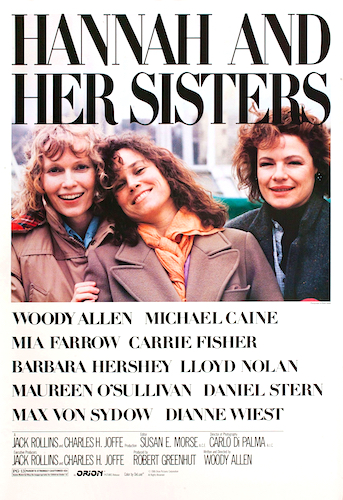
    Hannah and Her Sisters

    (1986)

    Woody Allen | 107 mins | digital (HD) | 1.85:1 | USA / English | 15 / PG-13

    Hannah and Her Sisters

    Hannah and Her Sisters is one of writer-director Woody Allen’s more popular and successful films. For example, it was nominated for seven Oscars, winning three; and nowadays, it’s his third highest-rated film on Letterboxd, above the likes of Manhattan and later-career highlight Midnight in Paris. All of which I mention because, personally, it’s the kind of film I’d describe as “something and nothing”, because I liked it well enough, but also didn’t really get what it was going for overall.

    It’s the story of… well, Hannah (Mia Farrow) and her sisters. They’re three middle-aged women who all live in New York City (of course) and, over the course of a couple of years, we follow their lives and relationships, with a focus on the latter. Actually, if anything, I might argue the biggest focus is on Elliot, played to Oscar-winning effect by Michael Caine, who is married to Hannah but finds himself pining for her sister, Lee (Barbara Hershey).

    I say “might argue” because Hannah and Her Sisters is one of those films that feels like a collection of subplots. All of the storylines play out, then they stop, with happy endings almost across the board, and that’s your film. I expect it’s based around a theme of some kind, but all I really got it from it was the old “the grass is always greener” adage. Apparently Allen particularly wanted to make something about the relationship between sisters, because he thought that was more complex than between brothers. Fair enough, but I’m not sure it really comes across in the finished film. There are only about two or three scenes in which the sisters actually interact. They’re mostly off on their own subplots; and while those subplots do effect each other, I don’t think they truly speak to the sisters’ relationships; not in any revelatory depth, anyway.

    I’ve enjoyed quite a few of Allen’s films that I’ve seen, but Hannah and Her Sisters won’t be cracking my personal favourites of his work. It was fine to watch — not exceptionally funny or dramatic or insightful or original, but fine — and then it ends, and we go on with our lives. It’s not bad, but it also wasn’t anything much. Not to me, anyway.

    3 out of 5

    Hannah and Her Sisters is the 32nd film in my 100 Films in a Year Challenge 2022. It was viewed as part of “What Do You Mean You Haven’t Seen…?” 2022.


    Chip ’n Dale: Rescue Rangers

    (2022)

    Akiva Schaffer | 97 mins | digital (UHD) | 2.39:1 | USA / English | NR* / PG

    Chip ’n Dale: Rescue Rangers

    On the surface, there’s nothing here for me — a live-action remake/reboot of a late-’80s/early-’90s cartoon that I don’t remember ever watching — but something persuaded me to watch the trailer, and that convinced me to watch the film the moment I could. If you’ve missed said trailer, or any of the attendant hype or reviews, what sold me is that this isn’t just an update of a children’s cartoon with modern tech, but a Who Framed Roger Rabbit-style riff on cartoon celebrity.

    Like Roger Rabbit, it’s set in a version of our world where cartoons are ‘real’ and living alongside us, and they act in the TV shows and movies we know them from. Decades on from the Rescue Rangers TV show, Chip (voiced by John Mulaney) and Dale (Andy Samberg) no longer get along, but when an old friend goes missing, they’re thrust into investigating his disappearance together.

    Frankly, the plot and character arcs feel like stuff you’ve seen before — probably because we have. Although Roger Rabbit is the obvious reference, the film’s storyline feels very similar to the Melissa McCarthy-starring Muppet version of the concept from a couple of years ago, The Happytime Murders. It works better here, though, because it’s not leaning on crudeness as a comedic crutch. If you didn’t see that film, it might be to Chip ’n Dale’s advantage in terms of feeling fresh.

    Instead, the best bit of the film is that it’s full to bursting with fun nods and references to pretty much every facet of (Western) animation. These are often tucked away in the background or on the periphery for the eagle-eyed to enjoy, with the film rarely (if ever) stopping to show them off. To its credit, that means the abundant Easter eggs aren’t allowed to overshadow the story, and so the film avoids using them in the same way Happytime Murders used its vulgarity. It’s just a shame that said story is a little well-worn.

    Ultimately, Chip ’n Dale gave me the same kind of entertainment as its trailer, but for 95 minutes. Which, in a way, is fair enough — no one can accuse the trailer of being misrepresentative. On the other hand, it would be nice if there’d been something more to substantive to discover. It’s no contender for Roger Rabbit’s throne, but nor is it another Happytime mess. My score rounds up, because I did have fun.

    4 out of 5

    Chip ’n Dale: Rescue Rangers is the 33rd film in my 100 Films in a Year Challenge 2022.

    * There was no certificate listed on the BBFC website at time of review. As you may or may not know, there’s actually no legal requirement for streamers to have their content certified, and so it seems Disney haven’t bothered. For what it’s worth, Disney+ lists the film as “9+”, which I guess equates to PG. ^