
Man, 2020 is non-stop!
If you’ve come here from a tweet or email link, we’re three sentences in and had three Hamilton references already. Well, I did draft about half-a-dozen Hamilton-related titles for this review, so a few more may sneak in yet. While I devote my energies to thinking of some, let’s get on with the usual business…

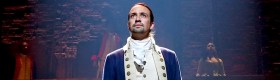
#157 Hamilton (2020)
#158 Mr. Blandings Builds His Dream House (1948)
#159 A Dog’s Will (2000), aka O Auto da Compadecida
#159a David Lynch Cooks Quinoa (2007)
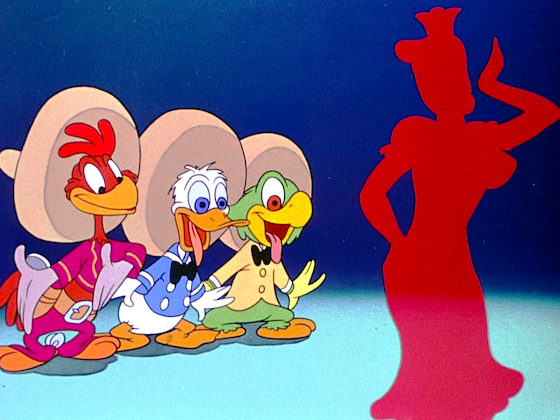
#160 Make Mine Music (1946)
#161 Chariots of Fire (1981)
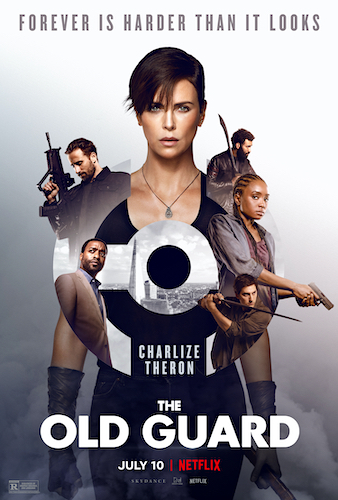
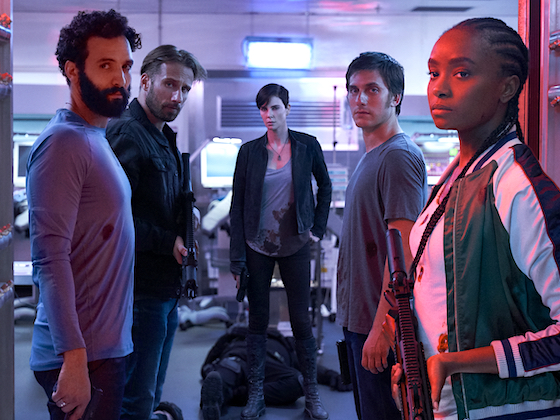
#162 The Old Guard (2020)
#163 Palm Springs (2020)
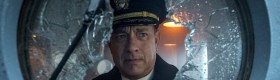
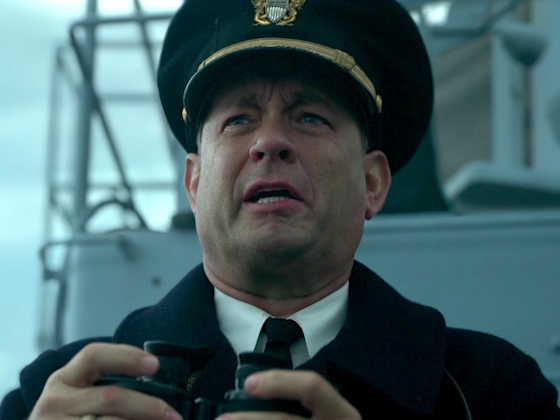
#164 Greyhound (2020)
#165 The Scorpion King (2002)
#166 Dangal (2016)
#167 The Lighthouse (2019)
#168 Melody Time (1948)
#169 Fun & Fancy Free (1947)
#170 Uncut Gems (2019)
#171 Lady Bird (2017)
#172 Safety Last! (1923)
#173 Love on a Leash (2011)
#174 The Wolf’s Call (2019), aka Le chant du loup
#175 Hunter Killer (2018)
#176 The Adventures of Ichabod and Mr. Toad (1949)
#177 Le Mans ’66 (2019), aka Ford v Ferrari
#178 Bloodshot (2020)
#179 Der Hund von Baskerville (1914), aka The Hound of the Baskervilles
#180 The French Connection (1971)
#181 Venom (2018)
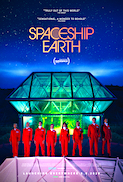
#182 Spaceship Earth (2020)
#183 Clueless (1995)
#184 Bridge to Terabithia (2007)



- I watched 29 new feature films in July.
- That makes it my third best month of 2020; but, more impressively, it’s also my sixth best month ever — out of 163 months, that puts it in the top 4%.
- It’s also my fifth month in a row with over 20 films, which is my second-longest run of 20+ months, right behind the six months from February to July 2018.
- It also finally pulls July’s all-time average up above 10.0. I’ve been looking to get all the months’ averages up that high for years, and July has been the real hold-out (it didn’t help that in 2009 its total was 0). In fact, it’s now 11.0, meaning all months are at 11+ except for November — but having them all above 10 is fine; I’m not going to actively try to pull them up anymore.
- In terms of other averages, it bests both the average for 2020 to date (previously 25.8, now 26.3) and the rolling average of the last 12 months (previously 17.3, now 19.3).
- #184 is the furthest I’ve reached by the end of July, beating the next best by 11 films. In fact, compared to my worst-ever year (2009), I’m 146 ahead.
- It also means I’ve already passed 2017’s final total, guaranteeing 2020 an all-time rank of at least third. With five months of the year left, I only need to watch 18 more films for second — that seems all but guaranteed, though never say never. For first place it’s 79 more, an average of 16 a month — at my current rate, eminently plausible; but last year I watched 48 films in that timespan, so (again) never say never.
- Back in April, I identified the handful of years from which I’d never seen a feature film. I crossed off two more of those this month, thanks to Safety Last! for 1923 and Der Hund von Baskerville for 1914. That just leaves 1912 and 1915.
- And talking of completing years, Lady Bird and Le Mans ’66 mean I’ve completed the Oscar Best Picture nominees from 2018 and 2020, respectively. I just need one more (Vice from 2019) to complete the last five years. I was obviously less circumspect earlier in the decade, though, because to complete back to 2011 I need a further ten films.
- This month’s Blindspot film: an archetypal ’70s crime thriller with a noir vibe, The French Connection — and it’s as good as that sounds. Plus one from my overflow list, ’60s anti-Bond spy thriller The Ipcress File — which, sadly, I was a little underwhelmed by (primarily because I expect to adore it, though; it is very good).
- From last month’s “failures” I watched The Lighthouse.

The 62nd Monthly Arbitrary Awards
 Favourite Film of the Month
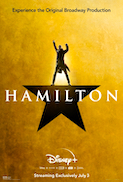
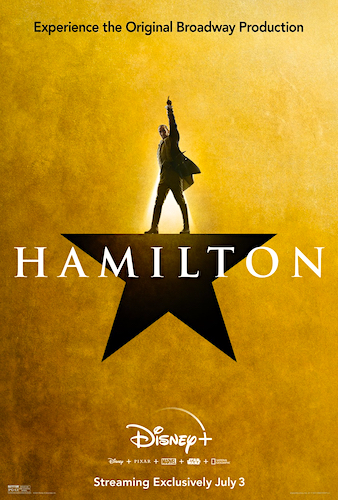
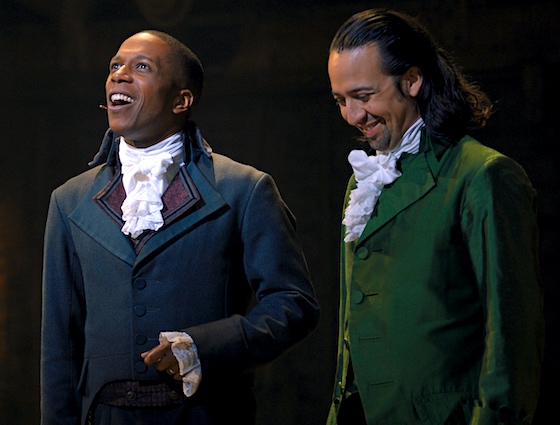
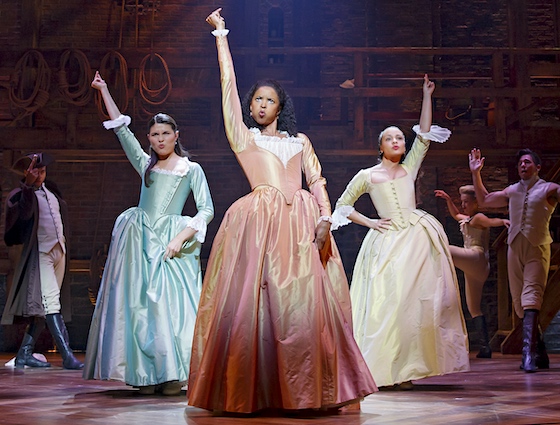
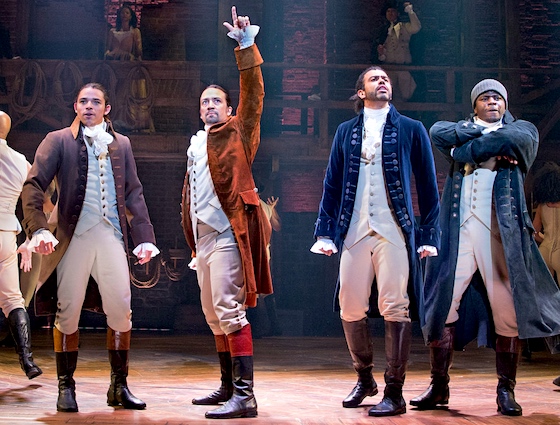
Debate may have raged in some places about whether it should count as a film or not, but clearly I’m going with “does count”, and therefore I get to declare Hamilton my favourite of the month. It’s also currently the 26th best film of all time on IMDb’s top list, so I’m clearly not alone.
Least Favourite Film of the Month
I watched three submarine-related movies this month: Greyhound because it was new, but that gave me an itch to watch a ‘proper’ submarine movie, and French thriller The Wolf’s Call was already on my watchlist, and that was so enjoyable that I still fancied more after that, so I turned to Hunter Killer — which I shouldn’t have, because it’s awful.
Worst Understanding of Geography of the Month
We turn again to Hunter Killer for an entertaining bit of “American filmmakers not understanding foreign geography”. Gerard Butler’s submarine captain is picked up by helicopter while on a hunting holiday in the Scottish highlands, to take him to his sub at the naval docks in Faslane — about 80 miles away. We next see him at Faslane, where his XO asks how was his trip in from Portsmouth, another major naval port in the UK. So, if that’s right, he went from the highlands to Portsmouth and then to Faslane — a 1,000-mile round trip. I guess no one on that film bothered to look at a map…
Best Song Not in Hamilton of the Month
Apologies to the four Disney musicals that I watched, plus any original songs cropping up in any of the other films I watched, but not much can beat the little ditties sung by the canine hero of Love on a Leash. “King of the castle! / King of the castle that’s also a dog / And lives in a house that is green. / What is that about?” Lin-Manuel Miranda must be quaking in his boots.
The Audience Award for Most-Viewed New Post of the Month
One of the most widely-popular cultural phenomena of our time, finally made available to a wide audience of both die-hard fans and the curious, and my review has had almost the whole month to accumulate hits. Yes, entirely predictably (to the extent that I wrote this blurb on the 5th and haven’t touched a word of it), July’s most-viewed new post was Hamilton.
That said, The Old Guard ended up coming pretty close; and they were both beaten by last month’s #1, my review of Netflix’s Eurovision movie, which is on track to be my most popular film review of 2020 (though who knows what the rest of the year will bring…)













My Rewatchathon continues to be a month ahead of pace, with #33 being where I should’ve reached by the end of August.
#31 The Princess Bride (1987)
#32 Hamilton (2020)
#33 The Woman in Green (1945)
Regular readers will know I’m not a huge re-watcher (hence the Rewatchathon) — if I watch a film again within about five years I consider it “soon” — and yet here I am watching Hamilton twice in a month. Well, you put it on just to watch a bit and then you can’t stop. I wouldn’t be surprised if it turns up in 2020’s Rewatchathon again yet…
I’ve rewatched The Princess Bride twice now without adding it to my “Guide To” series. It’s not like I haven’t got a big enough backlog anyway, right? I expect I’ll cover it someday. For now, I naturally posted some thoughts on Letterboxd after my most recent viewing.
The Woman in Green continues my rewatch of the Basil Rathbone Sherlock Holmes series. I didn’t enjoy this one quite as much as I’d remembered — it has some great ideas and good sequences, but it somehow doesn’t gel as well as it should on this viewing. Nonetheless, there’s enough to admire that I still rate it pretty highly, including Henry Daniell as the series’ best Moriarty.

Cinemas may still be mostly closed, and consequently there’s a shortage of new releases, but that certainly hasn’t stopped the streamers pumping out content, both new exclusives and archive titles (indeed, that’s probably why they are). Top of the pops for brand-new stuff this month was a Bollywood film, Dil Bechara, which catapulted to the top of the IMDb Top 250 chart thanks to eager fans rating it highly. The algorithm kicked in and it plummeted right back off it again, but in terms of raw numbers it’s still right up there. It’s streaming free on Hotstar if you want to see if it lives up to the fuss.
As I said, the regular streamers piled on the content this month, more so Amazon than Netflix, with originals like How to Build a Girl and Honey Boy, the subscription debuts of theatrical films like Midway and Knives Out, and archive titles like 1947 Best Picture winner The Best Years of Our Lives and 1985 contender The Killing Fields They also briefly had the new Charlie’s Angels, for about 24 hours before someone realised the mistake — it was due on Sky Cinema / Now TV about a week later. Perhaps that means it’ll be coming to Amazon eventually; perhaps someone just pressed the wrong button. Also catching my eye was The Mask of Zorro in 4K. That came out on disc in the US back in May, but we haven’t been so lucky. I hope that changes, because it’s a great film and the new transfer looks far superior to the old Blu-ray, but until then I might just watch it on Amazon. They also have the sequel, The Legend of Zorro, also in 4K, which hasn’t been treated to a disc release anywhere, probably because of it’s poor reputation. I don’t think I’ve seen it since the cinema in 2005 (even though I own it on DVD), so it’s due a revisit.
Amazon have also had a load more of their discounted-for-Prime-members rentals recently, so I’ve stocked up on the likes of The Assistant, Bad Boys for Life, A Beautiful Day in the Neighborhood, Color Out of Space, and Never Rarely Sometimes Always. All of those should feature in August’s viewing. I’ve also been tempted to splash the cash on plenty of Blu-rays, thanks to endless sales and offers. Barnes & Noble aren’t currently shipping to the UK, so I’ve missed out on their biannual Criterion sale, but I was so set for it that I forked out a bit more to get the titles from Amazon US (who don’t price match the sale, but get pretty close). Stock issues mean that order hasn’t even dispatched yet, so hopefully next month. Sales that have tempted me and have arrived include from Arrow (The Andromeda Strain, Aniara, Crime and Punishment, Hitchcock’s Jamaica Inn, and Zardoz), HMV’s Premium Collection (two more Hitchcocks, I Confess and The Wrong Man, plus Key Largo, The Thing from Another World, To Have and Have Not, and Wait Until Dark), and Zoom (4K upgrades for Arrival, The Revenant, and Split). And talking of things to 4K, films to rewatch, and imports, I snagged the US 4K release of Parasite. I doubt we’re going to get treated to that in the UK, and the recently-announced Criterion release won’t be 4K. I might still get it for the special features, though.
And if that wasn’t enough, I also picked up some new releases, including Master of Cinema’s set of three Edgar Allen Poe adaptations starring Bela Lugosi, those being The Raven, Murders in the Rue Morgue, and The Black Cat, which is noteworthy for being the fifth adaptation of that short story that I own (and I haven’t watched any of them!)

Tenet.
Or maybe not. Who knows what state we’ll be in by the time that’s due at the end of the month?
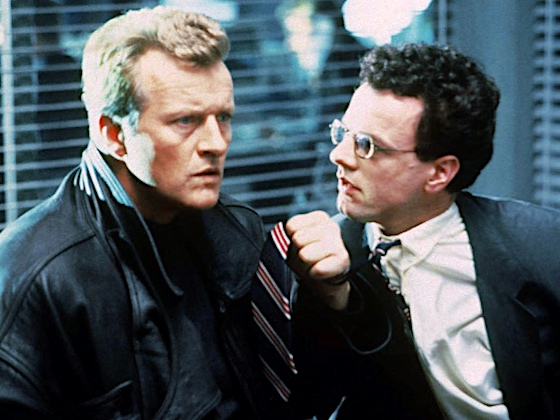
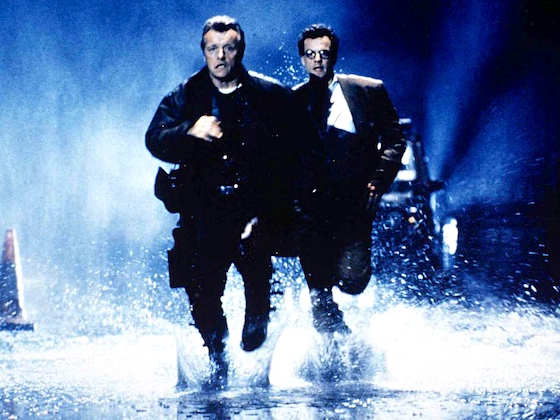


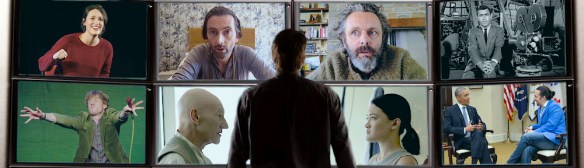
 This filmed-in-lockdown comedy stars David Tennant and Michael Sheen as they attempt to rehearse a play over the internet, the goal being they’ll be ready to put it on as soon as theatres reopen. Naturally, there’s much more to it than two actors practising a play — indeed, I’m not sure they ever actually get round to any proper rehearsing. Conflicts abound, both broadly relatable (Sheen is blackmailed into helping look after his elderly neighbour, but develops genuine concern for her) and actorly (a running debate/gag about which of the pair should get top billing), and there are a couple of big-name surprise cameos along the way (no spoilers — the surprises are worth it). With all episodes in the 15- to 20-minute range, the series is hardly a big time commitment (it runs well under two hours in total), but it’s well worth it and consistently funny. Indeed, I wish there was going to be more. Well, a second lockdown isn’t out of the question yet, is it…
 This documentary first aired back in 2016, in the wake of Hamilton’s success on stage. I’m not sure if it’s ever been screened in the UK, but I tracked down a copy after watching
 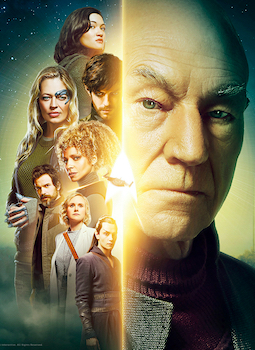 I started this when it began in January, and have been slowly trekking through it ever since — it’s taken me six whole months to get through just ten episodes. That’s a commentary in itself as to what I thought of it, I suppose, though if you asked me I’d say it’s “not bad”.
 I’ve never got round to Phoebe Waller-Bridge’s much-acclaimed sitcom, but, during lockdown, Amazon offered the original one-woman-show stage version (recorded last year during a live cinema broadcast) as a charity rental, so I thought I’d see what the fuss was about. My reaction was… muted, to be honest. I can certainly see how it pushes at boundaries, both of the depiction of women in fiction and of taste in general, and for that reason it’s significant, but I only found it sporadically funny, which makes it somewhat unsatisfying as a comedy. Also, I wasn’t expecting it to get so dark — if you’re a lover of small furry animals, beware.
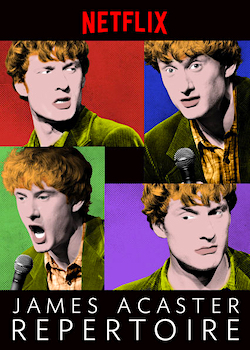 Another filmed stage comedy that left me somewhat underwhelmed. This is more straightforward stand-up, however, and as that it was more often amusing — whether you find Acaster’s “wacky” style (his word) to your taste will dictate exactly how funny. For me, he’s not the most consistently hilarious standup I’ve seen, but provoked laughs regularly enough. The real selling point here, however, is that it’s a four-parter. Ever heard of a multi-part stand-up gig before? Me either. These aren’t just four entirely independent gigs box-set-ed up either, but were conceived and shot as four connected sets.
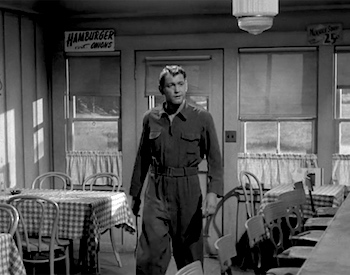 This month’s selection begins at the very beginning: the first-ever Twilight Zone episode, Where is Everybody? The title alone is a pretty succinct pitch of the episode’s theme, and the episode is as one-note as its premise. This is an exciting story in which a bloke… gets himself coffee, and… talks to a mannequin, and… tries to phone the operator but can’t get through, and… has an ice cream, and… yeeeaaah. The twist ending isn’t much cop either, 50% “it was all a dream”, 50% a thin moral about humans’ need for companionship. It could’ve been better: Rod Serling’s original pitch for episode one was a tale about a society where people were executed when they turned 60, which I think is a better concept, but it was deemed too depressing (imagine what they would’ve made of Logan’s Run, where the executions happen at 30!) That said, “everybody’s gone” is a reasonable starting idea, but the episode needs (a) more places to go with it, and (b) a more interesting reveal. (See
  I’ve written before that some episodes suffer from the series’ own influence, or just from an ensuing 60 years of sophistication on the part of the viewer, and Nightmare as a Child is a case in point. It has two reveals, and they’re both not so much guessable as obvious and inevitable. There’s even a bit of a coda to thoroughly explain it all again in case you didn’t get it. Maybe that was necessary back in 1960, when stories like this were breaking new ground in the audience’s minds, but today it feels like overkill. However, I wouldn’t say it’s a bad episode — indeed, the story of a woman meeting a strange little girl who seems to know an impossible amount about her life is still suitably eerie and tense in places — but it is one that plays less effectively today. That said, if you engage with it not as a mystery with a surprise but as simply a story, it has more to offer — Kozak compares it to “a tightly wound Hitchcockian thriller/murder mystery”, while Scott Beggs of
 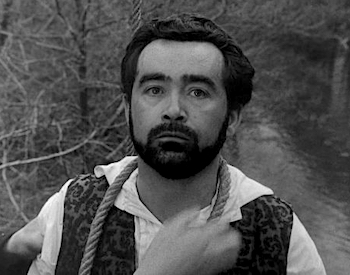 Having begun today with Twilight Zone’s first episode, we end with the last one produced — although they didn’t actually produce it. An Occurrence at Owl Creek Bridge is an award-winning French short film that Serling saw and liked so much he bought the TV rights (saving so much money on the cost of producing another episode that he brought season five in on budget). Even if Serling didn’t point out its alternate origin in his introduction, it’s immediately clear this came from somewhere else, because it doesn’t look or feel at all like a normal TZ episode. So what made Serling think it would fit the show? Why, it has an ironic last-minute twist, of course! This is regularly one of the best-regarded episodes of the series, and the short film itself has a pretty strong rep too, but I don’t get it. There’s some pretty photography and the beginning is fairly atmospheric, but it quickly starts to drag — the story is thin and slow, ending with a twist that I found inevitable from early on.
 Last month, I didn’t include this section because I couldn’t think of anything to put in it. Naturally I then spent the next couple of days remembering things, like the recent re-adaptations of Alex Rider on Amazon and Snowpiercer on Netflix. Obviously, I still haven’t watched either of those. More recently, Netflix launched Cursed, a young adult (I think) take on Arthurian legend from the point of view of the Lady of the Lake. I’m not wholly convinced by the trailers or buzz, but I do love a bit of Arthurian whatnot so it’s on my radar. Also passingly of note is that Amazon just released season three of Absentia. I







 100Films.co.uk