Thor: Ragnarok (2017)

2017 #148
Taika Waititi | 130 mins | cinema | 2.35:1 | USA / English | 12A / PG-13
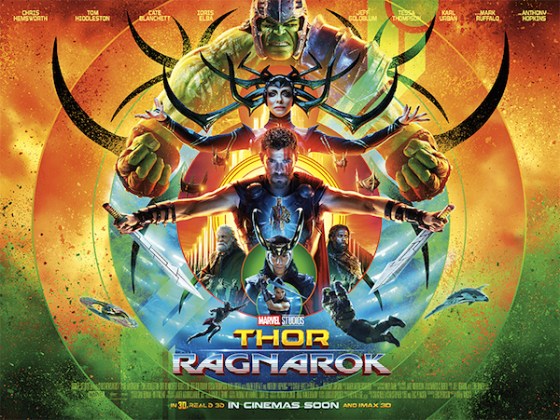
Thor: Ragnarok

It’s been a busy year for the MCU. Long gone are the days of Marvel Studios putting out one or two movies a year — this is their third theatrical release in 2017, alongside three full seasons of Netflix shows and two network TV series currently running. Whew! Nonetheless, according to Rotten Tomatoes this Thor threequel is the best-reviewed thing they’ve released this year (so far). Some critics have even said it’s the best Marvel Studios movie ever made. Well, let’s not get too hasty.

Two years on from Age of Ultron, Thor (Chris Hemsworth) has been scouring the universe in search of Infinity Stones, to no success. After the Goddess of Death (Cate Blanchett) emerges from her prison intent on conquering Asgard, the God of Thunder is cast out to a remote world ruled over by the Grandmaster (Jeff Goldblum). There he must compete in gladiatorial championships in order to escape and prevent Ragnarok, the long-prophesied destruction of Asgard.

Having previously attempted to make the Thor movies Shakespearean (by hiring Kenneth Branagh to direct the first one) and Game of Thrones-esque (by hiring Alan Taylor to direct the second), to diminishing returns as far as critical reception and audience responsiveness went, Marvel have tried a different tack for this third instalment. Essentially, they’ve done what they’ve done to most of their movies of late: made it funny. Tonally, you could be forgiven for thinking this was a Guardians of the Galaxy sequel (apart from it not starring any Guardians characters, that is).
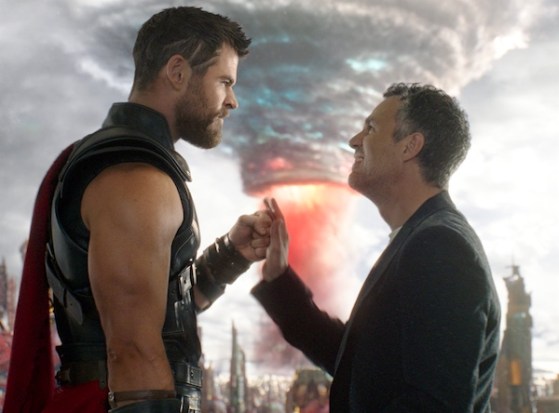
Not a buddy movie

To this end, they hired director Taika Waititi, who’s been gaining attention with this comedies What We Do in the Shadows and Hunt for the Wilderpeople. Waititi’s influence is definitely felt in the film’s splashes of irreverent humour, but everything else about Ragnarok is a typical Marvel Studios blockbuster. Critics who’ve said it’s more a Waititi movie than a Marvel movie were overselling it. The plot, the locations, the characters — they’re all your standard Marvel stuff. It’s colourful, it’s fun, it’s exciting — all standard Marvel operating procedure.

Therefore, just as with almost every Marvel movie, the devil is in the details. Ragnarok is a good one because of Waititi — because of the extra humour he injects, a consistent presence throughout the film, but also because he clearly has a good eye for imagery. If you want a taster, a lot of the most striking stuff is, unsurprisingly, included in the trailers. (Though, interestingly, there are several shots in the trailer that have been modified for the sake of spoilers. But to say more would be, y’know, a spoiler.) Action and more dramatic material are handled as well as ever. That’s the way the cookie crumbles with Marvel Studios movies: a bad or unremarkable director will make a bad or unremarkable Marvel movie, but a good or unique director can seemingly only make their presence felt so far as making “a good Marvel movie”, perhaps with a few of their own flourishes.
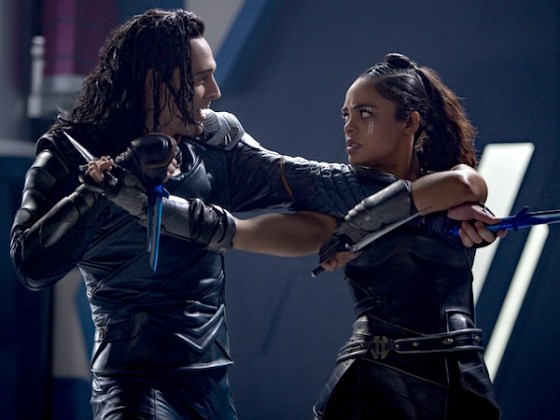
They're not buddies either

You may have heard some reports claim Ragnarok is an intergalactic buddy movie. It isn’t. Or, if it is, it’s a buddy movie where one of them’s Thor and the other one’s constantly changing. As the eponymous hero, Hemsworth gets to flex the comedic chops he revealed in movies like Ghostbusters. Everyone’s favourite Marvel movie villain, Loki (Tom Hiddleston), is back as well. While Ragnarok may ignore its predecessors tonally, it does a good job of continuing to build on Loki’s character arc. Blanchett is, if anything, under-hammy as the villain, pitching it too low when she’s sharing space with the likes of Goldblum. The expansive cast list means that both returning characters (such as Heimdall (Idris Elba) and Bruce Banner (Mark Ruffalo)) and newcomers (such as Skurge (Karl Urban) and Valkyrie (Tessa Thompson)) can only snag so much screen time each, but several of them are given efficiently-told arcs nonetheless (as usual, Heimdall mostly misses out).

Arguably the film’s standout character is Korg, voiced by Waititi and spewing lines that feel very much from the director’s wheelhouse, even though he’s not credited as a writer. Most of the biggest laughs come from him, especially as bits like “friend from work” are now very familiar from the trailers. There’s also a cameo from Dr Strange (Benedict Cumberbatch), which feels like it’s there just because they included that credits scene in his movie and so were committed to paying it off. I suppose it may have future benefits, as I believe Thor is now the only Avenger to have met Strange, but we shouldn’t be thinking about that — what have we all said before about the MCU being needlessly over-connected?

She's definitely not got any buddies

Talking of credits scenes, you may wish to know that there are two here, Marvel’s default number nowadays. Without spoiling anything, one is the vaguest of vague teases, the other a funny button on one of the film’s subplots. Neither are going to be remembered among the studio’s best credits additions.

If Thor: Ragnarok has a problem it’s the hype that’s been attached to it since the likeable trailers and glowing reviews started coming out. For those with appropriately managed expectations, make no mistake, it is a highly entertaining couple of hours. But it doesn’t break the Marvel mould, instead just filling it with more colourful materials. The best Marvel movie ever? No. The best thing they’ve released this year? Maybe.

4 out of 5

Thor: Ragnarok is in cinemas in the UK and various other countries now. It rolls out across the world in the coming weeks, ending with the US on November 3rd.

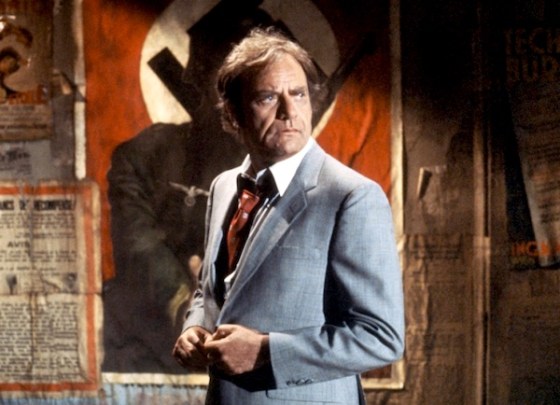
Twilight Zone: The Movie (1983)

2017 #129
Joe Dante, John Landis, George Miller & Steven Spielberg | 97 mins | streaming (HD) | 16:9 | USA / English | 12 / PG

Twilight Zone: The Movie

I can’t remember when I first heard of Twilight Zone: The Movie — certainly not until sometime this millennium — but I do remember being surprised I hadn’t heard of it before. Why wasn’t it more often talked about? After all, here’s a film based on a classic TV series, directed by some of the hottest genre filmmakers of the time: John Landis just after An American Werewolf in London; Joe Dante just before Gremlins; George Miller fresh from Mad Max 2; and, most of all, Steven Spielberg, coming off a run that encompassed Jaws, Close Encounters, Raiders of the Lost Ark, and E.T. I mean, Jesus, even if the movie wasn’t great then surely it should be well-known! It was only later still that I learnt about the infamous helicopter crash. Couple that with a mediocre critical reception and relatively poor box office results, and suddenly it’s no wonder no one ever talked about the film. My viewing of it was primarily motivated by attempting to complete the filmographies of Spielberg and Miller, but I’m glad I did because, on the whole, I rather enjoyed it.

As the original Twilight Zone was an anthology series, so is the movie — hence having four directors. Although the original plan was to have some characters crop up in each segment, thereby linking them all together, that idea didn’t come off. The end result, then, is really just five sci-fi/fantasy/horror short films stuck together — composer Jerry Goldsmith is the only key crew member to work across more than two segments. The advantage of that as a viewer is, if you don’t like one story, there’ll be another along before you know it. Because of that, I’ll take each part in turn.

The Trump Zone

The film begins with a prologue, directed by John Landis, featuring Albert Brooks and Dan Aykroyd as a driver and a hitchhiker chatting about classic TV and scary stories. Although obviously the shortest segment, it’s good fun and sets a kind of comic tone — not one the rest of the film follows, to be fair, but it’s kind of effective in that it has a knowing wink to the audience: “we all know The Twilight Zone is a TV show. Now, here are four stories from it.”

Landis also directs the first full segment, Time Out, the only one of the four not adapted from an original TV episode. Basically, it’s about a Trump supporter. You might not have noticed that if watching before last year, for obvious reasons, but viewed now it’s kind of hard to miss. What’s depressing it that the point of the film is this guy’s views are outdated in 1983, and yet you have Trumpers spouting the same shit in 2017, three-and-a-half decades later. That aside, as a short moral parable it’s effective. It doesn’t have the ending that was scripted (thanks to the aforementioned tragedy), but I think the conclusion it does have is actually more appropriate. It feels kind of wrong to take that view, because the only reason it was changed was that terrible accident. Obviously it wasn’t worth it just for this segment to have a better ending, but there it is.

Scary kid? Check.

Segment two, Kick the Can, is Spielberg’s, and anyone familiar with his oeuvre — and the criticism of it — will see that right away: it’s shot in nostalgic golden hues and contains positive, sentimental moral lessons. In fact, it’s so cloyingly sweet, it’s like a parody of Spielberg’s worst excesses. It was originally intended to be the last film in the movie, and you can see why: it would’ve formed a positive, upbeat finale to the picture. I’m not sure why they moved it — possibly because they felt it was the least-good. That’s what a fair few critics believe, anyway.

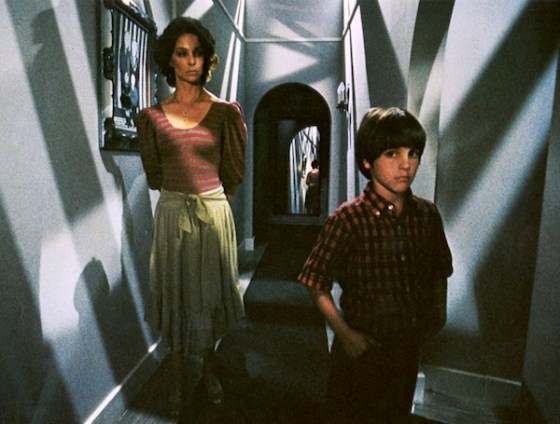
Personally, segment three was my least favourite. This is Joe Dante’s short, titled It’s a Good Life, and is about a woman who accidentally knocks a boy off his bike, gives him a lift home, and finds a pretty strange situation therein. I found it to be kind of aimless; weird for the sake of weird. It’s prettily designed and shot, with bold cartoon colours, but if I watched the film again I’d give serious thought to just skipping it.

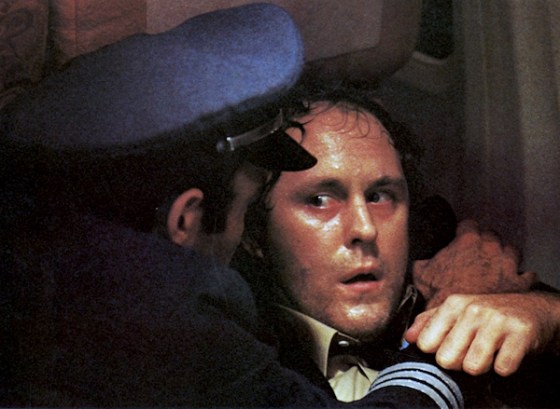
The final segment remakes arguably the most famous Twilight Zone episode: Nightmare at 20,000 Feet. It’s about a paranoid airplane passenger on a turbulent flight, who thinks he sees a monster on the wing. Naturally, no one believes him. I’ve not seen the original version so can’t compare, but director George Miller and star John Lithgow do a fantastic job of realising Richard Matheson’s story, loading it with tension and uncertainty — is it actually all in the passenger’s head? And if it isn’t, can they survive?

Fear of flying

On the whole, I liked Twilight Zone: The Movie more than I’d expected I would. Nonetheless, as a series of shorts, it’s destined to be a footnote in the career of all involved (even Landis has done a fair job of moving on from the controversy — as I said, I hadn’t even heard about it until relatively recently). The only truly great segment is Miller’s finale, but the others all have elements that make them worth a look.

4 out of 5

Now You See Me 2 (2016)

2017 #54
Jon M. Chu | 129 mins | streaming (HD) | 2.35:1 | USA & France* / English, Mandarin & Cantonese | 12 / PG-13

Now You See Me 2

Con thrillers are much like magic tricks: they set you up to expect one thing, then reveal something else was going on all along. The major difference is that, unlike most magic tricks, con thrillers eventually show you how it was done. So whoever came up with the idea of combining those two things into a movie where magicians use their skills to pull off elaborate heists was practically a genius in my book — what a magnificent marriage of ideas! Unfortunately, the resulting films — Now You See Me and this sequel — aren’t much good at magic, routinely substituting CGI for the tricks, and they’re not great at cons either, substituting a headlong rush and a barrage of twists for a plot that hangs together. And that’s why these films are fundamentally empty: they don’t understand that the impressiveness of both magic and reveal-based narratives lies in doing it for real, not in pretending to do it.

Nonetheless, I quite enjoyed the first movie — in spite of its flaws, it was a daft bit of fun. The sequel (which misses a trick from the off by not being titled Now You Don’t) is too stupid to even manage that level of entertainment, instead devolving into a morass of nonsensicality. It’s not even that its plot has zero credibility as a plausible story — it’s the very way it’s put together as a film. Scenes feel disconnected from one another. Bits within them seem to have been snipped out. Sequences of varying scales seem to have been created from the notion of “what if we had a scene like this?” with no thought given to if it fits in the film, or even if it makes sense within itself. I’m left wondering if the movie had to be heavily trimmed for time; or did it never make any sense and this is the best they could stitch together?

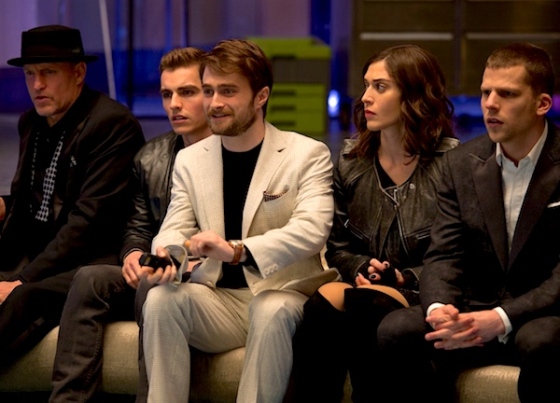
The cast try to understand the plot...

Some spectacle-driven movies can drift by without too much sense, but a con movie — where a major component is the explanation — is not one of them. Indeed, Now You See Me 2 endeavours to make sense. It tells you there was a twist; a clever plan; that someone pulled the wool over someone else’s eyes. Sometimes it does even pretend to explain how they supposedly achieved that… but it doesn’t actually explain it. It tries to just sweep you along in a whirlwind of “surprise!” moments. That might be fine if you don’t care how it hangs together, but if you pause to consider who knew what when, and who plotted what and how… well, the film doesn’t want to give you a chance to think about any of that. That just contributes to my belief that, if you did stop and try to piece it all together, you’d discover it doesn’t actually make sense.

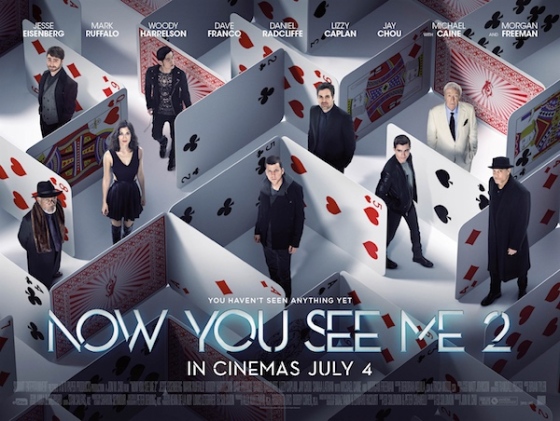
A few minor positives come from the new cast members. Lizzy Caplan is really good, a funny addition to the team, and Daniel Radcliffe entertains as the smiling villain, although thanks to the flurry of reveals he doesn’t get as much screen time as he deserves. Actors like Jesse Eisenberg, Mark Ruffalo, Morgan Freeman, and Michael Caine feel like they’re phoning it in for a paycheque. Well, sometimes a movie’s worth doing if it, say, pays for a nice house, eh Michael?

Watching it doesn’t bring any such benefits, though, so don’t bother.

2 out of 5

* I had this down as a USA/UK/China/Canada co-production. IMDb now says USA/France. Other places say just USA. One of the main production companies is from Hong Kong, according to IMDb. So who the hell knows? ^

Vixen (2017)

aka Vixen: The Movie

2017 #137
Curt Geda & James Tucker | 75 mins | download (HD) | 16:9 | USA / English | 12

Vixen

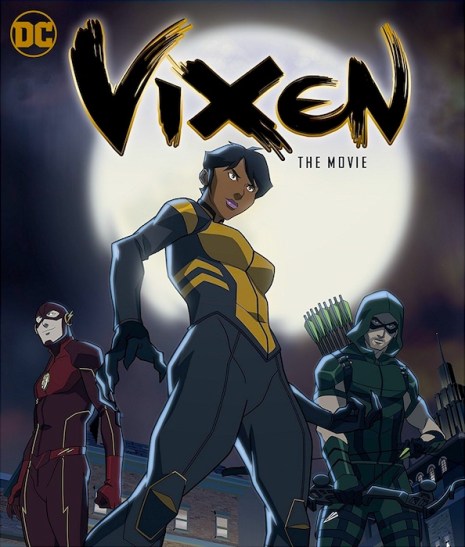
Received wisdom is that while DC comics adaptations are floundering on the big screen (because $3.1 billion from four movies is such a failure), they’re flourishing on the small one, with their ever-growing Arrowverse suite of shows a huge success on the US’s CW network. So named because it began with Arrow in 2012, said ‘verse now also encompasses The Flash, DC’s Legends of Tomorrow, and Supergirl. As well as these main shows, they’ve produced a couple of animated spin-offs for their online platform. The first of these was Vixen, which has so far produced two seasons of six five-minute episodes. Here, those two runs are combined with about 15 minutes of extra bridging material to produced a movie.

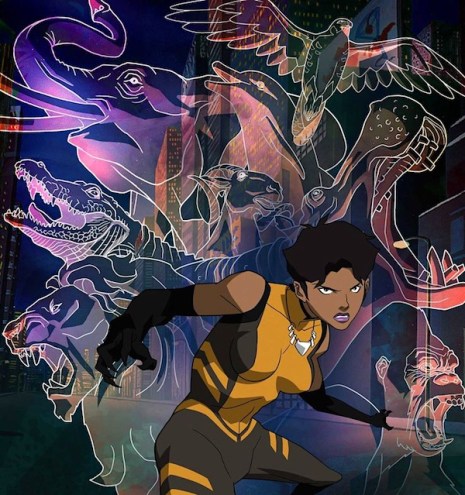
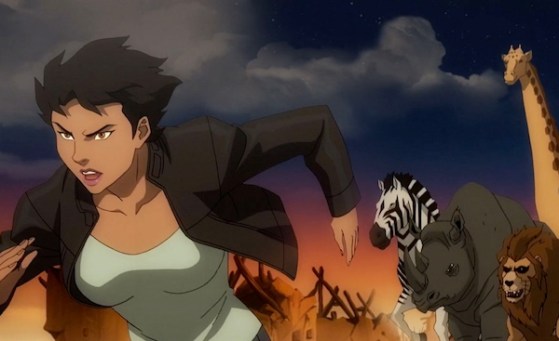
The titular Vixen is Mari McCabe (voiced by Megalyn Echikunwoke), who discovers that her family-heirloom necklace has the ability to grant her the power of any animal — so she can run like a cheetah, climb like a spider, stomp like an elephant, fly like an eagle, etc, ad infinitum. While contending with these new skills, she’s also accosted by superheroes Arrow and the Flash (Stephen Amell and Grant Gustin respectively, reprising their roles from the live-action shows), and has to battle with, first, Kuasa (Anika Noni Rose) trying to claim the necklace for herself, and then Eshu (Hakeem Kae-Kazim) trying to, er, claim the necklace for himself…

Foxy lady! Also lion lady, gorilla lady, elephant lady...

Firstly, it must be said that it’s really obvious Vixen consists of multiple episodes and seasons stitched together. It’s probably not so bad on the episodic level — me being me, I was watching out for where the breaks likely fell in the original five-minute-ish format — but it’s undeniable that it wraps up its first story in about half-an-hour, then moves on to a new story that lasts about 15 minutes, before finally telling another half-hour tale. It feels a bit like watching a movie and its sequel back-to-back, with a related aside in the middle, though in this case each ‘movie’ is the length of an animated TV episode. So, releasing it as Vixen: The Movie was perhaps a bit silly and/or disingenuous. It doesn’t desperately need to retain its original short form, but putting it out as two half-hours — with the added value of a bonus mini-episode containing that bridging story — might’ve felt more satisfactory.

Putting issues of form and presentation aside, the story — or, unavoidably, stories — are alright. The first has the shape of a pretty standard superhero origin story, given some added flavour thanks to the character’s African roots and the relationship with the villain. The short linking part feels like a run-of-the-mill episode of any superhero cartoon series. Apparently some fans complained that Vixen had mysteriously learnt to use her powers between the end of season one and start of season two, so this section attempts to address that point. The final section, as alluded to above, feels like a sequel, with a new primary antagonist but still carrying over threads and points from the first. It goes a bit awry the longer it goes on, with some very for-the-sake-of-it random cameos from the live-action shows, and a disappearance of internal logic during the climax.

At times its own format works against it: Mari says she has no identity and needs to find one, but the narrative doesn’t have enough room to let her. It probably would have if Vixen originated as a 70-minute movie, but in the form of five-minute episodes, which need to use their limited space to fulfil fan expectations of things like action sequences, there’s little to no room for genuine character development. The overall quality is often a bit cheesy and blunt — again, in part to make it satisfying for viewing in five-minute bursts, no doubt, but it does also feel in keeping with the overall style and tone of the Arrowverse.

Queen of the jungle

The animation itself is relatively cheap and basic — on a par with the lower end of Warner’s other direct-to-DVD DC animations; probably even a bit simpler. It’s not bad, but no one’s likely to be impressed. That said, when they pop in for cameos, the likenesses of the live-action actors is shit. On the bright side, they’ve used the animated format to create powers and action sequences that would require expensive CGI in a live-action show. These days they can manage that kind of thing, of course (Vixen eventually turned up in an episode of Arrow, in fact, and a version of the character is now a regular on Legends), and you can believe Vixen’s first season wouldn’t’ve been a huge problem for one of the live-action shows. The second season, perhaps as a result of that, goes more all-in on the effects-y action.

Fans of any or all of the other Arrowverse shows may well find something to enjoy in Vixen. Otherwise, it’s newcomer-friendly (aside from those cameos it’s fundamentally standalone) but I doubt it would do much to persuade the uninitiated that they’re missing out.

3 out of 5

The Arrowverse returns to UK screens this week, with new episodes of Supergirl on Mondays, The Flash on Tuesdays, DC’s Legends of Tomorrow on Wednesdays, and Arrow on Thursdays. That’ll certainly keep you busy (if you let it).

Antz (1998)

2017 #119
Eric Darnell & Tim Johnson | 83 mins | streaming (HD) | 16:9 | USA / English | PG / PG

Antz

I don’t know if there was something in the Californian water in 1998, but in the same year that major Hollywood studios faced off with similarly-themed disaster movies Deep Impact and Armageddon, fledgling CG-animation outfits did the same with ant-themed kids’ movies. One was Pixar’s A Bug’s Life, which has endured thanks to the ever-increasing cachet of the studio’s brand (it was only their second feature). The other, of course, was Antz, which has the starry-named voice cast but was only by DreamWorks, whose later success with the likes of Shrek has done little to elevate the standing of their entire oeuvre. Anyway, it’s a bit pointless me making these comparisons because I’ve still not seen A Bug’s Life. Maybe in that review, someday.

As for Antz in isolation, it’s a funny old film. It feels more aimed at adults than kids: star Woody Allen is doing a version of his usual schtick, and the plot riffs heavily on political systems like Communism, a combination which means most of the jokes will soar over children’s heads. That’s before we get on to the brutal war sequence against monstrous termites. Plus, the entire voice cast seem to have wandered in from a completely different kind of movie: as well as Allen there’s Gene Hackman, Christopher Walken, Anne Bancroft, Sylvester Stallone, and Sharon Stone. I don’t know how well it plays for kids, but, as an adult, all of this stuff gives it a welcomely different flavour.

A bug's famous voice

Visually, it also lacks the slick (if somewhat plasticky) sheen of early Pixar. I can’t quite decide if the animation has aged badly (it is 20-years-old CGI, after all) or has a certain timelessness. Some of the computer animated stuff is blocky and jerky, but it’s frequently paired up with painted backgrounds for scenery and the like, which gives a kind of pleasant mixed-media feel to some sections. The effect is emphasised by the quality of the transfer that’s around: although in HD, it’s clearly been transferred from an actual film print, not clean digital files. And not a great print at that: there’s spots of dirt and everything. I guess that shows the lowly standing even DreamWorks holds the film in, but there’s a certain kind of old-school charm to it. Which is probably just misplaced nostalgia on my part for old lo-fi media, but hey-ho.

Antz is an odd little film. It doesn’t contain the easy charms of a Pixar movie, and I can imagine kids would get very little out of it; but for adult animation fans, it’s kind of interesting.

3 out of 5

Antz is on Channel 4 today at 2:30pm.

Blade Runner 2049 (2017)

2017 #132
Denis Villeneuve | 163 mins | cinema | 2.39:1 | USA, UK & Canada / English | 15 / R

Blade Runner 2049

Last weekend, a film about an android negotiating an existential crisis when he learns he may actually be human, told over almost three hours with a slow pace in an arthouse style, topped the US box office. Put like that, Blade Runner 2049’s debut sounds like a stonking financial success. Alternatively, it’s a widely-advertised critically-acclaimed $150-million-plus effects-heavy sci-fi spectacle with a pair of movie-star leads, in which context its $33 million opening weekend only looks remarkable for how poor it is. For those of us who did bother to see it (and us Brits turned out — it did good numbers on this side of the pond), such concerns are almost immaterial. In creating a belated sequel to an innovative, influential, and beloved classic movie, 2049 has (to borrow a phrase from another unexpected big-screen sci-fi sequel) done the impossible — because it’s really bloody good — and that makes it mighty.

Set 30 years after the original movie, 2049 introduces us to new characters and a new mystery: when blade runner K (Ryan Gosling) makes a shocking discovery at the home of a Replicant he’s just retired, it starts him on a mission to find something previously thought impossible that could have world-changing implications; something with connections to the events of 30 years earlier. While unfurling this mystery/thriller plot, 2049 is also about K’s personal development/crisis as a character. Although they kept it out of the marketing, it’s only a mild spoiler to say he’s a Replicant (as if the single-letter name didn’t hint at that already, it’s also mentioned casually within the first couple of scenes), and the case he works causes him to question his place in the world.

Buried secrets

This is a movie with a lot to think about. It doesn’t do the thinking for you either, instead leaving space for the viewer to interpret not only what themes they should be thinking about but also what they should be thinking about those themes. This seems to have been a little too much for some viewers — I’ve seen anecdotal reports of people falling asleep or walking out. That’s not necessarily just because they were asked to do some work, of course: it could also be the pace and length. It’s definitely a long film — a shade under 2 hours 45, though obviously there’s a fair chunk of credits — and, watching it with a grotty cold, as I was, it certainly felt long. But I would also put that entirely down to the cold. It’s not a mile-a-minute thrill ride of a movie, but I think it’s the length it needs to be. It leaves room for ideas to sink in.

Not only that, it allows you time to luxuriate in the visuals. This is possibly one of the finest-looking films ever shot. Cinematographer Roger Deakins is long overdue an Oscar, we all know this, but if he doesn’t finally earn it for 2049 then there is no justice. If you’ve seen the trailer then you know the kind of thing to expect. When people say “you could hang any frame of this movie on your wall” it’s usually a ludicrous overreaction, but here it’s as true as it ever could be. (Also, having complained in several reviews recently that I think my cinema of choice is showing films too dark (a not unheard of problem — they run the bulbs too dim to save costs), 2049 looked absolutely fantastic. Maybe it’s just that other filmmakers aren’t as good as Deakins.)

Hot robot-on-robot action

It’s not just the film’s technical merits that recommend it either, as there’s an array of superb performances here. Gosling has a difficult job as K: he starts out almost as a blank, an emotionally reserved Replicant but also a character that we need to identify with, and later struggling with his innate programming as he’s presented with challenging ideas. It might be easy to do this in a very outward manner, all handwringing and moistened eyes and so forth, but Gosling keeps it low-key — in keeping with the overall style of the film, of course. I guess some will find him cold, but I still thought he was a relatable, likeable character.

Elsewhere, Harrison Ford is definitely a supporting character, despite his prominent billing. That’s okay, though. He gets some great, meaty material — surely the best stuff he’s had to work with in a long time, and he delivers on it too. Deckard isn’t as obvious a personality as Han Solo or Indiana Jones, but it doesn’t really matter how much Ford does or doesn’t feel like his role of 35 years ago: Deckard has a place and a function and a story in this new narrative, and that he sells. As a fan, it’s impossible not to think of the long-standing debate from the first movie: is Deckard a Replicant? 2049 manages to smartly dodge this question that you’d’ve thought it has to answer. If you’re watching out for how it handles it, it’s an impressive bit of work. And the debate does still rage: as shown in a recent joint interview, Ridley Scott still thinks Deckard definitely has to be, but Denis Villeneuve disagrees. You can make up your own mind (if you think it even matters).

Blade Runner 79, more like

Among the rest of the supporting cast, the stand out for me was Ana de Armas as Joi, K’s hologram girlfriend. You may’ve seen some reviews that say 2049 has a “a woman problem”, and maybe it does, but I still thought Joi was an interesting, nuanced character. Her role is very much in how she affects K, that’s true, but that the film tackles a love story between a robot and an AI is fascinating in and of itself. Maybe theme trumps character. Maybe they contribute to each other.

Really, it’s no surprise that 2049 has struggled at the box office. Despite trailers that emphasised the action, reviews were keen to point out it isn’t an action movie. Although they’ve mostly been glowing, maybe people looked beyond the star ratings to the content, which highlighted the truth: it’s a slow, considered movie; one that makes you think, rather than simply entertains. It’s not for everyone. All of that said, it’s kind of surprised me how few people it’s for: I’ve not even seen reviews pop up from many of the blogs I follow that routinely review new releases. (If you’ve posted one and think I’ve missed it, feel free to mention it in the comments.) One I did see is by long-time Blade Runner fan the ghost of 82, which is more spoilersome than this piece and so digs deeper into some of the film’s questions.

Shoot to retire

Now that it’s ensconced as a classic, it’s perhaps easy to forget that the original Blade Runner wasn’t massively popular with critics and didn’t do well at the box office back in 1982. It started out with a cult fanbase, which grew into the more widespread esteem it enjoys today. 2049 isn’t doomed to the same fate, but perhaps it’s destined for a similar one. Mainstream audiences might be ignoring it right now, but this is a movie that many people are going to be thinking about, talking about, rewatching, thinking and talking about some more, and being influenced by, for years — decades — to come.

5 out of 5

Blade Runner 2049 is in cinemas now. Go see it.

My review of the film’s 3D version can now be read here.

It placed 1st on my list of The 17 Best Films I Saw For the First Time in 2017, which can be read in full here.

Blade Runner 2022-2048

You’ve probably heard that three short films have been released as part of the promotion for forthcoming sci-fi sequel Blade Runner 2049. More than just trailers, these shorts go some way to bridging the 30-year gap between 2049 and the original Blade Runner. They were released out of sequence over the past couple of months, but here they’re reviewed in chronological order.

Blade Runner: Black Out 2022
(2017)

2017 #130a
Shinichirô Watanabe | 16 mins | streaming (HD) | 1.78:1 | USA / English

Black Out 2022

The first short is an anime directed by Shinichirô Watanabe, best known for Cowboy Bebop and, I guess, helming two of the Animatrix shorts. Set a couple of years after Blade Runner, it tells the story of some Replicant rights activists and their successful attack on LA, which will lead to a ban on Replicant production.

As a story it is, of course, background detail — presumably not essential enough to be included in 2049 proper, but filling in the backstory for fans. It’s the kind of thing you could read about in just a line but is more exciting dramatised. That said, with such a short running time there’s no space to grow attached to characters, so the ultimate effect on the viewer isn’t so different to just reading about the events depicted.

As a short animation, however, it’s a quality production. Animation allows it to do things a live-action short couldn’t — you’d need a blockbuster CGI budget to pull this off for real. It’s a good marriage of form and intent: in the context of a prequel short, it’d be pointless to do an anime of people sat in a room talking. It has a bit of needlessly fiddly story structure at the start (including one of my pet peeves: “two weeks earlier”), but mostly it puts its short running time to decent use. There are a couple of striking, effective images, alongside various nods to the original film — visually, a lot of tributes are paid. Plus, look for cameos by Edward James Olmos’ Gaff and Dave Bautista’s character from 2049.

It may be worth noting that it’s nothing like Cowboy Bebop, either. No surprise — Bebop‘s tone hardly fits the grim world of Blade Runner. If you wanted an anime comparison, it’s more like a Ghost in the Shell short — again, not so surprising given the source similarities.

Despite my complaints about its structure and ultimate purpose, this is probably the best of the three shorts.

4 out of 5

Watch Blade Runner: Black Out 2022 on YouTube here.

2036: Nexus Dawn
(2017)

2017 #130a
Luke Scott | 7 mins | streaming (HD) | 2.40:1 | USA / English

2036: Nexus Dawn

2049 director Denis Villeneuve introduces each of the three shorts, explaining how he tapped filmmakers he respected to create these little tales. This one is by, to use Villeneuve’s word, his friend Luke Scott — director of Morgan and (most pertinently of all, I suspect) Ridley Scott’s son. We’re in live-action now, as entrepreneur Niander Wallace (Jared Leto) meets with some committee to convince them to re-legalise Replicant production.

It might seem odd, given their very different production styles, but this works well as a pair with 2022. It’s all in the story: the anime is about the final straw that banned Replicants; Nexus Dawn is about how they were brought back. Despite their short form, these films aren’t telling side stories, but revealing major points in Blade Runner‘s future history. There are also several direct references to the black out which further ties the shorts together. It might not be wholly clear in the anime itself, but that event was clearly world-changing. Perhaps that’s why 2022 was initially released last, to pay off the teasing references which feature in both live-action shorts.

For those seeking a tease for 2049, we get an indication of what Jared Leto’s performance will be like. I imagine those who find him inherently annoying will see nothing to challenge their preconception. For the rest of us, he’s okay. He suits the possibly-mad genius role, and thankfully keeps it understated. There’s also a supporting cast of names bigger you’d expect from just a prequel short (Doctor Strange‘s Benedict Wong, Peaky Blinders‘ Ned Dennehy), which I’m not sure adds a huge amount but perhaps indicates the esteem of the Blade Runner name.

Technically, the short itself is well shot — in both content and form, it could conceivably be a deleted scene from the main film. That’s both a blessing and a curse, I guess.

3 out of 5

Watch 2036: Nexus Dawn on YouTube here.

2048: Nowhere to Run
(2017)

2017 #130a
Luke Scott | 6 mins | streaming (HD) | 2.40:1 | USA / English

2048: Nowhere to Run

The final short, again helmed by Scott the Younger, is set just the year before the new film. It introduces us to Dave Bautista’s character, a kindly but down-on-his-luck kinda guy who one day finds himself in a violent altercation that will clearly change his life.

Even more than Nexus Dawn, this feels like a deleted scene — I won’t be at all surprised if this leads directly into the events of 2049. As it’s not dramatising a turning point in history, it feels the most trailer-like of the three shorts. It’s still a little background narrative that’s (presumably) not to he found in the film proper, but it seems to be teasing where 2049 will begin rather than filling in important backstory blanks. Plus, an opening montage of clips from 2049 includes another reference to the black out, again suggesting that the anime is actually the most significant and worthwhile of the three shorts.

Bautista continues to be a surprisingly charismatic actor — even with very little to do here, and keeping it low-key, you warm to him. Perhaps that’s the point of this short: for us to like Sapper, and understand what he’s capable of and why, before his appearance in 2049. Perhaps it’ll even be deserving of a higher rating after seeing Villeneuve’s film. As a film, the side-street setting is probably not that much more logistically complex than Nexus Dawn‘s single room (aside from all the extras involved), but Scott makes it feel more expansive.

At first blush Nowhere to Run feels like the least essential of the three prequels, but we’ll see if that changes with hindsight after viewing 2049.

3 out of 5

Watch 2048: Nowhere to Run on YouTube here.

As a final thought, I’ll note that on Letterboxd I rated all three shorts 3.5 out of 5, and on IMDb gave them the equivalent 7 out of 10. Obviously I’ve separated them slightly here, with the anime getting 4 and the other two getting 3s, which would suggest an even finer gradation of marking (that I then rounded up/down). I don’t know if that’s really the case, but I think the reason why I settled on these differing scores is that the two live-action shorts feel like deleted scenes, while the anime feels like it’s expanding on something that would otherwise just be backstory. In other words, it depicts the most significant event in its own right.

Anyway, perhaps these scores will change after seeing 2049. Whether they do or don’t, all three shorts are essential viewing for fans, but probably inessential for the casual viewer — after all, if they really mattered, they’d be in the film.

Blade Runner 2049 is in cinemas tomorrow.

The Duological Monthly Update for September 2017

Well, I don’t know about you, but September flew by — it doesn’t feel like we can be in the last quarter of the year already. But here we are.

Two weeks ago I posted a mid-month update that noted September was behind average and asked the question, “could this be the first month in over three years to not reach the ten-film threshold?” Well…


#119 Antz (1998)
#120 Vintage Tomorrows (2015)
#121 Lions for Lambs (2007)
#122 Guardians (2017), aka Zashchitniki
#123 Life (2017)
#124 T2 Trainspotting (2017)
#125 Kingsman: The Golden Circle (2017)
#126 Yojimbo (1961), aka Yôjinbô
#127 Drew: The Man Behind the Poster (2013)
#128 Black Swan (2010)
Kingsman: The Golden Circle
.


  • So, the answer to the mid-month question: no. I watched exactly ten new films this month, maintaining that double-figure minimum for the 40th consecutive month.
  • However, that does make it the lowest month of 2017. It also failed to reach the September average (previously 11.78, now 11.6), the rolling average for the last 12 months (previously 14.25, now 13.83), and the average for 2017 to date (previously 14.75, now 14.2).
  • Part of the reason for this shortfall is I’ve been making more of an effort with my Rewatchathon. More on that later.
  • This month’s Blindspot film: Akira Kurosawa’s pre-make of A Fistful of Dollars, the superb samurai movie Yojimbo.
  • This month’s WDYMYHS film: with everyone getting in a tizzy about mother!, I thought it was a good time to finally get round to Black Swan. No idea what I’ll make of Aronofsky’s new one (I’ll catch it on Blu-ray or something), but I thought Black Swan was fantastic.
  • This month’s titular adjective comes from the fact I watched Trainspotting 1 and 2, Kingsman 1 and 2, and Wayne’s World 1 and 2. Just a coincidence, that. Shame I didn’t watch Sanjuro ‘n’ all, really.


The 28th Monthly Arbitrary Awards

Favourite Film of the Month
When I eventually get round to reviewing them, there’s a couple of films this month that will likely get the full five stars. Neither of those were the most enjoyable experience I had in front of a screen this month, though. That honour goes to Kingsman: The Golden Circle.

Least Favourite Film of the Month

I don’t know what I expected, but it turns out a Russian superhero movie whose trailer went viral purely because it featured a bear wielding a machine-gun wasn’t actually the basis for a great film. Sorry, Guardians.

Best Poster of the Month
Eh, sod any of these films’ posters — documentary Drew: The Man Behind the Poster is stuffed full with some of the greatest movie posters of all time, all painted by Drew Struzan, of course. For me, his three posters for the Back to the Future trilogy take some beating.

Best Dance Scene of the Month
Natalie Portman may have undergone a tonne of personally-funded training so she could do 80% of Black Swan’s ballet sequences for real, but she’s got nothing on Channing Tatum’s poison-induced moves in Kingsman.

The Audience Award for Most-Viewed New Post of the Month
For whatever reason, this is by the far the lowest-ranked most-viewed new post of the year so far: previous ones have all been in the top ten most-viewed posts for their month (surrounded by posts that weren’t new, obviously), but September’s victor was down at 16th. And for the fourth time this year, it was a TV review; specifically, my thoughts on the Twin Peaks season 3 finale. (The highest new film review was Kingsman: The Golden Circle, in 23rd overall.)


As I mentioned above, this was a good month for my Rewatchathon; in fact, it’s tied with May as the best so far.

#29 Jumanji (1995)
#30 Godzilla (1998)
#31 Trainspotting (1996)
#32 Kingsman: The Secret Service (2015)
#33 A Fistful of Dollars (1964)
#34 Wayne’s World (1992)
#35 Wayne’s World 2 (1993)

Lots of films I’ve been meaning to re-watch since my childhood this month — Jumanji, Godzilla, Wayne’s World — all films I watched on or close to their original release but haven’t seen since.

Godzilla was also my latest attempt at watching something in 4K. I’m beginning to come to the opinion that 4K does actually look better than 1080p, but, Jesus, it’s hard to tell. When I switched from SD to HD the difference was like night and day (that’s not the case for everyone, I know — some people either can’t tell or don’t care enough to notice), but from HD to UHD it’s like, “Is it better? It might be… I think…?” Maybe a side-by-side comparison would make this clear, but I’ve not been arsed to set one up. I think I’ll continue to get the 4K option when I subscribe to Netflix in the future, but I certainly have no plans to invest in a new Blu-ray player or start re-purchasing (or even initial-purchasing) my collection on 4K discs.


Party like it’s 2049.

The Past Month on TV #24

After my busy summer of TV, this month has been very quiet. Isn’t it meant to be the other way round?

The Great British Bake Off  Series 8 Episodes 1-3
The Great British Bake Off 2017After its move to Channel 4, which was as controversial as it was high-profile, I wasn’t sure if I was going to continue bothering with GBBO. What would it be without Mel and Sue’s effortless chemistry and terrible puns, or Mary Berry’s kind twinkle? But cake always wins, and after a few weeks I caved and am now gradually catching up (I mean, too much cake in one go is bad for you, right?) Unsurprisingly, it’s still fundamentally the same show. Sandi Toksvig and Noel Fielding seemed like random picks for the new hosts, but they have the right mix of daftness, quick wit, and empathy to fill Mel and Sue’s shoes, and function surprisingly well as a double act too. New judge Prue Leith is no Mary Berry, but she can do the job. The judging’s hardly the most important bit anyway, is it? That’s the bakes, and they’re as incredible as ever. It’s funny that something that was a tough technical challenge back in series two or three is now just an unmentioned part of something much grander and more complicated. GBBO may have been slightly tarnished by the whole kerfuffle of changing networks and losing popular presenters, but the revised show has turned out to be less a soggy bottom and more a batch of ten almost-but-not-quite-identical sweet treats.

The Great British Bake Off: An Extra Slice  Series 4 Episodes 1-3
An Extra Slice 2017One thing that’s actually been improved by the Bake Off franchise’s move to C4 is this companion show. It always felt a bit cramped before, squeezed into a half-hour when it wanted to be longer, and not allowed to really cut loose with its content because, although it was on the more irreverent BBC Two, it was still on The BBC. In its new home, it’s only been extended by about seven or eight minutes (presumably a result of C4’s commitment not to cut the series’ running time — the old 30 minutes of material plus ads wouldn’t quite fill a 45-minute slot) but that seems to have made the world of difference, allowing it room to breathe and throw in a few more gags. It’s got distinctly cheekier too, which befits host Jo Brand and the kind of guests they have on (mostly comedians). And somehow it never stops being funny how people at home have messed up baking.
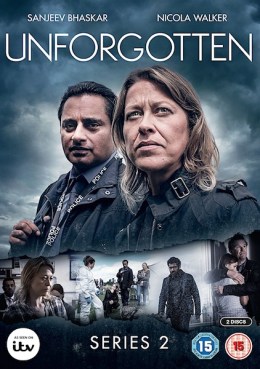
Unforgotten  Series 2
Unforgotten series 2I get the impression ITV’s cold-case thriller was a bit of a surprise success when the first series aired, because it felt like a finite unit that wasn’t expecting a continuation. Despite not having the grand old acting talent that perhaps made the first run a draw, the second series’ storyline is every bit its equal, a compelling mystery about how a successful entrepreneur came to be murdered and stuffed in a suitcase 26 years ago. The tone of the show takes its lead from its stars, the ever-excellent Nicola Walker and Sanjeev Bhaskar, playing a pair of coppers who are calm, understated and methodical when doing their job, but with deep wells of emotion and empathy for the people that job touches. Much of the series ticks along in this way — a good drama, but without many histrionics to wow you — until the finale, when the truth comes out in a devastating episode with heartfelt writing and incredible performances across the board, culminating in a striking final act. Unforgotten is far from the flashiest cop show on TV, but that doesn’t mean it can’t pack a punch.
Also watched…

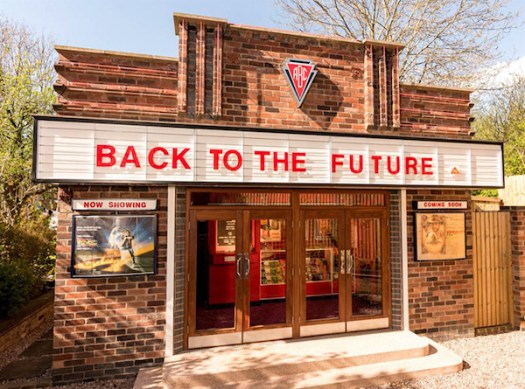
Where we're going, we don't need sheds...

Where we’re going, we don’t need sheds…

  • Amazing Spaces: Shed of the Year Series 4 Episodes 1-2 — Not normally my kind of thing, but episode one featured a cinema ‘shed’ and it was amazing. I’m not sure I’ve ever been so jealous in my life. You might think it’s just the façade pictured above, but oh no! You can have a look at a whole gallery of photos here and weep that you don’t have one in your back garden. Then, episode two had an impressive home-made TARDIS, as well as a little hedgehog rescue. I love hedgehogs. Someone should do a Pixar-esque animated movie starring hedgehogs.
  • The Musketeers Series 3 Episodes 5-6 — This final series seemed to attract a lot of criticism when it aired, but I think it contains as much good ol’ swashbuckling fun as ever.
  • Tim Vine Travels in Time — Exceptionally silly comedy pilot. What else would you expect from Tim Vine? It was pretty divisive on Twitter (too silly for some, it seems), but I enjoyed it. Hopefully they’ll do a series.

    Things to Catch Up On
    Star Trek: DiscoveryThis month, I have mostly been missing the return of Star Trek to TV, in the form of Discovery. It’s “a Netflix original series” everywhere outside the US and Canada, so I imagine I’ll catch up during one of my irregular Netflix subscriptions (after the whole first season is available to binge, of course). Also missed: Rellik, the new thriller with a Memento-esque structure from the writers of The Missing and One of Us, and the second series of Doctor Foster. I’m saving up both for a consecutive-day binge once they’re done.
    Next month… if rumours about a surprise mid-October release date are to be believed, I’ll probably review Netflix’s sixth Marvel show, The Punisher. If those rumours are rubbish, who knows?

  • A Fistful of Dollars (1964)

    The 100 Films Guide to…

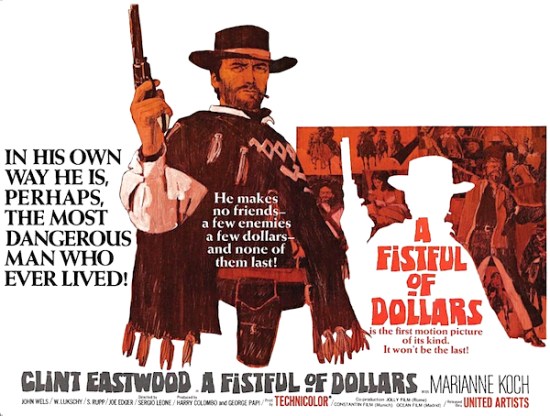
    In his own way he is, perhaps, the most dangerous man who ever lived!

    Original Title: Per un pugno di dollari

    Country: Italy, Spain & West Germany
    Language: English and/or Italian
    Runtime: 100 minutes
    BBFC: X (cut, 1967) | AA (1981) | 15 (1986)
    MPAA: M (1967) | R (1993)

    Original Release: 12th September 1964 (Italy)
    UK Release: 11th June 1967
    Budget: $200,000

    Stars
    Clint Eastwood (High Plains Drifter, Gran Torino)
    Marianne Koch (The Devil’s General, Spotlight on a Murderer)
    Gian Maria Volontè (For a Few Dollars More, Le Cercle Rouge)
    Wolfgang Lukschy (Dead Eyes of London, The Longest Day)
    José Calvo (Viridiana, Day of Anger)

    Director
    Sergio Leone (The Colossus of Rhodes, The Good, the Bad and the Ugly)

    Screenwriters
    Víctor Andrés Catena (Kill Django… Kill First, Panic)
    Jaime Comas (Nest of Spies, Cabo Blanco)
    Sergio Leone (The Last Days of Pompeii, Once Upon a Time in the West)

    Dialogue by
    Mark Lowell (High School Hellcats, His and Hers)

    Story by
    Adriano Bolzoni (Requiescant, Your Vice is a Locked Room and Only I Have the Key)
    Víctor Andrés Catena (Sandokan the Great, Cabo Blanco)
    Sergio Leone (Duel of the Titans, Once Upon a Time in America)

    Based on
    Yojimbo, a Japanese samurai film written by Akira Kurosawa & Ryûzô Kikushima and directed by Kurosawa. (Not officially, but the makers of Yojimbo sued and it was settled out of court — presumably because it’s really, really obviously a remake of Yojimbo.)


    The Story
    The Mexican border town of San Miguel is ruled over by two rival gangs. When a gunslinging stranger arrives, he attempts to play the two gangs off against each other to his benefit.

    Our Hero
    The Man With No Name, aka Joe, seems to just be a drifter, who rocks up in San Miguel and sees an opportunity to make some money by doing what he does best: killing people.

    Our Villains
    Neither of the two gangs — the Baxters and the Rojos — are squeaky clean, but the Rojos are definitely the nastier lot. Led by three brothers, the cleverest and most vicious of them is Ramón, who’ll stop at nothing to punish Joe after he threatens their empire.

    Best Supporting Character
    The innkeeper Silvanito, who warns Joe away when he first arrives, but becomes his friend and almost sidekick later on.

    Memorable Quote
    “When a man with .45 meets a man with a rifle, you said, the man with a pistol’s a dead man. Let’s see if that’s true.” — Joe

    Memorable Scene
    As Joe heads off to confront three of Baxter’s men who shot at him earlier, he passes the coffin maker — and tells him to get three coffins ready. Coming face to face with four of Baxter’s goons, Joe asks them to apologise to his mule. They, naturally, refuse… so he shoots them all dead. As he walks back past the coffin maker, he casually apologises: “My mistake — four coffins.”

    Memorable Music
    Ennio Morricone’s score is as much a defining element of this movie as the visuals or the cast. His later theme for The Good, the Bad and the Ugly may be his best-known work, but there’s a cracking main title theme here too.

    Letting the Side Down
    It’s just a fact of this kind of production from this era, but the English dubbing is really quite terrible. Well, the acting’s not all that bad, as it goes, but the lip sync is not very synced.

    Making of
    When it premiered on US TV in 1977, the network found the film’s content morally objectionable: the hero kills loads of people, apparently only for money, and receives no punishment. While that might sound perfectly attuned to US morals today, they had different ideals back then. So they ordered a prologue be shot, showing Eastwood’s character receiving a commission from the government to go sort out the town of San Miguel by any means necessary — thus morally justifying all his later killing, apparently. The short sequence was directed by Monte Hellman (Two-Lane Blacktop) and starred Harry Dean Stanton (RIP).

    Next time…
    The loosely connected Dollars (aka Man With No Name) Trilogy continued with For a Few Dollars More (which was part of my 100 Favourites last year) and concluded with The Good, the Bad and the Ugly (which someday will get the “What Do You Mean You Didn’t Like” treatment).

    Verdict

    The Dollars trilogy were among the first Westerns I saw, and I’ve been meaning to revisit them for many years. I was finally spurred on to start by watching Yojimbo for the first time. Watching that and this back to back, you can’t miss how similar they are — no wonder they settled the legal case, they wouldn’t’ve had a leg to stand on. Yojimbo is the classier handling of the material, giving the whole scenario a weightiness that has gone astray here. Fistful has its own charms, of course, as director Sergio Leone merrily reinvents the Western genre before our eyes — out go the simple white hat / black hat moral codes, in comes baser motivations (greed, lust) and quick sharpshooting. What it lacks in classiness or weight, it makes up with coolness and style.