
Justin Kurzel | 115 mins | download (HD+3D) | 2.35:1 | USA, France, UK, Hong Kong, Taiwan & Malta / English, Spanish & Arabic | 12 / PG-13

There seemed to be great hope when the Assassin’s Creed movie was announced. Partly because it’s a popular video game series, so of course its fans were excited; but also because it attracted star Michael Fassbender, an actor doing Oscar-calibre work, who then hand-picked director Justin Kurzel, whose previous movies suggested loftier ambitions than just trashy blockbusters. Feelings seemed strong that this could be the first great video game adaptation. But it was not to be.
Fassbender plays Cal, a criminal who is ostensibly executed but then wakes up in a strange facility where a doctor (Marion Cotillard) informs him that they’re going to strap him into a machine called the Animus, which uses Cal’s DNA to kind of send him back in time to relive the memories of his ancestor, who was an Assassin (with a capital A, because they’re like a guild or something). Her organisation, the Templars (who are the bad guys, presumably), want to use this totally plausible science to access the aforementioned memories so that they can locate the world-changing MacGuffin, hidden away by Cal’s ancestor (who was a good guy, I think). Something like that, anyway.
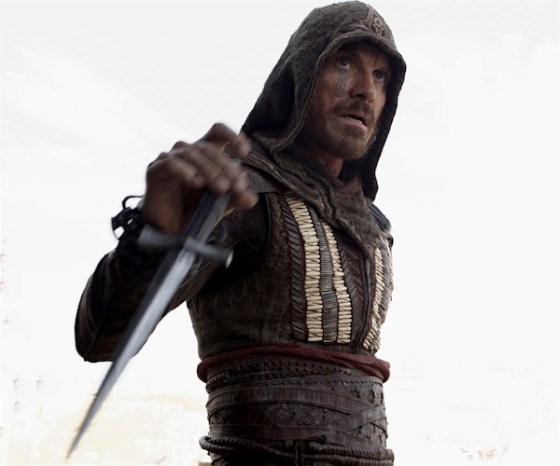
To be honest, a “something like that” feeling pervades the film. It’s a very strange viewing experience, in that you can follow what’s going on while at the same time feeling like it makes no sense whatsoever. Until the last act, anyway, when it goes thoroughly WTF. In part that’s because all the nonsensical bits and bobs that you let slide earlier finally come into play. Like, what’s going on with the other inmates? Are they actual Assassins? Did using the Animus make them Assassins? That seems to be what happens to Cal. So, how does that work exactly? And then the actual ending… what the hell was it all about? I’m not sure I could even summarise my confusion — like I said before: it’s both completely followable and completely nonsensical. Of course, it’s very much trying to leave things open for a sequel. I guess that won’t be happening…
For a video game adaptation marketed as an historical actioner, there’s altogether too much plot (whether it’s followable or not, the story is dull and unengaging) and too little action. What’s there is mostly well realised — apparently a lot of it was done for real, and although there’s obviously a lot of CGI background extension (with a nice painterly look), there’s a definite physicality to the parkour and fisticuffs that you don’t get with CGI body doubles. I mean, there are only three or four action sequences total, and only one and a half of them are really worth it, but at least there’s something to like in them. Unfortunately, the action carries no weight: our hero can’t change the past, just witness it as he helps the bad guys watch to see where the MacGuffin ended up. So we are literally watching someone watch someone else do all the action — like, y’know, watching someone else play a video game. It’s almost a meta commentary on video game movies, except I don’t think that was the intention.

So what is it trying to comment on? I mean, it’s an action blockbuster, so “nothing” would be a perfectly adequate answer. Nonetheless, some reviews claim it’s trying to consider philosophical, religious, and/or genetics-related concepts. I suppose it does technically mention such things, but it fails to actively engage with them to such a degree that I think it’s doing it a kindness to even claim it’s attempting to be a thoughtful movie. In a similar shot at intelligence, apparently we were meant to feel neither the Templars nor Assassins are good or bad, but both morally grey. However, rather than creating ambiguity in who to root for, it just comes across as a smudge of indifference.
Nothing else impresses either. It’s a very visually gloomy film. I can’t discount the possibility that’s because I watched it in 3D, with the notorious darkening effect of the glasses, but my setup usually compensates for that (I don’t recall noting any undue darkness on other 3D viewing). Actually, the 3D itself was fine — good, even, at times — but it’s battling the largely unappealing visuals.

I’ve never played an Assassin’s Creed game, but I’d wager they don’t primarily consist of people nattering in a lab interspersed with the occasional period action scene. Maybe a greater adherence to such thrills, and less needlessly convoluted plotting, would’ve made for a more likeable movie. My rating’s possibly a tad harsh, but Assassin’s Creed could and should have been better.

Assassin’s Creed is available on Sky Cinema from today.











 Favourite Film of the Month








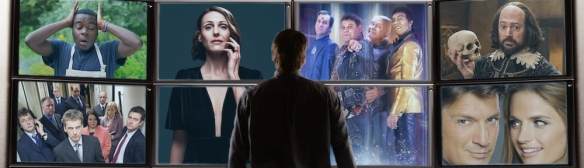











 Everyone was a bit surprised when they announced a second series of Doctor Foster. The
 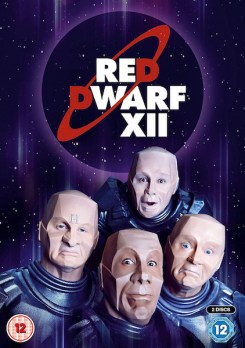 I still think of Red Dwarf as a programme that’s popped back for a bit of a revival, but I guess at this point it counts as just an ongoing show: since Dave brought it back in 2009 they’ve produced four series, half as many as the entire original run on the BBC. Give it another five or six years and they may equal, or perhaps even surpass, that number. It’s been a long time since I actually watched any of those old episodes that made the show’s name, so I can’t offer an opinion on whether the new runs are of the same quality — some say they are, some say they aren’t. Personally, I still think it’s funny overall, and (as I often say) that’s really all you need from a comedy. That said, one thing Dwarf has always done, and continues to do, is draw from actual science and science-fiction concepts to drive its plots and many of its gags. That makes it a proper sci-fi-comedy, rather than just a regular sitcom that happens to be set on a spaceship. Hurrah for that.
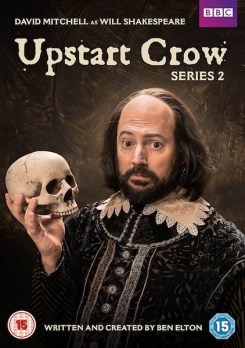 Talking of funny sitcoms, this series of Upstart Crow has been hilarious. Okay, I could do without Harry Enfield turning up as Shakespeare’s dad — almost every scene featuring him sees the humour take a turn towards the puerility of the toilet — but the rest of it is often pretty clever, riffing on Shakespearean plots and trivia. There was even a screenwriting joke in one episode that I guess would pass most people by. It also has a nice line in almost anachronistic humour, where characters comment on a fact of the day that is actually a commentary on modern life. It’s not subtle, and perhaps writer Ben Elton returns to that comedy well too often, but it’s always funny. And as I often say…
 It’s funny coming to The Thick of It for the first time now. It was so cutting-edge when it aired, and yet politics has got so much barmier since — these specials debuted a whole decade ago now, when the idea that Trump might be President was the kind of thing no one but sitcom gag writers thought about. That’s not to say the show’s lost any of its bite, just that it’s not as timely as it once was. These two hour-long specials, The Rise of the Nutters and Spinners and Losers (plus 15-minute bonus episode Opposition Extra, which follows some characters from Rise of the Nutters during the events of Spinners and Losers), set their satirical sights on the transition of power from Tony Blair to Gordon Brown. Don’t worry if you don’t remember that — there’s no reading up required, because The Thick of It is a fiction loosely inspired by real political events, rather than a straight riff on reality. It’s every inch the 21st century’s answer to Yes Minister in that respect. Although there’s an ensemble cast, all of whom are very amusing, the unmistakable star is Peter Capaldi’s Malcolm Tucker. With a regime change in the offing, Tucker risks being thrown out as part of the old guard, and so is on the back foot trying to manipulate things to his advantage. After three seasons of Capaldi as the Doctor, witnessing him here use his brain to run rings around other people to get the result he desires now feels like watching a somewhat evil — and much swearier — version of everyone’s favourite Time Lord.
 This month, I have mostly been missing The Gifted, the new TV show set definitively in the X-Men universe — unlike the last one, Legion, which apparently wasn’t. As you might infer from that use of “apparently”, I still haven’t got round to Legion either. I also haven’t seen the other new Marvel Comics-related show, Inhumans, which is part of the MCU. After the terrible reviews it’s received, I’m not sure I’ll bother.
 100Films.co.uk