
Rupert Sanders | 107 mins | cinema | 1.85:1 | USA & China / English & Japanese | 12A / PG-13

A few decades in the future technology has continued to proliferate to the point where the majority of humans are cybernetically augmented in some way, whether it be eyes that have additional functionality, like zooming or x-ray, or fingers that split into dozens of segments to type faster, or a stomach that can process alcohol quicker… However, Major Mira Killian (Scarlett Johansson) is the first of her kind: a human mind in a fully cybernetic body. Along with her team at anti-terror unit Section 9, they find themselves on the trail of a cyberterrorist who is murdering high-ranking employees of Hanka Robotics — the company that built the Major. As they dig further, they begin to uncover a startling conspiracy. Well, of course they do.
Although officially (as per the credits) adapted from Masamune Shirow’s original manga, this iteration of Ghost in the Shell creates a new narrative, but builds it out of liberally repurposed imagery, sequences, character traits, and more from the popular 1995 anime adaptation and its sequel, and apparently from the Stand Alone Complex TV series too (I’ve never got round to watching that so can’t vouch for its use here). Though to say “new narrative” is something of a kindness because, intricacies aside, the story isn’t new at all. A familiar narrative is not necessarily a barrier to enjoyment — to invoke it for the second time in as many GitS reviews, Doctor Strange had a rote “Marvel superhero begins” storyline but made up for it with flashy visuals and a good amount of wit, resulting in a movie that I enjoyed very much. Ghost in the Shell also has flashy visuals, as you’ll have no doubt noticed from the trailers, but instead of wit it has all sorts of existential philosophy to ponder upon.

Unfortunately, it doesn’t bother to. It certainly raises some of those issues, but I think it may do so by accident: director Rupert Sanders and co have clearly decided to focus on the action-thriller aspects of previous Ghost in the Shell material in their reworking, but have unavoidably swept up some of the philosophising in the process; but because they have little to no interest in actually exploring those questions (Sanders has literally said as much in interviews), they all lead to nowt. Some of the quandaries Ghost in the Shell’s world poses have been well-considered elsewhere — Blade Runner is probably the most obvious example — but, I think, not all of them. For instance, there’s rich potential in the stuff about having your brain put in a brand-new body, especially given some of the twists and revelations about that which come later on, but it doesn’t feel like the film has much to say about it. It’s a thriller movie that uses those elements to generate plot twists, rather than a film that’s interested in examining what they might mean to a human being who experiences them.
This tin-eared understanding of the source material stretches in every direction. Take the role of the bin man, for instance, and how it’s been repurposed here. How that character’s been tricked, and Section 9’s uncovering of it, is quite an affecting sequence in the original film, as well as contributing a lot to the film’s cogitation on how much our memories make us who we are. In this remake, the fundamental facts of the man’s case are still the same, but there’s very little feeling or emotion there. It’s just a plot point; a stepping stone on the way to the next bit of the narrative. I guess to most people watching Hollywood blockbusters plot is paramount, but there’s no reason it couldn’t have both driven the story onwards and contributed something meaningful.

Despite the focus on plot, and the relatively brisk running time of an hour and 45 minutes, Ghost in the Shell manages to drag on occasion. Perhaps the filmmakers felt they had licence to do so thanks to some of the slower sequences in the original film, but at least those were busy with philosophising, while here they’re just… I’m not sure, really. It was probably a form of exposition — slow, unfocused exposition — but dressed up to look like it might be something more. Conversely, at other times the relatively brief running time is to the film’s detriment, with characters and plot elements going underdeveloped. For example, we never really feel the brewing conflict between Hanka Robotics, the government-funded tech company that built the Major, and Section 9, a government anti-terror task force. We see some of the arguments between the heads of each organisation, but the fact they both answer to the government is only alluded to rather than enacted — the Prime Minister and what s/he might do is invoked on more than one occasion, but no one governmental personage ever appears to actually weigh in on matters. Considering the importance of all that to events in the third act, I thought it could’ve done with a few more building blocks.
If we set aside the wasted potential to engage with the thought-provoking topics its world raises, and the few storytelling fumbles like the one just discussed, Ghost in the Shell is a solid straightforward sci-fi action-thriller, with a decent if familiar revenge-ish story eventually emerging and some competently realised action scenes — though the very best of the latter are all homages to the original movie, which probably did them better. The design work is often exemplary, with some striking cityscapes and technology (the robotic geishas that have been quite prominent in the marketing, for instance), and Sanders and DP Jess Hall usually lens it all to good effect. That said, this is a future world that doesn’t really feel lived in — it looks like it’s just sprung out of the mind of a designer, or a comic book artist. Some might think that’s the fault of the source material being a comic book, but I don’t think it’s true of the earlier film, at least. The rubbish collectors are again a good example: in the original movie you really feel like they’re on their usual rounds, until Section 9 track them down and it explodes into an action sequence. In this version, they merely exist because a bin lorry is the kind of thing that would make a handy battering ram (and also as another nod to the anime, of course).
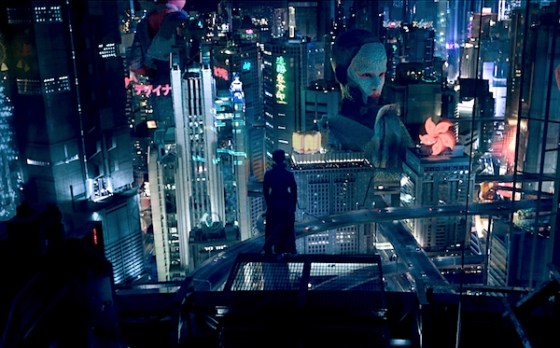
Funnily, for all the film’s faults in not talking about anything, there’s a lot to talk about with the film itself. I haven’t even touched on the whole whitewashing controversy, though to be honest it never bothered me that much anyway — I mean, it’s a US-led English-language remake, of course they’re more interested in a big-name American star than racial fidelity. Not that it’s cut and dried anyway: you might assume she’s Japanese, but the ’95 movie was supposed to be set in a future Hong Kong (for its part, the live-action movie never names the city or country it’s set in). Also, without meaning to spoil anything, the film itself touches on the issue. I thought how it did that was solid, though (as with everything else) under-explored, but others consider it an empty gesture to try to excuse the whitewashing.
I find it a little tricky to sum up my reactions to this new Ghost in the Shell, because they were kind of… nothing. I walked out of it feeling reasonably entertained by the action scenes and thriller storyline, though I would argue both could’ve been even stronger; and while I may lament its lack of engagement with the issues its world inherently raises, it does so little to tackle them that I almost just shrug it off — yeah, it probably should do that, but it doesn’t do it badly, or half-heartedly, it just doesn’t. Exactly what you want or expect from Ghost in the Shell may well dictate one’s reaction to it as much as the content of the film in and of itself, which I think is perfectly adequate for what it is. It could have been so much more, though.

Ghost in the Shell is in cinemas pretty much everywhere now.






























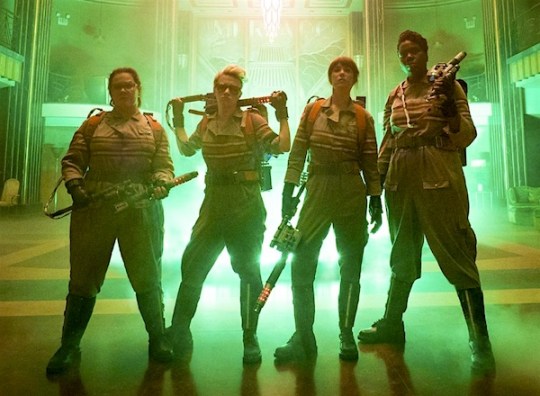
 Previously on Twenny-Four… There may be no Jack Bauer, the new font for the clock may be bizarrely wrong, and the on-screen text may have abandoned the familiar golden yellow for a soft blue, but everything else about Legacy is same old, same old. If you remember it from
 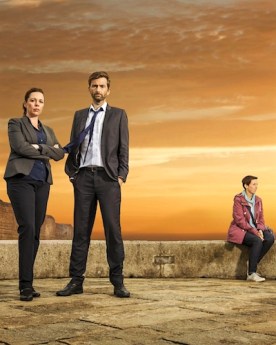 DI David Tennant and DS Olivia Colman (or whatever their characters are called) return after the much-criticised second series for a third run that represents a blazing return to form. Nearly every police drama on TV is always about murder, but here our committed coppers are faced with something that seems harder to prove, and all the more distressing and divisive for those involved: a sexual assault. The series was apparently put together with extensive advice from expert organisations, which means on occasion it almost tips a little too far into factual territory, like a “this is how it’s done in real life” dramatisation. Fortunately screenwriter Chris Chibnall is better than that, quickly focusing on how it affects the characters, and on building the mysteries that will fuel eight whole episodes. Suspicion abounds, but if Broadchurch’s first series proved anything it was that everyone can guess the culprit before the end without it undermining the effectiveness of the drama. I think we’re a ways from that point yet, though…
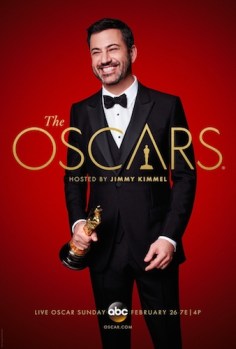 Best. Oscars. Ever! Oh, I bet it was horrendous actually being there having to deal with that ending, but my goodness, as a viewer it was fantastic. It couldn’t’ve been more dramatic if you’d scripted it. Imagine how terrible it could have been, though — if Moonlight had been forced to cede the win to La La Land, for instance (that would’ve sent #OscarSoWhite into overdrive), or if it had been in a category with a sole winner, who in the middle of their no-doubt-tearful acceptance speech was informed they hadn’t won after all and had to embarrassedly hand the statuette over to someone else… But no, it turned out OK. Well, not so for the La La Land guys, but for everyone else, yeah. And the rest of the ceremony wasn’t half bad either. Jimmy Kimmel was the most confident and capable host for bloody ages (and I say that as someone who enjoyed the likes of Neil Patrick Harris and Hugh Jackman) — if the show’s producers know what’s good for them, he’ll be the new regular host.
 The recent news that Fox have scrapped plans for a US remake of Luther (because they couldn’t find a lead actor good enough to replace Idris Elba) reminded me that I never got round to watching the original version’s last series, this two-parter that aired back in December 2015. I can see why feeling unable to cast anyone as engaging as Elba would lead them to abandon their remake, because there’s not all that much special about Luther outside of its lead. Some people talk about it as if it’s among the forefront of the Quality TV era that we’re currently blessed with, but that’s just a bit daft — much like the programme itself. It doesn’t know it’s daft — it’s all very serious — but it is daft, really. Sure it’s dark, and sometimes kinda scary, and certainly grim, but its realism quotient is way low. It has much more in common with the overblown heightened world of, say,
 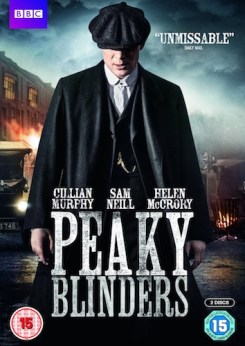 I’ve been meaning to get round to this since it first aired back in 2013, and for whatever reason now was the time (partly it was brought to mind by writer Steven Knight’s new dark period drama,
  “She’s dead… wrapped in plastic!” With those immortal words (not the first lines, but never mind) a TV phenomenon was born, and a whole new era of television slowly began.
  This month, I have mostly been missing the penultimate season of The Americans, which is two episodes in Stateside (no idea if there’s still a UK broadcaster; at this point I’m not sure it matters). Long-time readers may recall I like to save up The Americans and watch it binge-ish-ly once the season ends, which is a very rewarding way to watch such an intricately-constructed programme. The downside is that means I’m still a couple of months away from getting to find out what happens this year in “
 100Films.co.uk