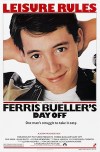
#50 Ferris Bueller’s Day Off (1986)
#51 The BFG (2016)
#52 War on Everyone (2016)
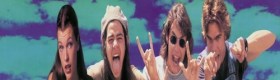
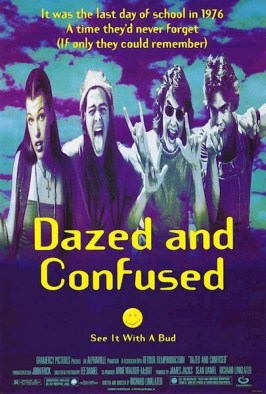
#53 Dazed and Confused (1993)
#54 Now You See Me 2 (2016)
#55 Nocturnal Animals (2016)
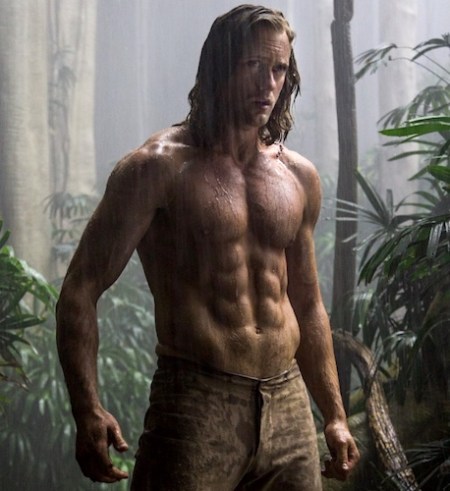
#56 The Legend of Tarzan (2016)
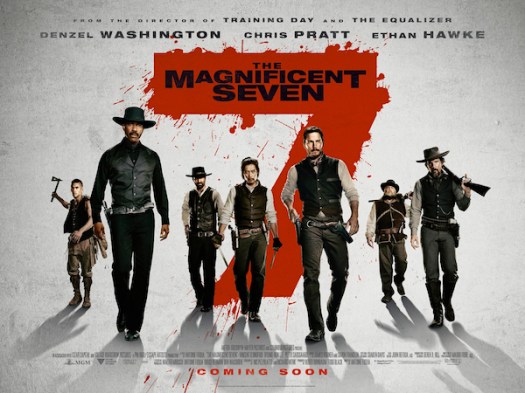
#57 The Magnificent Seven (2016)
#58 Sully (2016), aka Sully: Miracle on the Hudson
#59 Guardians of the Galaxy Vol. 2 (2017)
#60 The 39 Steps (1935)
#61 Silver Linings Playbook (2012)
#62 Split (2016)
.
I watched 13 new films this April, making it the lowest month of 2017 so far (but only by one).
It falls short of the average for the last 12 months (previously 14.75, now 14.08), and of 2017’s average to date (previously 16.3, now 15.5), but it does drag the April average up from 9.67 to precisely 10. (That leaves just June, July, and November as months with averages below 10.)
This month’s Blindspot film: one of Hitchcock’s definitive early works, solving the mystery of The 39 Steps.
This month’s WDYMYHS film: underwhelming Oscar-winning rom-com Silver Linings Playbook.
The 23rd Monthly Arbitrary Awards
Favourite Film of the Month
A lot of films vie for my affection this month. I was charmed by a friendly giant, found Tom Ford’s latest to be pleasantly provocative, enjoyed some magnificent gunslinging, was thrilled by classic Hitchcock, and chilled by Shyamalan’s return to form. But, to slightly modify this award to “most surprisingly among my favourite films of the month”, one film caught me unawares more than any other: I confess that I half expected to hate Ferris Bueller’s Day Off, what with its lead character seeming like a dick ‘n’ all, but the skill of writer-director John Hughes is not to be underestimated.
Least Favourite Film of the Month
Richard Linklater set out to make an anti John Hughes movies with Dazed and Confused, and I guess he succeeded based on this neat little favourite/least favourite mirroring we’ve got here.
Best Pilot in the Galaxy
Star-Lord and Rocket can bicker about it all they want, but neither can hold a candle to Chesley ‘Sully’ Sullenberger.
End Credits Scene I’m Most Annoyed I Had Spoiled Guardians of the Galaxy Vol. 2 may have five (five) scenes during its credits, but they’re all a bit something-and-nothing (I can’t even remember what was in them all now, and I only saw it three days ago). But that scene at the end of Split (it comes after the second title card, so I think we can argue it’s in the end credits)… damn, I wish that hadn’t been widely reported all over the shop and I’d instead been able to discover it in situ. That said, it’s so well constructed that it gave me a tingle of long-awaited excitement nonetheless.
The Audience Award for Most-Viewed New Post of the Month
Since I’ve started posting my content on IMDb my TV reviews have really taken off in the hits. It’s the latest one of these, The Past Month on TV #16 (in which I shared my thoughts on the likes of Doctor Who, Iron Fist, The Crown, and Twin Peaks), that takes this month’s gong. (My most-viewed new film review was Don’t Breathe.)
We’ll see if the new Pirates of the Caribbean film, Dead Men Tell No TalesSalazar’s Revenge, is the return to form that they’re claiming. And La La Land makes it to Blu-ray over here, so I’ll finally see it.
Over the last ten-and-a-bit years I’ve prided myself on reviewing every new film I see. Well, at the start it was less pride and more just how I did things (and most of those early ‘reviews’ were only a couple of sentences long), but as I’ve maintained it for so long I’ve come to pride myself on it. However, of late my backlog has reached ridiculous proportions, and is only expanding.
But I’m not giving up just yet, dear reader — hence this round-up. There are some films I just don’t have a great deal to say about, where all I’ve really got are a few notes rather than a fully worked-up review. So as in days of old (i.e. 2007), I’ll quickly dash off my brief thoughts and a score. Hopefully this will become an irregular series that churns through some of my backlog.
2016 #167
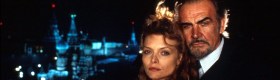
Martin Ritt | 112 mins | streaming (HD) | 16:9 | UK / English | PG
John le Carré’s famed story of crosses, double crosses, triple crosses… probably quadruple crosses… heck, maybe even quintuple crosses — why not?
The storytelling is very slow and measured, which I would guess is not to all tastes — obviously not for those who only like their spies with the action and flair of Bond, but even by Le Carré standards it’s somewhat slight. That’s not to say it’s not captivating, but it lacks the sheer volume of plot that can, say, fuel a seven-episode adaptation of Tinker Tailor Soldier Spy. Quite how the forthcoming miniseries from the makers of The Night Manager intends to be more than a TV movie… well, we’ll see.
There’s also some gorgeous black and white photography, with the opening sequence at Check Point Charlie looking particularly glorious.
Under the Shadow (2016)
2017 #12
Babak Anvari | 84 mins | streaming (HD) | 2.35:1 | UK / Persian | 15 / PG-13
Be afraid if your doll is took — it could be the Iranian Babadook.
Honestly, for all the creepy quality on display in this UK-funded Iran-set psychological horror, I don’t think labelling it as something of a mirror to The Babadook is unfair. It’s about a lone mother (Narges Rashidi) struggling with an awkward child (Avin Manshadi) while a malevolent supernatural entity that may be real or may just be in her head attempts to invade their home. Where the Australian horror movie invented the mythology for its creature afresh, Under the Shadow draws from Persian folklore — so, same difference to us Western viewers. The devil is in the details, then, which are fine enough to keep the film ticking over and regularly scaring you, be it with jumps or general unease.
The Babadook may have done it better, and certainly did it first, but Under the Shadow remains an effective chiller.
Teenage Mutant Ninja Turtles:
Out of the Shadows (2016)
2017 #29
Dave Green | 108 mins | streaming (HD) | 2.35:1 | USA, Hong Kong, China & Canada / English | 12 / PG-13
This first (and last? We’ll see) sequel to 2014’s Teenage Mutant Michael Bay Turtles ends with a cover of the theme from the original animated series, just in case you weren’t clear by then that it’s aspiring to be a live-action version of that particular cartoon.
For one thing, there are appearances by a lot of popular characters who are primarily associated with that iteration of the franchise. For another, parts of the film have a very “rules of Saturday morning cartoons” feel — people thrown from a plane are immediately shown to be opening parachutes; all of the villains survive to fight another day; that kind of thing. They’ve clearly made an effort to make it lighter and funnier than its big-screen predecessor. The downside: they’ve gone a bit too far. The tone of the screenplay is “kids’ movie”, which isn’t a problem in itself, but Out of the Shadows retains the dark and realistic visual aesthetic of the first movie, plus enough violence and swears to get the PG-13 all blockbusters require, which means the overall effect is a little muddled.
While it’s not a wholly consistent film, it does work to entertain, with funny-ish lines and kinetic CGI-fuelled action scenes. I must confess to ultimately enjoying it a fair bit… but bear in mind I was a big fan of the cartoon when I was five or six, so it did gently tickle my nostalgia soft spot.
Dazed and Confused (1993)
2017 #53
Richard Linklater | 102 mins | streaming (HD) | 16:9 | USA / English | 15 / R
Writer-director Richard Linklater has said that with Dazed and Confused he wanted to make an anti John Hughes movie; one that showed teenage life was mundane and uneventful. So here’s a movie about what it’s like to hang out, driving around aimlessly doing nothing. Turns out it’s pretty mundane and uneventful. And most of the characters behave like dicks half the time, which isn’t exactly conducive to a good time.
Despite that, some people love this movie; it’s often cited as being nostalgic. Well, I can’t say it worked that way for me. Indeed, I’m kinda glad I didn’t know those people in school…
2017 #57
Antoine Fuqua | 133 mins | Blu-ray | 2.39:1 | USA / English | 12 / PG-13
Despite sharing a title and setting, this second Western remake of Akira Kurosawa’s Seven Samurai is almost as different from The Magnificent Seven (1960 version) as that was from the original. Maybe that’s over-egging the point, but The Magnificent Seven (2016 version) is certainly not just a straight-up do-over of the popular Western classic.
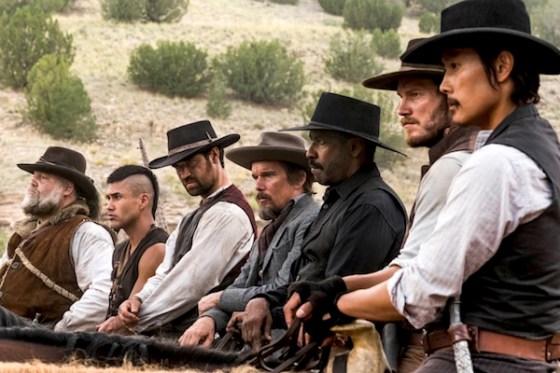
The broad sweep of the plot is the same: a small town is being terrorised by a local big-man and his gang, so they hire a septet of down-on-their-luck warriors to defend them. Here, said town has been relocated to America (from Mexico in the ‘original’), and the characterisations of the seven gunslingers have been struck afresh rather than recreated, albeit with some near-unavoidable similarities to the previous seven.
What you want to see in the film affects whether these changes are sizeable or not. As I said, the basic shape of the plot remains untouched, with the defenders recruited one by one, training up the townsfolk, and then engaging in a lengthy climactic battle when the bad guys return to town. So at a story level it works as well as this tale ever has, with the same pros and cons for its characters: with so many principals some get shortchanged on screen time, but they’re a mostly likeable bunch. In the lead roles, Denzel Washington, Chris Pratt, and Ethan Hawke are decent modern stand-ins for Yul Brynner, Steve McQueen, and Robert Vaughn (respectively, more or less), though of course that varies depending on your personal like or otherwise for the actors in question.
Looking to the combat, the film is again similar but modernised. The action scenes are slick, well choreographed and littered with dead bodies and big explosions, rather than the slightly off-the-cuff style of older action films. Framing it as a few-against-many last-stand skirmish, the film constructs the finale as a battle with strategies and tactics, ebb and flow, rather than an everybody-run-at-everybody-else free-for-all. That seems to be the way movies are going with their depiction of large-scale conflict, and I think that’s a good thing.
Where the remake’s changes have most impact is if you want to consider the film politically. The town in need of defending has been switched from a Mexican village to an American outpost, a symbol of good honest hard-working folk trying to establish a life for themselves. The villains terrorising them have been switched from a Mexican criminal gang to a power-hungry businessman, with a group of heavies and the local sheriff in his pocket. The seven encompass a greater deal of racial diversity: a black leader, a Mexican fugitive, an Asian knife-thrower, a Native American archer… The other three are white guys, but that doesn’t negate the point. In our modern political climate — particularly in the US — there’s a lot of different stuff to unpack there.
I’m not sure the issues in question really need spelling out, so I’m slightly more curious how much of it was intentional on the part of the filmmakers, and how much an incidental side effect of changes they made just to differentiate the film from the 1960 version. Frankly, I don’t think the movie is interested in making any big political points — you can’t reasonably deny those readings are there, but it’s all subtext (whether intentional or, I think more probably, accidental) to be analysed by those who are interested. I think director Antoine Fuqua and co were more concerned with creating an entertaining action movie than a political tract, and I think they’ve achieved that.
Judged as such, The Magnificent Seven probably isn’t at the forefront of its form, but it’s mostly a rollicking good time. And, as if to cement what I was writing recently about my preferences generally erring towards modern cinema, I actually enjoyed it more than the 1960 one.
2017 #56
David Yates | 110 mins | streaming (HD) | 2.35:1 | UK, USA & Canada / English* | 12 / PG-13
Reviving or continuing well-known IPs as action-packed summer extravaganzas is the order of the day in modern blockbuster cinema — witness the likes of the 2009 Sherlock Holmes and 2013 Lone Ranger — so I suppose it was inevitable that someone would eventually attempt the same with Edgar Rice Burroughs’ Lord of the Apes. As with the other films of its ilk, The Legend of Tarzan® (as its multiple title cards insist on calling it) is a mixed success.
Eschewing the “tell the origins (again)” form of most reboots, the film finds Tarzan long retired to England as Lord John Clayton III (Alexander Skarsgård) when he is invited back to Africa by the King of Belgium to observe the wonderful work being done there. Initially reluctant, John is persuaded to go by his now-wife Jane (Margot Robbie), who’s keen to revisit their old friends, and American agent George Washington Williams (Samuel L. Jackson), who suspects the Belgians of enslaving the Congolese people. Indeed, the whole invitation is actually a ruse, as Belgian envoy Leon Rom (Christoph Waltz) intends to deliver John to tribal chief Mbonga (Djimon Hounsou), who has an axe to grind against Tarzan, in return for the diamonds that a near-bankrupt Belgium requires. Naturally, fighting and vine-swinging and sundry acts of derring-do ensue.
When it works, The Legend of Tarzan® is a straight-up old-fashioned adventure movie, albeit with slicker action sequences and created with lashings of CGI. When it doesn’t, it comes across as oddly muddled. As with so many blockbusters last year (Suicide Squad and Rogue One spring immediately to mind), it feels like it was chopped and changed a lot in the edit. It’s hard to pin down how exactly, but it’s something in the way it flows (or doesn’t) between scenes, or sometimes even within sequences. Considering that (just as with the other two examples I mentioned) there were reshoots, you think they’d’ve smoothed some of that out.
Similarly, the effects are a distractingly mixed bag. A lot of the CGI is incredible — the animals look magnificent, for example; especially the gorillas, who are required to offer some kind of character as well as feature in action scenes. But the filmmakers have been overambitious in other areas. The film was mostly shot on soundstages, and the added-in backgrounds for outside stuff are painfully obvious much of the time. However, the worst bit is a sequence where Tarzan and friends swing onto a CG train that looks like it’s been borrowed from a 15-year-old computer game.
Fortunately the performances show a greater consistency. A tough training regime has left Skarsgård with the muscles required to look the part of a muscly jungle-man, but he also displays an adeptness for comedy — or, at least, a lightness of touch — that makes him an appealing hero. There’s a clear attempt to make Jane more than just a damsel in distress, albeit while still conforming to good ol’ Boys’ Own entertainment to some extent, and leading lady du jour Robbie helps give her character. Similarly, Samuel L. Jackson brings easy confidence to his American agent, who serves as a kind of sidekick to Tarzan for most of the movie, acting as comic relief and action scene back-up. If anyone’s underserved it’s the villains, with Waltz solid but giving the performance he always gives (surely he’s capable of more?) and Hounsou being somewhat underused — his character has a highly emotional reason for wanting Tarzan dead, but there’s little time to feel that when there are bigger villainous plans afoot.
Tonally the film reminded me a little of something like Superman Returns — a movie made a long time after a forebear and with a whole new cast, but intended as a sequel nonetheless. Only, where Superman Returns was a sequel to the firsttwo Christopher Reeve Superman movies, The Legend of Tarzan® is a sequel to a movie that doesn’t exist. Its fictitious forerunner is some kind of Tarzan ur-film, a non-specific version of the Tarzan and Jane story that ends with them moving to England and adopting his familial title. This film assumes we’re all familiar with that broad narrative, or familiar with enough to subsist on a few choice flashbacks anyway. And, actually, that’s fine if you do know the story — it certainly feels like we don’t need it going over again… even if, personally, the only version I’ve actually seen is the Disney one. But I do wonder what younger people made of it all, because it seems to me that Tarzan may have slipped somewhat from the general consciousness, so perhaps they’re less familiar with said backstory. Or maybe they’ve all seen the Disney film too.
Also like Superman Returns, The Legend of Tarzan® ends up as something of a well-intentioned muddle. Some viewers will lose patience with it for that, but I at least enjoyed the movie it wanted to be.
The Legend of Tarzan is available on Sky Cinema from today.
* English isn’t the only language spoken but, from what I can ascertain (by which I mean “I read this”), during the subtitled bits they’re speaking Generic Semi-Fictional African Language.^
Another busy month on the box round these parts, so I’ve once again divided my comments into new stuff (i.e. what was actually on TV this month), old stuff (i.e. anything older than four weeks), plus the usual round-up of quick thoughts.
Doctor Who(Series 10 Episode 1) The 36th run of Doctor Who kicked off with an episode titled The Pilot — no coincidence, that. This is the most newcomer-friendly episode of Who for 12 years, an episode finely calibrated to establish everything for a first-timer but also function for regular viewers too. A lot of that effectiveness can be attributed to Pearl Mackie as Bill, the new companion to Peter Capaldi’s Doctor. After a run of oh-so-special companions running back years, Bill is just an ordinary young woman; but of course she’s extraordinary in her own way: ready to learn, eager to help, full of both inquisitiveness and caring. This is surely the birth of both a fan-favourite companion in Bill and a star in Mackie.
It’s also a rejuvenation for Peter Capaldi’s Doctor. They arguably tried too many different things all at once when he joined the series a few years ago, making him old and irascible in contrast to the young and friendly Doctors that had preceded him throughout the revived series. He was gradually softening anyway, but freed of the burden of Clara he seems able to fully revel in his kooky kindliness. It’s perhaps the most Doctor-ish he’s ever been, and for Capaldi, a life-long fan of the show, that must be a real delight. It’s already a shame he’ll be leaving us this year, but at least we have 12 (or 11, if some rumours turn out to be true) more episodes to enjoy before then.
As for this episode in itself, it was more solid than incredible, though that perhaps does it a disservice. No, it’s not going to sit alongside the likes of Blink and Heaven Sent at the pinnacle of all that modern Who can achieve, but it set out the series’ stall well: it’s sci-fi, but a little quirky, a little scary, and full of heart and emotion. It was almost like a Russell T Davies-era episode, but with an unmistakable Moffat-ness about it too — he may be trying to dodge the “fairy tale” mode he adopted for most of his time on the show, reasserting the “this is based in the real world” aesthetic that RTD relaunched the series with back in 2005, but, frankly, Moffat does the former better than the latter, and there’s an edge of that heightened unreality here nonetheless.
But I think those are niggles and nitpicks. This is a strong opener that establishes a very likeable new TARDIS team to guide us through the season of adventures about to come. Fingers crossed the rest of the run can fulfil its promise.
Iron Fist(Season 1) The last of the Marvel/Netflix series before the Defenders team-up, Iron Fist has certainly divided critics and viewers. It doesn’t begin well: the opening episode is possibly the worst thing yet released as part of the MCU, and I only say “possibly” because I never bothered with Agents of SHIELD after the poor reaction to season one. It’s needlessly slow, repetitive, the characters behave implausibly, and the fights are terrible, looking like a first rehearsal filmed with one take. Things do improve — there are more engaging characters, some interestingly developed arcs, and better realised fights — but it still doesn’t come together as well as it could. For one thing, it makes the running of Rand Enterprises a major element, but has a very vague-seeming understanding of how business actually works. It’s just too simplistic.
One of the series’ strongest aspects is the unpredictable loyalties of its characters. I don’t mean that they’re inconsistent, but aside from Danny (who’s the title character, so of course he’s a good guy) and Claire (who’s been in every other Marvel/Netflix show, so she’s a known quantity), the trustworthiness and allegiance of almost every character changes at some point; for some of them, at multiple points. Heck, there are even scenes when you can’t be sure whose side to be on, because both have aspects of right and wrong, good and bad. There are better shows than Iron Fist that never manage that level of shading in their characters. I imagine there’ll be a second season, because when doesn’t Netflix commission more of anything, so hopefully they can build on what worked going forward. And maybe add a business consultant to the writers’ room or something.
The FlashDuet Amongst the eight Arrowverse episodes I watched this month was this: the much-anticipated musical crossover between The Flash and Supergirl, which star Glee alumni Grant Gustin and Melissa Benoist respectively — hence why (some) people called for a musical episode, which caused the producers to decide to do one. Somewhat ironic, then, that it seemed to go down well with critics (at least per Wikipedia) but less so with fans: its IMDb rating is just 6.0. I find myself in agreement with the latter. It wasn’t bad, as these things go, but it was overloaded with niggles, Like, why cast another former Glee actor as the villain but then not have him sing with the stars? Why is there a plot hole whereby they call said villain the Music Meister even though it was Barry and Kara who picked the musical fantasy? The guy’s powers seem to be hypnotism-based and nothing to do with music. There were only two original songs, one which was quite fun and one which was overlong and a tad cheesy. Neither came close to the delights of the Music Meister’s original appearance, which also managed five new songs (and a reprise) in an episode that was half the length. The episode’s guest cast seems to have been selected purely on the basis of “anyone from an Arrowverse show who likes to sing”. All in all it came across as half-arsed; like they felt they should do it because people demanded it, but didn’t assign enough time or energy to doing it properly.
The Crown(Season 1) The most expensive TV programme ever made (or not, whatever) certainly has its budget plastered all over the screen, which hopefully didn’t distract most viewers in the way it did me. It shouldn’t, really, because this is a good drama about the humanity behind the public faces. Its adherence to fact is apparently variable, which I imagine is very irritating to historians of the period, but it works for the fiction. There are great performances all round, with John Lithgow in particular disappearing into Churchill to the point that I forgot I was watching an actor more than once. There’s an interesting plot thread early on about the position of Philip (Matt Smith) relative to Elizabeth — how his role as a husband is challenged by her position as Queen, etc — which goes a bit awry as the series goes on and has other plots to focus on. It’s left quite open-ended, so hopefully it’ll be completed in the second season.
Line of Duty(Series 2) I devoted just 32 words to Line of Duty series one when I finally got round to watching it last October. In summary, it was pretty good but not really great, and the unadulterated adulation that follows the programme around nowadays seemed unmerited. Now I get it, though, because — in a similar fashion to how, say, Mad Max is a decent Ozploitation flick but Mad Max 2 is a reputation-earning action classic — series two is where it’s at. There was much praise for Keeley Hawes’ performance as a downtrodden copper under suspicion of organising a violent ambush of a witness protection convoy, and it’s deserved, but the real star is the writing. There are huge, attention-grabbing twists and surprises, and a mystery that keeps you revising your opinion on what happened right until the end, but perhaps most impressive are the lengthy, intensely procedural interview scenes that could come across as factual and dull but instead are completely gripping.
Twin Peaks(Season 2 Episodes 1-9) I first saw the debut season of Twin Peaks many years ago during a repeat run (it was a ‘classic series’ even then, though with hindsight it can’t’ve been a decade old at the time), then watched it again when the DVD came out, but this is my first time watching season two (legal complications delayed its DVD release for what felt like forever, and by the time it finally came out I just never got round to it). The second season is infamous for representing a steep decline in quality, though that isn’t yet evident from this batch of episodes, which covers up to the revelation of who killed Laura Palmer and their capture. I’d say it lacks the pure concentrated genius of the first season, having ramped up the quirkiness quotient and, at the behest of the network, rushing the resolution of the Laura Palmer mystery, but it ain’t bad by any means. There’s certainly much to like in the off-kilter characters, the folksy mysticism, and some fantastic performances — Kyle MacLachlan is a constant delight as Agent Cooper, but Ray Wise is frequently incredible as the grieving Leland Palmer. But I guess it’s mostly downhill from here…
Also watched…
24: LegacySeason 1 Episodes 5-8 — everything I said last time still applies: this is little more than 24-by-numbers. Episode 6 was a particularly irritating example, as a major subplot was hurried to its climax presumably because the writers just got bored with it. Why else rush the plot so massively, in a way that practically ignored the series’ real-time gimmick? I miss the days when the makers cared about maintaining that illusion.
BroadchurchSeries 3 Episodes 4-8 — it handled its treatment of the issues well, but as a drama Broadchurch 3 couldn’t quite reach the engrossing heights of the first series. Still, it’s a shame there won’t be further cases for the brilliant Tennant and Colman to investigate.
UnforgottenSeries 1 — ITV’s police drama recently aired a second series, with a third commissioned. This cold case-focused first run features powerhouse performances from a bunch of quality elder thesps (Tom Courtenay won a BAFTA for it, but for my money Gemma Jones as his wife was just as good), plus nicely understated turns from the ever-excellent Nicola Walker and Sanjeev Bhaskar as the coppers on the case.
Things to Catch Up On This month, I have mostly been missing series two of Peter Kay’s Car Share, which is a couple of episodes in on the telly or available in its entirety on iPlayer. I nearly didn’t bother with the first series (two years ago now!) because I’m not a huge fan of Peter Kay, but someone recommended it and it turned out to be hilarious. I’m sure I’ll make time for the new one soon.
31 days until new Twin Peaks…
Next month… more Doctor Who, more Twin Peaks, and probably more stuff dredged up from the “must get round to” pile.
Rewatchathon 2017 #8
James Gunn | 121 mins | download (HD) | 2.40:1 + 1.78:1 | USA & UK / English | 12 / PG-13
So, I just got a 3D TV. Well, it’s a 4K TV, but we’re interested in the fact it does 3D right now. And, to cut a long story short (literally — I wrote a 1,200-word post about this before deciding it was rambling and pointless), the impetus to get one now came from the fact that all TV manufacturers are ditching 3D from this year and I always kinda wanted it. (As to why I got a 4K one, apparently it makes for better quality 3D; plus it’s future proof — “future” being the operative word because I’m not replacing my Blu-ray player, I don’t keep a regular Netflix subscription, and Amazon Prime’s UHD selection (found on an otherwise-secret menu when you access it from a 4K device!) is quite pitiful.)
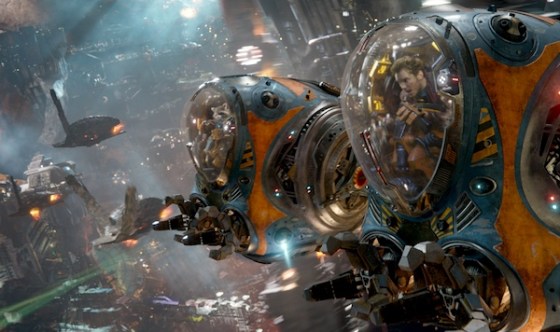
The first thing I watched was… the opening seven minutes of Doctor Who’s 50th anniversary episode, actually (which has superb 3D). But the first thing I watched in full was Guardians of the Galaxy, because I’d been meaning to rewatch it before the sequel lands at the end of the month, and because I’ve long been curious about the 3D version’s shifting aspect ratio.
Regular readers may remember that I love a good shifting aspect ratio, and Guardians does not disappoint. As usual for these things, most of the film is at 2.40:1, opening up to 1.78:1 for selected sequences. Director James Gunn uses it in a similar way to Christopher Nolan, with a scattering of expanded shots here and there alongside some whole sequences, mainly used for action scenes and epic establishing shots. (That’s as opposed to something like The Hunger Games: Catching Fire, which has more-or-less half the film in one ratio and the second half in the other.) Even on a TV the effect is immense, the screen-filling interludes feeling genuinely larger and more impactful. This was helped no small amount by my new TV being 12″ larger, which doesn’t sound like much but actually makes a huge difference (as the actress said to the bishop). That said, pausing a moment to do the maths, it’s nearly a whole third bigger than my old TV, so no wonder the difference is noticeable. But I digress…
As with so many 3D blockbusters nowadays, Guardians was a post-conversion. Nonetheless, I commented in my original review that some sequences seemed to have been designed with 3D in mind — specifically the chase through Knowhere, which I described as “little more than a blur.” I feel like past-me was correct, because I had no such issues with the sequence this time out. Even though I enjoy it, I’m still one of those people who regard 3D as fundamentally little more than a gimmick (though I’ve yet to see Hugo, so I guess there’s still room for my own conversion to considering it a Serious Filmmaking Tool), but it does lend a scope, scale, and pizzazz throughout the movie that’s a lot of fun, especially during the big action sequences. Indeed, particularly when combined with the shifting aspect ratio, it makes for some very striking moments.
I’d hesitate to say the 3D improved my opinion of the film as a whole, but I think the second viewing certainly did. My aforementioned original review was pretty darn positive, though I think I’d remembered enjoying it less than I did because the praise it received in some other quarters went into overkill. On this viewing I didn’t feel the problems with pace that bothered me before; and while I continue to think Nova City could do with more development before the climax (I still can’t even remember its proper name), I found said climax to be less overlong and more structured. Obviously the film itself hasn’t changed (well, other than that extra visual dimension), but my perspective on it clearly has (in addition to that extra visual dimension).
For all the benefits of bigger screen sizes, extra dimensions, and an adjusted appreciation of its pacing, Guardians’ greatest asset remains its characters and how much fun they are to be around. They are primarily what make it a mighty entertaining movie, whether in two dimensions or three.
The UK TV premiere of Guardians of the Galaxy is on BBC One tonight at 8:30pm — in 2D, of course.
2017 #52
John Michael McDonagh | 98 mins | streaming (HD) | 2.35:1 | UK / English | 15 / R
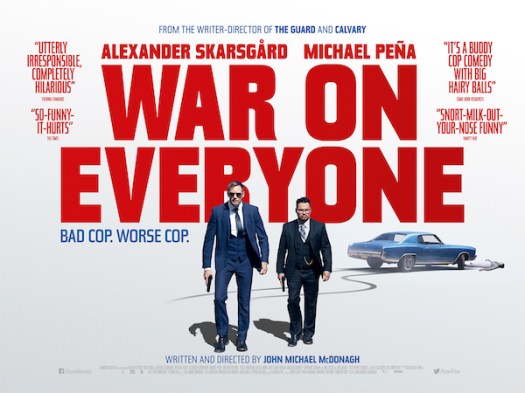
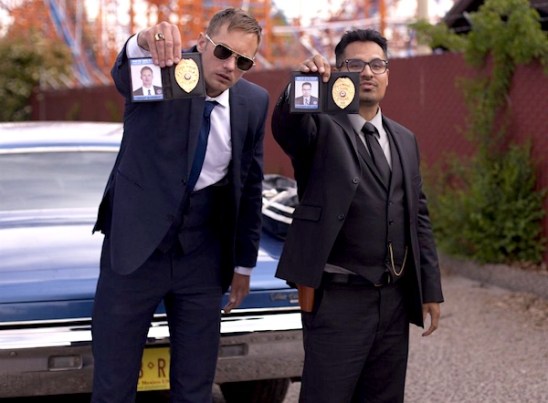
The third feature from John Michael “older brother of the guy who made In Bruges” McDonagh, War on Everyone is a comedy crime thriller about two dodgy New Mexico cops (Michael Peña and Alexander Skarsgård) who are tricked while trying to prevent a heist and so set about tracking down the stolen money — to pocket for themselves.
I’ve read that War on Everyone is massively offensive. Well, I mean, if you want to be precious about it, I guess some of it is. Maybe reading that left me expecting something incredibly outrageous, but sadly the film doesn’t hit those highs. I say “highs” — offensiveness for the sake of it is pointless, but some of the best material in the previous movies of the McDonagh brothers has come from a willingness to say and do un-PC things. War on Everyone doesn’t feel neutered in that regard, but nor is anything it does so striking.
Worse, it has a rambling narrative, wandering pace, and inconsistent tone. It’s not funny enough, frankly, but nor is the crime plot interesting enough to sustain the humour drought. Peña’s comedic gifts carry some of the flat material, though barely, while Skarsgård seems a little lost in an underwritten role. He and Tessa Thompson attempt to salvage something from a romantic subplot that springs from almost nowhere and then occupies a bunch of screen time to no one’s benefit. Caleb Landry Jones fares best as a foppish strip club owner, one of the henchman to Theo James’ big bad, whose entire character is basically, “he’s English — they make good villains, right?”
There are broad similarities to another irreverent comedy thriller from 2006 about a pair of not-so-nice fellas investigating a somewhat-complicated crime plot, but War on Everyone just serves to demonstrate how hard it is to do what Shane Black makes look effortless in The Nice Guys. I thought War on Everyone trailed well and looked like it would hit that same level, or at least something close to it, but sadly the final result feels fumbled.
John Michael McDonagh’s debut feature, The Guard, is on Channel 4 tonight at 12:05am. I’ve got the Blu-ray knocking around somewhere; really ought to get round to watching it…
2017 #51
Steven Spielberg | 117 mins | Blu-ray | 2.39:1 | USA & India / English | PG / PG
The writer/director team behind E.T. reunite for another tale of a young kid befriending a strangely-proportioned otherworldly creature who can’t quite speak English properly and has an acronym for a name. This one, of course, is adapted from Roald Dahl’s beloved children’s book, here rendered into live-action — or, for a large part, realistic computer animation — by director Steven Spielberg.
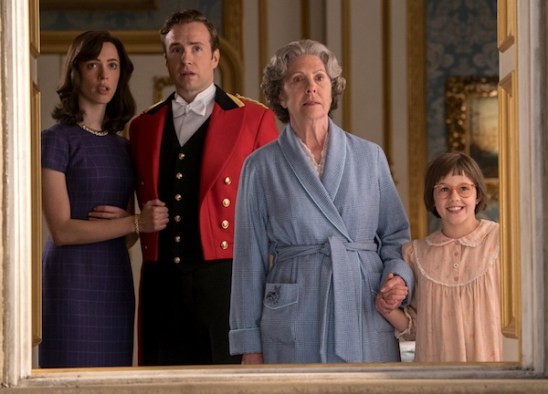
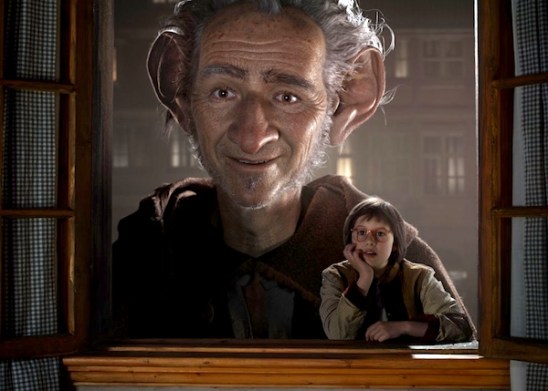
If you don’t know the story, it concerns insomniac orphan Sophie (Ruby Barnhill), who one night spots a 24ft giant outside her window. Wary of her informing the rest of the world of his existence, he snatches her up and carries her off to giant land. Despite Sophie’s fears, he doesn’t eat her, because he’s actually the Big Friendly Giant (Mark Rylance, motion captured) — but his fellow giants are a different story. Led by Fleshlumpeater (Jemaine Clement, also motion captured), they bully the comparatively tiny BFG and are a constant threat to Sophie’s life, so she concocts a plan, which involves a trip to see the Queen (Penelope Wilton).
For all its CGI — and, in creating a fantastical other-world adjacent to our own, there is a lot — much about The BFG feels pleasantly traditional, almost like a throwback to kids’ movies of a couple of decades past. This is partly the re-teaming of Spielberg and screenwriter Melissa Mathison, I suppose, but perhaps also the decision to retain the novel’s original 1982 setting. Not that you’d know it for most of the running time, until the Queen makes some telephone calls to “Nancy and Ronnie” (Reagan) and “Boris” (presumably Yeltsin, though that means someone’s got their eras mixed up); references that, coming quite near the end of the film, made me pause in the realisation that it wasn’t just set today (the reference to Boris made me assume the Queen was phoning our foreign secretary).
More than dated references, though, the throwback feel is thanks to the pace. I’d hesitate to call The BFG slow, but it’s certainly gentle for a good long while. I don’t think it needs to be a fast-paced thrill-ride, but a little extra speed early on, bringing the luxuriant two-hour running time down closer to the 90-minute mark, might’ve been beneficial. There’s certainly magic and wonder to be found throughout, which are very important aspects of a story like this, but I do wonder if kids might get a bit fidgety nonetheless, which would destroy the effect.
There is a lot to admire, however. The production design is superb, the giants’ environment full of stuff pilfered from the human world and re-appropriated into useful things — a ship for a (water)bed, for example, or a road sign for a tray; in one sequence, cars and trucks become roller skates. It’s all realised with startling detailed CGI. Okay, you’re not going to mistake the giants for upsized real humans (which kinda makes me long for a Hook-era version of the film, when they would’ve done it all for real with optical effects), but look at the small details — the texture of the giants’ skin, for example — and it looks phenomenal.
More importantly, the acting is pitched perfectly. Clement and his cohorts manage to be both menacing and comical by turns, Wilton brings easy class to the Queen, and Rafe Spall has an amusing little supporting role as a palace footman. However, Rebecca Hall is utterly wasted in a strangely nothing-y part as the Queen’s assistant — I can only presume this was either one of those “I love the book so will take any role” situations or one of those “my part was mostly cut” situations.
But the real stars are the two leads. Ruby Barnhill was the result of a months-long search for the perfect Sophie and it was worth the effort. Called upon to be confident, scared, awed, and ingenious, Barnhill’s performance is precisely calibrated — “subtle” would perhaps be overselling it, but she lacks the histrionics you get from weak child actors. She’s overall charming, which is important in engaging us in the relationship between her and the BFG. In the giant role, Mark Rylance is, of course, sublime. He may have been recreated in the computer, but all of his personality shines through, his expressions and mannerisms both believable and familiar if you’ve seen him in his corporeal form. It’s one of the best-yet advocacies of so-called “performance capture” (where the actor’s whole performance is captured by those grey jumpsuits with little dots on, as opposed to just “motion capture” where it’s only their physical moves being digitised and supplemented by animators — both are the same process really, it’s just someone coined a different term to indicate when more of the actor’s own work is retained).
Considering the level of challenge The BFG clearly presented to Spielberg (in the special features he talks about how at times he was unsure how to make the movie, with all the tough requirements of different scales, etc; he and his team actually spent a whole summer making the movie in previsualisation before they did it for real the year after), it’s something of a shame that it’s destined to be regarded as a minor work in his canon. I’m not going to argue it deserves a greater status among his venerable output, but it would be a shame for it to go ignored because of that.
2017 #21
Fede Alvarez | 88 mins | streaming (HD) | 2.35:1 | USA / English | 15 / R
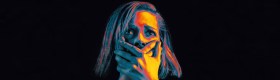
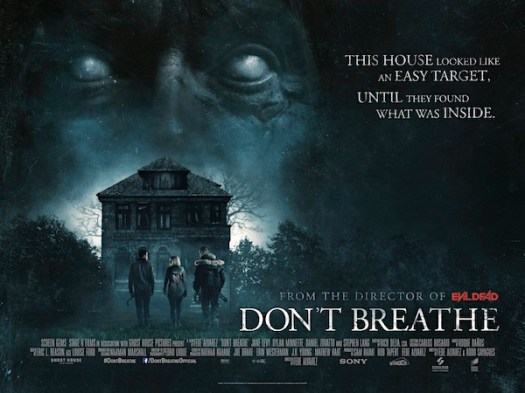
One of the most talked-about thriller-cum-horror movies of last year, Don’t Breathe (which is available on Sky Cinema as of last Friday) concerns a gang of young house burglars — Rocky (Jane Levy), who’s doing it to help get her little sister away from their good-for-nothing parents; her boyfriend Money (Daniel Zovatto), who’s a bit of a dick; and Alex (Dylan Minnette), who’s secretly in love with Rocky, and whose dad runs a security company from which they ‘borrow’ the necessary information to access homes without setting off the alarms. After a big final score, they set their sights on the remote home of a chap (Stephen Lang) whose daughter was killed in a car accident, from which he netted a hefty settlement. Plus he’s blind, so it’ll be easy money. Right? As is no doubt obvious, the blind bloke turns out to have a few secrets up his sleeve… and down his basement…
Despite how it was advertised (doesn’t that poster scream “horror movie”?), really speaking Don’t Breathe is a thriller — it’s about a trio of crooks trying to rob a home and its owner fighting back. Though I suppose it depends what you use to define “a horror movie”, really. I tend to think of them as featuring an enemy who is either supernatural or possibly supernatural, but I suppose the only real prerequisite is that they be scary. Don’t Breathe doesn’t have a supernatural villain (though the blind man’s abilities do stretch credibility), but it’s so gosh-darn suspenseful that the viewing experience is similarly tense to a horror movie, even if outright scares are few. And one memorable scene in particular is certainly classifiable as horrific, most especially for female viewers. So, as a sub-90-minute exercise in mood and thrills it’s a very effective viewing experience; but it’s best not to stop to think about the practicalities if it were real because a lot of the film doesn’t withstand scrutiny. I won’t rehash all of the plot’s logic gaps (there are plenty of articles online that already do that, if you’re interested), but I think it’s best enjoyed as a go-along-with-it experience.
One point of contention for many seems to be the likeability or otherwise of the characters. The ostensible heroes are a gang of crooks who we first meet robbing the home of an undeserving victim, and being needlessly destructive about it too. You might think this sets the blind man up as some kind of avenging hero, but it becomes clear pretty quickly that he’s an even bigger bad guy… so are we meant to side with the crooks after all? For me, this raises a question I’ve come up against before: does a movie actually need to have any likeable characters? Some people need that, for sure, but I don’t think a film does per se. I’m not sure Don’t Breathe has really thought through its position on this issue, which makes reading online commentary about this point a funny thing. For instance, I saw someone argue that the writers make no effort to make us like the burglars — so, what’s the whole thing with Rocky trying to get her sister out of their shitty life for, then? And then another person stated that they actually found themselves liking two of the “bad guys” — so, if the burglars are the bad guys that makes the blind guy the hero? I don’t want to spoil anything, but if you’ve seen the movie you’ll know why holding that opinion is either, a) ridiculous, or b) deeply troubling…
As I said, it’s best not to think about it too much. I think Don’t Breathe is perhaps the movie equivalent of a theme park attraction: designed to thrill you and scare you during its brief duration, not withstand plot and character scrutiny when dissected afterwards. That’s why my rating errs on the lower side, though if you want nothing more than a gripping hour-and-a-half it maybe merits another star.
If there’s something strange in your neighbourhood, who ya gonna call?
How about Scarlett Johansson in a skintight bodysuit? I’m sure plenty of people wouldn’t need something strange going on to want to make that call…
#30 Logan (2017)
#31 Robin Hood: Men in Tights (1993)
#32 Demolition (2015)
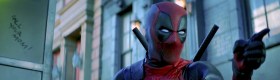
#32a Deadpool: No Good Deed (2017)
#33 Long Way North (2015), aka Tout en haut du monde
#34 Florence Foster Jenkins (2016)
#34a Hotel Chevalier (2007)
#35 The Darjeeling Limited (2007)
#36 Money Monster (2016)
#37 Room (2015)
#38 Warcraft (2016), aka Warcraft: The Beginning
#39 Kong: Skull Island (2017)
#40 13 Hours: The Secret Soldiers of Benghazi (2016)
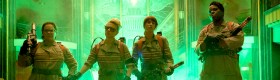
#41 Ghostbusters (2016), aka Ghostbusters: Answer the Call
#42 Babe: Pig in the City (1998)
#43 The Monster Squad (1987)
#44 Ghost in the Shell 2: Innocence (2004), aka Kôkaku Kidôtai Inosensu
#45 Big Game (2014)
#46 Young Frankenstein (1974)
#47 Black Dynamite (2009)
#48 Ghost in the Shell (2017)
#49 Jackie Brown (1997)
.
I watched 20 new films this March, making it my largest month for nearly a year, since last April’s 21.
It’s far head of the March average (previously 12.3, now 13.1) and also passes the average of the last 12 months (previously 15, now 14.75).
In terms of my yearly goal, it’s behind where I was last year (two-thirds there at #67) but ahead of every other year (including 2015 — aka The Year of 200 Films — when March ended at #44).
This month’s Blindspot film: plugging one of the few gaps in my Tarantino viewing with Jackie Brown.
This month’s WDYMYHS film: Room. Normally I’d offer a brief comment, but I already reviewed it in full here.
I watched three films starring Samuel L. Jackson this month. Even for a fella as prolific as he is, that’s still quite a number.
The 22nd Monthly Arbitrary Awards
Favourite Film of the Month
A tough contest this month between a couple of films I enjoyed an awful lot, but however much I was entertained by a giant ape beating up other giant monsters, the beautiful artistry of Long Way North just edges it today.
Least Favourite Film of the Month
Not such a tricky choice here: easily the worst film I watched this month was the disappointing mess that was Warcraft.
Best Dialogue of the Month
You’d think any month with a Quentin Tarantino film in it would have this award sewn up, but not when in the presence of the genius that is Black Dynamite. I’d throw in a quote, but half of the magic is in the delivery.
Most Gratuitous Arse of the Month
Plenty of derrières on display this month, between Natalie Portman’s much-discussed bare behind in Hotel Chevalier, Scarlett Johansson’s extremely figure-hugging costumes in Ghost in the Shell, Bridget Fonda’s post-coital stroll in Jackie Brown, and Kong stomping around the place with nary a stitch on as well. But the fact someone bothered to draw the intimation of an arsehole on the dog in Ghost in the Shell 2: Innocence takes the biscuit.
The Audience Award for Most-Viewed New Post of the Month
Following a tip from Caz at Let’s Go to the Movies, I’ve been adding my reviews to IMDb of late. That paid dividends this month, with an extraordinary (for me) number of hits flowing towards Logan.
This blog’s 10th birthday celebrations continued (and concluded) this month by counting down my 100 favourite movies I’ve seen for the first time in the past ten years. If you missed it, you can read all about it here:
Things are beginning to look up for my Rewatchathon, as I actually rewatched more than one film this month…
#3 Gattaca (1997)
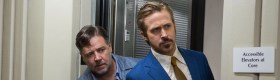
#4 The Nice Guys (2016)
#5 Mighty Morphin Power Rangers: The Movie (1995)
#6 Ghost in the Shell (1995)
#7 Hook (1991)
I think I was too young to properly appreciate Gattaca when I first saw it. Now, I think it’s a five-star sci-fi drama/thriller, and it would’ve contended for a place on my 100 Favourites if I’d got this rewatch in a couple of years ago.
Truth be told, I only watched the first 15 minutes of Power Rangers (then my NOW TV subscription ended and it cut me off), so I probably shouldn’t count it… but I would’ve found another way to finish it if those 15 minutes hadn’t been utterly terrible, so I say it still counts because I’d clearly seen enough.
This was the first time I’d watched Hook since childhood and, a few moments and images aside, I barely remembered it at all. It has things going for it (the sets are incredible and many of the special effects are fantastic), but it’s definitely the worst Spielberg movie I’ve seen (1941 still awaits…)
A big year for the MCU kicks off: I’ll be reviewing Iron Fist, and Guardians of the Galaxy Vol. 2 comes to the big screen (over here, at least).





 Favourite Film of the Month







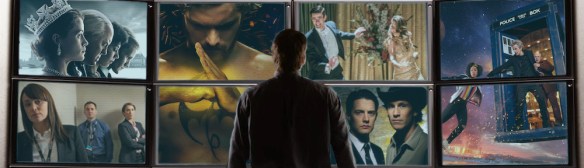







 The 36th run of Doctor Who kicked off with an episode titled The Pilot — no coincidence, that. This is the most newcomer-friendly episode of Who for 12 years, an episode finely calibrated to establish everything for a first-timer but also function for regular viewers too. A lot of that effectiveness can be attributed to Pearl Mackie as Bill, the new companion to Peter Capaldi’s Doctor. After a run of oh-so-special companions running back years, Bill is just an ordinary young woman; but of course she’s extraordinary in her own way: ready to learn, eager to help, full of both inquisitiveness and caring. This is surely the birth of both a fan-favourite companion in Bill and a star in Mackie.
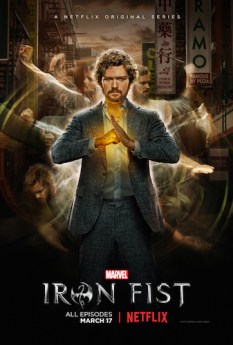 The last of the Marvel/Netflix series before the Defenders team-up, Iron Fist has certainly divided critics and viewers. It doesn’t begin well: the opening episode is possibly the worst thing yet released as part of the MCU, and I only say “possibly” because I never bothered with Agents of SHIELD after the poor reaction to season one. It’s needlessly slow, repetitive, the characters behave implausibly, and the fights are terrible, looking like a first rehearsal filmed with one take. Things do improve — there are more engaging characters, some interestingly developed arcs, and better realised fights — but it still doesn’t come together as well as it could. For one thing, it makes the running of Rand Enterprises a major element, but has a very vague-seeming understanding of how business actually works. It’s just too simplistic.
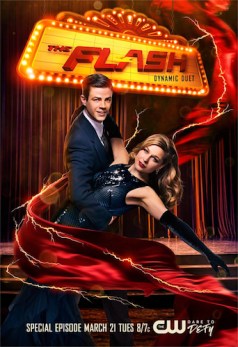 Amongst the eight Arrowverse episodes I watched this month was this: the much-anticipated musical crossover between The Flash and Supergirl, which star Glee alumni Grant Gustin and Melissa Benoist respectively — hence why (some) people called for a musical episode, which caused the producers to decide to do one. Somewhat ironic, then, that it seemed to go down well with critics (at least per
 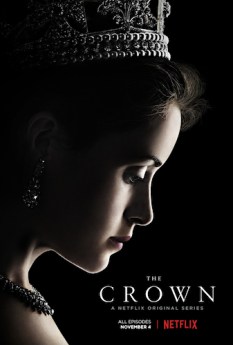 The most expensive TV programme ever made (or not, whatever) certainly has its budget plastered all over the screen, which hopefully didn’t distract most viewers in the way it did me. It shouldn’t, really, because this is a good drama about the humanity behind the public faces. Its adherence to fact is apparently variable, which I imagine is very irritating to historians of the period, but it works for the fiction. There are great performances all round, with John Lithgow in particular disappearing into Churchill to the point that I forgot I was watching an actor more than once. There’s an interesting plot thread early on about the position of Philip (Matt Smith) relative to Elizabeth — how his role as a husband is challenged by her position as Queen, etc — which goes a bit awry as the series goes on and has other plots to focus on. It’s left quite open-ended, so hopefully it’ll be completed in the second season.
 I devoted just 32 words to Line of Duty series one when I finally got round to watching it
 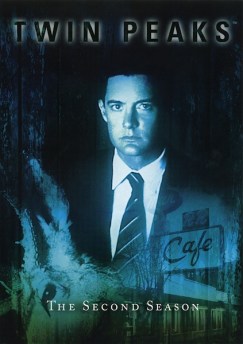 I first saw the debut season of Twin Peaks many years ago during a repeat run (it was a ‘classic series’ even then, though with hindsight it can’t’ve been a decade old at the time), then watched it again when the DVD came out, but this is my first time watching season two (legal complications delayed its DVD release for what felt like forever, and by the time it finally came out I just never got round to it). The second season is infamous for representing a steep decline in quality, though that isn’t yet evident from this batch of episodes, which covers up to the revelation of who killed Laura Palmer and their capture. I’d say it lacks the pure concentrated genius of the first season, having ramped up the quirkiness quotient and, at the behest of the network, rushing the resolution of the Laura Palmer mystery, but it ain’t bad by any means. There’s certainly much to like in the off-kilter characters, the folksy mysticism, and some fantastic performances — Kyle MacLachlan is a constant delight as Agent Cooper, but Ray Wise is frequently incredible as the grieving Leland Palmer. But I guess it’s mostly downhill from here…
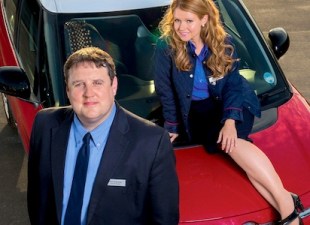 This month, I have mostly been missing series two of Peter Kay’s Car Share, which is a couple of episodes in on the telly or














 100Films.co.uk