Death Note (2017)

2017 #115
Adam Wingard | 100 mins | streaming (UHD) | 2.35:1 | USA / English | 18
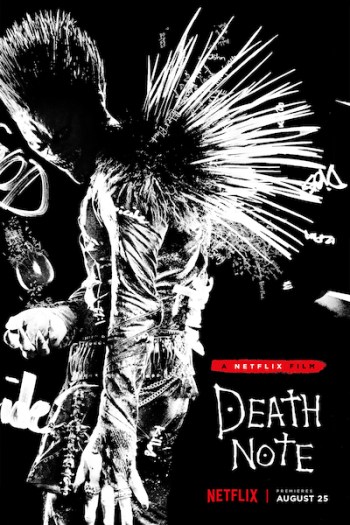
Death Note

Something of a global phenomenon in the ’00s, Death Note started life as a manga, is perhaps best known for its anime adaptation, was adapted into a series of live-action films (I reviewed the first two last week), adapted again as a live-action TV series, and was even turned into a musical. Although it’s taken a while, finally the inevitable is here: an American remake. After passing through several studios, it’s wound up with Netflix, under the helmsmanship of Adam Wingard. Thus, I was hoping for the new film from the director of The Guest. Instead, I got the new film from the director of Blair Witch. And much like Blair Witch, this is a ham-fisted reimagining of a once-popular franchise.

This incarnation of the story concerns Light Turner (Nat Wolff), a Seattle high school student who one day discovers the mysterious Death Note, a notebook with the power to kill just by writing someone’s name in it. Goaded into using it by the demonic death-god Ryuk (voiced by Willem Dafoe), Light soon teams up with his crush Mia (Margaret Qualley) and they set about murdering criminals. Their actions become famous under the alias Kira, which they hope to use to establish a new world order. But hot on the case is a mysterious super detective known only as L (Lakeith Stanfield), who engages Kira in a battle of wits.

As with so many things nowadays, the US version of Death Note has been dogged by accusations of whitewashing. As seems to be the case at least half the time, these accusations are largely unfounded. If this had kept the Japanese settings and character names but given them white faces, fair enough, but it hasn’t — it’s relocated to America, with American characters. It’s no different to all the other new-country remakes that have always happened (and also goes on the other way, with US movies remade in Bollywood and Asia, we just don’t hear about them very often here).
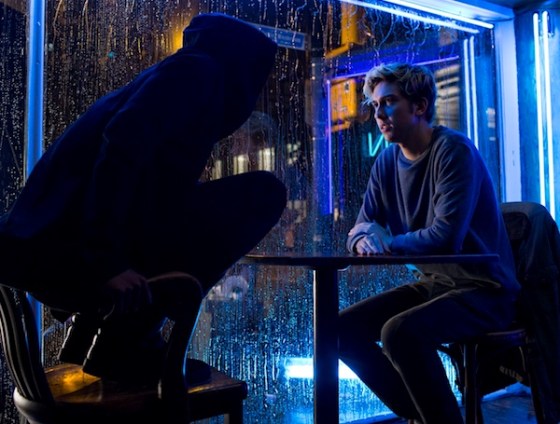
Light vs L

Unfortunately, Death Note: America has genuine problems to contend with. Despite that reimagining status, it’s still understandably shackled to the broad shape of the original work. Consequently, it glosses over some of the more interesting implications of the premise in its rush to make Kira famous and introduce L. Partly that’s what happens when you condense so much story into just 100 minutes, but it’s also because it’s beholden to bringing in L and starting his cat-and-mouse game with Light. When I reviewed the Japanese live-action movies, I didn’t think Light and L’s battle of wits was as clever as the films clearly thought they were, and it’s even worse here.

There would seem to be more fertile and interesting ground for exploration in why Light and Mia are trying to establish a new world order — what exactly they think that means; what motivates them to do it; and how they intend to achieve it. On the whole, the film doesn’t seem to be making time to dig into the psyche of its characters — why they’re doing what they’re doing, how it changes them — instead just going through the motions of a thriller plot. It feels like it’s had 20 minutes of character stuff cut out that would grease the wheels of the plot. The worst offender is the climax: there’s no weight to the big finale because we’ve been given no time to care about these characters or their relationships with each other.

Ello, L

For all the faults of the way the other version I’ve seen executed Light and L’s chess-like interactions, at least they consistently involved Light using the Death Note and its rules to try to trick L. Here, after the eponymous book and its abilities have been established, it’s basically just used to control other people to make them forward the plot, only returning to its real purpose come the climax. This is another reason the focus on Light and L’s duelling doesn’t work here: at least the original thought they were both geniuses and behaved as thus; each of them was motivated by proving they were cleverer than the other, everything and everyone else be damned. Here, L is still some kind of savant, whereas Light seems a pretty normal teenager, motivated by… well…

So, in the original, Light does his utmost to keep the Death Note secret from everyone to protect his identity as its user. Here, almost as soon as he’s got it he blabs about it to the girl he fancies. Why? Same reason most guys try to show off to girls: because he thinks it’ll impress her. It’s a change of motivation, but okay, why not? But he’s given very little indication that such a thing would impress her. What if she’d been appalled and gone running to the police? She doesn’t, of course, because this is a geek’s fantasy, so she a) loves it, and b) within minutes is shagging him. (Presumably. This may be an 18 for gore, but sexy times are implied by no more than a little light clothing removal. Perhaps they just sat around in their undies while murdering people with their magic book, I dunno.)
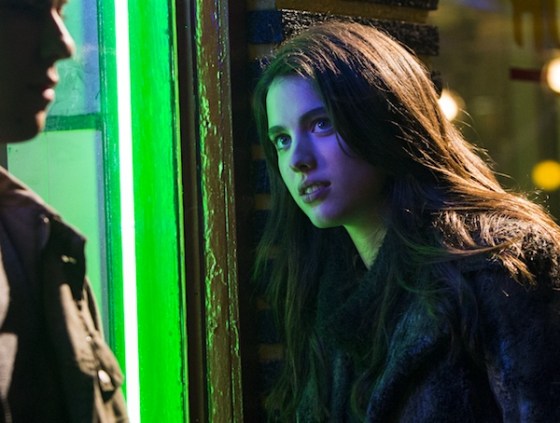
Bloodthirsty crush

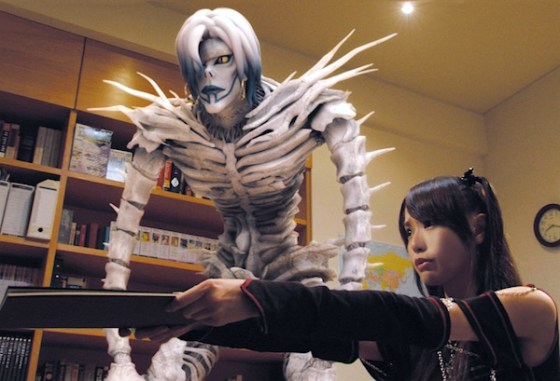
Believe it or not, Death Note is not a total washout. Indeed, the best things about the film are easily identified. Firstly, there’s Willem Dafoe’s voice performance as Ryuk. If you need a manipulative death-god, he’s a perfect choice. Secondly, the visual realisation of said death-god, a mix of strong CG and keeping him in the shadows. It’s light years more effective than the ’00s movies. On the downside, Ryuk’s role amounts to little more than a glorified cameo: after an initial appearance to explain the rules, he just pops up briefly to remind us he’s still a bother.

Thirdly, then, there’s the death sequences that occur on the first couple of occassions Light uses the Death Note. This film skips the “they just die of a heart attack” phase and goes straight for the “you can dictate how they die” jugular. In this version, that means a Final Destination-a-like chain of random events occur that make the deaths fairly amusing. Also, graphically violent — enough for that 18 in the eyes of the BBFC. These go AWOL again as the film has to get busy with its plot, which is a shame. Basically, someone should’ve tapped Wingard to make Final Destination 6.

Fourthly, and finally, the score is very likeable. It’s full of the ’80s horror movie synths you’d expect from the director of The Guest, though it’s undercut somewhat by a few bizarre song choices, mostly during the climax.

In the dark, no one can see your CGI

Having read a few reactions to the film online, it strikes me that on one hand you’ve got fans criticising it for not being faithful enough, while on the other you’ve got critics picking on it for things that I’d argue are inherent in the source narrative (at least based on what I’ve seen before). That doesn’t excuse this adaptation entirely — they’ve changed so much that fixing logic issues could definitely have happened too — but it’s an amusing juxtaposition of reasons for displeasure: it’s a film scuppered both by being faithful and by not being faithful. Unfortunately that means that, whether you’re comparing it to a previous version or not, it fails to be a coherent experience.

2 out of 5

Death Note is available worldwide on Netflix now.
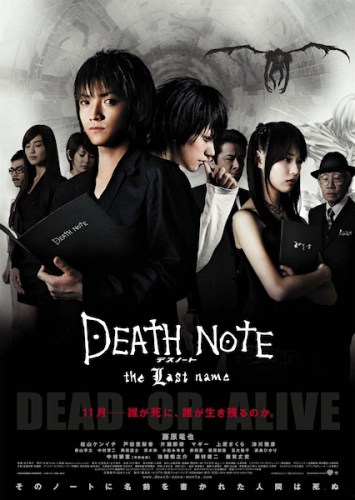
Death Note: The Last Name (2006)

aka Desu Nôto: the Last name

2017 #112
Shūsuke Kaneko | 135 mins | DVD | 16:9 | Japan / Japanese | 12

Death Note: The Last Name

Picking up immediately after the first movie, this sequel — part two of two — sees Light Yagami (Tatsuya Fujiwara), the owner of a supernatural notebook that allows him to kill anyone simply by writing their name, join the team of detectives searching for him. Although he had supposedly proven his innocence, Light is still the prime suspect of genius detective ‘L’ (Kenichi Matsuyama). Light aims to discover L’s real name and write it in his Death Note. He’s aided by the emergence of a second Death Note, wielded by TV host Misa Amane (Erika Toda), who has a crush on Light and agrees to help him. They’re observed and aided by their respective shinigami (death-gods), Ryuk (Shidô Nakamura) and Rem (Shinnosuke Ikehata) — but can supernatural beings be relied on in the end?

Fundamentally, The Last Name resumes Light and L’s cat-and-mouse game in the same style as the first movie — in case you didn’t get it, near the start of the film their figurative chess game is represented by a literal chess game. This time there are the added complications of Light being on L’s team and the second Death Note being in play, which at least adds some variety. Light continues to manipulate the book’s rules to help prove his innocence and achieve his goals, which is perhaps where the films are at their most inventive — for example, you forget about the Death Note if you lose possession of it, but regain those memories if you touch it again, so what if you could find a way to give it up, prove your innocence conclusively, and get it back later? The endless games and counter-games begin to get a bit tiresome after a while (together the duology pushes four-and-a-half hours), but they do eventually make for quite a surprising climax.

Figurative chess, literal chess

Produced hot on the heels of its predecessor (see my previous review for how ridiculously tight the production schedule was), it’s no wonder that The Last Name feels very much of a piece with the last movie. The major downside of this is L’s alleged genius-level intellect, which was quite ridiculous last time but is now off the charts as he frequently makes entirely unfounded leaps of logic. All of his ‘deductions’ are correct, of course, because the story wants him to be a genius, but he has no reason to be. No other character ever calls him out on it. Even when events would seem to prove him wrong, other characters, who should know better and stop him, let him keep going. He has a starting hypothesis (“Light is Kira”) and, whenever something disproves it, he pulls a reason out of thin air to keep himself being correct. He guesses right every time, but for no good reason. He should’ve been kicked off the case for being loony several times over.

Something else that’s more noticeable in The Last Name is how this series treats its female characters terribly. (Spoilers for the first film follow.) At the end of the first movie, it’s revealed that Light murdered his girlfriend in cold blood and feels absolutely no remorse, but he’s still positioned as the hero. In this film, every woman that turns up loves either him or his Kira alter ego. When they’re not working to help him, they prance around in schoolgirl outfits, or lounge about showing off their legs, or are chained up in revealing rags. They’re all a bit dippy, too, happy to do whatever Light/Kira says just because he’s deigned to interact with them. Conversely, almost all the menfolk are positioned as geniuses. It’s not outright distasteful, but you don’t have to think too hard to find it a bit eye-roll-worthy at the very least.

Me Light you long time

Although The Last Name seems to conclusively end its story, that hasn’t stopped the live-action incarnation of the franchise rolling on: a couple of years later there was a spin-off movie starring L (I have it on DVD and was going to review it this week, but, frankly, I couldn’t stomach anymore of the brat right now), and in 2016 it was revived with a miniseries that led into a fourth movie (no sign of a UK release for either of those, though).

As I said at the end of my review of part one, it seems clear these Death Note films were hampered by their hurried production — greater thought at the writing stage could iron out some of the issues I’ve outlined. Conversely, as it’s adapted from an existing work, it’s equally possible the problems are inherent to the material and more time wouldn’t’ve made any difference. Maybe the imminent US version will have reworked it to positive effect…

3 out of 5

The US remake of Death Note is released on Netflix tomorrow.

Death Note (2006)

aka Desu Nôto

2017 #110
Shūsuke Kaneko | 121 mins | DVD | 16:9 | Japan / Japanese | 12

Death Note

Something of a worldwide phenomenon in the ’00s, Death Note started life as a manga and is perhaps best known for its anime adaptation, but it was also adapted into a series of live-action films, the first of which actually predates the anime.

In case the whole thing passed you by, it’s the story of student Light Yagami (Battle Royale’s Tatsuya Fujiwara) who discovers a supernatural notebook, the titular Death Note, that was dropped by death-god Ryuk (voiced by Shidou Nakamura). Whenever a name is written in the Death Note, that person drops dead. Light begins to use it to execute criminals who’ve escaped justice, a pattern of killings that is quickly noticed by the police and the media, who dub the mysterious murderer “Kira”. While much of the public agree with his actions, the police are stumped in their investigations. Also on the case is a reclusive genius detective known only as ‘L’ (Kenichi Matsuyama), who quickly suspects Light of being Kira, initiating a game of cat and mouse between the pair.

It’s a good setup for a story, a premise that invites moral conundrums and “what would you do?” questions. I can see why it appealed to young people, too — what youth hasn’t wished certain annoying people would just drop dead? (Some places banned the manga because its popularity was leading to kids making their own Death Note books, writing in names of classmates and teachers. Obviously they didn’t actually work, but it was a “psychological health” thing.)

A little Light reading

There’s not much plot in that idea, mind: the Death Note is so all-powerful that there’s little drama in Light using it, especially as he isn’t morally conflicted himself — he’s sure he’s doing the right thing, despite people around him voicing their disagreement with Kira. The story therefore comes to focus on the battle between Light and L, a pair of self-proclaimed geniuses who work to constantly outwit each other. This is where the film begins to falter, because a lot of their supposed intelligence comes from leaps of logic designed to make them look clever.

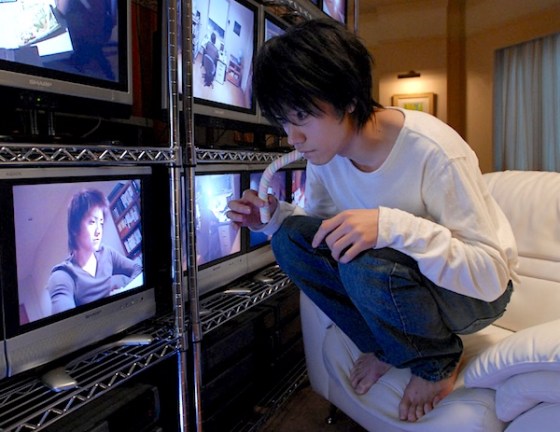
It’ll also be a problem for any viewers who need a likeable protagonist: although Light starts out aiming to do good, he’s gradually led to be a right evil bastard; on the other side, L is an irritating brat, walking around barefoot, weirdly crouching on chairs, always stuffing his face with sugary treats, and speaking cryptically to the level-headed coppers forced to work with him. I’ve said before that I don’t think a film necessarily needs a likeable hero to work, but it does feel odd that there’s no one to root for here. Partly I don’t think the film’s sure whose side we should be on. It’s made to feel like it should be Light’s, but the film also knows he’s not got the strongest moral compass.

One L of a detective

This “duel of the geniuses” eventually comes to a head in a neatly-conceived climax, but one which doesn’t wrap everything up — the film ends on a very “end of part one” note. Although this film is simply called Death Note and the second was released here as Death Note 2, in Japan they were marketed as a “two-part event” and released just months apart. So I guess the cliffhanger ending is fair enough — it’s not an attempt at launching a franchise (an annoying trend when sequels aren’t produced), but is instead no different than The Matrix sequels, or Kill Bill, or so on.

That said, the production schedule to make that happen is somewhat interesting, especially as it clearly had an influence over the film’s quality. The duology was produced at extraordinary speed. The concept of a two-film adaptation was greenlit in November 2005, Shūsuke Kaneko signed on as director in December, and they were shooting by the start of February 2006. Film 1 was shot in February and March, then came out in the middle of June, just three months later. Film 2 was still being written during Film 1’s post-production, before shooting in June and July, and was released at the start of November, just two months later. There were six assistant directors, including people who’d already graduated to helming their own films, just to handle the volume of work required to fit in the tight schedule — two major movies from script to screen in under 12 months. It’s no wonder the production looks a bit TV-ish at times, with somewhat dull cinematography and Ryuk realised through cheap and cheerful CGI. More vitally, the script or edit probably could’ve done with greater attention, to iron out some of those logic leaps and improve the pace in the middle.

Demonic CGI

The final work still manages to be an enjoyable thriller with a supernatural conceit — a film which definitely has its moments, especially as Light begins to work with the Death Note’s rules to creative effect — but it needed more polish, the legacy of its speedy production resulting in an array of niggles.

3 out of 5

The US remake of Death Note is released on Netflix this Friday.

The Past Month on TV #21

Another busy, busy month — I should’ve split it into fortnights again.

Anyway, read on for reviews of Top of the Lake: China Girl, the latest instalments of Game of Thrones and Twin Peaks, ‘old’ shows like Line of Duty series 3 (from all the way back in 2016) and Peaky Blinders series 2 (from even longer ago: 2014), and even more bits & bobs too.

Game of Thrones  Season 7 Episodes 2-5
Arya's as surprised as the rest of usThe first of this month’s quartet of trips to Westeros, Stormborn, demonstrated better than the premiere the whip-crack pace the show is now moving at. To pick one example: Arya re-encountered Hot Pie and learnt that Winterfell was back in the hands of the Starks, changed her plans to journey there instead of King’s Landing, and encountered Nymeria (her wolf last seen way back in the second ever episode), who now leads a pack of wolves and, basically, rejected Arya. All those developments previously would’ve taken Thrones a good four or five episodes to get through, but no more. There are benefits to this, of course — no more longueurs — but the worry is Dan & Dave are rushing for the sake of rushing; because they told themselves this story would be done in 73 episodes and they’ve kind of had enough after the best part of a decade working on it. Still, it’s not as if it’s bad, it’s just faster. And where the episode promises exciting reunions and first meetings left, right, and centre, we can be assured they’re just around the corner.
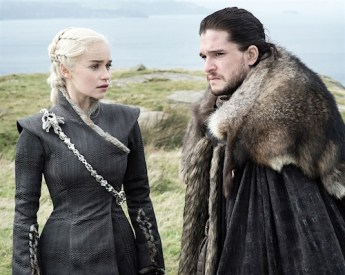
Almost literally, as Jon Snow, hot off deciding to go visit Dany at the end of the previous episode, rocks up to Dragonstone in The Queen’s Justice for the long-awaited meet-up between aunt and nephew — not that either of them know that. The show doesn’t even make us wait all episode for it, kicking right into it. And, again, things move ever onward, as cunning plans are executed, thwarted, and bettered. It’s been reported that this season has the same budget as normal, despite having three fewer episodes, and that clearly shows on screen with epic battles almost every week.

Jon and Dany, sitting in a tree...The most epic so far came in The Spoils of War. Apparently it’s been dubbed the Field of Fire — if there’s one thing Game of Thrones is consistently good at, it’s giving its big events cool monikers. (The “Field of Fire” is also an event from the series’ backstory, I believe, so maybe some of the reviews I read just got confused.) But it’s not just cool shots of fiery destruction that make this episode so satisfying: it’s the way that changes the game. Not to mention characters coming together after so long apart, both on the battlefield and not. That two girls talking in a crypt can be as thrilling as a dragon blowing shit up is… well, how character investment works, I guess. Some reckon this is the series’ best-ever episode. I wouldn’t go that far, but it is right near the top.
By comparison, Eastwatch was almost a calm affair. Okay, that might be an exaggeration; but there were no epic battles this week (just a cliffhanger teasing one next time). It continued to contribute to this perhaps being Thrones’ most satisfying season ever though, with yet more long-awaited reunions, a couple of pretty major revelations, and some great skullduggery and counter-skullduggery. It also held fan-pleasing moments aplenty, my personal favourite being Davos’ meta one-liner. If it doesn’t stand out as an all-round all-time classic like the episodes surrounding it, that says more about them than it does this quality instalment.

Top of the Lake: China Girl
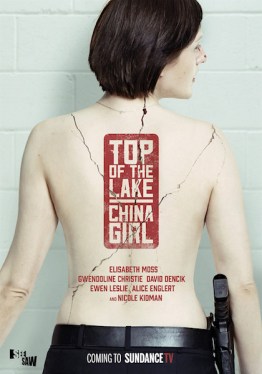
Top of the Lake: China GirlElisabeth Moss, star of both Mad Men, a series partly about the sexual politics of the ’60s workplace, and The Handmaid’s Tale, a series about the sexual politics of a world where women are baby-making slaves, returns as Det. Robin Griffin for a second run of Top of the Lake, which is now a series about the sexual politics of present-day Australia.
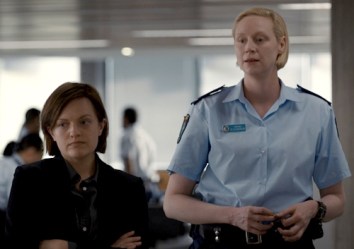
Set four years after the first season, China Girl sees New Zealander Robin back at work as a police detective in Australia. The inciting incident happens on Bondi Beach, but this is not the world of sunny tourist hotspots or chirpy vets: it’s the body of an Asian prostitute, brutally murdered and shoved in a suitcase, then dumped to rot in the ocean. And it gets grimmer from there. Meanwhile, Robin seeks a connection with the daughter she gave up for adoption at two days old, who is now a headstrong and over-assured seventeen-year-old blindly falling into something way out of her depth.

After a first episode that seems somehow tentative, as if it’s considering on the fly whether it should be a second season or a standalone narrative with the same protagonist, China Girl quickly resolves into its own beast: with vital groundwork laid in that sometimes stilted first hour, it hits the ground running as soon as episode two (making me wonder if, with further hindsight or a rewatch, the first episode wasn’t so awkward after all). Over its remaining five hours, China Girl increasingly impresses as dark, difficult, uncomfortable, challenging, and powerful drama. It’s also laced with surprising humour, and it’s a bit pretentious too. I can see why it was a hit at Cannes.

Elisabeth Moss and Gwendoline ChristieThere are some great performances in there too, mainly from the female characters — no surprise, really, considering creator and co-writer/co-director Jane Campion is clearly interested in exploring women’s place in the world. Moss carries things, with Robin competent but combative at work (she needs to be, as the Australian police force seems stuck in the ’70s with its gender politics) even as her personal life is a tumultuous mess. Nicole Kidman gets to play it kooky as the adoptive mother of Robin’s child, who’s gone all spiritual and lesbian recently. The most entertaining is Gwendoline Christie as an enthusiastic constable who latches on to Robin, eager to be her protégé. She brings the bulk of the humour, with great lines and moments aplenty, but also brings emotional depth when needed.
The whole thing ends with a degree of ambiguity rather than a killer blow, answering all the plot mechanics but seemingly less clear on how it wants to conclude its important themes. Nonetheless, for me it was an order of magnitude more interesting than the good-but-kind-of-woolly first season, and therefore a lot better than it too.

Twin Peaks  Season 3 Episodes 11-14
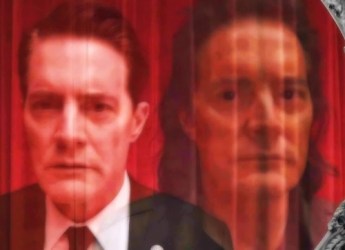
Two CoopersI must be honest with you, dear readers: the longer this Twin Peaks revival goes on, the less I feel I’m enjoying it. It works best when Lynch is trying to out-Lynch himself. Those episodes are crazy and borderline nonsensical and insanely challenging to what constitutes filmed entertainment, but at least they’re interesting; and if you don’t get it you can dismiss it as “it’s Lynch, innit”. It’s actually the ‘normal’ stuff — the investigations and machinations in South Dakota, Las Vegas, and Twin Peaks itself — that are beginning to get on my wick. Again, at times there are moments of clarity or inspired weirdness, but in between sits a morass of sludgy plotting and wilfully obscure characterisation. It’s starting to nudge the series from “revelatory experiment” into “noble failure” territory, for me.
That said, there was a definite uptick at the end of this month’s viewing, with Part 14 providing a lot of long-awaited developments and forward momentum for the plot (plus one of my favourite of the end-of-episode performances at the Roadhouse, Lissie’s Wild West). Perhaps everything will finally come together in the remaining few episodes after all? Or perhaps everything will slow down again and we’ll be none the wiser come the end of Part 18. Only time will tell…

Line of Duty  Series 3 Episodes 4-6
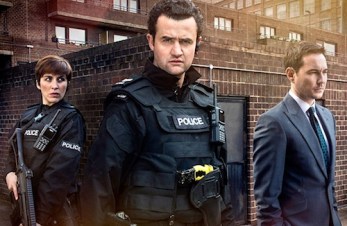
Line of Duty series 3As I noted last month, the third series of Line of Duty seems to be the one that attracted the most adulation. I was reserving judgement until I’d finished, because at the halfway point I wasn’t finding it superior to the brilliant second series.

For those still unaware of the show, it’s about a police anti-corruption unit, and in this six-parter they were looking into an officer who shot a suspect and covered up the circumstances. That wasn’t all that was going on, however. Line of Duty pretends it’s about a new case each series but, really, it told one big story across its first three runs. I wonder if that’s why some have hailed this one as its best: it finally brings all those long-brewing arcs to a head. Unsurprisingly, the bulk of the resolutions come in the feature-length finale, which is certainly a striking episode. Nonetheless, I’d argue series two was better overall — I felt it had a greater sense of mystery, palpable tension throughout, and the plot was more unpredictable. Still, I don’t wish to do the third series down — being second-best to that is no mean feat.

Peaky Blinders  Series 2
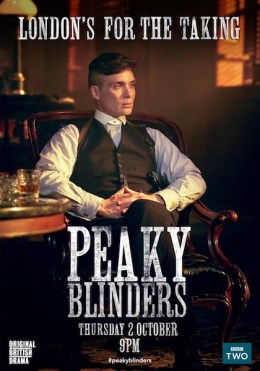
Peaky Blinders series 2The second series of BBC Two’s period crime drama jumps forward two years to find everyone’s favourite Brummie criminals running such a successful business that they intend to expand their operations to London, by sticking their oar into a turf war between the Jews (led by Tom Hardy) and the Italians (led by Noah Taylor). Meanwhile, Sam Neill’s copper is back with a vengeance, teaming up with the Irish to blackmail Blinders kingpin Cillian Murphy into performing an off-the-books assassination for the crown.
Peaky Blinders’ second series ups the ante from the already excellent first, pitching its leads into a more dangerous world where they’re not the major force to be reckoned with. As its stories unfurl over six hours (without needing to resort to wheel-spinning), you begin to wonder how they can possibly escape the various binds they find themselves in. It all builds to a payoff-filled finale, even though things don’t go quite to plan… Where that will take things in the third series will be interesting to see. (For more up-to-date fans than me, the fourth series is due later this year.)

Also watched…
  • The Bletchley Circle Series 1-2 — ITV’s short-lived drama (just seven episodes across two series), about former Bletchley Park codebreakers using their skills to solve crimes in ’50s London, is chiefly notable for its intelligent and capable female heroes. The first series is good, but I felt like the second was beginning to struggle to sustain the conceit — just how many criminal conspiracies were these ladies going to stumble upon?
  • The Musketeers Series 3 Episodes 1-3 — the last season! Sob! If you like swashbuckling excitement and have let this show pass you by, do find a way to catch up on it.
  • Sherlock Pilot — finally got round to watching this unaired pilot (it’s included as a special feature on the series one Blu-ray). I was under the impression it was something of a disaster, but it really isn’t. The direction isn’t as flashy as the final show (but is otherwise fine), and obviously it’s half-an-hour shorter, but other than that it’s all very similar.
  • Wallander Series 4 Episodes 2-3 — an adaptation of the final novel, in which the Swedish detective investigates a case relating to a shameful incident in his country’s past while battling early-onset dementia. It’s a superb idea for a story — the once-great detective battling his deteriorating mental faculties. This being Wallander, it tackles the concept from a more personal, emotional perspective, rather than a Memento-esque plot-driven one, but is no worse for it. It’s a sad end for the character, but an affecting one for his series.

    Things to Catch Up On
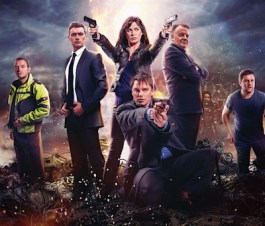
    Torchwood: Aliens Among UsThis month, I have mostly been missing Torchwood: Aliens Among Us. Although ‘just’ an audio drama from Big Finish, it’s being marketed as the series’ official fifth season, picking up after the events of 2011’s (disappointing) Miracle Day. A full 12-episode run, it’s coming out in three box sets — although part two isn’t out until October and part three until February, part one came out last week. Obviously, I’ve not listened to it yet. Hopefully next time…
    Next fortnight… another earlier-than-normal edition, as Netflix gets defendered and Game of Thrones reaches a feature-length finale. Yes, already.

  • Review Roundup

    In today’s round-up:

  • Money Monster (2016)
  • Transformers: Revenge of the Fallen – Big Screen Edition (2009)
  • Headshot (2016)


    Money Monster
    (2016)

    2017 #36
    Jodie Foster | 95 mins | streaming (HD) | 2.35:1 | USA / English | 15 / R

    Money Monster

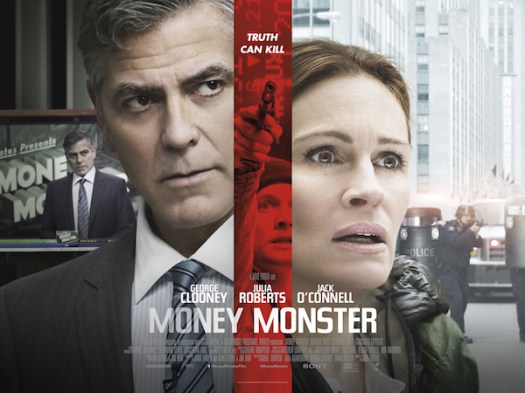
    Lee Gates (George Clooney) is the host of a silly financial advice TV show, produced by his mate Patty (Julia Roberts), who one day is taken hostage live on air by a guy (Jack O’Connell) who followed one of Gates’ tips and lost big.

    Director Jodie Foster’s topical thriller takes aim at both Wall Street finagling and satirising media consumption, but has bitten off more than it can chew. Some of its points are on target, they’re just so obvious it barely matters. At least it works quite effectively as a straightforward throwback-style thriller (it’s a bit ’90s), especially on a couple of occasions where it subverts expectations — like getting the hostage taker’s pregnant wife on the phone to talk him down, only she starts laying into him; or when the charming TV host pleads with the public to raise a company’s stock price in order to save his life, but the price goes down. That said, in the grand scheme of the movie these are quite minor niceties — the overall narrative goes exactly where you’d expect it to.

    Perhaps its greatest point comes at the end: the Wall Street guy is exposed as a total villain… and everyone just goes back to their lives. We all know these people do bad shit, but because everyone’s just kind of accepted it (and the people with power to perhaps do something about it are disinclined to attempt it, for $ whatever $ reason $), they’re allowed to just keep on going. You can shout about it all you want and however you want — by making a thriller movie with big-name stars, perhaps — but the best you can hope for is a shrugged “yeah, we know, it sucks”.

    3 out of 5

    Transformers: Revenge of the Fallen
    Big Screen Edition

    (2009)

    Rewatchathon 2017 #19
    Michael Bay | 150 mins | Blu-ray | 2.40:1 + 1.78:1 | USA / English | 12A / PG-13

    Transformers: Revenge of the Fallen IMAX

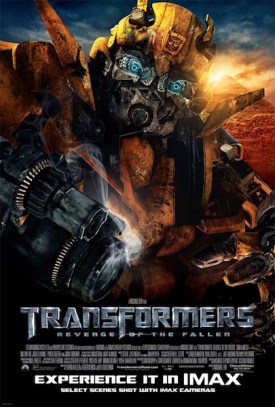
    “Big Screen Edition”? This is the version of the second Transformers movie that was released theatrically on IMAX, and later made available on Blu-ray exclusively at Walmart in the US. Which is why I’m only watching it now, when I picked up a cheap second-hand copy. As well as including two big sequences at a more IMAX-esque ratio, it’s also extended — by 30 whole seconds!

    30 seconds isn’t much in the first, and even a die-hard fan would struggle to spot them because they’re frames-long additions here and there. The full details can be found here, should you care. The expanded aspect ratio of the the IMAX scenes are more noticeable. I love a changing aspect ratio, and these are effective at adding scale to the two sequences they’re used in — the midway forest battle that (spoilers!) results in Optimus’ temporary death, and part of the climactic battle. On the downside, two action scenes in a two-and-a-half-hour movie isn’t very much, really.

    As for the film itself, I don’t know if I enjoyed it more than the first time, because I gave it quite a kind review then, but I kind of liked it (enough) for what it is — a big, dumb spectacle. It’s still too long, poorly written (in part a victim of the writers’ strike), and has all kinds of awkward and uncomfortable bits. It’s not a good film, but it is a decent(-ish) movie.

    3 out of 5

    Headshot
    (2016)

    2017 #92
    Kimo Stamboel & Timo Tjahjanto | 118 mins | Blu-ray | 2.40:1 | Indonesia / Indonesian & English | 18

    Headshot

    The Raid’s Iko Uwais stars in this actioner as Ishmael, a man who washes ashore with amnesia thanks to a bullet wound in his head — so far, so Bourne. Bad people are out to get him, of course, and when they kidnap the kindly doctor who nursed him back to health (Chelsea Islan), Ishmael goes on a violent rampage to save her and uncover his past.

    Beginning with a focus on the sweet kind-of-love-story between Ishmael and the doctor, Headshot has a slightly different feel to your usual beat-em-up-athon at first, almost like an indie romance drama. That changes pretty sharpish, of course, and we’re thrown into an array of highly choreographed punch-ups. It’s pretty entertaining as that, with some inventive bits here and there, but nothing to challenge the pair of films Uwais is best known for.

    Put it this way: I enjoyed it while it was on, but I sold the Blu-ray on eBay the next day.

    3 out of 5

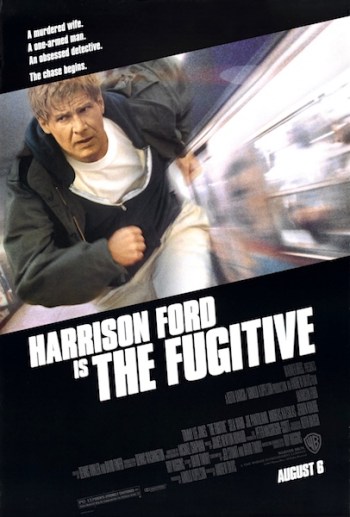
  • The Fugitive (1993)

    The 100 Films Guide to…

    A murdered wife.
    A one-armed man.
    An obsessed detective.
    The chase begins.

    Country: USA
    Language: English
    Runtime: 130 minutes
    BBFC: 12 (cinema, 1993) | 15 (video, 1994)
    MPAA: PG-13

    Original Release: 6th August 1993 (USA)
    UK Release: 24th September 1993
    Budget: $44 million
    Worldwide Gross: $368.9 million

    Stars
    Harrison Ford (Witness, Air Force One)
    Tommy Lee Jones (JFK, No Country for Old Men)
    Sela Ward (54, Independence Day: Resurgence)
    Joe Pantoliano (Risky Business, The Matrix)

    Director
    Andrew Davis (Under Siege, Holes)

    Screenwriters
    Jeb Stuart (Die Hard, Fire Down Below)
    David Twohy (Waterworld, Pitch Black)

    Story by
    David Twohy (G.I. Jane, Riddick)

    Based on
    The Fugitive, a TV series created by Roy Huggins.


    The Story
    After Dr. Richard Kimble’s wife is murdered, he is framed for the crime. Managing to escape custody, Kimble sets out to prove his innocence, while being pursued by a team of marshals intent on recapturing the fugitive.

    Our Hero
    Dr. Richard Kimble, respected surgeon, convicted of killing his wife, a crime he didn’t commit. When an accident on his way to prison allows me to break free, he goes on the run to clear his name.

    Our Villain
    The mysterious one-armed man who did kill Mrs Kimble. Why did he do it? Why can’t he be found?

    Best Supporting Character
    U.S. Marshal Samuel Gerard is the big dog on Kimble’s trail after he escapes custody. He just aims to bring the doctor back in, but maybe his sense of justice will ultimately prevail…

    Memorable Quote
    Kimble: “I didn’t kill my wife!”
    Gerard: “I don’t care!”

    Memorable Scene
    Kimble runs through drainage tunnels, pursued by Gerard, when he suddenly reaches the outlet — a massive drop over a dam. Gerard approaches, gun raised, his man cornered, Kimble left with no escape route — except to jump…

    Truly Special Effect
    The famous bus/train crash was done for real with a real train and a real bus on a real track, because that was actually cheaper than doing it with miniatures! The scale of the setup meant it could only be done once, so it was shot with multiple cameras — several of which were destroyed and their footage rendered unusable. Conversely, a couple of others were caught up in the crash but continued rolling. Although it may’ve been driven by cost-saving, the fact it was done for real makes it all the more effective, one of cinema’s iconic stunts.

    Letting the Side Down
    Despite years in development that created literally dozens of drafts, filming began without a completed screenplay — and sometimes it shows. Just don’t try to think through the logic of the villains’ nefarious scheme, nor wonder why the supposedly super-smart marshals never twig that maybe Kimble is investigating his wife’s murder.

    Making of
    The sequence in the St Patrick’s Day parade was conceived by director Andrew Davis late in the day — so late that it wasn’t part of the shooting schedule and there wasn’t time to plan it. On the day, the cast and crew made an early start so they could complete all of the schedule material before heading over to the parade. Shooting with a Steadicam, the director, cast, and cameraman improvised the action and shot it more-or-less in real-time.

    Next time…
    Five years later, Tommy Lee Jones reprised his Oscar-winning supporting performance as the lead in U.S. Marshals. It wasn’t as successful. Personally, I didn’t realise it was a sequel for years and have never bothered to see it.

    Awards
    1 Oscar (Supporting Actor (Tommy Lee Jones))
    6 Oscar nominations (Picture, Cinematography, Sound, Editing, Sound Effects Editing, Score)
    1 BAFTA (Sound)
    3 BAFTA nominations (Supporting Actor (Tommy Lee Jones), Editing, Special Effects)
    2 MTV Movie Awards (On-Screen Duo (Harrison Ford & Tommy Lee Jones), Action Sequence (train wreck))
    2 MTV Movie Award nominations (Movie, Male Performance (Harrison Ford))

    Verdict

    It must be at least 20 years since I last watched The Fugitive (it turns 25 next year), and it’s an interesting experience to revisit it today. Once upon a time this was a blockbuster; nowadays it’d be a mid-budget thriller… and probably wouldn’t get made because Hollywood doesn’t do those anymore. It’s a pleasingly ’90s manhunt movie — they can’t just track his mobile phone or zoom in with a satellite or what have you — but, aside from the nostalgia kick, the quality is a bit wobbly at times. It has strong performances, a breakneck pace (at least early on), and some stunning sequences, but the behind-the-scenes story of many, many drafts and a rushed schedule occasionally leave their mark on the screen, mainly in that the film’s whodunnit mystery isn’t all that engrossing or surprising. Maybe I’m just being nitpicky — it’s still a quality thriller. (The Blu-ray is a real dog, though. Could definitely do with a remaster.)

    Shin Godzilla (2016)

    aka Shin Gojira / Godzilla Resurgence

    2017 #108
    Hideaki Anno | 120 mins | Blu-ray | 2.35:1 | Japan / Japanese, English & German | 12A

    Shin Godzilla

    To the best of my knowledge, the Godzilla movies have never been particularly well treated in the UK. With the obvious exceptions of the two US studio movies and the revered 1954 original (which, similar to its inclusion in the Criterion Collection in the US, has been released by the BFI over here), I think the only Godzilla movie to make it to UK DVD is King Kong vs. Godzilla, and that’s clearly thanks to the Kong connection. Contrast that with the US, or Australia, or Germany, or I expect others, where numerous individual and box set releases exist, not only on DVD but also Blu-ray. There were some put out on VHS back in the ’90s (I owned one, though I can’t remember which), but other than that… Well, maybe we’ll be lucky and the tide will now change, because the most recent Japanese Godzilla movie — the first produced by the monster’s homeland in over a decade — is getting a one-night release in UK cinemas this evening. It’s well worth checking out.

    Firstly, don’t worry about it being the 29th Japanese Godzilla film, because it’s also the first full reboot in the series’ 62-year history (previous reboots in 1984 and 1999 still took the ’54 original as canon). The movie opens with some kind of natural disaster taking place in Tokyo Bay, to which the Japanese government struggle to formulate a response. But it quickly becomes clear the event is actually caused by a giant creature, which then moves on to land, leaving a trail of destruction in its wake. Ambitious government secretary Rando Yaguchi (Hiroki Hasegawa) is put in charge of a special task force to research the creature. Soon, the Americans are muscling in, contributing a dossier they’d previously covered up, which gives the creature its name: Dave.

    Alright Dave?

    No, it’s Godzilla, obv.

    Written and directed by Hideaki Anno of Neon Genesis Evangelion fame (and fans of that franchise will recognise many music cues throughout the film), Shin Godzilla is not just a film about a giant beastie stomping on things. Most obviously, it pitches itself as a kind of political thriller, as an intrepid gang of semi-outsiders battle establishment red tape to get anything done. In this respect it’s something of a satire, though not an overtly comedic one. It also seems to be taking on Japanese society, with the in-built deference to age or rank being an obstacle to problem-solving when it’s the young who have the outside-the-box ideas to tackle such an unforeseen occurrence. There’s also the problem of the Americans sticking their oar in, being both a help and a hindrance. Clearly the Japanese feel broadly the same way towards the U.S. of A. as do… well, all the rest of us.

    Anno takes a montage-driven, almost portmanteau approach to the storytelling, flitting about to different locations, organisations, departments, and characters as they come into play. This lends a veracity to the “as if it happened for real” feel of the film: rather than take the usual movie route of having a handful of characters represent what would be the roles of many people in real life, Anno just throws dozens of people at us — the film has 328 credited actors, in fact. It means there’s something of an information overload when watching it as a non-Japanese-speaker: as well as the subtitled dialogue, there are constant surtitles describing locations, names, job titles, types of tech being deployed, etc, etc. In the end I wound up having to ignore them, which is a shame because I think there was some worthwhile stuff slipped in there (possibly including more satire about people’s promotions throughout the film).

    We can defeat Godzilla with maths!

    I’d be amazed if anyone can follow both, to be honest, because the dialogue flies at a rate of knots. Anno reportedly instructed the actors to speak faster than normal, aiming for their performances to resemble how actual politicians and bureaucrats speak. Apparently he cited The Social Network as the kind of vibe he was after, though a more appropriate comparison might be that other famous work from the same screenwriter, The West Wing. Either way, I think he achieved his goal, further contributing to the film’s “real” feel and the (geo)political thriller atmosphere — even if it’s a nightmare to follow in subtitled form.

    Letting the side down, sadly, is actress Satomi Ishihara, who plays an American diplomat of Japanese descent. Apparently she found out she was playing an American after being cast, and was shocked to see how much English dialogue she had to speak. It shows. There’s nothing wrong with her performance on the whole, but casting a Japanese actress as a supposed American is a really obvious mistake to English-speaking ears. All of the English speech in the film is subtitled, which isn’t necessary for American generals and the like, but for her… well, I didn’t always realise she was no longer speaking Japanese. Poor lass, it’s not her fault, but it does take you out of the film occasionally.

    On another level from the politics, Shin Godzilla is also about wider issues of humanity and the planet. The ’54 film was famously an analogy about nuclear weapons, and Anno updates that theme to be about nuclear waste and its effect on the environment, inevitably calling to mind the 2011 earthquake and tsunami that led to the Fukushima power plant disaster. This is less front-and-centre than the thriller stuff — the actions of the humans are what drives the film’s plot, whereas the nuclear/environmental stuff is more thematic subtext. Put another way, I wouldn’t say the film gets too bogged down by this — it’s still about a giant monster blowing shit up with his laser breath.

    Either that or the purple goo he ate earlier really disagreed with him

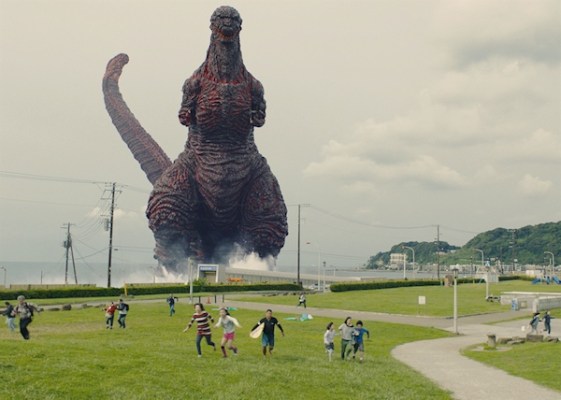
    Said giant monster is realised in CGI, some of it derived from motion capture, presumably as a tribute and/or reference to the old man-in-a-suit way of creating him. This is not a Hollywood budgeted movie and consequently anyone after slavishly photo-real CGI will be disappointed, but that’s not really the point. It still creates mightily effective imagery, and for every shot that’s less than ideal there’s another that gives the titular creature impressive heft and scale. He’s also the largest Godzilla there’s ever been, incidentally.

    If you come to Shin Godzilla expecting to see a skyscraper-sized monster destroy stuff and be shot at and whatnot for two hours straight, you’re going to leave dissatisfied. There are scenes of that, to be sure, but it’s not the whole movie. If a thriller about a bunch of tech guys and gals fighting bureaucracy while analysing data that will eventually lead to a way to effectively shoot (and whatnot) the monster, this is the film for you. It was for me. I have to mark it down for some of the niggles I’ve mentioned, but I enjoyed it immensely. (You can make you own size-of-Godzilla pun there.)

    4 out of 5

    Shin Godzilla is in UK cinemas tonight only. For a list of screenings, visit shingodzillamovie.co.uk.

    Free Fire (2016)

    2017 #105
    Ben Wheatley | 91 mins | Blu-ray | 2.39:1 | UK & France / English | 15 / R

    Free Fire

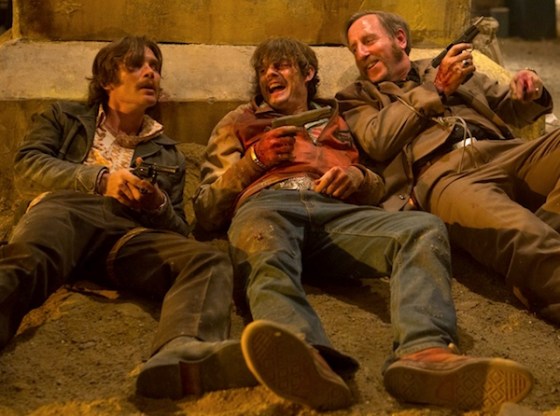
    The latest film from director Ben Wheatley (he of Kill List, Sightseers, A Field in England, High-Rise, and the rest) is by far his most accessible movie yet. Set in Boston in the ’70s, it sees two IRA fellas (Cillian Murphy and Michael Smiley) arranging through a pair of black market brokers (Brie Larson and Armie Hammer) to purchase guns from some arms dealers (Sharlto Copley and Babou Ceesay), with each side bringing along a couple of chaps to carry boxes (Sam Riley, Jack Reynor, Noah Taylor, and Enzo Cilenti). But things go sideways when a couple of those minor participants have a falling out, leading to a protracted shoot-out. “Protracted” as in “two-thirds of the movie”.

    If an hour-long gunfight doesn’t sound like your cup of tea, maybe Free Fire isn’t the movie for you. Conversely, this isn’t a Jason Statham flick: instead of an hour of highly-choreographed gunplay, most of the participants get injured early on and end up seeking cover around the rubble-strewn floor of an abandoned factory, occasionally taking potshots at each other. Most action movies are defined by their characters sprinting about — in this one, they crawl. The screenplay was partly inspired by FBI ballistics reports from real gunfights, so there’s actually some veracity to how things go down.

    Guys with guns

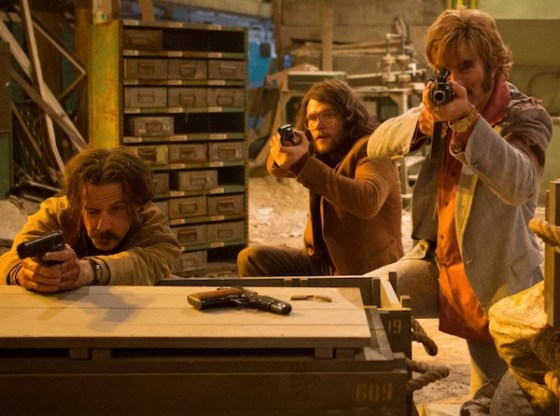
    So, on the one hand, it has a definite grit and reality. Bullet wounds actually hurt, leaving characters dragging themselves around in the dirt. Although there are occasional bullet-flying free-for-alls, just as often every shot counts. Similarly, their guns run out of bullets — frequently. Sometimes, permanently. On the other hand, however, it’s a bit like something Quentin Tarantino or Guy Ritchie might once have made, although thankfully without slavishly duplicating either of their overfamiliar styles. Without being an out-and-out comedy, it’s often pretty funny, thanks to the ludicrous situation and outrageous characters — all while remaining just this side of plausible, that is.

    Unfortunately, the thin premise means it lags a bit in the middle. It feels in need of a clearer overall purpose and one or two more ideas. A better sense of space would help, too. We know who’s shooting at who, but for a long time we don’t really know where they all are in relation to each other. That’s not a deliberate choice to evoke the confusion of a gunfight or something — the characters all seem to know where they need to point their weapons. It’s a lack of filmmaking clarity, exposed in the Blu-ray’s behind-the-scenes featurette when it’s revealed how meticulously and thoroughly the whole thing was mapped out — it’s a real shame that doesn’t translate on screen.

    More guys with guns

    These are flaws that hold Free Fire back from perfection, mind. It’s still a fitfully funny, sporadically tense, gleefully violent hour-long shoot-out. And events occur in real-time, too, which I always have a soft spot for. When all is eventually said and done, I doubt critics and scholars are going to hold it up as a key film of Wheatley’s career, but I’d wager it’s the one most people will get the most enjoyment from.

    4 out of 5

    Free Fire is released on DVD and Blu-ray in the UK today.

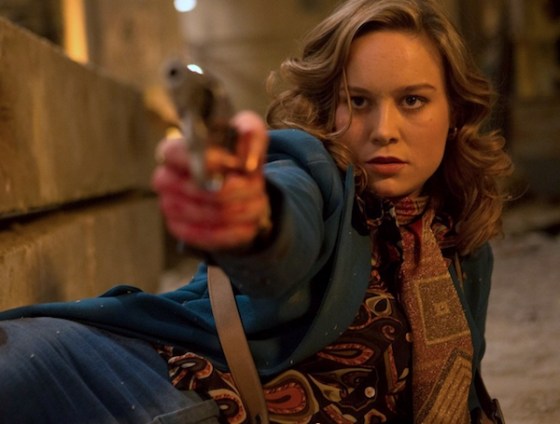
    She isn’t pictured in the review, so here’s a bonus one of Brie Larson being badass:

    Badass Brie

    22 Jump Street (2014)

    2017 #99
    Phil Lord & Christopher Miller | 112 mins | Blu-ray | 2.40:1 | USA / English | 15 / R

    22 Jump Street

    After the genuinely surprising success (both critically and financially) of the 21 Jump Street movie, a sequel was inevitable. This is that sequel — and it won’t let you forget it.

    In the first movie, best-buddy cops Jenko (Channing Tatum) and Schmidt (Jonah Hill) went undercover in a high school to unearth a drug ring. Now, they go undercover in a college to unearth a drug ring. Sequels, eh? But it’s okay because the film makes a running joke out of how it’s just rehashing what worked in the first movie. I say “it’s okay” — some people seem to fundamentally object to this, saying that acknowledging that it’s a copy doesn’t stop it being a copy. Personally, I give the film a bit more credit than that. It’s a copy because it’s funny when it’s a copy, not because it has absolutely no new ideas.

    In part, it knows when to improve on itself: they’ve taken one of the most memorable and likeable bits of the first movie — the meta-jokes at the expense of the film itself — and ramped them up to 11. And it works. Or, at least, it did for me. Is this the most meta comedy ever? I dunno, but I can’t think of another that so relentlessly riffs off both the expected tropes of its genre and its own status as a sequel. It broadens the remits to movies in general, too — when it finally paid off, the meticulously over-constructed ‘meet cute’ gag elicited one of the biggest laughs I’ve had at a film in a long time. I’m almost loathe to mention it, because it works best when you have no idea that’s where it’s going, but oh well. Similarly, the widely-discussed end credits must’ve been a real hoot when they were a total surprise. Fortunately, they’re still a ton of fun even if you’ve had the joke ruined. (As I’ve already half-spoiled one moment, and the credits were pretty widely covered back when the film first came out, I shall say no more.)

    Crash helmet

    The one shame in all this is that it rehashes the last movie’s relationship arc for the leads. Gags about it being exactly the same movie are funny when they’re overt, like with the main drug investigation plot, but it’s like no one in production noticed that they’d reheated the character arcs. It does kind of go somewhere new with it, but only in the sense that it’s inverted which of the pair soars and which feels left out. Nonetheless, it stills leads to some funny scenes, like the “break up” and a counselling session, so at least it’s not a complete loss.

    When a movie nobody expected anything good of becomes a hit and they rush to produce a sequel, you’d expect nothing more than a lazy rehash. 22 Jump Street takes that ball and runs with it, turning its lazy rehashery into meta-humour that makes the movie more-or-less the equal of its predecessor.

    It’s a shame the threequel seems to have become lost down the dead-end of making it a Men in Black crossover because I wouldn’t mind seeing trilogies given the Jump Street treatment. But you never know, maybe that’ll become the silver lining to the Han Solo fiasco.

    4 out of 5

    Channing Tatum stars in another spoof cop series, Comrade Detective, available on Amazon Prime from today.

    The Driven Monthly Update for July 2017

    It may be the silly season in cinemas, the time when summer blockbusters are at their most prolific, but July is traditionally one of my worst months for viewing — it has the lowest average (just 7.1) and is also the only month in 10½ years of 100 Films when I’ve failed to watch a single film (back in 2009). The story’s a little different this year, though…


    #91 Big (1988)
    #92 Headshot (2016)
    #93 Inferno (2016)
    #94 Spider-Man: Homecoming (2017)
    #95 ’71 (2014)
    #96 Planet of the Apes (1968)
    #97 Jersey Boys (2014)
    #98 War for the Planet of the Apes 3D (2017)
    #99 22 Jump Street (2014)
    #100 City of God (2002), aka Cidade de Deus
    #101 The Driver (1978)
    #102 Dunkirk (2017)
    #103 Lion (2016)
    #104 Get Out (2017)
    #105 Free Fire (2016)
    #106 Drive (2011)
    #107 Sing 3D (2016)
    War for the Planet of the Apes

    The Driver

    .


    I observed lots this month, as you can see…

    • 17 new films watched makes July the second best month of 2017 so far (behind February’s 20) and by far my best July ever (beating the 12 of both 2015 and 2016).
    • Obviously that surpasses the July average, increasing it from 7.1 to 8.1 — still the lowest of any month. It also beats the rolling average of the last 12 months (previously 14.2, now 14.6) and of 2017 to date (previously 15.0, now 15.3).
    • As you may’ve noticed, one of those was #100. I know it’s the title of the blog ‘n’ all, but, frankly, this is the fifth consecutive year that I’ve passed #100 before even reaching December — it hardly feels worth commenting on in depth. That said, its the second earliest I’ve got there, behind 2016’s May 28th and, having watched it on July 15th, just ahead of 2015’s July 27th.
    • Also: the #100 club is still a small group with just nine previous members (including one #200), so I did bother to try to pick a worthy film. City of God has been on my must-see list for almost 14 years, ever since it topped Empire’s “best of 2003” list, and was included in my 2015 WDYMYHS selections too, so it seemed a good pick.
    • This month’s proper WDYMYHS film: as if watching both Baby Driver and The Driver in the space of a month wasn’t enough, I also flung in Nicolas Winding Refn’s modern classic, Drive.
    • This month’s Blindspot film: in honour of the franchise’s latest instalment arriving in cinemas, I finally watched the original Planet of the Apes. It’s good, but I must admit I prefer the new ones. I still intend to watch the remaining four originals.
    • Weird coincidences: last July I watched Zootropolis, this July the broadly similar Sing; last July was when I last watched a new Ben Wheatley film, High-Rise, while this July it was Free Fire; and last July I watched the archetypal heist movie, The Sting, while this July I rewatched all three Ocean’s movies. None of those were intentional. Good thing I’d already watched Split (which shares a director with The Visit) and haven’t got round to Passengers (which shares a director with The Imitation Game), otherwise this would be going beyond a coincidence.
    • Finally: it’s the first time since records began (i.e. June 2008) that I’ve watched a film on July 12th. Yes, I have records of funny things like that. The fact I’m mentioning it now when I don’t normally shows how rarely this happens. Relatedly, then: how many days are there on which I’ve ‘never’ watched a film? Eight. That’s 2.2% of the year. Those dates are January 5th, May 23rd, June 29th, July 16th, July 19th, September 2nd, November 4th, and December 22nd. There’s no special significance to any of those (not that I can think of, anyway), it’s just random.


    The 26th Monthly Arbitrary Awards

    Favourite Film of the Month
    It was a pretty good month all round, looking back on it. Still, apes together strong — so strong that War for the Planet of the Apes is my pick this month.

    Least Favourite Film of the Month
    No outright stinkers this month, so, living up to the category name, I think my least favourite film of the month was also my last: Illumination Entertainment’s Sing, which is decent fun but no Pixar movie.

    Greatest Meet Cute of All Time
    If the rest of 22 Jump Street was humourless dross (which it isn’t), it would’ve all been worth it for the sublime ‘meet cute’ gag.

    Best Death Involving a Motor Vehicle of the Month
    Sure, The Driver and Drive may be all about using cars for action, but generally that’s for escaping. For murderousness, you have to turn to Free Fire, which (spoilers, cos it happens near the end) uses a van to go all Oberyn Martell on one of its characters.

    The Audience Award for Most-Viewed New Post of the Month
    Everyone has something to say when there’s a new Christopher Nolan film, and it appears people like to read what other people say too: the clear victor this month was my review of Dunkirk.


    I’m still more than a month behind on my Rewatchathon, but hopefully now that I’ve passed #100 I’ll be able to drag myself away from new stuff a little more often. I’ve got a long list of “must rewatch”es raring to go, so it shouldn’t be so hard.

    #21 Ocean’s Eleven (2001)
    #22 Finding Nemo 3D (2003)
    #23 Ocean’s Twelve (2004)
    #24 Ocean’s Thirteen (2007)

    Rewatching the Ocean’s trilogy, I came to the conclusion that Twelve is a much better and more interesting film than Thirteen, though the first is clearly the best of all. Anyway, as seems to be becoming my MO with these rewatches, I wrote a little bit about Eleven, Twelve, and Thirteen on Letterboxd.


    has already begun.