There’s so much TV right now! And that’s before you consider all the old stuff to catch up on (and by “old” I mean “anything aired before the past month”).
Still, here’s a selection of what’s been gracing my eyeballs in the last 35 days…

Luke Cage (Season 1)
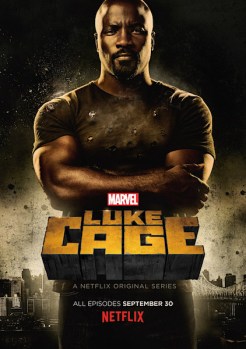 The third series in the Marvel/Netflix stable wins points for boldness, much as Jessica Jones did this time last year. Where Daredevil is a well-done but ‘standard’ superhero show, leading to it being somewhat demeaned by the Cool Kids of the critical world (but much higher-rated by us plebs on the likes of IMDb), Jessica pushed into dark psychological territory, and now Luke Cage brings black culture and life into the fold.
In truth, I still think Daredevil is the best produced of the three. Maybe that’s because it’s operating in more familiar territory, but it seems to know how to construct its storylines to fit the time given, and pace them to really kick off that “just one more episode” feeling that Netflix binge-watching is so famed for. Conversely, Jessica didn’t have enough story for 13 episodes, spinning its wheels and going in circles in the second half. Luke Cage doesn’t suffer from that exact problem, but it spends a lot of time finding excuses to keep its near-invulnerable hero out of the action.
But, for its plot-related flaws, it’s not a bad show. It has three strong villains — it’s just a shame it’s the fourth who becomes the focus for the back half of the season. Its use of music is unusual and brilliantly executed, though as it’s employing genres and styles, indeed a whole culture, that I’m not exactly au fait with, it’s like watching as a fascinated outside observer rather than someone fully embedded or engaged. That’s not necessarily a negative, just a different way of relating to it. And even with those storytelling faults I mentioned, there’s at least one huge and unexpected twist, which really livens up the show… for a bit. It also gives Rosario Dawson the biggest role she’s yet had in one of these Marvel series, and that’s no bad thing either.
Indeed, the best thing about Luke Cage is its characters. Mike Colter is an appealing leading man — when the character is allowed to do something, anyway — and the supporting characters on both sides are fantastic (with that one unfortunate exception I already mentioned). This bodes well for when they join up with everyone else in The Defenders next year, and also leaves season two with plenty of potential…
…if Netflix commission it, of course. Surely they can’t be intending to have 6+ Marvel shows on the go?!
Ripper Street (Season 5)
 It feels like only yesterday I was writing here about season four (it was, in fact, February and March). I think it was assumed this final season would be coming next year, but then Amazon announced it almost out of the blue just before the BBC’s run of season four ended, and made the unusual-for-them decision to dump the whole season at once, Netflix-style. It benefits this particular group of episodes because it really is one long story — when the show moved to Amazon for its third season it got more heavily serialised, but often with “case of the week” plots alongside that; the end of season four and all of season five throw that almost entirely aside for one long, developing storyline.
Nonetheless, they’ve done a good job of making a TV show rather than a really long movie in six parts. The third episode, in particular, sets our heroes aside almost entirely to spend an hour with a villain who’s barely done more than grunt so far, digging into his psyche and his hopes (if any) of redemption. It almost felt more like an arty drama film than an episode of a period police procedural and proves that, even after five years, a quality programme can still push at and explore its form.
The final episode, however, is a certified oddity. After wrapping up the season’s primary plots with relative haste, it moves on to an odd, somewhat lethargic non-story. It is, in its way, bold for what started as a police procedural to end with an episode that focuses on the drama of its characters’ lives, but it does so with an almost perverse fixation on setting up certain expectations only to dash them. It is tough to call the episode either satisfying or unsatisfying as a conclusion, though I imagine some will come to the latter opinion purely because it is so uncommon. It’s titled Occurrence Reports, and that seems apt, for it seems to merely report a series of occurrences; but they do at least, in their way, bring all of the series’ parts to their respective ends.
Leaving aside the finale’s forays into structural experimentation, this is a good final season, that has moments to count among the programme’s very best. I still reckon season three is the best individual run, however.
Black Mirror (Series 2)
 Well, it’s only taken me 3½ years to get round to this (seriously, where does time go?!) This bunch really represents the series’ highs and lows. On the one hand, Be Right Back — in which Hayley Atwell signs up for a company who create a virtual version of her deceased partner using his contributions to social media — is an exploration of broadly-plausible near-future-tech with a focus on its potential emotional effect. That’s what Black Mirror does best, I’d argue: look at stuff that may, perhaps, be in the pipeline, and how that would actually play out for us. On the other, there’s The Waldo Moment, which is also sickeningly plausible — as Charlie Brooker himself has said, it’s more or less come true, though with the likes of Boris Johnson and Donald Trump instead of a blue cartoon bear — but as an episode it doesn’t quite seem to know where to go with its concept or what it might ultimately signify. The episode just stops rather than ends, until a flash-forward coda that’s a bit silly in its extremity. Even Brooker, while doing press for the third season (released tomorrow), has said he’d go back and re-do that episode if he could. Still, full marks for effort.
Red Dwarf XI (Episodes 1-5)
 This latest series of Red Dwarf (which airs its fifth episode tonight, with the sixth available on demand from tomorrow) seems to have gone down rather well, with some reviews even hailing it as a “return to form” — that form being “the good old days” of Red Dwarf VI (or thereabouts), over 20 years ago. Personally, I didn’t dislike Red Dwarf VII or Back to Earth, and I even have a soft spot for Red Dwarf VIII, so what do I know? Nonetheless, I would concur that this Dwarf represents a fine vintage, hitting the series’ unique mix of accessible mainstream-ish comedy and proper science-fiction concepts. Red Dwarf XII is already in the can for 2017, and I wouldn’t be surprised to see Dave commission more episodes beyond that.
Star Trek The City on the Edge of Forever
Star Trek: The Animated Series Yesteryear
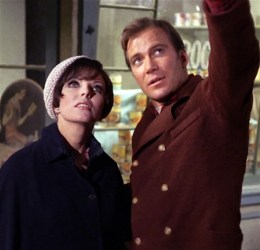 The entirety of TV Star Trek is available on Netflix, so I took the chance to watch the most acclaimed episodes of both The Original Series and The Animated Series — which happen to be connected, something I didn’t realise until afterwards. Er, I mean, which I totally planned. Both are pretty fine uses of science-fiction to explore relatable issues. Well, not many of us have to deal with disruptions to reality caused by time travel, or knowledge of the future creating dilemmas about what we do next, but they work the relatable stuff in around the surface plots. And they both still seem pretty bold for network TV episodes even today, almost half a century later, as (spoilers!) Kirk lets a good woman die to retain the correct timeline, and a kids’ cartoon deals with the subject of euthanasia.
Also watched…
Castle Season 6 Episode 8-Season 7 Episode 1 — almost always a nice, light, entertaining show, but the season 6 finale is a mess. Well, the bulk of it’s fine, but the premise is illogical and the cliffhanger is weightless and unneeded.
The Great British Bake Off Series 7 Episodes 5-9 — this series has seen Bake Off’s charms firing on all cylinders, I think, which just reminds you what we’re about to lose.
Line of Duty Series 1 — as this is on Netflix I thought I’d finally see what all the fuss is about. I think it’s the second run where it really took off, but this has its moments.
The Musketeers Series 2 Episodes 6-7 — quite a few grim crime shows in this month’s viewing, so a bit of quality swashbuckling is a welcome change of pace.
Scott & Bailey Series 5 — not the strongest run (the “darknet serial killers” case was a little too outlandish for a show that has often thrived on its more-plausible-than-your-average depiction of murder investigation), but still a quality police drama. Shame there won’t be more.
Things to Catch Up On
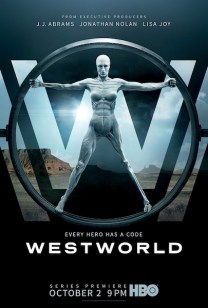 This month, I have mostly been missing loads of stuff. Probably the most talked about is HBO’s adaptation of Westworld, which has apparently pulled in even bigger ratings than Game of Thrones. Over here there’s the second series of The Missing, which if it’s half as good as the first will be a real must-see. Then there’s Woody Allen’s first (and last) TV series for Amazon, Crisis in Six Scenes. Reviews have been mixed to poor but I still intend to get round to it. And finally Hooten & the Lady, which may be the worst title for anything in the history of ever, but a globetrotting adventure series inspired by the likes of Indiana Jones and Romancing the Stone sounds right up my alley.
Next month… the latest Doctor Who spin-off comes to iPlayer; brand-new Black Mirror comes to Netflix; and I’ll finally watch Stranger Things, I promise.

 One of a couple of films John Carpenter directed “for hire” in an attempt to restore his Hollywood reputation after the box office failure of The Thing, Christine is an adaptation of a Stephen King novel about a car possessed by evil. Yes, a car. I guess if you wait long enough, anything and everything will be possessed by evil eventually (in fiction, at any rate).
 Even if Carpenter was doing it only for kudos with the studios, he still turned in solid work. Christine may not be scary, but she is menacing, and her attacks work as individual sequences. Unsurprisingly it’s not his strongest film, and it’s not the greatest adaptation in the Stephen King movie canon either, but if all movies by jobbing filmmakers were this good then we’d be luckier moviegoers.
 By many accounts this is the greatest film I’d never seen (hence it being this year’s pick for #100). How are you meant to go about approaching something like that? Probably by not thinking about it too much. I mean, something will always be “the greatest you’ve never seen”, even if you dedicate yourself to watching great movies and the “greatest you’ve never seen” is something pretty low on the list… at which point I guess it stops mattering.
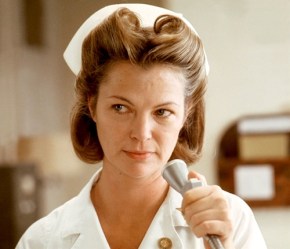 Hollywood is notorious for adapting novels by grafting on happier endings, but here they did the opposite, removing even the glimmers of justice that the novel offers. In the book (according to Wikipedia), when McMurphy strangles Ratched he also exposes her breasts, humiliating her in front of the inmates; when she returns to work, her voice — her main instrument of control — is gone, and many of the inmates have either chosen to leave or have been transferred away. Conversely, in the film there is no humiliation, and we explicitly see that she still has her voice and that all the men are still there. Of course, McMurphy’s ultimate end isn’t cheery in either version. It’s almost like the anti-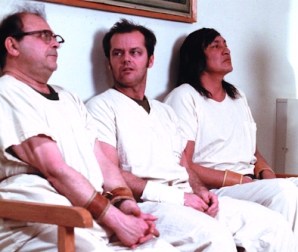
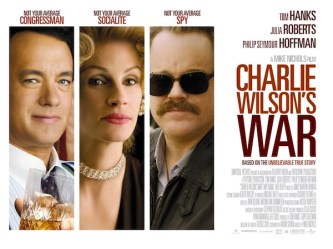 Unlikely stories can make great movies, or at least fun ones, and if this isn’t the former then it’s largely the latter.
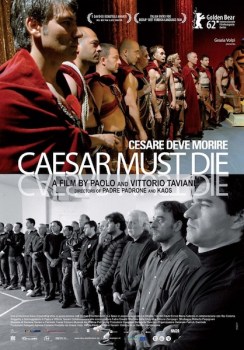 On the surface, this is a documentary about the inmates of Rome’s high-security Rebibbia prison — many of them with mafia connections — putting on a performance of Shakespeare’s Julius Caesar. However, it becomes clear fairly quickly that it’s all been staged, which is only more apparent when you learn some behind-the-scenes details (at least one prisoner had been released years earlier and returned to participate in this project).
 The directorial debut of uber-hearththrob movie star Ryan Gosling is not what you might expect someone of that particular adulation to produce. It’s not just that it has a dark heart, but that it’s slow, opaque, perverted, and not easily summarisable.
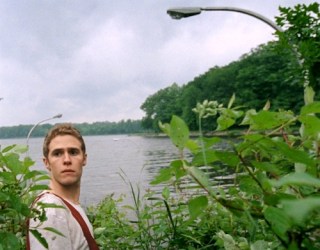 It comes to a very cathartic ending, on multiple levels. I almost didn’t realise I needed that catharsis at the end — I knew I wanted certain characters to get their comeuppance, but the load that seems to lift at the end, with all the different climaxes combined, including parts that might not seem ‘good’… well, it’s almost like Rat is right about Bones’ actions lifting a bad spell.
 The director of minor horror
 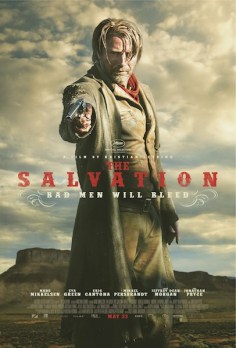 The spirit of the Spaghetti Western is kept alive in this Euro-minded South Africa-shot revenge Western.
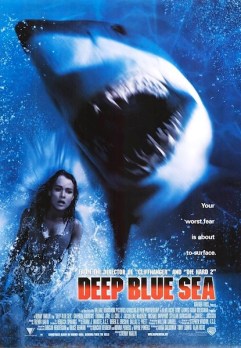 Deep Blue Sea is Terence Davies’ adaptation of Terence Rattigan’s play about the wife of a judge getting caught in a self-destructive love affair with an RAF pilot.

 Sometimes you have to wait to see a film because it’s not accessible for some reason (no one’s put it out yet, or it’s out of print and costs a fortune, or whatever). Other times… maybe it’s just me, but there are some films that I wait years to watch for no particular reason. Not wait in the sense of “drumming my fingers waiting for the chance”, but in the sense that I’ll get to it someday, it’s just not a priority, for whatever reason. And then one day, with nothing apparently having changed, the time comes when it’s that movie’s turn.
 If you’re a reader from outside the UK, I guess you’ve probably not heard of Tim Peake. He’s (quite rightly) been big news here for the last year or so because he was our first (official) astronaut. That it’s taken until now for there to be a British astronaut seems remarkable, but there you go. I guess we always let other people do the initial exploring, then come along later to own the place — I mean, that Columbus fella was Italian, and is Italian the official language of America? No it is not. Anyway, Peake is a qualified helicopter pilot and instructor, has a degree in Flight Dynamics and Evaluation, was selected to be an astronaut in a process that involved academic tests, fitness assessments, and several interviews, and then received six years of training, including a mission as an aquanaut, before he went into space. But no, you can totally train a group of drillers to do that in a fortnight.
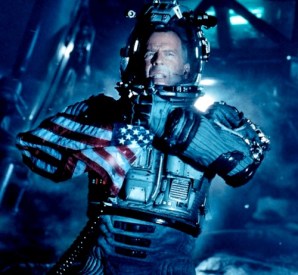 Apparently Michael Bay thinks it’s his worst film. In 2013, he said, “I will apologise for Armageddon, because we had to do the whole movie in 16 weeks. It was a massive undertaking. That was not fair to the movie. I would redo the entire third act if I could.” The problems stretch further than that, Michael.
 Maybe I’m wrong — it has a lower rating on IMDb. But then, that is IMDb. I should probably watch it again, but even without doing that I feel pretty confident saying it’s the better film.
 100Films.co.uk