
Steven Spielberg | 155 mins | streaming (HD) | 16:9 | USA / English, Mende & Spanish | 15 / R
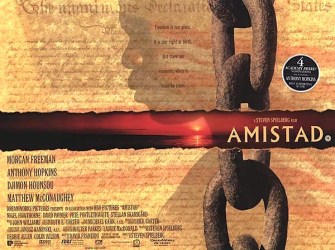 Feeling in need of more intellectual fare after helming The Lost World, Spielberg turned to a project already in development at Dreamworks: an adaptation of a non-fiction book about the 1839 mutiny on the slave ship La Amistad, and the ensuing legal battle. Although not poorly received by critics, there’s a sense that the consensus view dubbed it “black Schindler’s List”, the implication being that by aping the earlier film it was inevitably inferior. I don’t think that’s a watertight chain of logic, but, nonetheless, Amistad is clearly a ‘minor Spielberg’.
Despite being “a slavery drama”, most of the film functions as a legal drama: though it begins with the slave uprising, and later has an extended flashback showing their kidnap and transportation, the thrust of the film lies in the courtroom arguments about who owns the ship’s ‘cargo’ and consequently what should be done with them. This is a period when capturing Africans into slavery, and by extension their subsequent transportation, was illegal by international agreement, but actually owning slaves was not yet banned (at least in the US). It’s before the American Civil War too, so there’s a political dimension: if these ‘slaves’ are freed, what tension might that spark between the north and south?
 Though Spielberg is certainly not immune to the Africans’ plight — the depiction of life on a slave ship is appropriately harrowing — it’s clear from early on which side he expects us to identify with, in terms of cultural background if not shared morality: as survivors of the mutiny talk the next day, the slavers’ Spanish dialogue is subtitled but the slaves’ African dialect is not. It’s a simple but effective technique to align us with one side — as I say, not morally (in no regard is Spielberg trying to apologise for the slavers), but socially. Unfortunately, it’s not sustainable: later, when we need to understand the Africans to follow a scene’s point, their dialogue is suddenly subtitled, and from then it’s sporadically translated as needed. I can see why that choice was made, but it makes the unsubtitled bits feel like a cheat.
In most other regards, it’s kind of an old-fashioned movie. In a few ways that works: it’s got classical cinematography, both the use of film (obviously, this being well before mainstream adoption of digital) and the framing, the pace, the editing. In other respects… well, it feels very late ’90s now, the overall style of the screenplay and the treatment of the story reminding you that it’s not actually a moderately-recent film (which I guess I’d personally filed it away as, being the most recent of Spielberg’s pre-2010s films that I’d not seen), but is now nearly 20 years old. And, though I may be damned for criticising him twice in as many weeks, John Williams’ score is a little heavy-handed.
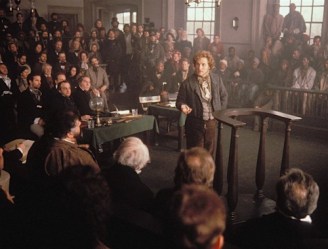 This can be said of Spielberg’s approach to the drama, too. Some of the courtroom stuff is suitably mired in legal technicalities and argument, but by film’s end it gets a little bit too… what’s the word? Not “preachy”. Not “sentimental”, exactly, though it’s born of that old criticism of Spielberg. “Melodramatic” may be on the money, though. It doesn’t help that everything reaches a climax — not only narratively, but also in the way it’s written, shot, acted, and scored — only for it to be revealed that it’s just the end of act two. Okay, that’s the truth of what happened (or near enough, for the purposes of this dramatisation), and by adapting it in that way it emulates the emotions the characters experienced; but from the audience’s perspective, you feel like you’ve reached the end… only to be served up another half-hour of movie. And it’s a long film too, so you feel that. It gets by because it’s fundamentally a good film, with strong performances and technical merits, but it’s a little bumpy for a bit.
There also seem to be a startling array of factual inaccuracies to level at the film. As ever with fictional adaptations of real life, it’s a difficult line. No fact-based fiction is 100% like reality, especially when you factor in unavoidable variances in people’s memories and opinions. However, the more serious or famous the events being depicted, or the more they’re being used to indicate some wider point about their setting, the greater the responsibility to present something that is at least passably accurate. I think some would contend that Amistad is not that. I’m no expert, but this section on Wikipedia, which is bolstered by multiple citations to suggest its accuracy, indicates the extent of the issue.
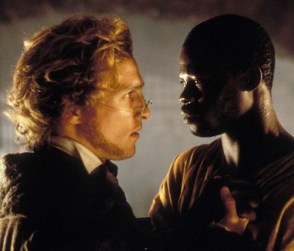 It’s easy to criticise Amistad, because Spielberg makes the production of very good movies look effortless, so the missteps stand out all the more. The story of La Amistad and its ‘cargo’ is a powerful one, and Spielberg has — naturally — turned it into a good film; but by remixing history to over-egg the message, it loses a little something. A valiant effort, but a film like 12 Years a Slave makes many of the same points in a less grandiose manner.

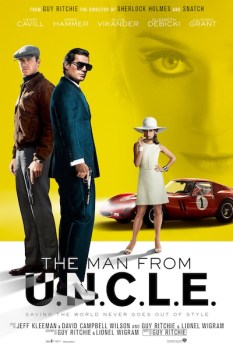 Guy Ritchie is a self-confessed non-fan of the classic ’60s spy-fi series
  I appear to be coming at director Ben Wheatley’s films in reverse order (having covered
  Kill List mixes in its genre elements — and they’re elements from a couple of different genres at that — so gradually that, as I said, it’s hard to discuss them without spoiling the film. (Much like the film itself, this review is getting progressively more revealing, so jump off when you’ve had enough.) It’s kind of a compilation of traditional British movie genres: we begin with kitchen sink, then discover we’re actually watching a crime film, before the final act swerves (though not without foreshadowing) into folk horror. The skill of Wheatley, and his co-writer Amy Jump, is in not making these transitions too implausible. That’s not to say they’re not surprising, but the doom-laden music, inexplicable proclamations by some characters, and a couple of very strange events should all clue the viewer in to the film not being a common-or-garden hitman flick.
 The final act is naturally where the film reveals its overarching purpose… or rather doesn’t reveal, because there are a shortage of answers here. It’s a lot more straightforward than A Field in England, but it still offers few (or, some would say, no) explanations for what’s occurred. According to Wheatley, the screenplay was more explicit about what was happening and why, and so was some of what they shot, but he cut back on the exposition to leave it up to audience interpretation. This isn’t a film to passively watch and have everything explained, but even viewers prepared to do a little work for themselves may find it frustrating.
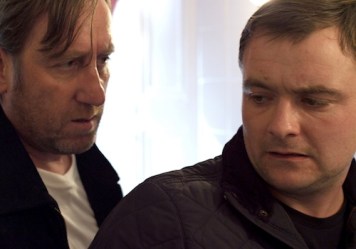 Memorable sequences keep it ticking over throughout — and so they should: taking inspiration from the likes of Kubrick and Stephen King, Wheatley started from specific images and worked backwards to a plot. Here, I think that method has been effective. The abstruse ending won’t be to everyone’s taste, but the journey there is worth experiencing.
 Most of mankind have become vampires, but the blood supply is running out and without it people mutate into monsters. Ethan Hawke’s scientist is developing a substitute, but when he encounters human resistance fighters he learns there may actually be a cure…
 Macbeth is my favourite Shakespeare play. Not that I’m a great scholar of the Bard, but I’ve seen and/or read enough to have a favourite. I also think it’s one of his most accessible works: its story and characters are relatively straightforward without being devoid of complexity; it’s got some immensely effective imagery and dialogue, including a solid compliment of famous lines; and it’s not excessively long either (it’s Shakespeare’s shortest tragedy, in fact). I also studied it twice over in secondary school, so I know it fairly well. Now, this doesn’t mean I have exacting standards when it comes to film adaptations (Shakespeare is plenty open to interpretation), but it does mean I have my expectations up, especially as there isn’t a film version of Macbeth that could reasonably be described as “definitive” (though I know
  What I mean, more specifically, is that he’s visualised parts of the text; applied the old rule of “show don’t tell”. So rather than a messenger giving the King a full account of Macbeth being awesome in battle, we see some of the combat; Banquo has hardly any lines early on, but we still understand his friendship with Macbeth just from the way they look at one another and go into battle together.
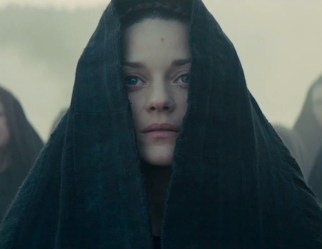 Cotillard is fantastic in all of this, and certainly worked hard for it: the way the French language applies emphasis is not suited to delivering iambic pentameter, apparently, so she worked hard with a dialect coach to nail her delivery. Her accent clearly marks Lady Macbeth as the only non-Scottish character here, which becomes another layer added to this interpretation.
 a good film based on a computer game.
 2014 Academy Awards
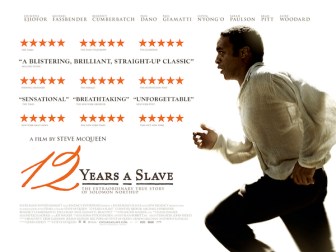 As we know, the Oscars are racist and always have been, especially recently. Like two years ago, when they didn’t give a load of nominations and several awards to a film about slavery from a black director and black screenwriter.
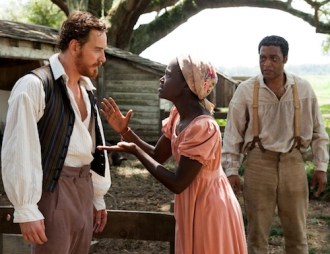 who will break your heart, and Michael Fassbender, who is overdue the gong for his many varied and accomplished performances. (I doubt his forthcoming triple of
 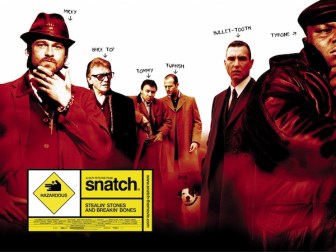 Guy Ritchie’s second feature met with relative indifference 16 years ago, consensus deeming it
 #21
#21 
 #36 Noah (2014)



























 Favourite Film of the Month
 Well now, hasn’t this been a long time coming? Just over two years since its western disc release was first announced, just over three years since it debuted in Japanese cinemas, and just over four-and-a-half years since
  Change, and the embracing or rejection of it, is surely one of the major themes of Evangelion. This is more explicitly debated as 3.33 moves into its middle section, where we get an extended dose of Shinji’s traditional insecurities. Hey, it wouldn’t be Evangelion without Shinji having a self-pitying whinge, right? Fortunately there’s more going on than that, but this is a section light on action and heavy on the series’ more thoughtful elements. There are answers to some of the mysteries, but it again wouldn’t be Evangelion if it all made easy sense. At the same time, Shinji bonds with new Eva pilot Kaworu. A controversial character, apparently, and not just because of the homosexual overtones (which some reviewers claim to miss, presumably because they’re blind), but the scenes where they harmonise by playing piano together are quite fantastically animated.
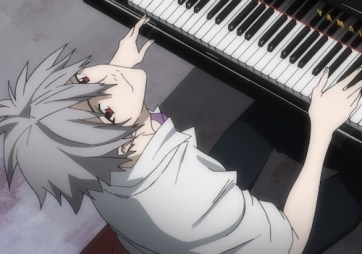 3.33 divides quite neatly into three half-hour sections. I guess that should be expected, as the whole tetralogy has been based in traditional Japanese ideas of narrative/musical structure, hence the films’ Japanese titles incorporating the names for the three movements: jo, ha, and kyū (序破急), which roughly equate to “beginning”, “middle”, and “end”. As discussed, the first is fantastic, some of the best material in the entire series, in my estimation. Also as discussed, the second is a lot slower, but has its plus points too. The third… ah, the third. Here we get some more action, which will please anyone who thrills to Eva combat, but it is also utterly mind-boggling. I’ve been reading up on a few fan sites since watching, and I’m still not absolutely sure what was going on or what it signified. You won’t find any enlightenment in the disc’s special features, which present a long list of extras at first glance, but turn out to be 19 repetitive trailers, TV spots, and promo reels. Yes, nineteen.
 So when will that conclusion come? Well, a few years ago Anno ‘joked’ that the finale might be released “four to six years” after 3.33. As we’re already almost at four years with no sign of a release date, I guess it wasn’t so much of a ‘joke’ after all. An English-friendly DVD/Blu-ray will inevitably take an additional couple of years, too. So an indefinite, but undoubtedly lengthy, wait begins…
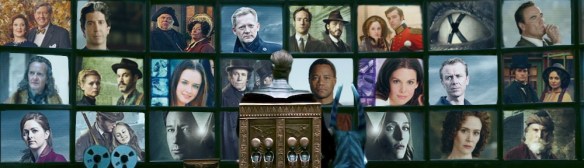
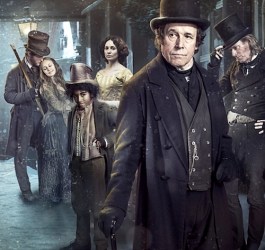 The BBC’s Avengers-style mash-up of characters from the work of Charles Dickens is an interesting mishmash of a show — part soap, part sitcom, part murder mystery — probably quite like Dickens’ originals, to be honest. It’s also an interesting case study in dramatic irony: every major storyline is a prequel to one of Dickens’ works, so how much do you rely on the audience knowing where everyone ends up? We surely all know where Miss Havisham is headed, but do you remember exactly what roles Compeyson and Pocket have to play? And is anyone but a Dickens expert (or someone who’s read Wikipedia, obv.) aware of who Honoria Barbary grows up to be? As a show, it’s not as classy or accomplished as the Beeb’s peerless Bleak House (from a decade ago now!), but it’s considerably more entertaining than their version of Little Dorrit that followed (both apt comparisons, because they’re Dickens adaptations in 15+ parts). It’s designed to be a returning series, and I hope it gets recommissioned.
 Oh, it’s a Woman’s Show — or, worse, a Teen Girl’s Show. There’s more to Gilmore Girls than that (stupidly reductive, anyway) description. OK, I’m not that fascinated by the ins and outs of Rory’s relationship dramas, and life would be simpler if Lorelai and Luke would just bloody well get together, but it’s endurable due to the fast*, witty, intelligent dialogue (seriously, these characters are impossibly well-read and -watched), the depiction of quirky small-town life and all its crazy characters, and the realistically antagonistic relationship between independent daughter and old-fashioned parents. I got quite far through watching Gilmore once before, many years ago, and then a while back started re-watching with a view to finishing it off. With Netflix’s four-movie revival coming later this year, it’s become time to get a wriggle on. So expect this to keep popping up — I’ve got 100 episodes to go…
 This is a few episodes in over the pond, I know, but it only started here on Monday (see also: The X Files). I’ve never seen one of Ryan Murphy’s other shows (Nip/Tuck, Glee, American Horror Story, etc), except for the Rocky Horror episode of Glee, which I hated. He seems to be quite a divisive creator, so maybe it’s for the best that here he’s only acting as producer and occasionally director. For people like me, who were too young to follow the O.J. case, this is a potentially-fascinating insight into a famous bit of… I was going to say “recent history”, but it’s 22 years ago now. Reportedly the series will focus on how the apparently open-and-shut case we witness in this episode goes astray at trial, which I guess makes this first part all about setting things up. If that is the case, I think there’s a lot of promise.
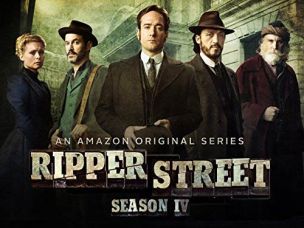 The Amazon-saved Victorian murder drama returned with a 130-minute episode shot in 2.35:1 widescreen — in other words, it was basically Ripper Street: The Movie. In truth, it was clearly designed as a two-parter, and would perhaps have played better in that form. The cinematography of that first episode is glorious though, so rich and well-designed, it’s practically worth watching just for that. Series 3 was the show’s strongest run so far, and for me the new series isn’t quite matching it yet, but it’s still a quality drama about dark deeds in dark places.
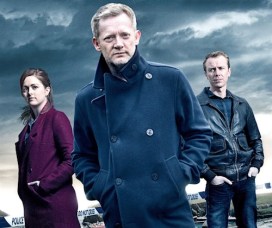 I don’t watch that much crime drama… says the person who’s already highlighted Dickensian, American Crime Story, and Ripper Street, and is also watching Death in Paradise, Elementary, and Vera right now. (I need to cut back on these.) One thing that works in Shetland’s favour is its remote, somewhat desolate setting. I suppose that makes it feel tapped into the Nordic Noir craze a little bit, though that’s probably where the comparison ends. This latest series is also telling a single story over its six parts, which is a change of pace for the show. It’s still in the “intriguing start” phase — there’s clearly something much bigger going on than these small-island cops are used to dealing with.
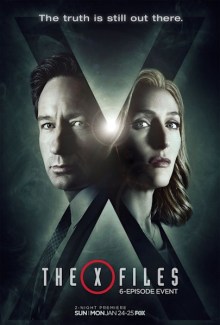 The X Files revival only has one episode left to air in the US now, but over here it’s barely begun (episode two went out on Monday). Despite the general apathetic reaction to the first episode (My Struggle), I largely enjoyed it. Only having dipped in to the original series meant I was thoroughly lost at times, but the Mulder and Scully reunion was suitably nostalgic and it threw around ideas with abandon. Episode two (Founder’s Mutation) seems to have been better received, but I can’t say I noticed a massive up-tick in quality. Ostensibly a “monster of the week” episode, it’s decent in that regard, though I also liked how it tapped into storylines from the past — when you’ve only got six episodes, making any of them completely cut-off and standalone feels somehow wasteful.
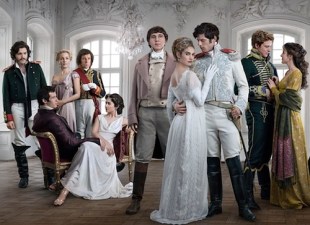 This month, I have mostly been missing the BBC’s new War and Peace — aka Phwoar and Peace, according to social media and/or journalists wanting to have influence on social media. It seemed like the kind of thing (i.e. lots of characters with Russian names) that would benefit from being watched intensively, rather than spread thin over a month and a half, so I’ve got it all saved up. Maybe next month, then.
 100Films.co.uk