2016 #83
Steven Knight | 85 mins | Blu-ray | 2.40:1 | UK & USA / English | 15 / R
 “Tom Hardy goes for a drive and makes some phone calls” is the plot of this film, which is often mislabelled as a thriller. That’s not to degrade its thrillingness, but rather to say that if you’re expecting a single-location single-character phone-based thrill-ride like Phone Booth (which I love) or Buried (which I’ve still not seen), you’re not going to get it. In reality, Locke is a drama about a man dealing with some woes that are both everyday and life-changing, but as a film it’s been made in an unusual and interesting manner.
To be more specific, the story concerns Ivan Locke (Hardy), the foreman on a huge construction site in Birmingham, and the only character on screen for the film’s entire running time. As he leaves work one evening, he’s stopped at some traffic lights. He indicates left… but, given some time to think about it, turns right. (Shades of Doctor Who season four there, but I don’t think it’s deliberate!) As he drives down the motorway for the next couple of hours, he makes a series of phone calls that completely change his life.
I could give you some indication of what those calls are about, but I think the less you know, the more entertaining it will be. As writer-director Steven Knight (Eastern Promises, Hummingbird, Peaky Blinders) says in his audio commentary, part of the idea was to construct a movie where the lead character’s big decision — which usually comes near the end — actually occurs at the start, and the whole movie deals with the repercussions of that. Locke deciding to turn right rather than left isn’t just a decision about the quickest route to his destination, but about heading to a different destination, 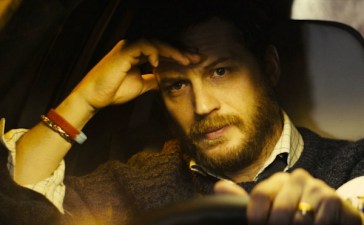 and in the process turning his life upside down. Another part was to tell a story about an ordinary guy dealing with events that aren’t going to change the world, aren’t even going to make the papers, but are a big deal in his life. Something like this could happen to any of us, and how would we deal with it?
I’d argue that Locke is Tom Hardy’s most unusual role to date: a total everyman. I mean, unusual for him. As such, it’s probably the best demonstration of his genuine acting ability: he’s got psychos and outré characters down pat, but playing an understated, fundamentally good, normal bloke? That’s a big change of pace. What’s so remarkable about Ivan Locke is his sheer unremarkableness. He’s a softly spoken guy, a friendly guy, a nice guy; as we learn at one point, he’s the only contractor who’s ever submitted paperwork to the council not just on time but early — he’s that kind of guy. And on this night, he’s decided to be completely honest with everyone; honest to a fault, in fact, because sometimes it just makes things worse. As Knight says in that commentary, what happens to Ivan is “an ordinary tragedy, and Ivan’s solution to the problem is the thing that makes him exceptional”.
Throughout this, however, is the issue of Hardy’s chosen accent… It’s Welsh, or meant to be Welsh, chosen to be working class but not harsh, with fewer preordained associations than some working class accents have. I thought it was… iffy, shall we say; and certainly people unfamiliar with the Welsh accent are all over the place in guessing where it’s from. However, looking on IMDb, Welsh people seem quite happy with it, so… Either way, you do get used to it (or I did, at least), so that as the film goes on it grates less often. Hardy’s too busy acting up a storm for it to matter, anyway. He’s a captivating performer when he’s given the space and character for it, and while I dispute the assertion (made in the special features) that he’s the only actor you could spend 80 minutes watching like this, it’s still a rare gift.
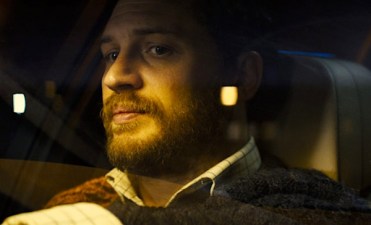 The rest of the cast appear as voices only on the other end of the phone, and in their own way are quite starry — faces that you may recognise, mainly from British TV, in even some of the smaller roles. Not that you see their faces, so, you know, you might have to look them up, or watch the making-of. Some of the performances err a little towards radio acting for me, which is kind of understandable seeing as how that’s basically how they were recorded, but there are particularly good turns from Andrew “Moriarty in Sherlock” Scott, as one of Locke’s underlings who has to step up to the plate while his boss is on the road, and Olivia Colman, who is always brilliant so that should be no surprise. Having just seen her play an ultra-capable woman recently in The Night Manager (which I’ll cover in my TV round-up this Thursday, incidentally), this is distinctly different. As if we needed to know she had range!
One of the people Locke talks to is his dad, which is noteworthy because his dad is dead. This isn’t a fantasy movie, and he isn’t having hallucinations either — he’s just imagining talking to him, for specific reasons that become apparent. These chats seem to be the film’s most divisive part for viewers: some people think it’s forced and terrible, others think it makes for great monologues. I hew towards the latter. Partly, it seems to stem from whether you believe people talk to themselves in the car or not. Here’s an apparently-uncomfortable truth for people who think no one does that: they do.
Other ridiculous criticisms include that it should only be a radio play, or a stage play, and that it’s completely uncinematic. It’s true that it could function on radio, but you’d lose an important aspect: that what we say with words isn’t always what we say with our face, which is particularly true when we’re on the telephone and the person we’re talking to can’t see our face. The film uses this contrast more than once. As for the stage, stage plays don’t allow for close-ups, and — voices aside — 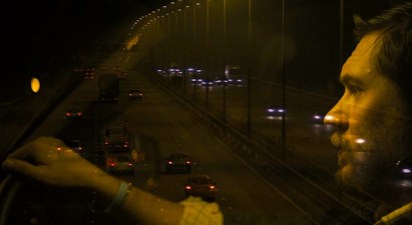 this is about what’s happening on Hardy’s face, not with his whole body. And in either form you’d lose all the photography of nighttime motorways, which have their own kind of hazy beauty. For a movie about someone making phone calls, it is intensely cinematic.
It’s also in real-time, more-or-less (it lasts 80 minutes, and near the end Locke says he’s been driving for a little over two hours — that’s near-as-damn-it, isn’t it?) I’ve discussed before how I like real-time narratives — it’s why I was initially attracted to 24, and why I’m very interested in forthcoming spin-off 24: Legacy while seemingly everyone else is busy stomping their feet and bawling like a baby because they want more Jack Bauer. I digress. Part of the beauty of Locke is that we’re locked in the car with this guy experiencing what he’s experiencing as it unfolds. There is no escaping it, only limited control over it. The fact he’s driving towards something is a very clear metaphor here, emphasised by occasional shots of his GPS showing the fixed track he’s on, and the fact he speaks to his dad — i.e. his past — in the rearview mirror. These could be heavy-handed metaphors, but they’re pitched about right in my opinion: you’ll probably spot them (which is always nicer than feeling you’ve missed stuff), but you’re not battered around the head with it.
It’s possible to make Locke sound like the most boring film ever — “a man drives home from work while talking on the phone, mostly about methods of pouring concrete”. Obviously, that undersells it massively. Hardy has never been more compelling, 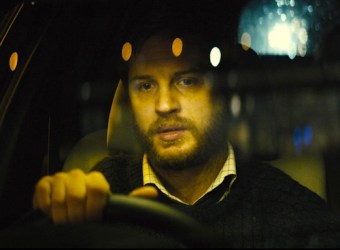 the supporting cast are so much more than “voices on the phone” (listen out, too, for Tom “Spider-Man” Holland and a midwife voiced by Alice “Sightseers” Lowe, who’s apparently Steven Spielberg’s favourite character), and the visuals are hypnotically compelling to boot. Even though it didn’t quite convince me to go the full 5-stars, I’d rate this one a must-see.
The UK network TV premiere of Locke is on Film4 tonight at 9pm.

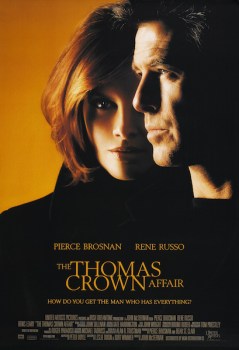 Once upon a time, John McTiernan was an action auteur, known for films that sat comfortably on the “mainstream modern classics” scale, like Predator, The Hunt for Red October, and, most of all, Die Hard. Then he made a couple of bombs (Rollerball and Basic), before ending up in a career hell of his own making thanks to some protracted legal battles. This thriller remake, starring Pierce Brosnan at the height of his Bond tenure (it was made between Tomorrow Never Dies and The World is Not Enough), is the once-eminent director’s last well-regarded film.
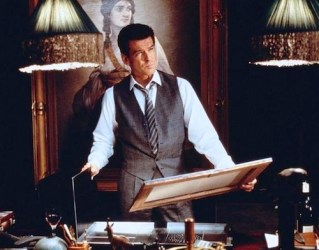 McTiernan’s action background comes to the fore in a pair of extended heist scenes at either end of the movie, which are surely the standout parts. The seductions and plot twists in between these bookends are certainly entertaining and may even keep you guessing, but it’s the heists that pack the most entertainment. They’re the kind of thing we don’t see so much nowadays, at least not in mainstream movies, because any sequence designed to provide excitement is a fight of some kind, and most of those are shot in the shaky-cam style. There’s none of that palaver here, just perfectly choreographed cutting between the various players in each heist, and some well-chosen music — as if being ably to do awesome stuff accompanied by the James Bond Theme wasn’t cool enough, here Brosnan gets to do the same to Nina Simone’s Sinnerman.
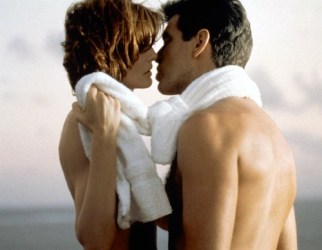 The Thomas Crown Affair may not be the best film on any of its principals’ CVs (well, except perhaps for Russo’s), but it’s a consistently enjoyable light thriller with a couple of particularly memorable sequences and a fun central dynamic. Apparently it’s better than the original, too. There’s long been talk of a sequel, but it seems to have gone the way of McTiernan’s career, which is a shame.
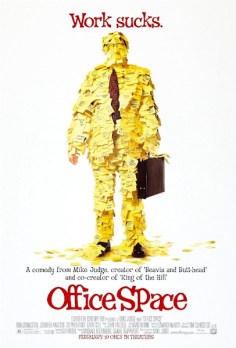 “From the creator of Beavis and Butt-Head” is not a designation that’s going to help sell a film to many people anymore. That the same fella also went on to write and direct the mediocre
 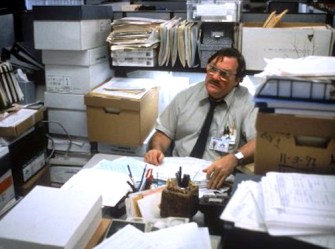 In truth, the plot doesn’t quite fill the slight running time, and Judge doesn’t seem to quite know how to end it — clearly he doesn’t want his hero figure getting caught out, but it can’t just go on forever. Fortunately, this is a comedy, and so plot matters only so much if the rest is funny. In some respects it’s a story of “first world problems” — these guys have decent jobs, making decent money, but it’s boring — but at least it finds the humour in this. Little vignettes of office life, a mix of light satire and gentle surrealism, keep the amusement ticking over too.
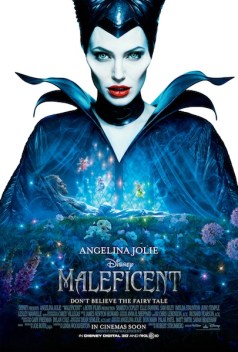 Disney seem to be embarking on a project to remake all of their most beloved animated movies in live action,
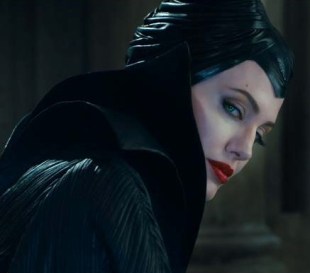 However, this is a Disney movie — you don’t get to turn a villain into the central character and have her be evil throughout. This is where the film gets really revisionist, because Maleficent keeps an eye on cursed Princess Aurora (Elle Fanning) as she grows, doing more to keep her alive than the trio of fairies she’s supposedly in the care of, and her heart is gradually warmed to the girl. Unfortunately, Maleficent was too good at the cursing malarkey: unable to lift her own spell, it plays out regardless, and the film serves us new renditions of the impassable thorns, giant dragon, and true love’s first kiss. It’s in the last where Maleficent is thematically revisionist rather than just a massive rewrite. Your mileage may vary on whether this version is obvious and cheesy, or actually more meaningful and (for the primary audience of little kiddies) more thought-provoking than the original’s — I’d go with the latter.
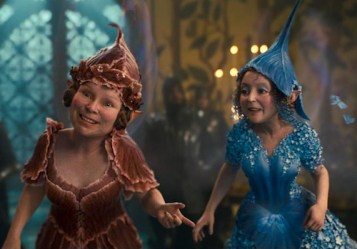 Parts of the film test-screened poorly — mainly the first act, with audiences wondering why it took so long for Jolie to turn up. Consequently, the whole thing was thrown out and reshot; in the process, Peter Capaldi and Miranda Richardson were deleted (and after they’d had to endure hours of transformative prosthetics for their roles, too), and Maleficent was given a new backstory. How far this extended into the rest of the movie, I’m not sure, but at times it feels like stuff has been cut or rearranged. Certainly the story flies past — if it wasn’t trimmed down in the edit, it needed expanding back at the screenplay stage.
 and even

 It’s certainly the summer of good-guy-on-good-guy dust-ups in the superhero subgenre this year, with Batman v Superman
 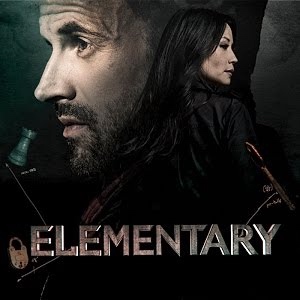 I’m a little surprised I’m still with this “Sherlock Holmes in modern day America with a female Dr Watson” series, because it was never a particularly good version of Sherlock Holmes and it still isn’t. What it has turned out to be is a decent show in its own right (for a US network procedural, anyway), with sometimes-interesting characters who happen to share the names and the odd characteristic of Sir Arthur Conan Doyle’s famed creations. It’s so much its own show that it’s never really bothered adapting the canon, so it was very odd when episode 16, Hounded, didn’t just use a few names from The Hound of the Baskervilles (as the series has in the past), but actually had a passable swing at modernising the entire plot. It doesn’t seem to have gone down too well with critics and viewers, though for my money it did a much better job than
 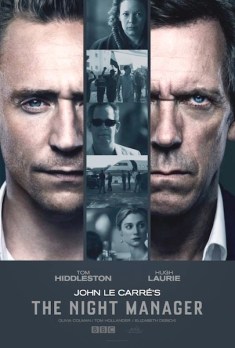 A lavish, all-star, ultra-hyped John le Carré adaptation that, thank goodness, lives up to its reputation. Although it wrapped up in the UK a couple of weeks ago, it only started in the US last night, and I recommend any America-based readers who enjoy a good thriller to get on board tout suite. The Night Manager doesn’t have a
 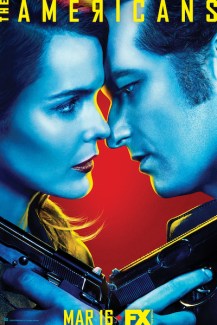 This month, I have mostly been missing season four of The Americans, aka the most underrated drama on television. Well, apart from with critics, that is, who’ve given this run
 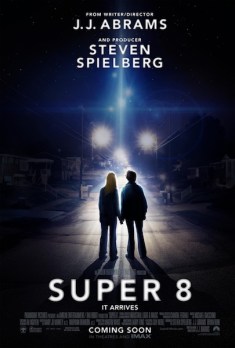 Before he started star warring and between bouts of star trekking, director J.J. Abrams teamed up with producer Steven Spielberg for this homage to the kind of movies Spielberg produced in the ’80s. Those films have endured down the decades; I’m not sure Super 8 endured as far as Abrams’ next
 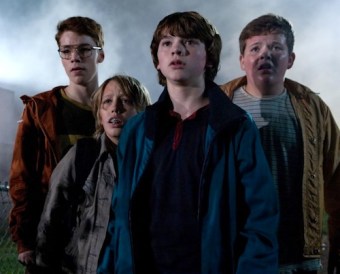 Unfortunately, the longer the film goes on the more it runs away with itself, as characters dash back and forth all over the place, sometimes in credibility-stretching fashion (we never do see how a group of kids manage to escape a heavily-guarded military base and drive back to an evacuated and blockaded town). The adults stumble through the story to little dramatic effect; Joe’s dad even has to be secretly locked up for a good chunk of the film (with no other characters noticing his disappearance) so that his storyline can be paused until he’s wheeled out for his part in the climax. The grown-ups do serve a role — giving us a perspective on events that the kids lack, and being tied to the emotional arcs of the leads — but it wouldn’t have harmed anything to limit them to those functions, rather than trying to half-heartedly give them stories of their own.
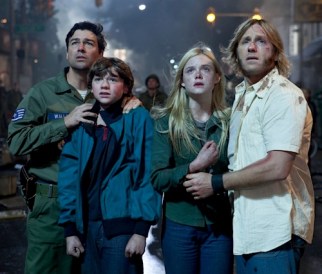 In some respects, the kids’ short film (which plays during the end credits) encapsulates the whole movie: a semi-thought-through SF/F plot, a tacked on emotional arc, the apexes of both tied together in the climax, and a couple of sometimes-shoehorned effects set pieces along the way. Yet for all that, it does enough right that I’d quite like to see Abrams attempt more work along these lines.
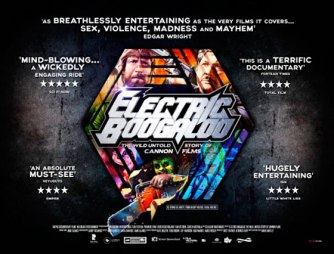 The director of
  (unless you’re a Cannon aficionado, perhaps), but they were there, they lived it, and they have first-rate insights into the craziness. Craziness like the story of the competing Lambada movies, which ended up being released on the exact same day. I mean, you’d think one Lambada movie would be more than enough, but two, competing… If you wrote it in a fiction, the audience would laugh at the ridiculous contrivance of it, but it happened. Elsewhere, there’s a chunk where they just slag off Michael Winner for a bit (awesome), and director Franco Zeffirelli describes them as the best producers he ever worked with and the only ones he ever liked. Like I say, you couldn’t make it up.
 (and if it’s told effectively, rather than the issue of if its telling is effective) is all that really matters.
 When a warrior family are betrayed and killed, the surviving siblings seek vengeance.
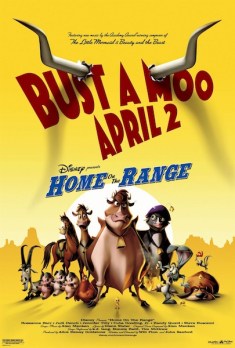 I have many goals within my film viewing, quite apart from trying to watch 100 films every year. Some I’ve completed (the Rathbone Holmes series), others are almost done (every Spielberg film), others not so much (every Hitchcock film), and others I’ve barely begun (the Zatoichi series). One of these goals is to watch every Disney Animated Classic, their canon of feature animations that currently sits at 55 titles (with another scheduled for later this year, in the US at least). I did a pretty good job on the real classics while growing up, and have since filled the gaps of the modern classics, so I’m left ploughing through their lesser periods: the content they pumped out in the war-affected ’40s, and the post-Renaissance pre-Lasseter clusterfrack that was their ’00s produce. My best hope is to uncover a hidden gem while I mop up this dross.
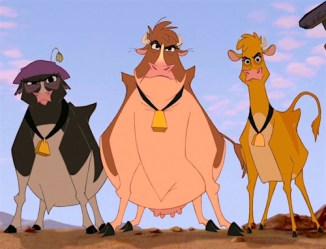 but only because it has a moderately amusing reveal in the middle of it. The animation is unremarkable, besides some terrible CG intrusions. It seems to be under the impression that “hog” is a word for “cow”, based on the number of puns. A couple of gags do land — I even laughed out loud once, though I’ve forgotten why — but the majority is resolutely uninspired.
 100Films.co.uk