2015 #181
Peyton Reed | 117 mins | Blu-ray | 1.85:1 | USA / English | 12 / PG-13
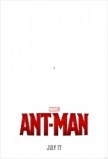
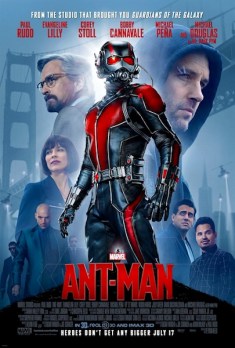 The final film in ‘Phase Two’ of the Marvel Cinematic Universe is perhaps the most fun Marvel movie since Iron Man kicked off the whole shebang seven years ago.
It’s the story of a burglar, Scott Lang (Paul “he’ll always be Mike from Friends to me” Rudd), who is enlisted by ageing genius Hank Pym (Michael Douglas) to pilfer something from Pym’s old company, now controlled by his former protégé and villain-in-waiting Darren Cross (Corey Stoll). Pym discovered/created something called the Pym Particle, which changes the distance between atoms and allows objects and people to shrink or increase in size. He hid his dangerous technology from the world, but now Cross has developed his own version and is seeking to sell a weaponised version to the highest bidder — which naturally includes some very nefarious characters.
Marvel are currently fond of mixing “superhero” with “another genre” to produce their movies — which makes sense, given the standard two-or-three superhero narratives were already becoming played out by the time Iron Man came along, never mind in the raft of movies Marvel Studios have released since. Here, “superhero” is mixed with “heist movie”; more specifically, “heist comedy”. It’s superheroes by way of Ocean’s Eleven, basically. In the key position, you’ve got Lang in the Ant-Man suit, able to shrink, infiltrate places, and control ants to help him; but then he’s got a whole support team: Pym planning and overseeing; Pym’s daughter, Hope (Evangeline Lilly), the inside woman; and a gaggle of Lang’s criminal friends (Michael Peña, David Dastmalchian, Tip ‘T.I.’ Harris), brought in to help them hack security ‘n’ that.
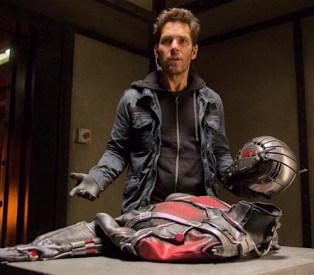 Nonetheless, some have criticised the film for not being especially original. I mean, originality’s good ‘n’ all, but c’mon, what do you expect when you sit down to a superhero movie from the primary purveyor of superhero movies? Ant-Man may blend elements from a few other genres into the superhero mix, but, yeah, it’s a superhero movie that, at times, plays like a superhero movie — just like everything else Marvel Studios has produced (with the possible exception of Guardians of the Galaxy). If that’s not your thing, fine, but there’s nothing so spectacularly rote or generic about Ant-Man when compared to the rest of Marvel’s output that it deserves to be singled out. In fact, if anything, it has a higher dose of originality than its peers. And it doesn’t climax with a giant flying thing crashing to Earth, the first Marvel movie you can say that about for years.
Where the film really succeeds, however, is in being — as noted — fun. Sometimes the structure is a little wonky, sometimes the dialogue is a little off, sometimes it’s a little heavy on the exposition, sometimes this and sometimes that, but it never stops moving at a decent clip, is never too far away from a good laugh, and offers some strong action sequences too. The very nature of the titular heroes’ powers offers us something new. Okay, there have been plenty of shrinking movies before, but not like his. Macro photography and CGI have been used to great effect to bring us into his world, and the fact he can shrink and grow at will adds a real kick to fight scenes.
 It remains tough to talk about Ant-Man without referencing The Edgar Wright Situation. I mean, you could ignore it, but then it becomes the elephant in the room. If you somehow missed it: writer-director Edgar Wright pitched Ant-Man to Marvel as a movie before Marvel Studios even existed, back in 2003, and had been developing it on and off ever since. The ideas he brought to the table — an action-adventure-comedy style, being a special effects extravaganza but with a lighthearted tone — influenced how the studio approached Iron Man and, consequently, the whole MCU. Nonetheless, Ant-Man wound up positioned as the 12th film in the studio’s slate, finally going into production after a decade of prep. Wright had a script almost finalised, he’d cast the film, a release date was set… and then he left due to “creative differences”. And the internet was on his side because Edgar Wright has made Spaced and Shaun of the Dead and Hot Fuzz and Marvel are a studio and studios are always wrong.
The full extent of what these creative differences were hasn’t emerged yet, because it wasn’t that long ago (inevitably, they will one day), but it must’ve been pretty major to walk away from a project you’d been working on for so long and were so close to finally realising. Some reports say Wright wanted the film to be completely standalone, with absolutely no ties to the wider Marvel universe. I kind of hope there’s more to it than that, because while the final version of Ant-Man isn’t completely standalone, it’s one of Marvel’s less connected efforts. Okay, it references S.H.I.E.L.D., Hydra, and the Avengers, and there are cameo appearances by characters from other parts of the universe (including Lang having to fight an Avenger), but its story doesn’t feed directly from a previous MCU film, nor does it make setting up another one an inherent part of the plot. In short, it’s nicely connected — it’s definitely part of the universe — but you don’t need to know a great deal to enjoy it on its own.
 After Wright left, the screenplay was rewritten by a host of scribes (far more than the two extra writers ultimately credited). Other things they’re responsible for include bulking up the supporting characters, especially Hope, which works pretty well, and Lang’s friend Luis (Michael Peña), which we should all be thankful for: Peña’s Luis is one of the best things in the movie, an enthusiastic motormouth who’s consistently entertaining whenever he’s on screen. He’s the standout from an ensemble that is generally strong, with Rudd proving a likeable lead and Douglas committing to the material in a way you wouldn’t necessarily expect an older actor to with ‘just a comic book movie’.
Would Edgar Wright’s Ant-Man have been better than Peyton Reed’s? We’ll never know. Well, one day we’ll have a good guess, because one day what changed will all come out. Wright still has a story and co-writer credit, so obviously a lot of his material survived. Nonetheless, the movie we’ve ended up with doesn’t feel like a compromised, homogenised, studio-controlled disaster. Chances are Wright could’ve brought greater visual and storytelling flair to proceedings, but Reed doesn’t do a bad job, especially when it comes to sequences in miniature. The final fight takes place on a children’s playset, doesn’t involve giant things falling epically out of the sky (is it the only Phase Two film to avoid that trope?), and is one of the best climaxes in the entire Marvel canon. Sometimes less really is more. Especially when “less” includes Thomas the Tank Engine. Whoever thought you’d see Thomas the Tank Engine in a Marvel movie?
I hope Ant-Man will be an important touchstone in what Marvel Studios do going forward. It proves smaller-scale adventures can work — not in the sense that it’s about a hero who shrinks to a few centimetres tall, but in that it’s a story focused on a couple of characters trying to steal something from a building and defeat one guy, not about saving an entire city or an entire planet. 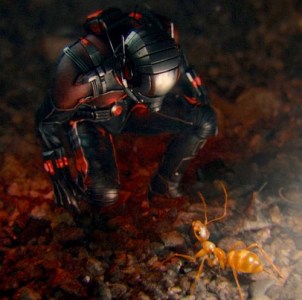 That doesn’t mean it’s a story that doesn’t have stakes, they’re just different stakes. It’s a refreshing change of pace at this point. It’s also pretty much standalone, with nice nods to the shared universe but without being dependent on other films (either before or to come) for its story. Guardians of the Galaxy did that too, but how many other recent Marvel movies is it true of? Even the highly-praised Winter Soldier is a long, long way from being immune to that fault.
Still, I doubt many people are going to call Ant-Man their favourite Marvel movie, although I think it might be the most pure fun I’ve had watching an MCU film since… well, ever. And I like fun.
Ant-Man is available on DVD and Blu-ray in the UK now, and in the US from next week.
It placed 20th on my list of The 20 Best Films I Saw For the First Time in 2015, which can be read in full here.
This review is part of the 100 Films Advent Calendar 2015. Read more here.

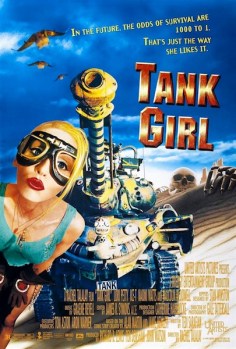 Critically derided, this anarchic adaptation of the rebellious comic has become a cult fave. You can see why: a ramshackle plot allows for plenty of outré zaniness, including a big musical number to a punky Cole Porter cover, and surely no one predicted the bizarre truth about the Rippers!
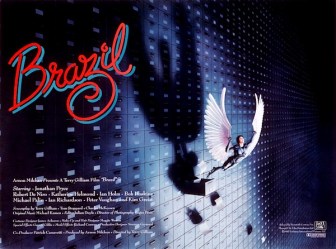 I normally aim for a “critical” (for want of a better word) rather than “bloggy” (for want of a better word) tone in my reviews, just because I do (that’s in no way a criticism of others, etc). Here is where I fail as a film writer in that sense, though, because I’m not even sure how I’m meant to review Terry Gilliam’s dystopian sci-fi satire Brazil, a film as famed for its storied release history as for the movie itself.
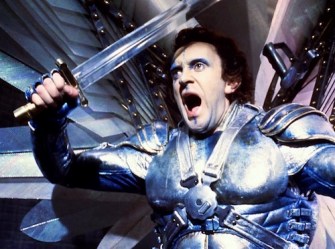 I’m sure there’s a thorough list of differences somewhere, but one good anecdote from Gilliam’s audio commentary tells how the ‘morning after’ scene was cut from the European release so last-minute that it was literally physically removed from the premiere print. (Gilliam regretted it immediately and it was restored for the video release.)
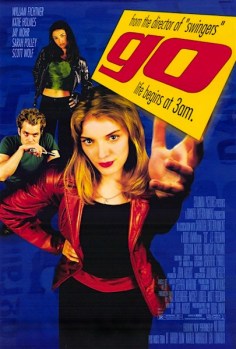 When people call 1999’s
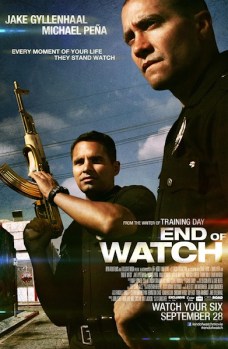 I don’t think anyone paid writer-turned-writer/director David Ayer much heed when he was one of a pack of people penning historically-inaccurate submarine thriller
  it would wash as a stylistic choice; because he attempts a diegetic explanation for why it’s shot this way, but then breaks the rules of that explanation instantly (and continues to do so, with increasing frequency), it turns a valid stylistic choice into an irritating, ill-thought-out distraction. Plus: you want to be innovative and shoot an L.A. cop movie on digital video? Too late! Michael Mann already got there… in 2006.
 Although there are things to commend End of Watch — in particular the performances, and even a couple of tense sequences when the filming style actually pays off — I can’t get on board with it being a best-of-year-type movie. Even if it could’ve been more — and, in spite of that varied CV, isn’t the best thing Ayer’s done (I very much liked his next movie, Brad Pitt WW2 tank movie
  Astronauts head to a Saturnian moon to examine its water in this scientifically-accurate drama.
 Magnificently strange film about a man (Burt Lancaster) who decides to ‘swim’ home through his friends’ pools. It becomes clear they know something he’s forgotten…
 The only feature-length work of director Jean Vigo (though
  The romance is told in a way many describe as “poetic”, which seems to me to be something of a euphemism for “obliquely”. There are certainly poetic shots or sequences, like Jean’s dive where he sees a vision of Juliette, but the actual narrative is more social realist — low-key, and not spelt out or expounded upon for our benefit.
 #173 Horns (2013)
 #179a
#179a 






















 Favourite Film of the Month
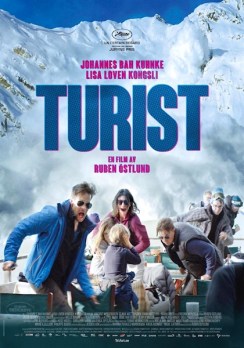 During a near-miss on a skiing holiday, a dad abandons his wife and kids. Cue days of passive-aggressive familial angst.
 100Films.co.uk