
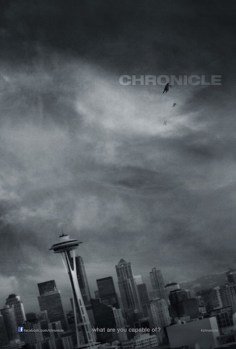
 The birth of the “found footage” sub-genre and the resurgence of the superhero movie began around the same time, the former with The Blair Witch Project in 1999 and the latter with X-Men in 2000. They both arguably came of age towards the end of the noughties, with the box office success of Paranormal Activity in 2009 and the start of the Marvel Cinematic Universe in 2008’s Iron Man. It was inevitable, really, that someone would eventually combine these coincidentally-linked post-millennial cinematic obsessions, and that someone was director Josh Trank, who became one of (if not the) youngest directors to open a movie in the #1 spot at the US box office with this, his debut feature.
The obvious route for a found-footage superhero movie is surely in the Kick-Ass/Super mould: a wannabe dressing up in a funny costume and setting out to fight crime, in the real world. Trank and screenwriter Max Landis have grander ambitions, however, setting their sights on characters who develop Superman-esque powers. It means the movie isn’t as low-budget and independently-produced as you might have expected (although clearly not high-budget, it’s full of special effects, and was released by 20th Century Fox), but it does retain a more subversive element — for one, that great responsibility doesn’t necessarily follow great power.
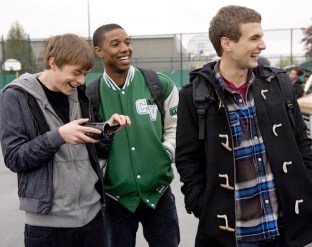 The story sees high school senior Andrew (Dane DeHaan) decide to start filming everything in his life, thanks to his borderline-abusive alcoholic father (Michael Kelly) and terminally ill mother (Bo Petersen). The same day (what a coincidence!), his cousin and only friend, Matt (Alex Russell), takes him to a party where, along with most-popular-kid-in-school Steve (Michael B. Jordan), they discover a hole in the woods with mysteries inside… Days later, all three begin to develop telekinetic powers, which they learn they can levy in various incredible ways — those ways being super, but largely without the heroic…
Which, in case you misread me, is not to say the boys become supervillains. Rather, they do what a lot of teenage lads would do: throw balls at each other with their mind; eat Pringles without having to pick up the can; use a leaf blower on a girl’s skirt; and so on. Using the found-footage style naturally, the friends experiment with their abilities, gradually increasing them, and bonding in the process. The story isn’t short of action or incident (some might disagree), but is equally character-focused, presenting individuals who are more rounded and believable people than your average superhero characters.
 This is even more pronounced in the extended version (“extended director’s cut” in the US), which includes over five minutes of extra bits that, in my opinion, make it a superior edit. Some are minor in impact, true, but there are a couple of short sequences with Andrew and Steve that deepen their relationship further, which enriches events at the end of act two. There’s also a moment that subtly prefigures the climax, and an extra bit in said finale that seems nigh-on essential to me. Considering the film still runs (just under) 90 minutes even with these additions, it’s difficult to see why they were cut in the first place. “Pace” is usually the rational for that, but if this is indeed a Director’s Cut then clearly Trank didn’t think they were an issue; equally, I can’t see why Fox would have objected. Still, they’re here to enjoy on Blu-ray…. though not on DVD… and I guess they’re not in TV screenings… Tsk.
Some accuse the film of being clichéd and predictable, which I don’t hold much truck with. It’s not twist-filled, but I felt the characters and their interactions grew naturally — if you can see where it’s going, it’s because it’s well-constructed, not because it’s how every movie does it. The time invested in growing our relationship with all three lead characters pays off increasingly as the movie rolls on, too, so that the climax is about more than just spectacle.
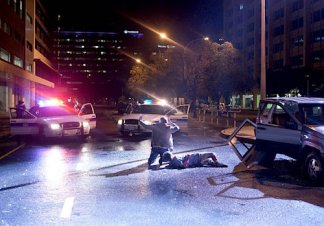 That said, spectacle it has. You wouldn’t expect that from a $12 million found-footage movie, but an epic duel through the streets of Seattle is one of the strongest climaxes to any superhero movie I can remember. It’s kind of like Man of Steel’s, only released a year earlier and executed a thousand times better (the lack of mass destruction and associated innocent-bystander massacre is a bonus). The finale is undoubtedly the high point of the film’s visual extravagance, but numerous other sections are striking too, not least thanks to Andrew’s mastery of controlling the camera with his mind, letting it float gently around as he films himself and others.
The qualities of the climax could be seen as a microcosm for the entire film, actually: a stylistic gimmick that works so well you forget many people consider it a gimmick; a scale grander than you might expect from both that gimmick and the movie’s budget; a largely-innovative treatment of a much-trod genre; and, similarly, characters who are multi-dimensional and better-realsied than your average, thanks both to Landis’ writing and a team of top-notch performances, particularly from DeHaan and Jordan — there’s a reason they’ve both gone on to bigger things.
 In the hands of many a desperate-to-get-noticed filmmaker, a found-footage superhero movie would likely have been a straight-to-DVD affair that could at best be described as “mediocre”. In Chronicle, however, Trank and co have crafted one of the best movies produced in either sub-genre. Most of the people involved — as well as the film they’ve all come from — can be classed as “one to watch”.

The network TV premiere of Chronicle is on Channel 4 tonight at 10pm.
It placed 6th on my list of The Ten Best Films I Saw For the First Time in 2014, which can be read in full here.
* Right: Chronicle was released in UK cinemas as a 12A, but with a couple of cuts for violence. On DVD/Blu-ray, it’s an uncut 15. Meanwhile, in the US, the theatrical version is PG-13, while the extended cut is technically Unrated. However, most of the additions are character scenes, so it’s surely still a PG-13. ^
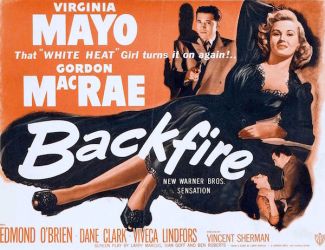 Before he was the romantic male lead in musicals like
  Besides, even if the film seems to forgo the usual gritty noir trappings for a pleasant “English murder mystery”-type tale at first, it actually has its fair share of dark elements and noir-ish features, which only increase as it goes on: secretive gangsters, nightclub singers, revenge shootings… Then there’s the photography which, again, transitions from a fairly ‘regular’ (for want of a better word) style early on, to a world of rain-slicked streets and high-contrast lighting.
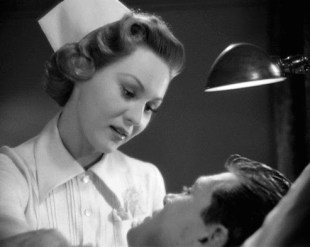 It’s in the latter’s case that the writing gets a chance to shine, too: the chief’s flashback is littered with snappy dialogue that feels kinda like he’s telling you the story himself, not just a matter-of-fact “here’s what happened earlier” objective account. Other flashbacks retain a degree of subjectivity — we only see events the characters could have witnessed, and in some cases the way they witnessed them (like the cleaning lady who only sees customers’ feet, before spying through a keyhole in a shot complete with keyhole matte) — but there’s an idea there, briefly glimpsed in that detective’s flashback, that would’ve made for an even more interesting film.
 So states Geoffrey O’Brien in his essay “Dark Magic” (included in the booklet for
 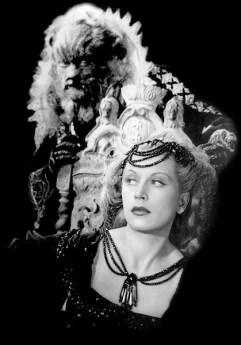 here the characters’ relationships are more complex and ambiguous, particularly at the climax. It isn’t a simple “see the true beauty behind the ugly exterior” moral fable; indeed, if anything, Marais’ Beast is more beautiful than the man he becomes.
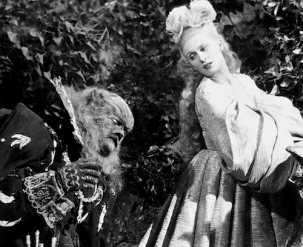 That final idea, of the erotic or sexual in the film, seems a favourite theme for critics: O’Brien reckons “the magic is sexual throughout — a fantastic… sex magic”, and I think we’ll skip Warner’s lengthy discussion of the feelings the film elicits in her. How prevalent such undercurrents are is surely in the eye of the beholder — O’Brien notes that “it is so chaste that no censor could have ever assailed it”, and I suspect many a viewer would feel the same. That said, the soft-lensed scene in which the Beast gently laps water from Belle’s delicately cupped hands may make viewers with a particularly-disposed mind think of certain other acts.
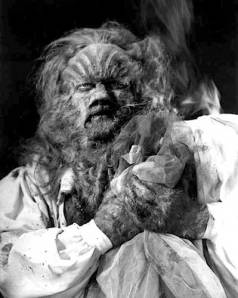 Cocteau was trying to move away from a wishy-washy kind of fantasy — indeed, he says as much in the press book for the film’s US premiere (a piece entitled “Once Upon a Time” and also included in Criterion’s booklet): “To fairyland, as people usually see it, I would bring a kind of realism to banish the vague and misty nonsense now so completely outworn.” In these respects you could probably draw a line from Cocteau to something like
 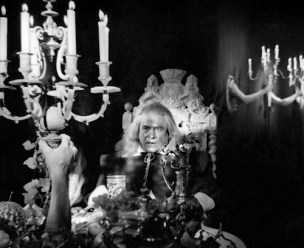 It’s in the Beast’s castle that the most enduring images of the film are played out, most famous among them being Belle’s father’s arrival, with the candles igniting themselves and the hands pointing the way, and Belle’s own arrival, a slow-motion run with billowing dress and curtains — if you haven’t seen the original, you’ve surely seen an advert inspired by it. For all the groundedness Cocteau and co may be bringing to the fantastical, it’s still a strange realm; one rendered with loving beauty in its design and photography, but with an unsettling effect. Right on the money, then.
 Good moral message, but isn’t the “superior” Beast the same fella as Prince Charming? The way a felled Avenant is transformed into the Beast at the same time as Charming is unveiled as a more-perfect duplicate of Avenant (it’s Marais in all three roles, of course) suggests some kind of parallel should be drawn. Warner wonders, “Has the Beast taken on [Avenant’s] appearance because [Belle] admitted to him that she was fond of Avenant?” Could be, but isn’t that a bit simple? She has another theory: “does Cocteau want to suggest that a ne’er-do-well like Avenant can also be transformed by love?” Could it be Avenant is about to get a lesson in how to be a better person, as Charming has already endured?
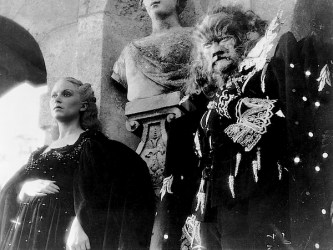 There’s a cheery message to end on. But then, this is “a fairytale for grownups” — a quote from Warner, but, to an extent, it would seem Cocteau agreed (by implication, with his statement at the start of the film urging the audience to embrace child-like acceptance of the story they are about to see) — and the resolutions of grownup stories are rarely “happy ever after”.
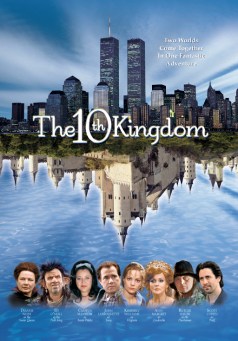 Created by British screenwriter Simon Moore (writer of
 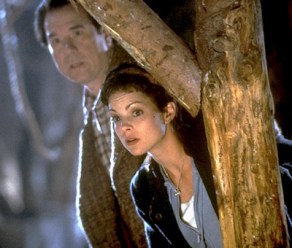 Anyway, the Nine Kingdoms is the place all our fairytales come from — the part of the narrative set there takes place “almost 200 years” after the “Golden Age”, when the events we know from stories actually happened. We’re led into this world by Virginia (Kimberly Williams) and her dad, Tony (John Larroquette), after indolent monarch-to-be Prince Wendell (Daniel Lapaine) flees to our world while escaping the Evil Queen (Dianne Wiest) and winds up taking the two New Yorkers back to his world. Along with Wolf (Scott Cohen), a chap with animalistic tendencies, the quartet try to stop the Evil Queen’s evil machinations.
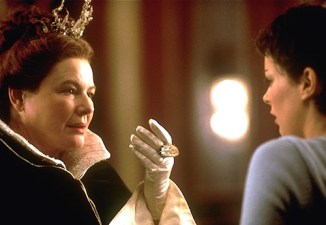 It also means the way it’s been edited into one long movie on DVD feels quite natural: it’s one long story with arbitrary breaks, not a series of finite episodes. (If you’re thinking, “of course it’s one story, it’s a miniseries”, plenty of single-narrative series and miniseries still function as discrete episodes that build to a whole.)
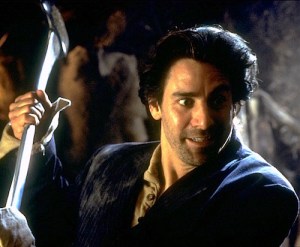 This gives the whole thing a heightened comedy tone, emphasised by many of the performances. A gaggle of troll siblings are irritatingly over-played, but Cohen’s meat-obsessed Wolf is a hammy delight (pun very much intended). The entertainment value means we quickly warm to the characters, so that when more perilous aspects of their quest do come into play later on, we care what happens. Plus, like most of the original fairytales (as opposed to Disney-style sanitised re-tellings), there’s the odd darker undercurrent. For instance, you may think the story of Snow White ends with a kiss and “happily ever after”, but here we’re told how the stepmother who poisoned Snow White was made to wear fire-heated iron shoes and ‘dance’ at the wedding until her feet were burnt raw, before being thrown out into the snow. Very dark and grim (and possibly from the original tale, for all I know).
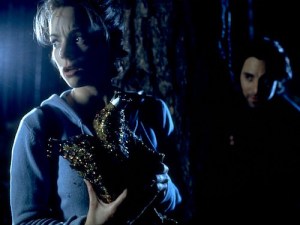 Little details in this vein abound: an apple tree has grown by Snow White’s cottage (don’t eat those apples!); the site of her glass coffin is now a tourist attraction; if you break a mirror, you genuinely get seven years’ bad luck… There’s also a pair of golden shoes that can turn you invisible, but the more you wear them the more you desire to use them all the time — what a precious idea (wink wink nudge nudge). These subversions also manifest in a strain of pleasant practicality; for instance, the abundant magic mirrors aren’t “just there”, but instead have been manufactured by dwarves. It lends the feel of a fully-conceived and rule-bound world, rather than an “anything can happen”, “just because” environment.
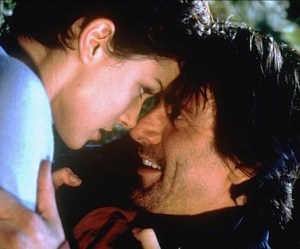 a world away from being locked in a castle until you change your mind. If this sounds like criticism, it isn’t. I’m not arguing the love story element of the series is unsuccessful — I’m sure it engages plenty of fans as the series’ primary attraction, even — but, on reflection, I’m not sure reading it as a Beauty and the Beast variation is actually that illuminating.
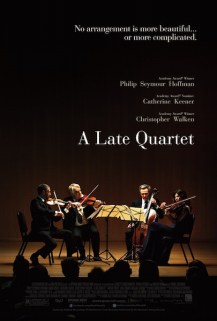 Set in the rarefied world of classical music performance, A Late Quartet charts the fallout among the members of a highly-acclaimed New York string quartet when their leader (Christopher Walken) announces his impending retirement.
 Where it does make a mistake is in divorcing Walken from the rest of the group for so much of the time. He ends up going to Parkinson’s groups and doing exercises as if this is some kind of “Issue of the Week” TV movie, while everyone else gets on with the plot. Some of the best bits belong to him though, like the story cribbed from a real musician’s autobiography.
 Based on the cult novel by Cracked.com editor David Wong, John Dies at the End is a bizarre horror-fantasy that defies easy explanation or summary.
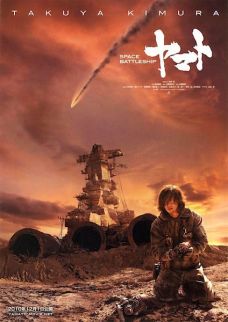 A live-action adaptation of the popular, influential and long-lasting anime franchise, known in the US as Star Blazers (here’s
 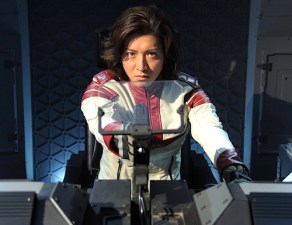 But this isn’t a mega-budget production (
 October’s films in full
 #103 Dead Poets Society (1989)














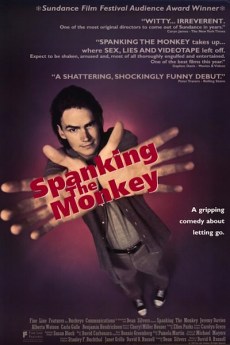 The debut of writer-director David O. Russell sees college student Raymond forced by his controlling father to turn down an exciting summer internship to care for his invalided mother.
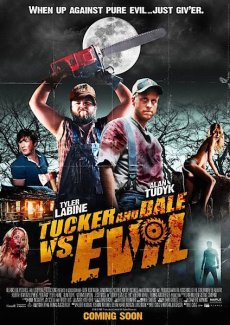 Riffing on the “evil hillbillies” horror sub-genre, a pair of simple country folk on a fishin’ holiday encounter a gang of college kids who, through a series of unfortunate coincidences, mistake them for murderous psychos — and decide to fight back.
 100Films.co.uk