
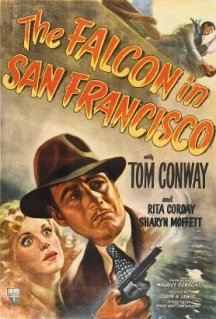
 The Falcon is often dragged into adventures by beautiful women he can’t resist, but here it’s a female of a different kind — a little girl. After her nanny is murdered on the train to San Francisco, the Falcon offers to take her safely home… only to get arrested for his troubles, and then be picked up by a mysterious woman and her heavies and given a good beating. What the blazes?!
But this is the Falcon — he can’t leave well enough alone, and so soon finds himself thoroughly immersed in one of the series’ more densely and complicatedly plotted instalments. There’s that little girl, who is being kept prisoner with her older sister… or are they? There’s their evil butler… or is he? There’s the mysterious woman and her slap-happy henchman, and the man working against her, who’s also out to get the Falcon… or is he? The murdered nanny’s husband works for a shipping company and has just come in to port… or has he? There’s the shipping company’s manager, just an innocent bystander… or is he?
In short, barely anything is as it seems, the Falcon is in the dark about what’s going on for most of the film, and so are we… but of course he figures it out, then proceeds to leave us in the dark… until it’s all explained in a speedy series of double-crosses in amongst some heavy exposition during the final scene. Phew!
 At least there’s some comic relief thanks to the return of the Falcon’s sidekick Goldie, who’s been absent since The Falcon Strikes Back (six films ago). He’s played by Edward S. Brophy, who was previously Detective Bates in the first Falcon film. After all that time away, Goldie will back in the next film, played by Vince Barnett; and then again in the one after that… played by Brophy. Ah, ’40s B-movies.
I’m not sure whether to give in San Francisco points for its intricate storyline or admonish it for being so darn confusing. At least it makes for a different kind of mystery from the usual whodunnit styling of the series recently; and even if the destination is frequently unclear, there’s fun to be had on the journey.

* As with the vast majority of the Falcon series, The Falcon in San Francisco hasn’t been passed by the BBFC since its original release. Nonetheless, it’s available on DVD, rated PG. ^
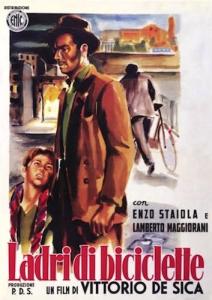 The victor of Sight & Sound’s inaugural “greatest film” poll (though it’s slipped down the rankings ever since), this is the simple story of a man hunting for his stolen bicycle, which is vital for his job, hard-won in a time of unemployment and poverty.
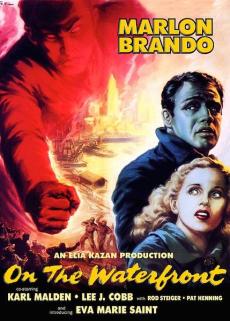 So much more than one famous scene, On the Waterfront is a movie about a magic jacket, which causes anyone who owns it to stand up for what’s morally right even in the face of oppression, but also to suffer badly when they do.
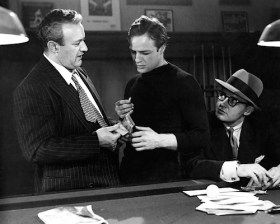 The only potential downside to this comes if you dig behind the scenes. Kazan was one of those who testified before the House Committee on Un-American Activities during its 1940s and ’50s witchhunt for Communists in Hollywood, naming eight men who were later blacklisted. If you consider the film to be Kazan’s answer to critics of his actions (as it “widely” is, according to Wikipedia), then presumably Brando is meant to be Kazan, calling out those who are doing ill to good hardworking Americans. But many a great film has been made with poor motive — just because Kazan thinks what Brando’s character does and what he did are the same thing doesn’t mean we have to. Even then, the issue of Kazan’s testimony is not so straightforward: a former Communist himself, he faced the end of his career if he didn’t testify, and the names he gave up were already known to the committee. The controversy dogged him for the rest of his career, though: when he received an honorary Oscar in 1999, several notable audience members refused to applaud.
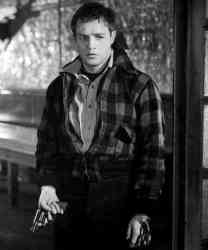 While subtext is undoubtedly a meaningful thing, and using one situation to comment on another is a tried and true way of presenting an argument or criticism, I’m not a proponent of offhandedly dismissing work(s) just because we don’t agree with the actions or beliefs of the person who made it. On the Waterfront is a powerful film, exemplarily made by skilled craftsmen. Whatever Kazan was trying to atone for with its message about standing up to bullies in defence of what’s right, the sentiment is true. And you don’t need a magic coat to do it either.
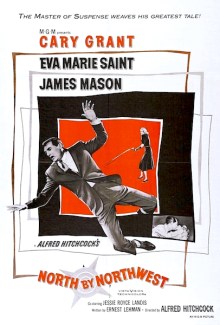 Alfred Hitchcock is famous for a good many movies — I wager most people would jump to
 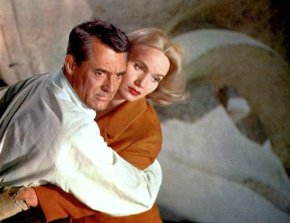 Grant is as wonderful as ever, a perfect ‘everyman’ to guide us through the crazy turns of events, but also finding the appropriate level of humorous edge where it exists. Eva Marie Saint is a textbook ‘Hitchcock Blonde’, attractive but duplicitous — women, eh? James Mason makes for an excellent English-accented villain — today it may be a terrible cliché to use Brits as villains in Hollywood movies, but we’re so damn good at it. That said, Martin Landau makes for a deliciously creepy henchman, so there’s no monopoly. There’s also Leo G. Carroll, who to me will always be best known from
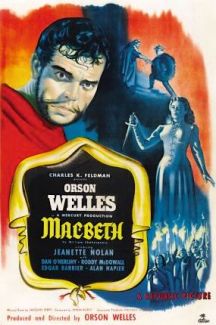 Twelve years on from his innovative, acclaimed, career-bolstering ‘
 The low budget and quick schedule affect the film across the board, for good and ill. There’s much dramatic staging, with grand sets and doom-laden lighting. The shadow-drenched cinematography may well be a result of the cheap production, but the resulting effect is marvellous. Indeed, all the camerawork is great. There are some striking long takes, including the majority of the night of the murder occurring in one long unbroken shot. The costumes, on the other hand, look like a ragtag bunch of Past Clothing from the studio’s store… which is because they essentially were.
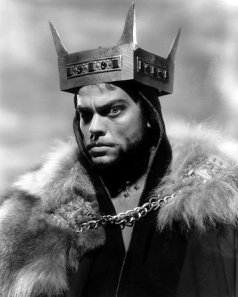 Macbeth himself is hardly in possession of all his faculties at that point, acting like a drunkard; but rather than make the sequence appropriately sinister (it’s in this state that he orders the execution of Banquo and Fleance, for example), it plays up the silliness, which is a shame.

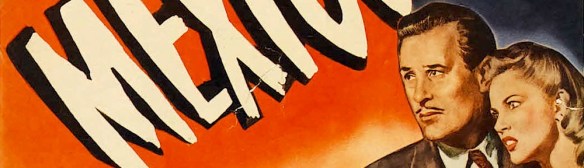

 After leaving his New York base to investigate some
 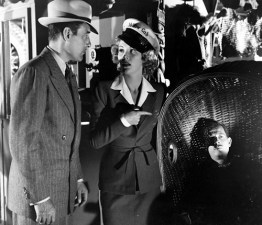 Stand-out sequences include a bit where the police detectives move through a crowd of suspects, all relaxing near the pool on a location shoot, while outlining each one’s possible motivations, essentially to their face. It’s a simple sequence, not exactly high on drama or humour, but there’s a pleasant structural touch to it. Or the finale: the Falcon is, as ever, drawn into the case by a mysterious woman… but by the end he has four of them grouped around him!
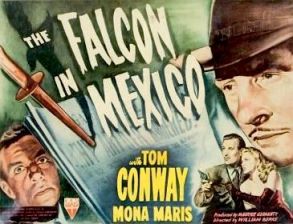 “In our peaceful country, life is very seldom in danger,” states one character halfway through The Falcon in Mexico, just one of many instances that might make you think the film was co-funded by the Mexican tourist board. Oh sure, there’s the usual array of thefts and murders that you’d expect from a Falcon adventure, but they’re mostly committed by Americans. No, the film on the whole is very keen on the place, and the quality of its police, and even ends with a shot of a poster proclaiming “Visit Mexico!”
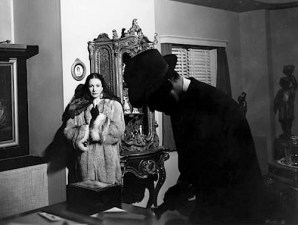 What I did make out was grandly far-fetched — more so than normal, I mean. Considering the tone and style of the series, it’s kind of OK that most of the plot’s explanations are not even close to plausible in the real world. On the bright side, it does make for another genuine mystery (I should stop praising the series for this now, all the films do it).
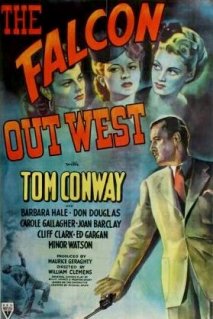 With each passing entry, the Falcon films become less reminiscent of their Saint forebears and more akin to the Poirots and Marples of this world: a gently comical murder mystery, with a finite location and a finite number of suspects, where the ‘game’ of solving the plot is the point.
 100Films.co.uk