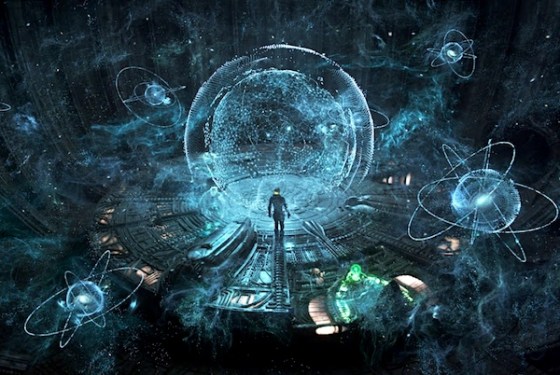

Anna Foerster | 91 mins | Blu-ray (3D) | 2.40:1 | USA / English | 15 / R
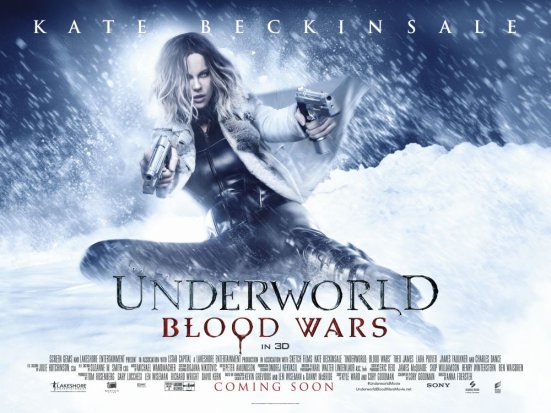
Kate Beckinsale is back in skintight leather for……
I’m sorry, my mind wandered off then. As I was saying: Kate Beckinsale is back in… skintight leather……
Sorry, happened again. As I was saying: Kate Beckinsale is back in… her role as a werewolf-killing vampire for the fifth entry in the Underworld series, which seems to be as undying as its star creatures.
Picking up a little while after the last one left off, the war between vampires and Lycans (aka werewolves) is now back in full swing, and both sides are hunting Selene (Beckinsale). Her own kind want her for previous crimes (see: the first two films), while the Lycans are after her daughter (see: the last film) to give them an advantage in the war. Fearing for their safety, the vampires invite Selene back into the fold to train a new generation of combatants, but there are sneakier plans afoot…
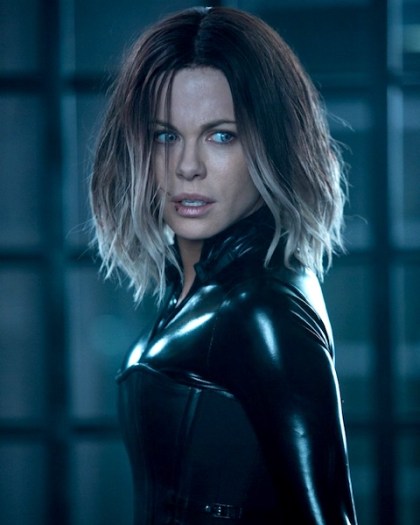
The first Underworld marked out somewhat-new territory when it hit screens in 2003 by taking fantasy/horror elements like vampire covens and werewolves and placing them in a modern urban environment, fighting more with guns than swords and teeth. It certainly wasn’t wholly original — Blade had already done a similar concept and visually it owed a lot to The Matrix — but it was fresh enough. Since then the series has increasingly strayed away from that: the second film brought more traditional-style Eastern European countryside, the third was a medieval prequel, and the fourth was… kind of nothing-y, really.
Now, they seem to have made something of an effort to get back to the ‘world’ of the first film, with extravagant vampire covens and underground Lycan forces, while also growing the series’ mythology by introducing us to new areas of vampiredom, primarily a Nordic coven. This move also brings with it a degree of politicking among the vampires, which is kind of what I imagine a millennia-old secret society would be like. I mean, don’t expect House of Cards — it’s done at the level of the action B-movie this series is — but it’s kinda fun. To achieve this it’s had to ignore an awful lot of the last film — not entirely, by any means, as it’s quite heavily based in some leftover plot points — but other parts have been completely glossed over. This lax attitude to continuity could be irritating, but a counterargument might go that isn’t it better to ditch stuff that isn’t really working in favour of stuff that’s more entertaining?
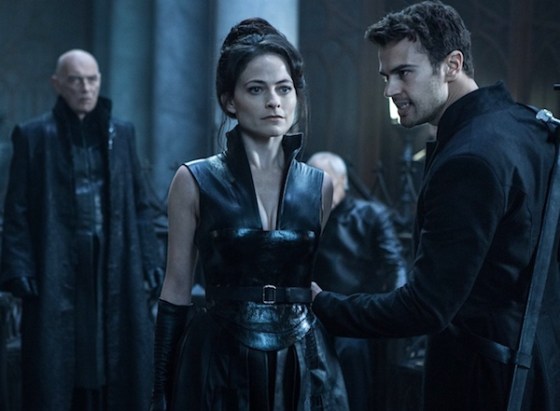
Part of the entertainment comes from characters talking rather than just fighting, and we’re treated to some magnificently cheesy, overworked dialogue. Some of these scenes are edited within an inch of their life, lines almost tripping over each other as they’re rushed on to the screen. By rights that should be a problem, yet in something as fabulously trashy as Underworld it feels more expedient — they’re getting on with it, rather than being ponderous about the mythology, like much fantasy is wont to do. I kinda like it for that. Alternatively, there’s one bit where the main characters seem to express themselves in a quick-cut series of heavy breaths and grunts. It’s either terrible or genius, or possibly both.
This tone is supported by some superbly hammy acting from a cast filled with faces from British TV. Sherlock’s Irene Adler, Lara Pulver, seems to be having a whale of a time as the scheming head of a vampire coven, while giving Miss Beckinsale a run for her money in the kinky outfit department. She’s accompanied by Merlin’s Arthur, Bradley James, pouting around as her frequently-insulted boy toy. Tobias Menzies (take your pick of what you consider him best-known for) does his best as the Lycan’s cunning new leader, who’s most threatening in his CGI-powered transformed state. And Charles Dance is back, exuding pure class as always, completely convincing you that he believes in all the high-fantasy drivel he has to spout.

Similarly, we all know Kate Beckinsale is better than this — and if you’d forgotten, Love & Friendship should’ve reasserted it. Even here she’s called on to be more than just a shapely pair of buttocks, getting to inject Selene with some rare emotion on several occasions. She also once again kicks ass left, right, and centre. The film’s action on the whole is fairly entertaining. There’s little impressive choreography or particularly original combat concepts, but it passes muster. Even Charles Dance gets to do some swashbuckling (as he terms it in the making-of), which is only brief but also as awesome as it sounds. Another part amusingly sees two bulletproof adversaries walk slowly towards one another while emptying their guns into each other. It’s, again, simultaneously close to being both terrible and genius.
Despite being renowned as a visually gloomy series, I thought it looked pretty nice in 3D — better than Awakening did, at any rate. Awakening was genuinely shot in 3D, whereas (based on what I could see in behind-the-scenes footage from the special features) Blood Wars appears to have been post-converted. It shows how far that technology has come that even a modestly budgeted movie like this (just $35 million) can afford post-conversion that often looks very good indeed.
The only major disappointment I had with the film was that, thanks to it being in a rush every time it had some plot to get through, parts of it don’t quite make sense. The ending, in particular, where a voiceover monologue mentions a load of stuff we haven’t just seen happen and doesn’t quite flow. Surely they could’ve afforded an extra two minutes to connect the dots? Apparently the ending was designed to both brings things full circle and, perhaps, leave it open for a sixth instalment. Well, I would say it shortchanges the wrapping-up bit — this could be a place to conclude the series, but by not giving that sufficient weight (i.e. by rushing it), it implies a kind of “tune in next time”-ness.

That aside, I actually massively enjoyed Blood Wars; much more than the negative reception led me to expect. Of course, the Underworld films are a fan-only experience at this point — not because of diminishing quality, as most reviews would cite, but because of how much the story is based in events from three of the previous four films. If you’ve watched any of those previous movies and not enjoyed them, it’s not worth catching up for this — it’s fundamentally “more of the same”, just done better than it’s been since the first movie.
These days franchises can revive themselves for new viewers later in their runs — Fast Five being the best Fast & Furious movie is a case in point — but Blood Wars isn’t a Fast Five. However, as someone who would, at this point, I guess, count myself as a fan of the series, Blood Wars delivered.

Underworld: Blood Wars is released on DVD and Blu-ray (in regular, 3D, and UHD flavours) in the UK today.












 This is shaping up to be a top-quality run of Who. You have to go back a good few years to find a similar-length run of consecutive episodes with the consistency this season is boasting. Obviously there are some divided opinions out there (as I’ve noted before, there is literally no pleasing all of Doctor Who fandom), but the consensus seems to be pretty positive.
 The fourth episode, Knock Knock, by
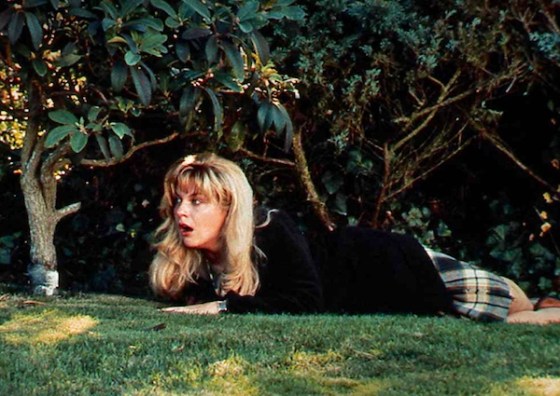
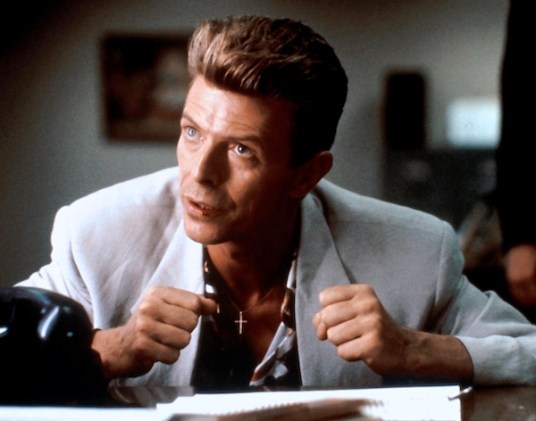
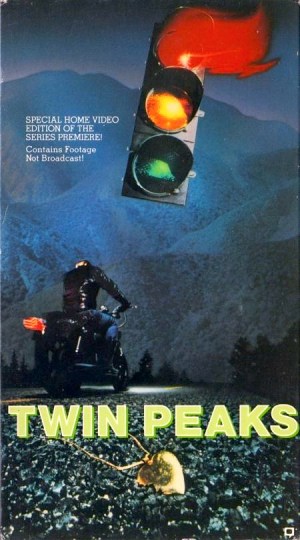
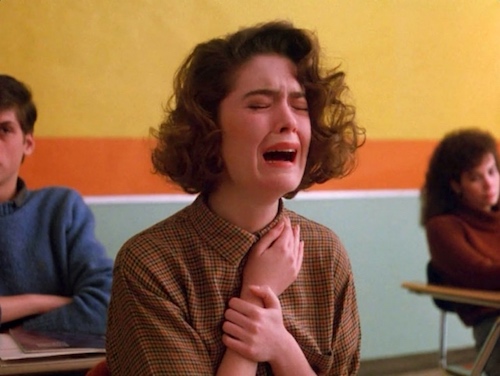
 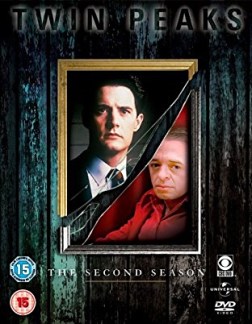 In the wake of the network-enforced resolution of the Laura Palmer storyline, Twin Peaks flounders. The writers clearly took a while to find a new footing, not helped by behind-the-scenes kerfuffles that led them to have to scrap entire prominent storylines (primarily, Kyle MacLachlan vetoed a Cooper-Audrey romance, reportedly because his then-girlfriend Lara Flynn Boyle was jealous of co-star Sherilyn Fenn). Utter phrases like “Super Nadine”, “Ben Horne wins the Civil War”, or (especially) “James Hurley on the road” to a Twin Peaks fan and you’re liable to give them a chill up the spine — and not the good kind.
 A dancing gorilla! A man singing a duet with himself! A rap/yodelling mash-up! A Moldovan trio who could apparently only dance with their right legs! A guy up a stepladder wearing a horse’s head in a slate-walled room covered with chalk-scrawled words that looked like it was straight out of a horror movie asylum! Måns Zelmerlöw again! All accompanied by Graham Norton on fine form with his biting, sassy commentary (“All her family play the fiddle. In fact, her brother will be fiddling with her on stage later.”) Oh Eurovision, never change.