Unknown's avatar

About badblokebob

Aiming to watch at least 100 films in a year. Hence why I called my blog that. http://100films.co.uk

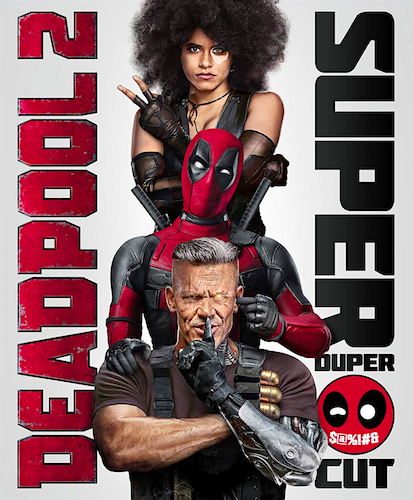
Deadpool 2: Super Duper $@%!#& Cut (2018)

2019 #39a
David Leitch | 134 mins | Blu-ray (UHD) | 2.39:1 | USA / English, Spanish & Cantonese | 15

Deadpool 2: Super Duper $@%!#& Cut

What’s an R-rated comedy without an “unrated” extended home ent version, eh? Well, the first Deadpool didn’t have one, but the sequel certainly does. Branded as the “Super Duper Dollar-At-Percent-Exclamation-Hash-Ampersand Cut”, it runs almost 15 minutes longer than the theatrical cut, with some alternate gags and music cues in the mix as well.

The Blu-ray’s scene selection menu offers an indication of which chapters feature new material, and the answer is “most of them” — those 15 minutes are spread relatively thinly throughout almost the entire film. There are a handful of wholly new scenes (as many as ten, depending how you count it), most of them quite short (one is under nine seconds), a couple of extended fight sequences, and then lots of added lines here and there. Plus, as I said, there’s a smattering of gags that have been changed for alternatives. The only thing that’s really missing is a fourth-wall-breaking gag about extended cuts — it’s uncommon for the Deadpool franchise to drop the ball like that.

As ever, Movie-Censorship.com has a thorough list of additions and changes. Their report reckons all the replacement gags are worse than the originals, but it’s certainly a matter of personal taste: there’s nothing so major lost, nor anything so poor gained, that it’s a crying shame. Personally, I think a fair few of the new and additional lines are at least decent. The added action stuff, on the other hand, is all neat, in particular a major extension to the Japanese bath fight that turns it into a single-shot masterpiece, and a fun bit between Domino and Juggernaut. I also thought the way this cut incorporates Russell’s backstory earlier and more fully worked well, adding weight to his motives and actions later in the movie.

X-Force... kinda

The net effect of the changes and additions is minimal, however. At the very least, I enjoyed it just as much on a second viewing as I did on the first (which is more than I can say about Deadpool 1). With that in mind, I’d probably pick the Super Duper Cut as my preferred version of the film. I liked most of the additions, and didn’t miss enough of the subtractions for it to bother me, so on balance this version wins. Individual opinions will naturally differ (that Movie Censorship guy obviously wasn’t impressed by the new stuff), but for anyone that enjoyed the theatrical version, this is definitely worth a look. That’s more than most people would say about Once Upon a Deadpool, at least.

4 out of 5

The theatrical cut of Deadpool 2 is available on Sky Cinema from today.

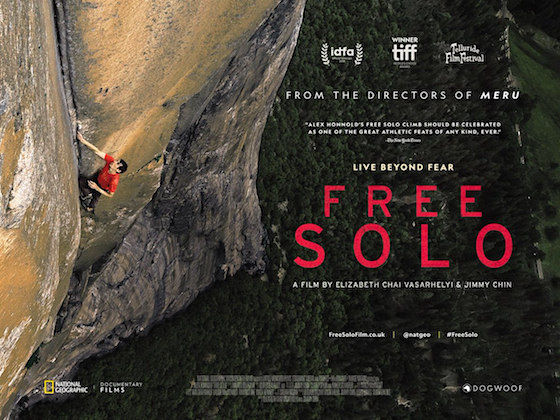
Free Solo (2018)

2019 #36
Jimmy Chin & Elizabeth Chai Vasarhelyi | 100 mins | download (HD) | 1.85:1 | USA / English | 12 / PG-13

Free Solo

Anyone can be happy and cosy. Nothing good happens in the world by being happy and cosy.

So says Alex Honnold, the subject of this documentary, when discussing the different approaches to life of his girlfriend, who he thinks wants to be “happy and cosy”, and himself, who seeks perfection in extreme endeavour. It’s as succinct a summation of his attitude to life as any in this Oscar-winning documentary.

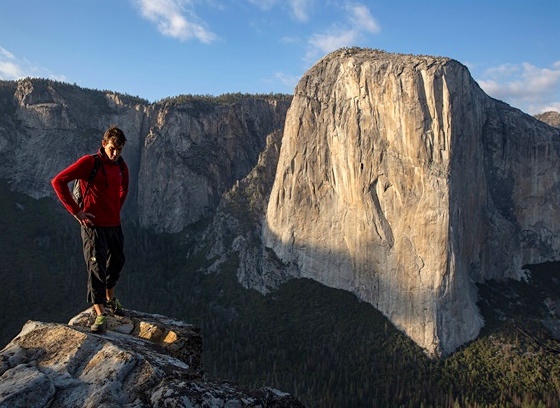
Honnold is a climber with a particular interest in free soloing, which is climbing without ropes or harnesses — think Tom Cruise at the start of M:i-2. His feats have made him famous, as an opening montage demonstrates (though I’d certainly never heard of him before this). The film is ostensibly documenting his attempt to be the first person to free solo up El Capitan in Yosemite National Park, an extraordinary feat due to its height and difficulty.

In fact, the film is as much a profile of Honnold as a person — how he got into this hobby, what motivates and drives him, how his mind works — as it is about the physical task of climbing. I knew there’d be some biographical detail and whatnot, but I thought most of the film would be about the headline climb — it’s what the film is promoted as being about, at least as far as I was aware, and (minor spoilers, if you don’t know that, yes, he managed it (almost two years ago now, so, like I say, not really spoilers)) it took him 3 hours 56 minutes, so it’s not like you’d have to show it in full to make a feature-length film. As it turns out, the climactic climb is afforded just 13 minutes of screen time.

Alex vs El Capitan

That’s not particularly a problem because Honnold is an interesting individual. He’s not just a normal bloke who likes to climb, but has a very particular mindset and focus, which seems to stem from his upbringing and has affected his relationship to society and other people. He’s clearly not incapable of forming friendships, or even romantic relationships, but they don’t affect him in the way they do the rest of us. Whether you find his attitude to life admirable or perverse is down to you. The film arguably celebrates it, which seems to have turned some viewers off, but Honnold’s philosophies (such as they are — he’s not consciously a deep thinker, I don’t think) are contrasted with the views of his friends, who like him but maybe in spite of his monomania.

Aside from what it exposes about Honnold, one of the revelations I gained from the film was how much planning goes into these kind of climbs. Like, spending months or years choosing routes, knowing all the little foot and hand holds, the body positions required, climbing it with ropes to test it out, and so on. It’s not just like, “that looks possible, let’s have a go,” which is I guess what I thought they did. With climbs of this difficulty, it’s rehearsed in the way you might Shakespeare — every little hold (and I do mean little: sometimes surface contact is as small as half a thumb) is pre-decided and memorised, then repeated on the day. The challenge of free soloing (at least at this level) is not “can I manage to find a way up this cliff face?”, it’s “can I scale this near-impossible route without a safety net?” It’s about doing something that’s at the limits of human capability and doing it perfectly, because the difference between 100% and 99% is, literally, death.

Whether you find Honnold’s commitment to it admirable or self-centred and self-aggrandising, it’s a fascinating mentality to have. And, at the very least, the scenery is breathtaking.

4 out of 5

Free Solo is released on DVD and Blu-ray in the UK today.

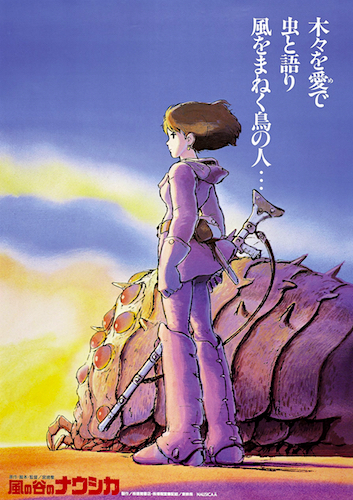
Nausicaä of the Valley of the Wind (1984)

aka Kaze no tani no Naushika

2018 #130
Hayao Miyazaki | 117 mins | Blu-ray | 1.85:1 | Japan / English | PG / PG

Nausicaä of the Valley of the Wind

I watched Princess Mononoke before Nausicaä, and also checked out the Blu-ray’s special features. Those include the film’s original Japanese trailers, which emphasise that it’s “13 years after Nausicaä”, which intrigued me, because director Hayao Miyazaki had made plenty of other films in between. But, having watched the earlier movie, the connection and similarities become clear: Nausicaä features an ecological message, a threat from nature that isn’t, industrial humans (with a female general) being the actual villains, innocent townsfolk that need saving, a princess who’s the only one who understands, and a boy from a different kingdom who helps her. They’re not identical, of course, but there’s a lot of overlap…

The animation is nice without being quite as mindblowingly good as later Ghibli productions — they certainly hit the ground running, but they would improve too. The full-length English dub was created in 2005 (the original US release was drastically cut and rewritten) and boasts a helluva cast: Uma Thurman, Patrick Stewart, Mark Hamill, Edward James Olmos, plus Alison Lohman as the lead and a young Shia LaBeouf. I don’t mean to disparage those actors who primarily ply their trade dubbing anime, but these starry Disney-funded dubs do add a certain extra oomph to the vocals.

Nausicaä was only Miyazaki’s second feature, but already shows a lot of the themes and concerns that would go on to characterise his later movies. I feel like maturity and/or experience make some of those later films better, but this is still a powerful demonstration of his talents.

4 out of 5

Nausicaä of the Valley of the Wind was viewed as part of my Blindspot 2018 project, which you can read more about here.

Princess Mononoke (1997)

aka Mononoke-hime

2018 #73
Hayao Miyazaki | 134 mins | Blu-ray | 1.85:1 | Japan / English | PG / PG-13

Princess Mononoke

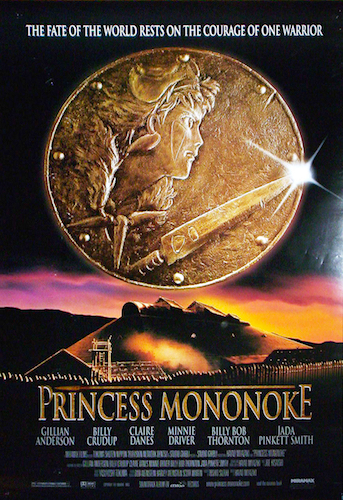
When I was first becoming aware of anime in the late ’90s, Princess Mononoke was one of the titles that everyone seemed to talk about (alongside the likes of Akira, and TV series like Cowboy Bebop and Neon Genesis Evangelion). This may be in part due to it being the first Studio Ghibli film afforded a US release since Nausicaä (that was a bad experience for director Hayao Miyazaki — the film was cut by 25 minutes and the dialogue was drastically changed — hence the moratorium until Miramax persuaded him otherwise. Still, Miyazaki refused to sell the rights until Miramax agreed to make no cuts, which, considering Harvey Weinstein’s scissor-happy reputation, was a wise move). But it’s also because it’s a stunning film in its own right.

Set in medieval Japan, it’s a fantasy epic about the conflict between industrialising humans and the gods of the forest they’re destroying. Our hero is Ashitaka, a young prince who kills a demon but is infected by it. Travelling to find a cure, he encounters the aforementioned war and finds himself torn between the two sides. On one is Lady Eboshi, who razed the forest to produce iron in Irontown (imaginative naming), which has become a refuge for social outcasts. On the side of the gods is San, the titular princess (“mononoke” is not a name but an untranslated word, meaning an angry or vengeful spirit), a human girl raised by wolves who intends to kill Eboshi.

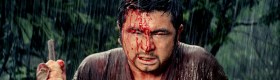
There’s more to it than that, because Miyazaki has imagined a very lyrical and meaningful story, about nature vs industry, and their possible coexistence. The theme isn’t exactly subtle in the film, but that doesn’t mean it isn’t well portrayed. He’s populated the narrative with interesting characters, too. There’s little easy right or wrong here, with those on all sides coming across as nuanced individuals, with complicated relationships. Naturally, it’s beautifully animated, both the natural splendour and the physicality of the world, including some superb action sequences. Some of the violence is exceptionally gory, though — I can’t believe this only got a PG (if it was live action it’d be a 15 easily, if not an 18).

Bloody princess

However, while I really enjoyed the earlier parts, it begins to go on a bit towards the end. The last hour-ish felt like it needed streamlining, with too much running back and forth all over the place. When introducing the film’s Western premiere at TIFF, Miyazaki concluded by saying “I hope you will enjoy all of the ridiculously long 2 hours and 13 minutes,” and I tend to agree with him — you can have too much of a good thing.

I always feel like I should watch anime in its original language with subtitles, and sometimes I do and sometimes I don’t. With Princess Mononoke, I was swayed towards the English dub because it was written by the great Neil Gaiman. There’s also a quality cast including the likes of Billy Crudup, Claire Danes, Minnie Driver, Billy Bob Thornton, Gillian Anderson, and Keith David. It’s definitely superior to an average dub, both in how it’s written (sounding more naturalistic than the “literal translation” feel some have) and performed (more understated and less histrionic than they can be). Out of curiosity I turned the subtitles on at one point, and they were completely different to what was being said in the dub. No wonder fans hate it when a disc only includes “dubtitles”.

Even if I have some reservations about the film’s pace and length, primarily in its second half, it’s a beautifully-produced film throughout, and the good stuff is so good that I can’t but give it full marks.

5 out of 5

Princess Mononoke was meant to be viewed as part of my What Do You Mean You Haven’t Seen…? 2015 project… just three years late.

The Limiting and Emotionally Draining Monthly Review of February 2019

Critique, eh?


#11 Velvet Buzzsaw (2019)
#12 The Guernsey Literary and Potato Peel Pie Society (2018)
#13 First Reformed (2017)
#14 High Flying Bird (2019)
#15 Memories of Murder (2003), aka Salinui chueok
#16 Gods and Monsters (1998)
#17 Hacksaw Ridge (2016)
#18 Leave No Trace (2018)
#19 Hereditary (2018)
#20 Zatoichi and the Fugitives (1968), aka Zatôichi hatashijô
#20a Inception: The Cobol Job (2010)
#21 Fences (2016)
#22 Sherlock Gnomes (2018)
#23 Ocean’s Eight (2018)
#24 Rope (1948)
#25 Roma (2018)
#26 Green Book (2018)
#27 Serenity (2019)
#28 The Predator (2018)
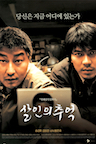
Memories of Murder

Hereditary

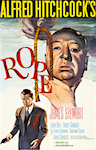
Rope

.


  • So, I watched 18 new feature films in February.
  • That’s below the rolling average of the last 12 months (previously 21.3, now 21.1), but does beat the average for February (previously 12.4, now 12.8), as well as January’s tally of ten.
  • That puts me at #28 overall as the month ends, which is the lowest I’ve been at the end of February for five years, since February 2014 closed out at just #12. On the other hand, 2015 and 2017 were both only on #29 at this point, so there’s nothing to worry about (where I should be to reach my new official target of 120 new films in a year is, of course, #20).
  • This month’s Blindspot film: Alfred Hitchcock’s wannabe-one-shot real-time thriller, Rope.
  • This month’s WDYMYHS film: true-life Korean murder mystery Memories of Murder. It reminded me of Fincher’s Zodiac, which is high praise indeed.
  • From last month’s “failures” I watched Roma, First Reformed, Leave No Trace, and my first 4K Blu-ray (see Rewatchathon).


The 45th Monthly Arbitrary Awards

Favourite Film of the Month
There were several films this month that earned five-star reviews — not always a prerequisite for being a favourite; and, I have to say, in most cases that was thanks to rounding up (I don’t believe a film has to be wholly flawless to earn full marks on a ratings system that’s so inherently vague!) My pick of the bunch is probably Korean police procedural Memories of Murder. As I said above, it reminded me of Zodiac, one of my all-time favourite films.

Least Favourite Film of the Month
Various films disappointed, underwhelmed, or divided me this month, but lowest among them has to be the battiness of Serenity, which also gets bonus negative points for trying to use the same title as the Firefly film.

Most Meme-able Movie of the Month
In my Velvet Buzzsaw review I noted it was ripe for the picking by meme-makers, but I guess because it didn’t go down very well it hasn’t really caught on. Instead, a drama about a troubled priest from the writer of Taxi Driver might not seem like a meme-magnet… but then again, “are you looking at me?” was a meme before memes existed. Anyway, nothing else this month beats this all-purpose line from First Reformed

Well somebody has to do something

Oh, and thanks to the unpopular Oscar results, this gem has taken off too…

Will God forgive us?

Most Self-Consciously Whimsical Title of the Month
I can kind of see what they were going for with The Guernsey Literary and Potato Peel Pie Society, but they took it too far and now it’s a more horrible mouthful than the pie itself.

The Audience Award for Most-Viewed New Post of the Month
Oscar buzz and an Oscar win did little to boost the fates of Roma and Green Book here. Instead, the top two spots were taken by reviews of new Netflix releases (an ever-popular post category), with High Flying Bird coming a distant second to Velvet Buzzsaw.


After a strong start last month, my Rewatchathon falls behind pace a little this time, with just two films.

#6 Inception (2010)
#7 Florence Foster Jenkins (2016)

Of note here is that Inception becomes the first film I’ve watched on 4K UHD Blu-ray. It looked great, and sounded even better. It ‘only’ has a DTS-HD MA 5.1 mix, though (as opposed to audiophiles’ new infatuation, Dolby Atmos), so I guess the regular Blu-ray sounds just as good; unless it was remixed, because the 4K does make a point of being the “original theatrical mix”. Well, whatever — the 4K disc sounds immense.


I once again have an extensive list of films I was meaning to get round to this month and, well, didn’t.

No trips to the cinema this month, so I haven’t seen How to Train Your Dragon: The Hidden World, Alita: Battle Angel, or The Kid Who Would Be King. I was going to rewatch How to Train Your Dragon 1 and 2 in 3D before that cinema trip, too, but didn’t get round to those either. I guess I’ll go through the whole trilogy in 3D when the third one hits disc in a few months’ time.

As for stuff that’s already coming out at home, I bought First Man, Venom, and imported the new Suspiria and the 1929 Der Hund von Baskerville, but didn’t manage to get round to any of them (obviously, otherwise they wouldn’t be mentioned here). I’ve also got BlacKkKlansman and Upgrade waiting as digital rentals. The Predator was another rental that nearly earned a mention here too, but then I watched it last night. I actually tried to watch it earlier in the month, but it turned out it wasn’t in 4K (despite that being what I’d paid for) and was cropped to the wrong aspect ratio (I do not recommend Chili!) In the end I acquired it via *ahem* other means.

I also bought a bunch more 4K UHD Blu-rays this month, thanks to various sales and offers. I gotta say, though, 4K is not solving all the world’s problems (or, at least, being the ultimate final physical media format) like it should. By which I mean: although I’ve now bought The Matrix trilogy on 4K, I’ve still got to keep my Ultimate Matrix Collection DVD set for four whole discs of stuff not in the 4K set. And although I’ve now bought The Dark Knight trilogy on 4K, I’ve still got to keep my Ultimate Collector’s Edition Blu-ray set for the bonus disc which has a couple of feature-length extras. And although I’ve now bought the Mission: Impossible 1-5 4K box set, I’ve still got to keep all the individual films’ Blu-rays for their various bonus discs. And although I’ve not bought the X-Men trilogy on 4K yet, I know it’ll be the same story, because that stupidly doesn’t include any special features discs at all (at least The Matrix and Dark Knight sets managed the film-specific ones). The only 4K box set I’ve bought that’s done it right is the Jurassic Park one, and I think that’s probably by accident (because none of those films had additional special features discs in the first place). I guess having to keep old editions isn’t the end of the world (selling second-hand DVDs/Blu-rays nets so little money nowadays that you’re not even close to covering the cost of rebuying), but it’s the principle — and wasted shelf space — that gets on my wick. Not to mention the looming possibility that one day they’ll do a re-release that does it properly and I’ll feel compelled to buy my favourites again

Finally, I’ve currently got my annual one-month subscription to Sky Cinema (via Now TV) to watch the Oscars, and there’s a whole host of films I want to get round to currently available on there, including (but not limited to) recent releases like A Wrinkle in Time, Isle of Dogs, Lady Bird, and Love, Simon.


2019 is Marching on already.

(D’you see what I did there? Do you? Do you? Do you?)

Serenity (2019)

2019 #27
Steven Knight | 106 mins | download (HD) | 2.40:1 | USA / English | 15 / R

Serenity

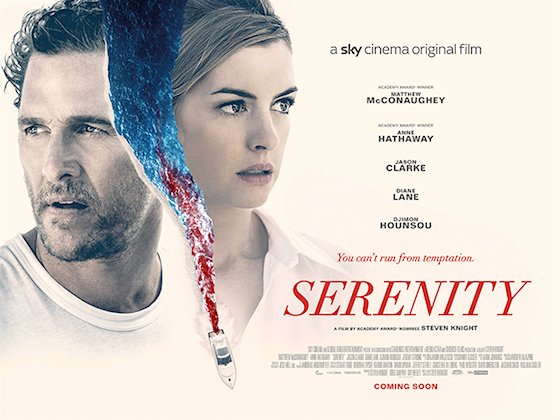
Sorry, Browncoats — this has nothing to do with Joss Whedon’s sci-fi classic. But if you’re instead worried this might supplant that in the general consciousness, never fear: despite coming with the pedigree of a cast headlined by Oscar winners Matthew McConaughey and Anne Hathaway (plus Jason Clarke, Djimon Hounsou, and Diane Lane), and a quality writer-director in Steven Knight (the man behind Locke and Peaky Blinders), this Serenity is a dud of epic proportions. I mean, the fact that, even with those names involved, it’s being dumped in the UK as a Sky Cinema Original should tell you something…

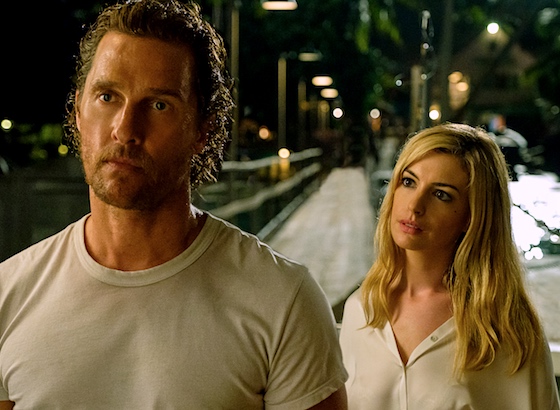
On the remote tropical paradise of Plymouth Island, Baker Dill (McConaughey) is a fisherman mostly taking tourists out on his boat, but eager to catch that one tuna that eludes him (a tuna isn’t quite as romantic a nemesis as a white whale, but I guess we’ll have to go with it). One day, his ex (Hathaway) turns up on the island with a proposition: she’ll pay him $10 million to drop her abusive husband (Clarke) in the ocean for the sharks. She has extra leverage in that hubby is beginning to get abusive towards the son Baker left behind, but who he still cares about. If that wasn’t enough of a moral quandary, there’s more to Plymouth Island than meets the eye, including a fishing equipment company rep who’s desperate to meet with Baker, but keeps just missing him…

An indecent proposal?

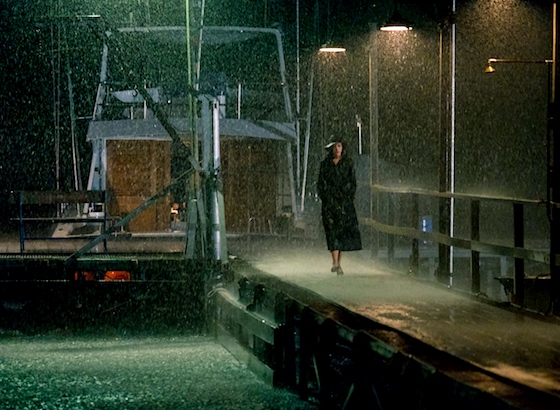
Serenity pitches itself as an island noir, and on the surface it ticks many of the right boxes, especially once Hathaway turns up, looking every inch the part of a classic femme fatale. You can tell she’s hamming it up a little too, playing into the role (with McConaughey, it’s harder to be sure…) It’s also beautifully lensed by DP Jess Hall, capturing both attractive sunny climes and a more overtly noir-ish vibe once a dramatic storm rolls in. But concurrent to that it’s clear some other mystery is going on, and here things get a bit more awkward, the film fumbling not to give too much away too soon. Personally, I think it fails — I guessed the twist pretty early, which I’m pretty sure was not intended, but if you don’t then it’s not cleverly built up to, it’s just muddled.

Once the twist is confirmed — and I say “confirmed” rather than “revealed” because, even though I guessed it, it seemed so loopy that I thought I must be wrong — the whole affair takes on a different light. But it’s not a well thought-through one. It’s the kind of twist that changes your perspective on everything you’ve seen, which is usually a neat development, but here it raises way more questions than it answers. To go into them would be spoilery… so, spoilers follow throughout the next paragraph.

So, we’re supposed to believe this kid has programmed a fishing game starring his dad — not wholly implausible. But it’s one where his dad frequently gets his kit off and shags around for money? I guess we could excuse this as the kid’s been playing too much stuff like Grand Theft Auto and thinks that’s what happens in games, if we’re being kind. But one day he decides to rewrite this game to make it about his dad committing murder, which the character in the game then objects to, and the game turns its own existing rules into an NPC to fight back? What, did this kid accidentally just program a full blown AI? Or several AIs? Or are we going with a Toy Story-esque notion where video game characters are actually sentient? And then somehow his dad actually doing it in-game encourages the kid to murder his real-life stepdad, which we learn thanks to some cheap news voiceover?

So far so noir

Serenity is such a ridiculous mess of a movie that it almost swings back round to being entertaining in its audacity. For me, though, it would need to be better constructed to pull that about-turn off. If it had fully considered the twist and its implications, thought it all through and played by all the necessary rules, some of the people who are laughing at it would still be laughing at it just for the basic concept, but I’d admire it at the very least for committing to its bit. Because it doesn’t, the only reason to consider watching is to marvel at its bizarre eccentricity.

2 out of 5

Serenity will be available on Sky Cinema from midnight tonight, with a limited UK theatrical release from tomorrow.

The Past Month on TV #43

Between trips away and rotten colds, my posting (and viewing) this month has been in rather short supply. That explains both why this TV column is later than normal and why it covers series that the constantly-churning “Netflix new releases” discussion cycle has already moved on from. (Next month: belated commentary on The Umbrella Academy, maybe.)

As well as Netflix shows that came out a while ago, there’s a BBC show that finished a while ago, an Amazon series that isn’t really out yet, and some thoughts on last weekend’s Academy Awards.

The Punisher  Season 2
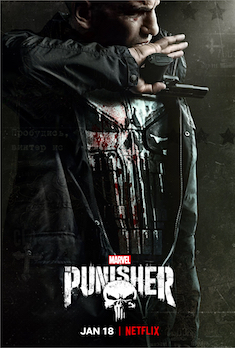
The Punisher season 2Earlier this month the news everyone had been expecting was finally made official: Netflix was cancelling The Punisher and Jessica Jones, thereby bringing to an end the era of the MCU on the streamer. Altogether it will have produced 13 seasons and 161 hours of television, ending with the release of Jessica Jones season three sometime later this year — which will be a more appropriate time to get into this, I guess. For now, there’s just the second — and, as it turned out, final — season of The Punisher.

Picking up a year after the first season, initially it seems like this will be an all-new tale for the eponymous antihero (Jon Bernthal) when he finds himself protecting an ungrateful teenager, Rachel (Giorgia Whigham), from a group of highly-trained assassins who want to kill her for reasons she and they won’t divulge. There’s plenty of mystery around the girl, the villain hunting her (a religious fundamentalist type who goes by the name Pilgrim (Josh Stewart)), what everyone’s motives are, and what the bigger picture might be. At one point our heroes get arrested by small-town sheriffs and the series gives over a whole episode to an Assault on Precinct 13 homage. It’s all good.

But then stuff left hanging from season one begins to creep in. No surprise, really: that first run did the usual Marvel/Netflix thing of introducing us to a character destined to become a more famous character, then spent the whole season getting there. In this case its Punisher nemesis Jigsaw (also the villain of Punisher: War Zone, FYI), aka Billy Russo (Ben Barnes), Frank Castle’s friend-turned-enemy whose face he lacerated in the season one finale. So, they were due a rematch. Unfortunately, here Russo’s storyline plays out with that other regular fault of Marvel/Netflix series: it… takes… ages… to… get… anywhere… And as we keep cutting away from Frank and his new ward to spend time on Russo, it’s slow pace is even more distracting.

Frank and RachelThe two plots do converge somewhat, naturally, with Frank having to deal with the machinations of Russo/Jigsaw at the same time as Pilgrim is coming after him. That means the series has to juggle the two stories as well, and it does that less than effectively, swinging back and forth between which it wants to focus on. For me, the problem remained the same: the new plot is interesting with a lot of potential, while the season one hangovers feel like little more than unfinished business. The latter become stretched out to fill the season, going round in circles, rather than being dealt with succinctly. Conversely, with that stealing so much space, the Pilgrim and Rachel story doesn’t get the screen time it needs or deserves. It seems like there’s a half decent balance at first, but that ultimately goes awry, and the ins and outs of the new storyline (I keep wanting to call it the “main” story, but that’s only true in a couple of early episodes) aren’t as explored as much as they should be. Considering there’s some interesting potential in there (Frank and Rachel have great chemistry, and the plot shapes up as a kind of political thriller, in a 24-esque way), it’s a shame it goes under utilised. It also comes to a great conclusion, showing it’s the real star element of the season. That said, the ending to the Russo story is good too (and so, combined, they make for an exciting finale), it just shouldn’t‘ve taken up so much time.

I wouldn’t go so far as to call The Punisher’s second season a disappointment — there’s a lot to like here for fans of the character and the series — but its lack of focus is a drawback. On the bright side, it wraps things up enough that this is an okay place to leave it. It’s open-ended for more adventures, of course (the across-the-board cancellations came so late in the day that none of the shows had planned for them), but there aren’t direct “what happens next?” questions like in Luke Cage or Iron Fist. Considering the chances of a revival on a Disney-owned platform seem to be 50/50 at best, at least there’s that.

Russian Doll  Season 1
Russian DollYou spend years wondering if anyone could re-do the premise behind Groundhog Day in a different way (well, maybe you don’t, but the thought has crossed my mind), and then several come along… not exactly at once, but in relatively close succession. So, following Happy Death Day, which saw a college student having to repeatedly relive her birthday which was also the day of her murder, now we have Russian Doll, which casts co-creator Natasha Lyonne as a thirtysomething New Yorker having to repeatedly relive her birthday which is also the day she dies. Well, she’s not being murdered, at least. Indeed, the series has a few tweaks and additions to the basic premise up its sleeve, but to say too much would spoil it — although the trailer gives away at least one biggie. Of course, as this is a streaming series, it takes three whole episodes before it reaches that major game-changer.

Fortunately, the show has other things to commend it, primarily the characters. Well, one character, and a bunch of quirky funny types. But hey, this is a comedy, so we can let that slide. And as for that one actually fleshed-out character, Lyonne’s heroine, the series really makes itself about her, her attitude to life, and how the situation affects her. It’s all good stuff. Plus, if you’re here for the plot, although it takes a little while to reveal its unique twists on the formula, once they’re out in the open they build up into an intriguing mystery. And, though it starts out looking like just a comedy in the vein of those other films that have used this concept before, it actually evolves into something more psychological, darker and more complex.

Frankly, one of the main reasons I started watching Russian Doll was because I expected it to be just Groundhog Day / Happy Death Day rehashed as a TV series — that’s what it looked like from the trailers, and I was partly expecting to be able to justifiably complain about that if I’d actually watched it. But, at the same time, I do like both those films, and Russian Doll’s trailer promised at least one new twist on the formula, so I was prepared to give it a fair shout to prove itself. In the end, it deserved the latter. Sure, of course the basic premise is similar to those previous films, but it reimagines it with a dark and foul-mouthed wit that’s distinctly its own, plus it takes the concept down some entirely new avenues. I don’t know how they’d do future seasons (it was originally pitched as three seasons, but it sounds like that evolved during production, so maybe they don’t have as clear an idea as they once did), but I’ll be here for them if they come along.

Hanna  Season 1 Episode 1
Hanna the seriesAmazon are adapting Joe Wright’s 2011 film Hanna into a TV series. Apparently that was commissioned back in 2017, which I don’t recall hearing about, and I feel like I would’ve remembered because I loved the film (never did get round to writing a fuller review, though). Anyway, the first I did hear of it was when they made the first episode available for 24 hours as a preview (the whole first season will be released at the end of March).

Unsurprisingly, the story has been extended to fit its new TV format — this first hour only covers the first act of the film. At this pace, it’s very plausible it’ll take the rest of the season to get through the rest of the movie’s plot (and I’m sure they’ve got some tricks up their sleeve to extended it beyond that). But, surprisingly, it doesn’t feel horrendously slow or artificially drawn-out. This isn’t a mile-a-minute action show, but its pacing is no worse than most other streaming series, here with the added excuse that it’s setting the scene. Indeed, that’s arguably the episode’s biggest problem when viewed in isolation: it feels a bit like the real plot will kick off in episode two, and this is all prologue. On the other hand, in that sense it works all the better when released as tease ahead of the main series. Either way, it grabbed my attention enough that I’ll continue with it when the rest is released.

Les Misérables  Episodes 4-6
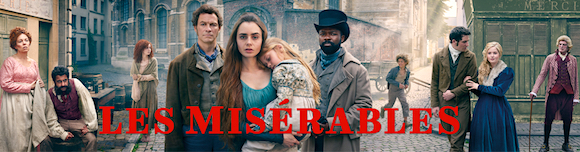
Les Misérables
The second half of the BBC’s new adaptation of Victor Hugo’s novel (gotta be careful to be clear about that, apparently) is all set in the story’s final time period — Cosette is now a young woman, desperate to see the outside world; Marius is now a young man, whose friends seem desperate to die for a revolution; and Javert is still Javert, still desperate to catch Valjean, presumably out of sheer spite and/or pride. All the characters, connected as much by coincidence and chance as by choice or action, come together around the June Rebellion of 1832, and… well, you either know the plot or you don’t want me to spoil it for you. This remains a handsomely mounted production until the last, however, including pulling off the action at the barricades with suitable scale and impact.

That stuff always feels like it should be the climax to me. In a literal sense, it’s the big action set piece, and is the end of the road for several major characters. But no, there’s plenty left after it, for good (the final confrontations between Javert and Valjean) or ill (Thenardier in the sewers; the unearned redemption of Marius’ grandfather). I rewatched the film of the musical when I was exactly halfway through this series, and by comparison most of the movie felt like a long “previously on” montage. The exception is this post-barricade stuff, where the BBC version, conversely, feels drawn-out compared to the economy of the musical’s telling. The final part was almost quarter-of-an-hour longer than the first five, and I couldn’t help but feel a little more streamlining would’ve helped. Still, it’s a relatively minor complaint amidst what has been a typically excellent adaptation by the Beeb.

In the UK, the whole series remains available on iPlayer for the foreseeable future, while in the US it will air on PBS from April 14th.

The 91st Academy Awards
The 91st Academy AwardsThe run-up to this year’s Oscars seemed to be mired in a mix of controversy and disinterest. The former was provoked by a variety of poor decisions by the Academy, including fiascoes around a Best Popular Film award, over who would host (it was Kevin Hart, then it wasn’t, then it was no one), and over the decision to present some awards during the ad breaks (which was scrapped, thankfully). This whole palaver is part of what fed the disinterest, along with a slate of nominees that was regarded to be generally uninspiring. As it turned out, plenty of people still tuned in (US viewing figures were slightly up from last year) and plenty of conversation was sparked. Other people can dig into it in more depth than me (and have, of course, considering the ceremony was days ago), but I will say I was overjoyed for Olivia Colman (definitely the best speech, although a couple of others were quite good too) and Spider-Verse, was quite pleased Black Panther won Best Score (I don’t know if it was actually the best overall, but I really liked it), and its other two victories (costumes and production design) were also welcome, and Spike Lee’s ecstatic win was another top moment. It wasn’t all sunshine and roses, obviously, with Best Picture in particular being an underwhelming result; though I’m not as miffed about Bohemian Rhapsody’s multiple wins as some people (even if its awards for sound editing and mixing were more about “most” than “best”).

The big takeaway from the night should probably be that going host-less worked. Queen’s opening performance was great (because Queen), and the non-monologue monologue from Maya Rudolph, Tina Fey, and Amy Poehler was another highlight of the ceremony. Things still ran smoothly, and there were no stupid asides like bringing normal people into the auditorium or whatever — cutting those time wasters was a much better idea than cutting actual awards. Maybe being host-free is the way forward, though I think they’ll need to continue finding ways to handle the monologue section going forward — the show needs some kind of intro, and a gentle ribbing of the nominees is an appropriate way to do it, I think.

Also watched…
  • The British Academy Film Awards 2019 — The BAFTAs also happened. We gave a better Best Film, but further evidence that maybe a host-less ceremony is a good idea: Joanna Lumley is a national treasure, but her opening monologue was excruciating.
  • Great News Season 2 Episodes 8-13 — The series finale of this cancelled-too-soon newsroom sitcom is titled Early Retirement. So, that’s a nice meta gag to console ourselves with, at least.
  • Mark Kermode’s Oscar Winners A Secrets of Cinema Special — Kermode dissects the formula to make an Oscar winner in this special of his excellent series. It’s available on iPlayer for a few weeks yet.

    Things to Catch Up On
    The Umbrella AcademyThis month, I have mostly been missing The Umbrella Academy, as I mentioned at the start. The trailers look good (love a bit of Hazy Shade of Winter), and it seems like critical and audience reaction has been positive, so it’s definitely on my watchlist. I’m also yet to start the new series of Scottish crime drama Shetland, or The Missing’s much-anticipated spin-off Baptiste. I expect I’ll be saving those up for a little while yet.

    Next month… HBO have set the Deadwood revival/finale movie to air this spring, which is, y’know, soon. I watched season one when it first aired, thought it was great, but when season two came around I found myself thoroughly lost and eventually gave up. I imported the US Blu-ray box set years ago (it’s bursting with special features vs. the UK’s completely bare bones release), and it’s been sat on my shelf waiting ever since, like so many non-pressing TV series nowadays. Well, I guess now is its time…

  • Green Book (2018)

    2019 #26
    Peter Farrelly | 130 mins | download (HD) | 2.00:1 | USA / English, Italian & Russian | 12 / PG-13

    Green Book

    Oscar statue2019 Academy Awards
    5 nominations — 3 wins

    Won: Best Picture, Best Supporting Actor (Mahershala Ali), Best Original Screenplay.
    Nominated: Best Actor (Viggo Mortensen), Best Editing.

    White people tell black people all about racism (again) in this year’s surprise Best Picture victor. Well, a surprise to some people — Roma was considered the frontrunner, but some of those with their finger on the pulse of Hollywood had already predicted Green Book’s success. One such pundit was Deadline’s Pete Hammond, a very pro-Green Book voice, although his post-show analysis seems to suggest it only won because of efforts by some Academy members to rig the vote against Netflix…

    The reaction to Green Book has been an odd one. It was initially well received, winning the People’s Choice Award after its premiere at TIFF, and racking up acclaim from both critics (a Certified Fresh 79% on Rotten Tomatoes) and audiences (8.3 on IMDb, which places it 128th on their Top 250 list). But the more widely it’s been seen and discussed, the more the tide has turned, especially as a more diverse audience has come to it. On its surface, the film is about overcoming racism — it’s the true story of a bigoted Italian American (Viggo Mortensen) serving as a driver for talented African American pianist Dr Don Shirley (Mahershala Ali) as he goes on a concert tour of the Deep South during segregation — but it’s told entirely from the white guy’s perspective.

    Coming at it from the perspective of a white guy also, I can see why people have liked the movie. It’s decently entertaining, with likeable performances from Mortensen and Ali, who have good chemistry. Their chalk-and-cheese relationship is funny without tipping over into outright comedy; and, naturally, the way they come to get along is Heartwarming. But it’s also a completely unchallenging movie. There’s just enough racism that you get to go “ooh, weren’t things unpleasant back then!” and be joyed when the characters overcome it in various ways, but not so much as to convey the actual outrage and horror of the era — or, indeed, the way it continues today. You’d think racism was more or less solved by this pair getting along back in ’62.

    Admire the white guy

    And that is a big part of the problem with the film. If you’d made this 20 or 30 years ago, that level of discussion might be alright — beginning to make old white men face up to what happened by softening it a little, by letting them see themselves in the white guy. Now, it all looks kinda naïve and simplistic. The more you dig into it, the more you realise Green Book has some casually racist elements of its own. I mean, the white guy even helps the black guy to become a better black guy! That’d be offensive in a fiction, but when these were real people it seems distasteful. I guess the counterargument might be that the black guy helps make the white guy better too, improving his ability to write love letters, as if that was some kind of mutual beneficial exchange. But it’s not equal, is it? Plus it’s again all from the white guy’s perspective: he’s fundamentally fine but, hey, a bit of a polish wouldn’t hurt, whereas the black guy needs a character overhaul that apparently only this straight-talking white guy can give him.

    But hey, don’t just take it from this white guy. For instance, check out this piece by Justin Chang at the L.A. Times about the film and its reception in the wake of its big win. It digs into the film’s negatives and controversies better than I ever could.

    A side note regarding the film’s title: it’s taken from The Negro Motorist Green Book, a guidebook to help African Americans travel in the segregated South by listing establishments that would accept them. They do use it in the film… briefly, about three times total. You feel like a movie depicting how and why the volume came into existence might’ve made for a more novel story.

    Write this instead...

    In the end, I find Green Book a little difficult to rate. Coming to it as a white viewer, it’s an enjoyably safe trip into history, with charming characters on enough of a personal journey to give it a story arc, but not so much of one as to ever make it challenging. Similarly, it has a simplistic but not fundamentally negative theme (“racism is bad, yo”). In that mindset, it’s a pleasant, feel-good two hours. But, considering it’s 2019 not 1989, I can certainly see why some are clamouring for more nuanced engagement with these issues. I wouldn’t call it a bad movie, but it is an old fashioned one, and certainly not the best of what 2018 had to offer.

    3 out of 5

    Roma (2018)

    2019 #25
    Alfonso Cuarón | 135 mins | streaming (UHD) | 2.39:1 | Mexico & USA / Spanish & Mixtec | 15 / R

    Roma

    Oscar statue2019 Academy Awards
    10 nominations

    Nominated: Best Picture, Best Foreign Language Film, Best Director, Best Actress (Yalitza Aparicio), Best Supporting Actress (Marina de Tavira), Best Original Screenplay, Best Cinematography, Best Production Design, Best Sound Editing, Best Sound Mixing.

    Drawn from writer-director Alfonso Cuarón’s memories of growing up in the Colonia Roma neighbourhood of Mexico City, Roma is the story of what happens to a middle-class family’s housemaid, Cleo (played by newcomer Yalitza Aparicio), over the course of ten months in 1970 and 1971. It’s also one of the best-reviewed films of the year, winner of BAFTA’s Best Film award (amongst others), and a frontrunner for the same at tonight’s Oscars. No pressure, then.

    Roma has already attracted a reputation for being slow and difficult to engage with for ordinary viewers — the very definition of an arthouse movie; and it’s in black and white with subtitles, just to compound the stereotype. There’s no doubting it has a measured pace, and the viewer needs to be prepared for that. It sets its stall with the opening credits, which fade in and out slowly over a static shot of paved flooring being washed by soapy water that flows across it like waves on a shore — and that’s all we see, for several minutes. From there, much of the move unfurls in wide shots, with slow pans or no movement at all, inviting the viewer to search the frame for details and significance. Note that it’s not nominated for Best Editing…

    Cleo the maid

    At first it’s difficult to see the point of all this, which is where accusations of it being boring stem from. Nothing seems to be happening, just people going about their lives and jobs; a “slice of life” narrative taken to the extreme. What’s missing from that view is context, and as the film goes on we get that — looking back at earlier scenes with the knowledge of what happens later, it’s more possible to see what Cuarón was going for. For example, there are two scenes side-by-side which are barely notable in themselves and certainly have no immediate connection — the father of the family going away on a business trip, and Cleo going to the cinema with the guy she’s been seeing — but when you know what happens later, these scenes are clearly back-to-back for a reason, with a clear connection. One might say juxtaposed, but they’re less being contrasted, more mirrored. There’s quite a lot of that kind of subtle, often exclusively visual mirroring throughout the film — it’s no coincidence the opening shot looks like waves.

    This is a film that rewards perseverance, then. It doesn’t work for everyone, but for some the way it slowly inducts us into this family’s life builds to great emotional payoffs come the events of the final act. After a whole lot of very little, it suddenly gets very dramatic and heart-wrenching. You’d have to be pretty cold not to feel anything for the characters given some of the things that transpire, but how much of a connection is developed between them and the viewer is, I think, very much a matter of personal experience. Based on online comments, some find the finale emotionally cathartic, and end up sobbing their heart out; others find Cleo’s silence to be distancing, making her true character and feelings inaccessible, and by turn neutering the film. I find myself sympathetic to both points of view. The film, and the characters, are certainly understated, but I don’t think they’re wholly shut off. Put another way, I wasn’t in tears by the end, but I felt I understood something of these people and their reactions to what had occurred.

    Departures

    One thing I wasn’t prepared for by anything else I’ve read about the film (which, admittedly, wasn’t much) was how much… slightly odd stuff there was. Not full-blown Lynchian weirdness, just things you don’t really expect to see. A surprising focus on dog shit, for example. A martial arts display with some very, er, jiggly full frontal male nudity. A Norwegian New Year’s Eve song performed in front of a blazing forest fire. Walls of pet dogs’ heads mounted like hunting trophies in a macabre display of affection, but with the sheer disturbingness of that seeming to go uncommented on. Cuarón has said 90% of the movie comes from his own childhood memories, so I guess he had an interesting time of it…

    At the very least, Roma is a technical masterpiece. Shot by Cuarón himself (because Chivo was unavailable), it looks thoroughly gorgeous — crisp, textured, always perfectly lit, be that by the nighttime glow of a city or misty morning air, with some shots that look like molten silver caressing the screen. Cuarón is the frontrunner for the cinematography Oscar, marking the first time it will have gone to a director lensing his own film (assuming he does win, of course), and it seems to be very much deserved (in fairness, I’ve not yet seen any of the other nominees to compare).

    But while everyone talks about the photography, very few people seem to mention the immersive sound design, and I think that’s just as worthy of attention. Roma is also nominated tonight for Sound Mixing and Sound Editing, categories that are often dominated by blockbuster-type films due to their energetic soundscapes — its competitors include the likes of Black Panther, Bohemian Rhapsody, First Man, and (somewhat ironically) A Quiet Place. I doubt Roma will overcome their bombast, but in its own way it’s just as effective, generating a world around you with its enveloping audio. I guess this is partly the problem of it going direct to Netflix, though — most people who see the film will listen to it through TV speakers, or, at best, a stereo sound bar. However, it’s proof that surround sound isn’t just for action movies, and that it’s worth having a system in your home, if you can.

    Journeys

    On the whole, Roma exudes the feel of a quality piece of Art, with a capital ‘A’ — it’s beautiful to look at, slow and heavy and opaque in its storytelling, with (perhaps) some deep message about human experience that’s left for the viewer to discern. Is it the best picture of 2018? Well, I mean, if you like that kind of thing… Should it win tonight? That depends what you think the Oscars should be rewarding, I guess. It’s not an unworthy champion in an artistic sense, but is something else — something artistic in a different way, and also more accessible — even more deserving of being crowned The Best? That’s always the tug-of-war when it comes to Best Picture, I suppose. It’s certainly not my favourite movie from last year (and I wouldn’t necessarily expect it to make 2019’s list either), but I still admire much of it.

    5 out of 5

    The 91st Academy Awards are handed out this evening. In the UK, they’re on Sky Cinema Oscars from 12:30am, with highlights on Sky One tomorrow at 9pm.

    Ocean’s Eight (2018)

    2019 #23
    Gary Ross | 110 mins | download (HD) | 2.39:1 | USA / English, German, French & Hindi | 12 / PG-13

    Ocean's Eight

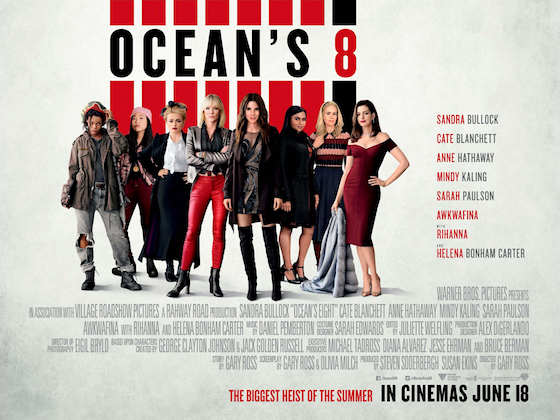
    This somewhat belated spin-off from the Ocean’s trilogy of all-star heist movies (it came eleven years after the last one) introduces us to Debbie Ocean (Sandra Bullock), the sister of George Clooney’s eponymous character from the trilogy, and also an experienced con artist. Recently released from prison, she sets about assembling a crew for an audacious heist: to lift a near-priceless necklace during the prestigious Met Gala.

    Said crew is all female — well, the crews in the previous trilogy were almost exclusively male, so why not? And just as those casts were full of big-name stars, so too is this. If Bullock’s in the Clooney role then Cate Blanchett takes over the part of Brad Pitt: the cool, in-control ‘sidekick’ who really makes Ocean’s grand plan happen. Fortunately, the film doesn’t slavishly map everyone else onto roles from the previous movies. One of the key parts is a fashion designer, played by Helena Bonham Carter — not a job that’s normally required for a heist, I don’t think. Here, it’s their way to access the mark who’ll be wearing the necklace, played by Anne Hathaway. The rest of the titular crew is rounded out by names of varying degrees of famousness, depending on your exposure to their previous work: Rihanna, Sarah Paulson, Mindy Kaling, and Awkwafina.

    As a gang, they’re quite likeable, fun to hang around with, and the cast seem to be having a good time. They’re somewhat hampered by a screenplay that rarely gives them the sparky material the previous bunch had to work with, though, so I’d suggest if there’s a Nine they get someone to punch up the dialogue and give this lot the text they deserve.

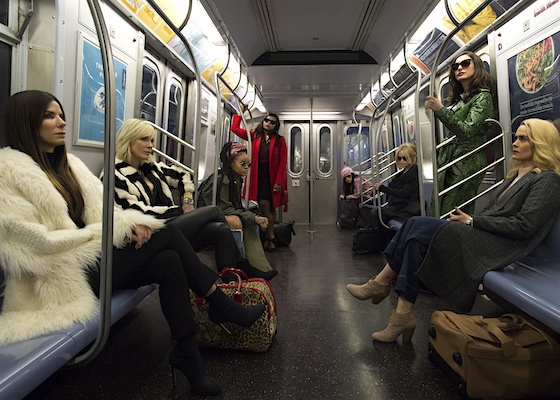
    One, two, three, four, five, six, seven... yep, eight. There's eight of them.

    Having said it doesn’t wholly map onto the previous movies, Eight massively lifts one plot thread from Eleven, which is that Debbie’s plan is secretly a way to get back at an ex boyfriend (Richard Armitage). Okay, in Eleven Danny Ocean is trying to win back his old lover and/or punish her new boyfriend, whereas here those characters are kinda combined as Debbie Ocean is trying to punish her old lover, but, well, the basic conceit is the same, right? The film does nothing to acknowledge that fact, just leaving it hanging there — awkwardly, if you’re au fait with the first movie. Conversely, whereas Danny was obsessed with his revenge to the point it risked derailing the main heist, for Debbie it seems to be a side benefit.

    That isn’t necessarily better, mind: it lowers the stakes of both the subplot (because she doesn’t seem that bothered) and the main plot (because she’s not in danger of getting sidetracked), so why include something so familiar? Indeed, the whole plot is relatively light on stakes, with the team carrying off everything with nary a hitch — barely any need to improvise or change the plan here, they’ve just got it covered. The one potential problem that does arrive is solved instantly, even before the heist begins, with such a straightforward fix that they don’t even need to modify the plan to incorporate it. It’s not even fake jeopardy, it’s just non-jeopardy.

    The whole film veers dangerously close to blandness in this fashion. Director Gary Ross may be a friend and colleague of Steven Soderbergh, but he doesn’t seem to have picked up the trilogy director’s inventiveness. There’s some mildly flashy editing scattered about, and maybe one creative shot / bit of sound design (when the camera follows the necklace underwater, the non-diegetic music gets muffled like, you know, we’re underwater), but it lacks the sophistication and verve Soderbergh brings. It feels like it needs a kick up the arse, basically.

    “Could you just give it a bit of a kick up the arse?”

    I even began to worry it was going to end with no attempt at genuine twists or surprises whatsoever, aside from a few minor but not terribly exciting reveals, which is not good for a heist movie — part of the point, surely, is that they also pull off a kind of narrative heist on the viewer. Fortunately, Eight does have a trick up its sleeve, which is quite fun. But even then, the big plan is still a pretty simple heist, which the film tries to pretend is complicated by showing Heist 101 stuff in excruciating detail (there’s a whole scene devoted to Rihanna slightly changing the position of two security cameras, one… click… at… a… time…)

    Yet for these faults, Eight still works as breezy entertainment. It’s not as perfectly slick and polished as Eleven — but then, that would’ve been asking a lot (as pure-entertainment capers go, Eleven is virtually flawless). It’s not as boundary-pushing as Twelve (a seemingly muddled film that gets interesting the more you think/read about it), but nor is it as aimless and derivative as I found Thirteen. It lacks the creative spark behind the scenes (either in the screenplay or directing departments) that could’ve elevated it, but it’s an easy way to spend a diverting couple of hours.

    3 out of 5

    Ocean’s Eight is available on Sky Cinema from today.