Unknown's avatar

About badblokebob

Aiming to watch at least 100 films in a year. Hence why I called my blog that. http://100films.co.uk

Patrick (2019)

aka De Patrick

2020 #221
Tim Mielants | 96 mins | digital (HD) | 2.39:1 | Belgium & Netherlands / Flemish, Dutch, French, English & German

Patrick

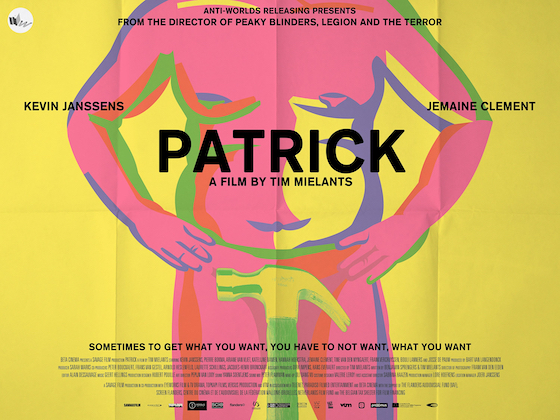
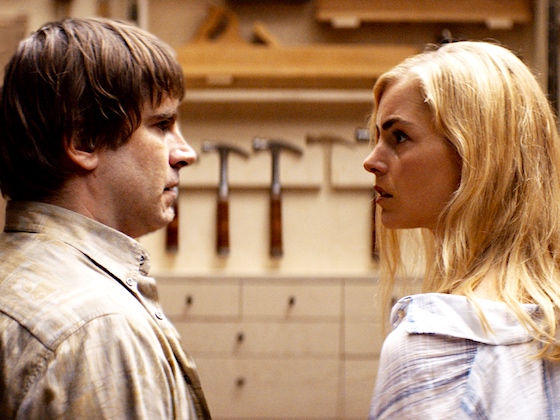
Patrick’s hammer is missing. More accurately, one of Patrick’s hammers is missing — he has seven, of different sizes, arranged in a neat row on a bespoke wall mount, and the middle one is no longer there. Patrick is the handyman at a nudist campsite run by his father, who is old and sick. The head of the residents’ council is a busybody; his wife is secretly sleeping with Patrick, not that Patrick seems to care. A famous musician Patrick has never heard of arrives to stay, followed by his pretty but frustrated girlfriend. Then Patrick’s father dies. But, most importantly, Patrick’s hammer is still missing. Fortunately, a former police officer friend turns up to pay his respects, and gives Patrick advice on how to find his hammer — so Patrick launches his investigation.

To sum Patrick up as “Agatha Christie meets the Coen brothers in a nudist camp” doesn’t feel too wide of the mark. Okay, there’s no murder, so perhaps mystery-genre fans could think of a better (though, unavoidably, less famous) author than Christie to sub in. But the fact remains that the missing hammer isn’t just a story hook to hang something else on: it’s a solid mystery narrative, with clues and red herrings and twists. Conversely, it’s not just a mystery, which is where the second comparison comes in. The overall quirky, just-left-of-reality, slightly-heightened tone evokes the Coens’ work, without (thank goodness) being a rip-off. It’s very much a comedy-drama, in that it’s not out-and-out seeking to provoke laughs, but it’s frequently absurd to the point of being laughable — although, with What We Do in the Shadows’ Jemaine Clement among the supporting cast, you can be assured of some genuinely humorous moments too.

One element that isn’t mined for amusement, to the film’s credit, is the nudity. Equally, if you’re the kind of person who hears “set in a nudist camp” and thinks “wah-hey!”, don’t get your hopes up. These are real nudists, not pretty movie ones: middle-aged to older, with lumpy flesh wobbling around all over the place. The one conventionally attractive member of the cast (Hannah Hoekstra as the musician’s girlfriend, Nathalie) remains clothed. Indeed, the positive aspect of how the film treats nudity is that… it doesn’t really treat it at all. It’s doesn’t use the nudity for laughs, nor does it sexualise it, nor does it linger on it, nor does it avoid it. It’s just there; a fact of life. This story takes place in a nudist camp, so people are naked — that’s that. Even if all sorts of bits flopping about strikes you as giggle-worthy at first, before too long you stop even noticing.

Anyone could have taken it

What is often visually appealing is Frank van den Eeden’s cinematography. There are some beautiful shots and scenes, from your obvious screen-cap-able pretty lensing (like a funeral where the whole camp are scattered around a smoke-filled forest), but the way the camera moves, with slow pans (like the one when Nathalie first visits Patrick’s workshop), or clever angles (like when Patrick has to climb out of a tipped-over caravan).

The combination of all of the above made me rather love Patrick. While the limits of a five-star rating system mean I’m only going to give it a 4 for now, it’s sort of a 4+, thanks to a litany of great shots and moments that spike above the overall quality of the film (which, I should make clear, is still high). It’s a movie that appeals to my taste: unmistakably absurd, but without revelling in that absurdity to the point where the wheels of momentum come off and it all falls apart. It satisfies as a mystery; as a pillorying of the politicking that goes on in small organisations; and as a character study of a man who just wants to find his hammer.

4 out of 5

Patrick is streaming on AMPLIFY! from today until 17th November. It’s on general UK release from 20th November.

It placed 16th on my list of The Best Films I Saw in 2020.
Disclosure: I’m working for AMPLIFY! as part of FilmBath. However, all opinions are my own, and I benefit in no way (financial or otherwise) from you following the links in this post or making purchases.

Waxworks (1924)

aka Das Wachsfigurenkabinett

2020 #232
Paul Leni | 82 mins | digital (HD) | 1.33:1 | Germany / silent | PG

Waxworks

Often billed as the first portmanteau horror movie, Waxworks only fits the bill in the loosest sense: its “three stories” are actually two stories and a dream sequence, the first (and longest) of which is, if anything, a swashbuckling farce.

But I’m getting a little ahead of myself. The film begins with a young writer (William Dieterle, who would later become a Hollywood director, responsible for 1938 Best Picture winner The Life of Emile Zola, amongst others) who is hired to pen backstories for the four statues in a carnival wax museum. Yes, four — the filmmakers ran out of money before they could film the fourth tale. As he begins writing, into each story he injects both himself and the museum’s curator’s daughter (Olga Belajeff) as his love interest.

The first tale is set in Arabian Nights-style Bagdad (IMDb says this part inspired Douglas Fairbanks to make The Thief of Bagdad, but a quick look at their release dates shows Fairbanks’ film came out months before Waxworks), and concerns a lecherous Caliph (Emil Jannings) who sets his sights on wooing a baker’s wife. It’s quite a sexualised segment all round: the baker kneads dough so erotically it sends his wife (and himself) all aquiver (I doubt it’ll do the same for many viewers, but it clearly works for them); later, the disguised Caliph sneaks into the baker’s home and spies the wife lying in bed with her back to him, and his gaze (and, by extension, ours) clearly lingers on her bottom (clothed, lest you think the film is uncommonly explicit). I guess the characters were too busy perving to apply logic to their decision-making: when the baker is too wary to slip a ring off the sleeping Caliph’s finger, he decides to chop his whole arm off instead. Totally reasonable. Meanwhile, why is the all-powerful Caliph worried about being found out by a lowly baker? Indeed, why’s he so worried that his guards will know he sneaks out at night? He’s the boss! On the bright side, there’s some beautiful and striking Expressionist set design; an exciting chase scene, set to dramatic percussive music in the new score by Bernd Schultheis, Olav Lervik, and Jan Kohl; and the wife’s save at the climax is a cunning twist. But, overall, it’s a bit of a daft farce.

Arabian nights

The second story stars Conrad Veidt as a Rasputin-esque Ivan the Terrible, who revels in killing prisoners in the Kremlin’s dungeons with an ultra-specifically-timed poison. If that wasn’t clue enough, this segment is thematically much darker. A bride’s father invites Ivan to attend the wedding, then the Czar insists they switch roles to travel there and the dad is killed by mistaken assassins. Then his arrow-pierced corpse is unceremoniously dumped on the front steps of his home while the wedding banquet continues inside; and when daughter sneaks away to grieve over his body, Ivan has some guards snatch her; and when the angry groom tries to attack Ivan, he’s ordered off to the torture chamber. Puts people who complain about rain on their wedding day into perspective, doesn’t it? Veidt is great as the deranged Ivan, although he’s so mentally unstable that it borders on comical. The finale doesn’t make much sense (he lets the girl go… then doesn’t?), but the denouement delivers a neat and fitting fate to Czar Terrible.

The third and final story begins with just five minutes of screen time left, so you know it’s not going to be wholly-realised tale. (Incidentally, the original German version of the film is lost, leaving us with only the English version, which is about 25 minutes shorter. What’s in those minutes? If anyone knows, they’re not saying online (to the best of my knowledge). Perhaps there was more linking material in the museum? Perhaps the third ‘story’ really was a whole story? Perhaps the first two were once even longer, though it’s hard to imagine how much more there could be to do in either of them — maybe the cuts were for the best…) Anyway, the third segment is the aforementioned dream sequence, in which the waxwork of Jack the Ripper comes to life and pursues the writer and his love (they met earlier that day but already seem pretty committed) through a series of highly impressionist sets, their disjointed oddity exacerbated by differently-aligned multiple exposures. It’s Expressionism to the max, and it’s suitably effective as a chiller. But, of course, it’s all a dream… and that’s suddenly the end!

Ivan's terrible, but Veidt's great

Like so many of the portmanteau films that have followed in its wake, Waxworks struggles to be the sum of its parts. It’s ultimately a bit underwhelming, with the first two stories being slower than necessary (and this is the cut version!) before giving way to a rushed finale. Make no mistake, there’s some very nice stuff in here, but it comes in bits and pieces. It’s a welcome watch for fans of silent cinema or early horror (with caveats about its “horror” content duly noted), and there are enough good parts to recommend it, but I wouldn’t argue it’s a classic in any enduring sense (beyond its obvious influence as a stepping stone to future portmanteau films).

3 out of 5

Waxworks is streaming on AMPLIFY! until 22nd November, and is released on Blu-ray as part of the Masters of Cinema Series today.

Also, new on AMPLIFY! today are…

  • what sounds like a German riff on Whiplash, but with violins, in The Audition
  • a documentary about the drawbacks of algorithms, Coded Bias
  • the UK premiere of Viggo Mortensen’s directorial debut, Falling
  • Catalan coming-of-age drama The Innocence
  • and unusual found footage documentary My Mexican Bretzel.

(If you don’t know, “bretzel” is the German word for “pretzel”.)

Disclosure: I’m working for AMPLIFY! as part of FilmBath. However, all opinions are my own, and I benefit in no way (financial or otherwise) from you following the links in this post or making purchases.

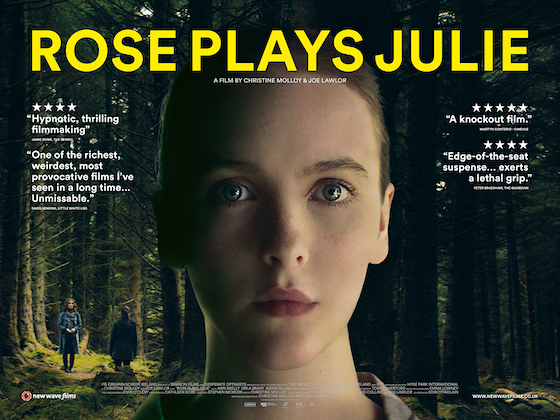
Rose Plays Julie (2019)

2020 #239
Joe Lawlor & Christine Molloy | 101 mins | digital (HD) | 2.39:1 | Ireland & UK / English

Rose Plays Julie

Long Lost Family meets rape revenge thriller in this Irish drama about a veterinary student, Rose (Ann Skelly), who was adopted as a baby and now decides to finally meet her birth mother, Ellen (Orla Brady), only to uncover a dark secret about their shared past. Well, I’ve kinda given away the ‘secret’ in my opening ten words, haven’t I? My apologies if you’re a total spoilerphobe, but here’s the thing: some blurbs and whatnot try to conceal that reveal (and when it comes in the film, it is played as a revelation; more on that in a bit), but, frankly, even if you haven’t already had it spelled out (and most reviews don’t try to hide it), it’s pretty easy to guess where things are going — perhaps even from reading one of those oh-so-oblique blurbs (that’s when I figured it out).

But this isn’t your standard rape revenge movie. The act itself is historical, with only its aftermath shown in a couple of fuzzy flashbacks — this isn’t one of those trashy flicks that has its cake and eats it by ickily revelling in the assault before also enjoying the violent vengeance. And instead of the avenger being a dismayed husband/partner, or the (attractive, young) wronged woman who’s suddenly an expert assassin, it’s the daughter who came of it. If you’re after the visceral thrills of the aforementioned kind of rape revenge movies, you won’t find them in this slow-burn, introspective drama; but if you’re open to that style, the mother-daughter angle of how it approaches its subject matter is a unique element.

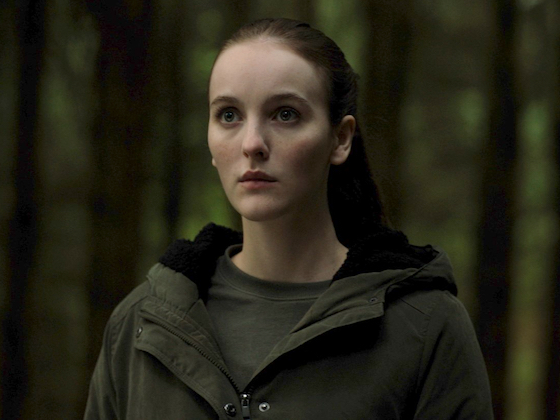
This is where the Long Lost Family part remains relevant, because the tentative new relationship between Rose and the mother who gave her up two decades ago is almost a big a part of the film as her seeking out and confronting her biological father. This rides a lot on Skelly and Brady as actors, because writer-directors Joe Lawlor & Christine Molloy aren’t the sort of filmmakers who write big speeches where their characters explain their feelings — quite the opposite. Instead, we study their passive faces in extended closeups, trying to discern what’s going on as they think things over. One of the most outwardly expressive moments comes when Ellen reveals their shared past to Rose, in a blunt statement just hours after they’ve first met. It’s probably not the best way to go about telling someone that was how they were conceived, but it makes for a slap-in-the-face moment of drama, and Skelly’s reaction is powerful: she doesn’t ‘do’ anything, but her face changes entirely.

The secret comes out

The film’s quiet, subtle mode must be challenging for an actor — no grand emotive speeches to show off with — but this cast are up to the challenge. Skelly is obviously the standout, letting through just glimmers of reaction that allow us to understand how much she’s struggling with all this troubling new information. Brady is very good also, even though I feel like some of her character arc has been left offscreen, between scenes. Rose’s father, Peter, is played by Aidan Gillen, who always excels at embodying smarmy bastards, and that extra-textual awareness helps him to, again, keep his performance mostly subdued and realistic. He’s not some overt monster stomping across everyone’s lives, but an outwardly nice guy with an evil core.

The film’s biggest detriment is that it perhaps takes its serious subject matter a bit too seriously. It’s a very portentous film, in which the restrained performances, gloomy photography, slow-burn pace, and ominous music combine to create an intensely fateful atmosphere. Something is, inevitably, going to happen… eventually… On the one hand, it means that, as Rose gets in deeper, the tension steadily begins to grow. On the other, I’m aware some viewers think it’s so self-serious that it tips over into being laughable. There’s something to be said for varying your tone.

Conversely, I can see why Lawlor & Molloy weren’t in the mood for levity: this is a film about two women, damaged in different ways, who need to come to terms with what has happened to them; both searching for something, even if they don’t know it. You could argue, even, that applies to three people, because Gillen’s character also comes to realise he’s broken — though, in his case, how much sympathy we can feel for him is a whole other discussion. And mixed into all that are major ethical dilemmas: reaching out to birth parents who requested no contact; euthanising healthy animals (if you’re squeamish about injured and dying animals, do not apply); and, by extension, the question of what is appropriate restitution for transgressive behaviour by humans.

Peter the rapist

The latter leads to an ending that I’m not sure how I feel about (massive spoilers follow!) Peter is killed by Ellen, but only because he acquiesces — he accepts what’s happening and allows Ellen to finish it. It’s not exactly suicide (he wouldn’t have done it if Ellen hadn’t turned up and stabbed him with a syringe full of poison), but, by the end, he’s also not protesting. He accepts his guilt and punishment; almost seems to welcome the relief, in fact. If only all rapists were so helpful… and the fact they wouldn’t be is what makes this such a grey area. But then, maybe that’s the point: the film isn’t arguing that this is how things should be done, but asking the question: is this ok? If not, what would be? On another level, from a story structure perspective, it feels somewhat unsatisfying that Rose isn’t involved, after the rest of the film was primarily about her. That might be morally correct (it’s really Ellen’s trauma to deal with), but it feels wrong dramatically to end the film with resolution for Ellen more than for Rose.

Between its heavy issues and unwaveringly doom-laden tone, Rose Plays Julie is not a light viewing experience. If you like the idea of slow-burn dramatic thriller that spends a lot of time focused on people’s still faces as they process information silently and internally, and leaves you with a lot to chew over when it’s done, this is a film for you. If you think that sounds inscrutable or dull, steer clear.

4 out of 5

Rose Plays Julie is streaming on AMPLIFY! until Thursday 12th November. It includes a half-hour Q&A with the directors, actor Orla Brady, and composer Stephen McKeon.

Disclosure: I’m working for AMPLIFY! as part of FilmBath. However, all opinions are my own, and I benefit in no way (financial or otherwise) from you following the links in this post or making purchases.

The Mole Agent (2020)

It’s Day 2 of the AMPLIFY! film festival (new content goes live at 1am, FYI). Among today’s additions is the UK premiere of The Mole Agent — one of 18 UK premieres that are part of the festival.

My review of that in a moment, but first, also debuting today are…

Incidentally, I’d recommend Rose Plays Julie, an engrossing and powerful psychological thriller (I’ll review it in full soon, time permitting).

The Mole Agent
(2020)

2020 #231
Maite Alberdi | 90 mins | digital (HD) | 1.85:1 | Chile, USA, Germany, Netherlands & Spain / Spanish

The Mole Agent

It’s easy to make The Mole Agent sound like the setup for a comedy: it’s about a doddery 83-year-old who must learn to be a spy. And, indeed, there are scene where the film is very amusing; particularly early on, when the octogenarian in question, Sergio Chamy, struggles to get to grips with the technology he’ll need to use, much to the exasperation of his spymaster, Rómulo Aitken.

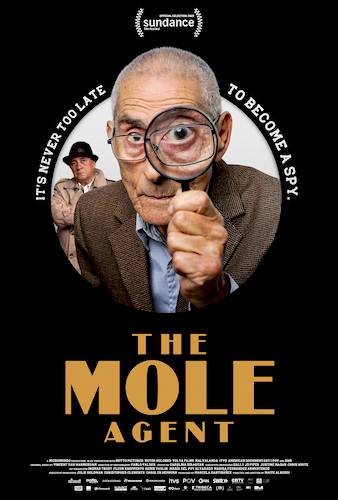
Except that premise, which the film has leant its promotion on (note the tagline on the above poster: “it’s never too late to become a spy”), is slightly misleading. Aitken isn’t a spymaster, he’s a private detective, who’s been hired to investigate allegations of abuse at an old people’s home — hence the need for an old person to go in as an undercover observer. It’s not exactly Bond, or even Le Carré, is it?

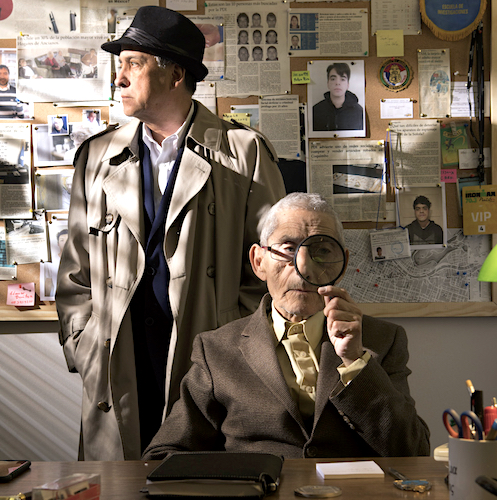
Indeed, director Maite Alberdi leans into a different genre — film noir — shooting the early briefing scenes with a heavy use of venetian blinds, either peering through them or employing their distinctive shadows. It’s a level of visual panache you’re not used to from a conventional documentary. It might lead you to question if what you’re watching was entirely documentary in nature, were it not for the fact that these scenes take place in the ‘safety’ of the PI’s office —it’s not unreasonable to assume the film crew semi-staged a couple of ‘scenes’ to add a bit of visual interest. (They clearly did it for the promo photos, too. I mean, just look at this one…)

Secret agent men

The real questions of form begin to emerge once Sergio begins his undercover mission. To be able to film what he’s up to, the documentary crew have inveigled themselves into the same old people’s home with the cover story that they want to make a film about a new resident — so when Sergio turns up, what a perfect coincidence, and excuse to focus their filming on him. Except… if this care home is abusing its residents, are they going to continue doing that with a film crew present? Heck, surely they wouldn’t even agree to a film being made at all?

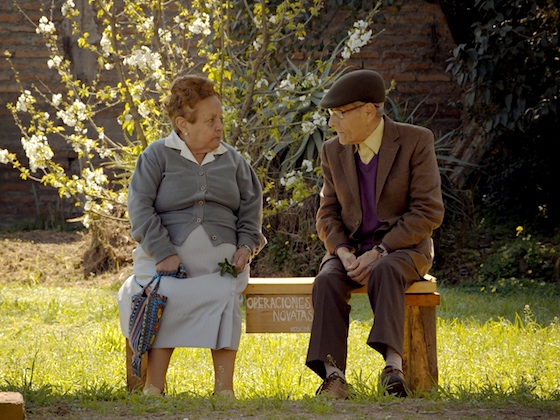
Well, the whole investigative goal goes out the window pretty quickly, anyway. Sergio is initially diligent about snooping around and secretly recording his reports for Rómulo, but he soon begins to make friends and become involved in the life of this little community. The other residents become his friends, and he’s more invested in their wellbeing as their comrade than as an outside observer. Concurrently, the film becomes less interested in the comedic fumbles of an octogenarian secret agent, and more in exploring the lives of these old people. Sergio’s fellow residents aren’t faceless possible-victims, but characters we get to know too.

What Sergio ultimately finds (spoilers!) is neglect — not by the staff, but by the families that shoved their elders away and forgot about them. For the film, that’s a much bigger observation; one on the state of society as a whole, rather than the misdeeds of a single care home. (If anything, the home is wholly vindicated, because we see how much they care for and support their residents.)

Friends to the end

If The Mole Agent has a fault it’s that it can be a little slow at times — though, given the pace these (often delightful) oldies move at, perhaps that was unavoidable. But it’s worth the investment nonetheless, because it’s ultimately a powerfully affecting experience. It’s a film that intrigues you with its laughable premise, then swings round to punch you in the emotions with a crystal-clear message.

4 out of 5

The UK premiere screening of The Mole Agent is on AMPLIFY! until Friday 13th November. It’s on general release in the UK from 11th December.

Disclosure: I’m working for AMPLIFY! as part of FilmBath. However, all opinions are my own, and I benefit in no way (financial or otherwise) from you following the links in this post or making purchases.

Luxor (2020)

AMPLIFY! film festival starts today, and one of the launch films is Luxor, which is also on general release in the UK today (though not in cinemas, what with them all being closed again). It’s available digitally via an array of services, but, psst, AMPLIFY! may well be the cheapest.

Other titles available on AMPLIFY! from today are…

…and there’s much more to come over the next couple of weeks (the festival ends on Sunday 22nd). For info on all the films, check out the AMPLIFY! programme.

I’ve already seen some of those films, so I intend to review them in the next day or two; but for starters, here are my thoughts on Luxor

Luxor
(2020)

2020 #226
Zeina Durra | 86 mins | digital (HD) | 1.85:1 | Egypt, UK & UAE / English & Arabic | 12A

Luxor

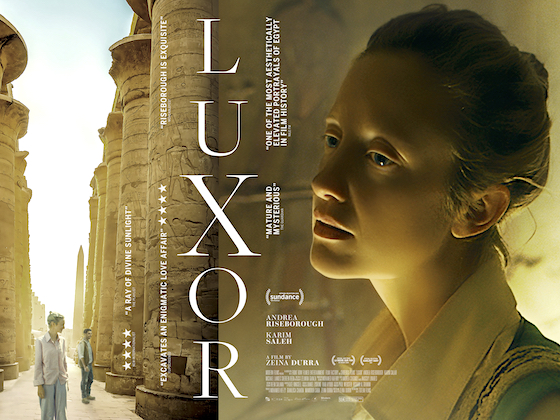
Hana (Andrea Riseborough) arrives in Luxor, Egypt, for a break — as we will come to learn, she’s a doctor who’s been working on the Syrian border, and the traumatic things she witnessed have clearly taken their toll; and Luxor isn’t just a scenic place to visit, but somewhere she spent a significant time, a couple of decades ago, in her 20s. While touring the sights, she happens to bump into Sultan (Karim Saleh), an old friend from back in the day — and, clearly, more than a friend. He’s an archaeologist on a dig, and so they begin to see more sights together, and their connection is rekindled…

Luxor plays like it’s part gentle romantic drama, part tourism video. There are multiple scenes of Hana leisurely roaming around ancient monuments, soaking in the atmosphere and history. (According to writer-director Zeina Durra, “the film had a whole load more of those silent walking scenes but we had to take them out for the sake of the audience’s sanity!”) There’s a lot going on internally for these characters — a lot of stuff we’re not privy to — which will work for some viewers and wholly turn off others. I found Hana’s mental state to be infectious, to a degree. There’s evident nostalgia for her previous time there, tinged with a certain amount of melancholy. Well, nostalgia is inherently quite a melancholic emotion, with its longing for unobtainable pleasures, but Hana is definitely at a time in her life when she’s considering both the past and possible futures. It’s so palpable that Luxor is, at times, the kind of film that’s so seeped in nostalgia it can make you long for a place you’ve never been.

Sightseeing

Unfortunately, these things I liked about the film begin to lose footing somewhat as it goes on and hunts around for a conclusion. There’s a thread of spiritual, almost magical realism stuff, which doesn’t feel inappropriate given the history of the place, but it doesn’t sit wholly with the romantic drama bit either. It’s the kind of thing that has to be measured out very carefully if you’re going to mix it into an otherwise grounded drama, and I’m not sure how much the film commits to it. It culminates in a dream sequence that I didn’t buy into. Also rubbing me up the wrong way were the occasional chapter-like title cards, which felt like a pointless addition (I’m tempted to say affectation) because they didn’t seem to add anything, not even a shape or structure, that wasn’t there otherwise.

I liked Luxor at lot at first (if describing it as “a tourism video” sounds negative, well, it’s set in the kind of enchanting place you’d like to watch a travel video about, so that’s ok), but by the end it had kind of lost me. I thought it was better when it had less of a plot, even — I’m not normally the kind of critic to take such a view (I like a story in my films, thanks), but I was succumbing to its relaxed tenor quite pleasantly. In the absence of the option for real-world trips abroad right now, others may well feel the same. What unfolds after that is, I think, on reflection, a meditation on a specific kind of female middle-age. I suspect that, too, will play better with some viewers more than others.

3 out of 5

Luxor is screening on AMPLIFY! until Thursday 12th November.

Disclosure: I’m working for AMPLIFY! as part of FilmBath. However, all opinions are my own, and I benefit in no way (financial or otherwise) from you following the links in this post or making purchases.

The Horrific Monthly Review of October 2020

Don’t be fooled by the title, dear reader: I’m not one of those people who spends all of October watching horror movies. But the world we live in is horrifying enough for that adjective to apply to pretty much any month this year, isn’t it?

So as England prepares — not for No Time to Die, as we’d hoped for from November — but for Time to Try Not to Die in Lockdown 2, let’s look back at the month that was the tenth in the seemingly-never-ending year that is 2020…


#219 Lancelot du Lac (1974), aka Lancelot of the Lake
#220 Borat: Cultural Learnings of America for Make Benefit Glorious Nation of Kazakhstan (2006)
#221 Patrick (2019), aka De Patrick
#222 Dick Johnson is Dead (2020)
#223 The Good Liar (2019)
#224 Driving Miss Daisy (1989)
#225 Some Beasts (2019), aka Algunas Bestias
#226 Luxor (2020)
#227 The American President (1995)
#228 Down with Love (2003)
#229 Puzzle (2018)
#230 Misery (1990)
#231 The Mole Agent (2020)
#232 Waxworks (1924), aka Das Wachsfigurenkabinett
#233 Vampires Suck (2010)
#234 The Face of Fu Manchu (1965)
#235 Tim’s Vermeer (2013)
#236 Crazy Rich Asians (2018)
Patrick

Tim's Vermeer

Crazy Rich Asians

.


  • I watched 18 new feature films in October.
  • That’s in the lower-middle for 2020 so far — 7th out of 10 months, to be precise.
  • Unsurprisingly, then, it fails to equal my 2020 average (previously 24.2, now 23.6).
  • It also fails to equal my rolling average for the last 12 months, but as last October was so poor (just four films), it still increases the average, from 19.9 to 21.1.
  • Continuing on the bright side, it surpasses the October average (previously 13.2, now 13.5).
  • #236 is also the furthest I’ve ever reached by the end of October, besting #222 in 2018.
  • You might think that makes 2020 a lock for my #1 year ever, but it’s not so simple (as my previous overviews of predictions have shown). There are 26 films to go to a new record — 13 per month for November and December, which sounds very doable (my worst month this year totalled 12), but it’s worth noting that the November average is 10.4 and for December it’s 11.2, so never say never.
  • As for the once-seemingly-possible target of #300, that would mean 32 per month in November and December. Literally, not impossible (I’ve managed over 30 in two consecutive months twice before), but also not likely (I’ve only managed over 30 in two consecutive months twice before). Time will tell…
  • This month’s Blindspot film was supposed to be An American Werewolf in London. For most of the year I’d had that singled out to be October’s pick, for obvious reasons. I considered watching it earlier in the month, but decided to leave it for nearer Halloween. Then as Halloween neared I thought, “why not save it for the day itself?” Because Halloween is the last day of the month and the best-laid plans are apt to be upended, that’s why not! So, yeah — oops. I’m aiming to watch it today to catch up quickly.
  • From last month’s “failures” I watched Crazy Rich Asians and The Good Liar.


The 65th Monthly Arbitrary Awards

Favourite Film of the Month
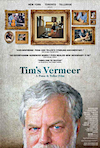
I watched a lot of films I liked this month — indeed, there was only really one choice for the “least favourite” category. But in terms of favourites, it was quite easy to single one out, too, because one film really blew me away: Tim’s Vermeer, a documentary about the point where art, technology, and obsession meet. It’s fascinating and genuinely awe-inspiring.

Least Favourite Film of the Month

I was able to watch a few screeners this month for films showing as part of AMPLIFY! Maybe it’s wrong for me to pick one of those here (shh, don’t tell anyone!), but, well, Some Beasts was easily the worst film I watched this month. Not because it’s badly made, but a final-act plot swerve struck me as wholly distasteful and poorly handled. More on that whenever I get round to reviewing it.

Most Layers in a Title of the Month
Before viewing, I wondered if Crazy Rich Asians was about Asians who were crazy-rich or rich Asians who were crazy. Turns out, it’s both! So many layers! (Two. That’s two layers.)

Most Penises of the Month
One of Borat’s most famous scenes may be a nude wrestling/chase scene between two men, but that’s got nothing on Patrick, a whole film set in a nudist camp. (Don’t let that turn you off / switch you on, mind — there’s a lot of good stuff in Patrick, and the nudity is fairly incidental.)

The Audience Award for Most-Viewed New Post of the Month
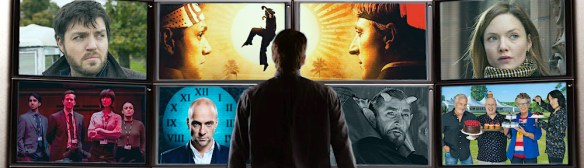
…goes to my latest TV column again, for the fourth time this year. I’ve gotta say, this one did have one of my favourite header collages I’ve put together (the entire thing uses mirroring! Me so clever). (The highest film-related post was a distant second, Bloodshot.)


At one point I was over a month ahead on my Rewatchathon goal for the year. That lead has been slowly eroded, and now I’m officially one film behind. Still, with just two months to go, it’s certainly not impossible that I’ll get there.

#40 Live and Let Die (1973)
#41 Mystery Men (1999)

As a Bond film, Live and Let Die will get my ‘Guide To’ treatment at some point. For now, I put some thoughts on Letterboxd.

Superhero comedy Mystery Men was included in my 100 Favourites series back in 2016, but I hadn’t actually watched it in a decade or more. I’m happy to report that I did still enjoy it. It takes a while to warm up — basically until the whole team has been introduced, which takes longer than you might think — but, once it gets there, it’s frequently gold. Will it make the next iteration of my 100 Favourites list? It’s more borderline than I might’ve expected. It’s not a perfect movie, but it is very enjoyable overall.


Big titles have continued to flee, and with a new lockdown cinemas will be closing again, but a few releases did sneak out in the meantime, like acclaimed horror Saint Maud, and… um… Cats & Dogs 3? Eesh. London Film Festival organised outreach screenings across the UK, but the only one that made it into the schedule at my local was closing-night film Ammonite. And in the sort-of-cinema column, Robert Zemeckis’s re-adaptation of The Witches went straight to premium streaming. I wouldn’t pay £16 for a rental of that anyway, so the mixed-to-poor reviews certainly didn’t sway me.

Another re-adaptation, The Secret Garden, finally had a cinema release, but having been sold off to Sky as a Sky Cinema Original, it was more readily accessible at home. This month the streamer also offered up Underwater, Seberg, and films not starring Kristen Stewart, like Waves. But Now TV finally stopped giving me good cut-price offers to resubscribe, so I likely won’t be able to consider watching any of those until next Oscar season, when I resubscribe to watch the ceremony.

The other two big streamers had some significant originals too. Netflix offered yet another re-adaptation of classic English literature, Rebecca, plus Aaron Sorkin’s latest, The Trial of the Chicago 7; plus David Attenborough bio/polemic, A Life on Our Planet, and another Adam Sandler thing, Hubie Halloween. Over on Amazon, the headline grabber was Borat Subsequent Moviefilm (as you might’ve noticed in my viewing list, I finally watched the original in preparation, but haven’t watched the sequel yet), and a quartet of original chillers from Blumhouse — Black Box, The Lie, Evil Eye, and Nocturne — which I don’t think have garnered great reviews, but which look interesting nonetheless. Amazon also boasted another quartet this month: the Indiana Jones series. I’ve been meaning to rewatch them forever — indeed, I’ve owned the Blu-ray set since 2012 and never watched it. I ought to get round to that before they turn up on 4K and I buy them again…

And talking of purchases, I’m still failing to stop myself buying tonnes more stuff. Indy may not be on 4K yet, but that other Spielberg-related ’80s geek trilogy, Back to the Future, did make its bow on the format this month. Of course I bought it. I nabbed an even bigger box set in Amazon’s Prime Day sale: the Universal Classic Monsters complete 30-film Blu-ray set, which includes 38 films (because, thanks to Universal’s lazy bundling of existing sets, there are seven duplicate movies in the set (whole discs could’ve just been taken out), and one film they only count as an extra, the Spanish version of Dracula). Other horror-ish pickups included Indicator’s new Fu Manchu set (officially out tomorrow; I’ve already watched the first (#234 above)); Japanese classic House; and another Universal / James Whale / Boris Karloff effort, The Old Dark House (which I watched on streaming back in June and loved). New releases included interactive DC animation Batman: Death in the Family, 88 Films’ latest Jackie Chan classic, Spiritual Kung Fu, and an import of Requiem for a Dream in 4K (it’s out in the UK later this month, but the import was cheaper). Finally, a few more to rewatch in 4K, thanks to a 3-for-2 offer: Bad Times at the El Royale, Die Hard, and Spielberg’s War of the Worlds. Whew!


Lockdown 2: Covid Boogaloo.

Vampires Suck (2010)

2020 #233
Jason Friedberg & Aaron Seltzer | 82 mins | digital (HD) | 1.85:1 | USA / English |
15* / PG-13

Vampires Suck

Since 2015, I’ve been marking Halloween by reviewing the Twilight movies. Last year, I finished them. Or did I?!

…well, yes, I did. But here’s something of a coda: a spoof of the series, produced in 2010 when Twilight was still at (more or less) the height of its popularity. At the time, making a Twilight spoof must have seemed a great idea — it was popular, but also widely lampooned. The only problem is, isn’t Twilight already so fundamentally ridiculous as to be unspoofable? Maybe; maybe not… but when you put Jason Friedberg and Aaron Seltzer in charge, you’re not likely to get great results.

There’s a fair chance you won’t recognise Friedberg & Seltzer’s names, but you might know their body of work. They started out as co-writers of the Leslie Nielsen-starring spoof Spy Hard, but more significant is their second movie: Scary Movie, the 2000 horror spoof that provoked a whole string of similar genre-centric spoofs over the next 15 years. They graduated to directing with 2006’s Date Movie, which IMDb voters think is the 23rd worst movie ever made, and they followed that with spoofs Epic Movie (the 12th worst movie ever made), Meet the Spartans (the 22nd worst movie ever made), Disaster Movie (living up to its name, the #1 worst movie ever made), The Starving Games (the 45th worst movie ever made), and Superfast! (by this point, too few people are watching their movies to even get the score low enough to appear on that ranking — I don’t know about you, but I hadn’t even heard of Superfast until today, and it came out in 2015).

Black Eyed Peas

In the middle of all that sits Vampires Suck, only the 46th worst movie ever made — by Friedberg & Seltzer’s standards, a success! Now, I’m not about to mount a full-blown defence of the movie, but I will say it’s certainly not one of the worst things I’ve ever seen. Indeed, just within the subgenre of 21st-century genre spoofs, I’d say Superhero Movie is much worse (though, re-reading my review, it sounds pretty similar to my thoughts on Vampires Suck). Sure, there are plenty of cheap, uninspired, crass, and rip-off gags, but some of it also made me laugh, so it’s not a total washout. It’s never as funny as the real thing at it’s funniest (Face Punch forever!), but it wasn’t as uninspired as I expected.

I keep calling these “genre spoofs” but, as with Superhero Movie (and so, I extrapolate, all the other Movie movies), it’s not truly a spoof of an entire genre, but instead sticks closely to one film; or, in this case, two films (only the first two Twilights had been released at the time, so it bundles them both in). Every scene is a recreation of one from the original, but with a comedic twist. As such, I’m not sure whether it works better if you have seen the original (so you know exactly what’s being referenced) or if you haven’t (so you don’t realise just how simplistic all its ideas are). I guess it’s aimed at the former kind of viewer, though. I mean, some parts are barely more than repeats of stuff from the real film framed in such a way as to say “isn’t this stupid?” Some of the pop culture references in gags are painfully dated, too. That’s always a risk with this kind of comedy, but then I guess they’re not expecting longevity — if they were, they might put more effort in.

Team Body Hair

On the other hand, highlights include Jenn Proske doing a very good job of imitating Kristen Stewart’s acting style. It’s unmistakable, but a relatively subtle and consistent bit of humour; or, at any rate, not as overblown a gag as… everything else the film is doing. And if you listen, the lyrics in some of the music tracks are decent parodies of the kind of songs Twilight was soundtracked with (“I feel so lonely / Nobody gets me”). Other times, you’re left to provide your own punchline. “We’re just like any other normal American family,” the head vampire comments; “except, of course, we have no souls and we walk the Earth trying to satisfy an unquenchable thirst for blood.” That’s it for the film, but you’ll probably be thinking, “sounds like a normal American to me.” Arguably the best joke is in the title — and whether you think it’s moderately amusing or an obvious and tired pun, I’d argue my assessment holds true.

At the end of my review of Breaking Dawn Part 2, I pondered if I’d wasted my time watching the Twilight Saga — I mainly engaged with it because of its prominent place in pop culture, but that seems to have quickly faded. The same thought, then, is even more true of a middle-of-the-road spoof of the series. If you’re a dyed-in-the-wool Twilight fan, I guess a pisstake is not going to agree with you; but if you despise the main series, this kind of close parody is as bad as the real thing. It did tickle me at times, but I won’t be watching it again.

2 out of 5

* For its theatrical release, the BBFC suggested cuts to five scenes to earn the film a 12A. That cut was also released on DVD and Blu-ray, but it’s uncut and a 15 on streaming. In the US, there’s an unrated “Extended Bite Me Edition”, but it’s only 96 seconds longer. ^

The 100-Week Roundup XIV

I love deadlines. I like the whooshing sound they make as they fly by.

While I’ve been busy with FilmBath and AMPLIFY!, a lot of review dates I intended to hit have flown by, which naturally brought to mind the Douglas Adams quote above. All those reviews that would’ve tied in to something now won’t, but they’ll find a home here someday.

In the meantime, I’m far behind on my 100-week roundups, which is why I’ve put some energy into this little lot. They finish up my reviews from October 2018, as well as dipping a toe into the waters of November 2018. It’s a mixed bag in every sense: very different genres; very different styles; very different ratings…

The films in question are…

  • It’s Such a Beautiful Day (2012)
  • The Lives of Others (2006)
  • Jennifer’s Body (2009)
  • Going for Golden Eye (2017)


    It’s Such a Beautiful Day
    (2012)

    2018 #218
    Don Hertzfeldt | 62 mins | Blu-ray | 1.33:1 | USA / English

    It's Such a Beautiful Day

    In 2014, when Time Out New York ranked It’s Such a Beautiful Day 16th on their list of the 100 Best Animated Movies Ever Made, critic Tom Huddleston described it as “one of the great outsider artworks of the modern era, at once sympathetic and shocking, beautiful and horrifying, angry and hilarious, uplifting and almost unbearably sad.” That’s a description I’m about to singularly fail to better.

    Animator Don Hertzfeldt enjoys a cult following — you might never have heard of him (though chances you heard about his Simpsons couch gag, if nothing else), but if you have, well, you have. After releasing numerous shorts, It’s Such a Beautiful Day was his first feature — and, indeed, it was first released as a trilogy of short films between 2006 and 2011. Hence my notes break down into three parts, which I shall now share unedited…

    Part 1, Everything Will Be OK. Okay, so, this is weird. Interesting depiction of some kind of mental collapse (I guess we’re meant to infer it’s a brain tumour). Odd everyday events — what does it mean? Maybe that’s the point — Bill [the central character] is pondering what it all means too, after all.

    Part 2, I Am So Proud of You, is like, “you thought that was weird? Get a load of this!” A lot of it seems to be weird — what some people would describe as “disturbed — just for the sake of it. But at other times, it’s almost casually profound. There’s something interesting about its relationship to time and the order of events, or at least the presentation of the order of events.

    Part 3, It’s Such a Beautiful Day. See above. It’s interesting that it was three short films, made over a period of six years, because it really does feel of a piece. Maybe it was just easier to fund/produce shorts rather than a feature, and this was always the end goal.

    Well, there you go. This is not an animated movie for everyone (if you think “animated movie” means “Disney musical”… hahaha), but it’s certainly something unique and special.

    4 out of 5

    The Lives of Others
    (2006)

    aka Das Leben der Anderen

    2018 #220
    Florian Henckel von Donnersmarck | 137 mins | digital (HD) | 2.35:1 | Germany / German | 15 / R

    The Lives of Others

    In 1984 East Berlin, an agent of the secret police, conducting surveillance on a writer and his lover, finds himself becoming increasingly absorbed by their lives.IMDb

    This German movie won the Best Foreign Language Film Oscar and BAFTA (as well as a host of other similar awards), and is currently ranked as the 59th best film of all time on IMDb. It lives up to its accolades. It’s tense and thrilling like a spy movie; emotionally and politically loaded like an art house drama.

    Of particular note is Ulrich Mühe, superb as the increasingly-conflicted Stasi agent. He conveys so much with so little — the character’s massive ideological change is all portrayed as inner conflict. I was wondering why we hadn’t seen a lot more of him since, but sadly he passed away the year after the film came out, aged just 54.

    As the film focuses so much on him, it might be easy to underrate the technical merits, especially because they’re unobtrusive; but it’s perfectly shot by Hagen Bogdanski, with crisp, cold, precise photography. As for writer-director Florian Henckel von Donnersmarck, his followup was infamous Johnny Depp / Angelina Jolie vehicle The Tourst, a film so maligned it seems to have derailed his career. Shame.

    5 out of 5

    The Lives of Others placed 24th on my list of The Best Films I Saw in 2018. It was viewed as part of What Do You Mean You Haven’t Seen…? 2018.

    Jennifer’s Body
    (2009)

    2018 #222
    Karyn Kusama | 102 mins | digital (HD) | 1.85:1 | USA / English | 15 / R

    Jennifer's Body

    Jennifer’s Body didn’t go down well on its original release, but the past few years have seen it develop a cult following, with people regularly recommending it on social media as an under-appreciated horror flick. I didn’t dislike it, but I’m not ready to join their ranks.

    You can see what they were going for, in some respects — it’s trying to be a very feminist horror movie, with the female friendship at the core and so on. And yet, despite the female writer and female director and female stars, chunks of it feel so very male fantasy. I mean, Megan Fox goes skinny dipping for no reason. We don’t see anything explicit, but I’d wager that has more to do with Fox’s contract than authorial intent. Later, there’s a lingering kiss between the two girls that looks like it’s trying its hardest to best the famous one from Cruel Intentions. And talking of references, the whole film sounds like it’s trying really, really hard to be Heathers, with an overload of slang ‘n’ shit. It’s a bit, well, try-hard.

    Megan Fox is surprisingly good though, and there are some neat bits of direction, like the intercut murder/virginity-losing scene. It’s just a shame the whole film doesn’t show that kind of consistency. It did grow on me as it went on (I’m not sure if it took me time to settle into its rhythm or if it just had a clunky start), though exactly how much is debatable: it ends up being a moderately entertaining comedy-horror, but one that’s never really scary and rarely that funny.

    3 out of 5

    Going for Golden Eye
    (2017)

    2018 #224
    Jim Miskell | 60 mins | digital (HD) | 16:9 | UK / English

    Going for Golden Eye

    According to IMDb trivia, this is “the first video game mockumentary”. Well, you’re not going to mistake it for a real documentary — the acting is uniformly amateurish, which is one of the film’s biggest hindrances (it certainly gets in the way of selling the documentary conceit).

    Making allowances for such amateur roots, the film does manage some decently amusing bits, although just as many that don’t land. Very little about it will surprise or delight, but more forgiving or nostalgic viewers may be tickled at times. Plus, you have to have a certain amount of admiration for zero-budget filmmakers who managed to produce and get distribution for their film. Even if there’s an occasional for-friends-and-family feel to parts of it, they’ve still completed something many wannabes only dream of.

    Outside of aforementioned relatives, this is only really going to appeal to people with nostalgia for playing GoldenEye on N64 back in the day. In a way, the best part of the whole film is the opening montage about how GoldenEye was unexpectedly great, bucking expectations of both movie tie-in games and first-person shooters. A genuine well-made documentary about the game — why it was so important; what made it so popular — would be interesting…

    2 out of 5

  • FilmBath + AMPLIFY!

    In a mirror of this post from last year, I’m here again to blame my recent blogging quietness on FilmBath Festival. Yes, even in these Covid-struck days, we are putting on a film festival. It’s different — smaller, for one thing, with just nine films over five days (last year we screened dozens of features over 11 days). But, as if to make up for that, we have a New Thing…

    AMPLIFY! is an online virtual film festival — which, in short, means you can enjoy it if you live anywhere in the UK. I won’t go into the full marketing spiel, but instead point you in the direction of the website. Here’s a fun bonus, though: if you want to order tickets (or, for best value, a festival pass), use the code “LoveBath” and you’ll get 10% off. (So we’re clear: I don’t get any bonus or benefit of kickback for plugging either festival. I’m just letting you know what I’m up to, and clueing you in to a cool thing.)

    AMPLIFY!’s lineup features a bunch of UK premieres (including Viggo Mortensen’s directorial debut, Falling); previews (like thriller Rose Plays Julie, which screened at last year’s LFF but hasn’t yet had a wide release); timely documentaries (including The Mole Agent, about an octogenarian spy — yes, I said documentary); other special treats (including the new restoration of silent classic Waxworks ahead of its Masters of Cinema Blu-ray release); and stuff that you might not get a chance to see otherwise (like a strand of Catalan films). I’ve had a chance to see a couple of the films, and I’d recommend Patrick — a dark comedy mystery about a nudist camp handyman who’s lost his hammer. I rather loved it.

    And if you are in the Bath region, the FilmBath schedule is online here (top tip: Nomadland is close to selling out already). It’s going to be a bit different to normal, so there’s information about all that in the FAQs.

    Putting on two festivals has meant more work, of course, and the fact that AMPLIFY! is a collaboration between four festivals has introduced new challenges –– primarily to do with it being online, which none of us have done before (who had, before this year?) But we’re getting there. And when we do, normal blogging service will resume.

    A Beautiful Day in the Neighborhood (2019)

    2020 #195
    Marielle Heller | 109 mins | digital (UHD) | 1.85:1 + 1.33:1 | USA & China / English | PG / PG

    A Beautiful Day in the Neighborhood

    Thanks to the ubiquity of their films and television programmes, American culture permeates the world. Even if something isn’t directly exported, there are enough references to it in other media that we all get to know it by osmosis. (If you think I’m exaggerating, here’s one example: there are many documented cases of people trying to “plead the fifth” when being interviewed by law enforcement in countries where the fifth amendment to their constitution has nothing to do with criminal procedure.) So, it’s all the more unusual that Mr Rogers is apparently an influential part of American childhoods, but he wasn’t (as far as I’m aware) widely known outside of the US until a couple of years ago. That was thanks to the acclaim garnered by documentary Won’t You Be My Neighbor? As these things often go, that was followed by a biopic — which is this.

    However, rather than try to tell Mr Rogers’ whole life story, A Beautiful Day in the Neighborhood (a reference to the fictional land in his TV series, which is presumably why the US spelling was retained even for the UK release (except on DVD covers, etc)) focuses on one man’s encounter with Rogers. That man is Lloyd Vogel (Matthew Rhys), a cynical journalist with familial problems aplenty. He’s assigned to write a puff piece on Rogers — a couple of hundred words for a magazine issue about “heroes”. The pair seem an ill fit, but that’s the point — it’s basically a punishment from his long-suffering, usually-indulgent editor. Lloyd is initially reluctant, then sceptical — surely the whole “Mr Rogers” thing is a persona; an act? But as he spends more time with the man, it begins to change his view on the world too.

    Okay, it probably takes a while for the film to get to that point, exactly, but I’m not spoiling anything — you know that’s where it’s going. “I met this guy whose world view was so much more positive and optimistic than mine… and it didn’t affect me at all, I’m still a grumpy bastard.” That’s not a story Hollywood’s going to tell, is it? Heck, that’s not even a story. So, yeah, of course Mr Rogers’ fundamentally decent and kindly nature is going to have an impact on Lloyd.

    A beautiful lunch in the neighbourhood

    Despite Mr Rogers being the focal point, then, the film is really more about Lloyd’s personal journey. But that journey is instigated and facilitated by Mr Rogers, so his “supporting character” part is vital. And who better to portray the very embodiment of decency than Tom Hanks? Rogers’ widow has said that Hanks was the perfect actor to play her husband; for his part, he’s said taking the role was “terrifying” due to the cultural significance. Hanks is as accomplished in the role as you’d expect, and it deservedly earnt his sixth acting Oscar nomination (his first in almost 20 years, and long overdue, I think).

    If it all sounds a bit predictable, director Marielle Heller dodges that with some indie-movie-esque flourishes. There’s a touch of Wes Anderson to how she uses Mr Rogers’ TV show, switching into Academy ratio to demarcate us entering a different ‘world’ — not just literally clips from the show, but bookend narration, dream sequences, location transitions, and so on. IMDb lists the 1.33:1 ratio as just being used for “TV scenes”, but I think that undersells its use and effectiveness, which is more comparable to (say) how Anderson used three different ratios in The Grand Budapest Hotel.

    Its those kind of inescapable but well-considered flourishes — plus the believable transition in Lloyd’s character, which is more grounded in reality than the “slightly unlikeable guy becomes super positive” cliché — that elevate A Beautiful Day in the Neighborhood out of the predictable or twee, and into being a genuinely heartwarming kinda film.

    4 out of 5

    A Beautiful Day in the Neighbourhood is available on Sky Cinema and Now TV from today.