Unknown's avatar

About badblokebob

Aiming to watch at least 100 films in a year. Hence why I called my blog that. http://100films.co.uk

The Cube Trilogy

Introduction

I watched the entire Cube trilogy in one night — boy was it a long’un.

“Three ninety minute films?”, some of you might think, “I’ve seen single films longer than that!” Yes indeed, this is true, and I’ve watched all of the extended Lord of the Rings in one day — but those are good, and the Cube sequels just aren’t.

Anyway, I’ve posted all three reviews at once — partly because things are lagging review-wise here and I want to get a wriggle on (17 days ’til 2009!) — and so here is a little summary of the trilogy, with a brief note on my thoughts on it as a whole at the end.

This is probably obvious, but in case not: click on each film’s title for the full review.


#83a
Cube
1997 | Vincenzo Natali | 87 mins | DVD | 15 / R

Cube manages to effectively juggle gruesome horror deaths, sci-fi mysteries, an awful lot of maths, and character-based drama. It’s a brilliant, low-budget, understated film [that] everyone interested in the more intelligent end of the sci-fi spectrum should see.”

5 out of 5


#84
Cube²: Hypercube
2002 | Andrzej Sekula | 90 mins | DVD | 15 / R

“The new cube set is bigger, shinier, simpler, emptier, always one plain colour, and devoid of traps. Consequently, but perhaps inadvertently, it seems to symbolise the film itself… Hypercube feels like expensive tosh based on a faux-intellectual idea.”

2 out of 5


#85
Cube Zero
2004 | Ernie Barbarash | 93 mins | DVD | 15 / R

“an entirely different setup: the people who observe the cube!… until one of them goes inside, and then we’re right back in familiar territory… Derivative and, worst of all, quite irritating.”

2 out of 5


Final Thoughts

I first saw Cube many years ago, certainly before it had any sequels, and have always thought it excellent. I picked up the trilogy DVD set a few years back, despite hearing advice that went, roughly, “never ever watch the sequels. Ever.” My God was that good advice.

The first remains a masterpiece, provided you can ignore the two sequels and their weak additions to the mythos. Try to integrate all three into the same fictional universe and you’re just going to wreck much of what’s great about the original. Watch that, love that, and pretend that was all there ever was.

Cube Zero (2004)

2008 #85
Ernie Barbarash | 93 mins | DVD | 15 / R

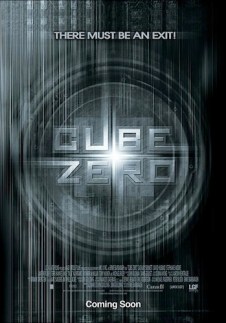
Cube ZeroI presume, from the title, that Cube Zero is meant to be one of them prequel things, going back before the original film to reveal more of the backstory and answer questions that probably didn’t need answering. It does some of this — there are unwelcome answers and an ending that explicitly links back round to the first film — but undermines it by apparently being set in some fantasy-future retro-industrial universe that doesn’t gel with the everydayness of the preceding entries. This design work is almost nice, reminiscent of films such as Brazil, The City of Lost Children, and even Blade Runner; but it’s all on a direct-to-DVD scale that feels oddly familiar from things I’m sure I haven’t seen. Derivative? Yes indeed.

One thing it isn’t especially derivative of — initially, anyway — is its two prequels. After the requisite gory opening, the camera pulls back to reveal an entirely different setup: the people who observe the cube! Except they’re still a small group (just two), confined to one room, with no idea about the people behind all this. They are, very literally, only one step removed… until one of them goes inside, and then we’re right back in familiar territory, except with an added outside perspective that sinks to new depths so low I don’t even want to explain them.

In the cube itself, we have the most gory deaths yet. Barbarash — here adding “director” to his list of crimes after producing and co-writing Cube² — lingers on the gruesome details, seeming to make the series bridge the gap between relatively old-style horror films and the new trend for sickening weirdness that Saw would kick off the same year. I’m sure gore-hounds will love it but, for me, Cube was never about how vile the deaths could be.

You have to admire them (albeit begrudgingly) for trying to do something different with the concept and give it some fresh spins. But, as ever, the series didn’t need those additions, and consequently it doesn’t need this sequel. It answers too many questions, which might be acceptable if the answers were remotely original or satisfying, but, of course, they aren’t: they’re derivative and, worst of all, quite irritating.

And that goes for the film too.

2 out of 5

For a brief overview of the Cube trilogy, please look here.

Cube Zero featured on my list of The Five Worst Films I Saw in 2008, which can be read in full here.

Cube²: Hypercube (2002)

2008 #84
Andrzej Sekula | 90 mins | DVD | 15 / R

Cube²: HypercubeThe new cube set is bigger, shinier, simpler, emptier, always one plain colour, and devoid of traps. Consequently, but perhaps inadvertently, it seems to symbolise the film itself.

Despite this simplified set, the concept behind the new cube — or ‘hypercube’, so we’re told — and the plot that results from it is incredibly complex. In fact, it seems to be too complex for the writers to grasp, so the viewer doesn’t stand a chance. It’s not the only overdone element either: Sekula’s direction is frequently as inappropriately elaborate as possible, twisting the camera round for no reason other than some misguided attempt at (inaccurately) conveying this cube’s mixed gravity. He also feels the need to illustrate characters’ backstories, something the original left to the dialogue, which is probably because the ragtag selection of flat stereotypes here are far more generic than the lot in the first film.

And there’s loads of them too, though it’s hard to tell if this is to cover for them all being one-dimensional, or a transparent attempt to keep things moving by constantly chucking more people into the mix. As if to underline the point, several are cloned from the first film, but with much weaker acting, and almost none of them are granted a plot thread that actually gets resolved. In fact, nearly every character is entirely pointless. Eventually some of them do get killed off, but every death is too reliant on some middling CGI and abstract ideas. Not a single one is as properly inventive or scary as those found in the original.

Hypercube should at least be applauded for trying something new, when it might have been easier to bung a new group of people into the same cube and come up with new ways of killing them or new puzzles to solve. It dives further into SF territory, dragging in parallel universes and varying timelines, and largely avoids rehashing the first film’s mysteries. In fact, it more picks up where that left off, drawing out questions and providing some answers about the reasons for, origins of, and people behind the cube. Unfortunately, these questions don’t need re-posing and the answers certainly aren’t required. Like other elements of the first film not carried over — the clever deaths, the claustrophobia — it’s nice that they’ve not been duplicated, but equally they didn’t need changing, expanding or explaining.

Even worse, the writers seem to have spent more time mulling over the behind-the-scenes complexities of constructing the cube — and put in all their characters and ideas about this — and not enough time actually crafting a plot. The more the clock ticks by the more obvious this becomes, to the extent that they don’t even seem to have an ending. What minimal logic there was is thrown out the window in favour of some crazy different-timeline horror that barely resolves anything and certainly cops out of almost everything.

Where the original Cube felt like the smart little sci-fi indie it was, Hypercube feels like expensive tosh based on a faux-intellectual idea. Much of the original’s brilliance lay in its simplicity, but the sequel is more complex from the off — and not in a way that rewards the attentive viewer, or even in a way the writers seem to understand. Bigger and shinier, but simpler and emptier, it’s consequently less engaging, less interesting, and far less enjoyable.

2 out of 5

For a brief overview of the Cube trilogy, please look here.

Cube²: Hypercube featured on my list of The Five Worst Films I Saw in 2008, which can be read in full here.

Cube (1997)

2008 #83a
Vincenzo Natali | 87 mins | DVD | 15 / R

CubeI’ve seen Cube a couple of times before, but, as I’ve watched it again immediately before taking on the two heavily-criticised sequels, I thought it might be worth throwing in my opinion on the original too.

Cube has a deceptively simple concept — a sci-fi/horror/mystery in which six strangers are trapped together trying to escape a series of cube-shaped rooms, some of which contain deadly traps — but within that it pulls a lot together. The major element, arguably, is the mystery of what the cube is — where is it, who built it, how does it work, why are those people there, is there a way out? Some of these questions are answered but, crucially, not all of them, and it’s partly due to this, ironically, that it’s a satisfying experience. In its series of careful, measured, necessary reveals, the film strikes a perfect balance between what it lets the viewer know — and the revelations are expertly paced throughout — and what it keeps hidden, either for the viewer to deduce or interpret for themselves, or simply because one doesn’t need to know.

Within the cube and its mystery there are the characters. Depending on your point of view they’re either well-drawn sketches interacting realistically in an unrealistic situation, or archetypes representing different facets of humanity, or simply chess pieces to move the clever construction — of both plot and setting — forward. At times the movie does work like a slasher-horror, picking off characters one by one, but after a few grisly deaths it rather transcends that. The scenes where characters debate and argue aren’t quite as engrossing as when they’re puzzling over the cube, but nor do they drag. Not all the performances are good — Maurice Dean Wint in particular lets the side down for much of the film — but the character arcs are never less than believable and well considered.

Cube manages to effectively juggle gruesome horror deaths, sci-fi mysteries, an awful lot of maths (don’t worry, you don’t need to understand it) and character-based drama. It’s a brilliant low-budget (not that it shows) understated film, which seems to have been somewhat forgotten these days, probably under the weight of the two widely derided and unnecessary follow-ups. But that remains for me to see. Whatever they may be like, everyone interested in the more intelligent end of the sci-fi spectrum should see Cube.

5 out of 5

For a brief overview of the Cube trilogy, please look here.

What makes a film a film?

What makes a film a film? I don’t mean “as opposed to a book”, or “as opposed to a pile of rubbish”; but rather, “as opposed to a TV special”, or different to a direct-to-DVD movie — indeed, is there a difference?

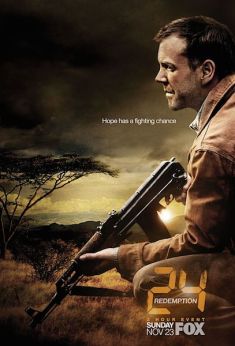
This is the sort of thing that’s bothered me for a while, mainly thanks to the Radio Times. The Radio Times’ film section frequently features reviews for things they label as “US TVM” — translation: an American TV Movie. Not everything falls into this category. The 1996 Doctor Who TV Movie (the clue’s in the title) was just listed as a TV special, as was the recent one-off episode of 24, Redemption. Why are these different to other feature-length made-for-TV one-off dramas? The former was a British co-production, perhaps, but the latter wasn’t. The latter is part of an on-going series, made between seasons, however. But then, one-off editions of other (older) series have been reviewed as “US TVM”s, so why are they different? It’s not even a hard rule in that instance, as some old series have their feature-length episodes screened as a matter of course among other repeats.

On a different tack, what about Paul Greengrass’ excellent Bloody Sunday, simultaneously screened on Channel 4 and released in cinemas? Or more recently, Ballet Shoes — just part of last year’s Christmas schedule in the UK, but it received a limited late-summer theatrical release in the US. So is that a film, or ‘just’ a TV special? Is a cinema release the key? Well, no — at least as far as the Radio Times are concerned — because Ballet Shoes wouldn’t now feature in their film review section were it repeated, while those other “US TVM”s will continue their circulation. [2015 note: A few years after I wrote this, Ballet Shoes was indeed repeated, and not listed as a film. Whenever Bloody Sunday is on, the Radio Times list it as a film.]

Is length the issue? Clearly not — look at the Basil Rathbone Sherlock Holmeses, some of which struggle to make the hour mark, a running time that Midsomer Murders or Poirot tops with every new episode.

And all this without even considering direct-to-DVD movies!

Perhaps it’s not a scientific rule-driven process, but just a “feel”? But that’s rubbish too — I’d wager 24: Redemption is at least twice as cinematic as most of the ’80s “US TVM”s awarded a proper film section review. Maybe it’s production method, then? But Redemption was produced as an individual piece, outside of the series’ production — much as a ‘proper’ 24 movie would’ve been, though surely with a smaller budget. So too was the Doctor Who TV movie, and obviously all one-off UK productions are made in a similar vein. And many of them, like Ballet Shoes, are surely just a theatrical release away from being a ‘film’ rather than a one-off TV drama, aren’t they? Perhaps it’s stylistic conventions — production company logos at the start, for example. But that seems a tad arbitrary to me, and plenty of independent films dispense with such.

Or perhaps, in this modern world, IMDb is the decider — whether it has that little “(TV)” after the title or not (it does for Ballet Shoes and 24, but not for Bloody Sunday). But then, why are the people at IMDb — and, we should remember, most of their content is user-generated anyway — any more qualified to decide than you or I?

It’s all down to the individual then, is it? Perhaps. If I declare 24: Redemption a film and review it as a numbered entry in 2008, would anyone care? But would it mean that, ‘morally’, I should go back and review Ballet Shoes as part of 2007? Or last month’s Einstein and Eddington as part of 2008? Or afford any of the countless other feature-length TV specials I’ve seen in the past two years the same treatment?

I don’t have any answers here, just more questions. I’m not going to go back and review Ballet Shoes though. Nor am I going to add Einstein and Eddington, or this Christmas’ The 39 Steps when it comes around. I may well count 24: Redemption, though [I did]. I don’t have Sky, so as far as I’m concerned it may as well be direct-to-DVD, especially in its extended DVD-exclusive form.

And direct-to-DVD movies definitely still count… don’t they?

Gasman (1997)

2008 #76a
Lynne Ramsay | 15 mins | DVD | 15

“Gritty”, “realist” and “indie” are just some of the stock terms that immediately jump to mind when watching this short, which directly enabled Ramsay to make her first feature, Ratcatcher.

Films with such words attached are not automatically to my liking, but Gasman succeeds in using the associated techniques to tell a simple story of complex emotions and meaning for the characters involved. There are times when its documentary-like style is indulgent — the opening goes on too long, for example, and some shots seem deliberately obscure — but it also relates the story effectively and produces a few beautiful views too.

Even cleverer is the use of sound: there’s virtually no dialogue, so the occasional half-heard splashes, often amongst background chatter, are all the more telling. Mostly this is in a subtle fashion, though the key phrase that reveals all is both pretty blunt (though not inordinately so) and repeated an awful lot in a very short space of time.

Gasman is not wholly successful, then, though it does have an interesting story with a strong ending, dialogue-free, that both completes the plot and leaves you wondering what happens next.

4 out of 5

This short is available on the DVD Cinema16: British Short Films, as well as the Criterion Collection and Pathe/Fox releases of Ratcatcher.

Mamma Mia! (2008)

2008 #81
Phyllida Lloyd | 104 mins | DVD | PG / PG-13

Mamma Mia!If you listen to the critics, no one liked Mamma Mia. If you listen to the public, everyone loved it. It’s the highest grossing British film of all time at the UK box office — at last count, just over £400,000 away from being the highest ever* — and was still playing on the big screen at hundreds of locations the weekend before its DVD release.

Mamma Mia! is the first feature from director Lloyd, who also directed the original stage production — and sometimes both facts show. She doesn’t always quite know what to do with the camera, the choreography is often aimed at a theoretical audience rather than the camera position (a pet peeve of mine), some shots are over-simplistic, others over-done, and there’s a bit of “point and shoot” too, missing opportunities that would be obvious to more experienced film directors. It’s never atrociously directed — at the very least, the scenery looks stunning, and is put to much good use — but it does the job and little more.

The songs themselves don’t need discussion (everyone knows what they think of Abba) but it’s worth mentioning how they’re choreographed and how they come about in story terms. Some have been brilliantly staged (Mamma Mia itself, but especially Does Your Mother Know), though others are flat and awkward (The Winner Takes It All doesn’t win anything as far as I’m concerned). Equally, some emerge naturally from the story (Chiquitita, Money Money Money), while others feel shoehorned in (again, The Winner Takes It All). For others still they seem to have just given up forcing them into the plot, leaving them to be performed by a musical act: Super Trouper, which at least is vaguely appropriate to the juncture it appears; and Waterloo, which is tacked on during the end credits, though at least is amusingly done.

The majority of the cast were clearly chosen for acting skills rather than singing ability, not that it’s done the film many favours. Pierce Brosnan was unfairly singled out by critics for poor vocals, but he’s no worse than several others. On the other hand, Julie Walters is as much of a riot as you’d expect, right from her first line, and earns the lion’s share of the laughs. For any bored male viewers, there’s always Amanda Seyfried, with her often bouncy pair of friends — played by newcomers Rachel McDowall and Ashley Lilley (why, what did you think I meant?) Every cast member is clearly having a ball, so much so that some forget to do more than read lines aloud; but it’s occasionally infectious, the frequency of infection being directly proportional to how susceptible the viewer is to this genre of music and this genre of film.

It may go without saying, but the more you like Abba the more you’ll like Mamma Mia. Conversely, the more you hate them the more you’ll hate it. (Extra stars can be added or subtracted at the end depending on which side of the fence you fall.) It’s therefore easy to see why audiences — especially British audiences — have lapped it up, while the critics have been fairly damning. On the other hand, the often clichéd first-draft-level script and occasionally ungainly first-readthrough-level performances don’t help things any. Luckily it very rarely takes itself too seriously, and consequently is often hilariously funny. Though it attempts both, it clearly works best when being a camp and cheesy comedy rather than a serious romance/family drama. One especially weak note, in my opinion, is the subplot awarded to Colin Firth’s character, who turns gay almost out of nowhere. It’s not a bad idea for a subplot, especially in a film based on Abba music (not that I’m applying any stereotypes here), but it’s poorly executed.

Mamma Mia! never aimed to please the critics, or even your regular movie-goer. Instead it sets its sights firmly on Women Of A Certain Age who can remember Abba from first time round, and students who perhaps listen to them in a more ironic way nowadays. In that sense, it’s clearly an unmitigated success. As camp as a row of tents, disliked by critics, loved by audiences: Mamma Mia! is everything you’d expect from Abba.

3 out of 5

* In the interests of fully-correct information, I feel I should point out that Mamma Mia! has now [December 28th, 2008] overtaken Titanic at the UK box office. (BBC News) ^

Fist of Legend (1994)

aka Jing wu ying xiong

2008 #77
Gordon Chan | 99 mins | TV | 18 / R

Fist of LegendI found myself watching Fist of Legend unintentionally following this year’s Children in Need appeal. The significance of this piece of trivia is that I watched it on TV, which means I had to watch it dubbed. Apparently, “it is regarded as one of the best martial arts films of all time, and almost universally viewed as Jet Li’s best” (thank you Wikipedia), but the dub does its utmost to obscure this.

Putting the audio aside (for the moment), the film has a lot to recommend it — primarily, the fights. At 2am, after seven hours of near-solid TV watching, it was these that drew me in. I’m no expert on martial arts, but I do like a good fight (on film) and Fist of Legend serves up plenty of those. In fact, there’s approximately one every five minutes, an impressively high ratio that consciously — and very pleasingly — fulfills what you want from this kind of film. This quantity doesn’t seem to have damaged quality either: all are generally impressive, but there are some particularly good ideas floating about too, such as a long fight where both participants are blindfolded.

There’s a plot too, which includes a few surprisingly surprising twists and an interesting undercurrent of Japanese/Chinese racial tensions thanks to the setting (1937, during a Japanese occupation of Shanghai). This adds an extra level to what could otherwise be a stock revenge plot.

So, that just leaves the soundtrack. The English audio is at least as bad as you’d imagine, and a reminder — if one were needed — about why dubbing foreign language films is so hated. Whatever the qualities of the film itself, the clichéd dub script and flat voiceover performances, awkwardly delivered to fit the actor’s mouth movements, make the film look cheap and poorly done. On the bright side, the main villain has an amusingly gravelly “I am playing a villain!” voice.

If you can look past the rubbish dub (which I should imagine is even easier on DVD, what with turning it off), Fist of Legend is very enjoyable. However, with the action being the primary source of pleasure, those who don’t like martial arts movies may want to imagine a lower score.

4 out of 5

The Cable Guy (1996)

2008 #79
Ben Stiller | 88 mins | download | 12 / PG-13

The Cable GuyThe best thing I have to say about The Cable Guy is that the opening titles were very well done.

The second-best thing I have to say is that a subplot featuring director Ben Stiller as a faded-child-star twin-killer is very neatly integrated into the film, seeming utterly pointless until it has a near-vital role in the climax. That’s a pleasing piece of writing/editing right there. Unfortunately, the point this seems to be aiming at — that TV rules our life too much, that we’re too addicted to it, etc etc — is not only old hat, but also rendered meaningless in this instance by the lack of impact: TV goes off for the night, and one guy picks up a book. Oh, wow. And to top it off, thanks to an unnecessary final beat, it seems Jim Carrey’s titular character hasn’t actually learnt the lesson we thought he had.

Incidentally, The Cable Guy is a comedy, though at times it seems to wish you’d forget that so it could be a psychological stalker thriller. Perhaps that’s what it had wanted to be — for one thing, there are surprisingly accurate predictions for the future of telecommunications, although their coming true may simply have killed another joke (“play Mortal Kombat with a friend in Vietnam!”) — until someone realised the idea was too silly to be taken completely seriously. How funny you find the end product will depend on whether you like the style of comedy Carrey employed in the early & mid-’90s, and whether you can stomach pointless asides that don’t do anything for the plot (final act freaky nightmare, step forward). There’s little else to engage interest — Matthew Broderick’s pseudo-protagonist is, perhaps, too nice and too eager to please, and the go-nowhere romantic subplot — his main action aside from being Carrey’s straight man — has all the depth and shape of something from a cookie cutter.

More fun than the jokes, actually, is playing Spot The Pre-Fame Comedy Star. Eyes open for young-looking turns from (in ease-of-identification order) Jack Black, Ben Stiller, Owen Wilson, Janeane Garofalo, and Kyle Gass. And Eric Roberts randomly shows his face too, not that that’s relevant to anything.

The Cable Guy is rated 12, or PG-13 in the US, which may also be the last ages you’d enjoy it at.

2 out of 5

In case anyone’s wondering what’s happened to #77 & #78… Despite spending 23 months carefully posting reviews in order (well, the first two months are actually a bit of a muddle), it’s now December and I’m a few behind, so I’ve decided to throw numerical sequence to the wind and just post reviews as & when I get round to completing them. The main reason for this is to help drive things forward so that I can actually end 2008’s posting by December 31st, rather than having it drag on into 2009 and overlap with Year 3. I’m sure no one will really mind. Or care.

Eternal laziness of the dreamless blogger

11 months down, 1 to go… 81 films down — it should’ve been at least 92.

It’s fair to say 100 Films hasn’t gone quite as smoothly this year as it did last, where I made it to 100 by the start of September and meandered on to a final total of 129. Rather than being in the luxurious position of just watching as much as I like to see how far I can get, I have 31 days to see 19 more films to even hit my basic target.

“Oops.”

I could reel off a list of excuses — the effort I’ve tried to put into writing much longer reviews, having an undergraduate degree to complete, starting work on a postgraduate degree, actually getting a job over the summer… but there’s also plain old laziness — yeah, isn’t watching a film such a lot of effort?

…no?

Of course, as the old adage favoured by so many teachers goes, “you’ve only let yourself down.” (I may be paraphrasing for effect.)

Still, 31 days! And 19 of them holiday-days! The end is in sight, and I might still make it.

Though, don’t be surprised if the reviews get shorter — it would be nice to complete 2008 within 2008 after all — and, if I do well, I may even get the final lists (see here and here for last year’s) online for December 31st.

Hey, a blogger can dream.