Unknown's avatar

About badblokebob

Aiming to watch at least 100 films in a year. Hence why I called my blog that. http://100films.co.uk

Bhaji on the Beach (1993)

2010 #90
Gurinder Chadha | 96 mins | DVD | 15 / R

The debut feature from director Gurinder Chadha (of Bend It Like Beckham, Bride & Prejudice and Angus, Thongs and Full-Frontal Perfect Snogging fame) and screenwriter Meera Syal (of Goodness Gracious Me, Anita and Me and Life Isn’t All Ha Ha Hee Hee fame) focuses on the experiences of a group of British Indian women. One might add “unsurprisingly”, considering the other works on their CVs, but I feel that would just open a can of worms, so moving on…
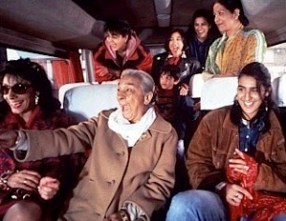
One gets the sense that, in 1993, Bhaji on the Beach was a break-out film that uncovered an area of British society and culture that had been largely concealed from the wider media landscape. It was no doubt bitingly relevant, showcasing a different set of cultural rules and expectations, not to mention the casual racism that I’m sure was as prevalent as it’s depicted. That’s not to say everything is healed and we no longer need to understand these things, but, viewed today, the film feels less “this is how things are” and more “this is how things were then”, emphasised by the ever-so-’90s costumes, cars, locations… It feels as much a period piece as, say, Ashes to Ashes.

The perspective is definitively female — no bad thing for a medium where, almost 20 years later, there are still few female directors, and those that garner the widest recognition tend to do so in typically male genres. This also arguably helps it transcend a potentially exclusive cultural specificity: topics like unwanted pregnancy, abusive husbands and parental expectations are certainly relevant to a wider audience. Bhaji on the BusIndeed, there’s certainly evidence that the film was constructed with such an audience in mind: when the women settle down for a traditionally British ‘picnic on the beach’, we’re given a close-up to show they’re eating samosas and bhajis instead of sandwiches and what-have-you. If all the talk of pregnancies, abuse and racism sounds a bit serious, there’s also a good degree of humour and an appropriate lashing of sentiment.

The low budget occasionally adds an unfortunately amateurish feel to the film’s construction. Chadha clearly has vision and skill — the numerous daydream/nightmare sequences show this off in spades — but some dialogue scenes are either unimaginatively shot, or in some instances plain flat. Just a pinch of the talent applied elsewhere would serve to give them a necessary kick. Similarly, a few of the performances err on the weak side, to exactly the degree where some viewers won’t even be bothered while others may be frequently irritated.

As a very low budget, very indie, very ’90s film, Bhaji on the Beach has aged rather; yet for that it’s still an enjoyable, informative and affecting feature. It’s no surprise both Chadha and Syal have gone on to bigger things.

4 out of 5

On Film4 tonight, Sunday 27th July 2014, at 1:10am.

Bride & Prejudice (2004)

2010 #82
Gurinder Chadha | 107 mins | TV | 12 / PG-13

I don’t imagine Bride & Prejudice is going to convert many people who aren’t already predisposed to liking it in some way. That’s not to say it’s not good or doesn’t have potential crossover appeal, but it still has a whole list of things that will put certain viewers off.

Melodramatic love story/stories? Check. A couple of over-acted comedy characters? Check. Characters bursting into song? Check. Bright, colourful, extravagant song-and-dance numbers? Check.

I can’t comment on how much it’s like a Bollywood movie because I’ve never seen one, but it’s a little bit what I’d expect one to be like; albeit a Westernised one, as it’s mostly in English, with some significant British and American characters, and runs comfortably under two hours. Another point of reference that came to mind was Moulin Rouge, though it’s not as MTV-style fast-paced as that, and the songs are originals rather than repurposed pop/rock numbers. Also Mamma Mia, though I don’t wish to bring about the negative connotations — it’s well sung and not as cheesy.

The other main facet is that which is (hopefully) obvious from the title: it’s a Jane Austen adaptation. It’s easy to think we’re in no rush for another version of Pride and Prejudice, what with the iconic 1995 BBC series and the Oscar-nominated Keira Knightley film, not to mention the numerous adaptations predating either of those, but Bride brings plenty that’s vastly different to the table. It converts the novel very accurately (as best I can tell, having only seen screen versions), retaining both the characterisation and the majority of the plot in a similar sequence of events.

On the surface it’s completely different, of course, transplanting everything from 19th Century England to modern-day India, complete with vibrant song & dance numbers, email correspondence and aeroplane-fuelled globetrotting. There’s no danger anyone will confuse this for a straight adaptation. But for all that it is a faithful retelling, the characters and their actions unmistakably Austen’s.

That said, while most characters are fundamentally unchanged, others are suitably modified. Nitin Ganatra offers a very different Mr Collins (here, Mr Kohli), for instance. Removing the awkward creepiness of the usual interpretation, he’s instead Americanised — brash, mannerless, over-enthusiastic — but still odd, unlikeable, and undesirable.

Little of the plot requires such modification, perhaps thanks to the culture it’s been grafted onto — the predominance of arranged marriages wouldn’t really work in a ’00s British setting — and those bits which are changed are relatively minor. Lydia (here, Lakhi) runs off with Wickham for an afternoon at the London Eye, rather than eloping; Georgiana (here, the slightly more modern Georgina) was impregnated at 16, less legally complicated than the novel’s 15.

As I said, Bride & Prejudice certainly isn’t for everyone, but for those that can accept its musical, colourful, comical style and familiar plot (the curse of any version of a much-adapted tale), it’s a wonderful entertainment.

4 out of 5

Dragonslayer (1981)

2010 #73
Matthew Robbins | 104 mins | TV | PG / PG

Back when he was still directing The Hobbit, Guillermo del Toro spoke a bit about his plans for Smaug, the dragon antagonist of Tolkien’s tale. Talking about the lack of “landmark” designs for dragons, there was one he did single out (I’ll give you one guess which it was)…

One of the best and one of the strongest landmarks that almost nobody can overcome is Dragonslayer. The design of the Vermithrax Pejorative is perhaps one of the most perfect creature designs ever made.

Indeed, the realisation of the spellcheck-bothering dragon is definitely one of the film’s high points. It’s an impressive creation, brought to the screen in those wonderful pre-CGI days through a total of 16 puppets, which included a 40-foot hydraulic model and the first use of “go-motion”, a computerised version of stop-motion designed to add motion blur. Of course it has that veneer of ’80s effects work, which is either nostalgic or amateurish depending on your point of view (and, most likely, age). Some of it looks expectedly dated — it’s nearly 30 years old after all, and hasn’t benefitted from the attention lavished on the likes of Star Wars (even discounting all the CGI Lucas has pumped into that) — but largely it remains effective.

Vermithrax Pejorative is a long time coming, however, wisely kept off screen by director Matthew Robbins. It’s not that the monster shouldn’t be revealed, just that, like Alien, it carries more power when glimpsed in parts and flashes, and the wait to see it builds the tension. It’s worth the wait, and it’s not as if the rest of the film is worthless.

Aesthetically, it’s got that nicely dirty, realistic feel to its depiction of the Dark Ages, which has been rather lost as swisher filming techniques have come along to make everything oh-so-stylised, particularly in genres like fantasy. The rough, practical effects add to this feel, in a way CGI is unlikely to do (not that it couldn’t, I’m sure, but it would have to be exceptionally well managed and I can’t think of an example).

A very young-looking Peter MacNicol leads the cast, being sporadically (shall we say, kindly) fresh. He’s been better served in character roles since. According to IMDb he’s embarrassed by the film and doesn’t include it on his CV. Particularly when one considers the kind of work he does now, it’s quite easy to see why. Being a US-produced medieval-ish fantasy film, everyone is English — except the two leads, of course. They’re all fine but, like every high-concept fantasy blockbuster, this is more about the adventuresome hijinks and giant monster than character development. Similarly, an interesting subplot about the move from The Old Ways of magic and superstition to The New Ways of Christianity feels like a good idea that hasn’t been fully integrated, made up of little more than a couple of passing nods and a negatively-inclined inclusion in the coda.

Dragonslayer is a little scrappy, in a way — the narrative, the acting, the effects — and yet, for that, it’s a minor treat. I don’t know what The Youth Of Today would think of it, but as someone who in his childhood watched many examples of this kind of film on video from the small rental place in town — films like The Princess Bride, The NeverEnding Story; you could even include big-hitters like the Star Warses or Ghostbusters — it fits nostalgically into that era. And there’s a lot to be said for nostalgia.

4 out of 5

Terminator Salvation: Director’s Cut (2009)

2010 #72
McG | 118 mins | Blu-ray | 12 / R

Terminator Salvation begins with a title sequence that displays the film’s title twice. I know you shouldn’t judge a book by its cover and all that, but somehow it just doesn’t bode well.

However, I was somewhat surprised — after the mass of negative reviews — to discover that I quite liked Terminator Salvation. Sacrilege! But, let’s see if I can explain why…

I’ll begin with the most obvious potential flaw (other than the very concept of continuing the Terminator franchise without James Cameron, that is): director McG, he of the two risible Charlie’s Angels films. Oh dear. But it turns out he’s a surprisingly good director — he certainly does better work than the cheap hack job Jonathan Mostow made of Terminator 3. I doubt everyone agrees on this point, but whatever else you may wish to say about McG, he knows how to put an action sequence together. Most of the time. There’s still some shaky-cam business and very fast cuts, but the sense of geography and what’s actually happening is largely maintained.

This is helped by two things: one, that several sequences involve Giant Robots that benefit from very wide, often aerial, shots to show them off; and two, the apparent inspiration of Children of Men’s long-take action sequences. McG doesn’t quite have Alfonso Cuarón’s conviction in maintaining the single shot for an entire sequence, but he does use it for significant chunks. That said, the latter sometimes backfires. Early on the film feels a bit like watching someone else play a first person shooter, compounded by McG’s habit of sticking with one character throughout sequences that could benefit from a wider perspective, for example Connor’s helicopter crash. That said (again), I’m a little torn what to think of that example: keeping the camera on Connor produces an unusual spin on a potentially familiar sequence, but it’s also a bit disorientating and, as I say, compounds this sense of watching someone else play a game.

Story wise, I thought it fared fairly well. The tale of how John Connor came to meet Kyle Reese and become leader of the resistance wasn’t exactly begging to be told, but if you’re going to continue the franchise into post-Judgement Day future war territory it was probably the best place to start. Terminator 3 proved that the narrative of Arnie/any other Terminator coming back to our present to save Connor/prevent Judgement Day wasn’t in need of reheating again, so it’s also nice to be presented with a slightly more original story within the same universe.

It’s not all fine and dandy though: the behind-the-scenes issues you may have heard about are fitfully apparent on screen, with occasional awkward jumps or half-thought-out developments that smack of an unfinished script or compromised edit. Some of the dialogue’s pretty poor too — considering it starts off pleasantly economical, it’s a shame when characters begin uncomfortably stating the obvious as it wears on.

And even if you hadn’t seen it on the box or heard about it in all the film’s publicity, it’s obvious pretty early on that Marcus Wright will turn out to be a Terminator. To McG’s credit, he plays the ultimate reveal quite well — for those who know, it just about functions as a scene in its own right; for those who still hadn’t guessed, it works as a reveal — but if any filmmaker genuinely thought they’d kept it covered up they were sorely mistaken, and the first half could’ve done with a more knowing rewrite to compensate. Or just delete the prologue.

Littered throughout are numerous nods to the franchise’s history, some of which occur quite naturally, others that feel shoehorned in. I suppose it kept some people happy. The same can be said of the action sequences, though one of the most forced — an attack by a random Giant Robot on an abandoned gas station our heroes only happen to have stopped at — also turns out to be one of the best. Others though, like John Connor taking out a Moto-Terminator with a bit of rope, are more “wouldn’t that be cool to see?” than logical behaviour in the context of the story.

There’s not much for the cast to do either, with a multi-pronged story that leaves everyone feeling short changed. Christian Bale growls a bit and occasionally looks Meaningful as John Connor. At least he doesn’t use his Batman voice. His part was artificially boosted following the star’s casting, which dilutes the focus from where it should be: Marcus Wright, played by the new Colin Farrell (i.e. he’s being cast in everything based on the fact someone said he was The Next Big Thing), Sam Worthington. He’s fine as ever, though his accent seems to waver between American and his native Australian. The same can’t be said of Helena Bonham Carter’s brief turn — her voice hits a constant fake American. Meanwhile, Arnie’s digitised cameo is just that. On the one hand it’s a nice touch, on the other it’s ultimately pointless — Connor doesn’t even react to the familiar face.

Bryce Dallas Howard is severely underused as Kate Connor; one wonders if her part was massively cut back at some point, or if she was just tempted by an exceptionally good payday — considering she usually appears in smaller, better-regarded films, an almost non-existent role in a blockbuster seems an odd choice. That said, she did the same thing in Spider-Man 3 and has since plumped for a role in the Twilight exploitative moneymaker series, so I guess my analysis of her career choices is off.

Finally, then, what of the Director’s Cut? I’ve not seen the theatrical so can’t comment myself, but the changes are few and most are ultimately insignificant. There’s a thorough, illustrated list here. Perhaps the most interesting thing (and you’ll see how I meant that loosely) about the newer cut is what it once again shows about the differences between the UK and the US: over here, it retained its theatrical 12 certificate when extended by just under three minutes to include ever-so-slightly more violence and the briefest of brief nudity; in the US, that bumped it up to an R.

More interesting than these slight tweaks is the behind-the-scenes story of a very different film, which I alluded to earlier. I don’t want to discuss it at length, but this article does. Would that have made for a better film? Christ knows. I wouldn’t count on it. Probably not, even. But it is interesting.

It’s not popular to like Terminator Salvation, that’s for certain, and I suppose it depends what you expect from the film. Is it the equal of the first two genre-definers? No. Is it better than the rehashed hack-directed third? Yes. Did I actually enjoy it? You know what, I did; and considering the reviews had me expecting to hate its poorly-made guts for just about every reason under the sun, it turns out that’s a good result.

3 out of 5

Terminator Salvation begins on Sky Movies Premiere today at 10am and 8pm, and is on every day at various times until Thursday 9th September.

August 2010

August. 2010.

Watched films. Some counted.

These are they.


From behind to ahead

No, I’m not talking about anatomy. Look:

At this exact point last year, as we head into the year’s final third (already?! Where’d 2010 go?), I was 22 films behind The Target — i.e. the rate of film-watching that would get me to exactly 100 films by December 31st at a regular, consistent pace.

This year, I’m 23 films ahead.

I’m having a little party. By myself. Nibbles?

But this is no time to be complacent, oh no. There’s still 11 films to go. I may theoretically have time for 34, according to The Target, but who knows what might go wrong? I mean, I started last year three times further ahead than I needed to be and was behind before February.

Enough of that, what of August 2010? Well, to get 23 films ahead, I watched 17 this month (plus one short). That’s the most in a single month this year, just beating May’s 16, but third all-time to December 2008 — when I managed 18 to just scrape 100 that year — and August 2007 — when, somehow, I managed between 25 and 29 films (records for such ancient times are sadly not as thorough).

Hark at me, waffling on about my past times. You’d just like a list of films, wouldn’t you? Wouldn’t you? Well here’s one anyway.


#73 Dragonslayer (1981)
#74 Star Trek: First Contact (1996)
#75 Nanny McPhee (2005)
#76 Final Destination 2 (2003)
#77 Total Recall (1990)
#78 Late Spring, aka Banshun (1949)
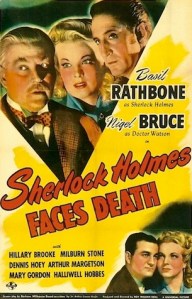
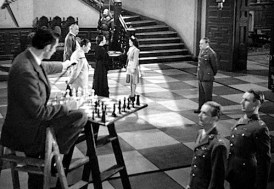
#79 Sherlock Holmes Faces Death (1943)
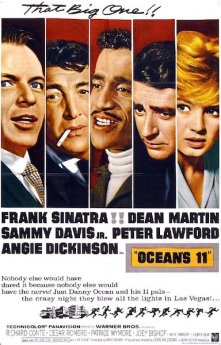
#80 Ocean’s Eleven (1960)
#81 Star Trek: Insurrection (1998)
#82 Bride & Prejudice (2004)
#83 Final Destination 3 (2006)
#84 Matchstick Men (2003)
#85 The Damned United (2009)
#86 Snake Eyes (1998)
#87 Daylight (1996)
#88 Night at the Museum (2006)
#88a The Met Ball (2010)
#89 The Seeker: The Dark is Rising (2007)


Next time on the all-new 100 Films in a Year monthly update…

The year’s final act begins. Will I even come close to 2007, and reach 100 before the month’s out?

Only time — and probably Twitter — will tell…

The Seeker: The Dark is Rising (2007)

2010 #89
David L. Cunningham | 95 mins | TV (HD) | 12 / PG

The Dark is RisingHarry Potter has a lot to answer for. By taking a successful children’s book and turning it into a billion-dollar film franchise, Warner Bros inadvertently suggested everyone else try the same with every kids’ book series they could get their hands on. The Chronicles of Narnia, The Golden Compass, Inkheart, Twilight — for better or worse, it’s all Potter’s fault.

And so, of course, is the awkwardly titled The Seeker: The Dark is Rising, allegedly based on Susan Cooper’s five-volume fantasy series, The Dark is Rising, and specifically the second novel, The Dark is Rising. Changes from book to screen abound, however, though I’m no authority to list them — I’ve only read the first book, and that was many years ago — but there’s no sign of an Arthurian influence or Cornish setting (things I’m informed the books are concerned with). In fact, it’s specifically set near London, because, of course, Britain is only London; and the lead character is changed to an ex-pat American, because, of course, Americans would never go to see a fantasy movie starring a British kid.

Fan-baiting changes aren’t the only things wrong with the film, though. For much of the first half I was almost considering a scene-by-scene account of the irritations and weaknesses, but that would mean watching it again. So, for a few of the problems: the dialogue is frequently clunky, either with stock fantasy phrasing or plain old implausible utterances; the acting is variable, in particular the irritating children, but even Christopher Eccleston fails to do much decent with his villain role; the story is ill thought out, with conflicting or logic-less motivations and a quest structure that requires no skill (the titular Seeker has to find six ‘signs’ — i.e. little magic MacGuffins — a task which seems to involve waiting around until one falls into his hands, sometimes literally); Cunningham’s direction is over enthusiastic, throwing in jaunty angles and varied film speeds like it’s been outlawed to use a straight shot at 24 frames per second.

It’s also almost entirely devoid of humour, which isn’t necessarily a bad thing but doesn’t exactly help. About the best joke is that the Rider’s primary disguise amongst regular folk is a doctor, and he’s played by Chris Eccleston, who had just been The Doctor.

And if I’m nitpicking, that poster is pretty thoroughly unrepresentative. The guy on the top left isn’t even in it (they cut a whole character, I presume that’s him), while the two flanking our hero at the bottom are also minor roles; and, anyway (spoilers!) are both bad guys. Sort of. A bit. Well, look, they’re not even close to being as much of a trio as that poster implies. At any point.

Yet for all that, it’s not all bad. The film is actually awash with great (or potentially great) moments, sequences and ideas. Considering how weak other parts are, it’s easy to assume the good bits must have occurred by accident, or be left-overs from the novel. Equally, as most occur in the film’s second half, the damage has already been done. They also don’t negate the fact that exciting or inventive action scenes don’t make up for a plot that leaves them bereft of character development, emotion, or truly genuine thrills.

If you’re a fan of the books, I imagine you already know to stay well clear. For the rest of us, The Dark is Rising might be worth a single watch for the sake of a handful of these appreciable scenes, but after suffering through the objectionable performances and pondering the unsatisfying storytelling, you’ll wish they’d found their way into a movie that was more deserving.

2 out of 5

The Seeker: The Dark is Rising featured on my list of The Five Worst Films I Saw in 2010, which can be read in full here.

Snake Eyes (1998)

2010 #86
Brian De Palma | 94 mins | TV (HD) | 15 / R

Kick-Ass, Knowing, National Treasure 2, Matchstick Men, now Snake Eyes — I feel like I’m seeing a lot of Nicolas Cage of late. (To be precise, it’s five films in as many months.) It’s not a conspiracy, I assure you, just an almighty coincidence.

Unlike in Snake Eyes, in which it’s no coincidence that a top boxer throws a fight seconds before the US Secretary of Defense is assassinated right behind dirty cop Rick Santoro (Cage), all in a lovely 12-minute opening take. And there’s plenty more to it than that, but I wanted the sentence to be halfway legible. Who did it? Why? How’s it all connected? Who’s involved? Such are the questions to be answered in the ensuing near-real-time neo-noir.

Let’s start with the opening take. It’s a fake (there are eight cuts), which is pretty obvious, but it’s still a nifty way of starting the film. As well as being the kind of thing I always like to see, it sets up nearly everything we need to know for the rest of the film. Almost every element of the conspiracy is tucked away in there somewhere, from the blatantly obvious to the tiniest detail we won’t even notice. It’s just one of many long takes director Brian De Palma deploys throughout the film, including one that sails over various hotel rooms for no reason other than it looks pretty cool. Which is fine — there’s nothing wrong with looking cool, especially in a crime thriller film set in an Atlantic City casino.

Another thing I always like is real-time. I don’t know why, but there’s something pleasing about a story that unfurls in exactly the time it takes to tell it, that doesn’t skip over characters getting places or cheat our sense of relative time for a nifty editing-based twist (which I’m not saying can’t work — just look at Silence of the Lambs — but there’s also a skill in avoiding it). Perhaps there’s just a thrill in the logistical challenge of making the concept — which is highly unnatural to film and TV — work. The first season of 24 paid much attention to it, to good effect; later seasons didn’t and, in my opinion, suffered. Johnny Depp-starer Nick of Time also used it, though I can’t remember much about that except it was total rubbish. Snake Eyes doesn’t stick to its real-time as rigidly as 24, but it was good enough to satiate me. By the time it begins to deviate significantly from the concept, the story’s got so involving that it no longer matters.

And another thing I always like is a bit of noir. Snake Eyes fits the bill, with ‘heroic’ characters of questionable morality, voluptuous femme fatales, vicious villains, double dealings, punch-ups in shadowy alleys, and dozens of other generic signifiers that I’ll leave it for you to discover and/or remember. I was rather surprised to discover it wasn’t on Wikipedia’s era-encompassing list of film noir (until I added it): I’m not always that good at identifying what counts as post/neo-noir (one might ask “who is?” considering the genre’s broad/nonexistent definition), but I’d say Snake Eyes is pretty much undoubtable in its noir-ness.

Based on IMDb scores and Rotten Tomatoes ratings and whatnot, it seems Snake Eyes isn’t very well regarded. Honestly, I’m not sure why. Perhaps it’s too stylised for some tastes — not everyone will like the long takes, the flashbacks, the point-of-view shots, the split screen, or Cage’s usual OTT performance — but I enjoy all of these things when used well, and here they are. Cage, for instance, isn’t permanently OTT, finding the character’s more realistic side when called upon; his style doesn’t always work, this is certainly true, but here it’s a match.

If there’s one significant flaw, it’s that the ending is too much based on convenience and coincidence; and someone in the editing room should’ve paid more attention to removing all references to the original, deleted ending in which the casino got flooded. I have no idea why that was removed — maybe someone thought it was a bit ludicrous. But it sounds more satisfying than what was included, which, as noted, relies on a handy spot of coincidence and at least one action that seems out of character. I can forgive it though, because I liked everything else. And the post-climax montage is a suitably downbeat ending to our hero’s story — another noir trait there.

Snake Eyes certainly isn’t perfect — as well as the above, I’m sure some take issue with its occasionally implausible conspiracy plotting — but if one accepts that it’s set in a slightly more noir-ish world than our own, and that half the fun is to be had from De Palma’s visual trickery, I think there’s a lot to like. And like it I did.

4 out of 5

Snake Eyes is on BBC One tonight, Sunday 26th April 2015, at 11:35pm.

Matchstick Men (2003)

2010 #84
Ridley Scott | 111 mins | TV (HD) | 12 / PG-13

Matchstick Men ends with a twist. One of those great big changes-everything-you’ve-just-seen numbers that have a habit of making a film notorious. Yet I’m almost loath to mention it, because I’ve never read a review, preview, summary or what-have-you of the film that mentions there’s a twist. Maybe I’ve just been reading the wrong pieces; maybe no one cares; maybe they’re all just playing along trying to keep it secret. But not me, because I bloody hated it.

The twist, that is. The rest of the film is pretty good, but the twist undermines it — and not just because I knew it was coming. I don’t wish to sound boastful, but I knew it was coming before I even started watching, guessed from the little I did know about the film from one or two reviews and (sort-of-spoiler warning!) that they’d cast a 24-year-old as a 14-year-old. I spent the whole film hoping that my predicted twist wouldn’t come to pass, but, with crushing inevitability, it did. I didn’t guess every element of it before I began, though I picked up most as the film went along, and those that I didn’t get weren’t surprising either.

Is it easily guessable? I don’t know. It was to me. Perhaps I’ve seen too many heist-type movies or TV shows (watching several seasons of Hustle covers that one easily), or perhaps just too many films with twists, or perhaps it’s just my writer’s brain at work — the latter does have a tendency to make many films guessable. At the end of the day it doesn’t matter, because a guessable twist can still work. This one doesn’t.

Twists are fine. Twists can be great. As I said, you can guess a twist is coming and it can still work. A really good twist works even when you know for certain it’s coming; its existence raises what you’ve seen, makes it all work even on repeated viewings when the element of surprise is obviously gone. Matchstick Men doesn’t have that kind of twist. It has the kind of twist that undermines everything you’ve just seen. Not because it’s illogical — it isn’t in the slightest — but because it tramples over the film’s emotional resonance, in my opinion.

I don’t want to give away the twist here because, even if it’s a rubbish one, that’s a bit unfair on the film. I’d encourage you to watch it anyway and see what you think. And there are reasons to watch it anyway, even if some of the best ones are at least partially tossed away at the end.

Good things, then. The performances. Nic Cage can be awfully mannered and OTT quite often, but here it works. His character is inherently implausible — an obsessive-compulsive agoraphobe who’s also a con artist — but he plays it well, replete with tics and habits. It could easily be a caricature or spoof of the afflictions, and at times it threatens to tip the balance — when we see him obsessively cleaning to a jaunty “isn’t this funny” score, for instance — but the line is successfully trod most of the time.

Alison Lohman is also exceptionally good as a 14-year-old girl. It took a scene or two to convince me, but after that I was plenty on board with it. It occasionally takes some effort to remind yourself she was 24. As the third lead, Sam Rockwell plays a typical Sam Rockwell part. He does it very well, naturally, and there’s nothing to fault him on, but he’s been better elsewhere. The rest of the cast are absolutely fine but not exactly called on much — this is Cage’s film, and to a lesser extent Lohman’s. They have the emotional journey, the film’s heart-and-soul around its long(-ish) con ‘plot’ (which could just be lifted from any episode of Hustle… except it’s not even that complex).

It’s also, as you may have noticed, A Ridley Scott Film. It doesn’t feel like one. It has a ’00s-US-indie aesthetic in every regard and consequently feels like the work of a first-or-second-time young-ish director. Perhaps this is to Scott’s credit, but on the downside it lacks any distinctive qualities. I suppose it’s not fully at odds with the rest of his career — even when you try to pick a genre Scott’s known for, you often find only two or three examples of it in his CV; and there are several genres you can do it with — but if you hadn’t told me it was a Ridley Scott film I’d never have guessed, and I’d wager no one else would either.

Matchstick Men was a lot better than I’d expected, because most of the coverage I remember shoved it aside as a middle-of-the-road side project for Scott. It’s definitely better than that, if still not the “sweep the Oscars” success Ebert seems to think. But I wish they’d stuck with the decision to cut out the twist, not because I object to how it leaves our hero (which was the reasoning, apparently), but because it undercuts an awful lot of what’s good in the film and consequently left a bad taste in my mouth, all for the sake of some aren’t-we-clever-ness.

Stop the film about when Roy wakes up in a hospital bed. Imagine they got away with it and he went to live happily with his daughter. It’s not just a nicer ending, it’s a more whole one too. And then imagine that film on my end-of-year Top 10, because this one won’t be.

4 out of 5

Inglourious Basterds (2009)

2009 #82
Quentin Tarantino | 153 mins | Blu-ray | 18 / R

Inglourious BasterdsWatching almost any film a second time can affect your opinion of it. It could reveal deeper levels of character or theme; it could allow you to see how the writer(s) subtly foreshadowed events, or built up to the big twist; it could be you spot jokes you were too busy laughing during last time; it could let you look at the imagery now you don’t have to concentrate so hard on the subtitles. Or it could reveal shallowness, that there’s nothing to be gleaned that you didn’t get the first time; or highlight the holes in a plot that seemed so well constructed before; or jokes that were hilarious fall flat when heard more than once; or the action sequences aren’t exciting when robbed of their freshness. A second viewing can reveal that you were too young to get it the first time, or that you’re now too grown up to enjoy it; it can reveal a bad movie isn’t so bad, or that without the hype it’s actually quite good; it can raise a favourite even higher in your estimations, or it can tear it down. And even if a second viewing just reaffirms exactly what you felt the first time, well, when there’s such a chance for change and it doesn’t occur, that’s an effect in itself.

This is why I try to post all my reviews after only seeing a film once. There’s nothing wrong with appraising a film after many viewings — far from it — but that’s not the point of this particular blog, focusing as it does on films I’ve never previously seen. (Whether a newcomer’s perspective is still worth anything once a film is months, years, or decades old is another matter, perhaps for another time.) Unfortunately, though rarely, a film slips through the cracks. As you’ve likely guessed, Inglourious Basterds is such a film: though I named it my favourite film I saw in 2009, I didn’t make any notes or write a review promptly. And so here I find myself, over eight months since I first watched itEli Roth and Brad Pitt are basterds — and, today, a year since its UK release —, having watched it a second time to refresh my memory. But has it changed my opinion?

Inglourious Basterds is, in some respects, a law unto itself. That’s probably why it received such a mixed reaction at Cannes; one that, notably, settled down to generally praiseful by the time it was officially released a few months later. It wasn’t, as had been expected, the story of a group of American Jews dropped behind enemy lines to murder Nazis, thereby spreading terror through the enemy ranks. That’s part of the tale Tarantino eventually brought to the screen, but what you’d expect to make up the bulk of the movie — as Aldo Raine himself puts it, “killin’ Natzis” — is skipped over with a single cut. The film is divided up into five chapters; the second is the one most directly concerned with the Basterds, and it’s also the shortest.

And that’s not the only thing Tarantino does differently. The whole film is a grab-bag of filmmaking styles, techniques and modes, thrown together with a gleeful abandon. Tarantino uses what he wants when he wants it, sometimes for no reason at all, and with no eye to creating a stylistic whole. If he wants a character’s name to appear in huge letters over a freeze-frame of them, he will; that doesn’t mean he’ll use it for every character, or every major character, or for every other character on that one’s side — if he wants it just once, he’ll throw it in just once. It’s like that square Uma Thurman drew in Pulp Fiction,Milk? Oui. only instead of being one thing once he does it again and again, with any trick he fancies, throughout the film.

I’m tempted to list them, but that would remove some of the fun if you’re yet to see the film. My favourites, however, are the subtitles that don’t always translate things — e.g. when a French character says “oui”, so do the subtitles. It’s pointless really, but also kind of thought provoking too: if, as a non-French-speaker, we say “oui”, knowing what it means, then are we actually saying “yes” or are we saying “oui”? I’m certain, however, that Tarantino’s subtitling choices weren’t designed to elicit such thoughts and probably don’t stand up to the scrutiny they’d require (such as: if the rest of a Frenchman’s French is translated to English, why aren’t his “oui”s? (As it were.))

This is just one of the things that signals the truth of Inglourious Basterds: it’s not really about World War 2 — though you’d be forgiven for thinking it was, considering it’s all set during World War 2 and all the characters are soldiers, resistance fighters or politicians — but is in fact about film, or cinema, or the movies, or whichever name you want to use. It’s not just his mix and match of cinematic techniques that suggests this — though the much-heralded use of Spaghetti Western style on a World War 2 setting works as fabulously as you could hope — but it’s overt in the text too.

The ending. Sort of.The ending (and skip this paragraph if you haven’t seen the film) is the key to that, as I’m sure you either noticed or have read in other coverage. The power of cinema literally destroys the Nazis, changing the course of the war. Killing Hitler — and the rest — is one of those barmy notions that at first seems wrong, and then seems completely right. “If my characters had existed, this is what would have happened” is one of those genius notions that seems so inescapably obvious you wonder why no one’s done it sooner. Why do you necessarily need to obey history if the rest of your story is fiction anyway?

Back to other matters. It’s interesting just how long the scenes are, and in so few locations. Chapter One takes place solely in a small farmhouse (except for a few minutes outside it); Chapter Four is almost entirely in the La Louisiane bar; Chapter Five almost entirely in Shosanna’s cinema. And while the other two use more locations, their number isn’t great: Chapter Three features the aforementioned cinema, a cafe and a restaurant; Chapter Two a briefing ground, Hitler’s war room, some derelict location, and a prison. This isn’t a full list of locations and scenes, but it’s most of them. Tarantino hasn’t created some writerly exercise — “you are only allowed five locations, one long scene in each” — but he has nonetheless crafted most of his films in long scenes in few locations. I imagine this, along with “all that reading” La Louisiane(I believe more of the film is subtitled than in English), did little to endear it to the complaining masses who thought they were getting “Kill Bill in WW2”.

The chapter-ified structure and constant introduction of new characters suggests a Pulp Fiction-ish ‘short story collection’ at first, but it becomes clear as the film moves on into its fourth and, certainly, fifth chapters that it actually all builds together as one whole story. The chapter headings serve their purpose, denoting the various stages of the tale and allowing Tarantino to jump around, rather than having to find a way to move more seamlessly from segment to segment or somehow intercut them all. Indeed, unlike the other Tarantino films the use of chapters evokes — i.e. Pulp Fiction and Kill BillInglourious Basterds is quite solidly linear, at least as far as the progression through each chapter is concerned. (Chapter Two jumps about in time a bit, with a Nolan-esque stories-within-stories-within-stories structure, but even then does little to upset the linearity.)

ShosannaAnd for all those constantly-introduced characters, the acting is top notch. Christoph Waltz easily deserved the huge pile of awards he garnered, his quirky persona following in a long tradition of calm psychopaths in movies. You always know his pleasantries hide something far nastier; every scene he appears in is instantly tense. Mélanie Laurent is an instant one-to-watch as the film’s real central character, Shosanna, though she seems to have been sadly sidelined by all the praise heaped on Waltz. It doesn’t hurt that she’s the kind of woman you’d happily decorate a whole review with pictures of (though you’ll note I resisted). Michael Fassbender is the very definition of Englishness, without quite slipping into an irritating stereotype. It’s difficult to imagine the originally-cast Simon Pegg in the role, though I’m sure he would’ve brought something… shall we say, different… to it. Brad Pitt’s much-criticised heavily-accented performance is fine. While not as memorable as the others mentioned, I don’t see why some have had such a problem with it.

Between Tarantino’s writing and more excellent performances, we’re also treated to a host of minor but memorable characters: Denis Menochet’s farmer, managing to equal Waltz in the long opening scene;Give me my Oscar now Til Schweiger’s vicious German basterd; Diane Kruger’s glamorous, calm actress-spy; Daniel Brühl’s apparently sweet accidental hero and movie star-to-be; Martin Wuttke’s raving loony Hitler; and others too. Perhaps the only duff note for me was Mike Myers as an English General. I liked the Wayne’s Worlds and Austin Powerses (and haven’t subjected myself to The Love Guru for this reason), and he’s not exactly bad here, but there’s a part of me that couldn’t escape wondering exactly why he was cast in such a small and uncomedic role. A real Brit would’ve been more appropriate, I feel. Perhaps Simon Pegg.

Myers was one of the things I noticed more on my second viewing. So was that “care-free deployment of an abundance of film-specific techniques” — while they’re undoubtedly there, when one expects them they don’t seem nearly so surprising or all-pervading as they did at first. Clearly it’s the shock value: in the same way a jump scare or joke dependent on a surprise twist might only work once, so Tarantino’s occasional and somewhat incongruous flourishes don’t stick out as firmly when you know they’re coming. But that’s not a bad thing. There’s no joyous discovery of something new and slightly different exploding across the screenRun Shosanna! every once in a while, but it also proves they work, that he was right to employ them.

Some people hated Inglourious Basterds (though not enough to keep it out of the IMDb Top 100), be it for the unexpected nature of its story or for the long talky scenes with lots of reading. But that’s just another reason I love it — not to be awkward or Different, but because by being so much its Own Thing it can provoke such strong feelings, in either direction. It’s common for Hollywood to produce films so bland they evoke bags of apathy from those with enough brainpower to realise the film doesn’t have any, so it’s quite nice to have a film that has a brain — and, more importantly, a personality (several, even) — that it isn’t afraid to show off, and isn’t afraid for you to dislike if you want. Love it or hate it, it demands to be seen and judged on its own merits.

To be frank, I’m not sure I liked Inglourious Basterds as much my second time. I may well like it more again on my third, when there’s less personal hype involved. I’d still give it the same star rating though, so at least there’s no conflict there.

You might argue that Pulp Fiction or Reservoir Dogs are better films, but — with its long idiosyncratic speeches and scenes, relatively extreme violence, use and re-appropriation of generic convention, Shosanna on filmcare-free deployment of an abundance of film-specific techniques, and, both through this and also directly in its narrative, its love of film as a medium — Inglourious Basterds isn’t just “a Quentin Tarantino film”, it is Quentin Tarantino. His choice of final line — “You know something, Ultivich? I think this just might be my masterpiece” — is clearly about more than Aldo Raine’s swastika-carving abilities.

5 out of 5

Inglourious Basterds is on Film4 tonight, Friday 24th October 2014, at 9pm.

It placed 1st on my list of The Ten Best Films I Saw For the First Time in 2009, which can be read in full here.

Don't forget the cream

Final Destination 3 (2006)

2010 #83
James Wong | 89 mins | TV (HD) | 15 / R

Never mind Death, it’s another force entirely that the makers of Final Destination need to worry about. The law of diminishing returns, to be precise, and it strikes the series hard in its third instalment.

The setup’s the same as the first two: teenager has premonition of an accident, kicks up a screaming fuss, a bunch of people are saved, the accident happens killing others — usually including some we assumed would be saved — and then Death begins to pick them off one by one. The twist this time (it’s a sequel, of course there’s a twist) is that the last photo taken of someone before they die includes a clue to their death, and our hero just so happened to be snapping away at everyone for the yearbook…

Unfortunately, this time out, no one can seem to make the concept work. FD2 was a very direct sequel, bringing back surviving characters (well, character) and building on the concepts — primarily, everyone who was saved in Film 2 had been saved before by encountering a Film 1 survivor post-plane crash. What it also did was add an element of fun to the thriller plot. We know they’re all going to die, we know it’s a mystical force, but it played around with how it would happen,Trepidation? The right feeling at the start of this film. with the ludicrously OTT setups that led to their death. It made it funny.

Final Destination 3 attempts most of this, but doesn’t succeed. We’ve got a wholly new set of characters, all of them high schoolers, losing the faintly interesting age diversity introduced in the second film. None of them are built up beyond the most surface of elements — the bimbos, the jock, the goths, the irritating one — and turn up one by one in order to die in a creative fashion.

Even the two leads we follow from victim to victim lack character, despite being given the whole film to develop some. Ryan Merrimen starts out as an irritating, stereotypical, loudmouth jerk, only to instantly discover a Surprising Sensitive Side when he survives because, well, the audience need to feel sympathetic towards him now. As the unwitting prophet, MopeyMary Elisabeth Winstead, soon to be seen as the ultimate object of geeky desire in Scott Pilgrim vs. the World, is a wet blanket, filling the film with mopery about failing to save everyone. I suppose, when compared to her aloof hipster role in Pilgrim, it at least shows she has range. Her character is supposedly a control freak, a fact we’re battered around the head with thanks to painful expository dialogue, but that thread goes nowhere.

So what of The Point of a Final Destination film: the deaths? Some are moderately inventive, and one or two even provoked a crumb of the intended amusement, but somehow it didn’t click as it was clearly intended to (i.e. more with the humour of the second than the fear of the first). Even the most appropriate deaths — like the bimbos being burnt alive in sunbeds — somehow fails to generate the required level of interest. It may be that they’re just not ridiculously complicated enough. They’re implausible, certainly, but… not implausible enough. By the end, the lack of creativity is just disappointing.

How you'll feel

As for the big opening — the poster-filling roller coaster crash — well, it follows in the footsteps of the second film more than the first. That is to say, in the first the plane just blew up (more or less), while in the second we were treated to an array of fanciful deaths in the extended pile-up sequence. You might expect the ‘coaster to just derail, but oh no: it goes back and forth, splits in half, people fly out, get hit by bits of track, fall onto spikes, fall… out… Maybe I was just in a bad mood or something but, like the rest of the deaths, it somehow didn’t work, didn’t fulfil the visceral need it was tilting at. I’d rather it had just derailed, plummeted to the ground — maybe exploding into an unrealistic fireball — and been done with.

Scream if you want it to end fasterPlus, having set up the whole photos-predict-deaths thing, it’s barely used. Most of the pictures are kept out of sight for as long as possible, and only a couple offer reasonably discernible clues to the character’s fate. The others are either blatant — such as the one where a gun’s being pointed at her head (it’s actually a nail gun that does her in, but that hardly qualifies as a twist) — or too meaningless — being half-blinded by a camera flash apparently equates to a firework hitting you in the face, or something.

With its third entry, the Final Destination series nosedives in quality. The first was an entertaining high-concept horror-thriller; the second more of the same but with a ludicrously humorous bent; the third tries its hardest to do both, but fails miserably to pull off either. No wonder they were intending to scrap the series until the fourth’s miraculous box office turnaround.

Talking of the fourth, I hear it’s even worse. Perversely, I almost can’t wait to find out how.

2 out of 5