Unknown's avatar

About badblokebob

Aiming to watch at least 100 films in a year. Hence why I called my blog that. http://100films.co.uk

Bank Holiday (1938)

aka 3 on a Week-End

Carol Reed | 82 mins | digital (SD) | 4:3 | UK / English | U

Bank Holiday

You’ll be forgiven for not having heard of this one, even though it’s directed by Carol Reed (The Third Man, Oliver!, etc) and stars Margaret Lockwood (The Lady Vanishes, etc), because it seems to be pretty obscure. I only discovered it when browsing the online offering of UK digital channel Talking Pictures TV, and it mainly caught my attention because that was just before the weekend of the Queen’s Platinum Jubilee, when we had a double Bank Holiday. “What appropriate viewing,” I thought. Well, sometimes chance smiles on us, because this definitely doesn’t deserve to be so overlooked.

As the title indicates, the film is set on a Bank Holiday weekend — the August one, to be precise — and, this being the interwar years (i.e. well before the ease of popping overseas for a quick holiday), city folk flock to the seaside en masse. In terms of the film, a variety of melodramatic and comic plot lines unfurl for an array of characters. The primary one follows a nurse (Lockwood) getting away for a rare holiday with her young fella (Hugh Williams); but he’s not planned it very well, and she’s distracted by thoughts of a man (John Lodge) who was suddenly made a widower on her last shift. That particular storyline gets a bit heavy (death in child birth; attempted suicide), but its balanced by comic antics in other plot lines. Overall, the mix of drama and humour gives a “something for everyone”, all-round entertainment feel that you tend not to get within a single work anymore.

Two outta three ain't bad

Nowadays, the film arguably has greatest value as a snapshot of 1930s British society. There’s a degree to which it feels ‘of its time’ as a work of cinema, but not in a terribly dated way. Indeed, while some things have changed a lot in the ensuing nine decades, but there are definitely behaviours, attitudes, and meteorological phenomena that’ll be familiar to any British viewer and their experience of a summer holiday weekend. And it remains entertaining in its own right. The comic bits still mostly work. Even when they’re not hilarious, at least they’re not embarrassing. The drama is similarly solid: the handling of romantic relationships remains relatable, rather than feeling terribly old fashioned (in fact, it had to be edited for release in the US due to its implication that an unmarried couple had a sexual relationship. And they think us Brits are the prudish ones…)

To call Bank Holiday a “forgotten classic” or similar would be to overstate the point somewhat, but it does seem to be a largely forgotten film that merits being better known.

4 out of 5

June’s Failures

The ‘big news’ this month that’s relevant here is I’ve finally decided to cancel most of my streaming subscriptions — namely: Sky Cinema, MUBI, Apple TV+, and Disney+. Yes, it’s crazy but it’s true: I’ve had all of them on the go at once, along with Netflix (though I share someone else’s account, so at least that’s free to me) and Amazon Prime (which has its own extra benefits, of course). My existing payments don’t run out on most of them until various dates in July, so they’ll still be a part of failures both this month and next. And that’s part of why the streamlining was necessary: there’s stuff I want to watch on all of these services, but I’m not getting around to enough of it to justify the cost. I might start bringing them back in, one at a time; but when there’s all of Netflix, Amazon, and my ever-growing Blu-ray collection to choose from, I hardly need them. And, frankly, for some of those services, I’ve paid for month after month without watching anything at all. Morally, I feel I’ve more than earnt the right to acquire anything already on my watchlist from (*ahem*) somewhere else, if or when I really want to see it.

Anyway, on to actual titles. The big film at the cinema this month was… Top Gun: Maverick again, really, as its phenomenal popularity led it to become the first billion-dollar-grossing film released in 2022. When it comes to Cinema, Tom Cruise doesn’t mess around. Trying to face up to it, the likes of Jurassic World: Dominion and Lightyear seemed to find it something of a struggle, apparently hampered by poor reviews. Maybe critics do still matter after all. Also filling out the multiplexes have been Baz Luhrmann’s Elvis biopic, horror The Black Phone, and whatever exactly Alex Garland’s Men is. Also worth a mention, I hear, is Good Luck to You, Leo Grande for a first-rate performance from Emma Thompson, which isn’t likely to get much awards season buzz because the film is going direct to streaming in the US, rendering it ineligible for the Oscars. That said, with BAFTA increasingly going its own way, she’ll still stand a reasonable (perhaps even higher, now it’ll be the only opportunity to reward here) chance this side of the pond.

Talking of Alex Garland, I heard someone describe Spiderhead (Netflix’s biggest original of the month) as “Ex Machina but you can go make tea and not miss anything”, which is amusing but also means it’s still on my watchlist (I would never go make tea during a film without pausing, personally, but nonetheless, I get the point that’s being made). They also had a new Adam Sandler thing, Hustle, which I shouldn’t really mention because it’s going nowhere near my watchlist. I think I heard some people say it’s not too bad, but I’m not a Sandler fan and the plot is something to do with one of those sports only America really plays seriously, which makes it triply uninteresting (because sport would make it doubly so, and American-only sport even more so again). Meanwhile, their surprise hit of the month was apparently Interceptor, an action thing which received poor notices (19% on Rotten Tomatoes) but nonetheless hit #1 in many territories, sparking sequel discussion. It’s on my watchlist, but it’s hardly a priority.

The other streamers’s offerings were even less impressive, believe it or not. I mean, Amazon’s main original offering this month seemed to be Force of Nature, a Mel Gibson-starring (already a bad sign) cop drama (hardly popular right now) that was released elsewhere back in 2020. Oh dear. It doesn’t look good. Alternatively, there’s time-travel rom-com Press Play, which mixes things up by making it the woman who’s time-travelling for a change. Innovative. Doesn’t mean it’s any good though, with 56% on Rotten Tomatoes and low viewer ratings on the likes of IMDb. As for Sky Cinema, they had Gerard Butler vehicle Last Seen Alive, which my boss — who’s the kind of guy who likes Gerard Butler films — watched and said was awful. (I should probably stop bothering to mention all these films I’m never intending to actually watch…) The only thing that looked halfway decent was also a ‘Sky Original’, Dual, which I gather is some sort of clone-on-clone action thing starring Karen Gillan… but my Sky Cinema subscription has already expired, so I won’t be watching that anytime soon.

Also new to Sky this month (and therefore not actually getting watched) were reboot Resident Evil: Welcome to Raccoon City, which I heard nothing good about, and Clifford the Big Red Dog, which I also heard nothing good about. Poor old Sky, they do seem to be struggling nowadays. Though they did have The Matrix Resurrections — which I’ve seen, and should have reviewed; and bought on disc, so should watch again — and Edgar Wright’s Last Night in Soho, which seemed to get divisive reviews, but is Edgar Wright, so I’ve blind bought it anyways. Noteworthy catalogue additions to the other streamers included, on Netflix, The Man with the Iron Fists 2 (I say “noteworthy” — I liked the first one enough that this sequel earns a spot on my watchlist, but it’s hardly a major title) and The Devil’s Men (a film made before the ’90s on Netflix? Why, wonders will never cease! Stops me forking out for the Indicator Blu-ray, too); and, on Amazon, Extremely Loud and Incredibly Close (a Best Picture nominee that I know isn’t meant to be very good, but, as well as being on my ‘to see’ list because of the Oscar nom, it was also on my 50 Unseen list for 2012, and I think this might be the first chance I’ve had to watch it for free in almost a decade).

And, if you’ve not seen Queen biopic Bohemian Rhapsody, you can now stream it on Netflix… or Disney+… all All 4. For all the flack that film gets on Twitter, plus the facts that it’s been shown on TV and is currently on multiple services, I noticed that it had rocketed to #1 on Netflix the day after it was added. For all that certain cinephile hate it, I get the impression normies love it, or at least like it. So did I, so I ought to watch it again (I do own it on 4K disc, though).

Disney+’s biggest add this month was Doctor Strange in the Multiverse of Madness, racing there so quickly from the cinema that it’s gained a rare two-months-in-a-row mention in my failures. Technically there are several Marvel things I should watch before I get to it, but as I’ve already jumbled up my viewing order, I might skip to it sooner rather than later. I’d quite like to see it in 3D, but as Marvel’s home-3D releases only happen in Japan nowadays, I think that would mean waiting until something like September. Maybe I should just hang back — it’s not as if people are still quiet about spoilers from it.

As ever, all of the streamers added tonnes of other stuff that I’ve bulked out my watchlists with, but if I started listing it all we’d really be here forever. I haven’t even discussed anything from iPlayer, MUBI, or Apple TV+, but little of it seems worthy of mention. MUBI’s sole brand-new addition, straight from a limited theatrical release, was Pleasure, which has been discussed in some circles for its unflinchingly graphic portrayal of the porn industry. Frankly, I’m not sure I care. And Apple TV+ had a different kind of festival darling, Cha Cha Real Smooth. I have no idea what it’s even about. I saw people logging it on Letterboxd when it played festivals, but I’ve heard it’s one of those kinds of films that people who go to film festivals enjoy while they’re there, but doesn’t merit much consideration outside of that context. Hardly praise to rush it up my list, that.

Last — but most certainly not least — all the discs I’ve been spending too much of my money on in the last month. The headliner this month has to be The Batman, one of those films I would say I’m really keen to see but have consistently failed to watch both at the cinema and on disc since it arrived a few weeks ago. It comes with two problems: it’s three hours long, so I’ve got to find the time (at the moment, I seem to be able to just about squeeze in a 70-minute noir of an evening, if I make a concerted effort); and my anticipation for it is so high, I can’t simply bung it on and hope for the best — I’ve got to be Prepared. So, goodness knows when I’ll get to it, but it’s right at the top of my “soon” list.

The only other brand-spanking-new release I picked up this month was Michael Bay’s Ambulance, which I feel like I’m more likely to get round to because, well, it’s Michael Bay — no need to engage brain there, right? But I’ve heard it’s one of his best films, hence why I’ve blind bought it immediately. For all the criticism he’s received down the years, when he’s on his game, Bay is one of the best pure action directors ever.

So, everything else I bought was either a new release of a catalogue title, or a slightly older release on offer. To stick with 4K, in the “new release” camp were The Untouchables and Wild Things, both blind buys but films that seem possibly up my alley. More of a known quantity was Drive, in a very lavish edition from Second Sight. I’m looking forward to revisiting it, because I put too much pressure on it to be an instant favourite first time I saw it. I didn’t dislike it, but I’m hoping I’ll like it even more on a rewatch. And, thanks to box set sales, I finally got round to picking up both the first Alfred Hitchcock Classics Collection (the one with The Birds, Psycho, Rear Window, and Vertigo, the latter being the one I most need to revisit) and The Lord of the Rings trilogy. I shall refrain from ranting about the shitshow Warner Bros made of that release. Suffice to say, I’m not actually happy to have ‘had’ to buy the barebones films-only edition, but here we are.

Everything else cuts even deeper into moviedom’s back catalogue. Indeed, it’s mostly films I’ve never even heard of, frankly, but which are part of series or from labels that I trust. We’re talking stuff like Columbia Noir #5 and The Pemini Organisation from Indicator; Execution in Autumn and Outside the Law from Masters of Cinema; ’70s martial arts titles like The Killer Meteors (starring Jackie Chan and Jimmy Wang Yu), Monkey Kung Fu, Shaolin Mantis, and The Shaolin Plot; and both volumes of the BFI’s British horror short film anthology, Short Sharp Shocks. Finally, from a new StudioCanal line of cult movies, two Italian films directed by Enzo G. Castellari: High Crime (the original title translates as The Police Prosecute, The Law Acquits, which, as long Italian genre titles go, is a bit nothingy) and Spaghetti Western Kill Them All and Come Back Alone (which, I’m sure you’ll agree, is a superb title).

I’ll tell you something: for all being a physical media addict costs my bank account, you certainly don’t stumble across any of this kind of stuff on the streamers.

The Halfway Monthly Review of June 2022

Another month gone, and suddenly we’re halfway through 2022. Whaaaat?!

To mark the occasion, the Viewing Notes section is a little longer than usual, taking a look at how the rest of the year might shape up — or might need to shape up, considering my new 100 Films Challenge is currently running behind schedule…


This month’s viewing towards my yearly challenge

#36 Top Gun 3D (1986) — Rewatch #6
#37 Scream (1996) — Wildcard #2
#38 Escape in the Fog (1945) — Genre #1
#39 Pretty in Pink (1986) — WDYMYHS #5
#40 Paris, Texas (1984) — Blindspot #6
#41 The Flying Deuces (1939) — DVD #3
#42 Apollo 10½: A Space Age Childhood (2022) — New Film #6
#43 My Name Is Julia Ross (1945) — Genre #2


  • I watched 12 feature films I’d never seen before in June.
  • Six of them counted towards my 100 Films in a Year Challenge, along with two rewatches.
  • Wait, two rewatches? Yep, because I’ve deployed my second wildcard of the year to count Scream as a second rewatch for June. That means I can’t count two rewatches in a single month again this year; but, as it marks the beginning of a rewatch of the Scream series, it does open up the rest of those films to counting under Series Progression. Nifty.
  • Genre was the only category I hadn’t started when June began. Escape in the Fog changed that, meaning all 11 categories are officially underway — and all still ‘in play’, with none completed — as I reach the halfway point.
  • This month’s Blindspot film was Wim Wenders’ Paris, Texas, starring Harry Dean Stanton as a dad trying to bond with his kid.
  • This month’s WDYMYHS film was the John Hughes-penned Pretty in Pink, co-starring Harry Dean Stanton as a dad who’s really good with his kid. I remain one behind here, but there’s still plenty of time to catch that up.
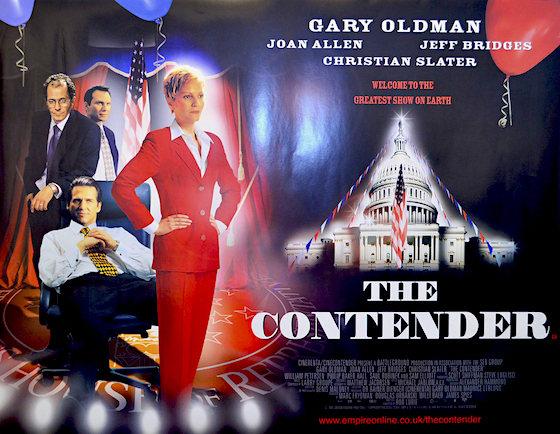
  • From last month’s “failures” I only watched The Contender.
  • I also watched a short film this month — my first this year! I often feel like I should watch more shorts, especially as I own hundreds on disc (a handful of dedicated collections, and then loads included as special features here and there). Maybe I should make it some sort of official goal. 100 Short Films in a Year? Sounds doable — but in addition to what I already aim for? Maybe not.

As I was saying, now that we’re halfway through the year, here’s how things are shaping up overall…

  • I should be at #49 now (not #50, thanks to the first six months of the year being slightly shorter than the second six). Although I’m short of that, at least I’m not a whole month’s worth short (the target for the end of May is #41), so that’s something. Nonetheless, I need to push a bit harder for the rest of the year: the monthly average to reach 100 in 12 months exactly is 8.3 films per month, but for the rest of the year I need it to be 9.5.
  • As a point of comparison, so far this year I’ve averaged 7.2 Challenge films per month, so it’s a bit of a step up.
  • But I’ve averaged 10.5 films per month overall, so if I just make more of them Challenge-compliant going forward then I should be fine.
  • Were I still doing my old-style 100 Films Challenge (just watching any new-to-me 100 films in a year), I’d currently be at #63 — which would be my poorest performance at this point since 2014.
  • All of which sounds fine and dandy, until you remember this: I typically watch fewer films in the back half of the year.
  • That’s not just a casual observation: I have numbers on this. For example, I can tell you that, out of 15 years of running this blog, I did actually watch more films in the back half of the year five times. And on a further three occasions, the second half was within 10% of the first half’s tally. So, it’s not as if the two halves are often wildly different. Which is funny, when you think about it, considering my overall annual tallies can be so very different — historically, anywhere from 94 to 264 films in a year.
  • Anyway, what do the stats foretell for this year? Based on my all-time average first-half-to-second-half ratio, I would watch 122 films this year. Narrowing that to just the last five years, I would make it to 108. And if we look at just years where I’d made comparable progress by the end of June — which happen to be 2010 to 2014, when I’d reached between #55 to #64 by this point — they too reckon I’d make it to 122.
  • Which is all well and good for my old target, but what about the New 100 Films Challenge? Well, so far my ratio of new films to films that count is roughly 1.47:1. If that holds, then watching 122 new films would mean I watch only 83 that count towards my Challenge. So, as I said earlier, I need to up the number of compliant films. Or, of course, just watch more films.
  • As to that final point, the last time I watched more films in the second half of the year than the first was in 2015, driven by pushing myself to make it to #200. But such a goal isn’t always necessary: in 2014, I did an even greater percentage of my viewing in the back half, but only to make it to #136. And goals aren’t a guarantee of anything: in 2016, I watched more in the first half of the year than I had in 2015, but so much less in the second half that I only made it to #195.

All of which goes to prove one thing: when it comes to my film watching, statistics may be fun, but they’re useless at predicting the future.


The 85th Monthly Arbitrary Awards

Favourite Film of the Month
Quite a few more-than-solid films this month, but the one that comes closest to jumping out at me is also one I’ve been meaning to see ever since it came out, 12 years ago now. That would be political thriller The Ghost Writer (originally released as The Ghost here in the UK, but now under its international title on Netflix). Why does it sometimes take me so damn long to get round to things I was actually quite keen to watch? Goodness only knows. And it’s things like this — where, as I expected, I enjoy them a lot — that prove I shouldn’t let such delays happen.

Least Favourite Film of the Month

Apologies to any Laurel and Hardy fans reading this, but my first real experience of their work didn’t really make me laugh, and a comedy that doesn’t make you laugh isn’t much of a success, so The Flying Deuces takes this (dis)honour.

Most Timely Viewing of the Month
Here in the UK, we got a bonus Bank Holiday if June, to celebrate Queenie’s Platinum Jubilee… and, on the first of them, I watched the fairly-obscure (I’d certainly never heard of it before) 1938 film Bank Holiday. The film and modern real-life event aren’t really connected in any way (no Jubilee going on in the film), but hey-ho.

Best Accent of the Month

Accents in films are a funny business. Sometimes, people don’t even bother: witness My Name Is Julia Ross, a Hollywood production set entirely in London and Cornwall, where half the cast don’t even bother to attempt English accents. Sometimes, you wonder if people needed to: take The Ghost Writer, where it feels like everyone’s doing one accent or another, be it Scots and Americans doing English, or Brits doing American. And then there’s films that are a wonder unto themselves, like House of Gucci, where the entirely-English-speaking cast are doing ‘Italian’ as if they’re in a Dolmio advert. “I cooka da pasta” indeed.

The Audience Award for Most-Viewed New Post of the Month
For the second month in a row, my monthly failures roundup — namely, May’s Failures — has topped the chart. I say “topped”: it was the highest new post, but 29th overall. I guess my new reviews just haven’t been that interesting. (My ‘mistake’ has been stopping TV reviews: 24 of the 28 posts above May’s Failures were old TV columns.)


Every review posted this month, including new titles and the Archive 5


Y’know, I still haven’t been to the cinema yet this year. I keep meaning to see Top Gun: Maverick, but things keep getting in the way. But, as of today, my local cinema have put it back on to their biggest screen for the weekend, so maybe I’ll finally pull my finger out and get there in the next couple of days.

As for the rest of the month… oh, who knows!

2022 | Weeks 18–20

These three weeks take us most of the way through May. When I first started writing this batch of reviews, I thought that would bring me almost up-to-date… but then I realised we were already over halfway through June, and, as I finish it, June is almost over. Time flies!

It’s partly because I haven’t been watching as many films over the past couple of months (so it doesn’t feel like I watched these as long ago as I actually did), instead spending a lot of my leisure time on finally watching Apple TV+ series For All Mankind (I’ve just finished season one, which was really good, and I hear only gets better) and replaying all the Monkey Island games (I’m on the fifth and, to date, final one now).

But I digress. Because I already posted Shang-Chi and Frances Ha separately, the remaining reviews from this period are…

  • The Monolith Monsters (1957)
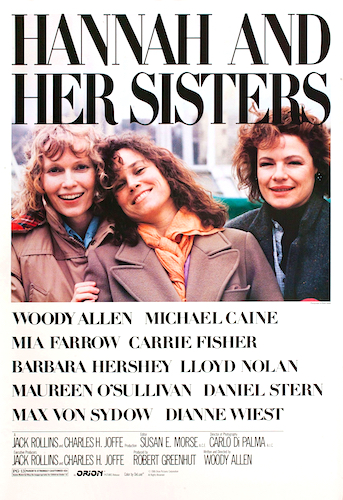
  • Hannah and Her Sisters (1986)
  • Chip ’n Dale: Rescue Rangers (2022)


    The Monolith Monsters

    (1957)

    John Sherwood | 77 mins | Blu-ray | 2:1 | USA / English | PG

    The Monolith Monsters

    I watched this film in Eureka’s box set of ’50s B-movies, Three Monster Tales of Sci-Fi Terror. As you can tell from its inclusion there — and, indeed, its title — this is one of a wave of “monster movies” from that era. Except it isn’t, really. In fact, it’s a sci-fi disaster movie jerry-rigged into what I guess was the prevailing B-movie trend of the day: the eponymous ‘Monolith Monsters’ aren’t monsters at all, but an alien rock that expands relentlessly.

    Whatever you want to call it, the film offers a mix of B-movie daftness and real-sounding science that’s quite appealing. For example: our heroes discover this crazy, hitherto unknown multiplying rock; then realise they have maybe two days to stop it before it destroys their town; and rather than, say, alert the government, or call in expert help, they decide to… figure it out for themselves. But it does make you wonder: is this poor B-movie logic, or just 1950s Americanness? I love the thought that some crazy extraterrestrial incident may have occurred in some backwater town in the middle of nowhere, and no one ever knew about it because the locals just dealt with it themselves. “Oh yeah, aliens invaded back in ’57, but we didn’t see the need to bother nobody else with it, just shut ’em down ourselves.”

    Yet for all that silliness, there’s some scientific logic in play too. Whether it’s real science or “close enough”, I don’t know (let’s be honest, it’s probably the latter), but they manage to make it sound convincing. It helps contribute to an exciting climax, in which a plan to stop the monoliths can only be executed at the last moment before the town is overrun. Rocks don’t normally move fast enough to create race-against-time tension, but hey, these are alien rocks.

    The more I reflect on The Monolith Monsters, the more I like it. For a pulpy B-movie, it has an appealing seriousness. Sure, there’s some schlockiness that I wager is inevitable thanks to its era and budget range, but it feels like it’s trying to be more than trashy entertainment, aiming instead to be a more grounded, almost realistic sci-fi thriller. In reaching for that end it becomes a little slow going at times, but overall it’s quite fun.

    3 out of 5

    The Monolith Monsters is the 31st film in my 100 Films in a Year Challenge 2022.


    Hannah and Her Sisters

    (1986)

    Woody Allen | 107 mins | digital (HD) | 1.85:1 | USA / English | 15 / PG-13

    Hannah and Her Sisters

    Hannah and Her Sisters is one of writer-director Woody Allen’s more popular and successful films. For example, it was nominated for seven Oscars, winning three; and nowadays, it’s his third highest-rated film on Letterboxd, above the likes of Manhattan and later-career highlight Midnight in Paris. All of which I mention because, personally, it’s the kind of film I’d describe as “something and nothing”, because I liked it well enough, but also didn’t really get what it was going for overall.

    It’s the story of… well, Hannah (Mia Farrow) and her sisters. They’re three middle-aged women who all live in New York City (of course) and, over the course of a couple of years, we follow their lives and relationships, with a focus on the latter. Actually, if anything, I might argue the biggest focus is on Elliot, played to Oscar-winning effect by Michael Caine, who is married to Hannah but finds himself pining for her sister, Lee (Barbara Hershey).

    I say “might argue” because Hannah and Her Sisters is one of those films that feels like a collection of subplots. All of the storylines play out, then they stop, with happy endings almost across the board, and that’s your film. I expect it’s based around a theme of some kind, but all I really got it from it was the old “the grass is always greener” adage. Apparently Allen particularly wanted to make something about the relationship between sisters, because he thought that was more complex than between brothers. Fair enough, but I’m not sure it really comes across in the finished film. There are only about two or three scenes in which the sisters actually interact. They’re mostly off on their own subplots; and while those subplots do effect each other, I don’t think they truly speak to the sisters’ relationships; not in any revelatory depth, anyway.

    I’ve enjoyed quite a few of Allen’s films that I’ve seen, but Hannah and Her Sisters won’t be cracking my personal favourites of his work. It was fine to watch — not exceptionally funny or dramatic or insightful or original, but fine — and then it ends, and we go on with our lives. It’s not bad, but it also wasn’t anything much. Not to me, anyway.

    3 out of 5

    Hannah and Her Sisters is the 32nd film in my 100 Films in a Year Challenge 2022. It was viewed as part of “What Do You Mean You Haven’t Seen…?” 2022.


    Chip ’n Dale: Rescue Rangers

    (2022)

    Akiva Schaffer | 97 mins | digital (UHD) | 2.39:1 | USA / English | NR* / PG

    Chip ’n Dale: Rescue Rangers

    On the surface, there’s nothing here for me — a live-action remake/reboot of a late-’80s/early-’90s cartoon that I don’t remember ever watching — but something persuaded me to watch the trailer, and that convinced me to watch the film the moment I could. If you’ve missed said trailer, or any of the attendant hype or reviews, what sold me is that this isn’t just an update of a children’s cartoon with modern tech, but a Who Framed Roger Rabbit-style riff on cartoon celebrity.

    Like Roger Rabbit, it’s set in a version of our world where cartoons are ‘real’ and living alongside us, and they act in the TV shows and movies we know them from. Decades on from the Rescue Rangers TV show, Chip (voiced by John Mulaney) and Dale (Andy Samberg) no longer get along, but when an old friend goes missing, they’re thrust into investigating his disappearance together.

    Frankly, the plot and character arcs feel like stuff you’ve seen before — probably because we have. Although Roger Rabbit is the obvious reference, the film’s storyline feels very similar to the Melissa McCarthy-starring Muppet version of the concept from a couple of years ago, The Happytime Murders. It works better here, though, because it’s not leaning on crudeness as a comedic crutch. If you didn’t see that film, it might be to Chip ’n Dale’s advantage in terms of feeling fresh.

    Instead, the best bit of the film is that it’s full to bursting with fun nods and references to pretty much every facet of (Western) animation. These are often tucked away in the background or on the periphery for the eagle-eyed to enjoy, with the film rarely (if ever) stopping to show them off. To its credit, that means the abundant Easter eggs aren’t allowed to overshadow the story, and so the film avoids using them in the same way Happytime Murders used its vulgarity. It’s just a shame that said story is a little well-worn.

    Ultimately, Chip ’n Dale gave me the same kind of entertainment as its trailer, but for 95 minutes. Which, in a way, is fair enough — no one can accuse the trailer of being misrepresentative. On the other hand, it would be nice if there’d been something more to substantive to discover. It’s no contender for Roger Rabbit’s throne, but nor is it another Happytime mess. My score rounds up, because I did have fun.

    4 out of 5

    Chip ’n Dale: Rescue Rangers is the 33rd film in my 100 Films in a Year Challenge 2022.

    * There was no certificate listed on the BBFC website at time of review. As you may or may not know, there’s actually no legal requirement for streamers to have their content certified, and so it seems Disney haven’t bothered. For what it’s worth, Disney+ lists the film as “9+”, which I guess equates to PG. ^


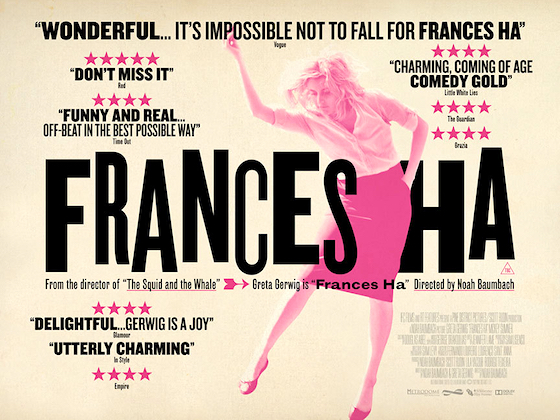
  • Frances Ha (2012)

    Noah Baumbach | 81 mins | digital (HD) | 1.85:1 | USA & Brazil / English | 15 / R

    Frances Ha

    Being a ditzy twentysomething in New York, hanging out with friends and going to parties, having a job as a dancer and earning just enough to get by, and nothing quite going to plan but it all kinda being ok anyway — all in black & white? I see why some people love this film. It’s a kind of obvious fantasy life for certain Artsy people. Of course, there’s not much drama in that (not that that would stop some filmmakers), and so Frances’s messy life begins to get messier. It may stop being a fantasy, but it’s certainly relatable to any of us who’ve failed at the things we’d dreamed of doing.

    While some viewers find the characters’ lives relatable or something to aim for, I’m not surprised to learn that other viewers just find them really annoying. The primary characters are all twentysomething art snobs, which is a definite phase some twentysomethings go through. Some grow out of it, some don’t. I don’t think the film is idolising them, which is part of what allowed me to enjoy it. If it had presented them as wonderful people living an ideal lifestyle, I might’ve hated them. Not that the film condemns them, but I think it takes them for what they are rather than outright celebrating it. That much is clear by how Frances ends up washing out of that lifestyle — it’s not even that she chooses to reject it; it’s that it’s unsustainable.

    Having watched the film with the perspective of being older than Frances, where her life ultimately goes after she’s forced to reevaluate and make changes… well, I guess personal experience of whether your dreams were fulfilled, had to be tweaked, or were totally squandered is likely to colour whether you think the film ends up somewhere realistic or, in fact, with almost-stereotypical movieland optimism. As if that wording doesn’t give it away, I do err towards the latter.

    Girls just wanna live in New York City in black & white

    To dig deeper into that, I find it hard to process my reaction to the ending, because it’s not that I want Frances to suffer — indeed, in many ways I found it a relief that she got her life on track and seemed happy. I can’t say I was super-invested in her as a character, but co-writer/director Noah Baumbach and co-writer/star Greta Gerwig got me invested enough that, when things were truly shitty, I did feel bad for her, and when she turned it around I was glad. But I also felt like she was lucky. She doesn’t get her dream, but she gets something comfortably adjacent to it. To people who want to make films and are making films (like, y’know, the people who made this film) that probably seems like a “compromised (therefore realistic) happy ending” (as opposed to an “everything turns out exactly as hoped (therefore unrealistic) happy ending”). But to those of us who’ve had to make even greater compromises — who’ve had to abandon dreams entirely and settle for what’s achievable — which, I’d wager, is the majority of human beings — Frances’s fate doesn’t seem hugely realistic.

    I suspect the filmmakers believe they’ve created an ending in which Frances didn’t win, but nor did she lose; that she did ok. I’m sure I can’t be alone in seeing it as Frances still winning — not a 100% victory, but whatever she has (85% maybe?) is nothing to be sniffed at. So that’s why I’m conflicted: I’m glad Frances got her 85%; but if you want realism — and, as this is a black & white indie movie, not a glossy Hollywood dream factory, I kinda do — she should’ve got, like, 20%. By that I don’t mean end up living on the street or whatever, but maybe she had to move back to boring old Sacramento, move in with her parents for a bit, get a run-of-the-mill job in an office or whatever — something like that. Depressing, but truthful.

    Anyway, it’s still a nice little fantasy for indie kids, so:

    4 out of 5

    Shang-Chi and the Legend of the Ten Rings (2021)

    Destin Daniel Cretton | 132 mins | digital (HD+3D) | 2.39:1 | USA / English & Mandarin | 12 / PG-13

    Shang-Chi and the Legend of the Ten Rings

    Unless you’re a dyed-in-the-wool fan, keeping up with the MCU is beginning to feel more like a chore than entertainment. There’s just so much of it! No wonder it can feel like its fans never watch anything else, because getting through the myriad TV series and movies could conceivably fill most of your free time. That said, it’s obviously not doing the movies any harm (yet) based on the spectacular box office performances of No Way Home ($1.89 billion, the 6th highest grossing film of all time) and Doctor Strange 2 ($935.3 million and counting). And getting round to everything does have its benefits, because occasionally you find a diamond, and it’s not always one the critics or other viewers have flagged up. I mean, most of what I heard about the first Doctor Strange was that it was just the standard superhero origin story over again, but it’s one of my favourite films from the studio’s output, primarily thanks to the stunning visuals and a few other clever developments. Being another iteration of something isn’t always bad, especially if you’ve iterated closer to perfection.

    Shang-Chi is the latest Marvel movie to fall into that camp for me. It is, again, a superhero origin story; but, again, one that’s been refined to a place where the hints of familiarity don’t really matter. It’s about Shaun (Simu Liu), an ordinary guy working as a valet in San Francisco… who it turns out isn’t such an ordinary guy, but is really Shang-Chi, the son of the magically-powered leader of a global crime syndicate known as the Ten Rings. Of course, events conspire to bring Shang back into contact with his estranged family, where he must choose whether to stand against his father’s evil plans.

    The MCU publicity claim that any given film is “not just a superhero movie, it’s a [1970s conspiracy thriller / John Hughes comedy / whatever]” has, rightly, become a bit of a laughing stock. But I think Shang-Chi might be the first time it’s actually true. Yeah, it’s undeniably set in the MCU and, as such, plays by some of those rules (there are Blip references from early on, with the requisite cameos and mid-credit teaser scenes to follow), but the bulk of the movie itself is not really a superhero film as we normally think of them. Rather, it’s a martial arts fantasy-actioner. Now, maybe those are in the same ballpark — people with impossible abilities fighting each other — but I’d argue the style of it in Shang-Chi feels closer to something like Detective Dee or 47 Ronin (except good) than Iron Man or Captain America, or even the other fantasy/magic-based MCU sub-series like Thor or Doctor Strange.

    A sticky situation

    And for that, I loved it. Unfortunately, where it’s most like the MCU is in an ‘epic’ battle finale that, a few show-off moments aside, is mostly realised through CGI that looks like swirling mud. If it weren’t for that disappointment (and, to be clear, it’s not a disaster, just a bit of a let down), I might have given the film an even higher score.

    I was also glad I bothered to track down the 3D version (only released on disc in Japan, I believe. I also believe Japanese imports are expensive. I wouldn’t know from experience, I’ve never bought one). I’m aware that 3D is an ever-dwindling format and that’s why major labels aren’t bothering with disc releases anymore (though it must be worth it at theatrical level, because they’re still shelling out for these post-conversions that cost millions of dollars a pop), but it’s a shame for those of us who enjoy it and still have the kit, because it’s as enjoyable as it ever was when done well. Shang-Chi may not be the height of the format, but lots of it looked nice with the extra dimension. Sadly, unlike many previous Marvel 3D releases, it didn’t have the bonus benefit of a shifting IMAX ratio. There is an “IMAX Enhanced” version of the film (it’s on Disney+), but, like the last two Avengers movies, it presents the entire film in IMAX’s 1.9:1 ratio, so no luck for us 3D fans there (or anyone bar Disney+ viewers, because it’s not included on the film’s 2K or 4K Blu-ray releases either).

    4 out of 5

    2022 | Weeks 16–17

    Ooh, it was gonna be a classy one this week, with two recent Oscar winners — of Best Picture and Best Animated Feature, no less — and a highly-acclaimed Kurosawa classic — the 12th greatest film ever made, according to Letterboxd users. But then two of those reviews got so long I thought they better belonged in their own posts, and so we’re just left with two very different coming-of-age movies…

  • CODA (2021)
  • Cruella (2021)


    CODA

    (2021)

    Siân Heder | 112 mins | digital (UHD) | 1.85:1 | USA, France & Canada / English & American Sign Language | 12 / PG-13

    CODA

    When CODA became the Best Picture victor at this year’s Oscars, it wasn’t exactly unforeseen, but it certainly wasn’t what anyone had expected early on in the awards race. Indeed, the very reason it had became some people’s prediction hinged on the way the Best Picture votes are counted: a preferential ballot, which means that having a lot of second- and third-place votes is arguably even more important than first-place ones. The idea behind the system is to create a consensus around the winner, rather than the award going to the film with the largest minority of voters backing it. Certainly, pretty much everyone can agree that CODA is a nice film — but probably too “nice” to have won Best Picture, unfortunately.

    It’s not the kind of movie many will come away from feeling wowed. It’s a solid drama about a teenager coping with fairly typical teenage stuff, with the added twist that the rest of her family are deaf but she isn’t. Chalk up a mark in the ‘positives’ column for representation, then, in this case of the deaf community. It’s not one token character, either, but several major characters, who the film treats as real human beings who happen to be deaf, rather than as The Deaf Character. One reason it succeeds at this is because they’re not all perfect people just because they have a disability. Another is that the film doesn’t pretend their deafness isn’t a barrier — there are multiple obstacles it creates when engaging with the rest of their community. But CODA is a nice movie, remember, so everything turns out alright in the end; and it does so with enough effectively-managed (some might say “manipulated”) emotion that you may find yourself with a tear in your eye; or perhaps even bawling with tears flowing down your cheeks, depending on your susceptibility to such things.

    So, the best film of 2021? Almost certainly not. The one everyone is likely to agree they all liked? Most probably.

    4 out of 5


    Cruella

    (2021)

    Craig Gillespie | 134 mins | digital (UHD) | 1.85:1 | USA / English | 12 / PG-13

    CODA

    Disney’s wave of live-action remakes seem to fall into one of two camps: straightforward remakes of the original Animated Classics, sometimes to the level of feeling like shot-for-shot do-overs; or extensions and reimaginings that seek to fill in around the edges of the original work. Perhaps because they already did a live-action version of 101 Dalmatians back in 1996, Cruella takes the latter approach. It’s a prequel, naturally, showing how an ordinary(-ish) little girl grows up to be a wanton dog murderer.

    Except (non-specific pseudo-spoilers incoming!) not really, because the film ends in such a way it’s very hard to imagine this Cruella becoming the deranged villain of the original text. Indeed, I’ve seen some commenters refer to this as a reboot rather than a true prequel, which seems like a fair enough angle. I mean, this is a Cruella de Vil who has a dog for a best mate. Even with the “dalmatians killed my mother” backstory (which I think the film knows is a gag. Considering that such a plot point came up as a joke on social media as soon as the project was announced, you’d hope the filmmakers were aware how daft the audience would find it), it’s hard to imagine how this version of the character could go from how we see her here to being prepared to roundup and kill hundreds of animals.

    Setting aside the need for connectivity and looking to the film in its own right, I would describe it as delightfully stylised. It’s got a particular tone and style that will turn off some viewers (and, certainly, some critics), but — even if you don’t personally enjoy it — I think it’s something we should celebrate. We sometimes talk about big-budget movies being homogenised; focus-grouped to the point of blandness and similarity. Cruella isn’t that, instead hitting notes that are suitably camp and gloriously unhinged. It certainly isn’t the most radical variation in tone ever — it merits comparison with early Tim Burton, without ever being as genuinely out-there as his best work — but it’s more so than the average. It’s so much madder than it needed to be, and that’s why it’s fun and not the usual Disney live-action cookie-cutter money-spinner.

    To my mind, its only sins are an over-reliance on obvious needle drops and cheap green screen. The latter has been brought up online as a damning example of how poorly crafted big-budget movies are these days. They’re not wrong about the examples used: two key scenes that take place at a cliffside have clearly been shot day-for-night in a studio and lit very flatly. The nighttime (i.e. ultra-dark) colour grade helps to hide some of the sin by covering it in darkness, but whack up the brightness and it’s all too apparent how awful it looks. But I would counter that these are fairly isolated examples. Cruella is hardly a go-to example of the wonders of cinematography (and there are other weak shots, too), but most of the film looks pretty good.

    4 out of 5


  • High and Low (1963)

    aka Tengoku to jigoku

    Akira Kurosawa | 144 mins | Blu-ray | 2.35:1 | Japan / Japanese | 12

    High and Low

    Akira Kurosawa has a good many classic films to his name, but, according to users of both IMDb and Letterboxd, this is the second best of them all — and, on the latter’s list, the 12th greatest film ever made, to boot. No pressure.

    Adapted from the American crime novel King’s Ransom by Ed McBain, the film stars Toshiro Mifune as a business executive who we first meet being wooed to join a potential coup of the company. (The film rattles through a few twists early on to set up its initial dilemma, which I’m now going to spoil, so if you want to go in completely cold, jump to the next paragraph.) In fact, Mifune is plotting his own takeover, paid for by leveraging everything he has. But then, his young son is abducted, with the kidnappers demanding a huge ransom — if he pays, his carefully-laid plans will be impossible to execute; but it’s his son! But then, it turns out it isn’t his son — the crooks took the wrong boy, instead kidnapping the son of Mifune’s lowly chauffeur. But they don’t know that, and there’s no way in hell the poor chauffeur could pay a ransom. What’s a man to do?

    Some might power a whole film on that storyline and dilemma, but it’s only the beginning of High and Low. Its original Japanese title (天国と地獄) literally translates as Heaven and Hell, and, as both monikers indicate, this is a film of two halves; of opposing forces; of extreme choices. Without wishing to spoil any more of what goes down, I’ll say that almost the first hour of the film takes place almost entirely in a single room. It feels like the whole thing might unfurl there, a la Hitchcock’s Rope — almost a formal exercise in telling a story from a single setting. But then it moves to an immediately more dynamic locale — a train — for a properly thrilling sequence, around which the story and structure pivots. The rest of the film goes ultra-procedural. A lengthy scene early in this half depicts a police debriefing in a manner that feels almost documentarian, as if we’re witnessing a genuine meeting filmed and presented in real-time, as various detective duos update senior officers and their colleagues on the specific aspect of the case they’ve been working.

    Hanging on the telephone

    This eye for detail, presented with a degree of mundanity, makes the film feel extra realistic. That extends to the final details. No spoilers, but, although you may call this a Thriller due to the type of story being told, it doesn’t climax with a big twist or revelation; no reveal of some super-clever grand plan that, with implausible foresight, anticipated and accounted for everything that’s happened. Rather, the film seems to proceed methodically and logically through every thread of investigation and consequence for its primary characters, until it simply has no more left to tell.

    It’s certainly a fine piece of work — although, on first watch, I’d say I’ve seen several better examples of the genre and several better films by Kurosawa. But that isn’t truly a criticism of the film, rather of its high placing on the lists mentioned at the start. Awareness of such accolades has a tendency to overshadow any first viewing of a film that warrants them (just witness how many people are underwhelmed by Citizen Kane), so I look forward to returning to High and Low sometime under less pressure.

    5 out of 5

    High and Low is the 30th film in my 100 Films in a Year Challenge 2022. It was viewed as part of Blindspot 2022. It placed 6th on my list of The Best Films I Saw in 2022.

    Encanto (2021)

    Jared Bush & Byron Howard | 102 mins | digital (UHD) | 1.85:1 | USA / English & Spanish | PG / PG

    Encanto

    The 60th film in Disney’s animated canon was, despite that status, sent straight to streaming in the midst of the pandemic. Possibly because of that, it seemed to catch on quite quickly as their latest major success. Case in point: one of the songs — We Don’t Talk About Bruno — ended up having greater chart success than Frozen’s notorious Let It Go.

    (I’ve got to take the time to say that I find this quite baffling. I don’t love Let It Go (I’m a 36-year-old man, not a six-year-old girl in 2013), but it’s clearly a catchy tune with lyrics that transcend its place in the film — you can understand how it became such a huge hit. But for the life of me I can’t work out why We Don’t Talk About Bruno has surpassed its success. It’s a likeable song that plays well in the movie — and I think hearing it in place is important, because the first time I heard it was on the radio and I couldn’t even work out what they were singing about. So, there’s nothing going on lyrically that makes it applicable in any other context, and I don’t think the underlying tune is so earwormy as to warrant play merely for that reason. Or maybe it is if you’re the right age, because clearly something made it a massive hit.)

    Anyway, the film itself is about a family, the Madrigals, who live in a magical house in an isolated part of Colombia and all have magical powers — except Mirabel (Stephanie Beatriz), for reasons no one understands. But when the family begin to lose their abilities, finding out what’s going on and fixing it falls to Mirabel. Because of course it does.

    Someone's gotta do the donkey work

    Encanto doesn’t look like your typical Disney Princess movie, but it’s not functionally different to them. The Madrigal family’s powers mean they effectively rule over their small town, albeit in a benevolent way, which makes Mirabel a de facto Princess; and she has the usual Disney Princess hangups about feeling under-appreciated and needing to find her self-worth. But hey, at least she doesn’t also need to find a husband! Nonetheless, it’s welcome that the film is less traditional is its setting — present-day South America, rather than the typical fairytale land of historical Europe — and the pace is also up-to-date. In fact, it’s quite frantic. Like, okay, calm down a bit; take your time occasionally; let stuff stay on screen long enough for us to appreciate how good it looks. And the animation does look great, with detailed designs, fluid movement and dynamic camerawork, and an incredibly colourful palette, especially when fired up by HDR/WCG.

    The songs are by Hamilton’s Lin-Manuel Miranda, unmistakably so. It’s something about the phrasing, the rhythm, the rhyme patterns… I’m no musicologist so I can’t adequately explain it, but they’re distinctively his work. But that’s what you want when you hire someone, right — their own voice. If you don’t like this style from his other work, chances are the music here won’t appeal to you either. If you do like it, there’s much to enjoy, from the opening number, The Family Madrigal, which introduces us to the large cast of characters at whipcrack pace, to my personal favourite, Surface Pressure, about one family member’s struggle with all the weight on her shoulders. And yet they put Dos Oruguitas up for the Original Song Oscar, apparently trying to emulate the success of Coco’s Remember Me. Oops. (Obviously they should’ve gone with breakout hit Bruno, but I reckon either of the other songs I’ve mentioned would’ve stood a better chance.)

    One of Encanto’s directors is Byron Howard, whose previous work for Disney has encompassed Bolt, Tangled, and Zootropolis — three films I’d class as among the very best of Disney’s current purple patch. It’s a helluva record. Happily, Encanto continues it. I might rank it a little behind the other three when all is totted up, but being next in line to such strong movies is nothing to be ashamed of.

    4 out of 5

    Encanto is the 28th film in my 100 Films in a Year Challenge 2022. It placed 4th on my list of The Best Films I Saw in 2022.

    Top Gun (1986)

    The 100 Films Guide to…

    Top Gun

    Up there with the best of the best

    Country: USA
    Language: English
    Runtime: 110 minutes
    BBFC: 15 (1986) | 12 (cinema, 1989) | 15 (video, 1996) | 12 (video, 2004)
    MPAA: PG

    Original Release: 12th May 1986 (Mexico)
    US Release: 16th May 1986
    UK Release: 3rd October 1986
    Budget: $15 million
    Worldwide Gross: $357.5 million

    Stars
    Tom Cruise (Risky Business, Mission: Impossible)
    Kelly McGillis (Witness, The Accused)
    Val Kilmer (Top Secret!, Batman Forever)
    Anthony Edwards (Revenge of the Nerds, Miracle Mile)

    Director
    Tony Scott (The Hunger, Crimson Tide)

    Screenwriters
    Jim Cash (Turner & Hooch, Anaconda)
    Jack Epps Jr. (Dick Tracy, The Flintstones in Viva Rock Vegas)

    Based on
    Top Guns, a magazine article by Ehud Yonay.


    The Story
    Fighter pilots Maverick and Goose are sent to the US Navy’s elite Fighter Weapons School, aka Top Gun, a combat training academy-cum-competition to establish the Navy’s best pilots.

    Our Hero
    Pete ‘Maverick’ Mitchell is a hotshot pilot who’s prone to bending the rules when he thinks it’s necessary. But that sort of behaviour doesn’t fly with the instructors at Top Gun. Is his daring what gives him the edge, or what makes him a liability?

    Our Villain
    Maverick’s prime rival in the Top Gun competition is Tom ‘Iceman’ Kazansky, whose callsign comes from the his precise, ‘ice cold’ flying style — the antithesis of Maverick. In the real-world, the villains are the MiG fighter jets of a tactfully unnamed foreign power.

    Best Supporting Character
    Maverick’s best mate and RIO (Radar Intercept Officer) is Nick ‘Goose’ Bradshaw. While Maverick seems to rub most people up the wrong way, Goose is widely liked. No idea where his nickname comes from.

    Memorable Quote
    “I feel the need… the need for speed!” — Maverick

    Memorable Scene
    For all the slick flying and whatnot, arguably the film’s most iconic scene comes on the ground, when the pilots relax by playing a game of beach volleyball — mostly shirtless, their sweaty muscles glistening in the sun. If you weren’t already feeling the homoerotic subtext, this kind of rams it home. (It’s a fairly incidental scene, but if you doubt its impact, know that the makes of the sequel felt they had to include a version of it, which led to the cast prepping for months to make sure their bodies were suitably toned.)

    Memorable Music
    Top Gun is blessed with multiple memorable tracks, both original songs and soundtrack cues. Several even won awards (see below). But the one that didn’t is the most iconic, and so catchy that it’s played several times throughout the film: Kenny Loggins’ Danger Zone.

    Making of
    There was a lot of cooperation from the US Navy in the production of the film (it paid off: after release, they saw recruitment skyrocket), but they only authorised two actual missile shots for filming purposes. Both were were shot from multiple angles to generate extra usable footage, but it still wasn’t enough, and so the filmmakers commissioned further shots using miniature planes and rockets. These were done so convincingly that the Navy conducted an investigation into whether any unauthorised missile firings had been performed for the film.

    Next time…
    It took over 35 years (partially thanks to Covid-related delays), but a sequel was finally released this year. But of course you know that: Top Gun: Maverick is probably the most praised blockbuster of the year so far.

    Awards
    1 Oscar (Original Song (Take My Breath Away))
    3 Oscar nominations (Sound, Film Editing, Sound Effects Editing)
    1 People’s Choice Award (Favorite Motion Picture)
    1 Grammy (Pop Instrumental Performance (Top Gun Anthem))
    1 Brit Award (Soundtrack)

    Verdict

    I loved Top Gun as a young kid — though, as is so often the case with movies from my childhood, I don’t actually know how many times I saw it. We weren’t great rewatchers in my household, so I expect I only actually watched it two, maybe three times, max. But my dad and I used to play jet fighter simulator games on our PC, with usernames like Maverick and Iceman, entirely inspired by the film. So, obviously, it comes with a dose of nostalgia for me, even though I hadn’t seen it for a couple of decades (my recent rewatch inspired by, of course, the release of the sequel). Does it hold up? Well, that depends what you want from a movie. It certainly comes with a more-than-healthy does of ’80s cheese and rampant-but-unacknowledged homoeroticism. For some, that makes it either unwatchable or two hours of laughing at the film. But if you’re onboard with its particular style, it’s still good fun; an entertainment-focused blend of fast-paced action in the skies and matey rivalry on the ground, with a dash of romantic melodrama for good measure.