

Wong Kar Wai | 109 mins | streaming (HD) | 2.35:1 | Hong Kong & China / Mandarin & Cantonese | 15 / PG-13
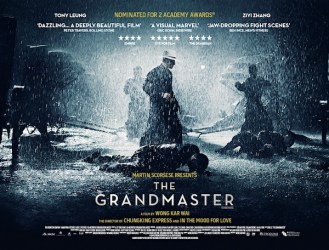 As a Western viewer, if you know anything about Ip Man beyond “he’s the chap who trained Bruce Lee”, it’s probably thanks to the pair of eponymous biopics starring Donnie Yen (soon to become a trilogy). Heck, if you know that much there’s a fair chance it’s due to those films. This take on the man, directed and co-written by Wong Kar Wai and starring Tony Leung as Ip, is tonally very different.
Some of the facts remain the same, naturally: Ip is a master of Wing Chung in Foshan, China, until the Japanese occupation ruins everyone’s lives. Post-war, he moves to Hong Kong and sets up a school there. Concurrently, there’s something about being the grandmaster of martial arts in all of China, or somesuch. When the previous incumbent is murdered by his disciple, the old man’s daughter, Gong Er (Ziyi Zhang), has revenge in mind.
The Grandmaster is very much more an arthouse version of the story than the Ip Mans’ accessible action-movie stylistics, with elliptical storytelling and a carefully-measured pace, even in the action sequences. I’ve seen at least one review criticise Wong for leaning too heavily into ‘genre’ pictures — I guess that critic doesn’t actually watch too many genre pictures, because a good number of genre fans criticise this for being too arty. It is more “arty” than “genre”, even given its inclusion of numerous fantastic fight scenes. The duels are stunning, though pure adrenaline-junkie viewers seem to find even those a disappointment. Well, they’re wrong.
 It helps that it’s gorgeously shot. Ultra-crisp blue-black rain-soaked night time duels; rich golden hues in pre-occupation Foshan; cold bright-white snowy landscapes; a train platform fight that’s almost sepia-like. Between the photography and the ever-excellent action choreography of Yuen Woo-ping (The Matrix, Crouching Tiger, Kill Bill, et al), the film is immensely satisfying on a visual level.
One factor that may — or, as we will see, may not — have an effect on how the film fares beyond the purely visual is that there are at least three different cuts: a 130-minute original cut, a 122-minute international cut, and the 108-minute version released in the US by the Weinsten Company. “Ah,” you might think, “yet another Weinstein hack job.” Well, Wong himself says otherwise:
As a filmmaker, let me say that the luxury of creating a new cut for U.S. audiences was the opportunity to reshape it into something different than what I began with — a chance one doesn’t always get as a director and an undertaking much more meaningful than simply making something shorter or longer. The original version of The Grandmaster is about 2 hours, 10 minutes. Why not 2 hours, 9 minutes or 2 hours, 11 minutes? To me, the structure of a movie is like a clock or a prized watch — it’s about precision and perfect balance.
We always knew that we wanted to have a U.S. version that was a bit tighter and that helped clarify the complex historical context of this particular era in Chinese history, focusing further on the journeys of Ip Man and Gong Er. While the previous version was more chronological, adding narration and captions to explain certain plot points gave us the freedom to bring more life to moments in the characters’ stories. I also aimed to enhance the audience’s understanding of the challenges faced between North and South, especially during the Japanese invasion.
Well, the narration and explanatory title cards are at times useful, but at others feel heavy-handed. I guess that’s the result of them being added retroactively as an explanatory device — if Wong had felt that information needed to be in the film throughout production, I’m sure it could’ve been better integrated into the storytelling.
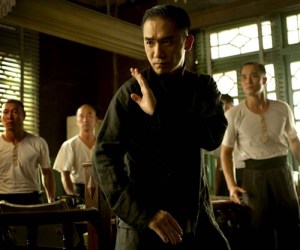 However you look at it, the other Ip Man films are undoubtedly more palatable to a mainstream audience. Does that mean they’re worse? No. Better? Not necessarily. But I don’t think The Grandmaster is all it could’ve been. It seems to run out of story and lose its way as it gets towards the end. The focus shifts entirely to Gong Er, and it feels less clear what it’s meant to about as a whole film. It becomes a movie of great moments, and maybe even scenes, but an unsatisfying whole. But oh, the images…

This review is part of the 100 Films Advent Calendar 2015. Read more here.
 This is not a well-reviewed film —
 It’s The Julian Assange Movie, in which Benedict Cumberbatch dons a lanky white wig and an Australian accent to portray one of the most significant figures of our times, whether you like it or not.
 so I can’t really judge her. The same goes for the rest of the cast, where a wide array of starry and/or acclaimed names (Peter Capaldi, Laura Linney, Anthony Mackie, Alexander Siddig, Dan Stevens, David Thewlis, Stanley Tucci, Carice van Houten (who’s big in Belgium,
  They don’t seem to have any particular significance in themselves — they’re not famous, nor more wronged than anyone else — so maybe they’re just meant to be emblematic? As in, Laura Linney’s character is there to be representative of Assange’s effect, not the only person it happened to. Or was she the only person fired, and that’s the point? The film doesn’t make it clear.
 he’s the honourable one; the one who’s actually invested in the site’s supposed values. But then the film is partly based on his book, so he would be the good guy.
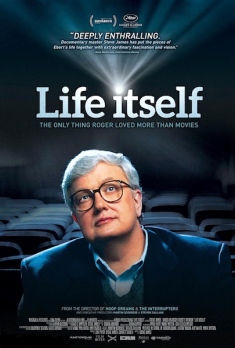 Roger Ebert was an influential, respected, beloved critic for decades, and one with an interesting life: he began in old-school newspaper journalism, defined TV movie criticism, and eventually spearheaded the profession’s move online. So it merits recounting in this documentary by the director of
 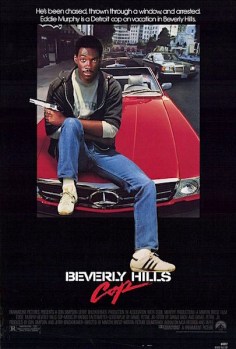 The last time I watched the first entry in a once-popular ’80s comedy cop movie series,
 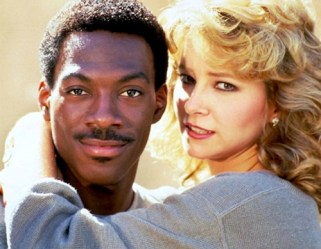 Murphy’s not the only good thing, though. Judge Reinhold and John Ashton make an excellent double act as the pair of cops assigned to keep an eye on Foley in Beverly Hills; Ronny Cox is their amenable boss; Steven Berkoff pretty much just has to turn up to be an excellent villain; Lisa Eilbacher is decent as the girl (presumably changed from being a love interest after they cast a black guy). Her part doesn’t exactly call for a great deal, but she’s fine enough in it; as good as anyone ever is in such a limited role.
 the mystery is non-existent (even if it wasn’t obvious Berkoff would be the villain, the henchman who did the deed is shown to be in his employ the first time we meet him); Brest’s direction is unremarkably static… you could probably go on. But thanks to Eddie Murphy and the rest of the cast, Beverly Hills Cop winds up a highly watchable, very likeable spot of entertainment.
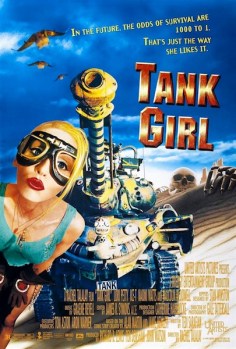 Critically derided, this anarchic adaptation of the rebellious comic has become a cult fave. You can see why: a ramshackle plot allows for plenty of outré zaniness, including a big musical number to a punky Cole Porter cover, and surely no one predicted the bizarre truth about the Rippers!
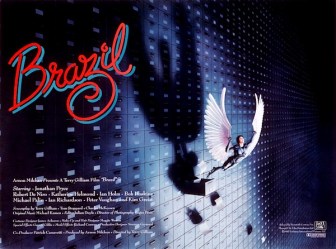 I normally aim for a “critical” (for want of a better word) rather than “bloggy” (for want of a better word) tone in my reviews, just because I do (that’s in no way a criticism of others, etc). Here is where I fail as a film writer in that sense, though, because I’m not even sure how I’m meant to review Terry Gilliam’s dystopian sci-fi satire Brazil, a film as famed for its storied release history as for the movie itself.
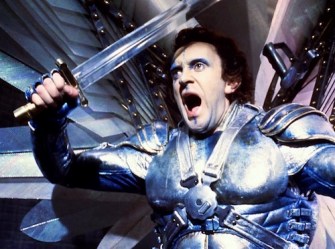 I’m sure there’s a thorough list of differences somewhere, but one good anecdote from Gilliam’s audio commentary tells how the ‘morning after’ scene was cut from the European release so last-minute that it was literally physically removed from the premiere print. (Gilliam regretted it immediately and it was restored for the video release.)
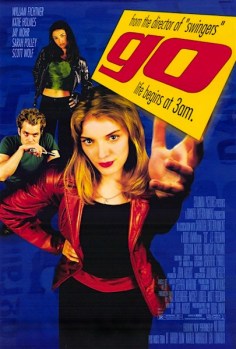 When people call 1999’s
 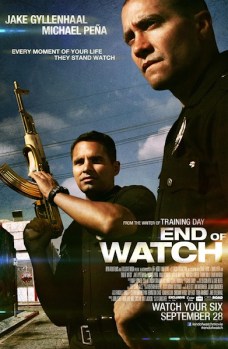 I don’t think anyone paid writer-turned-writer/director David Ayer much heed when he was one of a pack of people penning historically-inaccurate submarine thriller
  it would wash as a stylistic choice; because he attempts a diegetic explanation for why it’s shot this way, but then breaks the rules of that explanation instantly (and continues to do so, with increasing frequency), it turns a valid stylistic choice into an irritating, ill-thought-out distraction. Plus: you want to be innovative and shoot an L.A. cop movie on digital video? Too late! Michael Mann already got there… in 2006.
 Although there are things to commend End of Watch — in particular the performances, and even a couple of tense sequences when the filming style actually pays off — I can’t get on board with it being a best-of-year-type movie. Even if it could’ve been more — and, in spite of that varied CV, isn’t the best thing Ayer’s done (I very much liked his next movie, Brad Pitt WW2 tank movie
  Astronauts head to a Saturnian moon to examine its water in this scientifically-accurate drama.
