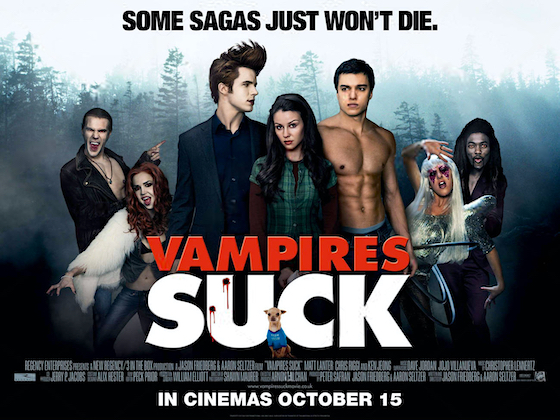
Vampires Suck (2010)

2020 #233
Jason Friedberg & Aaron Seltzer | 82 mins | digital (HD) | 1.85:1 | USA / English |
15* / PG-13

Vampires Suck

Since 2015, I’ve been marking Halloween by reviewing the Twilight movies. Last year, I finished them. Or did I?!

…well, yes, I did. But here’s something of a coda: a spoof of the series, produced in 2010 when Twilight was still at (more or less) the height of its popularity. At the time, making a Twilight spoof must have seemed a great idea — it was popular, but also widely lampooned. The only problem is, isn’t Twilight already so fundamentally ridiculous as to be unspoofable? Maybe; maybe not… but when you put Jason Friedberg and Aaron Seltzer in charge, you’re not likely to get great results.

There’s a fair chance you won’t recognise Friedberg & Seltzer’s names, but you might know their body of work. They started out as co-writers of the Leslie Nielsen-starring spoof Spy Hard, but more significant is their second movie: Scary Movie, the 2000 horror spoof that provoked a whole string of similar genre-centric spoofs over the next 15 years. They graduated to directing with 2006’s Date Movie, which IMDb voters think is the 23rd worst movie ever made, and they followed that with spoofs Epic Movie (the 12th worst movie ever made), Meet the Spartans (the 22nd worst movie ever made), Disaster Movie (living up to its name, the #1 worst movie ever made), The Starving Games (the 45th worst movie ever made), and Superfast! (by this point, too few people are watching their movies to even get the score low enough to appear on that ranking — I don’t know about you, but I hadn’t even heard of Superfast until today, and it came out in 2015).

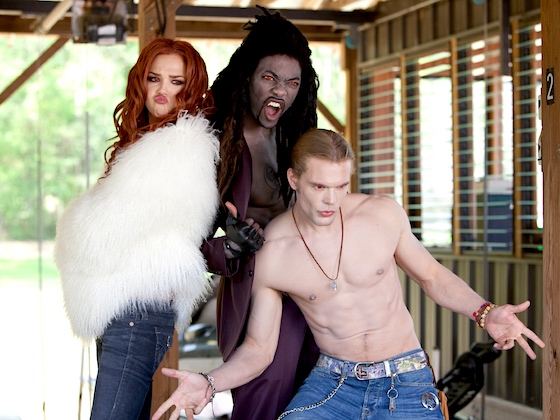
Black Eyed Peas

In the middle of all that sits Vampires Suck, only the 46th worst movie ever made — by Friedberg & Seltzer’s standards, a success! Now, I’m not about to mount a full-blown defence of the movie, but I will say it’s certainly not one of the worst things I’ve ever seen. Indeed, just within the subgenre of 21st-century genre spoofs, I’d say Superhero Movie is much worse (though, re-reading my review, it sounds pretty similar to my thoughts on Vampires Suck). Sure, there are plenty of cheap, uninspired, crass, and rip-off gags, but some of it also made me laugh, so it’s not a total washout. It’s never as funny as the real thing at it’s funniest (Face Punch forever!), but it wasn’t as uninspired as I expected.

I keep calling these “genre spoofs” but, as with Superhero Movie (and so, I extrapolate, all the other Movie movies), it’s not truly a spoof of an entire genre, but instead sticks closely to one film; or, in this case, two films (only the first two Twilights had been released at the time, so it bundles them both in). Every scene is a recreation of one from the original, but with a comedic twist. As such, I’m not sure whether it works better if you have seen the original (so you know exactly what’s being referenced) or if you haven’t (so you don’t realise just how simplistic all its ideas are). I guess it’s aimed at the former kind of viewer, though. I mean, some parts are barely more than repeats of stuff from the real film framed in such a way as to say “isn’t this stupid?” Some of the pop culture references in gags are painfully dated, too. That’s always a risk with this kind of comedy, but then I guess they’re not expecting longevity — if they were, they might put more effort in.

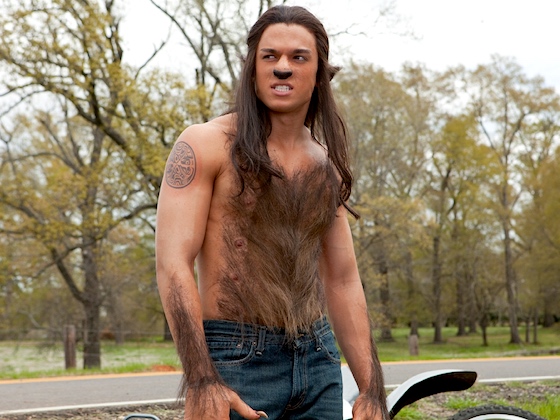
Team Body Hair

On the other hand, highlights include Jenn Proske doing a very good job of imitating Kristen Stewart’s acting style. It’s unmistakable, but a relatively subtle and consistent bit of humour; or, at any rate, not as overblown a gag as… everything else the film is doing. And if you listen, the lyrics in some of the music tracks are decent parodies of the kind of songs Twilight was soundtracked with (“I feel so lonely / Nobody gets me”). Other times, you’re left to provide your own punchline. “We’re just like any other normal American family,” the head vampire comments; “except, of course, we have no souls and we walk the Earth trying to satisfy an unquenchable thirst for blood.” That’s it for the film, but you’ll probably be thinking, “sounds like a normal American to me.” Arguably the best joke is in the title — and whether you think it’s moderately amusing or an obvious and tired pun, I’d argue my assessment holds true.

At the end of my review of Breaking Dawn Part 2, I pondered if I’d wasted my time watching the Twilight Saga — I mainly engaged with it because of its prominent place in pop culture, but that seems to have quickly faded. The same thought, then, is even more true of a middle-of-the-road spoof of the series. If you’re a dyed-in-the-wool Twilight fan, I guess a pisstake is not going to agree with you; but if you despise the main series, this kind of close parody is as bad as the real thing. It did tickle me at times, but I won’t be watching it again.

2 out of 5

* For its theatrical release, the BBFC suggested cuts to five scenes to earn the film a 12A. That cut was also released on DVD and Blu-ray, but it’s uncut and a 15 on streaming. In the US, there’s an unrated “Extended Bite Me Edition”, but it’s only 96 seconds longer. ^

The 100-Week Roundup XIV

I love deadlines. I like the whooshing sound they make as they fly by.

While I’ve been busy with FilmBath and AMPLIFY!, a lot of review dates I intended to hit have flown by, which naturally brought to mind the Douglas Adams quote above. All those reviews that would’ve tied in to something now won’t, but they’ll find a home here someday.

In the meantime, I’m far behind on my 100-week roundups, which is why I’ve put some energy into this little lot. They finish up my reviews from October 2018, as well as dipping a toe into the waters of November 2018. It’s a mixed bag in every sense: very different genres; very different styles; very different ratings…

The films in question are…

  • It’s Such a Beautiful Day (2012)
  • The Lives of Others (2006)
  • Jennifer’s Body (2009)
  • Going for Golden Eye (2017)


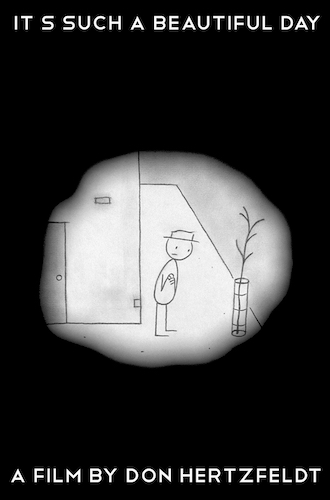
    It’s Such a Beautiful Day
    (2012)

    2018 #218
    Don Hertzfeldt | 62 mins | Blu-ray | 1.33:1 | USA / English

    It's Such a Beautiful Day

    In 2014, when Time Out New York ranked It’s Such a Beautiful Day 16th on their list of the 100 Best Animated Movies Ever Made, critic Tom Huddleston described it as “one of the great outsider artworks of the modern era, at once sympathetic and shocking, beautiful and horrifying, angry and hilarious, uplifting and almost unbearably sad.” That’s a description I’m about to singularly fail to better.

    Animator Don Hertzfeldt enjoys a cult following — you might never have heard of him (though chances you heard about his Simpsons couch gag, if nothing else), but if you have, well, you have. After releasing numerous shorts, It’s Such a Beautiful Day was his first feature — and, indeed, it was first released as a trilogy of short films between 2006 and 2011. Hence my notes break down into three parts, which I shall now share unedited…

    Part 1, Everything Will Be OK. Okay, so, this is weird. Interesting depiction of some kind of mental collapse (I guess we’re meant to infer it’s a brain tumour). Odd everyday events — what does it mean? Maybe that’s the point — Bill [the central character] is pondering what it all means too, after all.

    Part 2, I Am So Proud of You, is like, “you thought that was weird? Get a load of this!” A lot of it seems to be weird — what some people would describe as “disturbed — just for the sake of it. But at other times, it’s almost casually profound. There’s something interesting about its relationship to time and the order of events, or at least the presentation of the order of events.

    Part 3, It’s Such a Beautiful Day. See above. It’s interesting that it was three short films, made over a period of six years, because it really does feel of a piece. Maybe it was just easier to fund/produce shorts rather than a feature, and this was always the end goal.

    Well, there you go. This is not an animated movie for everyone (if you think “animated movie” means “Disney musical”… hahaha), but it’s certainly something unique and special.

    4 out of 5

    The Lives of Others
    (2006)

    aka Das Leben der Anderen

    2018 #220
    Florian Henckel von Donnersmarck | 137 mins | digital (HD) | 2.35:1 | Germany / German | 15 / R

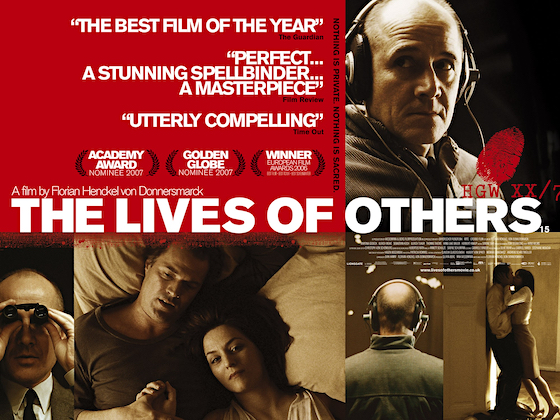
    The Lives of Others

    In 1984 East Berlin, an agent of the secret police, conducting surveillance on a writer and his lover, finds himself becoming increasingly absorbed by their lives.IMDb

    This German movie won the Best Foreign Language Film Oscar and BAFTA (as well as a host of other similar awards), and is currently ranked as the 59th best film of all time on IMDb. It lives up to its accolades. It’s tense and thrilling like a spy movie; emotionally and politically loaded like an art house drama.

    Of particular note is Ulrich Mühe, superb as the increasingly-conflicted Stasi agent. He conveys so much with so little — the character’s massive ideological change is all portrayed as inner conflict. I was wondering why we hadn’t seen a lot more of him since, but sadly he passed away the year after the film came out, aged just 54.

    As the film focuses so much on him, it might be easy to underrate the technical merits, especially because they’re unobtrusive; but it’s perfectly shot by Hagen Bogdanski, with crisp, cold, precise photography. As for writer-director Florian Henckel von Donnersmarck, his followup was infamous Johnny Depp / Angelina Jolie vehicle The Tourst, a film so maligned it seems to have derailed his career. Shame.

    5 out of 5

    The Lives of Others placed 24th on my list of The Best Films I Saw in 2018. It was viewed as part of What Do You Mean You Haven’t Seen…? 2018.

    Jennifer’s Body
    (2009)

    2018 #222
    Karyn Kusama | 102 mins | digital (HD) | 1.85:1 | USA / English | 15 / R

    Jennifer's Body

    Jennifer’s Body didn’t go down well on its original release, but the past few years have seen it develop a cult following, with people regularly recommending it on social media as an under-appreciated horror flick. I didn’t dislike it, but I’m not ready to join their ranks.

    You can see what they were going for, in some respects — it’s trying to be a very feminist horror movie, with the female friendship at the core and so on. And yet, despite the female writer and female director and female stars, chunks of it feel so very male fantasy. I mean, Megan Fox goes skinny dipping for no reason. We don’t see anything explicit, but I’d wager that has more to do with Fox’s contract than authorial intent. Later, there’s a lingering kiss between the two girls that looks like it’s trying its hardest to best the famous one from Cruel Intentions. And talking of references, the whole film sounds like it’s trying really, really hard to be Heathers, with an overload of slang ‘n’ shit. It’s a bit, well, try-hard.

    Megan Fox is surprisingly good though, and there are some neat bits of direction, like the intercut murder/virginity-losing scene. It’s just a shame the whole film doesn’t show that kind of consistency. It did grow on me as it went on (I’m not sure if it took me time to settle into its rhythm or if it just had a clunky start), though exactly how much is debatable: it ends up being a moderately entertaining comedy-horror, but one that’s never really scary and rarely that funny.

    3 out of 5

    Going for Golden Eye
    (2017)

    2018 #224
    Jim Miskell | 60 mins | digital (HD) | 16:9 | UK / English

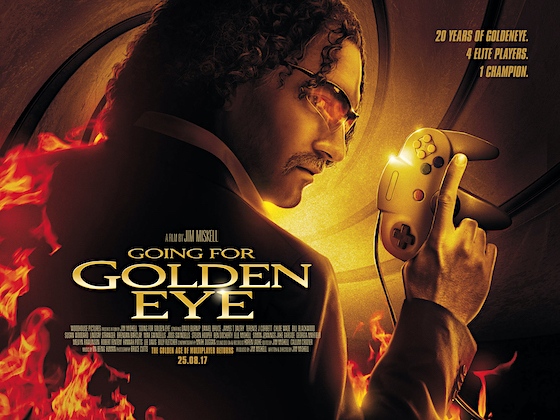
    Going for Golden Eye

    According to IMDb trivia, this is “the first video game mockumentary”. Well, you’re not going to mistake it for a real documentary — the acting is uniformly amateurish, which is one of the film’s biggest hindrances (it certainly gets in the way of selling the documentary conceit).

    Making allowances for such amateur roots, the film does manage some decently amusing bits, although just as many that don’t land. Very little about it will surprise or delight, but more forgiving or nostalgic viewers may be tickled at times. Plus, you have to have a certain amount of admiration for zero-budget filmmakers who managed to produce and get distribution for their film. Even if there’s an occasional for-friends-and-family feel to parts of it, they’ve still completed something many wannabes only dream of.

    Outside of aforementioned relatives, this is only really going to appeal to people with nostalgia for playing GoldenEye on N64 back in the day. In a way, the best part of the whole film is the opening montage about how GoldenEye was unexpectedly great, bucking expectations of both movie tie-in games and first-person shooters. A genuine well-made documentary about the game — why it was so important; what made it so popular — would be interesting…

    2 out of 5

  • FilmBath + AMPLIFY!

    In a mirror of this post from last year, I’m here again to blame my recent blogging quietness on FilmBath Festival. Yes, even in these Covid-struck days, we are putting on a film festival. It’s different — smaller, for one thing, with just nine films over five days (last year we screened dozens of features over 11 days). But, as if to make up for that, we have a New Thing…

    AMPLIFY! is an online virtual film festival — which, in short, means you can enjoy it if you live anywhere in the UK. I won’t go into the full marketing spiel, but instead point you in the direction of the website. Here’s a fun bonus, though: if you want to order tickets (or, for best value, a festival pass), use the code “LoveBath” and you’ll get 10% off. (So we’re clear: I don’t get any bonus or benefit of kickback for plugging either festival. I’m just letting you know what I’m up to, and clueing you in to a cool thing.)

    AMPLIFY!’s lineup features a bunch of UK premieres (including Viggo Mortensen’s directorial debut, Falling); previews (like thriller Rose Plays Julie, which screened at last year’s LFF but hasn’t yet had a wide release); timely documentaries (including The Mole Agent, about an octogenarian spy — yes, I said documentary); other special treats (including the new restoration of silent classic Waxworks ahead of its Masters of Cinema Blu-ray release); and stuff that you might not get a chance to see otherwise (like a strand of Catalan films). I’ve had a chance to see a couple of the films, and I’d recommend Patrick — a dark comedy mystery about a nudist camp handyman who’s lost his hammer. I rather loved it.

    And if you are in the Bath region, the FilmBath schedule is online here (top tip: Nomadland is close to selling out already). It’s going to be a bit different to normal, so there’s information about all that in the FAQs.

    Putting on two festivals has meant more work, of course, and the fact that AMPLIFY! is a collaboration between four festivals has introduced new challenges –– primarily to do with it being online, which none of us have done before (who had, before this year?) But we’re getting there. And when we do, normal blogging service will resume.

    A Beautiful Day in the Neighborhood (2019)

    2020 #195
    Marielle Heller | 109 mins | digital (UHD) | 1.85:1 + 1.33:1 | USA & China / English | PG / PG

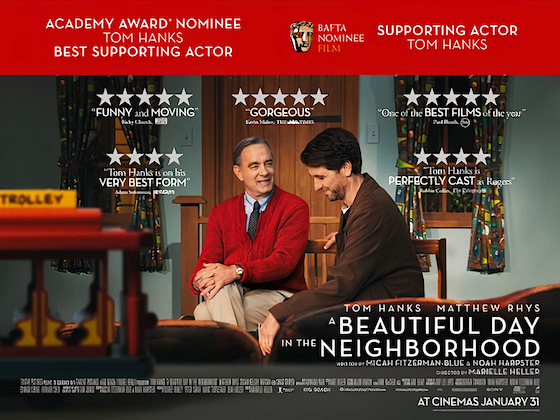
    A Beautiful Day in the Neighborhood

    Thanks to the ubiquity of their films and television programmes, American culture permeates the world. Even if something isn’t directly exported, there are enough references to it in other media that we all get to know it by osmosis. (If you think I’m exaggerating, here’s one example: there are many documented cases of people trying to “plead the fifth” when being interviewed by law enforcement in countries where the fifth amendment to their constitution has nothing to do with criminal procedure.) So, it’s all the more unusual that Mr Rogers is apparently an influential part of American childhoods, but he wasn’t (as far as I’m aware) widely known outside of the US until a couple of years ago. That was thanks to the acclaim garnered by documentary Won’t You Be My Neighbor? As these things often go, that was followed by a biopic — which is this.

    However, rather than try to tell Mr Rogers’ whole life story, A Beautiful Day in the Neighborhood (a reference to the fictional land in his TV series, which is presumably why the US spelling was retained even for the UK release (except on DVD covers, etc)) focuses on one man’s encounter with Rogers. That man is Lloyd Vogel (Matthew Rhys), a cynical journalist with familial problems aplenty. He’s assigned to write a puff piece on Rogers — a couple of hundred words for a magazine issue about “heroes”. The pair seem an ill fit, but that’s the point — it’s basically a punishment from his long-suffering, usually-indulgent editor. Lloyd is initially reluctant, then sceptical — surely the whole “Mr Rogers” thing is a persona; an act? But as he spends more time with the man, it begins to change his view on the world too.

    Okay, it probably takes a while for the film to get to that point, exactly, but I’m not spoiling anything — you know that’s where it’s going. “I met this guy whose world view was so much more positive and optimistic than mine… and it didn’t affect me at all, I’m still a grumpy bastard.” That’s not a story Hollywood’s going to tell, is it? Heck, that’s not even a story. So, yeah, of course Mr Rogers’ fundamentally decent and kindly nature is going to have an impact on Lloyd.

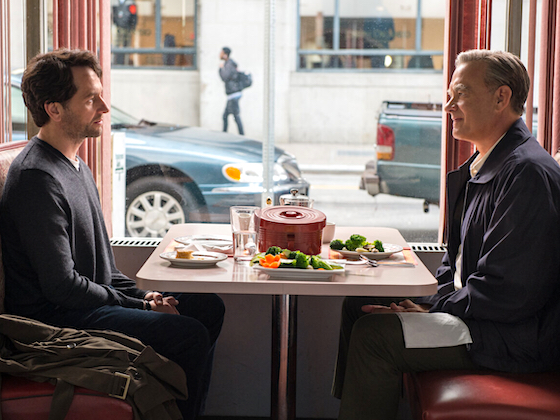
    A beautiful lunch in the neighbourhood

    Despite Mr Rogers being the focal point, then, the film is really more about Lloyd’s personal journey. But that journey is instigated and facilitated by Mr Rogers, so his “supporting character” part is vital. And who better to portray the very embodiment of decency than Tom Hanks? Rogers’ widow has said that Hanks was the perfect actor to play her husband; for his part, he’s said taking the role was “terrifying” due to the cultural significance. Hanks is as accomplished in the role as you’d expect, and it deservedly earnt his sixth acting Oscar nomination (his first in almost 20 years, and long overdue, I think).

    If it all sounds a bit predictable, director Marielle Heller dodges that with some indie-movie-esque flourishes. There’s a touch of Wes Anderson to how she uses Mr Rogers’ TV show, switching into Academy ratio to demarcate us entering a different ‘world’ — not just literally clips from the show, but bookend narration, dream sequences, location transitions, and so on. IMDb lists the 1.33:1 ratio as just being used for “TV scenes”, but I think that undersells its use and effectiveness, which is more comparable to (say) how Anderson used three different ratios in The Grand Budapest Hotel.

    Its those kind of inescapable but well-considered flourishes — plus the believable transition in Lloyd’s character, which is more grounded in reality than the “slightly unlikeable guy becomes super positive” cliché — that elevate A Beautiful Day in the Neighborhood out of the predictable or twee, and into being a genuinely heartwarming kinda film.

    4 out of 5

    A Beautiful Day in the Neighbourhood is available on Sky Cinema and Now TV from today.

    The Past Month on TV #62

    I didn’t think I’d watched much TV to cover in this month’s column, and then I came to write it…

    Cobra Kai  Season 1
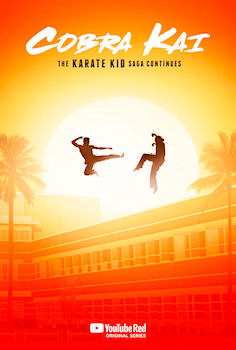
    Cobra Kai season 1A belated sequel/spin-off to the Karate Kid movies, Cobra Kai was one of the first series to be released when YouTube decided to get in on the Netflix game. It was a hit for them, too, attracting tens of millions of viewers and very strong reviews. And yet it feels like no one talked about it, so where those 90 million people were hiding, who knows. Anyway, with YouTube wrapping up their series production (they were a bit late to a market already saturated by Netflix, Amazon, and a dozen other TV and film studios), existing and future seasons of Cobra Kai have been passed onto Netflix — and now everyone’s talking about it. Are more people watching it, or is the Venn diagram between “people who primarily watch stuff via Netflix” and “people who use social media” just a perfect circle? We’ll never know. I guess I’m one of those people who only started talking about the show after it moved to Netflix. I did mean to get to it sooner, but no way was I paying for YouTube, and I missed the couple of times they made it all available for free.

    Anyway, what of the programme itself? As I said, I’d heard it was good, but I didn’t expect it to be this good. Seriously. A belated revival of a half-forgotten oh-so-’80s kids’ sports movie franchise should not be one of the best shows on TV in the 2010s, but, turns out, it kinda is. The writing, the performances, the way it uses the franchise’s legacy but is also it’s own thing… all of that is more or less perfect. One of its strongest features is a nicely nuanced treatment of the returning characters. They haven’t just kept them the same, nor merely inverted it so Johnny’s turned good and Daniel’s gone bad. They both have their heroic and villainous moments; both can be inspiring; both can be embarrassing middle-aged men. There’s a certain lack of vanity on the part of the actors there, acknowledging the real passage of time rather than still trying to be Karate ‘Kids’.

    It has what I consider to be the perfect balance of storytelling styles for this streaming era: it’s telling one long story (of course it is), but each episode works as a self-contained unit, with its own plots and subplots. Put another way, it’s ten episodes that together add up to one story, rather than a single long narrative arbitrarily chopped into ten pieces. Because of that, it only gets better as it goes on — you get more invested; the characters develop; stuff pays off… it’s superb. I don’t really do “binge watching” (maybe two episodes in one day, sometimes), but Cobra Kai is so addictive that I ended up watching half the first season in one sitting. It helps that the episodes are short (around 25 minutes each), really feeding the “just one more” feeling. If you’ve only got half-an-hour to spare, you can throw the next episode on and get a satisfying instalment; but if you’ve got nowhere else to be, don’t be surprised if you get suckered in to more, because it does kind of work as “a movie”. (Indeed, watching the first five episodes in one sitting almost felt like watching the first half of a two-part movie, because they reach a particularly suitable break in the overall narrative.)

    The move to Netflix was prompted by YouTube informing the production team that they’d air the already-filmed third season, but definitely wouldn’t commission a fourth. The first two seasons have already been such a success for their new home that Netflix have commissioned that fourth season before they’ve even released the third (it’s due early next year). There’s a lot one could analyse about that (considering the first episode already had 90 million views on YouTube, how many more people were there to watch it on Netflix?!), but the important point is: more Cobra Kai, guaranteed! If it keeps up this level of quality, that’s a very good thing.

    (The only reason I didn’t race straight on to season 2 was to spread it out a bit, what with the wait ’til season 3. Expect a review next month.)

    Strike  Lethal White
    Strike: Lethal WhiteA four-part adaptation of the fourth Cormoran Strike novel by J.K. Rowling Robert Galbraith, which sees the private detective investigating the blackmail of an MP at the same time as a historical murder comes his way that the may be connected to the same MP. What a coincidence! No, it really is a coincidence; but don’t worry, with four whole hours of story to get through, you’ll probably have forgotten about that by the end. There’s also the ongoing drama of the will-they-won’t-they relationship between Strike and his sidekick, Robin Ellacott. If you thought her getting married to her dick of a fiancé at the end of the last series was going to put a stop to that, you were very wrong. Strike mainly coasts by on the likeability of its two leads — the actual plot isn’t bad, just not anything remarkable. We’ve had four or more decades of this kind of investigative crime drama on British TV, and Strike is one of the ones that happens to currently be on.

    Criminal  Season 2
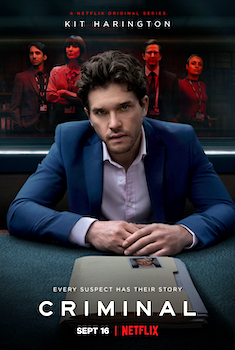
    Criminal season 2Remember when Netflix first launched Criminal and made a big deal of how it was one format filmed by four different countries? Does no one else remember that? Because I swear it was one of the key USPs, but it’s gone entirely unmentioned in the (surprisingly large amount of) press about the second season — which I presume suits Netflix just fine, because three of the countries have been quietly dropped, so only the UK version remains. (What’s the betting the UK one did better simply because its anglophone cast are more widely known around the world?)

    Anyway, it remains a funny old drama — it wants to be grounded and focused (it all takes place in an interview room and the observation room next door), but rather than allow the minutiae of the actors’ skills to shine through (the other USP), it can’t help but indulge in jumping about with narrative bells and whistles. Most questionable is the second episode, in which Kit Harington gives a good performance, but the “falsely accused of rape” storyline feels like it’s failed to read the cultural moment. It’s got a 9.2 rating on IMDb, though, so I guess the men’s rights-type people found it.

    Derren Brown: Miracle
    Derren Brown: MiracleI’d found the last few Derren Brown live shows relatively underwhelming (not to mention his recent TV specials), which is perhaps why I missed this back whenever it first aired on Channel 4 (in 2016) and am only now catching up. Maybe it’s the distance of time, then, but I thought this was a really strong and entertaining set of tricks and set pieces. The only thing I’d like more is if he explained how the faith healing stuff worked. We know it’s a con, a trick, but it still has an effect. He acknowledges part of it (it’s all psychological, “the stories we tell ourselves”), but how does that fix a woman’s eyesight or render a man unable to read? I know magic tricks aren’t ‘meant’ to be explained, but when you’re exposing shysters’ cons, I feel like revealing the methodology is ok.

    Netflix Comedy Specials
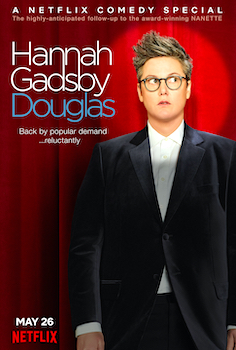
    Hannah Gadbsy: DouglasRecently, I’ve been unwinding with some of Netflix’s standup specials. The most noteworthy / widely discussed of those is certainly Hannah Gadsby’s Douglas, her followup show to the massively successful Nanette (which I commented on last month. “Followup” is the right word, because Gadsby begins the set by talking about Nanette’s success and her reaction to it. Then she begins the new show… without beginning the show. Instead, she does a long bit where she lays out the entire structure of the show to come before, almost 15 minutes in, “the show” actually starts. After Nanette was so praised for bending the form of what “standup comedy” could be, I guess she felt the need to do it some more. It’s fairly ingenious and works quite well. As for the material itself, it’s not as emotionally devastating as Nanette, but still appropriately pointed when needed.

    Elsewise, I’ve been trying out some American comedians who I hadn’t even heard of before I saw their trailers on Netflix. Demetri Martin’s accurately titled Live (at the Time) indulges in a lot of quick, deadpan humour, including some nice meta jokes. That’s my kind of thing. Also my kind of thing: dark comedy. Apparently Anthony Jeselnik’s Fire in the Maternity Ward is the kind of comedy that some people find offensive, but I struggle to find any comedy “offensive” when it’s clearly being performed with self-awareness that it is wrong, and that’s why it’s funny (as opposed to someone saying something as “just a joke” when it’s their actual word view, i.e. what right wing ‘comics’ tend to do). So, yes, I’m aware some people find Jeselnik’s material beyond the pale, but he hit just the right note for me (i.e. I’ve seen darker, but they probably went too far). Finally (appropriately), Marc Maron’s End Times Fun accepts that the world is fucked and gets on with making gags about it. His bit about how the way hardcore Marvel fans behave is actually the same as religious fanatics is bang on, while his finale — an extended vulgar ‘prophecy’ for the end of days — is hilarious, and quite close to Jeselnik in terms of pushing at offensive-to-some boundaries.

    The Twilight Zone  ‘Best Of’
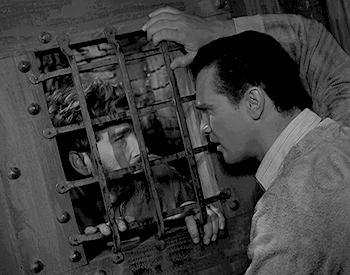
    The Howling ManThis is my tenth and final selection of the best episodes of the original Twilight Zone, which gets me to the end of the top third of episodes on my consensus ranking (The New Exhibit is ranked 52nd, which is exactly 33.3% through). I think that’s as far as I can reasonably call the “best of”. If you think it sounds quite far through the list to still be calling these “the best”, bear this in mind: a lot of this month’s episodes are well placed in several rankings, but then one or two more negative nellies drag them down. (The Howling Man is the most extreme instance of this: it’s in the top 20 according to voters on Ranker, and placed in the top 30 by ScreenCrush, Paste, and IMDb users, but neither TV Guide nor Thrillist include it in their top 50, and BuzzFeed put it 149th.) My personal opinion of some of these episodes made me wonder if I’d pushed “best of” too far, but there have been episodes in previous “best of” selections that I liked even less, so I think it’s coincidence rather than that TZ has run out of good episodes before I even get halfway through. (And just because I didn’t like them doesn’t mean they’re not well regarded — one of my least favourites here, Stopover in a Quiet Town, has 8.3 on IMDb and is ranked 25th there.)

    The first episode this month isn’t a disaster, but doesn’t quite coalesce either. Ring-a-Ding Girl has some very nice ideas, but they’ve not been arranged properly to make a wholly satisfying episode. For one thing, it leaves a whole town full of people aware of the strange thing that’s happened — that doesn’t feel very Twilight Zone, where these things normally only directly affect one or two people, and even they often can’t be sure it actually happened. That’s more a minor point of style than a fundamental flaw, mind. Still, I feel like someone could rewrite this and make it a lot better — heck, it could probably even sustain a feature, if done right. Bit of a shame, then.
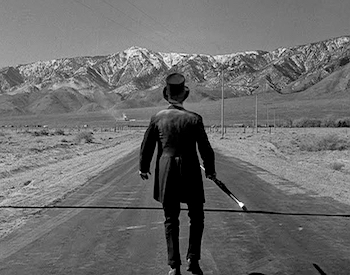
    A Hundred Yards Over the RimOn the other hand, a common feature of The Twilight Zone is “man out of time” stories. The show did a lot of those, and A Hundred Yards Over the Rim is certainly one of them. In 1847, a pioneer at the head of a wagon train heads over a nearby rim to scout for water, and finds himself in 1961. There’s reasonable potential in that, but what follows offers no remarkable features or moral messages. If the pioneer was on the verge of giving up, and seeing that people like him did bring civilisation to those barren places motivated him to carry on, that would be effective. In fact, he’s pretty much the only one in his party who’s already certain they’re on the right path, so all his trip through time represents is a brief obstacle in his path. Similarly, he discovers evidence that his dying son will actually survive and achieve great things, but he didn’t seem to doubt his son’s chances before that, so what did he really gain? Apparently this is JJ Abrams’ favourite episode, which I feel explains a few things…

    Much better is The Howling Man, a mostly unsettling episode with a “dark and stormy night” feel. that’s a cliche, but Douglas Heyes’ OTT Dutch-angle filled direction emphasises such an overblown atmosphere. It’s fun, if a little campy, especially in its final reveal. It’s the kind of episode that’s so particularly styled that whether you love it or loathe it is entirely down to personal taste, which probably explains those ranking discrepancies I mentioned at the start. As I also mentioned, Stopover in a Quiet Town is one of my least favourite episodes. It’s not that it’s bad per se, but it felt like little more than a remix of a handful of previous episodes; like a workmanlike pastiche rather than a true Twilight Zone instalment. The moral of the story — stated bluntly by Rod Serling in his closing narration — is “if you drink, don’t drive.” Thrillist reckon it’s “the best PSA about drunk driving of all time.” I just think it’s the weirdest.

    A man and his dog are the subject of The Hunt, one of TZ’s occasional sweet episodes. When the pair die, you might not think this is going to be a nice one, but we soon follow them into the afterlife — not that they realise it. Yep, as is so often the case with these kinds of TZ episodes, we understand the situation immediately while it takes the characters most of the episode to cotton on. It’s only in the second half that it gets to the real point: arriving at the gates of Heaven, St Peter informs the man that his dog can’t come in. What kind of Heaven would it be without dogs?! Well, this is The Twilight Zone, so… It’s a twee little tale, really. I liked the “dogs are great” side, but was less keen on the sensation it gives of being a Sunday school lesson.

    One for the AngelsOne for the Angels is another feel-good episode, in which a two-bit street salesman manages to outwit Death… twice! Once for himself, once for a little girl who lives in his block. Ed Wynn embodies the friend-to-children type persona most familiar from his later appearance in Mary Poppins, while Murray Hamilton (also best known for a later film role: the mayor from Jaws) makes for a charmingly besuited Mr Death. That the salesman manages to pitch cheap crap to Death himself for a full quarter of an hour stretches belief. Well, I say “belief” like Mr Death is real, but, even with the rules of fantasy, what does Death need with all that crap? Ah, but it’s all for a good cause, so maybe we can let it slide in the name of feeling happy.

    We end on an even rarer beast: a season 4 episode! Out of 71 episodes of The Twilight Zone I’ve watched so far, this is only the 5th from that season — and three of those were in my “worst of” posts. Basically, if you didn’t already know, people don’t like season 4. As one of its better instalments, The New Exhibit is proper horror movie stuff. Indeed, I could see this as the setup for a standalone feature film; which is quite different to season 4’s usual problem, that the double-length episodes led to plots being padded to fill the running time. That said, this isn’t the best execution of the concept. Where it’s going feels inevitable from early on, so it still feels a little long-winded — you could definitely rattle through this tale in 25 minutes. Indeed, as Paste puts it, it “could work as either a very short story, or be expanded into a horror feature. As a 50-minute episode, it takes a long time to get going, then ends abruptly just when it was beginning to get interesting.” Ironically, a feature version would probably get going quicker, then spend more time on the later good stuff — and this episode would’ve benefitted from the same. All of which said, I still found it effectively creepy. Some people say it’s not scary at all, but I guess that depends on whether you find wax figures inherently unsettling or not.

    And that concludes what I’m calling “the best of The Twilight Zone“. I’m going to keep working me way through the series and writing about it, though. Hopefully I’ll unearth a few underrated gems among the episodes that fall in the middle of the rankings.

    Also watched…
  • Elementary Season 7 Episodes 1-4 — The final run of American Sherlock begins in London… the kind of London that’s clearly been shot on LA backlots and standing sets. Bless ’em.
  • The Great British Bake Off Series 11 Episode 1 — Defying the lockdown odds, Bake Off is back! I guess that’d feel more special if this wasn’t the fourth series I’ve watched this year (series 1 in January, series 9 in June, and series 10 in September). Thankfully, An Extra Slice is back too, because that’s the best bit.
  • Jonathan Creek Specials + Series 5 Episode 1 — We’ve reached “the rubbish ones” now, where the plots get too far-fetched (in The Clue of the Savant’s Thumb, a couple improvise on the spot an elaborate coverup for… a complete accident) or, in the case of series 5 opener The Letters of Septimus Noone, don’t even function like a proper episode (it shows the answer to the mystery at the start!) I used to always hope Creek would keep coming back, but if it carries on like this, maybe it’s best if it doesn’t.
  • The Rookie Season 2 Episodes 18-20 — When this started, its best feature was how grounded and plausible it was. Now we have serial killers scheming from within prison and dirty cops framing rookies for elaborate criminal enterprises. In short, it’s getting a bit like other OTT cop shows, which is a shame. I half expected it to be cancelled given recent events in the US, but it hasn’t been, which is good because season 2 ends on a huge cliffhanger.

    Things to Catch Up On
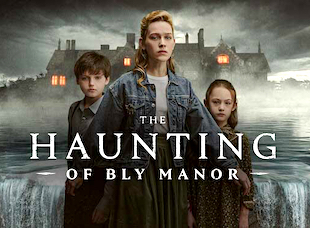
    The Haunting of Bly ManorThis month, I have mostly been missing The Haunting of Bly Manor, the followup to The Haunting of Hill House, which I also never got round to watching. This is the perfect month for that kind of thing, obviously, so I ought to make the effort. Not sure I will, mind. Same goes for Lovecraft Country, which I heard a lot of good things about, and then heard less good things about, and now I’m just not sure. I mean, there’s so much TV to watch nowadays, you gotta be careful not to waste that precious viewing time. And I’m sure there’s been a bunch of other stuff, but God, never mind watching it, I can’t even keep up with remembering it all.

    Next month… The Mandalorian is back. (Not watched season one of that yet, either.)

  • Bloodshot (2020)

    2020 #178
    David S.F. Wilson | 109 mins | digital (UHD) | 2.39:1 | USA & China / English |
    12 / PG-13

    Bloodshot

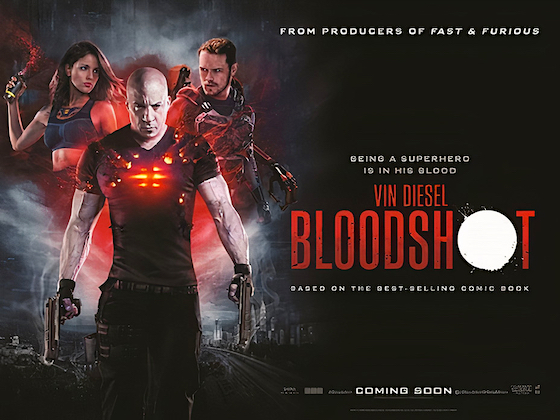
    If you only know about comic books from the movie universes they spawn, you’d be forgiven for thinking Marvel and DC are the be-all and end-all of that medium. Not so, of course. One of the other publishers with their own stable of superheroes just waiting to make the leap to the screen is Valiant, and (if you hadn’t already guessed) Bloodshot is one of theirs. Indeed, at one point it was intended that it would be an Iron Man-style jumping off point for another cinematic universe, but I can’t imagine that’s still on the cards.

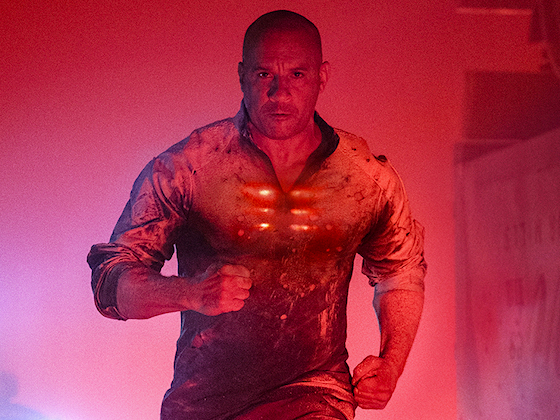
    Anyway, in this screen incarnation, Bloodshot stars Vin Diesel as Ray Garrison, a US Marine who is kidnapped and killed along with his wife… but then he wakes up, albeit with amnesia. An experimental scientific programme has seen nanite tech injected into his bloodstream, giving him increased strength and healing abilities. Increased strength? Speed healing? Amnesia? I guess he’s Cyber-Wolverine, only without the cool claws. Anyway, Ray begins to have flashbacks, and he heads off to kill the terrorists who killed him and his wife. But all is not as it seems…

    I don’t know why I’m holding back — the trailer spoiled more of the plot than that. And I’m not trying to spare you so you can enjoy the story as the movie unfolds, because Bloodshot is not a film I particularly recommend; and what is enjoyable about it has nothing to do with its storyline. That said, the twist I’ve implied exists would’ve been quite good — certainly one of the film’s higher points — if they hadn’t blown it in the trailer. The only other thrills come from its action sequences, which are passable, albeit constructed with a prominent degree of sloppiness that indicates the filmmakers either weren’t skilled enough or weren’t attentive enough to truly get it right. For example, they didn’t even bother to put British number plates on any of the cars during a chase that supposedly takes place in London; not to mention that the streets they’re darting around look nothing like the UK.

    Kind of a superhero

    Poor location scouting aside, there’s copious amounts of the computer-generated bombast that’s par for the course in a modern blockbuster. But underneath that digital set dressing, Bloodshot feels like a throwback to the comic book adaptations of 20 years ago; one of those superhero-movies-they’d-rather-weren’t-superhero-movies we got in the late ’90s or early ’00s, before X-Men and Spider-Man finally straightened everyone out. It even has the kind of plasticky CGI stunt doubles you haven’t seen in at least 15 years (Marvel & co use CGI stunt doubles all the time, of course, but they’re better done than these ones).

    Like those half-arsed efforts of old, Bloodshot is, when taken as a brain-off sci-fi actioner, mostly adequate. That’s about the best that can be said for it. I was going to say that it’s probably bland enough to scrape a passing grade, but, the further I get from it, the more it lessens in my memory. My score sides with that hindsight.

    2 out of 5

    Bloodshot is available on Sky Cinema and Now TV from today.

    The 100-Week Roundup XIII

    Horror, comedy, romance, and singing Nazis in this week’s roundup…

  • TiMER (2009)
  • Suspiria (1977)
  • Matinee (1993)
  • The Producers (1967)


    TiMER
    (2009)

    2018 #210
    Jac Schaeffer | 100 mins | streaming (HD) | 1.85:1 | USA / English & Spanish | 15 / R

    TiMER

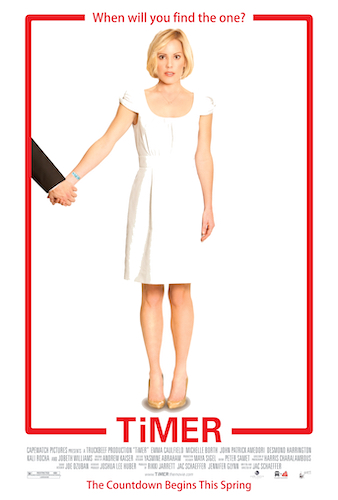
    The debut feature of writer-director Jac Schaeffer (who hasn’t helmed a feature since, but is now the showrunner of Marvel’s WandaVision) is a sci-fi romcom that doesn’t sell out its high concept to make its romance work. Said concept is that you can buy an implant that will count down to the day when you meet your soulmate. So, there’s the usual romcom “will they/won’t they” shenanigans, but with this added SF complication.

    As a sci-fi fan, I thought the concept was very well done indeed. At it’s core it’s quite a simple idea — I mean, such a device is hardly something that would change the entire world, but it would certainly affect our attitude to relationships and dating. The writing has thought through those effects, the way it would modify people’s reactions and behaviour and so on, and applied all of that to its story in a natural way; that is to say, it influences what happens, rather than the plot being little more than an exercise in exploring the permutations of the concept. Couple that with a solid romcom element, and you have a likeable little film.

    4 out of 5

    Suspiria
    (1977)

    2018 #211
    Dario Argento | 98 mins | Blu-ray | 2.35:1 | Italy / English | 18

    Suspiria

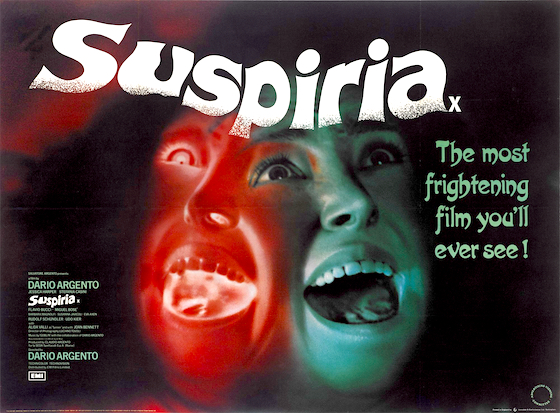
    Perhaps horror maestro Dario Argento’s best-known movie, Suspiria is the story of American ballet dancer Suzy Bannion (Jessica Harper), who travels to Germany to train at a prestigious dance academy, where she instead uncovers many creepy goings-on.

    There’s a bit more to the story than that, but, really, Suspiria is more about its unnerving atmosphere, creepy scares, and strikingly brutal murders than emphasising a traditional narrative. According to the film’s Wikipedia page, “film scholar L. Andrew Cooper notes ‘aesthetic experience is arguably the ultimate source of ‘meaning’ in all of Argento’s films’,” and that was certainly my main takeaway here — as I wrote in my year-end summary, it’s a masterpiece of uneasy atmosphere, with striking colours and music.

    There’s a lot more that could be written about Suspiria (and, of course, has been written in the 43 since its release), but if you were expecting deep-dive insight in a roundup column, you’re in the wrong place.

    5 out of 5

    Suspiria placed 16th on my list of The Best Films I Saw in 2018. It was viewed as part of Blindspot 2018.

    Matinee
    (1993)

    2018 #213
    Joe Dante | 99 mins | TV | 1.85:1 | USA / English | PG / PG

    Matinee

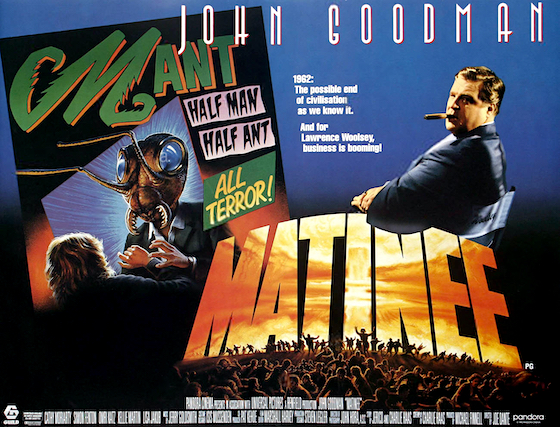
    I confess I’d not even heard of Matinee before Arrow put out a Blu-ray a few years back, but it seems to be something of a cult favourite — it’s laden with high-scoring reviews on Letterboxd nowadays. It’s about a producer of horror B-movies (modelled on William Castle) who attempts to promote his latest piece of monstrous schlock, Mant, to a military-base town during the Cuban Missile Crisis. Thematically, it’s a tribute to and evocation of the magic of the movies, which probably explains its popularity on a movie-logging website. That’s definitely its strongest aspect, with John Goodman getting to deliver some nice speeches about the wonder of going to the pictures. Shame today’s cinema managers and employees don’t seem to share his romanticism for the experience…

    Other than that, I thought it was a bit something and nothing. The movie-within-a-movie is a lot of fun, and setting a good chunk of the film during its premiere screening is a neat bit of structure, but overall the antics get a bit daft.

    There’s a bit of unintended mirroring in the inclusion of a school drill for the atomic bomb about to drop, with safety precautions that would be fundamentally useless were it to actually happen — it calls to mind how today US schools do drills for school shooting situations, again with virtually useless advice (or so I’ve heard). You could possibly draw out some commentary on the changing nature of threats to US citizens (it used to be from without, now it’s from within), but Matinee was made in 1993, so the chances of it being intentional are nil.

    3 out of 5

    The Producers
    (1967)

    2018 #216
    Mel Brooks | 86 mins | DVD | 1.85:1 | USA / English | PG / PG

    The Producers

    Writer-director Mel Brooks is best known for his fourth-wall-breaking movie parodies like Young Frankenstein, Spaceballs, and Robin Hood: Men in Tights, but his debut feature is a different kettle of fish. It takes place in (broadly speaking) the real world, where failing Broadway producer Max Bialystock (Zero Mostel) and accountant Leopold Bloom (Gene Wilder) come up with a moneymaking scam that involves putting on a show so terrible that it closes on opening night.

    Cue a mix of black humour (the play they settle upon is called Springtime for Hitler: A Gay Romp with Adolf and Eva at Berchtesgaden) and slapstick, with scenes and moments indicating the direction Brooks’ style would later take (like an aside about another character being delivered direct to camera, or someone answering a comforting “there, there” with “where, where?”).

    Although originally opening to mixed reviews, the film was a box office hit, earnt Oscar nominations (Best Supporting Actor for Wilder) and wins (Best Screenplay for Brooks), and was eventually adapted into an actual Broadway musical (you couldn’t make this up) which was then (re)made as another film (you really couldn’t make this up) and as recently as 2016 was used as the basis for a spoof of Trump (sadly, he’s not made up either). That, I think, speaks to the enduring hilarity of the original.

    4 out of 5

  • The Man Who Killed the Monthly Review of September 2020

    This month started off strong: reaching #200 (for only the third time ever); watching plenty of films; posting a lot of reviews… but then it tapered off on all fronts. Partly this is because I’ve found myself back in the employ of FilmBath Festival — yes, even in this crazy COVID world, we’re putting on a film festival. Plus an online offering that will be accessible nationwide… but shh, that’s not been officially announced yet! More details in the coming weeks.

    For now, back to the last month on this blog…


    #199 All Is True (2018)
    #200 In the Mood for Love (2000), aka Fa yeung nin wah
    #201 Anand (1971)
    #202 Ikiru (1952)
    #203 The Man Who Sleeps (1974), aka Un homme qui dort
    #204 All About Eve (1950)
    #205 A Shaun the Sheep Movie: Farmageddon (2019)
    #206 Vice (2018)
    #207 The 40 Year Old Virgin (2005)
    #208 For the Love of Spock (2016)
    #209 Guinevere (1994)
    #210 Blind Fury (1989)
    #211 Waking Ned (1998)
    #212 Out of Africa (1985)
    #213 The Hippopotamus (2017)
    #214 Enola Holmes (2020)
    #215 Fanny and Alexander (1982), aka Fanny och Alexander
    #216 The Man Who Killed Don Quixote (2018)
    #217 Lost in La Mancha (2002)
    #218 He Dreams of Giants (2019)
    Anand

    Farmageddon

    Fanny and Alexander

    .


    • I watched 20 new feature films in September.
    • That makes it my 25th month with 20+ films, and my first 20+ September in five years.
    • It surpasses my September average (previously 11.9, now 12.5) and the rolling average of the last 12 months (previously 18.9, now 19.9), but falls short of 2020’s average to date (previously 24.75, now 24.2).
    • Early in the month I reached my 200th film for this year. I wrote about the history and stats of that achievement here.
    • Moving beyond #200 means 2020 is already my second biggest year ever, with three months still to go
    • #218 is the furthest I’ve reached by the end of September (my previous best was #206 in 2018), meaning a new all-time record is not impossible — but there are still 44 films to go to get there, more than double the number I watched in October-to-December last year.

    As for the films themselves…

    • Back in July, I identified that Vice was the only film I needed to see to complete the last five years of Oscar Best Picture nominees (that’s 43 films). So, now I’ve done that, it’s on to the last decade of the same (which is 88 films), for which I still need to watch another ten. Let’s see how long that takes…
    • From last month’s “failures” I watched The Man Who Killed Don Quixote (see the Arbies for more about this).
    • This month I watched four Blindspot films. That makes it sound like I’m doing it very, very wrong, but allow me to explain.
    • Firstly, I needed to catch up for missing one last month — that was In the Mood for Love.
    • Then I needed to watch one for this month, of course — that was Ingmar Bergman’s magnum opus, Fanny and Alexander.
    • Then you may remember I had a list of eight ‘overflow’ films to also consider watching — this month, I watched two, Ikiru and All About Eve.
    • So, I’m now back on track for the main list and over halfway through the overflow. But I’ll still need to watch exactly one overflow film a month (in addition to a main list film) for the rest of the year if I want to finish all 20.


    The 64th Monthly Arbitrary Awards

    Favourite Film of the Month
    Rather spoilt for choice this month, what with four Blindspot films that mostly lived up to expectations, plus several other great and/or very enjoyable movies too. Perhaps the most pleasant surprise was Fanny and Alexander — I’ve not always got on with Ingmar Bergman’s films before, so his over-three-hour magnum opus could’ve been horrific for me, but I actually thought it was fantastic.

    Least Favourite Film of the Month
    Un homme qui dort? More like Un homme qui t’endort.

    Best Blind Swordsman of the Month
    I had intended to save Blind Fury until after I’d finished the Zatoichi series (which I really should have done by now, but I’ve let various things get in the way). For those who don’t know, it’s a modern-day US-set remake of Zatoichi Challenged — a thoroughly bizarre idea, so it seemed best to leave it until I was done with the series proper. But then I noticed it was leaving Amazon Prime imminently, so I decided I’d better get on it. Such are the ways of the streaming era. It’s not as good as the real thing, but it was more fun than I expected.

    Most Debatable Viewing Order of the Month
    I’ve owned acclaimed (un)making-of documentary Lost in La Mancha on DVD but never got round to watching it — so long, in fact, that Terry Gilliam was finally able to actually make the film it’s about, The Man Who Killed Don Quixote, and it’s now streaming on Sky. The makers of La Mancha also documented that successful effort, in a new film called He Dreams of Giants, which I recently had access to a screener for. So the question became: which order to watch them in? I’m not sure the one I plumped for (see #216–218) was the right way to go about it, but then neither of the alternatives (La ManchaDon QuixoteGiants; or La ManchaGiantsDon Quixote) seemed perfect either, so this was as good as any. In fact, with hindsight, I think it might have been the best way — watching the docs before the resultant feature would’ve set too many unnecessary expectations.

    The Audience Award for Most-Viewed New Post of the Month
    For only the third time this year (there have been other years where it happened most months), my most-viewed new post was my latest TV column. (The most-viewed film post was, as befits its status as a modern masterpiece, my review of Love on a Leash.)


    The Basil Rathbone Sherlock Holmes movies have made up over a third of my Rewatchathon so far this year. With them finished, there’s now a hole where they used to be as a go-to choice, meaning my pace has slipped slightly… but I’m still currently on target for 50 by the end of the year, so that’s okay (for now).

    #38 Jodorowsky’s Dune (2013)
    #39 Mission: Impossible II (2000)

    I wrote my review of Jodorowsky’s Dune after that rewatch, so my Letterboxd log adds little more than that I enjoyed it more second time round.

    M:I-2 is a different kettle of fish: you can find my latest opinion of the film itself on Letterboxd (short version: I still really like it). As for its place in the Rewatchathon, it continues my rewatch of the Mission: Impossible movies in 4K that I started back in May. Then I mentioned that it’s the first two films that feature the biggest upgrades in PQ with their 4K transfers. M:I-1 is the more strikingly good-looking film, but this one looks great most of the time too. The downsides are that the overall improvement reveals how much softness there is in some of the original photography, and skin tones look too hot in a couple of scenes (though I couldn’t quite be sure if I needed to fiddle with my TV settings, or if it was the transfer’s fault, or just the way the film was shot). Still, a resounding improvement over the old Blu-ray.


    The reopening of cinemas continues with Bill & Ted Face the Music making its UK debut on the big screen only, and… that’s probably it: Tenet’s underperformance at the US box office has the studios running scared again. Bond is still on schedule for November, but will that hold? Only time will tell.

    Another film that got a cinema release in some territories was Disney’s live-action remake of Mulan. Of course, it went direct to streaming everywhere that Disney+ is available, and that includes the UK, even though our cinemas are open. £20 vs a £6 cinema ticket? Hmm… Anyway, I guess that didn’t do well either, given that Disney have moved the rest of their big titles into 2021 rather than send them to Disney+ too.

    Also on streaming, Netflix had a couple of big originals in the shape of Charlie Kaufman’s I’m Thinking of Ending Things and The Devil All the Time. Both set Film Twitter and Letterboxd abuzzing, but I haven’t been in the mindset for their heaviness yet. There was also the hugely controversial Cuties, which is a debate I’m not interested in reigniting, and they ended the month with a new adaptation of gay play The Boys in the Band. Also catching my eye on Netflix were a string of titles I’ve bought on Blu-ray but not got round to watching: First Man, The Handmaiden, the new Halloween… Shame on me. (They’ve also added various things I have seen and reviewed, of course, but that’s not the point of this section.)

    Over on Amazon, no brand-new films that I could see, but they did have the streaming premieres of Guy Ritchie’s The Gentlemen and acclaimed crime drama Queen & Slim. They’ve also now got Crazy Rich Asians, after it ended its time on Now TV / Sky Cinema. Talking of which, after having a subscription to that for most of the year — first for the Oscars, then via a series of free and heavily discounted months — I cancelled it at the start of this month because it was going to be full price, only for them to now offer me a free month. Additions there this month include The Good Liar, Motherless Brooklyn, and Judy.

    BBC iPlayer’s also had a pretty strong slate of movies recently, including recent-ish titles moving in from other streamers (Molly’s Game, I, Tonya) and HD versions of classics (Doctor Zhivago, The Life and Death of Colonel Blimp, etc). Also, Christopher Nolan’s Memento, which I’ve not seen for a very long time indeed and ought to take the chance to rewatch in HD (that feels like the kind of film that’s due a 4K release from someone like Arrow, but who holds the rights I don’t know).

    Finally, my disc purchases were a lot calmer than last month’s 54 films. It’s taken five years, but I finally completed my collection of the “Top 5 Films I Hadn’t Heard of Before Watching The Story of Film But Now Really Want to See” by importing the US release of Hyenas. I managed to find a copy of Doctor Sleep with the director’s cut included (if I’d realised they really meant it when they said it was “limited edition”, I’d’ve bought it sooner! After being out of stock on HMV’s website for months, they seem to have found some additional copies, so fortunately I only paid normal price for it). Rewatching Jodorowsky’s Dune inspired me to purchase Arrow’s new Jodorowsky box set, which I fear I may regret (his films aren’t half odd looking), but there we go (knowing me, I’ll not get round to them for years / ever anyway).

    I also picked up… Bullitt (primarily for one of its special features, feature documentary The Cutting Edge: The Magic of Movie Editing) … the US 4K release of anime Ghost in the Shell (though I accidentally ended up with two copies, so I need to get that on eBay) … and re-bought all three Ghostbusters films (the original pair in a new-to-the-UK 4K box set, which duplicates the discs from last year’s limited and expensive US 35th anniversary set; and the 2016 reboot in 3D, which I got brand-new for £1.50. The fact most people have given up on 3D is a boon for those of us who haven’t).


    October means one thing for some people: Halloween. I doubt I’ll be so singularly focused (I never have been before — why start now?), and I’m not even sure what I’ll do for the day itself (because it is just a day, not a season, or even a month — sorry, people). Between 2015 and 2019 I spent it covering the Twilight saga, but I finished that last year (thank God) so need a new notion. Although there’s always that Twilight spoof — which, according to IMDb voters, is the 46th worst film of all time, ranking lower than any real Twilight film. Dare I brave the horror?